
There is something deeply comforting to me about a home that knows exactly what it wants to be, and this converted bus does just that. Tucked into a quiet landscape where self-sufficient living feels less like a trend and more like good common sense, it carries the plainspoken charm of a country cottage and the ingenuity of a well-tended workshop. As a concept design, it imagines a smaller, steadier way of living, where every inch is useful, every finish has warmth, and nothing feels wasteful or cold.
What makes this home special is not only its clever footprint, but the tenderness of its design. I found myself thinking of old Midwestern farm kitchens, sewing rooms, and porches where people made do beautifully with what they had. Here, that same spirit has been translated into a polished little dwelling on wheels, with layered wood tones, hardworking materials, soft natural light, and the kind of thoughtful storage that makes daily life feel calm instead of crowded.
Exterior
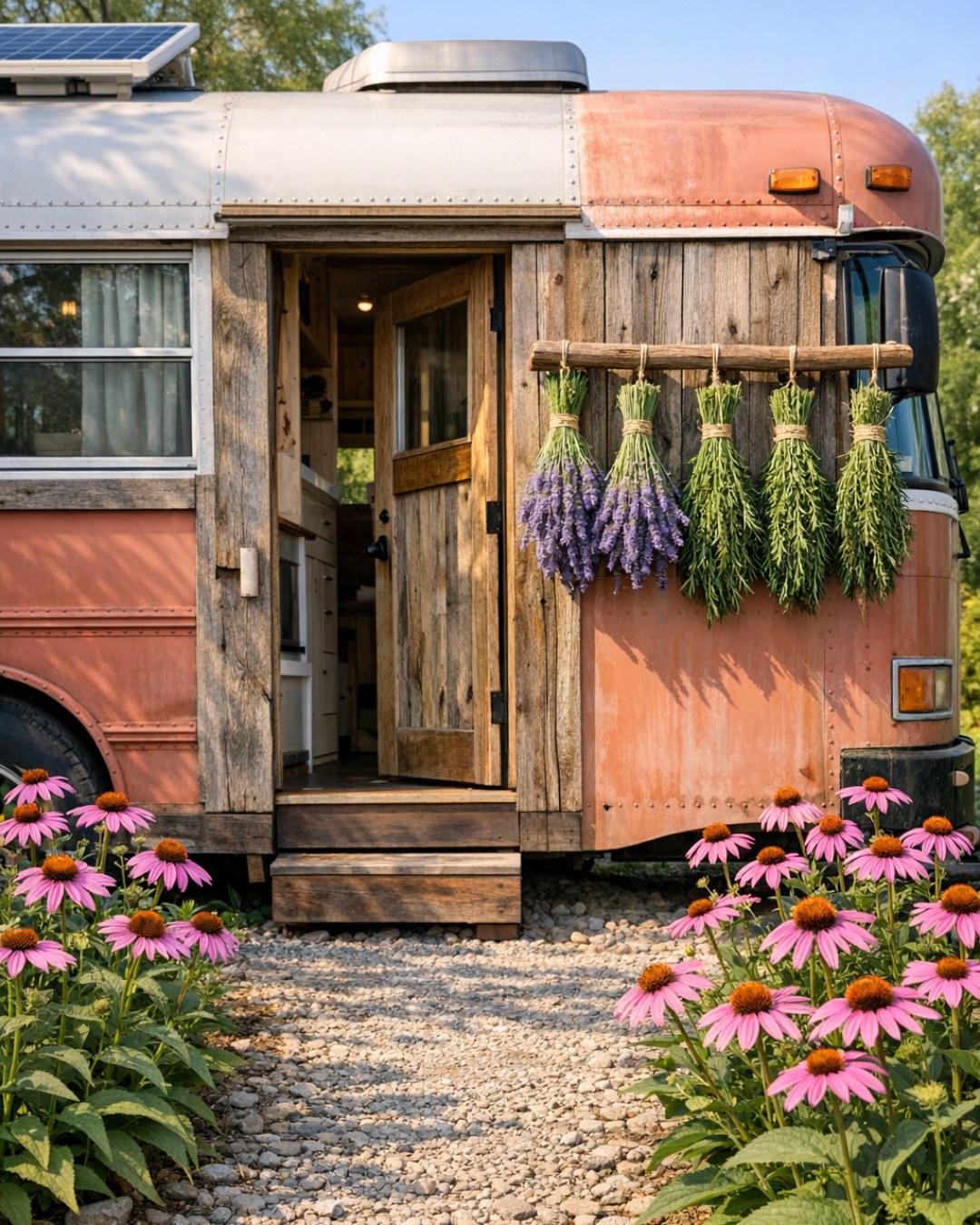
From the outside, the bus keeps enough of its original character to feel honest, while the redesign softens it into something welcoming and residential. The body is finished in a muted cream with warm olive undertones, paired with matte black window trim and a natural wood entry door that immediately changes the mood from utility to home. I especially like the way the lines are handled: the long profile is broken up with planter boxes, a slim retractable awning, and rooftop solar panels that sit neatly rather than announcing themselves. It feels practical, yes, but also cared for, in the way a freshly painted barn or a well-built chicken coop feels cared for.
The styling avoids fussiness and leans into durable beauty. Textured metal details, sturdy outdoor lighting, and simple steps up to the entrance make the whole exterior feel grounded despite its mobile bones. If this bus were parked at the edge of a meadow or beside a grove of trees, it would belong there easily. The palette is restrained and earthy, and that restraint pays off; instead of gimmick, you get quiet confidence, the kind that suggests the interior has been planned by someone who understands both beauty and weather.
Living Room
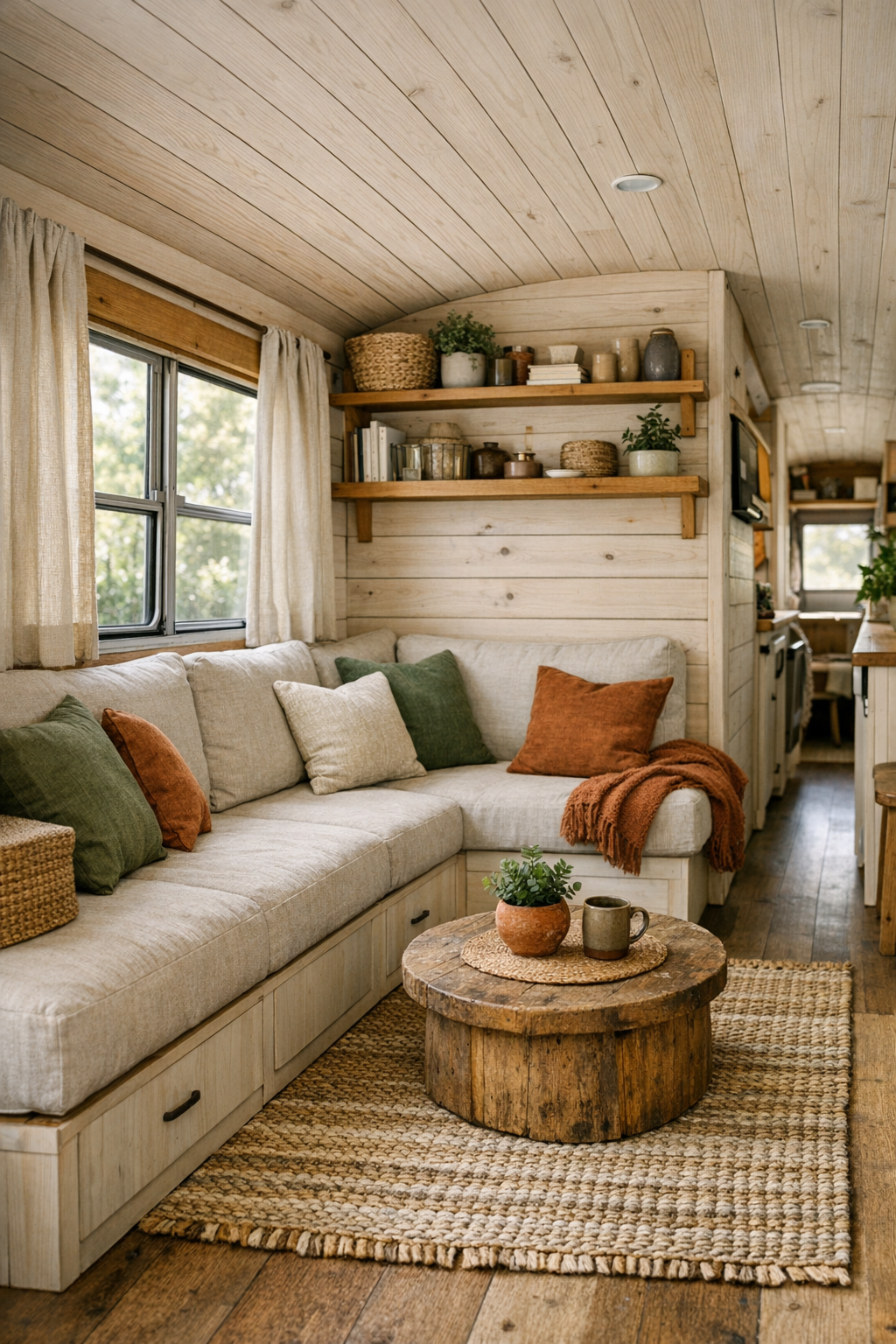
The living room is arranged with the kind of discipline small spaces require, though it never feels severe. A built-in bench sofa runs along one side beneath the windows, upholstered in a durable oatmeal linen with storage tucked below. Opposite, slim open shelving in honey-toned oak keeps books, baskets, and a few useful objects within reach without closing the room in. The walls are wrapped in pale wood planks that bounce light around the length of the bus, and the ceiling is kept bright, which gives the whole area an airy lift. I can just imagine sitting here in the late afternoon with a cup of coffee, watching the light stripe across the floor.
Texture does much of the work in making this space feel lived in. A woven wool rug softens the narrow walkway, while cushions in faded green, rust, and cream bring in a gentle homespun palette that feels rooted in field and harvest. The lighting is layered thoughtfully: petite black sconces for evening, a small reading lamp near the bench, and generous daylight pouring through the original bus windows, now dressed in simple flax curtains. Rather than trying to disguise the proportions, the room embraces them, creating a cozy sitting area that feels a bit like a sleeper car and a bit like a farmhouse keeping room.
Dining Room
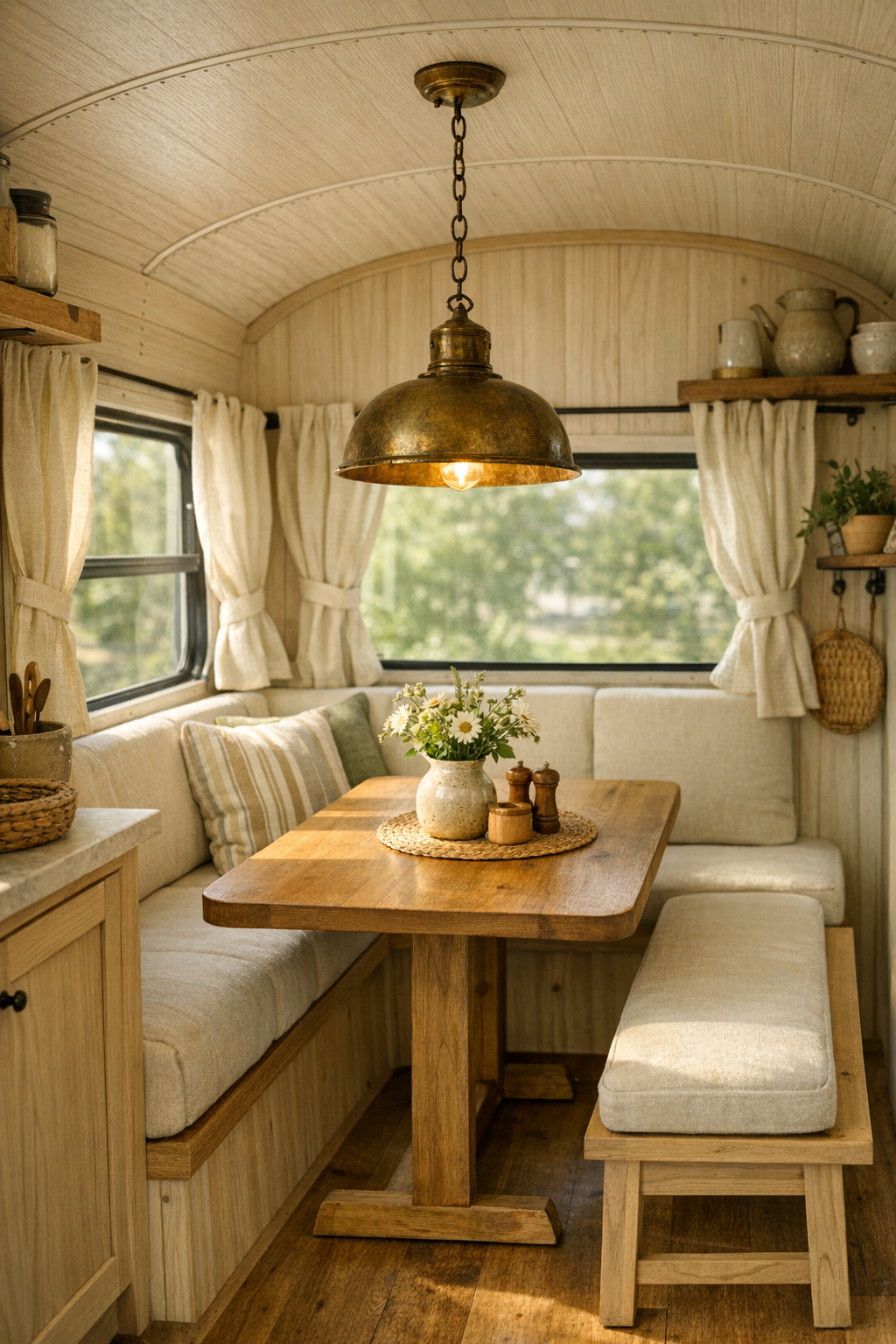
The dining area is modest in size but full of charm, tucked between the living room and kitchen like the heart of an old family home. A compact banquette is built into one wall, paired with a solid wood table whose rounded corners make movement easier in the narrow footprint. Across from it sits a simple bench or two lightweight chairs, easy to shift around as needed. The joinery here matters: the table base is substantial without being bulky, and the banquette back is shaped just enough to feel comfortable through a long meal or a slow morning of letter writing and planning.
What I love most is how the dining corner manages to feel ceremonial without wasting an inch. A small pendant in aged brass hangs low over the tabletop, giving the space a soft golden pool of light in the evening. Underfoot, the flooring transitions seamlessly from the living room, but the dining nook feels defined by textiles and proportion rather than hard visual breaks. A narrow ledge nearby holds crockery, a little crock of wooden spoons, perhaps even a jar of wildflowers, and suddenly this little table feels ready for biscuits, soup, cards, and conversation all at once.
Kitchen
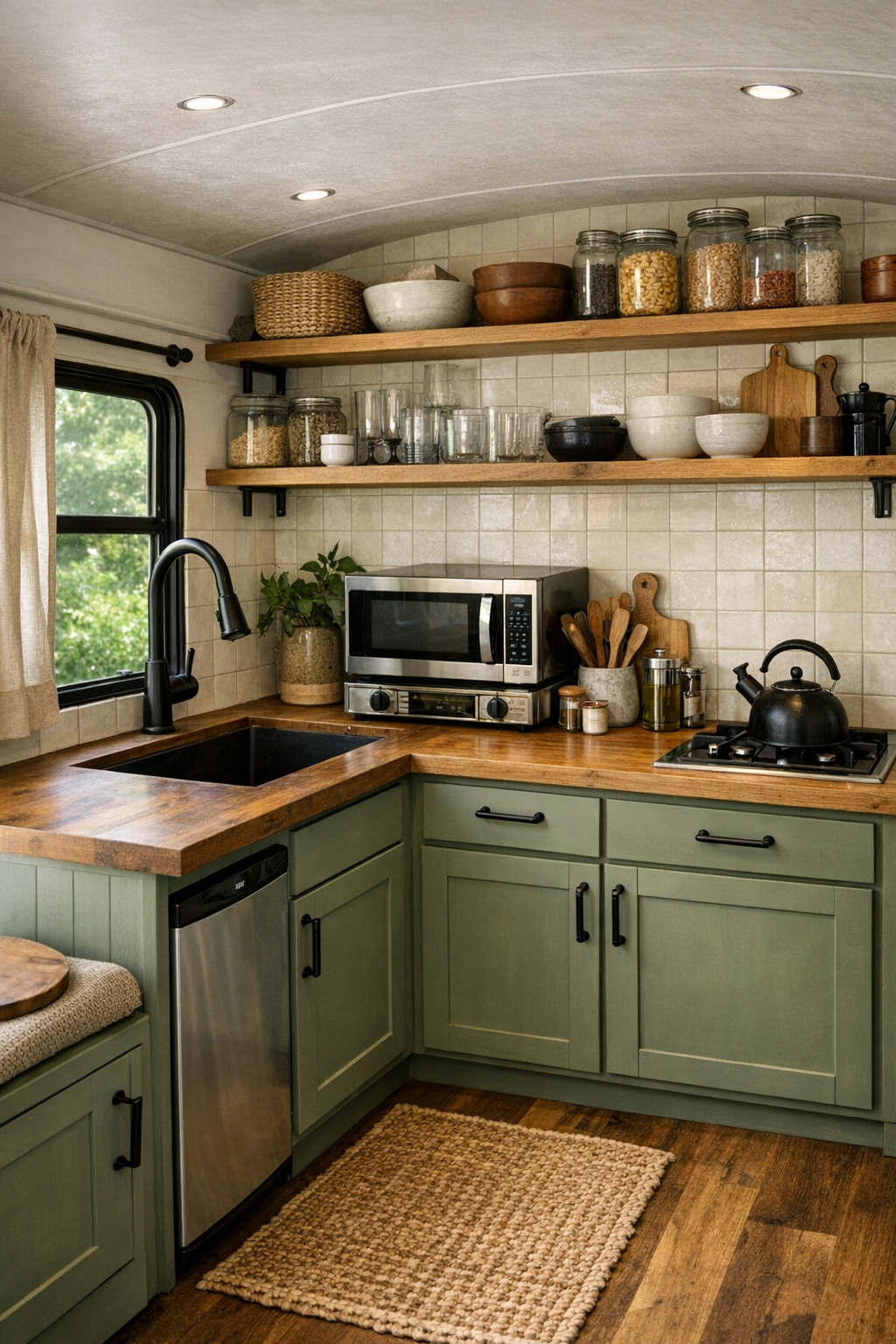
The kitchen is where this bus truly shows off its self-sufficient spirit, and I must admit it won me over immediately. It is laid out in a tidy galley, with cabinetry running in clean lines and every storage cavity thoughtfully claimed. Lower cabinets in a muted sage green anchor the room, while upper shelves in natural oak keep everyday dishes visible and easy to reach. The countertop appears to be butcher block or a matte composite with the same visual warmth, and the backsplash is done in simple square tile, likely a soft cream, which reflects light beautifully without feeling shiny or urban. It is the sort of kitchen that suggests real cooking, not just pretty staging.
There is an admirable sturdiness to the details: a deep sink, compact but serious appliances, durable pulls in blackened metal, and clever under-counter storage for pantry staples, composting, and tools. A rail for hanging utensils and a magnetic strip for knives save space while adding a workshop neatness I always appreciate in hardworking kitchens. The windows keep the galley from feeling enclosed, and I imagine herbs on the sill, bread cooling on the counter, and a pot of beans simmering while rain taps the roof. For a compact space, it carries remarkable emotional weight; it feels capable, generous, and thoroughly domestic.
Bedroom
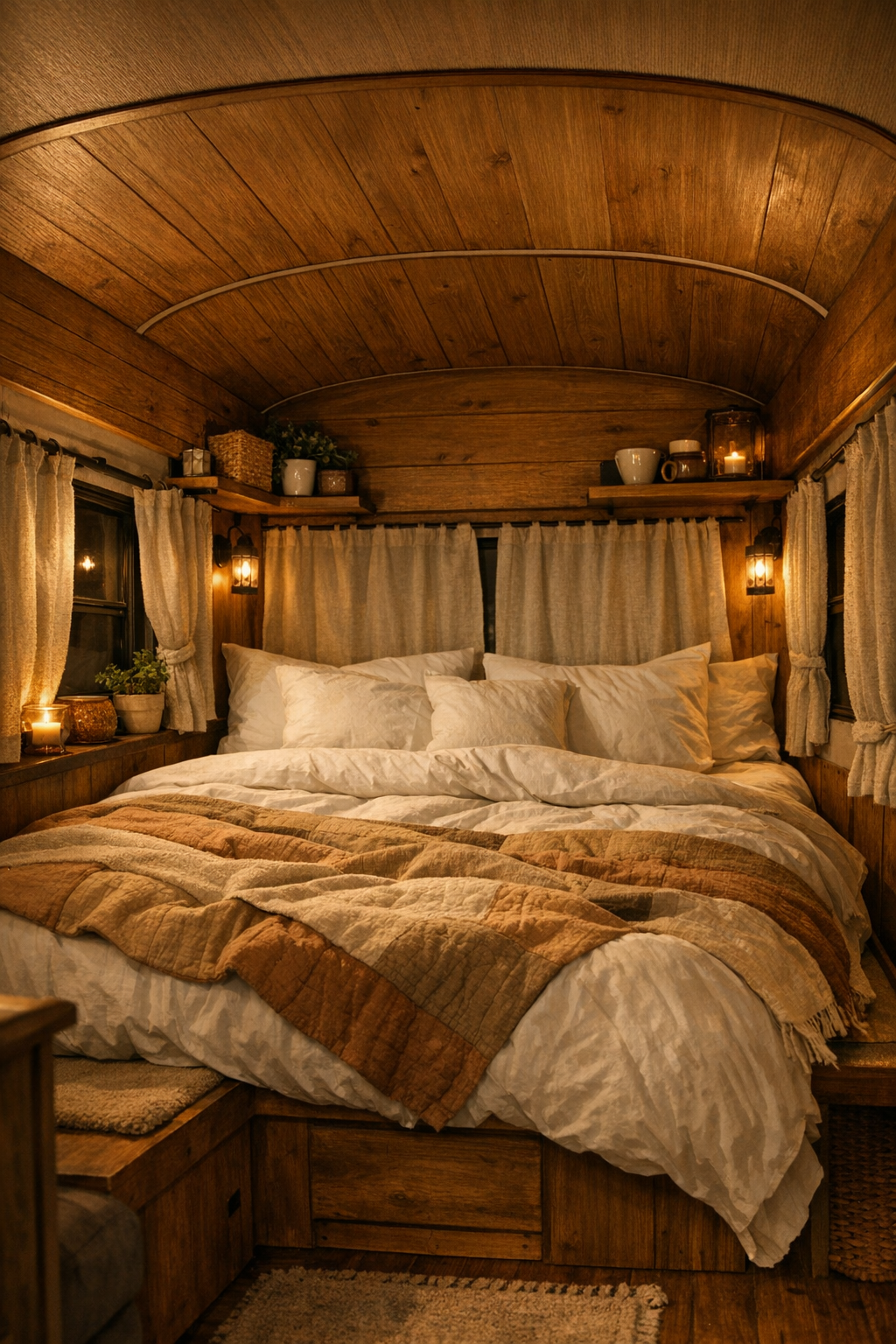
The bedroom, set toward the quieter end of the bus, has the hushed feeling of an alcove made for rest. The bed platform is likely built in, with drawers or cubbies below, and dressed in crisp white bedding layered with a quilt in soft earth tones. Wood paneling continues through the space, but here it is paired with a slightly deeper color palette—perhaps moss, clay, and weathered flax—to make the room feel grounded and sleepy. There may be shelving tucked into the perimeter, maybe even a small ledge for a book, glasses, and a lamp, all integrated neatly so the room stays peaceful.
What makes this bedroom work is its sense of enclosure without heaviness. Curtains, slatted dividers, or partial walls would offer privacy while still allowing the bus to breathe visually from end to end. Bedside lighting is kept low and warm, ideal for reading or winding down, and the windows are dressed more substantially here for softness and insulation. It reminds me of the best guest rooms in old country houses, the ones with quilts folded at the foot of the bed and morning light arriving gently through fabric. Small though it is, this room understands comfort.
Bathroom
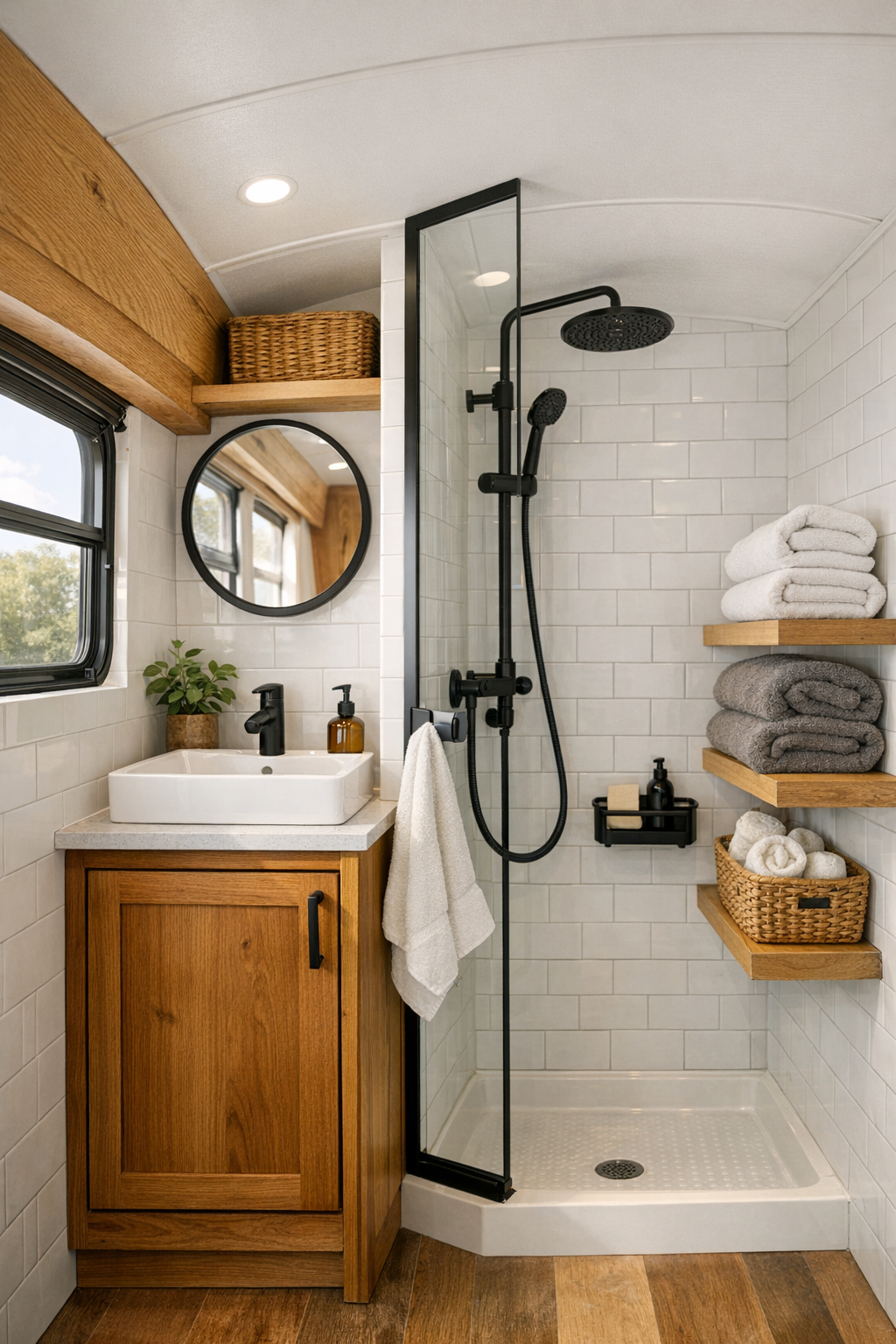
The bathroom is one of those spaces where restraint becomes luxury. Instead of trying to crowd in too many finishes, the design keeps to a simple palette of white, warm wood, and matte black accents, allowing the room to feel clean and composed. A compact vanity with a vessel sink or integrated basin sits beneath a medicine cabinet or open shelf, and every line is handled with care so the room reads larger than it is. The shower, likely enclosed in glass or a light curtain, is finished in practical tile that is easy to maintain and brightens the entire nook.
Even here, the self-sufficient intention is evident. Storage is tucked vertically, hooks are placed exactly where they are needed, and fixtures are selected for efficiency without looking institutional. I can imagine a little wooden stool, neatly folded towels, and perhaps a small window letting in the kind of daylight that makes a tiny room feel fresh after a morning wash. There is no extravagance here, but there is dignity, and I think that matters more. A bathroom like this tells you the home has been thought through from habit to habit, not just surface to surface.
Other Areas
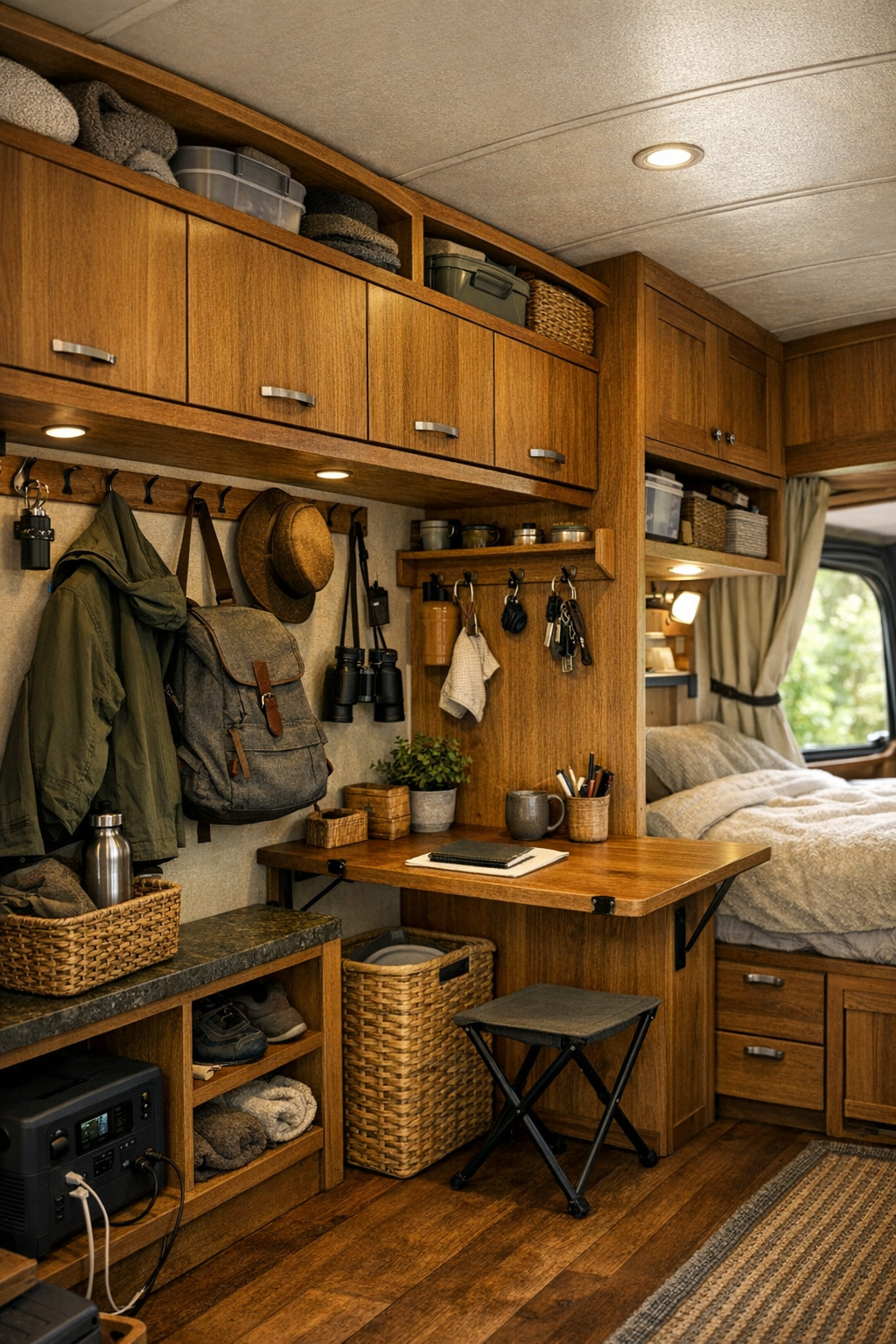
Beyond the main rooms, this bus seems to shine in its in-between spaces, and that is often where a small home proves its worth. The entry likely includes a hardworking drop zone with hooks, shoe storage, and maybe a narrow cabinet for coats, tools, or pantry overflow. Overhead compartments are designed to look more like custom millwork than transport leftovers, blending right into the architecture. I would not be surprised to find a fold-down desk, a utility closet with laundry functions, or tucked-away systems for water, batteries, and supplies, all handled with the same neat practicality my generation has always admired in a well-run household.
These supporting areas give the home its self-reliant backbone. They allow the pretty rooms to stay pretty because the work of daily living has someplace to go. I especially appreciate when a design remembers that boots need drying, jars need storing, linens need folding, and winter layers need hanging somewhere sensible. In that respect, this bus feels deeply familiar to me. It carries the old rural wisdom that a home should not only look good in the afternoon light, but also help you through mud season, supper, and Monday morning.
Why You'd Live Here
You would live here if you believe a home does not need excess to feel rich. This bus offers beauty with purpose, comfort without waste, and a style that honors the old virtues of thrift, craftsmanship, and self-reliance. Every room appears to earn its keep, and yet there is still softness everywhere—in the wood grain, the textiles, the lighting, and the gentle country palette that makes the space feel settled rather than experimental.
For me, the appeal is simple: it feels like a home that would support a good life. You could cook well here, rest well here, keep your things in order, and wake each morning with the landscape close at hand. It takes the humble spirit I have always loved in rural living and wraps it in smart, graceful design. That is a hard balance to strike, and this little bus manages it with an ease that is awfully persuasive.