
There is something about a home set against the hush of late summer that speaks straight to my heart, and this converted bus does exactly that. Resting into a hardworking homestead with the fields gone golden and the garden beginning to lean toward autumn, it carries a rustic off-grid spirit that feels both practical and deeply tender. The whole place has that rare balance I always admire: it is humble in footprint, but generous in feeling, with weathered wood, soft light, and thoughtful craftsmanship making every inch count.
What makes this little home so special is the way it turns necessity into beauty, which is often the best kind of design if you ask me. Though this is a concept design, it feels grounded in the real comforts people have always needed: warmth, usefulness, storage, and a place to sit down at the end of the day and breathe. The bus keeps its narrow bones, but inside it opens up with a calm, earthy palette and a lived-in sweetness that reminds me of old farm kitchens where nothing was wasted and everything had a purpose.
Exterior
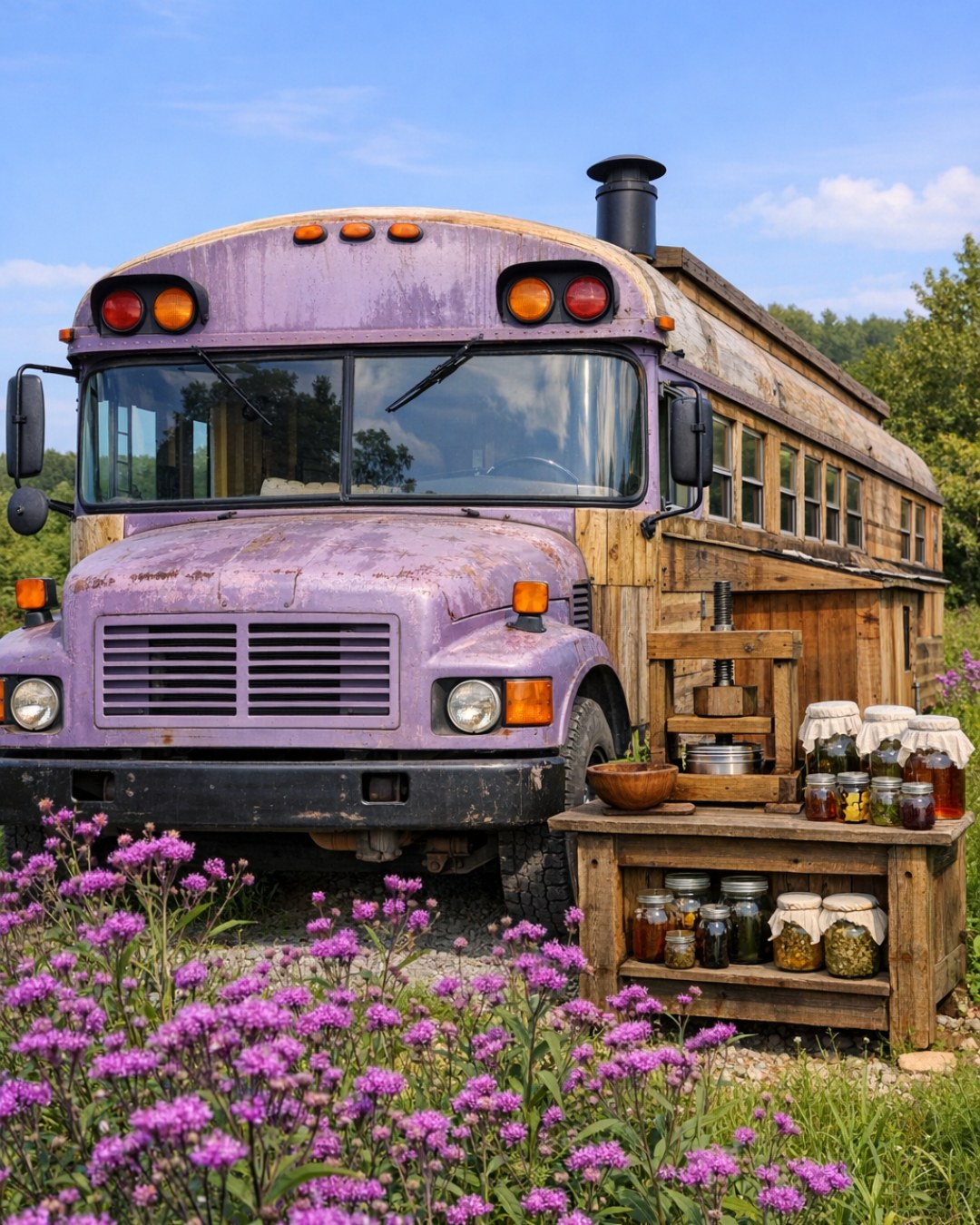
From the outside, the bus has been softened into the landscape instead of made to shout over it, and I think that is one of its finest qualities. The original shape is still legible, but it has been wrapped in character through natural wood cladding, matte painted metal, and carefully preserved windows that let in the light without losing the vehicle's history. The palette leans into late-summer country colors: wheat gold, dusty sage, warm cream, and the brown-black tone of iron left out in the weather. A small awning and a simple entry stoop make it feel less like a machine and more like a true front porch, which in rural life is often where a home first earns its welcome.
The setting does a great deal of the storytelling here. Gravel underfoot, a few raised garden beds nearby, stacked firewood, a rain barrel, and a line of practical hooks or shelves outside all support the off-grid life without fuss. I can picture the exterior materials aging beautifully through the seasons, taking on the silvering and patina that always make a place feel earned. Nothing appears overdesigned; instead, the bus settles into the homestead with the quiet confidence of something repaired by hand, improved with care, and meant to serve for years.
Living Room
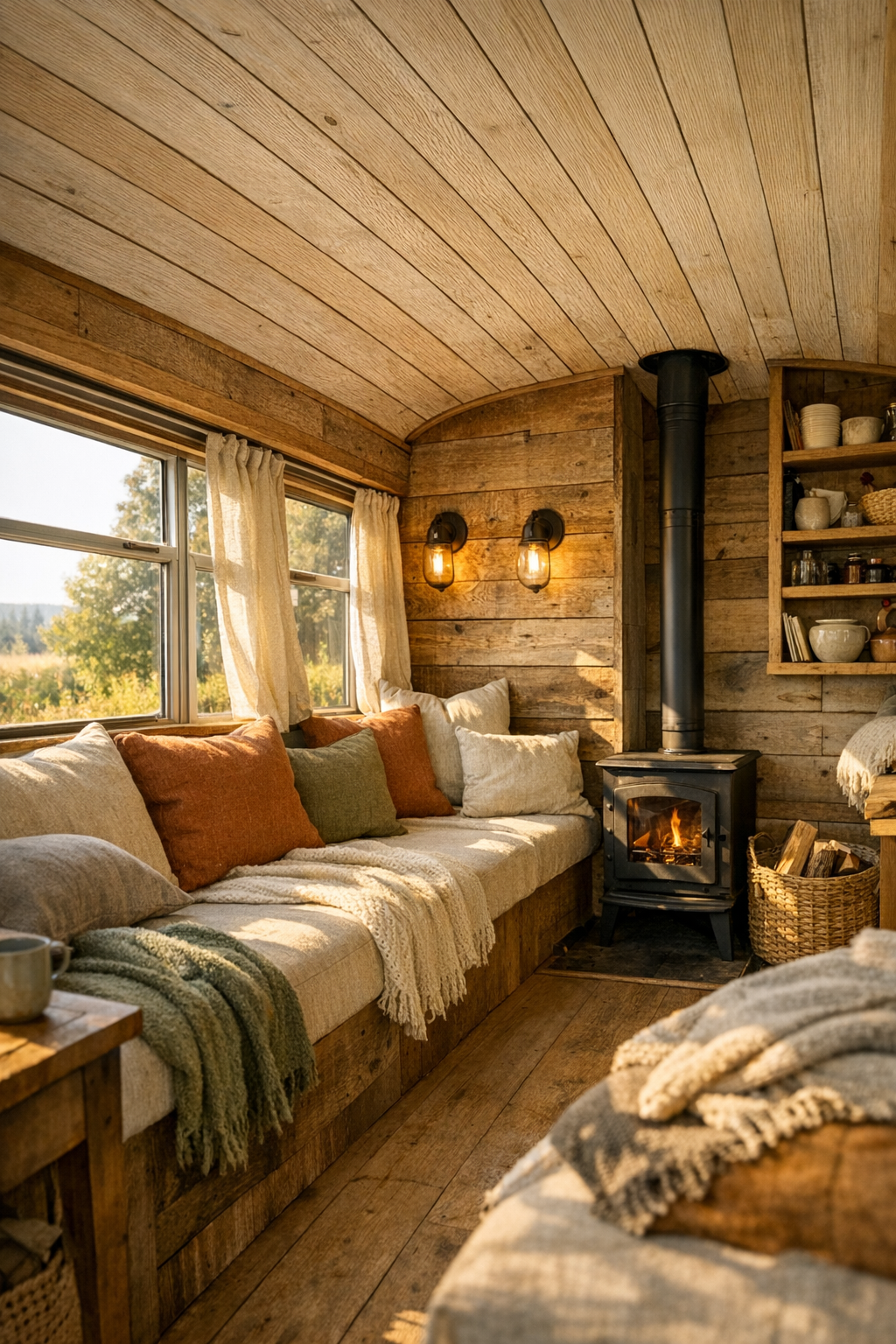
Inside, the living room makes marvelous use of the bus's long, narrow form by treating it not as a limitation but as a rhythm. A built-in bench sofa runs along one side beneath the windows, layered with oat-colored cushions, faded plaid throws, and small linen pillows in rust and moss. Across from it, a compact wall finished in tongue-and-groove wood creates just enough visual grounding for open shelving, a tiny stove, and a ledge for crocks, books, and a lantern or two. The ceiling, likely finished in pale wood planks, lifts the eye upward and keeps the room from feeling pinched.
What I like most is the texture story: rougher reclaimed wood against smoother waxed surfaces, soft wool and cotton against blackened metal, and sunlight washing over everything in the afternoon. The lighting appears thoughtfully layered, with simple sconces, a few warm under-shelf lights, and daylight as the true star of the room. Furniture is modest and hardworking, with perhaps a small stump-style table or a built-in chest doubling as storage. It feels like a room made for reading while supper simmers, for muddy boots set by the door, and for conversations that don't need any hurry.
Dining Room
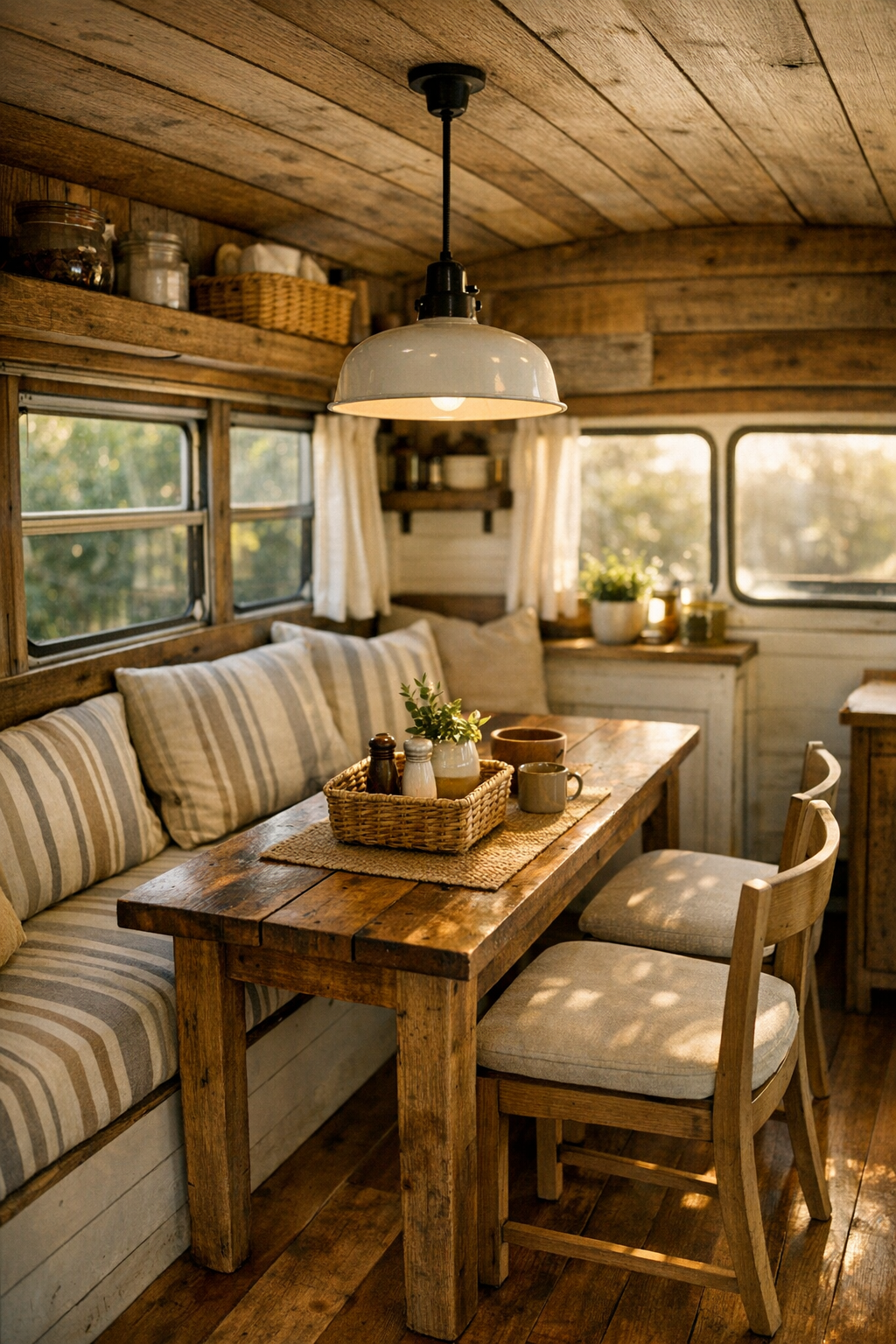
The dining area is likely tucked into a clever midpoint of the bus, where circulation and gathering have to work hand in hand. I imagine a built-in banquette paired with a narrow farmhouse table, perhaps topped in solid wood with all the knots and grain left visible. There may be a bench on one side and compact chairs on the other, keeping the arrangement flexible without crowding the aisle. In a home like this, every meal feels more intentional, and the scale of the room encourages that old-fashioned closeness I grew up with, where people pass dishes elbow to elbow and stay seated long after the plates are cleared.
Design-wise, the dining room continues the home's gentle country language with enamel pendant lighting, woven seat pads, and maybe a simple runner in muted stripes. A ledge for jars, a wall hook for a basket, or a shallow cabinet for linens would make perfect sense here, offering storage without visual heaviness. The color palette remains warm and grounded, but perhaps a touch lighter around the table to reflect the daylight and keep the space cheerful. It feels less like a formal dining room and more like the heart of daily living, which, to my mind, is exactly what a dining space ought to be.
Kitchen
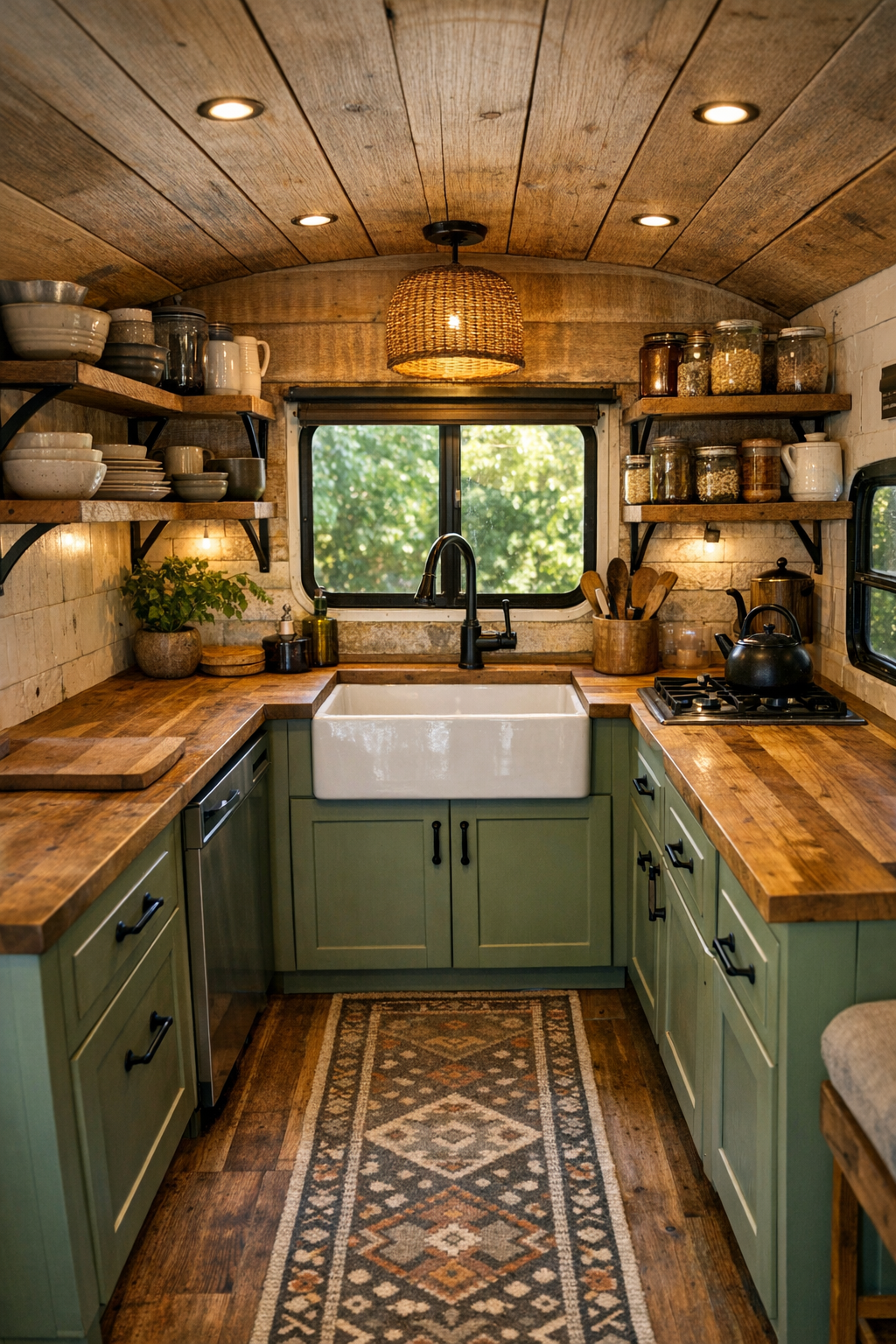
The kitchen is where this home truly shines for me, perhaps because I have always believed a kitchen tells the deepest truth about how a place is meant to be lived in. Here, the cabinetry is likely custom-built to fit every curve and inch, painted in a softened green or warm cream and paired with butcher-block counters that bring instant warmth. Open shelving keeps everyday pieces within easy reach: stoneware mugs, stacked plates, glass jars of grains, and a crock for wooden spoons. The sink, almost certainly set beneath a window, gives the cook a view outside, and that small grace can make ordinary work feel like part of the day rather than apart from it.
There is a practical beauty to the finishes that feels rooted in old rural kitchens. A simple apron-front sink, dark metal hardware, and perhaps a slim runner underfoot all contribute to a room that is unfussy but full of soul. I can imagine compact off-grid appliances integrated neatly, with thoughtful storage hidden beneath benches, in drawers, and overhead. The lighting would matter greatly in a narrow galley like this, so under-cabinet glow, daylight from both sides, and a modest ceiling fixture keep the workspace bright and crisp. It is the kind of kitchen where bread could cool on the counter, herbs might dry by the window, and a pot of beans would never feel out of place.
Bedroom
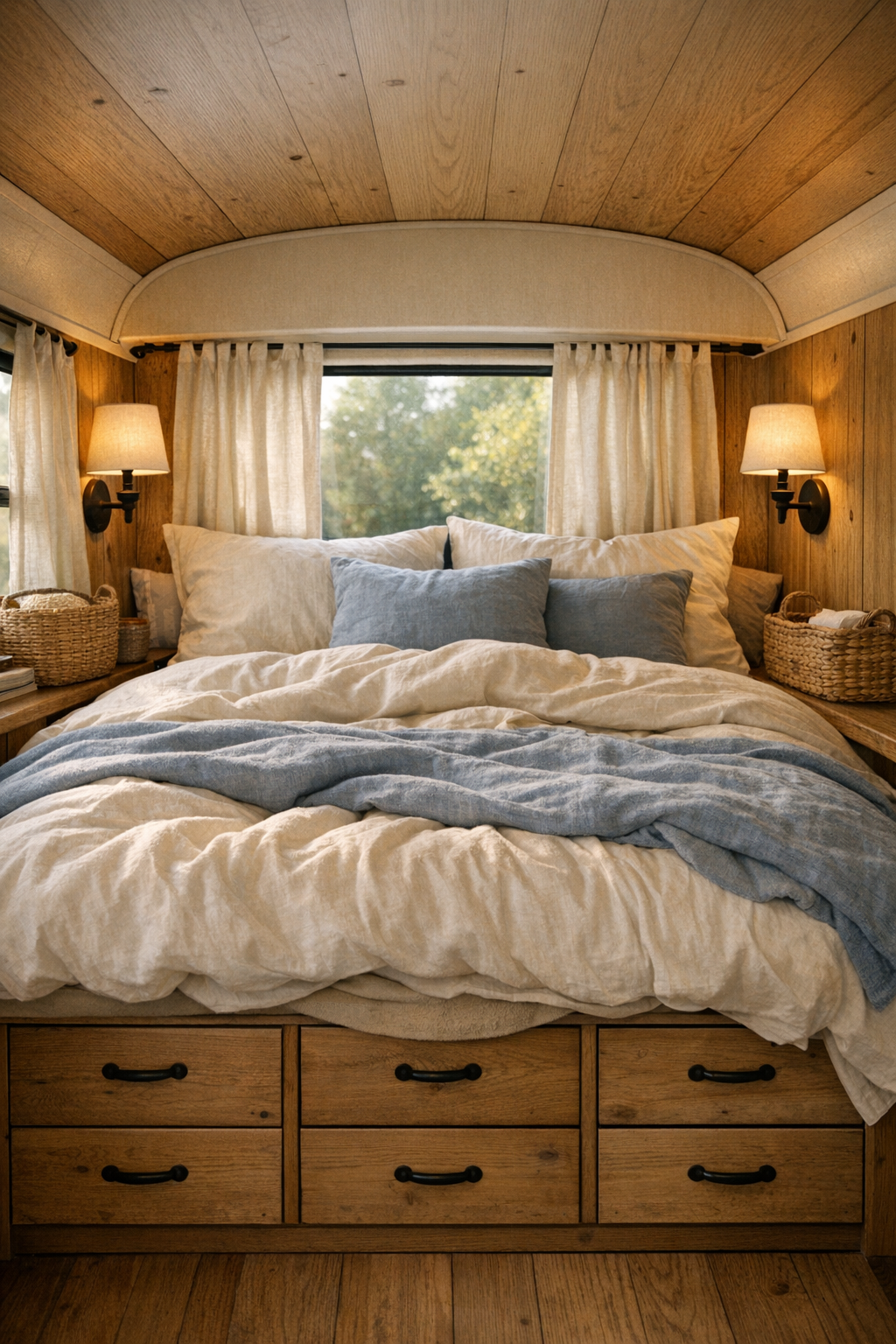
The bedroom carries the quietest mood in the bus, tucked away like a little secret at the end of the day. I imagine a built-in bed framed by wood paneling, with drawers below and shelves above so that storage becomes part of the architecture rather than an afterthought. Bedding in washed linen, cream quilts, and perhaps a soft brown or muted blue accent would keep the room restful without losing that homestead warmth. Because the windows are so important in a bus conversion, simple curtains in natural fabric would soften the edges and add privacy while still letting the morning light drift in gently.
What saves a small bedroom from feeling cramped is restraint, and this design seems to understand that beautifully. Instead of too much furniture, there are integrated surfaces: a slim reading ledge, a niche for a book, a peg rail for clothes, and one or two carefully chosen sconces. The materials remain tactile and honest, with wood grain, woven baskets, and perhaps a small wool rug underfoot. It feels like a room built for deep sleep after a long day outside, and there is a plainspoken luxury in that which I find more appealing than anything showy.
Bathroom
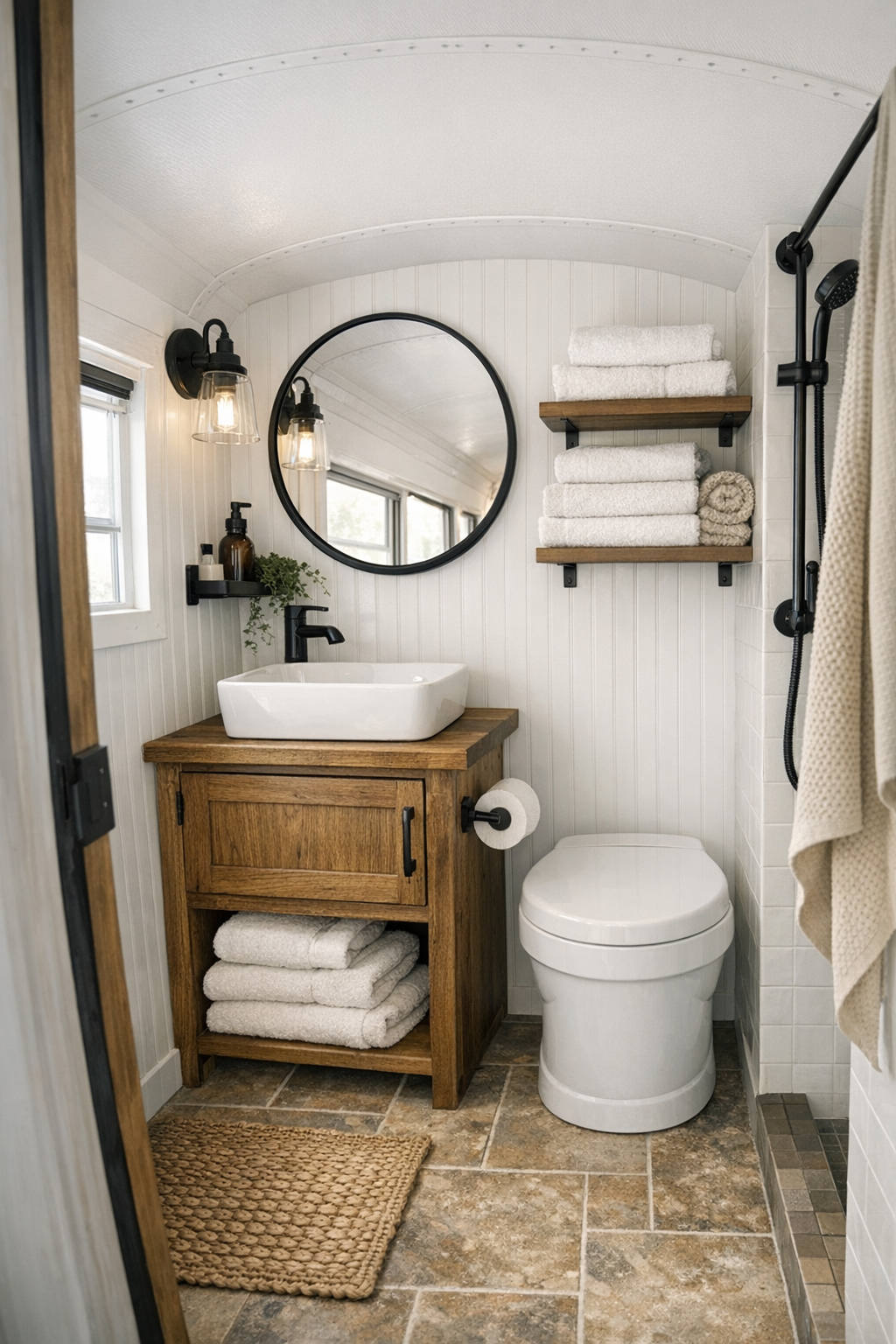
The bathroom may be small, but it appears to have been treated with the same care as the rest of the home, and that makes all the difference. A compact vanity in wood or painted finish, a simple vessel or farmhouse-style sink, and black iron fixtures give the room a clean, grounded look. I could easily see beadboard or narrow vertical paneling on the walls, which is a fine trick for adding character without visual clutter. If there is a shower, a clear divider or soft curtain would help keep the room feeling open, while tile in a muted earth tone would anchor the floor with durability and charm.
In spaces like this, small details do the heavy lifting. A round mirror, a ledge for soaps and folded towels, a basket tucked below the vanity, and warm light against natural materials all contribute to a bathroom that feels cared for rather than merely efficient. There is likely a balance of crisp surfaces and softer elements, with cotton towels, brushed hardware, and perhaps one little stem of greenery to brighten the corner. It is practical, yes, but also peaceful, which is something every bathroom ought to strive for.
Other Areas
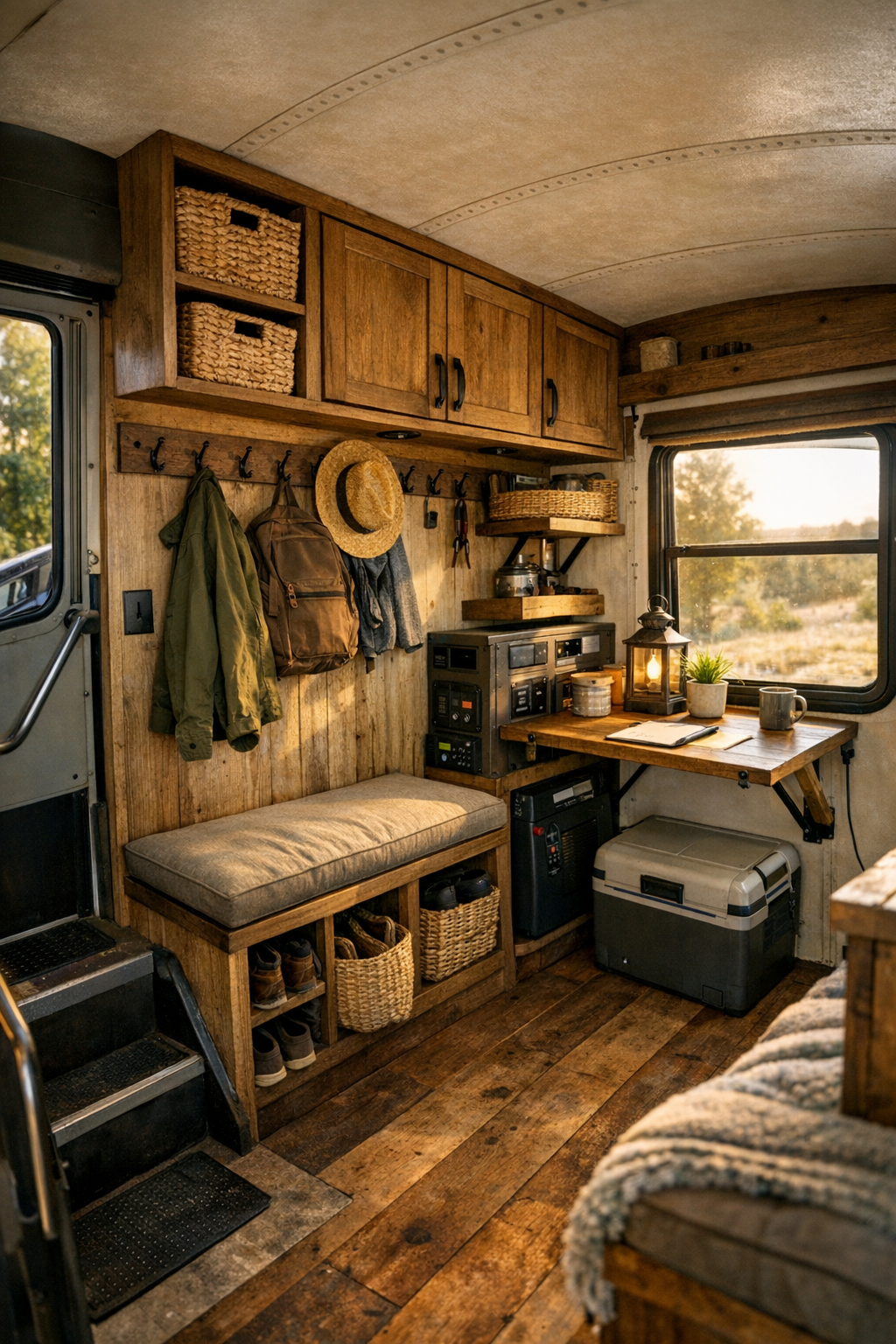
Beyond the main rooms, what gives this bus its true polish are the in-between spaces and practical touches. The entry likely includes a narrow boot area with hooks, cubbies, and a bench lid for storing outdoor gear, all of it tailored to country living. Overhead compartments may have been reworked into handsome storage with wood fronts, while odd corners are turned into shelves, pantry slots, or hidden utility cabinets for off-grid systems. I always appreciate when a home respects the daily mess of life and plans for it ahead of time, and this one seems to do that with a very steady hand.
There may also be a tiny work nook or reading corner, perhaps just a fold-down desk by a window with a stool and a lamp, but enough to write a note, plan the garden, or sit quietly with coffee at first light. Transitional spaces are kept visually calm through repeated finishes, which helps the whole bus feel cohesive instead of chopped into tiny compartments. The consistency of wood tones, iron hardware, woven storage, and soft neutral textiles ties everything together. It is a reminder that good design is not only about the main moments; it is also about the little places where a home supports the rhythm of ordinary days.
Why You'd Live Here
You would live here because it proves that a small footprint does not have to mean a small life. This bus offers beauty without waste, comfort without excess, and a close relationship to the land that so many homes try to imitate but never quite achieve. Every room has been shaped with intention, and that intention comes through in the honest materials, the careful storage, and the way the light is invited in at every chance. It feels handmade in spirit, even where the detailing is refined.
I think, too, that you would live here for the feeling it leaves with you. It has the same goodness I have always loved in old rural homes and farm kitchens: a sense that life can be simpler and richer at the same time. Set within the late-summer hush of a homestead, this converted bus feels rooted, resilient, and wonderfully human. It does not ask for grand gestures; it simply offers a lovely place to wake, work, cook, rest, and belong.