
This warm chestnut brown container home has the kind of presence I always appreciate: modest in scale, but deeply considered in the way it meets the landscape and the people who live in it. Set in what feels like a quiet edge-of-town site, it pairs the sturdy geometry of repurposed steel with a softer, more welcoming palette, so the whole place reads less industrial and more tailored retreat. As a concept design, it imagines senior-friendly living without making the house feel clinical or stripped of personality.
What makes it special to me is how intelligently comfort is built into the design language itself. Wide passages, low-threshold transitions, carefully layered lighting, and easy-to-navigate sightlines are all folded into a home that still feels rich with texture and warmth. The chestnut exterior sets the tone, and inside that warmth continues through wood finishes, gentle neutrals, practical built-ins, and a layout that seems to understand that the best homes support everyday routines beautifully.
Exterior
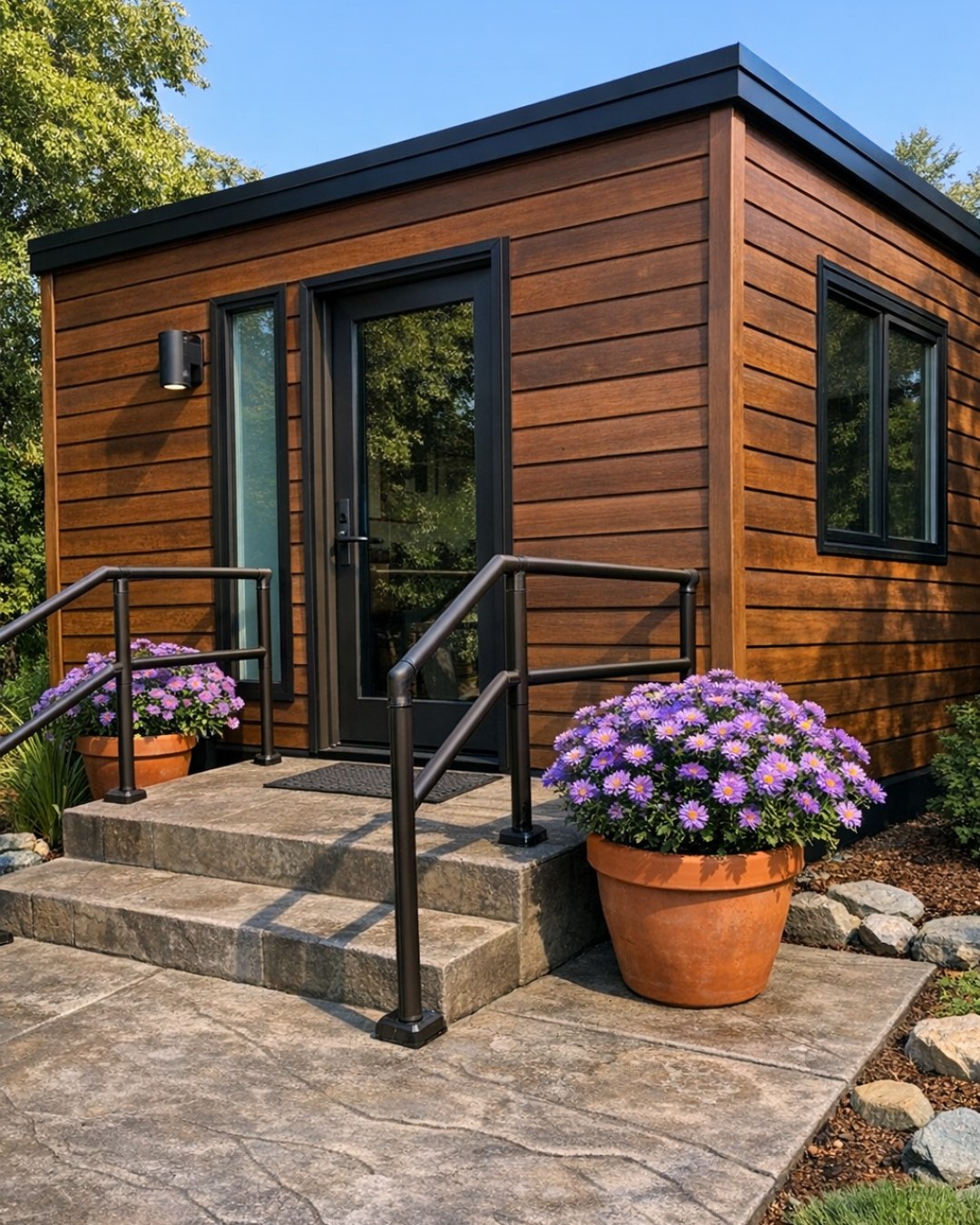
From the outside, the home embraces its container origins while softening them with a handsome chestnut brown finish that gives the metal cladding a more residential, grounded character. I like the way the horizontal lines of the containers are left legible, but not overemphasized; they provide rhythm without making the structure feel stark. A simple, gently sloped path to the entrance, broad landings, and a covered front approach immediately communicate accessibility, yet they are handled with enough restraint that the whole composition still feels elegant rather than overtly specialized.
The detailing appears to do a lot of quiet work here. Matte black trim around the windows gives the façade crisp definition, while warm wood at the soffits and entry surround introduces a tactile note that balances the steel shell. Large windows are positioned to bring in daylight and offer clear views outward, something I always think matters in a home designed for long-term comfort. Low-maintenance planting, clean paving, and a sheltered sitting spot near the door complete the exterior with the kind of practical grace that makes the house feel settled and easy from the very first glance.
Living Room
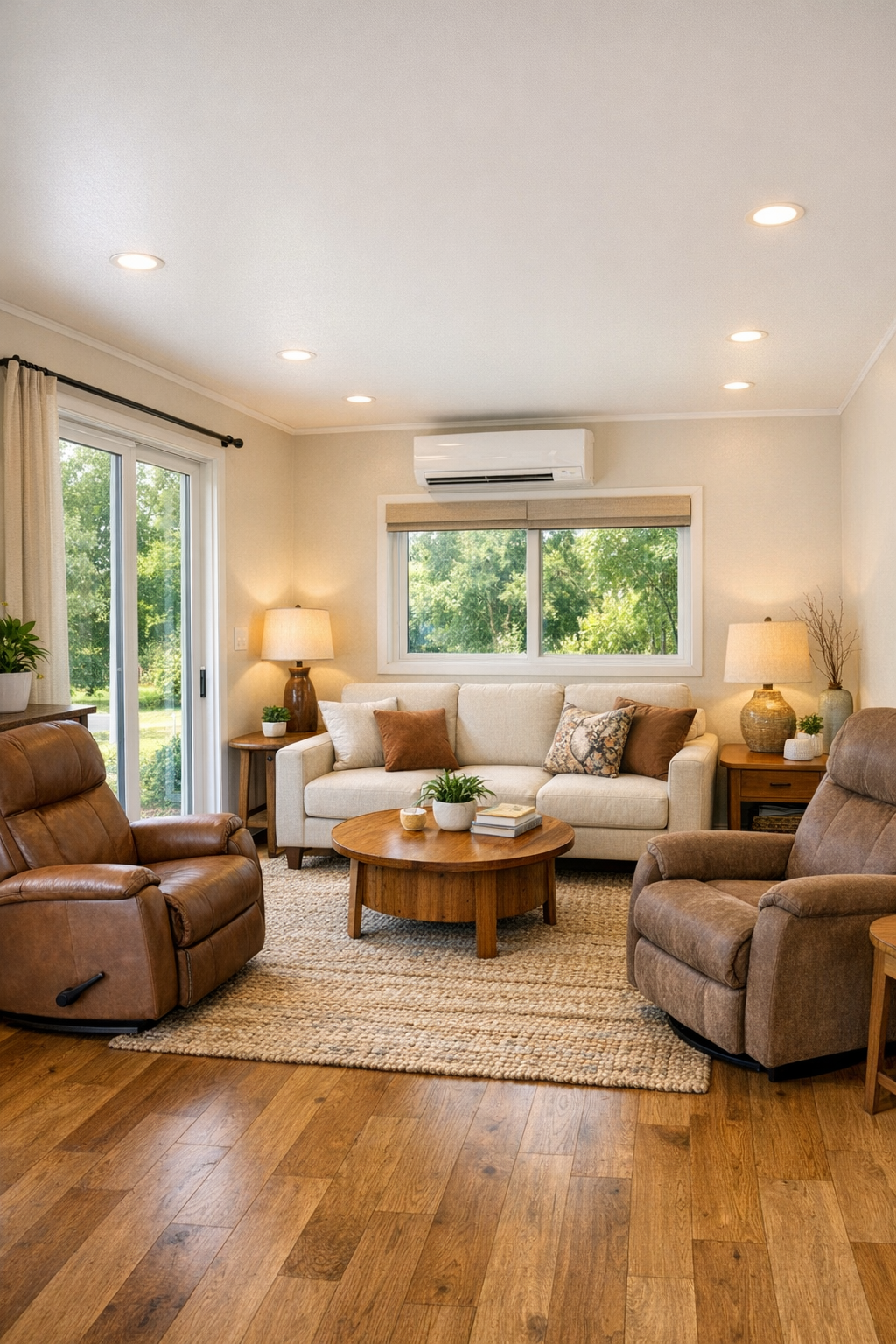
The living room feels like the heart of the home, and it understands exactly how to be calm without being dull. A soft neutral envelope of warm white walls, medium-toned oak flooring, and chestnut accents keeps the room visually connected to the exterior, while a generous area rug in a subtle woven pattern helps absorb sound and define the seating zone. I can easily imagine a sofa with supportive cushions, a pair of easy chairs with slightly higher seats for comfort, and rounded-edge tables placed with enough clearance to move through the room effortlessly.
Lighting is especially well resolved here, which I notice immediately in homes meant to serve people across changing needs. Daylight pours in through broad windows, but layered interior lighting keeps the room usable and flattering after sunset: recessed ceiling lights for overall brightness, a shaded floor lamp near a reading chair, and discreet wall lighting that softens corners. Built-in storage keeps clutter off the floor, and the furniture placement preserves open circulation, so the room feels welcoming, legible, and wonderfully unfussy.
Dining Room
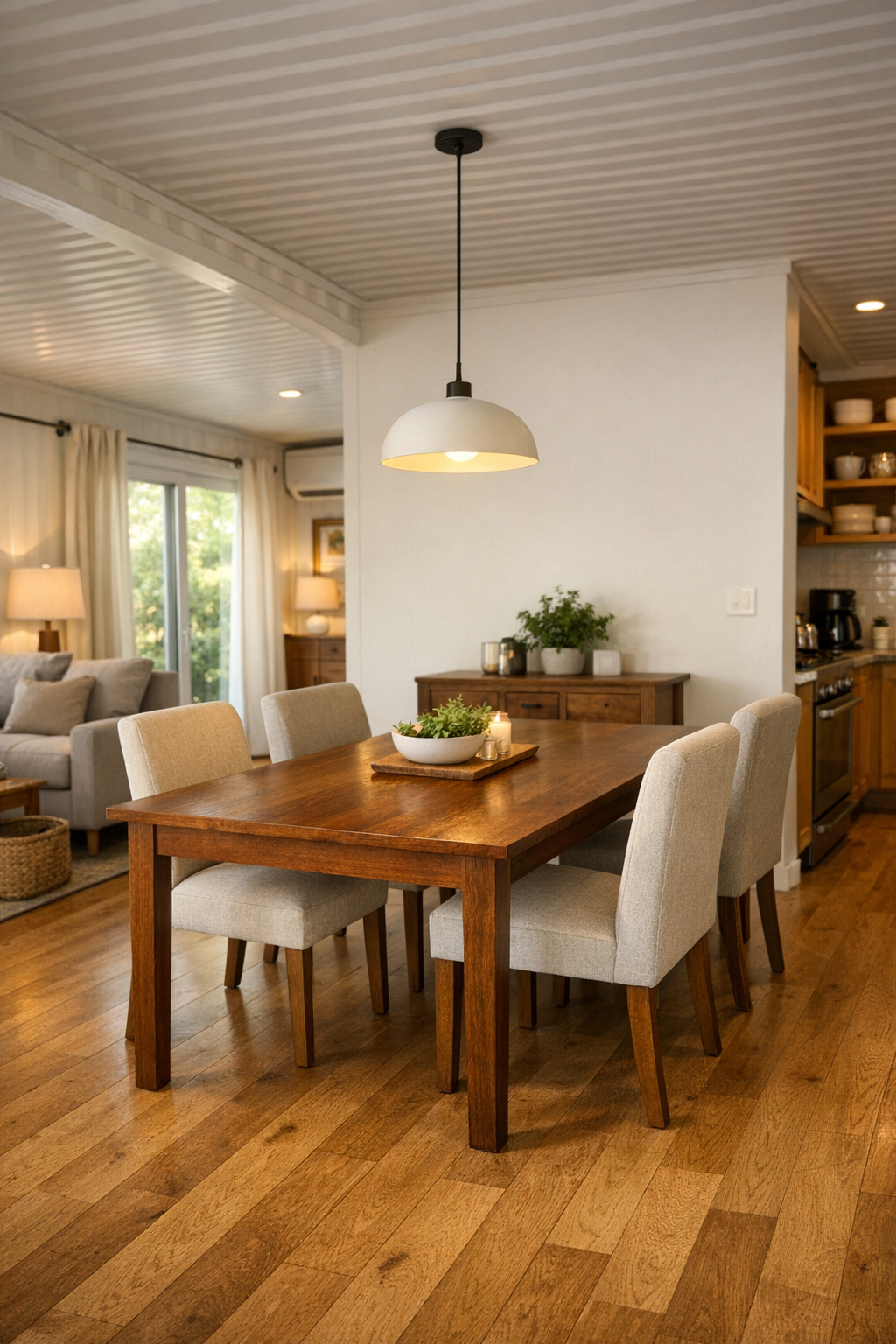
The dining area carries the same practical warmth, but with a slightly more social energy. Rather than a formal room, it feels like an extension of the living and kitchen spaces, which makes a lot of sense to me; open visual connection is not only good for entertaining, it makes daily life easier and more intuitive. A solid wood dining table in a chestnut or walnut tone anchors the space, paired with comfortable upholstered chairs that look stable, easy to sit in, and supportive enough for lingering over coffee or a long lunch.
I appreciate how the finishes likely keep contrast clear but gentle: a lighter wall color behind the table, darker wood tones at the furniture, and perhaps a simple pendant centered above to create focus without glare. There is probably enough room around the table to move comfortably even when chairs are occupied, which is one of those details that separates thoughtful design from merely attractive design. The overall impression is intimate and polished, with surfaces chosen to be durable, forgiving, and easy to maintain.
Kitchen
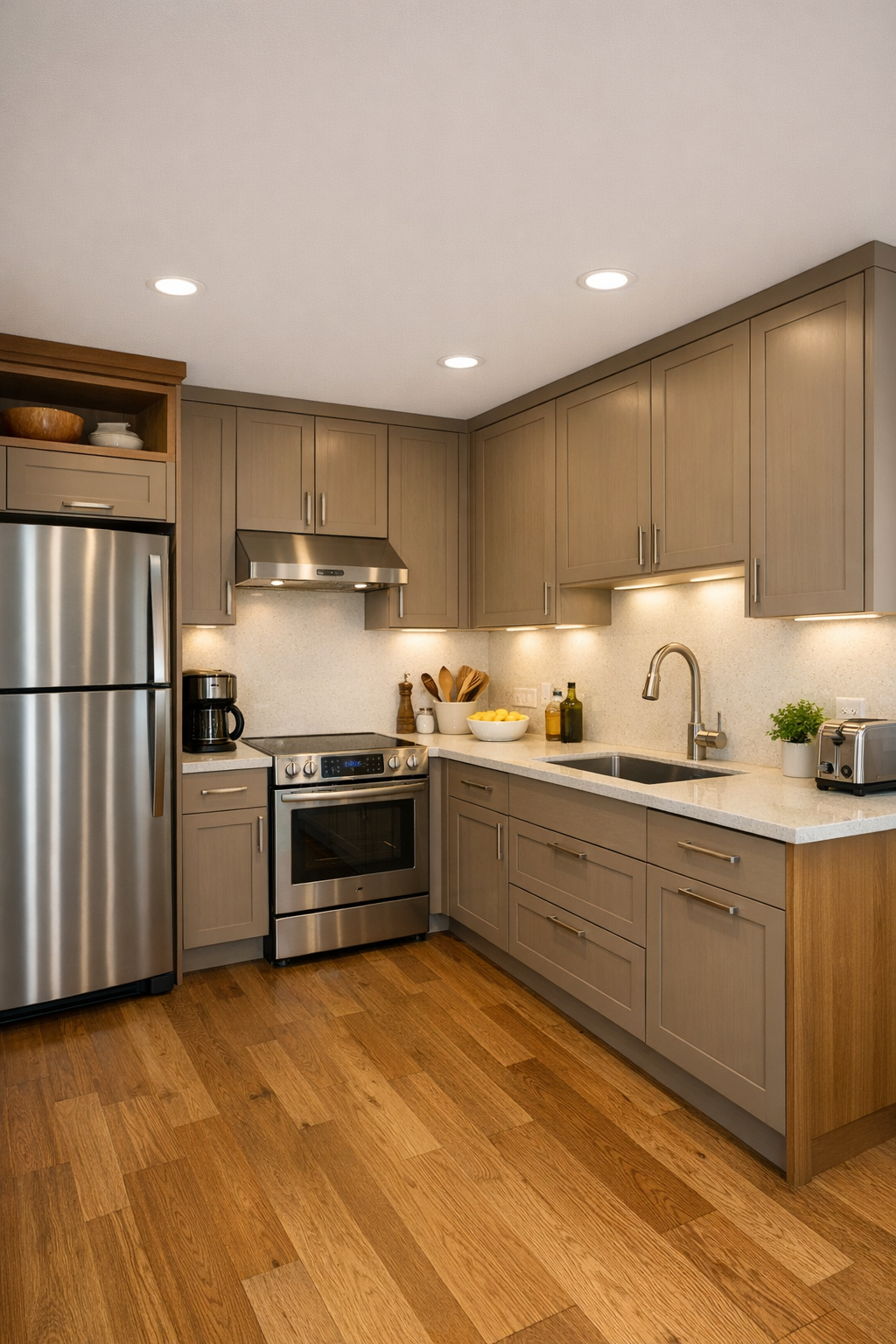
As someone who spends a lot of time thinking about how kitchens actually work, this is the room I studied most closely in my mind, and it really delivers. The layout appears compact but highly efficient, with everything arranged to reduce unnecessary reaching and turning while still allowing more than one person to be present comfortably. Flat-front cabinetry in a warm wood finish or soft mushroom tone, easy-grip hardware, and broad drawers instead of hard-to-access lower cabinets would make this kitchen especially functional for aging in place.
The countertops look best imagined in a light quartz with subtle movement, bright enough to reflect light but not so glossy that they create glare. I would expect under-cabinet lighting, a simple full-height backsplash, and appliances integrated at accessible heights wherever possible. What I love most is that practicality does not come at the cost of appetite appeal: the warm timber notes, clean lines, and uncluttered work surfaces create a kitchen that feels composed, efficient, and genuinely pleasurable to cook in.
Bedroom
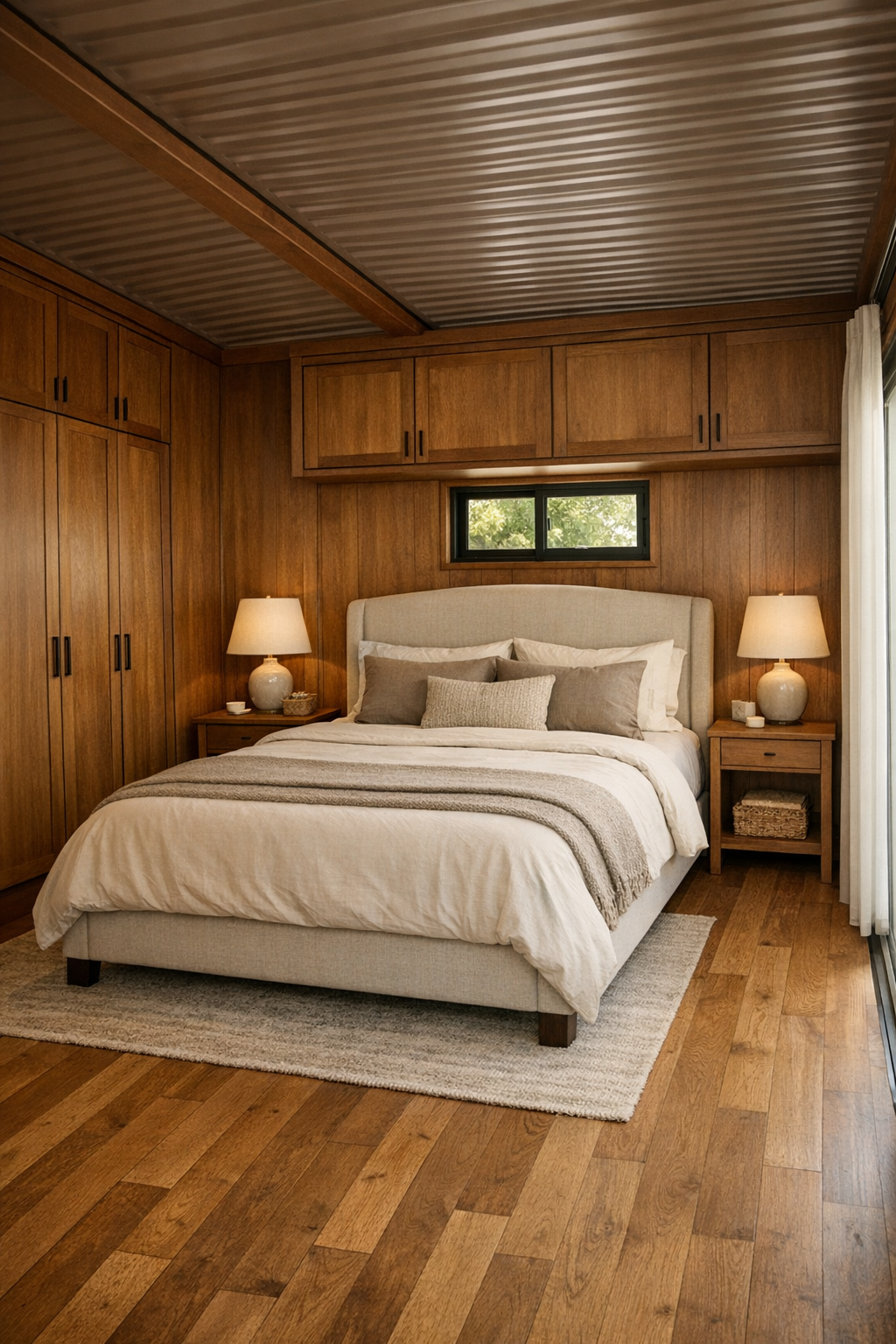
The bedroom seems designed to soothe first and impress second, which is exactly right. A restrained palette of warm ivory, oat, chestnut, and muted taupe gives the room softness without flattening it, while upholstered textures at the bed and window treatments help counterbalance the firmer lines of the container shell. I imagine a bed with a supportive, slightly taller profile for ease of getting in and out, flanked by simple nightstands with easy-reach lamps and enough surface area for daily essentials.
Storage is likely integrated intelligently, perhaps with built-in wardrobes or streamlined cabinetry that avoids bulky furniture and keeps pathways clear. Natural light feels important here, especially if the windows are scaled to maintain privacy while still making the room feel airy and connected to the outdoors. This is a bedroom that understands rest as a design problem as much as a decorative one: quiet colors, soft textures, straightforward circulation, and no visual fuss where the eye ought to settle.
Bathroom
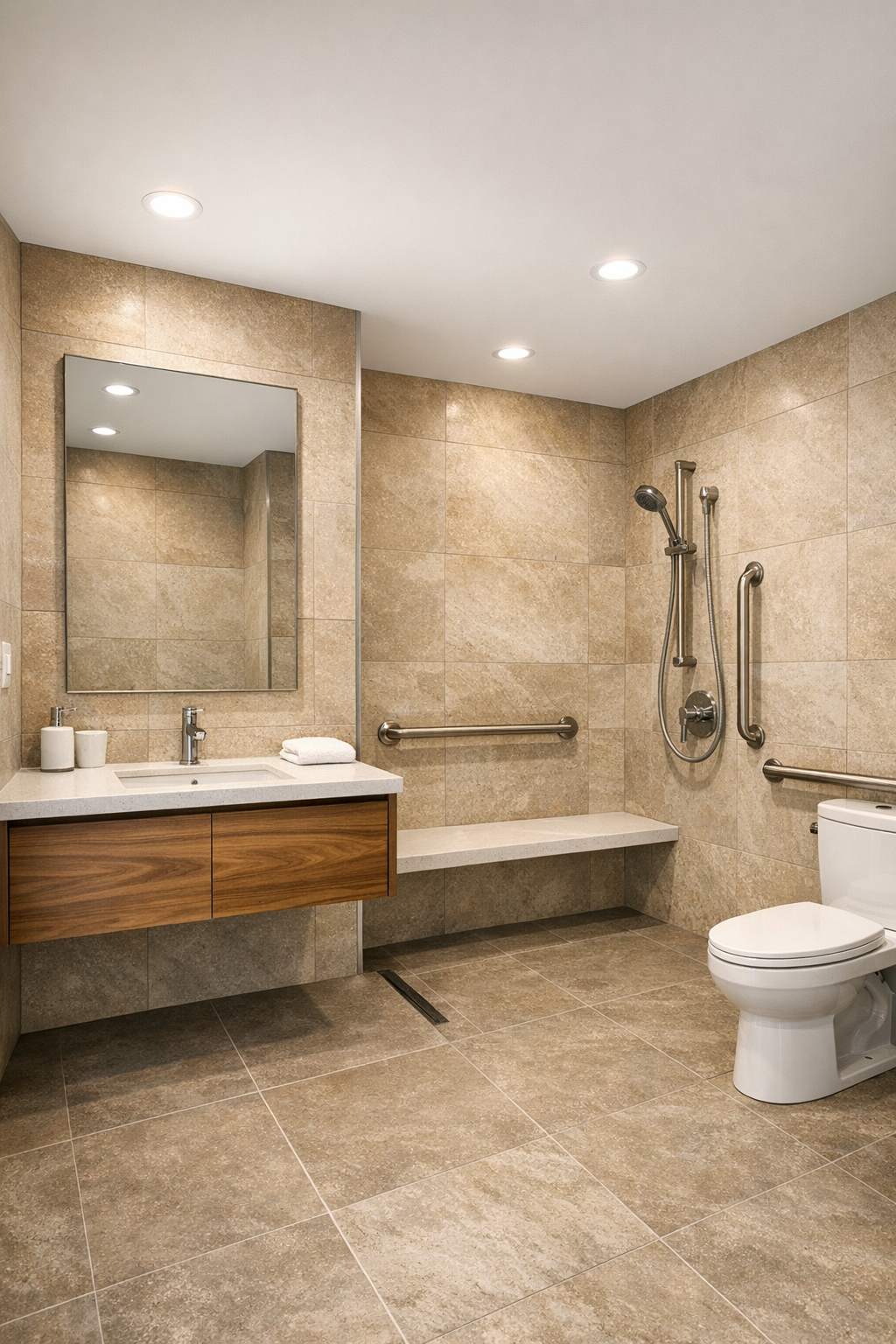
The bathroom is where senior-friendly design can either feel seamlessly luxurious or unfortunately institutional, and this one clearly lands on the right side of that line. A curbless shower, non-slip tile underfoot, and a wide vanity area are all handled as clean contemporary moves rather than obvious accommodations. I can picture large-format porcelain tile in a warm stone tone, a floating vanity in wood or wood-look finish, and a quartz counter that keeps the room feeling bright and easy to maintain.
Just as important, the lighting would need to be balanced and honest: strong enough for grooming, but diffused enough to avoid harsh shadows. Grab bars can be integrated in finishes that match the plumbing hardware, and a built-in shower bench can read like a spa feature rather than a medical necessity. This is the kind of bathroom I admire because it solves practical problems with dignity, and in design terms that is always the more difficult achievement.
Other Areas
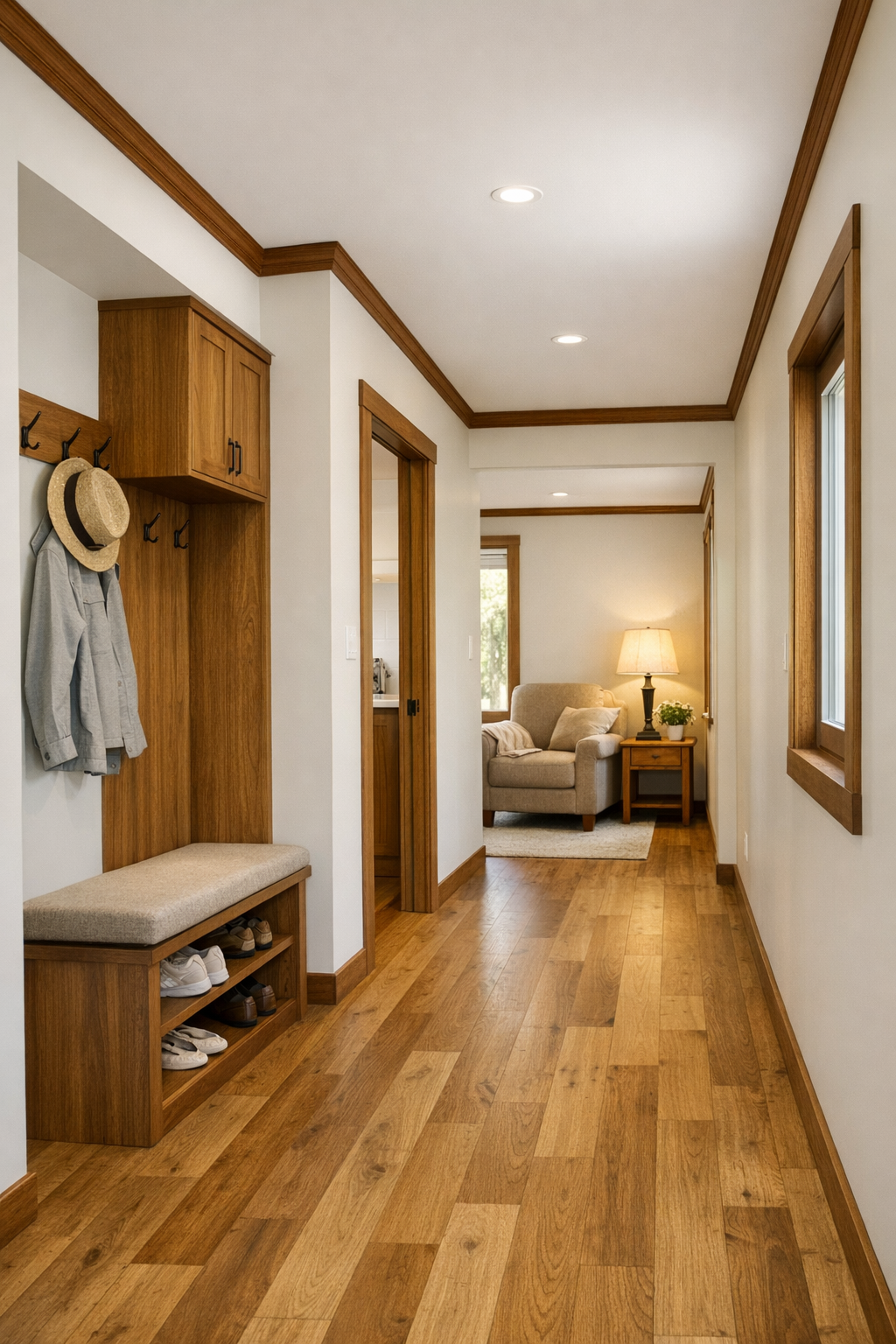
In a home like this, the connecting spaces matter just as much as the main rooms, and I suspect the hallways, entry zone, and utility areas are doing a great deal of subtle heavy lifting. Wider passages, flush transitions, and durable flooring that runs continuously from room to room would help the entire interior feel larger and easier to navigate. A built-in bench or drop zone near the entrance, perhaps with hooks, drawers, and a shallow shelf, would add a practical moment of organization without crowding the footprint.
I also imagine there is at least one flexible nook that could function as a reading corner, hobby station, or compact home office, depending on what the day requires. That sort of adaptability becomes increasingly valuable over time, and in a container home it speaks to very smart space planning. Even the storage likely feels intentional rather than leftover, tucked into walls, under counters, or integrated into millwork so the home remains clean-lined, calm, and easy to maintain.
Why You'd Live Here
You would live here because it proves that compact, accessible design can still feel deeply warm, stylish, and personal. Too often, homes designed for longevity sacrifice atmosphere in the name of function, but this one understands that beauty is part of comfort too. The materials are practical without being bland, the layout is efficient without feeling tight, and every room appears to support daily life in a way that feels natural rather than corrective.
I also think there is something especially compelling about the way this house treats restraint as an asset. It does not rely on excess square footage or flashy finishes to make an impression; instead, it wins you over with coherence, usability, and an inviting sense of calm. For anyone drawn to container architecture but unwilling to give up warmth, ease, or the pleasures of a well-resolved interior, this home makes a very convincing case.