
This park model RV leans fully into a relaxed coastal vocabulary, but it does so with a level of polish that makes the whole home feel composed rather than themed. From the blue shiplap exterior to the generous wraparound deck, everything about it suggests an easy indoor-outdoor rhythm, the kind of place where mornings begin with coffee in damp sea air and evenings end under soft porch lighting. Even as a concept design, it feels remarkably livable because the proportions, finishes, and furnishing choices are grounded in comfort.
What struck me most is how the interior carries that breezy exterior promise without becoming precious. The palette stays light and salt-washed, with sandy neutrals, weathered wood tones, crisp whites, and blue accents that echo the siding outside. As someone who spends a lot of time thinking about how homes support real daily rituals, especially cooking and gathering, I appreciate the way this one balances beauty with function in a compact footprint.
Exterior
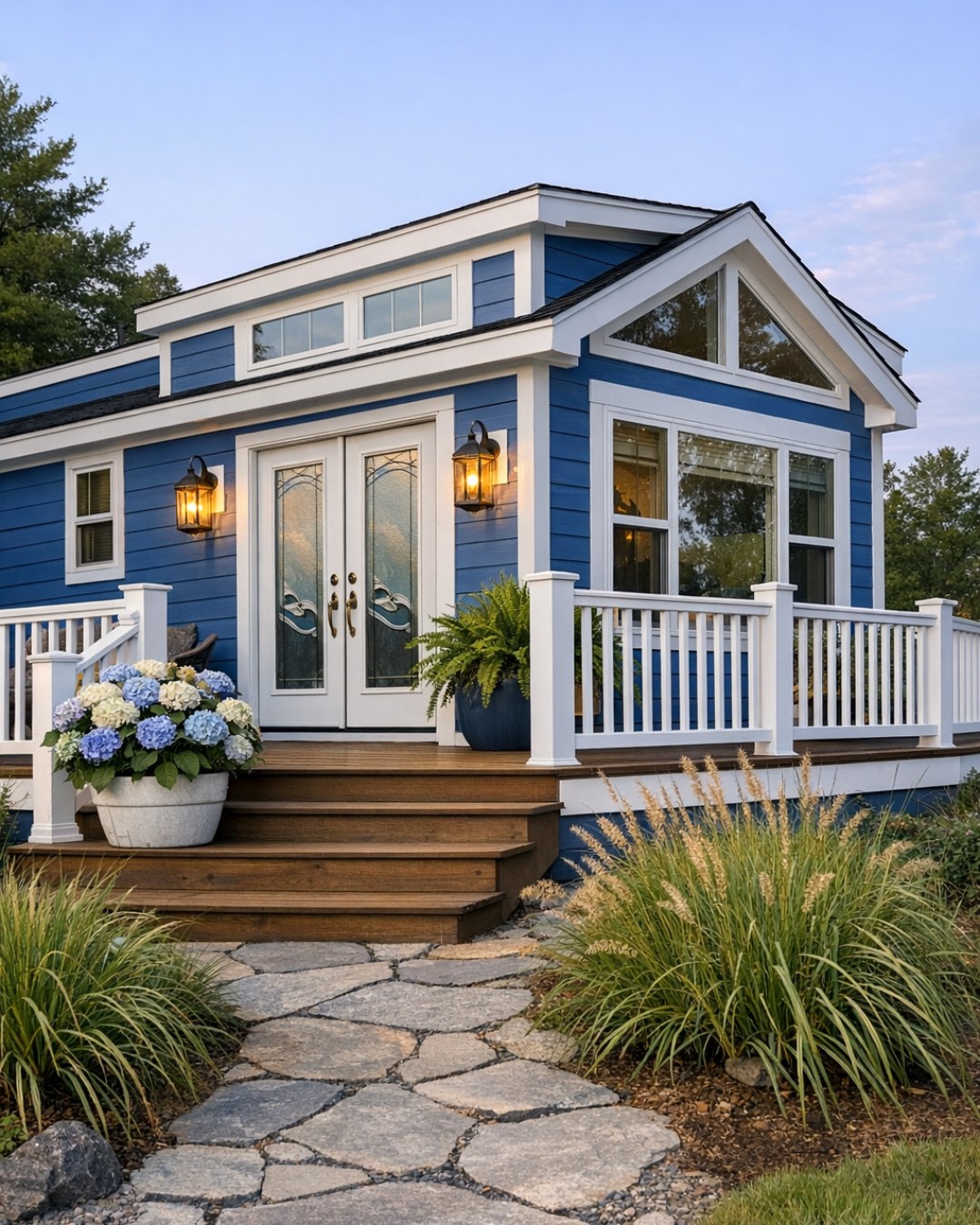
The exterior presents a classic coastal profile in miniature, clad in blue-painted shiplap that gives the home texture and character before you ever step inside. White trim crisps up the edges, keeping the composition bright and tailored, while black hardware and lantern-style sconces add just enough contrast to stop the look from drifting into sweetness. The wraparound deck is the real gesture here, extending the living area outward and making the RV read more like a cottage than a temporary structure.
I like how the deck creates zones without feeling crowded: a spot for dining, a corner for lounging, and enough circulation space to keep it all easy. Railings are simple and open, preserving sightlines and letting the siding remain part of the visual story. Potted grasses, striped outdoor textiles, and natural wood underfoot soften the crisp lines, giving the whole setting that wind-brushed, late-summer ease coastal homes do so well.
Living Room
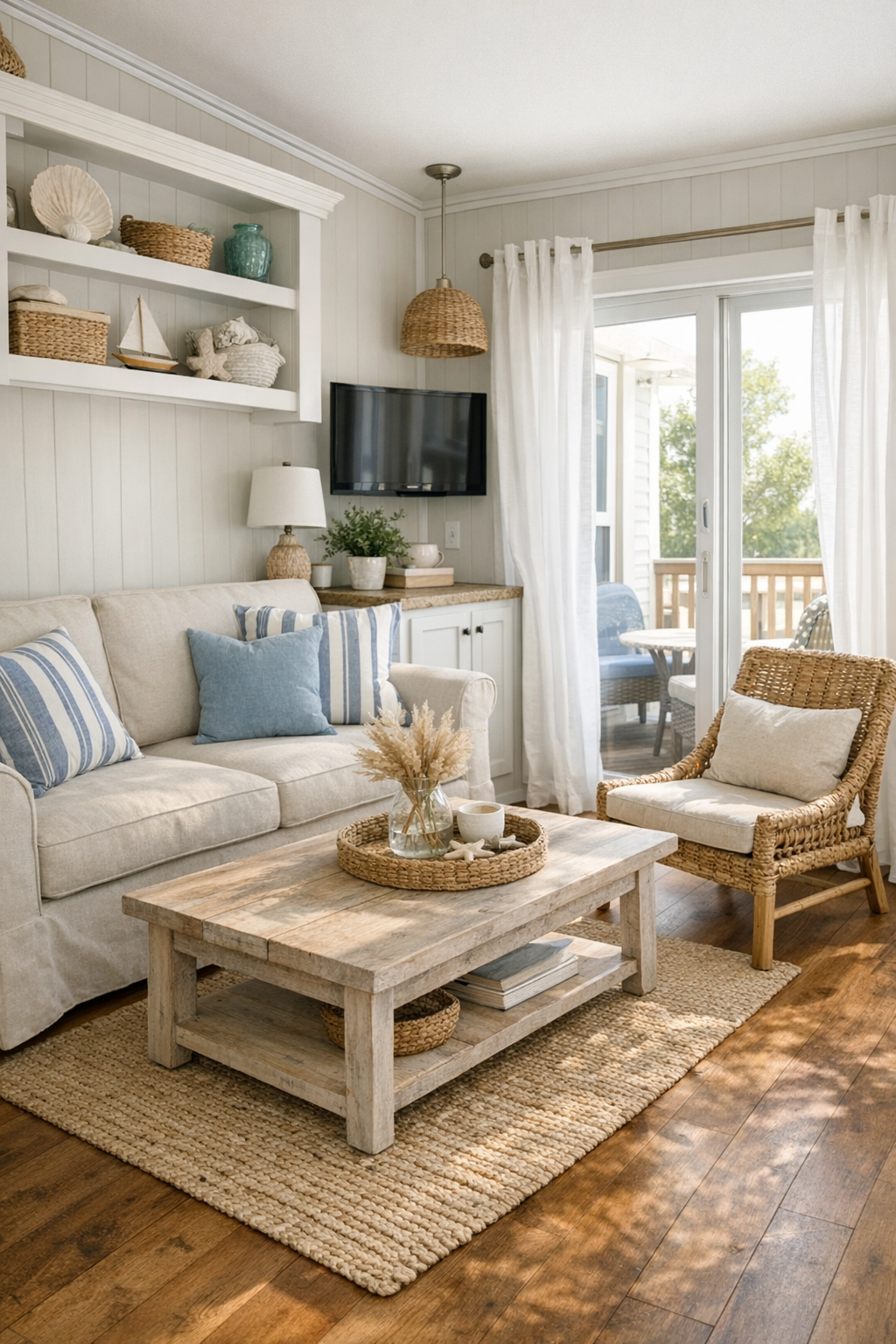
The living room is compact, but it never feels pinched because the design relies on light, line, and restraint instead of bulk. White or pale ivory walls bounce daylight around the room, while warm wood flooring keeps the space from feeling cool. A slipcovered sofa in a soft oatmeal fabric anchors the seating area, layered with blue-and-white pillows in varying stripe scales, and a woven accent chair introduces a touch of texture that feels appropriately beachy without trying too hard.
Storage is worked in quietly, which I always consider a mark of good small-space design. Built-in shelving painted to blend with the walls keeps the perimeter visually calm, and a simple coffee table in bleached wood adds function without adding weight. Lighting appears thoughtfully layered, with a central fixture for overall brightness and smaller lamps for evening softness, creating a room that can shift from sunny daytime retreat to intimate conversation spot with very little effort.
Dining Room
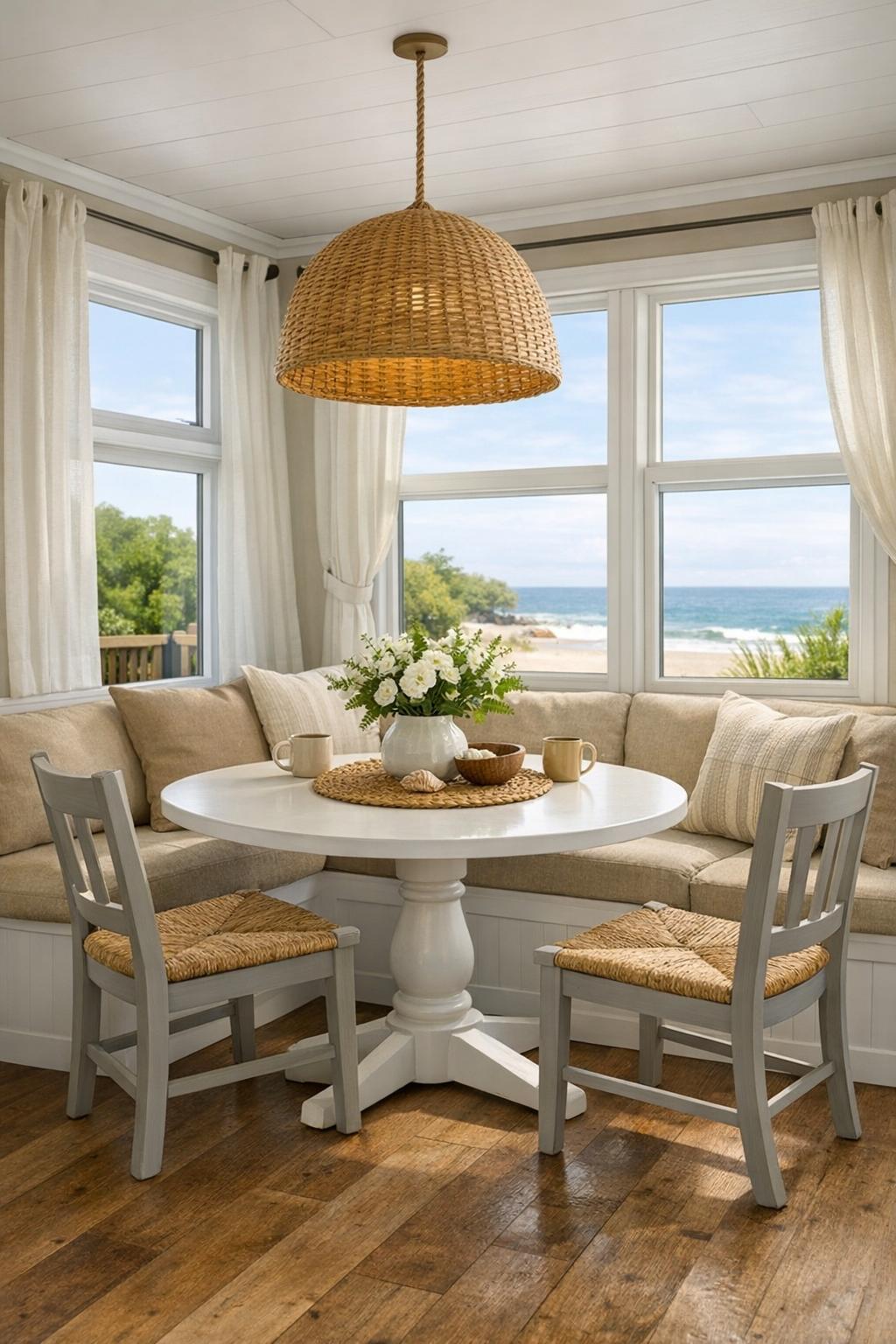
The dining area is handled with the same disciplined lightness, likely positioned to take advantage of windows and views toward the deck. A small round pedestal table makes particular sense here; it softens circulation and keeps chair legs from turning the room into an obstacle course. I can easily imagine painted wood chairs or a built-in banquette with performance fabric cushions in sandy linen tones, both options reinforcing the casual cottage mood while staying practical for everyday meals.
What gives the space presence is not size, but detail. A pendant overhead in natural rattan or white enamel draws the eye upward, and a simple ceramic centerpiece keeps the table from feeling bare. In a home like this, the dining area really becomes an all-purpose zone, useful for dinner, reading, or even a little prep work overflow from the kitchen, so I appreciate finishes that feel durable and unfussy while still looking thoughtfully styled.
Kitchen
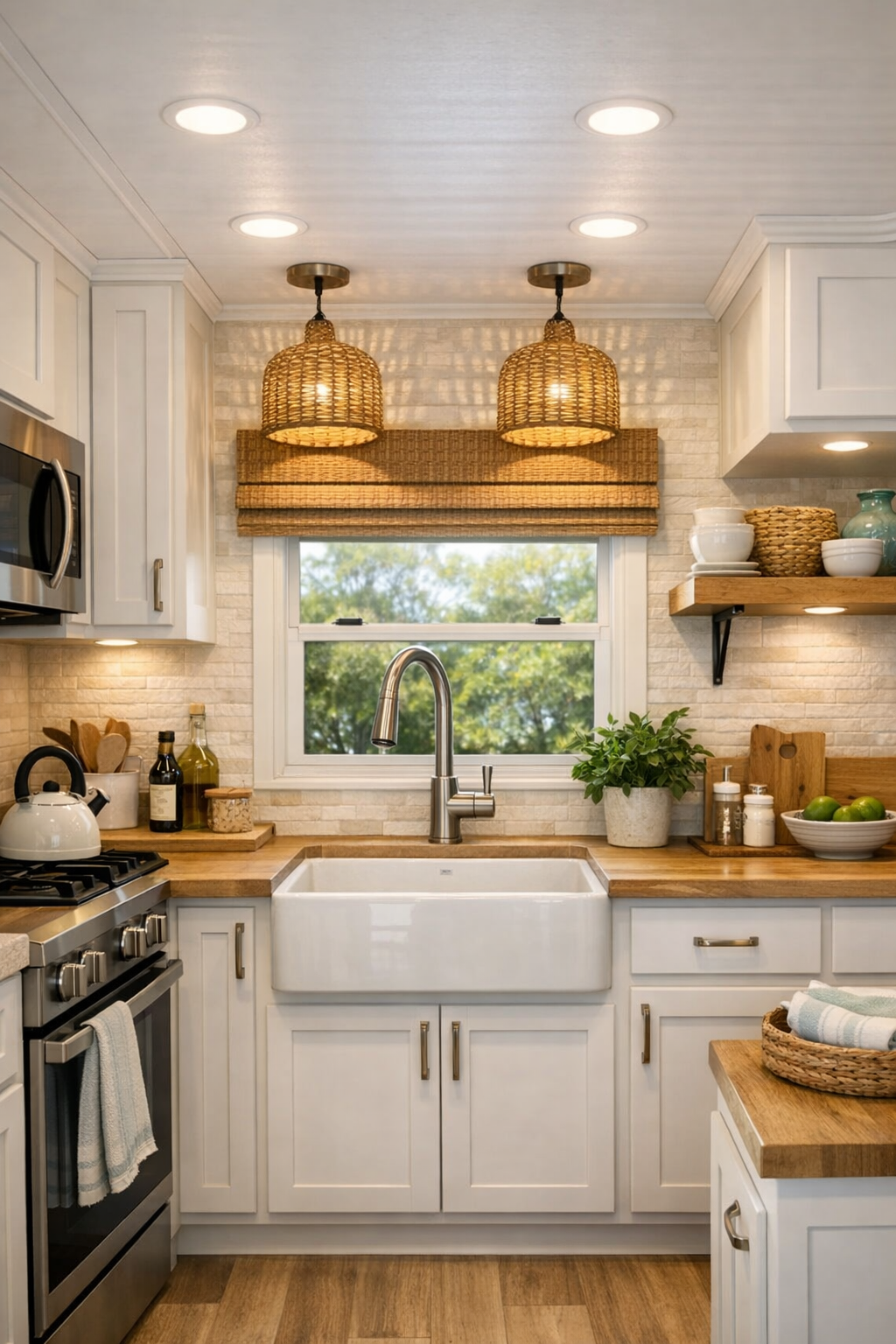
The kitchen is where this home really wins me over. As a cook, I notice immediately when a compact kitchen has been planned by someone who understands workflow, and this one appears to do exactly that. Cabinetry in a crisp white or soft putty tone keeps the room open, while brushed nickel or matte black pulls add a clean finish. A butcher block or lightly veined quartz countertop brings warmth and workability, and the backsplash, whether beadboard, shiplap, or glossy tile, contributes texture without cluttering the eye.
Open shelving used sparingly would be ideal here, enough for everyday dishes and a few beautiful pantry staples, but not so much that the room feels exposed. Under-cabinet lighting, a compact apron-front sink, and thoughtfully placed appliances make the kitchen feel like a serious working space rather than an afterthought. I especially like the possibility of blue lower cabinets or island detailing to tie the interior back to the exterior siding, a subtle move that makes the whole house feel cohesively designed.
Bedroom
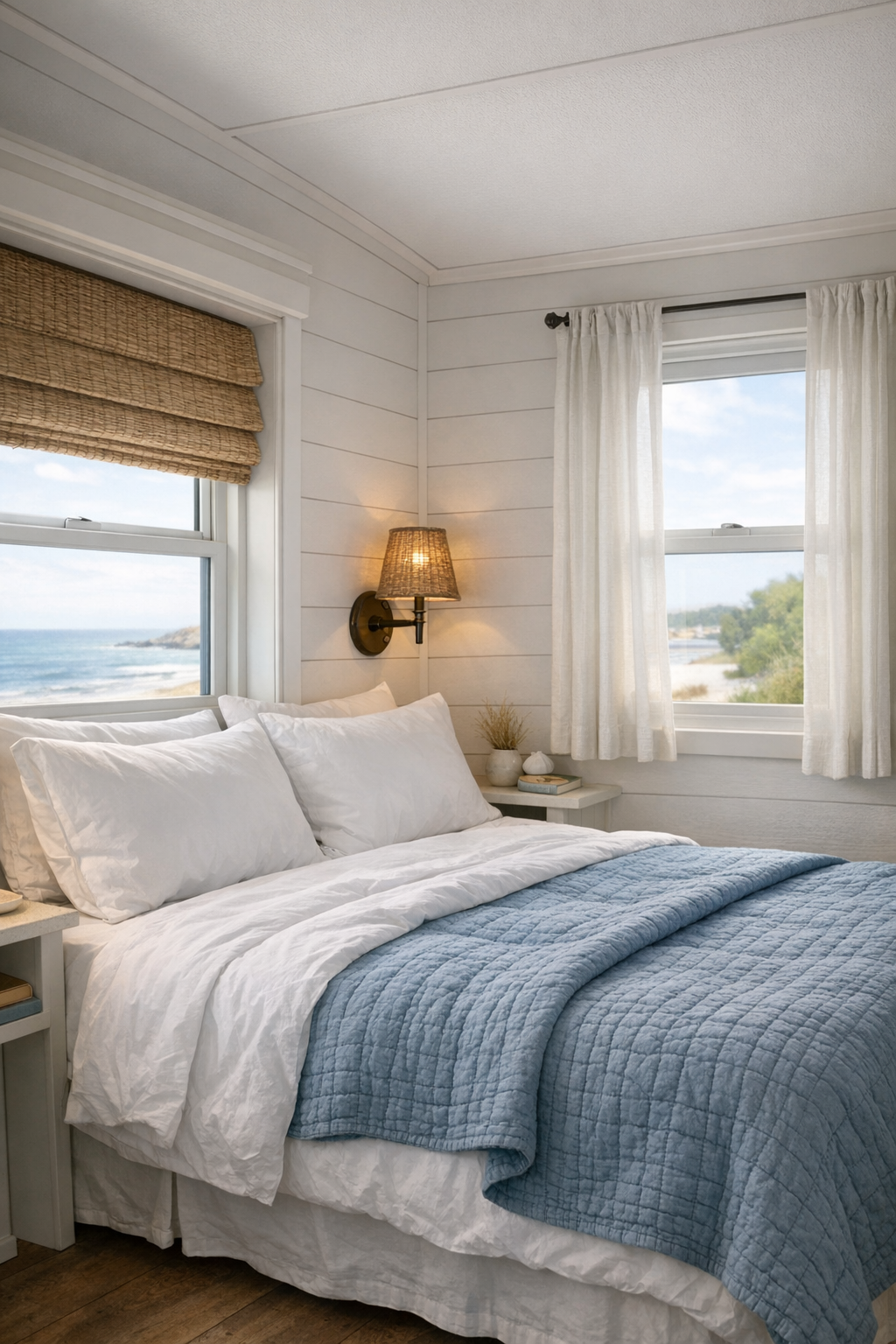
The bedroom continues the home's soft restraint, using texture more than color to build interest. Crisp white bedding, a quilt in faded blue, and perhaps a striped lumbar pillow are enough to connect the room to the coastal palette without overworking the theme. I would expect narrow bedside ledges or built-in nightstands rather than full tables, a smart choice in a park model where every inch has to earn its keep.
What makes a bedroom like this successful is the sense of enclosure without heaviness. Wall sconces free up surface area and add a gentle glow for evening reading, while woven shades or airy linen curtains filter light in a way that feels private but still bright. If there is storage tucked beneath the bed or integrated into surrounding millwork, all the better; that kind of quiet practicality is what turns a charming room into one you could genuinely settle into.
Bathroom
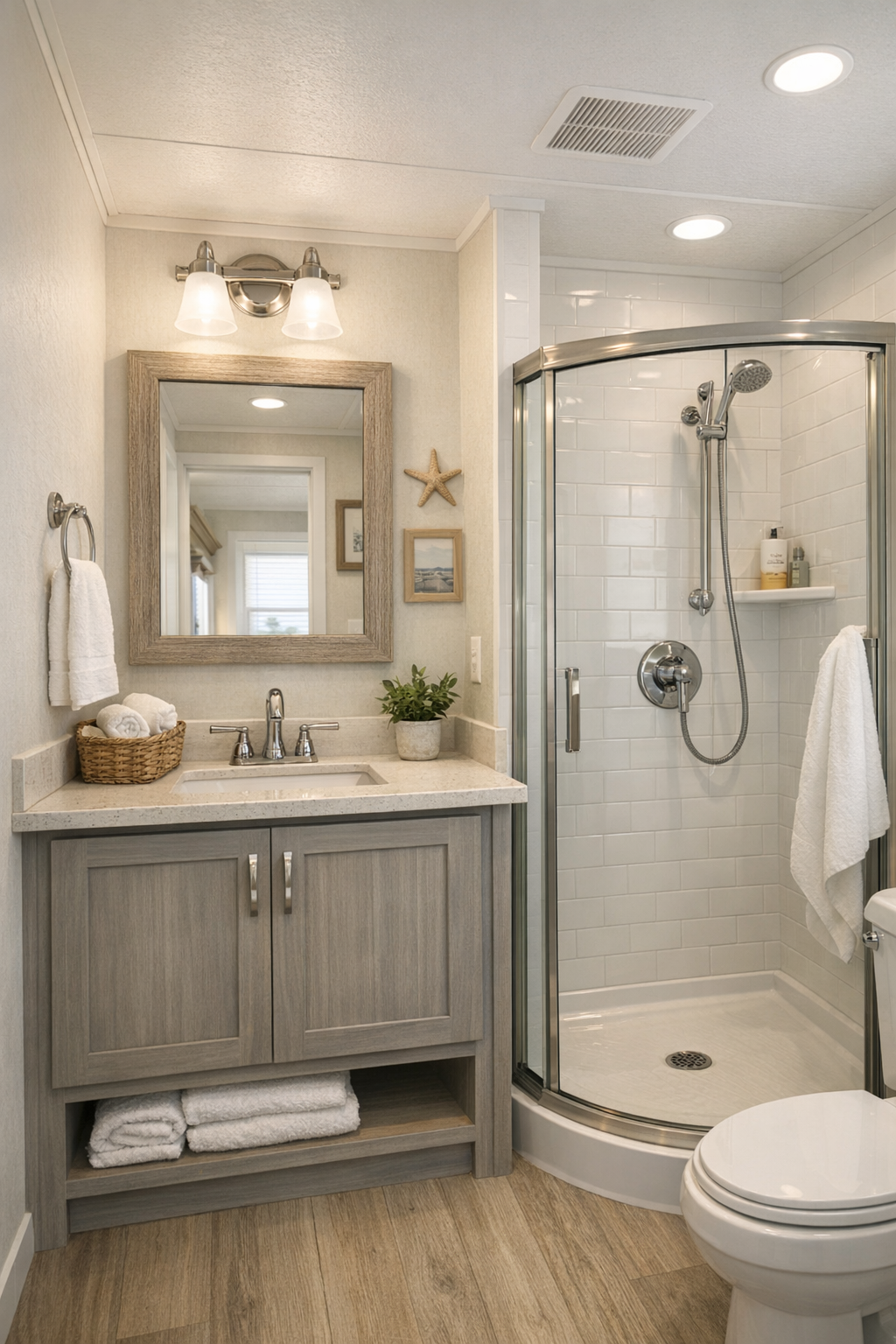
The bathroom looks to be designed with the same small-space intelligence as the kitchen, using reflective surfaces and pale finishes to stretch the room visually. White walls or soft gray paneling would keep it fresh, while a vanity in driftwood or muted blue adds just enough personality. I like the idea of a framed mirror rather than a plain builder-grade sheet, because even in a compact bath, that one detail can lend a finished, residential feeling.
Texture matters here too. A white tile shower with simple grout lines, polished chrome fixtures, and perhaps a pebbled or patterned floor gives the room dimension without noise. Good lighting at the mirror is essential, and I suspect this bath would pair practical brightness with a cleaner overhead glow, resulting in a space that feels crisp, hygienic, and surprisingly calming, exactly what you want from a bathroom in a smaller home.
Other Areas
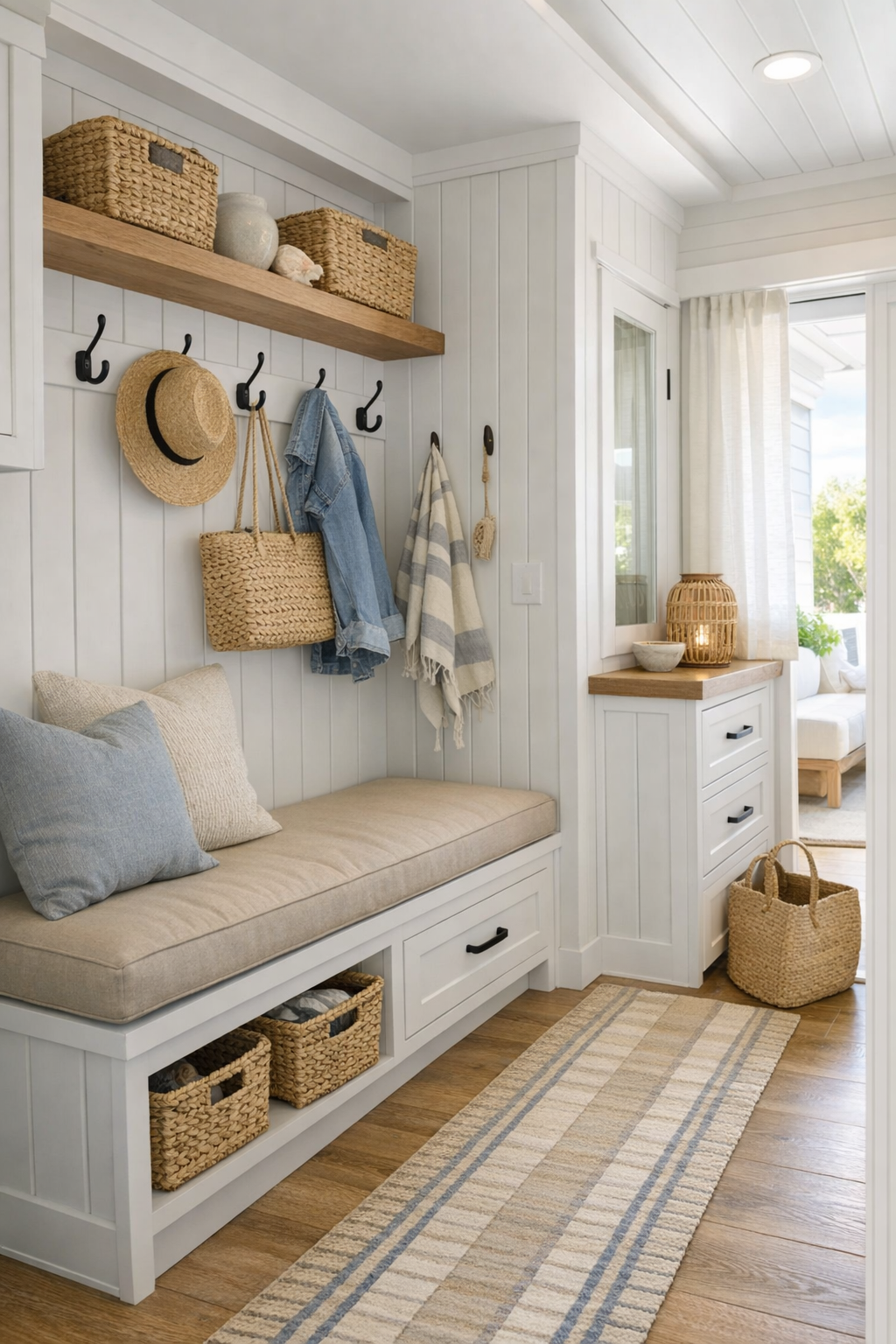
In a home like this, the in-between spaces matter enormously, and they seem to have been treated with care rather than left over as residual square footage. Hallway niches, entry hooks, under-bench storage, and stair drawers are the kinds of features that make daily life simpler, especially when coming in from the deck with sandy shoes, market bags, or a tray headed outdoors. I always appreciate when transitional areas are given a bit of beauty too, perhaps a beadboard wall, a slim runner, or a row of woven baskets that keep necessities close but tidy.
The loft, reading corner, or utility zone, if included, would likely follow the same language: pale painted surfaces, natural wood, and compact furnishings scaled correctly to the architecture. That consistency is what keeps a small home from feeling chopped up. Instead, each auxiliary area extends the same calm, coastal atmosphere, so movement through the house feels fluid and intentional rather than like a sequence of compromises.
Why You'd Live Here
You would live here because it offers something many larger homes miss: clarity. Every choice seems edited toward ease, from the wraparound deck that expands daily life outdoors to the light, durable interiors that make a compact footprint feel generous. The coastal styling is recognizable, certainly, but it is the discipline behind it, the careful use of color, texture, and built-in function, that makes the home memorable.
For me, the appeal is in how naturally it supports real routines. There is space to cook, space to gather, space to read, and space to exhale, all wrapped in a palette that feels bright and restorative. It manages to be charming without becoming fussy, and that is not a small accomplishment. In short, it feels like a retreat designed by someone who understands that beauty works best when it helps everyday life along.