
Set down on a quiet patch of homestead land, this converted bus feels like a little miracle of practicality and beauty all at once. From the outside, it keeps the honest spirit of its former life, but inside it opens into a warm, carefully layered home that feels more like a beloved cottage than something on wheels. I’m always drawn to spaces that make do with what they have and still manage to feel gracious, and this one does exactly that with soft wood tones, hardworking finishes, and a kind of gentle ingenuity that suits the landscape around it.
What makes this home so memorable is the way off-grid living is handled not as a compromise, but as a design language of its own in this concept design. Every inch feels considered: storage tucked into unlikely corners, light invited in wherever it can be, and materials chosen to age kindly under daily use. It has the soul of a farmhouse pantry, the calm of a cabin, and the cheerful surprise of finding something handmade that turns out to be finer than anything store-bought.
Exterior
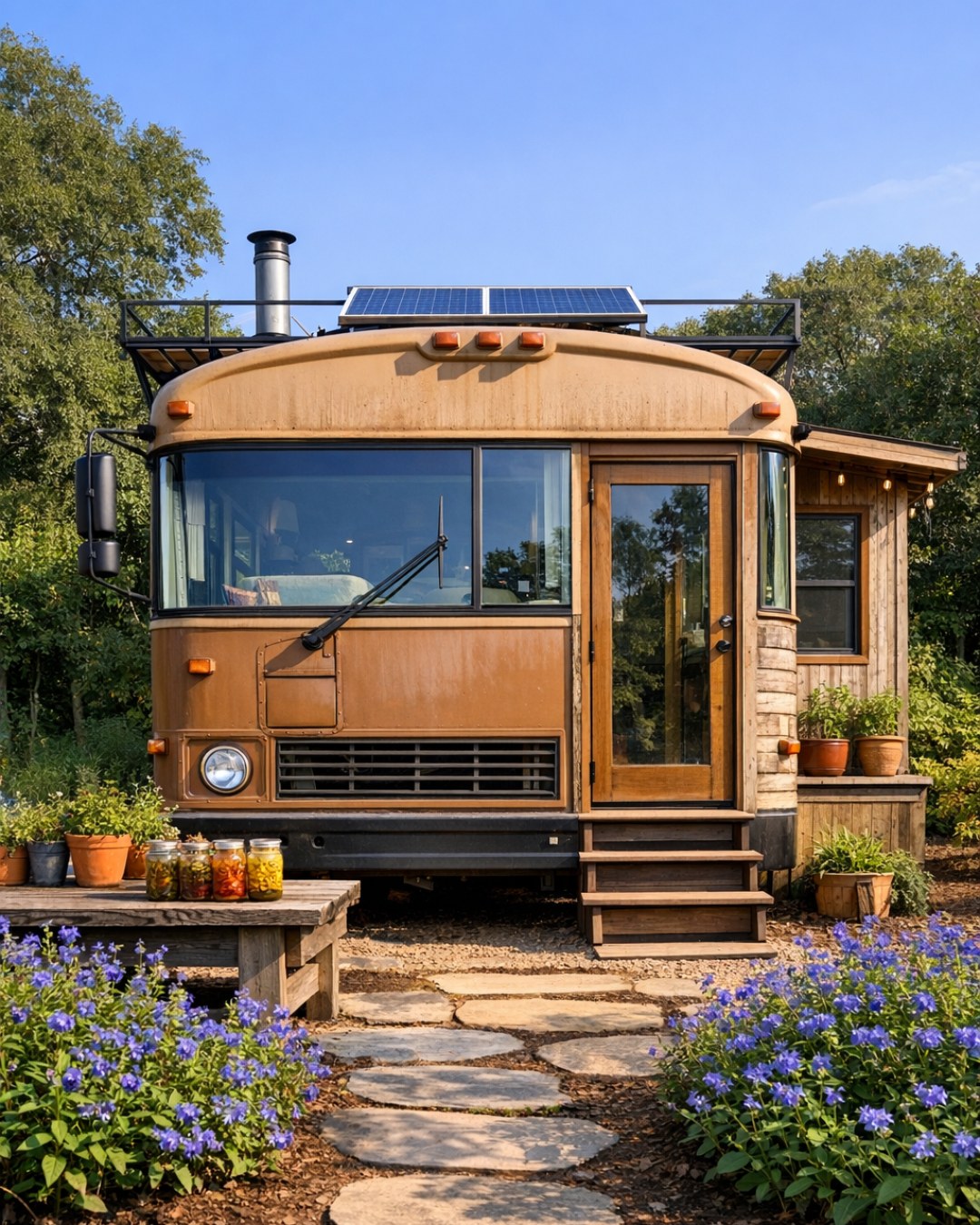
The exterior keeps the bus recognizable, and that is part of its charm. Rather than disguising it completely, the design leans into the long, narrow silhouette and softens it with homestead touches: a muted painted body in a weathered sage or creamy oat tone, black-framed windows, simple metal steps, and planter boxes that make the whole thing feel settled into the land. I can picture gravel crunching underfoot, a wash line nearby, and a little vegetable patch not far off, which gives the bus a lived-in dignity instead of novelty.
What I especially like is the way the surrounding site works as an extension of the home. A small wood deck creates an outdoor threshold, while a corrugated metal awning offers shade and shelter without fuss. Lantern-style lighting, galvanized utility hooks, stacked firewood, and a few sturdy outdoor chairs make the bus feel companionable and useful, the sort of place where boots line up at the door and the day begins with coffee in cool morning air.
Living Room
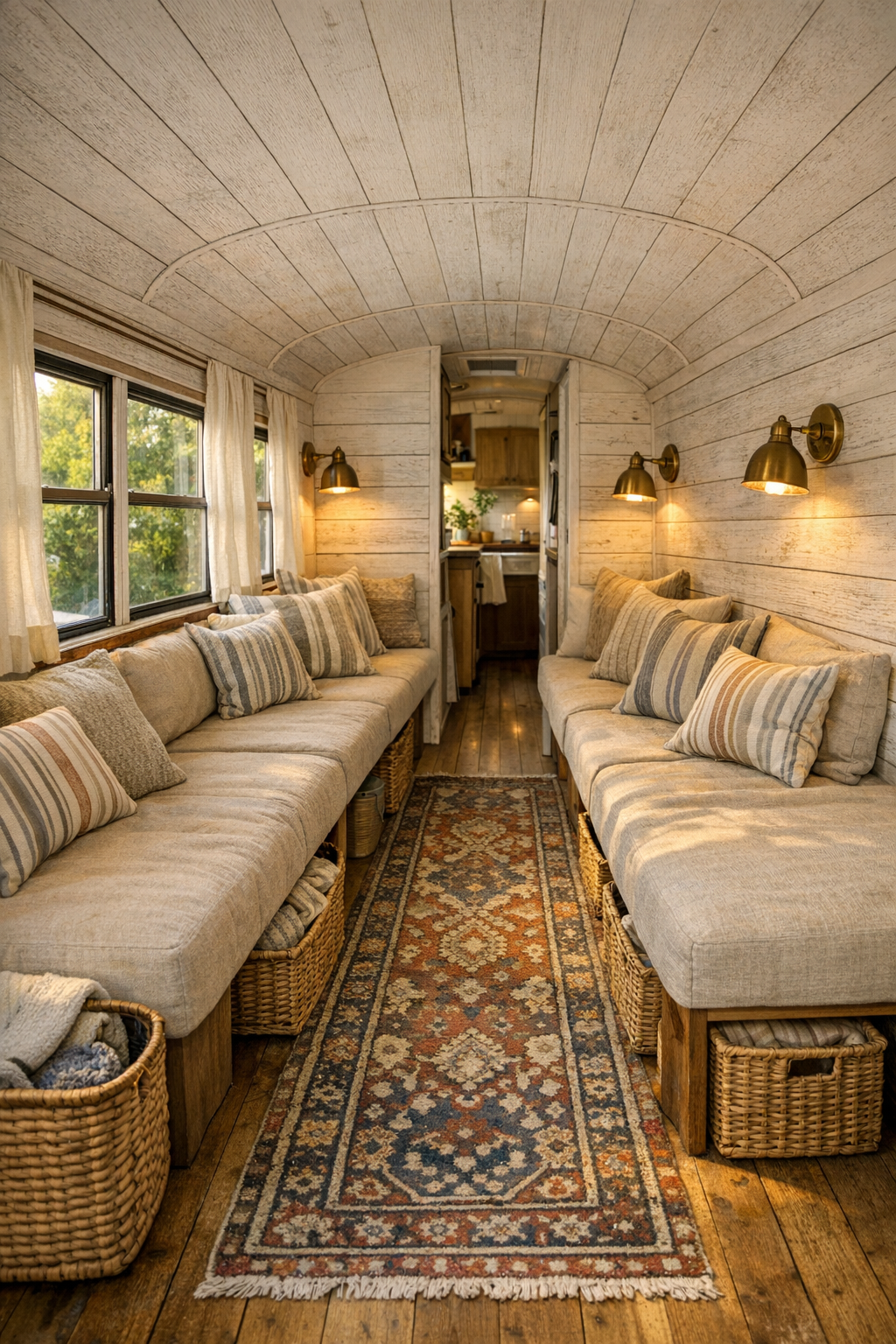
The living room makes beautiful use of the bus’s narrow footprint by treating it almost like a train parlor, with built-in seating and a clear central path that keeps the space from feeling crowded. Bench seating upholstered in durable oatmeal linen runs beneath the windows, topped with ticking-stripe pillows, quilted cushions, and a wool throw or two for texture. Whitewashed wood planks on the walls brighten the shell, while a warm butcher-block ledge, black iron brackets, and a small cast-iron stove or compact heating unit give the room its welcome bit of weight and grounding.
Natural light is the real decorator here. It spills in through the repeated windows and bounces off creamy paint, making brass reading sconces and matte black hardware stand out in all the right ways. I’d call the mood unexpectedly refined: a vintage rug in faded brick and blue underfoot, baskets tucked beneath seats, a small fold-down table for tea or letter writing, and shelves lined with crockery, books, and a few old crocks that look as though they’ve been in the family for years.
Dining Room
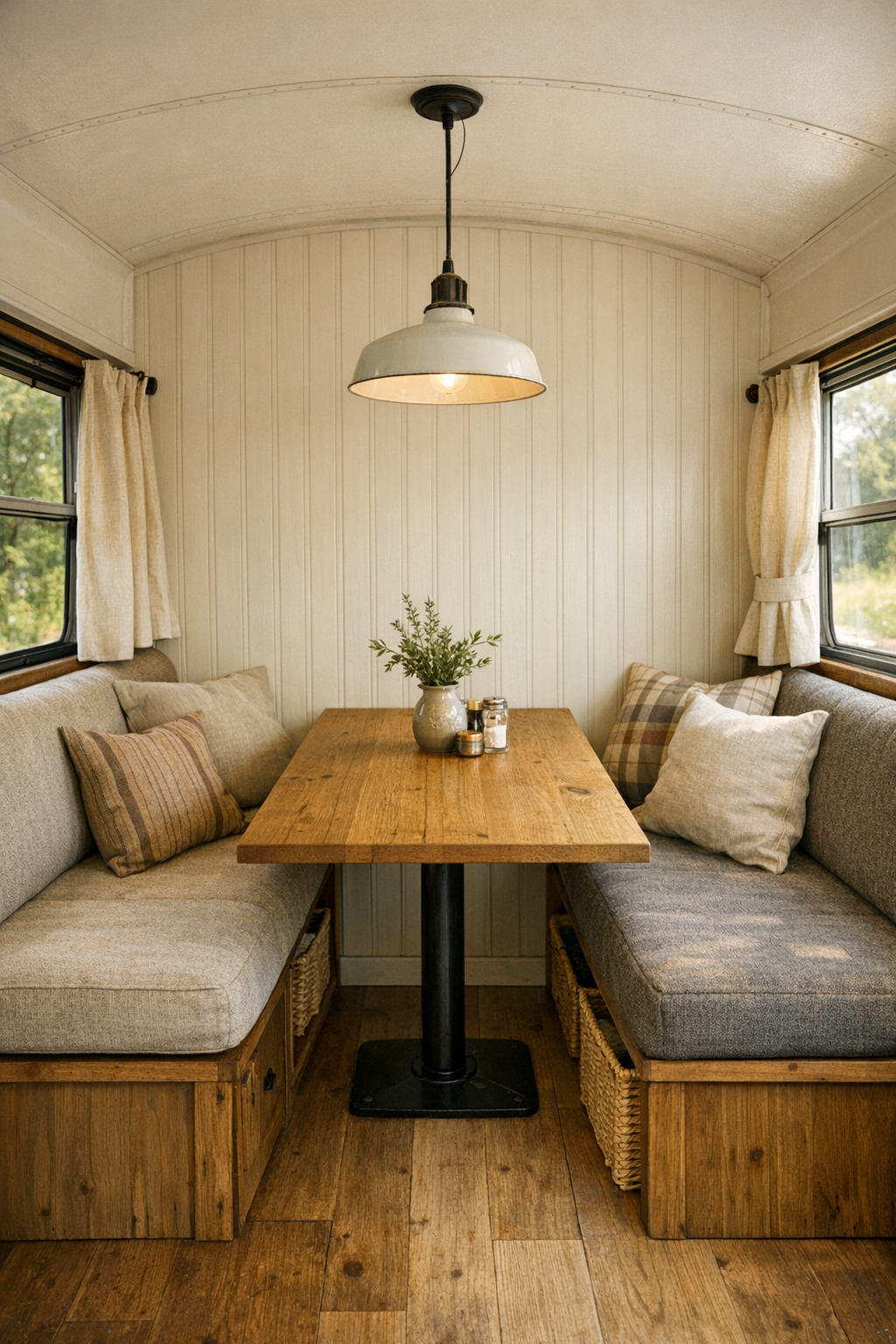
The dining area is modest in size, but it has that same sturdy grace I’ve always admired in old farmhouse kitchens. A built-in banquette makes the most of the wall, paired with a slim rectangular table in natural wood and one or two simple chairs that can be moved as needed. The finishes are humble in the best sense: beadboard paneling, a hand-rubbed wood tabletop, soft cream paint, and cushions covered in fabrics that can stand up to supper, sewing projects, and whatever else daily life brings.
Because space is tight, the room relies on proportion and detail instead of excess. A small pendant with an enamel shade hangs low over the table, creating a pool of warm light that turns even a plain meal into something inviting. I can almost see a pie cooling by the window or seed catalogs spread across the table in late winter, and that is what this little dining nook gets so right: it feels useful first, and lovely because of it.
Kitchen
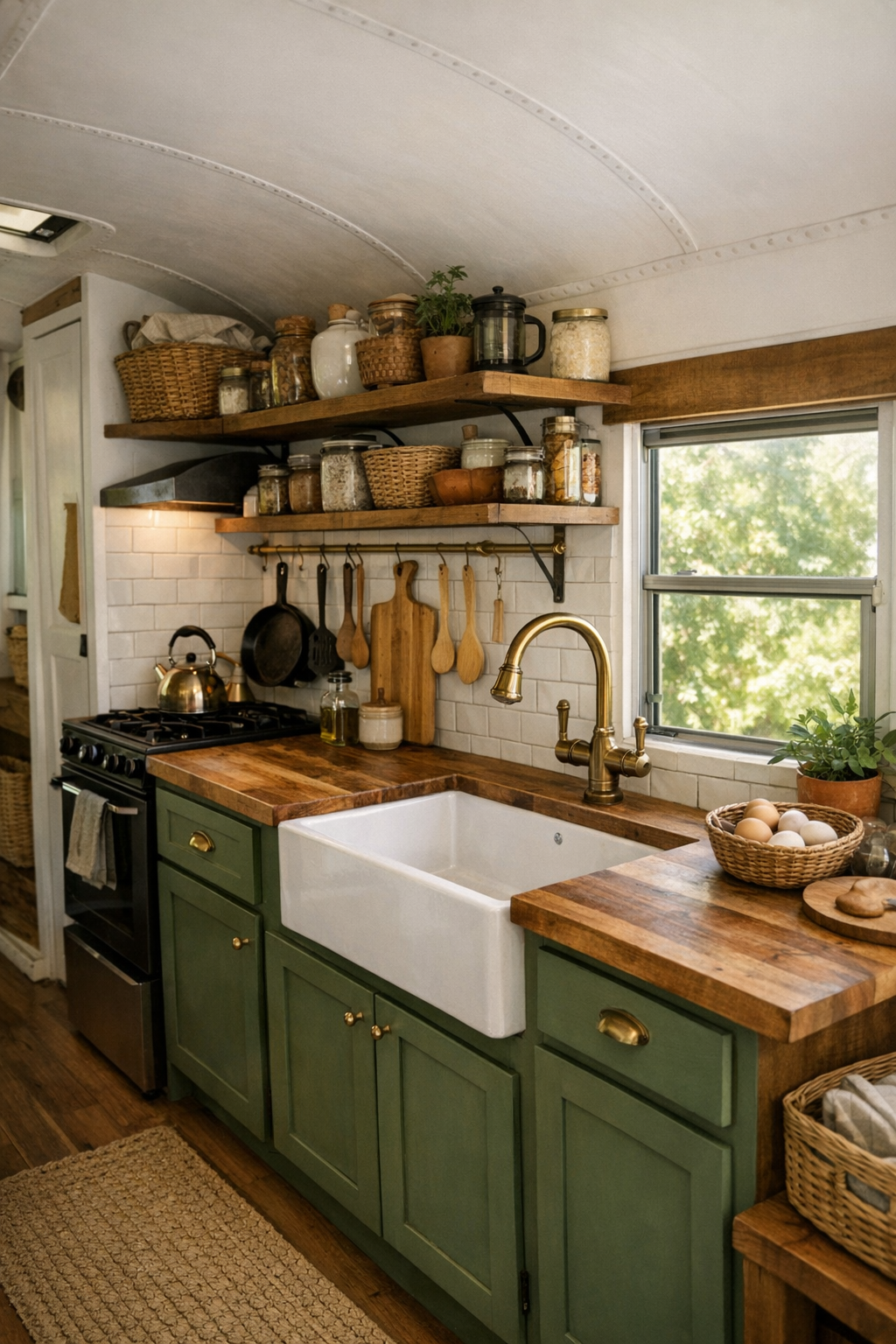
The kitchen is, to my eye, the heart of the whole place. It is compact, certainly, but thoughtfully arranged with lower cabinets in a mossy green or dusty blue, open shelves above, and counters in butcher block that bring warmth and usefulness in equal measure. A deep apron-front sink, unlacquered brass faucet, white tile backsplash with dark grout, and a small propane range give it the look of a country kitchen that has simply been edited down to its essentials. Nothing feels skimpy; it feels efficient, and there is a big difference.
I love the practical details that make the room work hard without losing its charm: rails for hanging utensils, jars lined up neatly, hooks for mugs, woven baskets for produce, and drawers built into the toe-kicks or corners where a regular home might waste space. Light from the windows keeps the surfaces cheerful, and under-cabinet lamps add a buttery glow after sundown. It’s the sort of kitchen where biscuits, soup, and jam would all feel perfectly at home, and where a seasoned cook would know exactly where every spoon belongs.
Bedroom
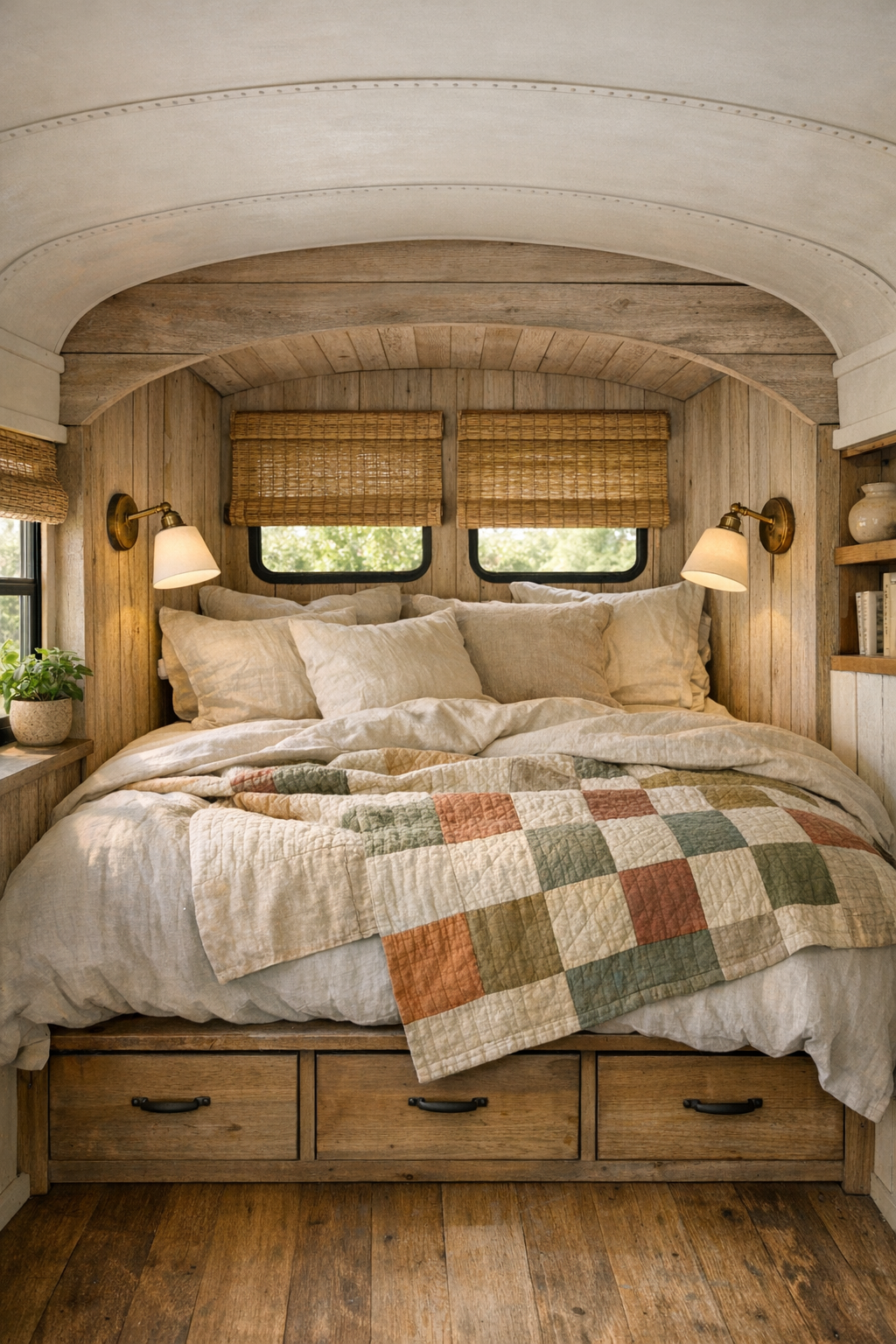
The bedroom takes the bus’s cozy dimensions and turns them into an advantage. Set at one end, the bed feels tucked away like an alcove, framed by wood paneling and softened with layers of natural linen, a patchwork quilt, and pillows in faded florals or ticking stripes. I appreciate that the palette stays restful here: warm white, oat, weathered blue, and touches of brown from walnut trim or stained pine, all of it creating the hush that a sleeping space needs.
Storage is folded in so neatly you almost forget how necessary it is. Drawers under the bed, shallow wardrobes, cubbies overhead, and little wall-mounted shelves keep the room orderly without making it feel fussy. A pair of petite sconces provides reading light, while blackout curtains or soft woven shades bring privacy and insulation. It has a simple, deeply comforting quality, the kind of room that makes you want to open a window at night and listen to the crickets beyond the garden.
Bathroom
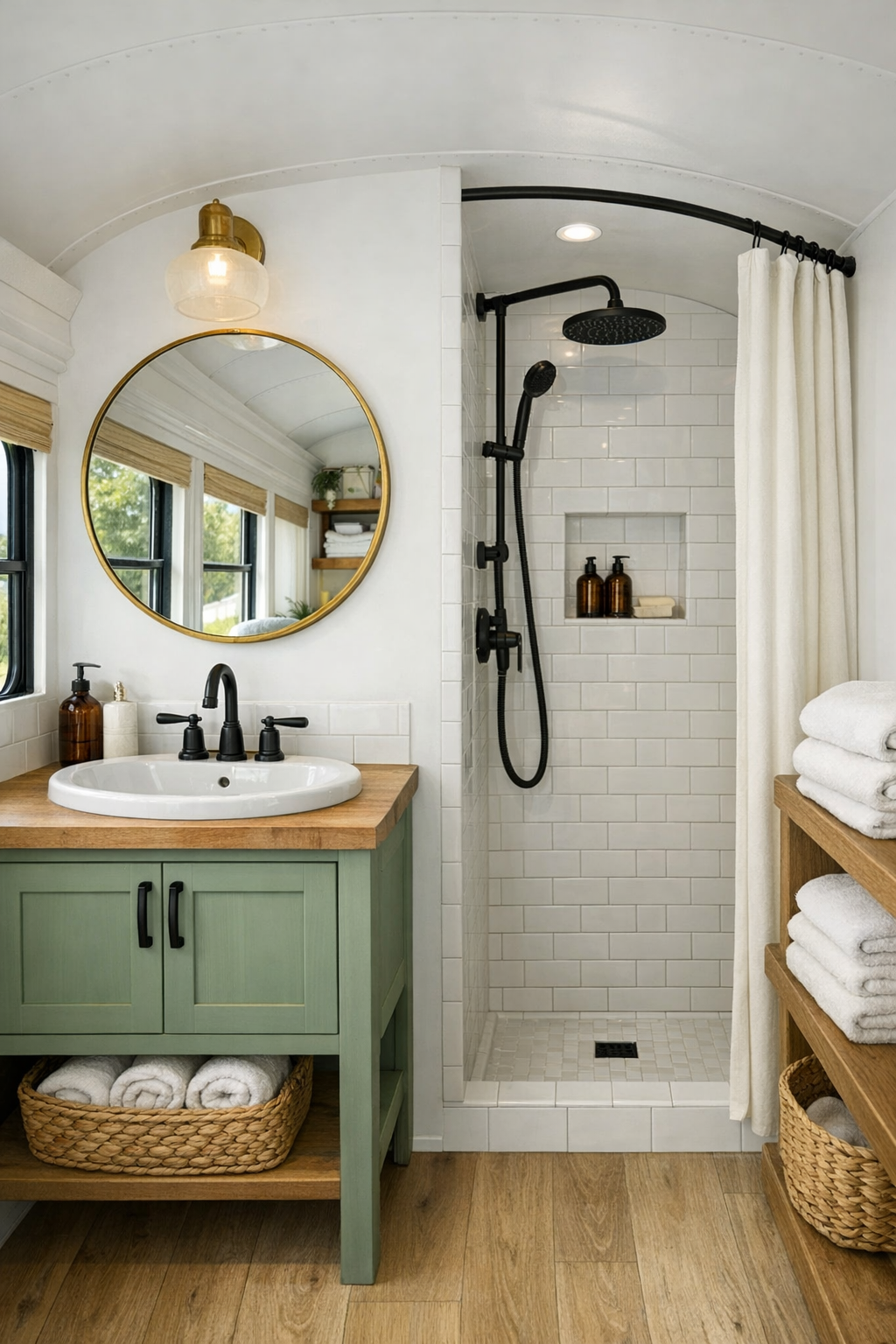
The bathroom is proof that a very small room can still feel polished. A compact vanity in painted wood, a small round mirror, and a porcelain sink keep the look classic, while a shower lined in white tile or waterproof vertical paneling gives the space freshness and order. I like that the fixtures are simple and honest: matte black hooks, a brass or black faucet, neatly folded cotton towels, and maybe a tiny ledge for soap and a crock for toothbrushes.
To keep the room from feeling closed in, the design leans on brightness and texture. Pale finishes reflect the light, a skylight or window helps with ventilation, and the floor might be done in small patterned tile or sealed wood-look planks for a bit of visual character. It feels clean, sensible, and pleasantly unpretentious, exactly as an off-grid bath should, but with enough warmth that it never slips into the merely utilitarian.
Other Areas
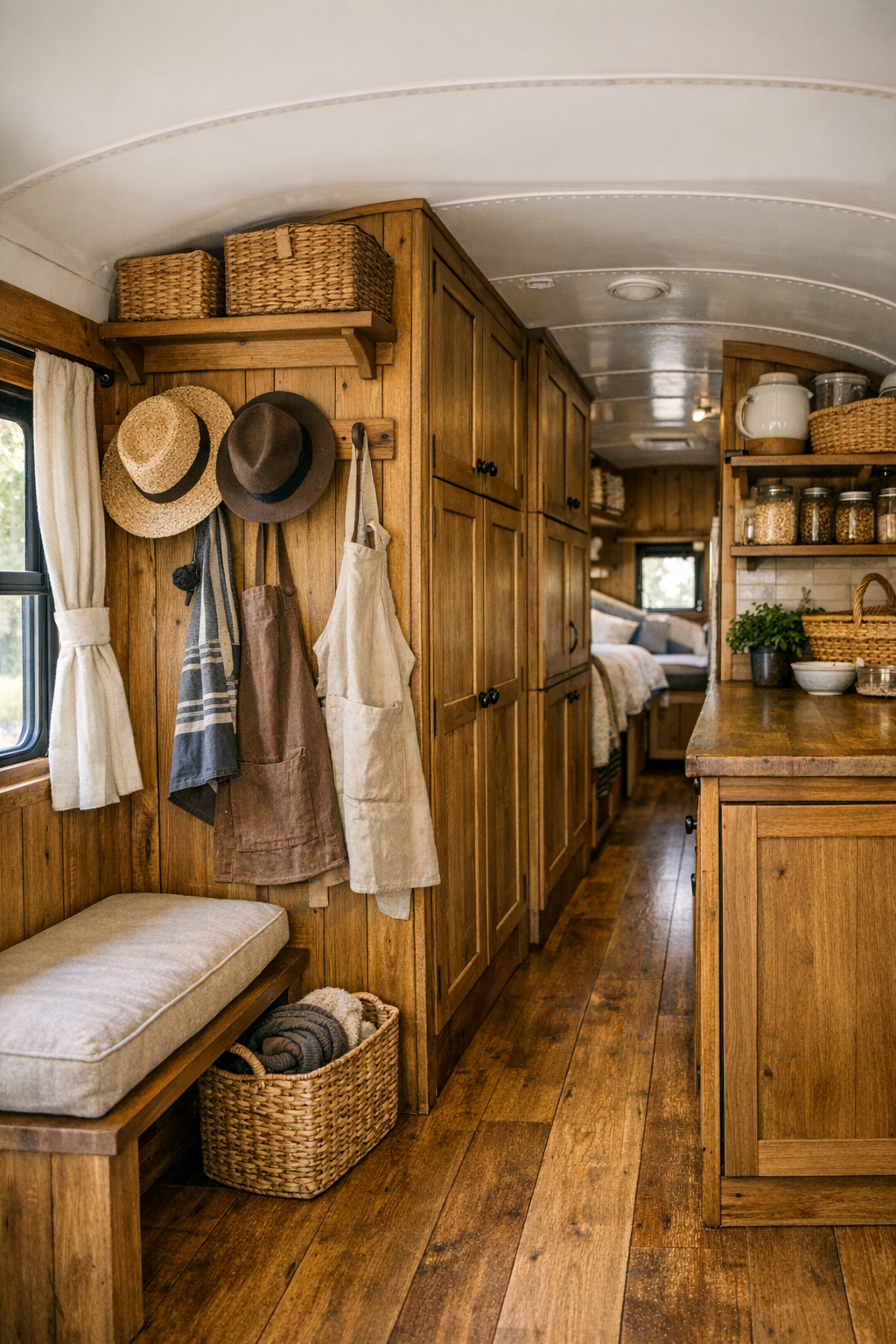
In a home like this, the in-between spaces matter just as much as the main rooms. The corridor becomes a design feature of its own, with paneled walls, slim storage cabinets, pegs for hats and aprons, and little nooks that hold pantry goods, lanterns, or boots. Perhaps there is a compact desk tucked by a window, or a mudroom-style entry with a bench, shoe cubbies, and a shelf for baskets. These are the details that make small-space living feel not cramped, but beautifully rehearsed.
I’m especially fond of the practical systems being folded into the design rather than hidden away apologetically. Battery storage cabinetry, water filtration tucked behind handsome panels, and multipurpose furniture all support the off-grid life while preserving the softness of the interior. There’s a homesteader’s wisdom to it, really: use what you have, store it well, and make it pleasant enough that everyday chores become part of the home’s rhythm instead of a burden.
Why You'd Live Here
You’d live here because it turns restraint into beauty. This bus shows that living smaller does not have to mean living with less care, less comfort, or less personality. Every room offers evidence that thoughtful materials, honest craftsmanship, and a strong sense of purpose can create a home that feels deeply nourishing. It’s off-grid, yes, but it never feels austere; it feels independent, calm, and closely tied to the land around it.
More than that, you’d live here for the feeling it gives back to you. It invites a slower rhythm, where storage is intentional, meals are simple and satisfying, and the view out the window matters as much as what’s on the walls. To me, that is the quiet luxury of a place like this: not excess, but enoughness, shaped with warmth and imagination until it becomes something truly special.