
There is something deeply reassuring about a home that wears its age honestly, and this off-grid converted bus does exactly that. From the outside, it keeps a beautifully weathered presence, with sun-softened paint, a sturdy stance, and the kind of practical character that suggests miles traveled and a second life well earned. Set against an open rural backdrop, it reads as part homestead, part hideaway, with a grounded, resourceful spirit that I find especially appealing.
Inside, the surprise is how generous and composed it feels, despite the narrow footprint you would expect from a bus. This concept design turns every inch into something useful and warm, blending cabin-like textures with hardworking built-ins and a layout that supports daily life rather than just novelty. As someone who spends a lot of time thinking about how spaces function, especially around cooking and gathering, I appreciate how thoughtfully this one balances independence, comfort, and plain good sense.
Exterior
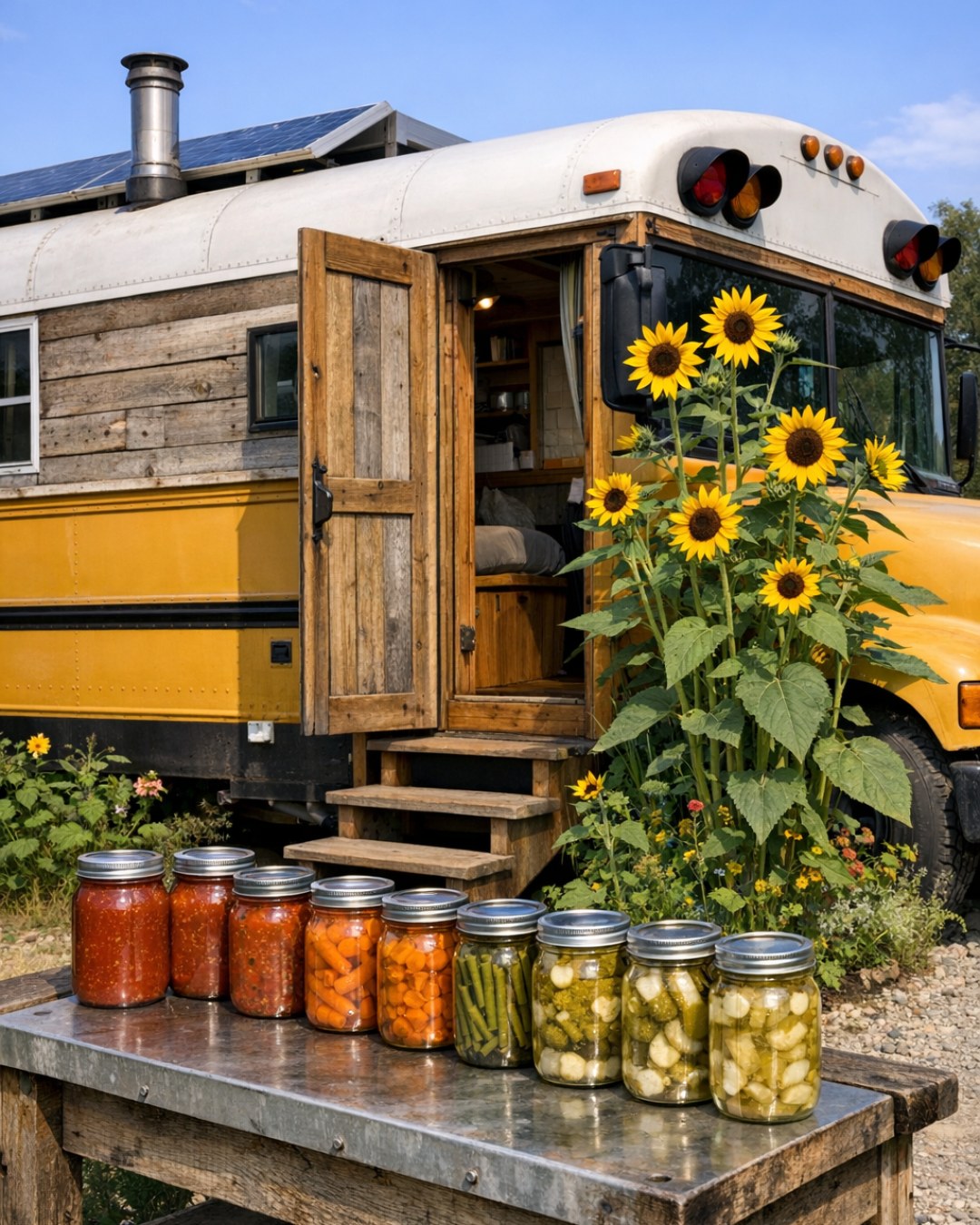
The exterior leans into its history instead of disguising it. The worn finish, visible rivets, and original bus proportions give the home its unmistakable identity, while modest updates such as new windows, a roofline fitted for solar equipment, and a simple entry platform make it feel settled rather than improvised. I like that the design resists polish for polish’s sake; it keeps the rugged shell intact and lets the patina act almost like a material in its own right.
The setting is essential to the mood. Parked within a lightly cultivated landscape, with utility elements tucked discreetly into the site, the bus feels connected to a slower, self-sufficient way of living. There is likely gravel underfoot, a few raised beds nearby, perhaps stacked firewood and rain barrels off to one side, and that combination gives the home a quiet agricultural rhythm. It feels sturdy, independent, and entirely comfortable with a little dust on its boots.
Living Room
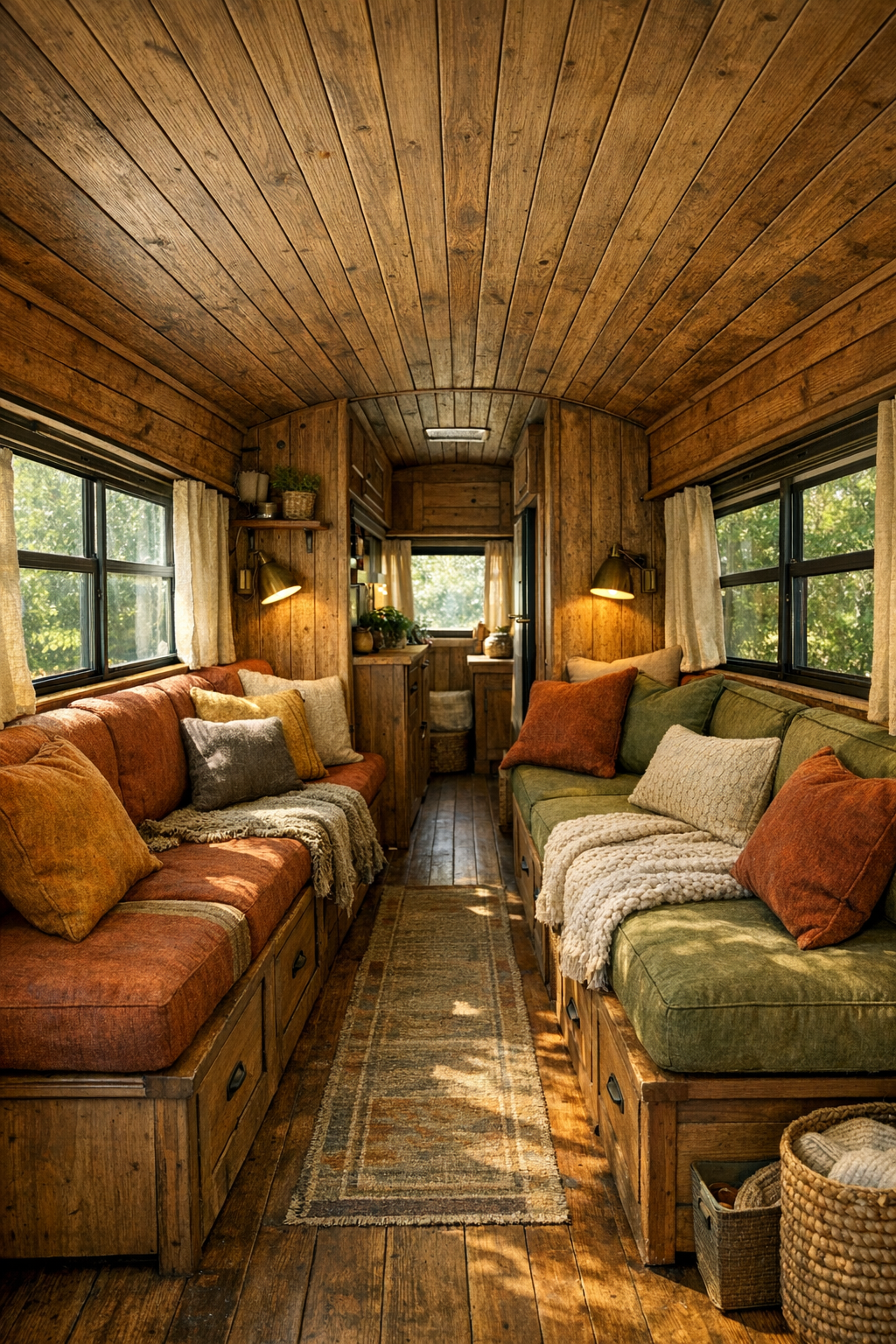
The living room makes clever use of the bus’s linear shape by placing comfort along the walls and preserving a clear path through the center. A built-in bench sofa with deep storage below anchors the space, layered with oat, rust, and faded olive cushions that soften the metal shell. Wood cladding on the walls and ceiling warms the interior immediately, and the contrast between the bus’s original curved structure and the tailored millwork gives the room a satisfying balance of old and new.
Light does a lot of heavy lifting here. Large side windows keep the room open and connected to the landscape, while compact sconces and a few small reading lamps create pockets of amber light after sunset. I can imagine a wool throw tossed over the bench, a narrow ledge serving as both bookshelf and tea perch, and a small stool pulled in when company arrives. It is not oversized, of course, but it feels calm and usable, which in my experience matters much more than square footage.
Dining Room
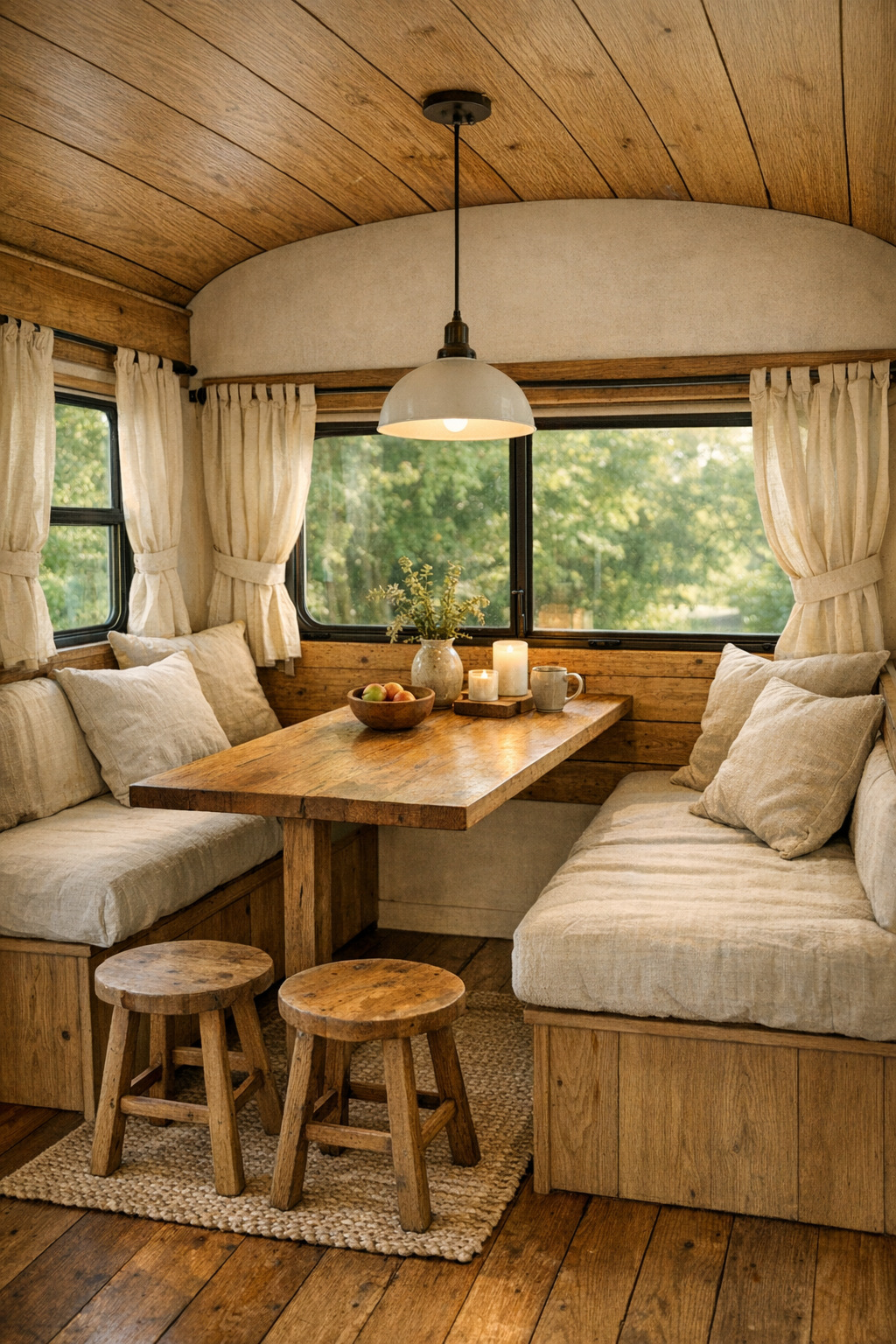
The dining area is compact but remarkably inviting, shaped around a slim built-in table that feels more like a farmhouse breakfast nook than a compromise. One side is typically fixed with bench seating, while the other may use a pair of lightweight chairs or stools that can move as needed. That flexibility is key in a small home, and here it is handled with grace. The palette remains earthy and restrained, with natural wood, matte black hardware, and linen seat pads adding just enough softness.
What I enjoy most is how the dining space seems designed for real meals. It is easy to picture a loaf of bread cooling by the window, a bowl of late-summer tomatoes at the center, or a pot of soup carried over from the galley kitchen. A pendant overhead helps define the zone without overwhelming it, and the nearby windows keep it cheerful during the day. The effect is intimate, practical, and surprisingly domestic in the best sense of the word.
Kitchen
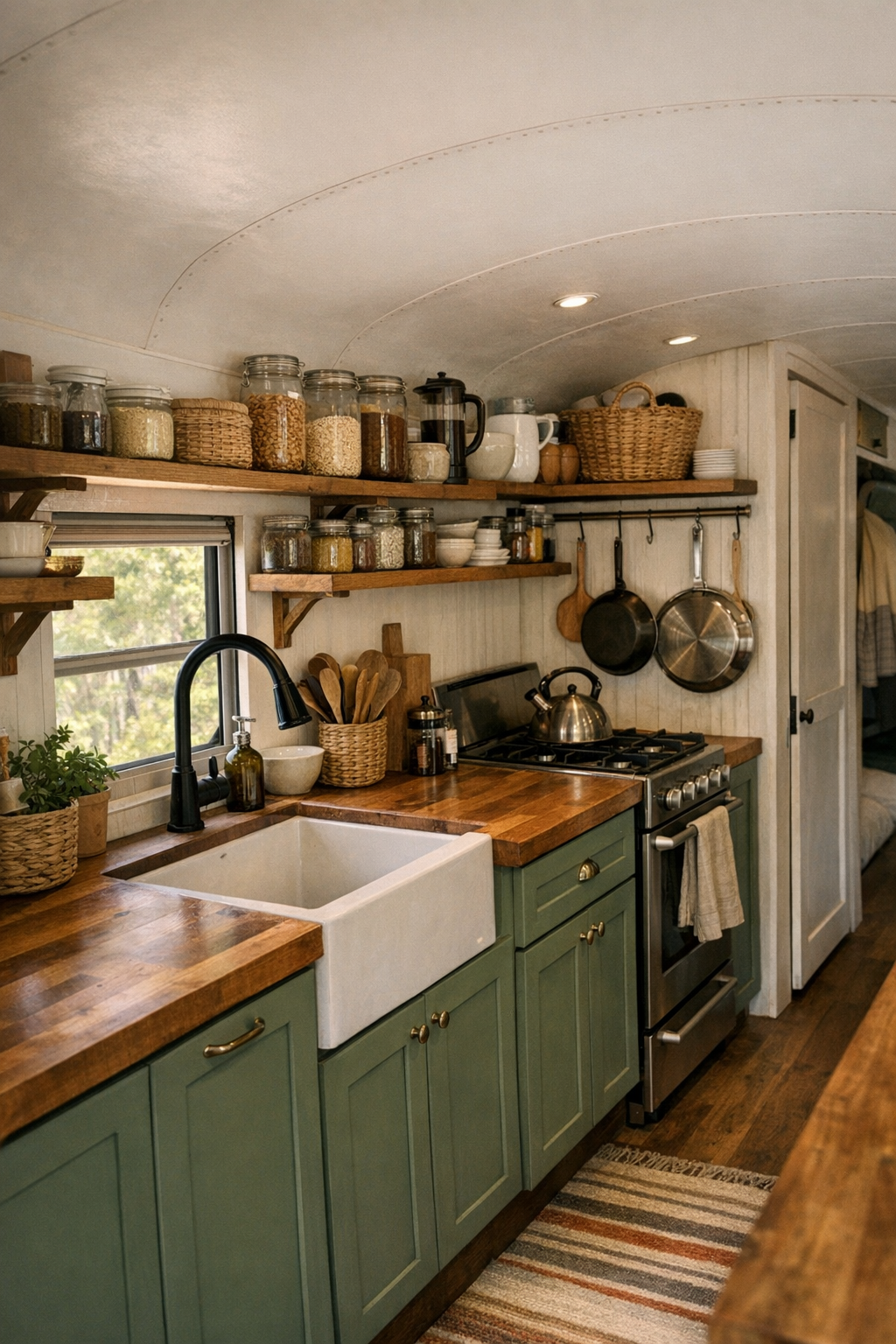
The kitchen is where this bus really earns its homestead credentials. It is laid out as a hard-working galley with efficient counters on both sides or along one long wall, depending on the exact configuration, and every surface appears chosen for durability. Butcher block counters bring warmth, open shelving keeps daily tools accessible, and painted lower cabinetry in a muted green or clay tone grounds the composition beautifully. A deep sink, compact range, and undercounter refrigeration are integrated neatly, without the kitchen ever feeling overfitted.
As a cook, I pay close attention to whether a small kitchen still respects the workflow, and this one does. There is enough landing space beside the stove, enough vertical storage for pantry staples, and enough visual quiet to make the room feel orderly even when in use. I can see hooks for cast-iron pans, baskets for onions and garlic, and perhaps a rail for frequently used utensils. It feels like a kitchen built by someone who actually understands the difference between decorative charm and genuine function.
Bedroom
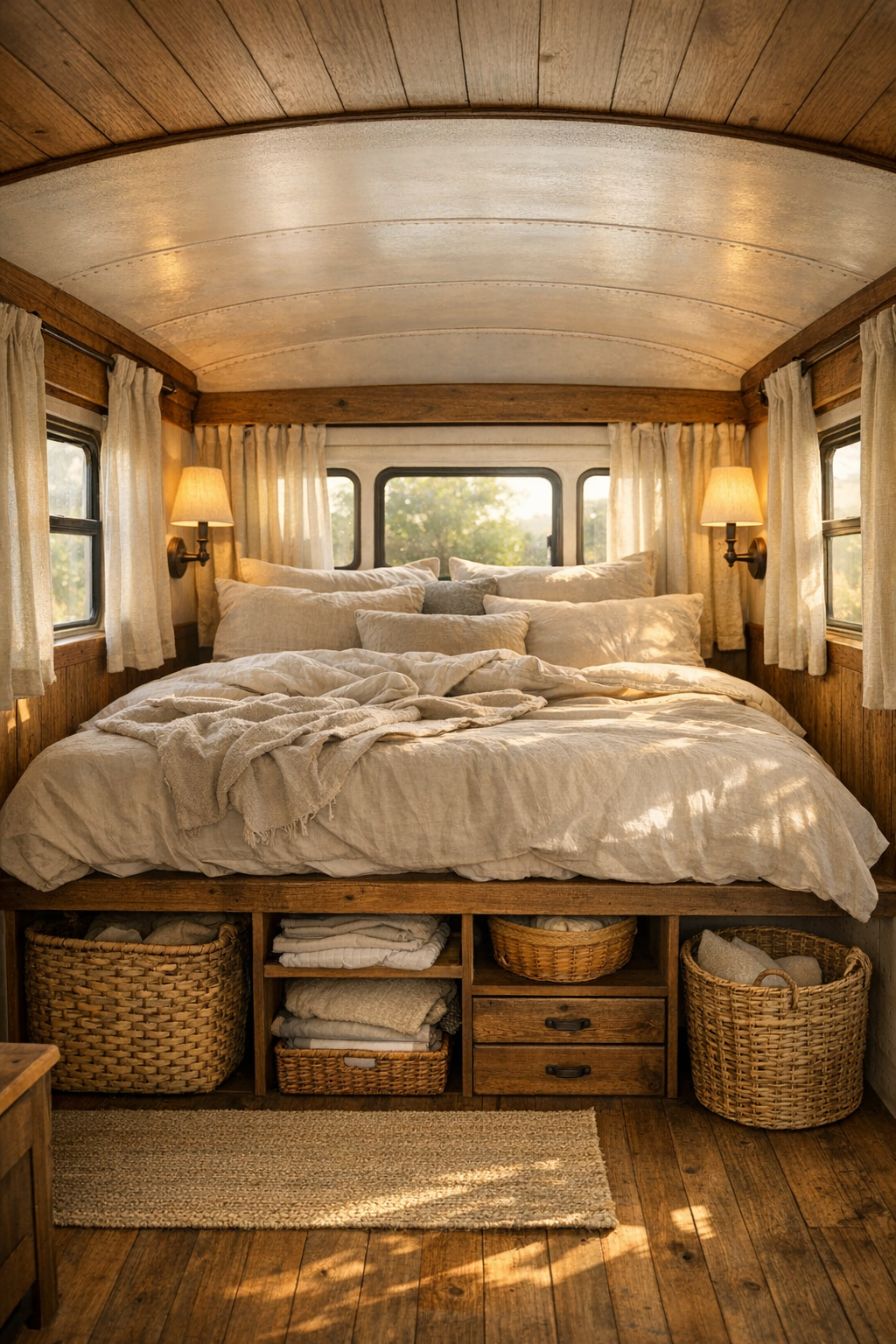
The bedroom proves that restful design does not require excess. Tucked into one end of the bus, it likely uses a raised platform bed to create storage below, and that move alone makes the room feel purposeful instead of cramped. Soft neutral bedding, a quilted coverlet, and perhaps a pair of wall-mounted sconces keep the sleeping area simple and serene. The ceiling curve of the bus becomes especially appealing here, giving the room a cocooning quality that a conventional boxy bedroom often lacks.
Texture carries the design more than ornament. Linen curtains, wood trim, woven baskets, and a small rug underfoot provide enough variation to keep the palette from falling flat, while keeping the room visually restful. I would expect just a narrow shelf for books and glasses, maybe a tiny ledge for a ceramic cup of tea, and windows placed to catch morning light. It feels quiet, tucked away, and genuinely restorative, which is exactly what a bedroom should be.
Bathroom
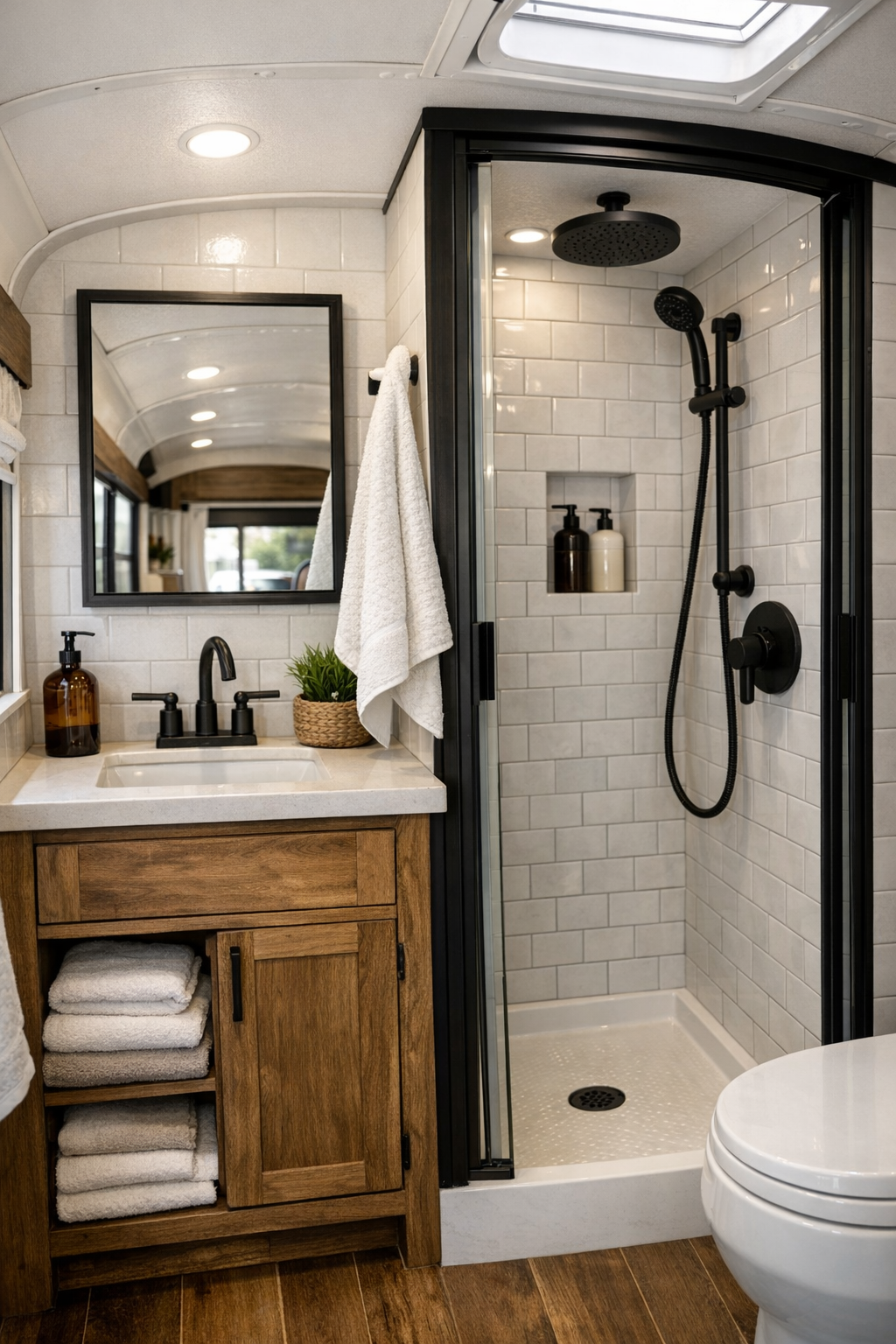
The bathroom is compact, as expected, but it appears carefully disciplined in its material choices. A petite vanity in natural wood, a small basin, and matte black fixtures give it a clean, utilitarian backbone, while tile in soft white or pale stone helps reflect light and make the room feel fresher. In a home like this, moisture control and easy cleaning matter enormously, so the finishes need to be both attractive and practical, and this design seems to understand that balance very well.
I especially like the likelihood of simple details doing the aesthetic work: a framed mirror, a rail for neatly folded towels, a shower curtain in sturdy canvas or linen blend, and maybe a little shelf for soap and everyday essentials. Nothing feels fussy. Instead, the room carries that same off-grid confidence as the rest of the bus, offering exactly what is needed with a touch of warmth. It is proof that small bathrooms can still feel composed and considered.
Other Areas
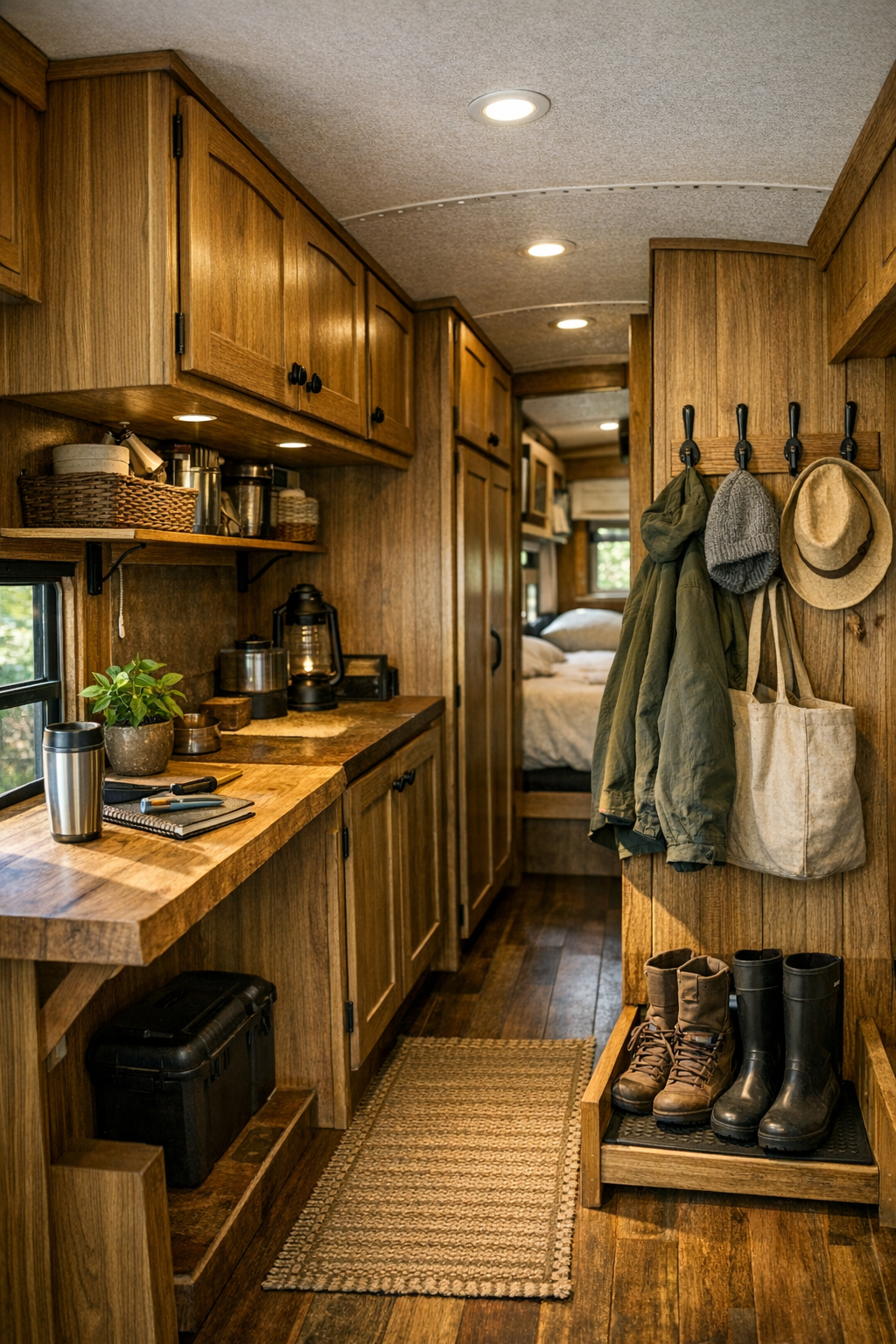
What makes a bus conversion succeed, in my view, is often found in the in-between spaces. Here, those areas likely include a well-organized entry corner with hooks and boot storage, overhead cabinets that follow the bus’s original lines, and transitional zones that double as utility space. There may be a small desk ledge for planning the day, reading recipes, or handling practical tasks, and I appreciate that sort of layered functionality. In a compact home, every threshold has to contribute.
The off-grid systems are also part of the design story, even when they are tucked out of sight. Battery storage, water management, heating elements, and pantry overflow all need homes, and the best versions of these spaces fold them into cabinetry or under-bench compartments so the interior still feels calm. That is what gives this bus its sense of ease: not just charm, but organization. It suggests a life that is pared down, yes, but also thoughtful and fully lived.
Why You'd Live Here
You would live here if you value intention more than excess. This bus offers the romance of off-grid living, certainly, but what makes it compelling is that it also supports the routines of ordinary life: cooking, resting, storing, cleaning, and gathering in comfort. The materials are humble but handsome, the layout is compact but intelligent, and the overall mood is one of capable warmth rather than performance.
I think that is why this home lingers in the mind. It does not try to be grand; it tries to be enough, and succeeds beautifully. For someone drawn to independence, slower rhythms, and rooms that feel made rather than manufactured, this converted bus delivers a retreat with real substance. It is worn in the loveliest way, and all the more inviting for it.