
There’s something deeply calming about a Carolina coastal houseboat that understands its setting without leaning on cliché, and this one gets that balance just right. It feels breezy, grounded, and gently sophisticated, with a barrier-free layout that makes every transition easy on the body and easy on the eye. Set against the soft light and tidal rhythm of the coast, the home pairs practical accessibility with a palette of sand, salt, driftwood, and sky in a way that feels generous rather than clinical.
What I love most is how this concept design turns universal design into a real aesthetic advantage. Nothing feels added on; the wide passages, flush thresholds, thoughtful clearances, and graceful circulation simply make the entire home feel more open and more livable. As someone who spends a lot of time thinking about how spaces support daily routines, especially around cooking and gathering, I find this houseboat especially compelling because it’s equal parts retreat, working home, and polished coastal escape.
Exterior
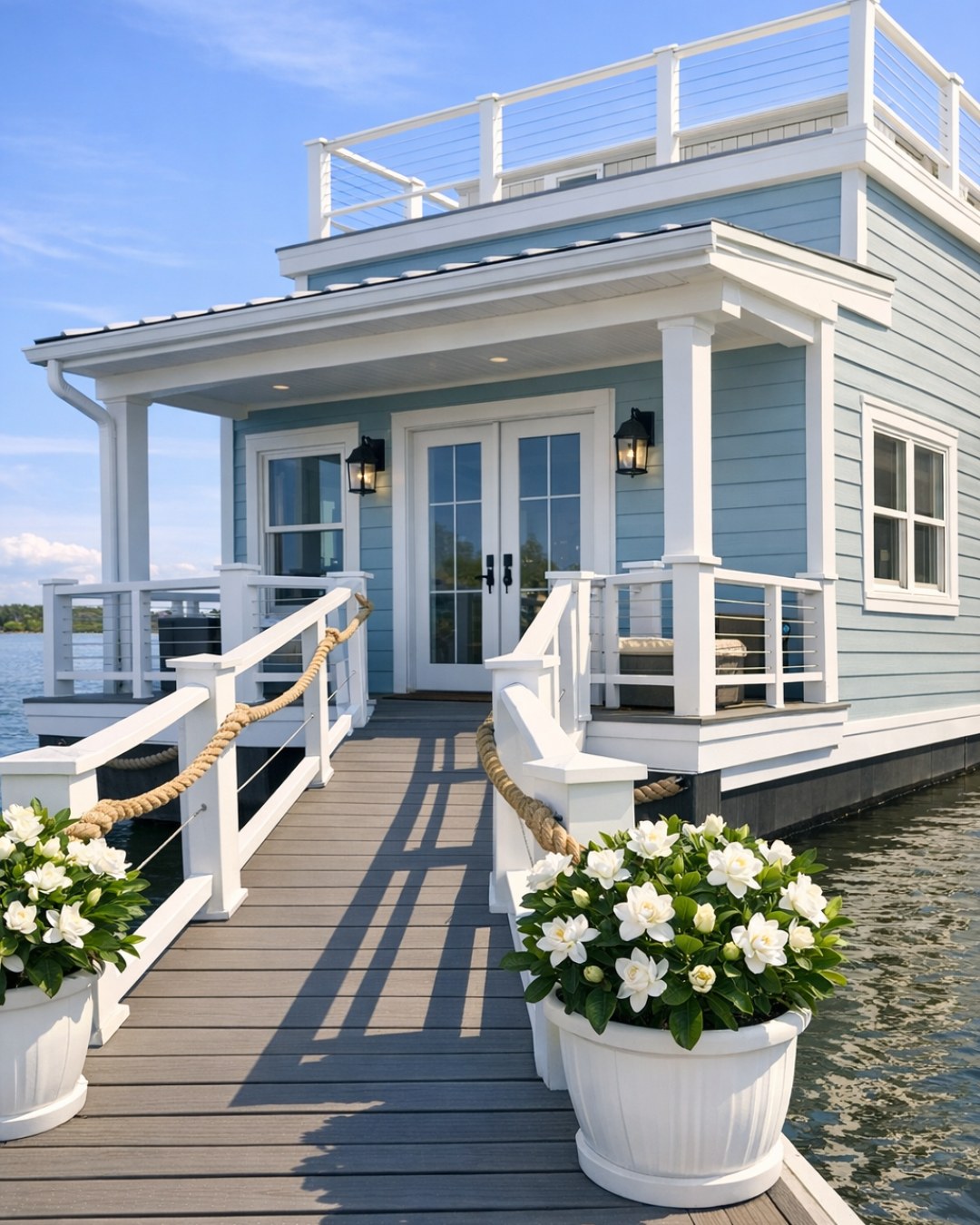
From the outside, the houseboat presents a clean, low-profile silhouette that feels perfectly suited to the Carolina coast. The cladding appears in a mix of durable painted fiber cement and warm-toned wood accents, with the crispness of soft white siding offset by weathered oak detailing and matte metal railings. The roofline stays simple and horizontal, which gives the structure a settled, contemporary character while also helping it feel visually connected to the horizon. Generous glazing wraps key sides of the boat, reflecting water and sky by day and casting a warm lantern glow in the evening.
The barrier-free thinking is especially elegant here. The boarding point is designed as a smooth, gradual approach rather than an obvious ramp, and exterior circulation decks are wide enough to feel social rather than merely functional. Railings are sturdy but visually light, and the deck surface looks like a slip-resistant composite in a pale driftwood tone that won’t compete with the scenery. Potted sea grasses, built-in bench seating, and a sheltered outdoor sitting area give the exterior the easy usefulness I always appreciate in coastal living; it’s not just pretty at a distance, it’s designed to be used all day.
Living Room
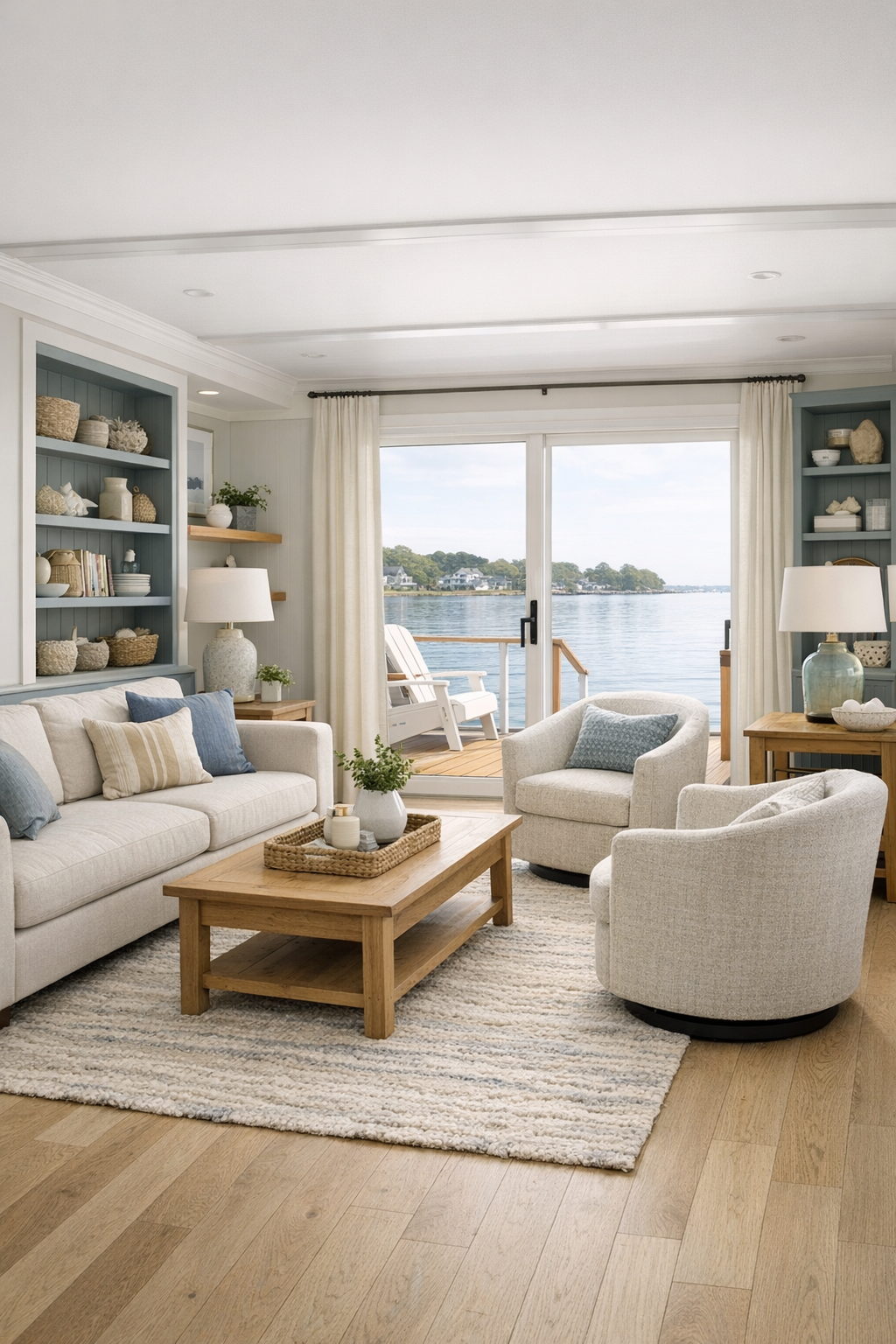
The living room is where the houseboat’s quiet confidence really comes through. The palette stays coastal but refined: oatmeal linen upholstery, chalky white walls, pale oak floors, and touches of muted blue-green that echo marsh water rather than shouting beach theme. A low, deep sofa and two swivel chairs are arranged for easy conversation and unobstructed movement, which is one of the smartest things about the room. There’s enough turning space to keep the layout accessible, yet it still feels intimate, helped by a textured wool rug, a softly curved coffee table, and built-in millwork that keeps clutter off the floor.
Light does much of the decorating here. Broad windows pull in changing reflections from the water, while layered fixtures keep the room usable after sunset: recessed lighting for even illumination, sconces for warmth, and a pair of table lamps with glazed ceramic bases that add a handcrafted note. I also like the way the finishes avoid glare. Instead of shiny surfaces, the room leans into brushed metal, limewashed wood, woven shades, and nubby textiles that make it feel comfortable in every season. It’s a room that invites long conversations, a stack of cookbooks on the side table, and the kind of lingering that great homes always allow.
Dining Room
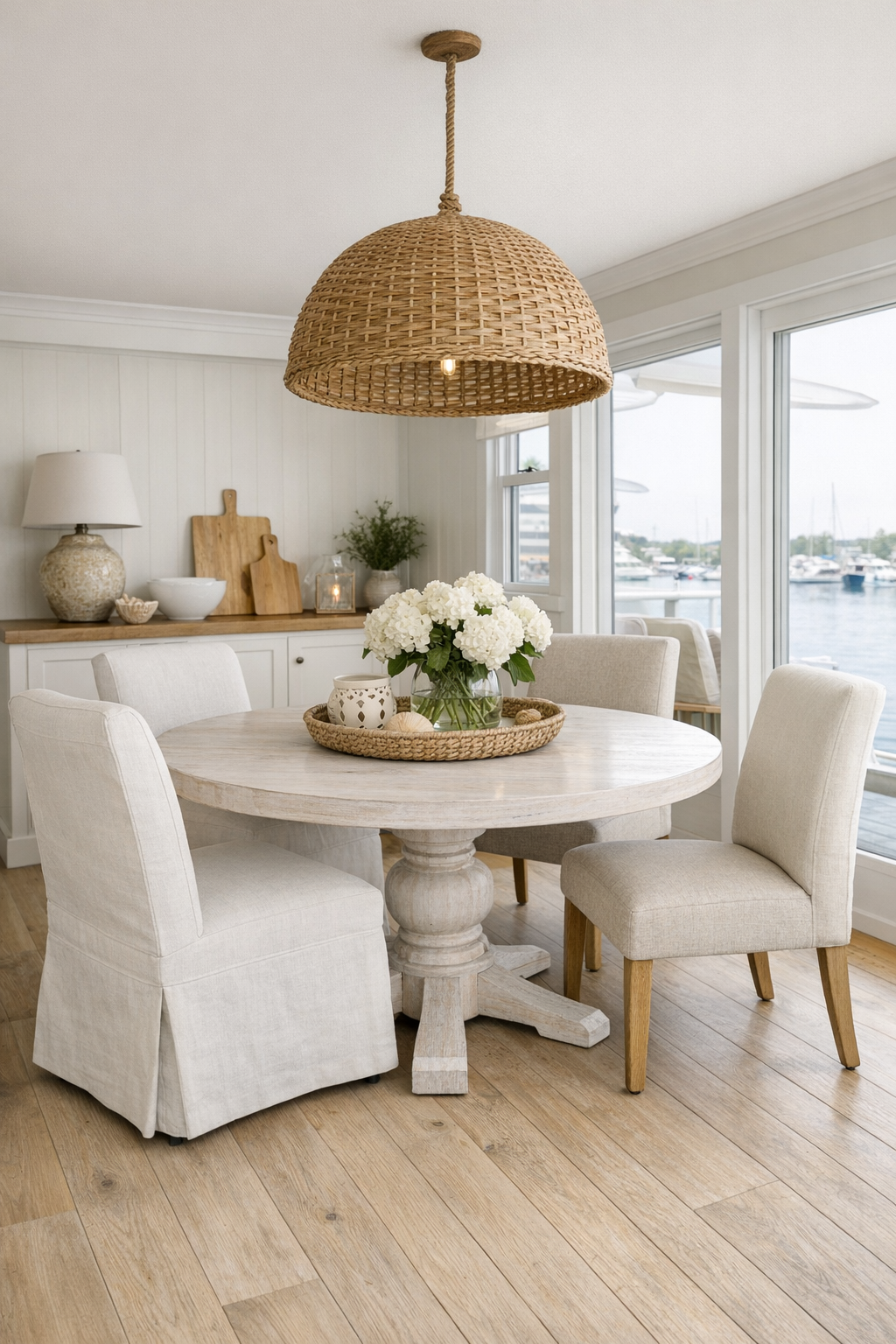
The dining area is integrated beautifully into the main living zone, but it still has enough definition to feel like its own destination. A round pedestal table is the right move here, both visually and functionally; it softens the architecture, encourages conversation, and allows easier movement all around it. The finish looks like whitewashed oak with a subtle grain, paired with upholstered dining chairs in a sandy performance fabric that can handle real life. I always pay attention to whether a dining space feels ceremonial or inviting, and this one absolutely lands in the second camp.
Overhead, a sculptural pendant in woven natural fiber brings texture without heaviness, and the room benefits from borrowed light from the surrounding windows. There’s likely a built-in sideboard along one wall, finished to match the millwork, offering storage for table linens, serving pieces, and all those practical things that make entertaining smoother. The overall mood is relaxed but polished, the kind of place where you could set out a casual shrimp boil one evening and a more composed dinner the next. It has that flexibility I value so much in a home, especially one centered on gathering.
Kitchen
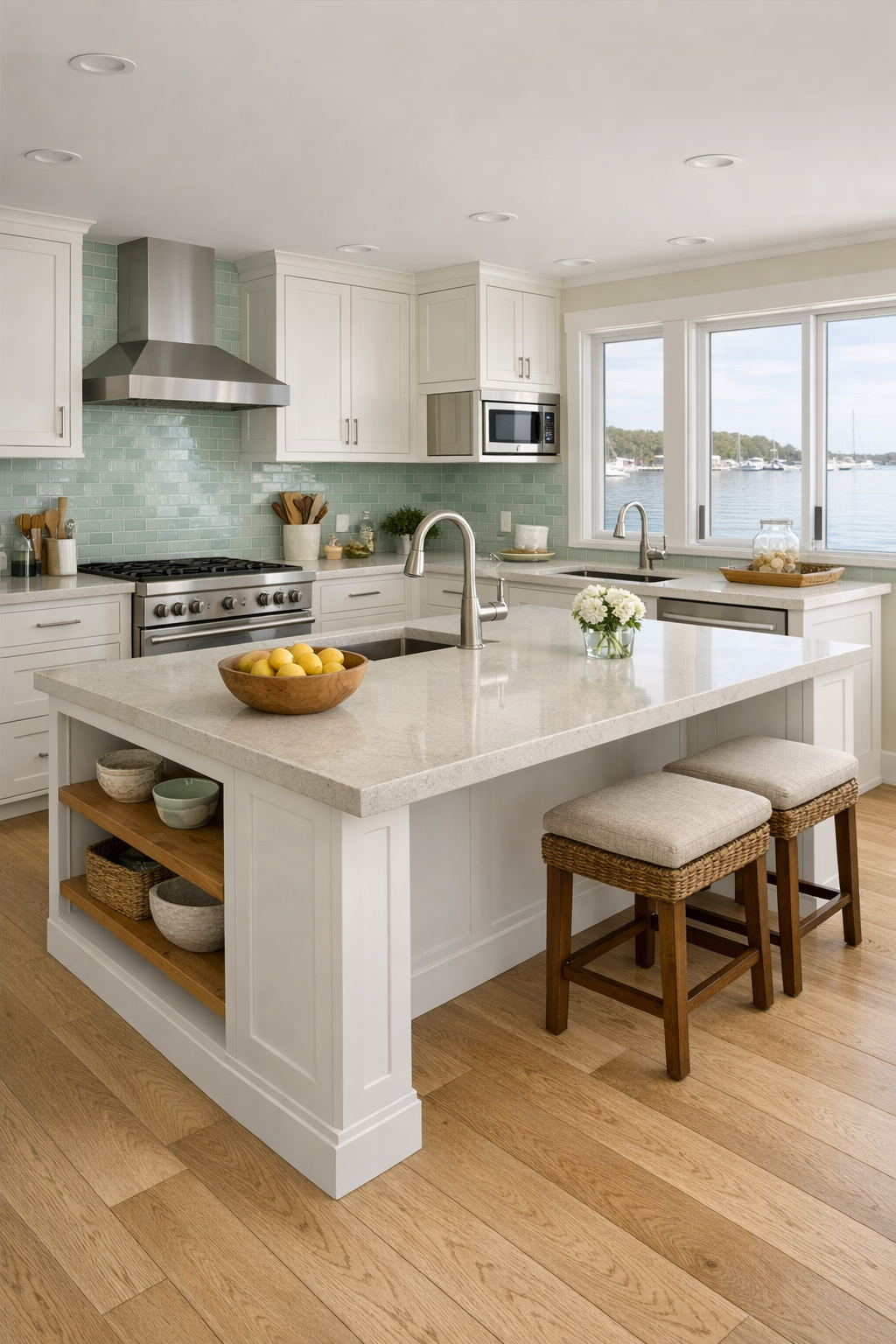
If you ask me, the kitchen is the heart of this houseboat, and this one is especially well considered. The cabinetry is a soft, warm white with simple shaker fronts, paired with honed quartz countertops in a pale sandy tone that hide the chaos of actual cooking better than a stark polished slab ever could. A large island anchors the room, designed with open knee space on one side so it works for multiple users and multiple tasks, from rolling dough to plating lunch. The work triangle is loose and efficient, and the circulation paths are wonderfully generous, making the room feel capable rather than crowded.
What really wins me over are the details that support everyday cooking without calling attention to themselves. There are likely deep drawers for pots, pullout pantry storage, easy-reach wall cabinetry, and appliances installed at heights that reduce strain. The backsplash, perhaps a handmade-look tile in a soft sea-glass tone, adds just enough sheen to bounce light around, while brushed nickel hardware keeps the look crisp and durable. I can picture setting a Dutch oven on the cooktop, opening windows to let in the briny air, and moving through the space without a single awkward pinch point. For anyone who genuinely uses a kitchen, that kind of ease is a luxury.
Bedroom
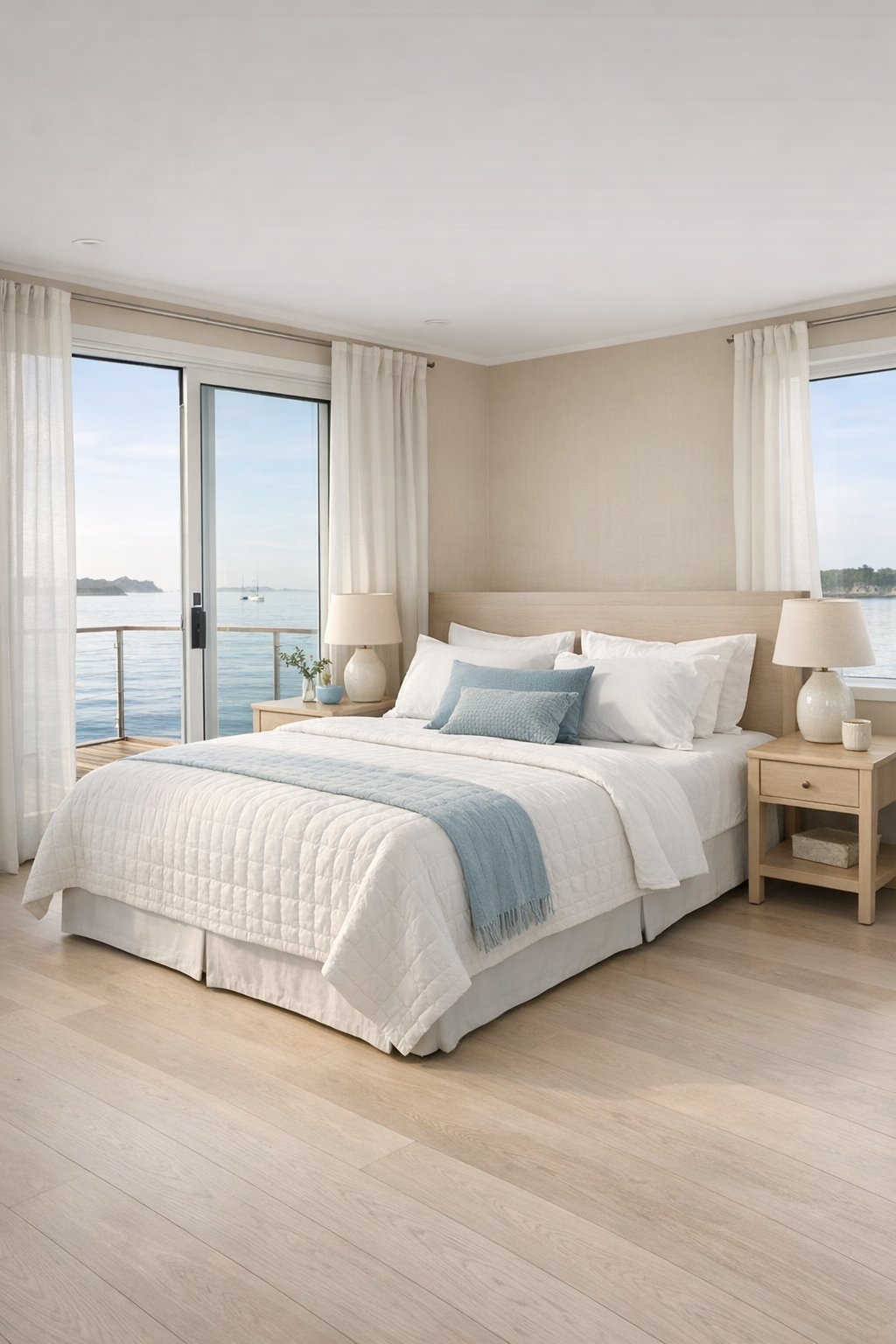
The bedroom shifts the mood slightly, becoming quieter and more cocooning without losing the home’s overall airiness. The bed is likely centered on a paneled wall in a muted oyster or sand tone, layered with crisp white bedding, a quilted coverlet, and accent pillows in washed blues and flax. I appreciate that the furniture stays restrained: slim nightstands, integrated reading lights, perhaps a built-in wardrobe to keep floor area clear. That restraint allows the materials to do the work, from the grain of the wood to the softness of the textiles and the changing light across the walls.
Because this is a barrier-free design, the room feels especially calm in its proportions. There’s comfortable clearance around the bed, smooth flooring underfoot, and no fussy level changes or overly bulky furniture to interrupt movement. Window treatments appear to be layered with light-filtering linen and room-darkening panels, which gives flexibility while preserving the softness of the room during the day. It’s the sort of bedroom that encourages proper rest, not just sleep but that exhale you want at the end of a long day by the water.
Bathroom
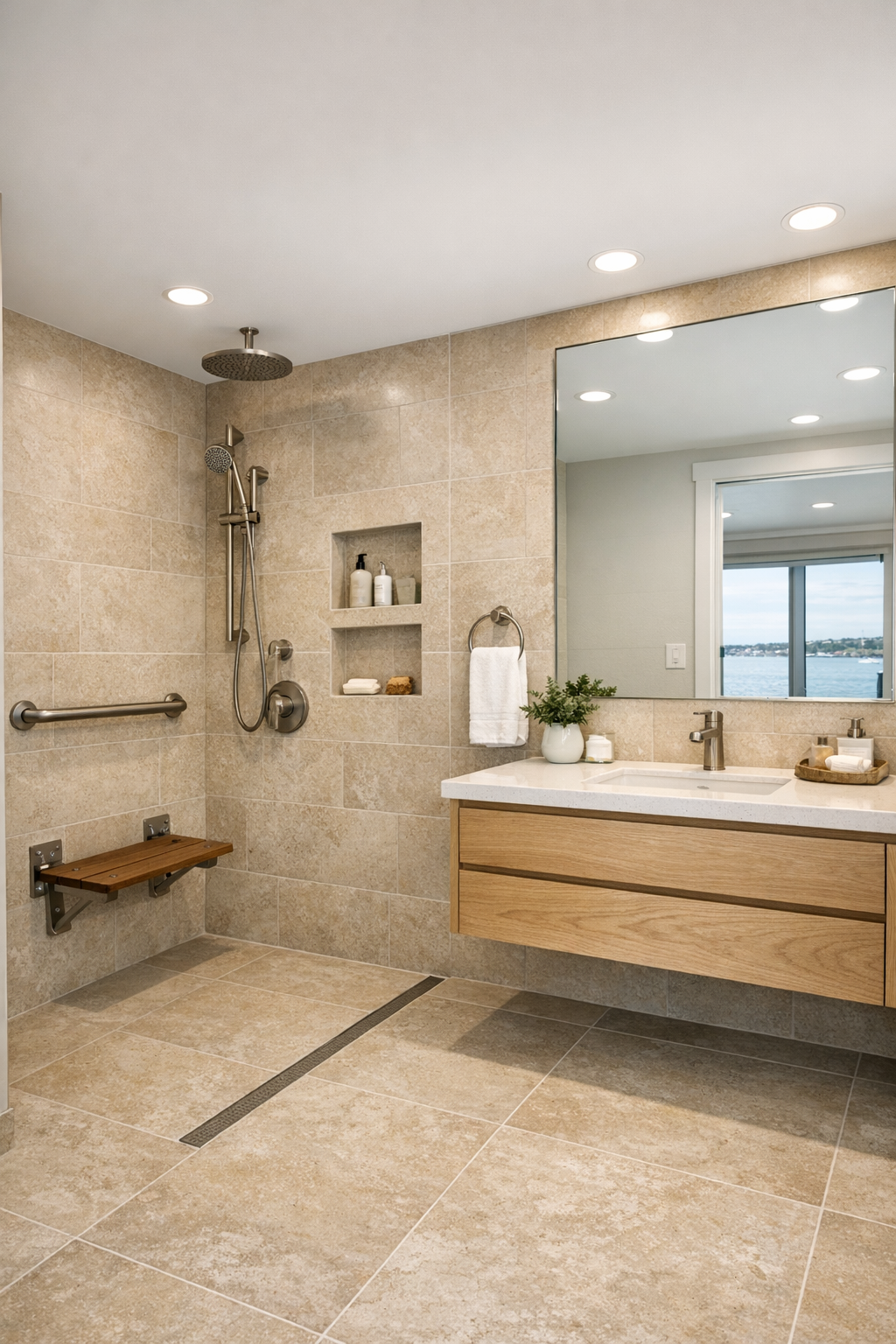
The bathroom is one of the strongest examples of how accessibility and beauty can work hand in hand. A curbless shower with a subtle linear drain keeps the floor plane continuous, and I imagine large-format porcelain tile in a warm limestone look extending across both floor and walls for visual calm. A floating vanity in light oak adds warmth and gives the room a little lift, while the countertop remains simple and durable in a pale solid surface. The fittings are likely in brushed stainless or satin nickel, understated and practical in a marine environment.
There’s also a spa-like restraint here that I find very appealing. Good lighting at the mirror eliminates harsh shadows, while a soft ceiling wash makes the entire room feel bright and clean. Niches are built into the shower wall instead of relying on add-on storage, and grab bars are integrated in a way that feels architectural rather than institutional. That’s the recurring success of this houseboat: the things that make it easier to use also make it look more composed. In the bathroom, that translates into a space that feels restorative, sensible, and genuinely luxurious.
Other Areas
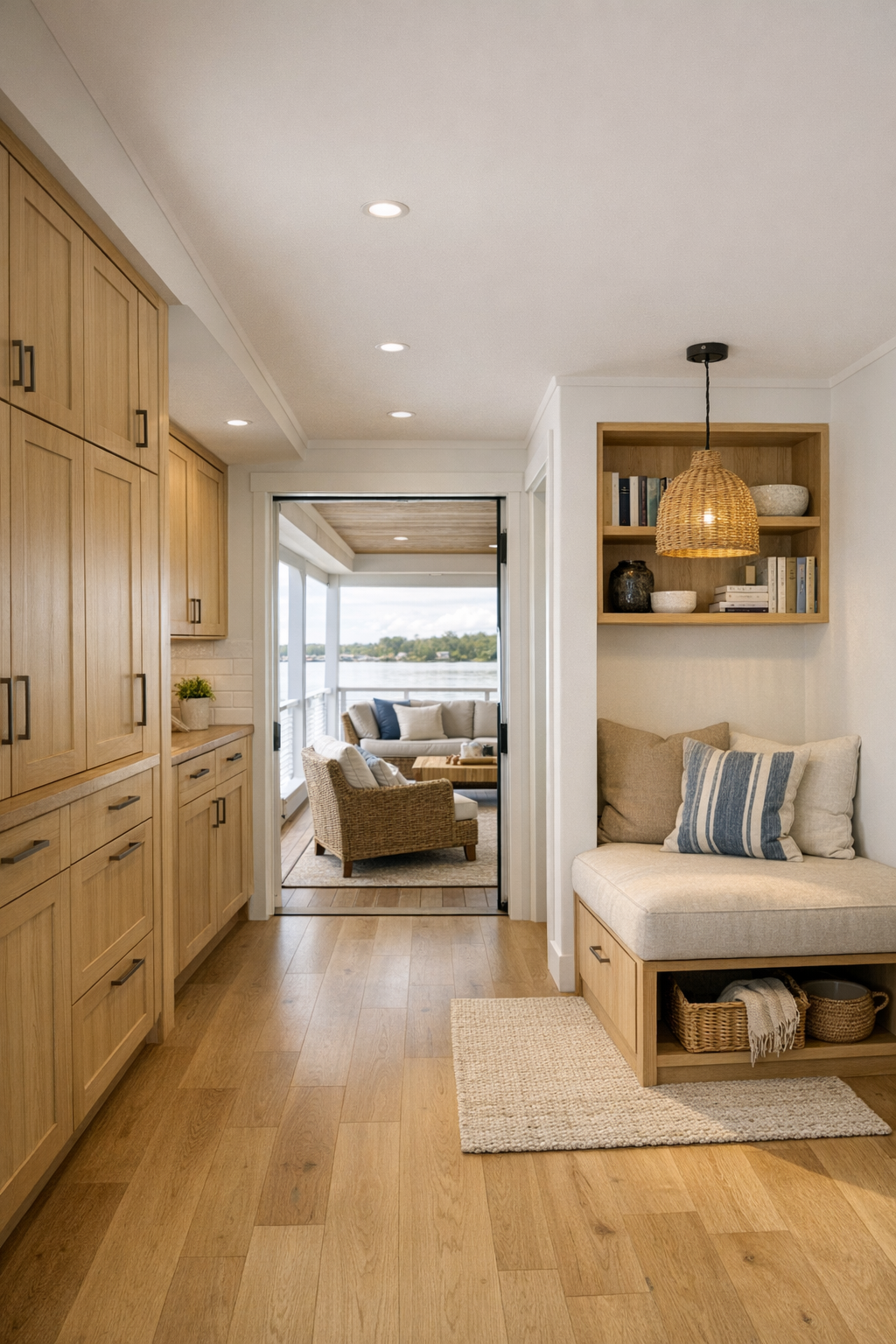
Beyond the main rooms, this houseboat seems to understand that successful living happens in the in-between spaces. Hallways are wider than expected and likely treated less like corridors and more like extensions of the living environment, with art niches, low-profile sconces, and perhaps a slim console or integrated bench where space allows. A compact office nook or reading corner would make perfect sense here, especially with built-in shelving and a desk surface positioned to catch natural light. Even utility zones, like laundry storage or entry cabinetry, are probably handled with the same tidy millwork and restrained palette so nothing breaks the visual rhythm.
I’d also include a covered outdoor deck as part of these supporting spaces because on a coastal houseboat, that threshold between inside and out is everything. With comfortable lounge seating, weather-friendly textiles, and maybe a dining ledge or small table, it extends the home without adding complexity. The best part is that the barrier-free approach continues seamlessly, allowing the entire house to function as one connected environment. That continuity gives the home its real sense of ease, and ease, in my experience, is one of the hardest design qualities to achieve well.
Why You'd Live Here
You’d live here because it proves that barrier-free design can be graceful, warm, and deeply stylish. This houseboat doesn’t force a choice between accessibility and atmosphere; it folds both into a single, coherent vision shaped by light, coastal materials, and thoughtful planning. Every room feels usable in the best sense of the word, which for me is always a sign of lasting design. It’s a home that anticipates real life and makes that life feel easier.
You’d also live here for the mood, which is wonderfully hard to fake. The Carolina coastal references are subtle, the interiors are polished without being precious, and the connection to the water is constant without overwhelming the rooms themselves. As someone who believes the best homes support daily rituals, from brewing coffee to cooking dinner to simply finding a comfortable place to sit at day’s end, I find this one very persuasive. It offers beauty, practicality, and calm in equal measure, and that’s a combination I never stop admiring.