
There is something deeply satisfying about a home that knows exactly what it wants to be, and this converted bus settles into that truth with uncommon grace. Set in a summer meadow with tall grass brushing the wheels and wildflowers softening every edge, it brings together rustic practicality and a kind of quiet beauty that feels earned rather than staged. I love the way the design honors the bus’s narrow footprint while still creating rooms that feel complete, intimate, and full of purpose.
Though this is a concept design, it feels rooted in the real rhythms of country life: morning coffee at first light, muddy boots by the door, supper simmering while the windows stand open to the field. The mood is warm and handmade, with knotty wood, iron hardware, linen curtains, and a gentle palette of wheat, moss, cream, and weathered brown. What makes it special is not just that it is off-grid, but that it turns self-sufficiency into something genuinely inviting.
Exterior
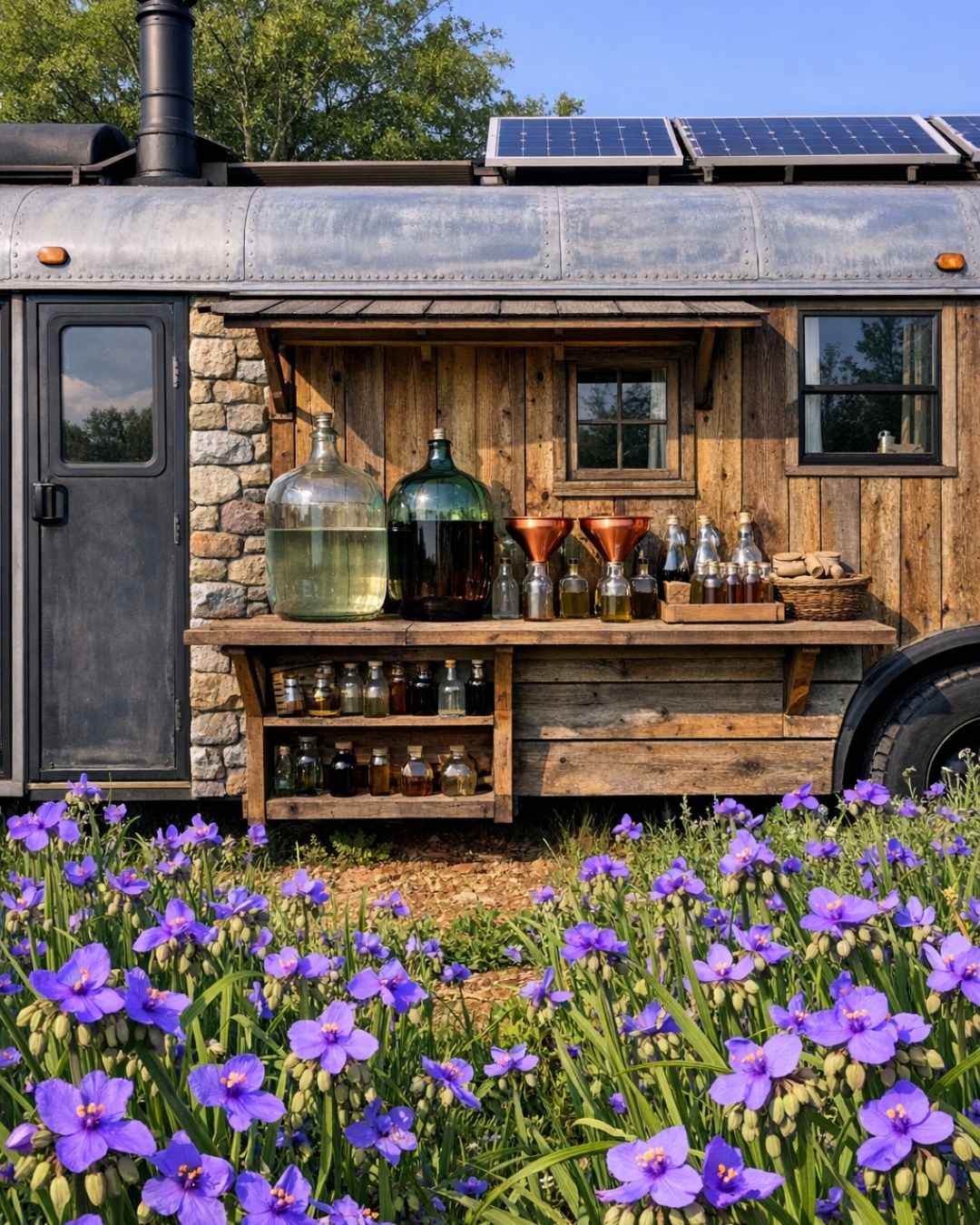
From the outside, the bus keeps enough of its original shape to preserve its story, yet every visible update makes it feel at home in the landscape. The body is finished in a muted, earthy green with cream trim that softens the lines, and the windows are framed in stained wood that adds a cabin-like quality without becoming fussy. A simple awning extends over one side, casting a strip of shade across a small deck made of rough-sawn timber, where a pair of folding chairs and a galvanized planter make the home feel settled for the season.
What I find especially charming is the balance between utility and romance. Solar panels sit neatly along the roofline, rainwater collection is incorporated with an almost old-fashioned restraint, and a compact wood storage nook near the entry gives a hint of how the bus functions through changing weather. It feels sturdy and self-reliant, but never severe. In the meadow light, with the exterior materials weathering naturally and the bus resting low against the grass, the whole scene has the plainspoken beauty of a well-kept farm outbuilding turned unexpectedly lovely.
Living Room
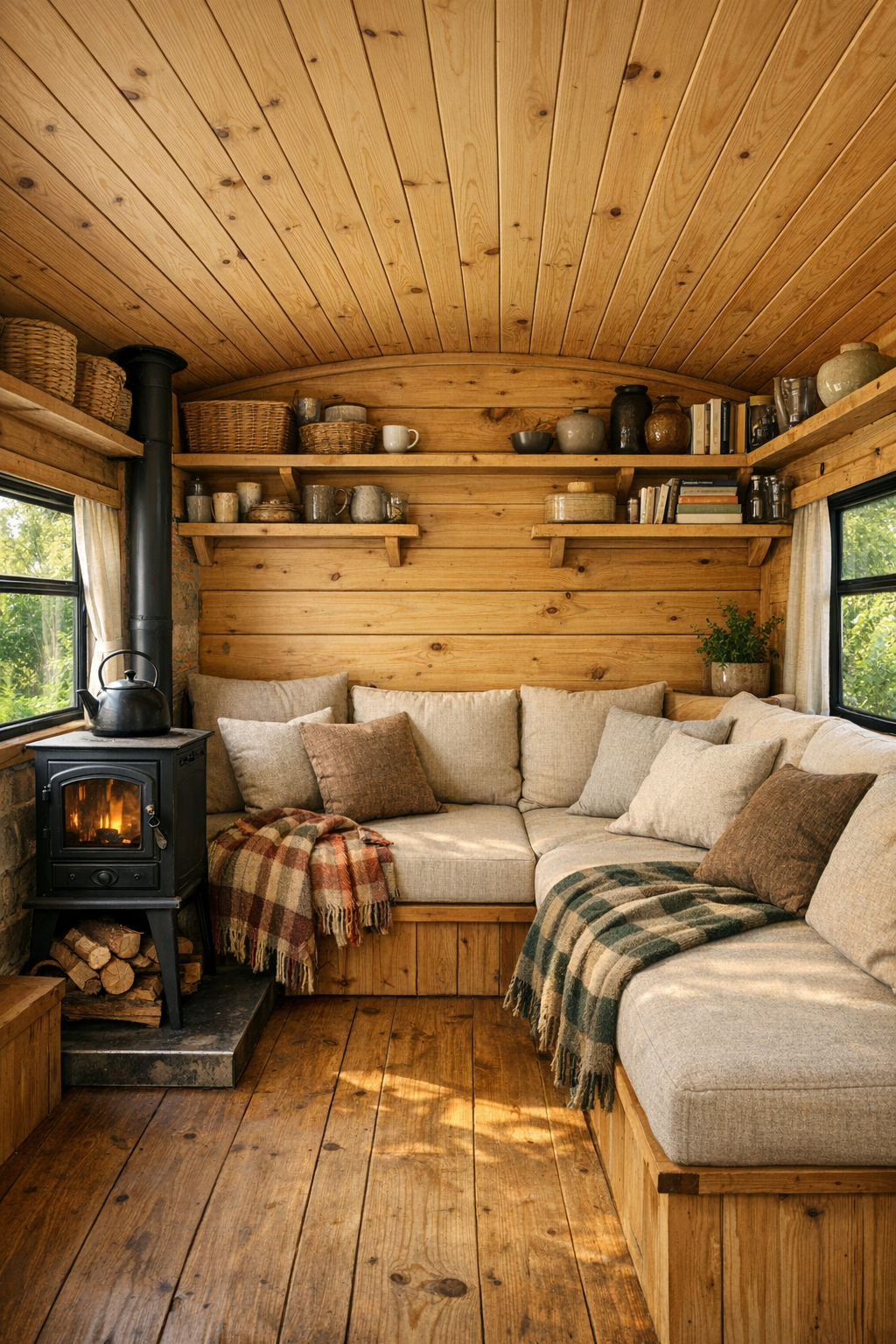
The living room is arranged with a confidence that makes the most of every inch. A built-in bench sofa runs beneath the windows, topped with deep seat cushions in oatmeal canvas and layered with wool throws in faded plaids and ticking stripes. Opposite, a slim wall with open shelving provides space for books, crocks, baskets, and a small cast-iron stove, all scaled carefully so the room still feels breathable. The wood ceiling arches gently overhead, and that curve gives the space a softness that reminds me of old haylofts and train cars in the best possible way.
The palette here is rooted and comforting: honeyed pine, matte black metal, warm ivory upholstery, and accents of sage and rust that echo the meadow outside. Light enters from both sides, washing across the grain of the wood and making the room glow in late afternoon. I can imagine settling in here after a long day, windows cracked, curtains lifting in the breeze, with the kind of ease that comes from a room where nothing is excessive and everything is chosen with care.
Dining Room
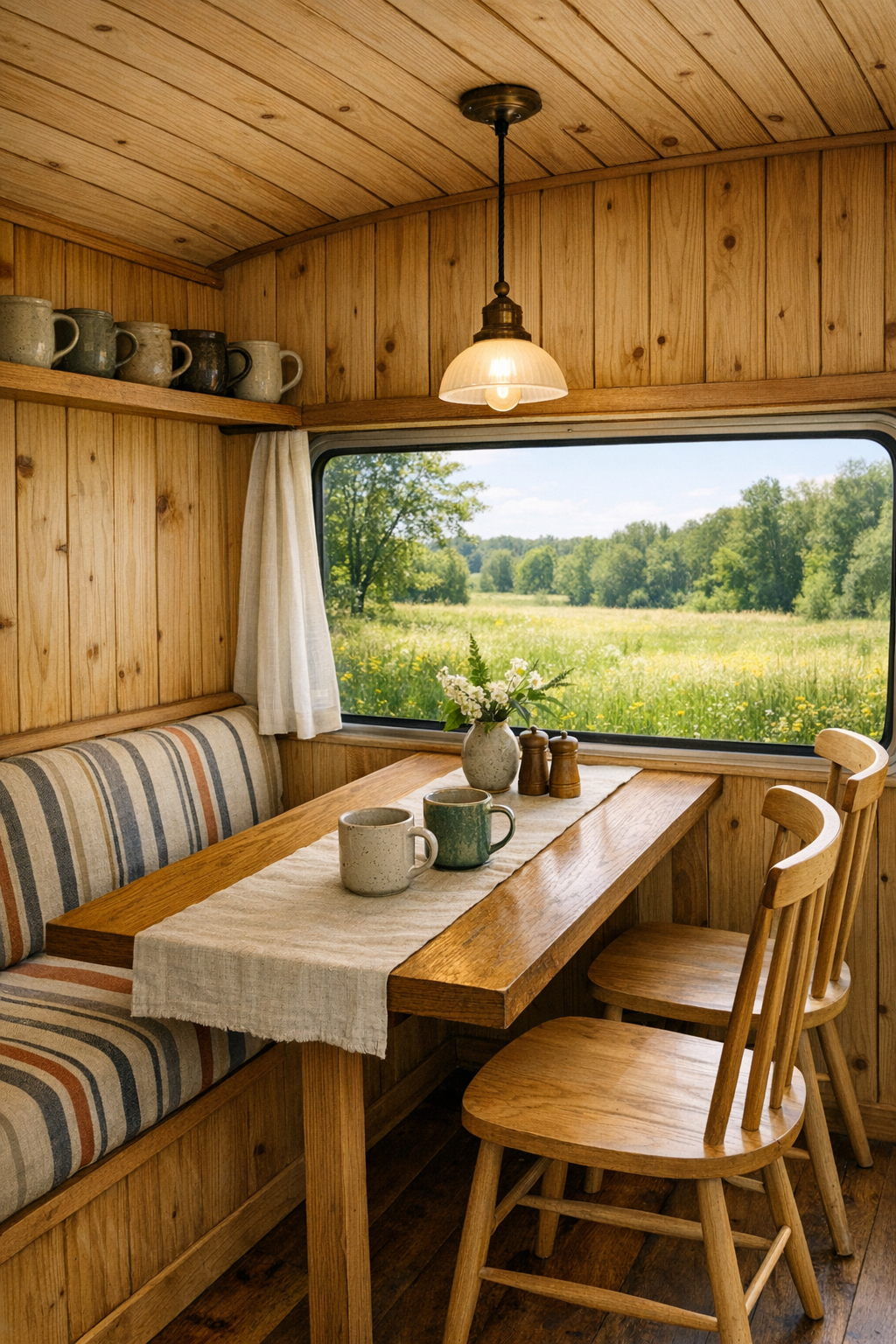
The dining area is tucked neatly between the living space and kitchen, and it is one of those clever arrangements that feels both practical and gracious. A narrow built-in table in stained oak sits beside the window, paired with a fixed bench on one side and a pair of simple spindle chairs on the other. The seating keeps the passageway open while still allowing the space to function like a true dining room rather than an afterthought. A small shelf above the table displays stoneware mugs and a little vase of field flowers, which is exactly the sort of touch that keeps a compact home from feeling hard-working to the point of austerity.
There is a sweetness to this room that reminds me of summer suppers in old family kitchens, where every meal felt just a bit more special because everyone had to gather close. A linen runner softens the tabletop, the bench cushion is covered in muted striped fabric, and a petite metal pendant hangs low enough to create intimacy without crowding the headspace. Because the window sits at table height, the view of grasses and sky becomes part of the setting, and the whole room feels stitched into the meadow beyond.
Kitchen
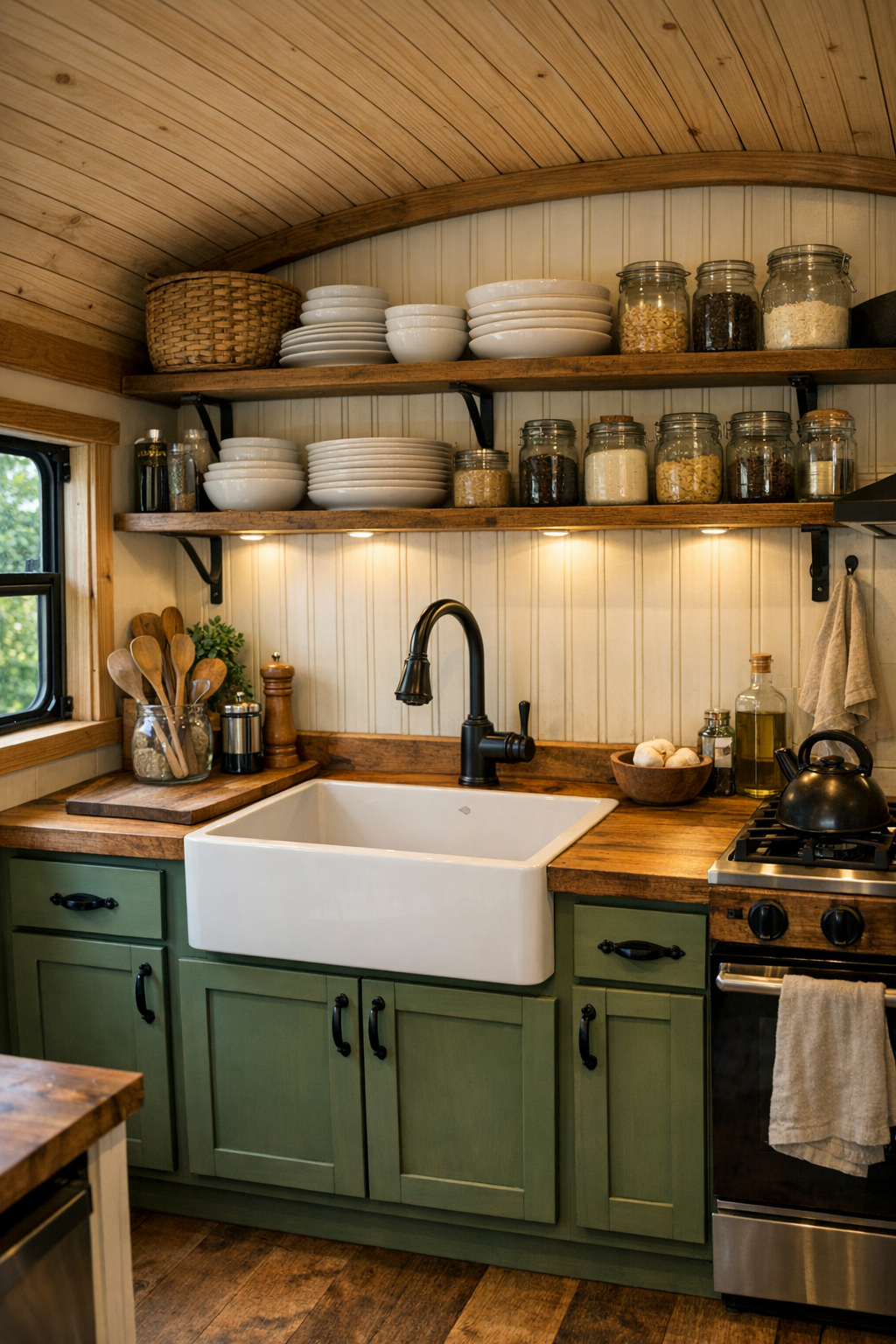
The kitchen is, to my eye, the soul of the whole bus. It is compact, yes, but it has been planned by someone who understands that small kitchens can still be deeply satisfying if the bones are right. Lower cabinets are finished in a muted moss green, while the upper storage is kept partly open, displaying stacked white dishes, clear jars, and everyday cookware with a kind of honest orderliness. Butcher-block counters bring warmth, and a deep farmhouse-style sink, fitted carefully into the narrow layout, gives the room a hardworking anchor.
I especially appreciate the old-fashioned spirit carried through the details: unlacquered brass latches, black iron hooks for utensils, a petite range with a proper vent hood, and a beadboard backsplash painted a soft cream. Under-cabinet lighting keeps the work surfaces bright, while daylight from the bus windows adds a cheerful, almost garden-fresh quality. This is the kind of kitchen where biscuits would make sense, where soup could simmer slowly, and where even a modest meal would feel connected to the landscape outside.
Bedroom
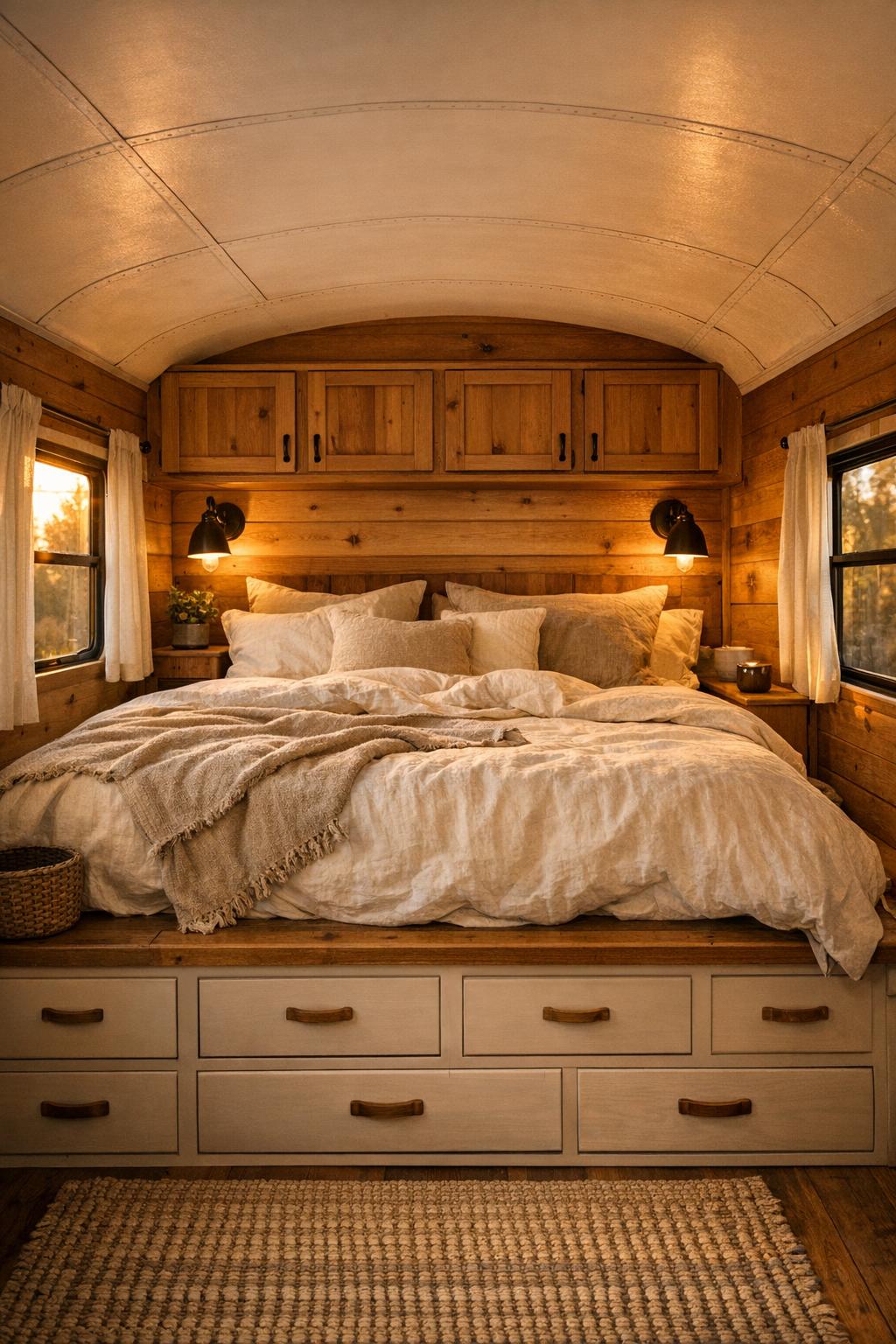
The bedroom is positioned to feel tucked away, and that privacy matters in a home this size. A raised bed platform spans the width of the bus, dressed in washed linen bedding in soft cream, flax, and dusty green, with quilted layers that make it look irresistibly comfortable. Drawers are built neatly beneath the bed, and shallow cabinets above the headboard use every available plane without making the room feel boxed in. The window placement is especially thoughtful, framing the meadow at pillow height so waking up would feel like opening one’s eyes right into the landscape.
What gives this room its peace is the restraint. The materials are simple—wood walls, linen textiles, matte metal sconces, a woven rug underfoot—but they are arranged with such calm proportion that the room feels larger than it is. I can picture the evening light turning golden across the blanket folds, a book set aside on the ledge, and the quiet that settles once the day is done. It has the plain comfort of a guest room in an old farmhouse, translated beautifully into a smaller, more intentional form.
Bathroom
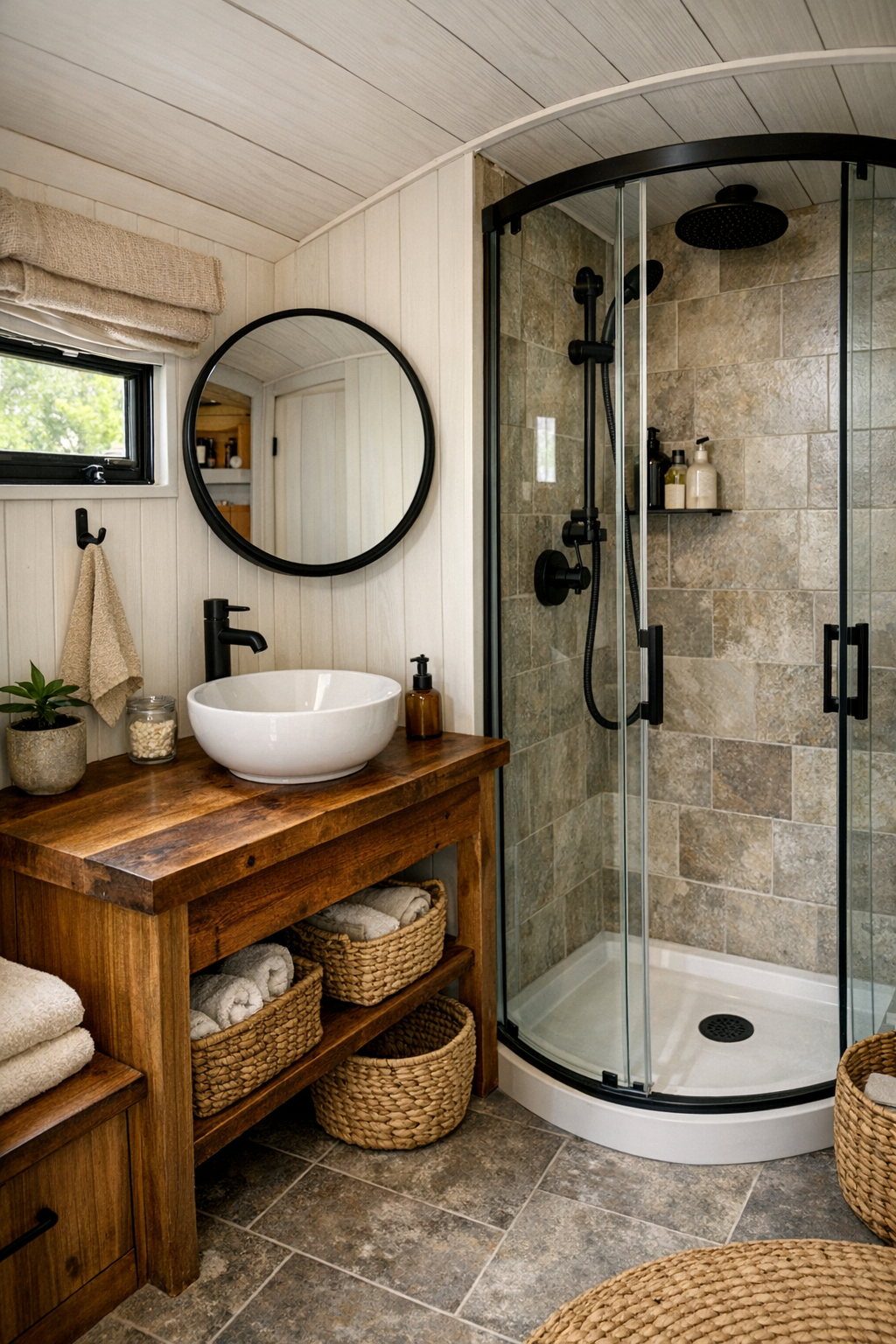
The bathroom proves that rustic need not mean rough. It is compact and beautifully composed, with a small vanity in stained wood, a round mirror with a black metal frame, and a vessel sink that brings a touch of refinement without breaking the home’s plainspoken character. The walls are finished in light vertical paneling, which helps the room feel taller, while the floor shifts to a durable stone-look tile in soft gray and sand tones that can handle country life with dignity.
A corner shower enclosed in clear glass keeps the visual lines open, and the fittings in matte black tie back to the stove, sconces, and hardware used elsewhere in the bus. I like that the styling remains gentle rather than trendy: a woven basket for towels, a peg rail for robes, a little window for daylight and air. It feels clean, organized, and entirely livable, with the sort of modest polish that makes daily routines feel cared for.
Other Areas
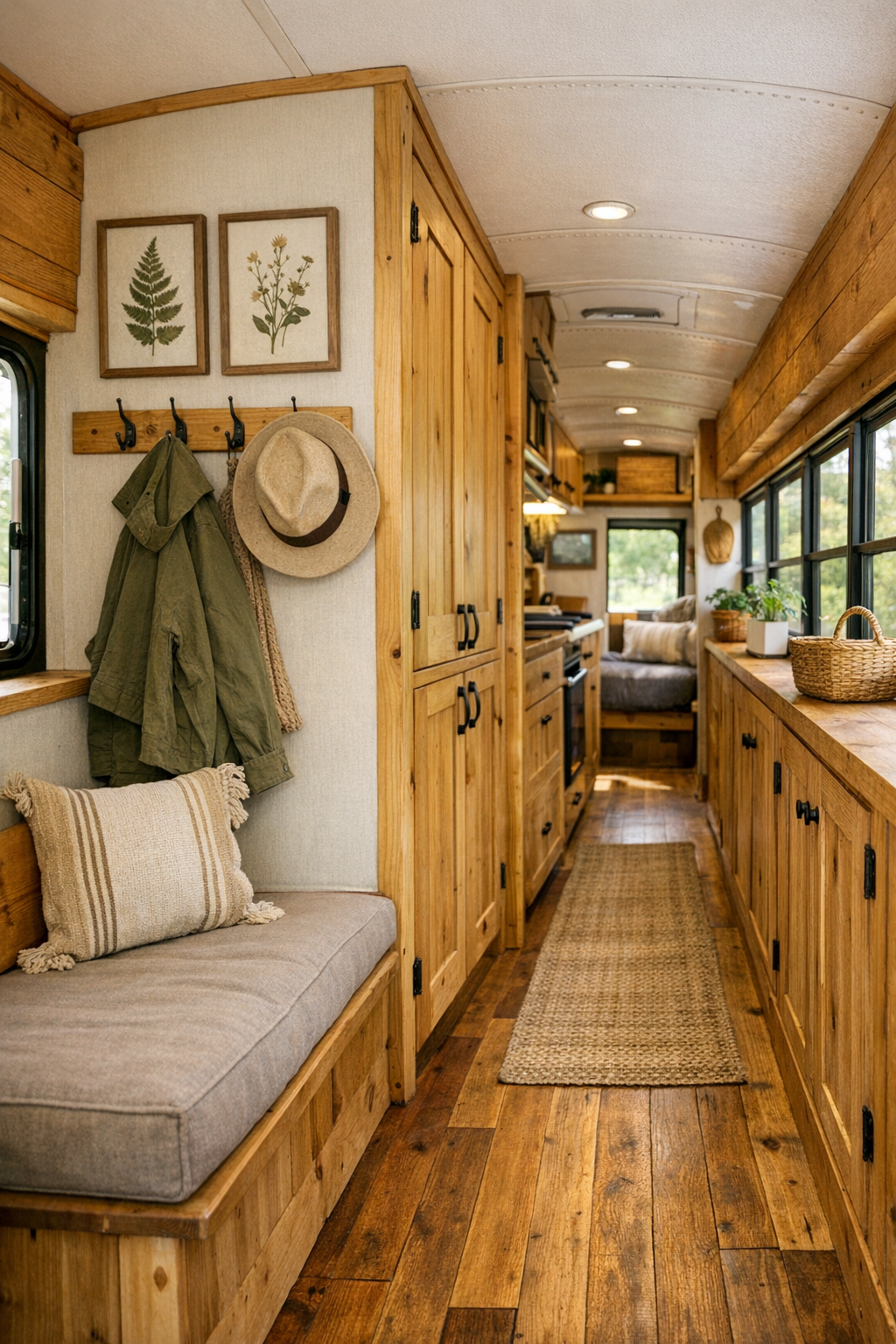
What elevates this bus beyond novelty are the transitional and working spaces that have been given real attention. The entry includes a tidy boot area with hooks, a bench, and storage for outdoor layers, which is exactly what a meadow home ought to have. Overhead compartments have been reimagined as handsome built-ins with wood fronts, and even the corridor has moments of interest—small reading lights, narrow ledges, framed botanicals, and carefully placed windows that keep the movement through the home from ever feeling cramped or tunnel-like.
There is also a lovely sense of outdoor-indoor living built into the design. The side deck acts as an extra room in good weather, and just beyond it one can imagine a fire ring, a wash line, a few potted herbs, perhaps even a weathered table for shelling peas or slicing tomatoes. Inside, every spare corner seems to serve some domestic purpose, but none of it feels burdened. It is a small home that understands the pleasures of work, rest, and seasonality all at once.
Why You'd Live Here
You would live here if you believe a home can be small without feeling skimpy, and rustic without feeling performative. This bus offers the kind of thoughtful design that makes daily life not only possible, but lovely: a kitchen that welcomes real cooking, storage that respects real habits, and rooms that carry a softness so often missing in off-grid spaces. It turns limitations into character, and that is no small feat.
I think, too, that you would live here for the feeling of nearness—to weather, to daylight, to quiet, to the simple domestic rituals that often get lost in larger homes. There is humility in this design, but also real beauty. It feels like a place where life could be pared down to what matters most, and where every window, every board, and every well-used corner would earn its keep in the gentlest way.