
This soft buttercream single-story container home carries a kind of quiet sweetness that caught me right away. Set in what feels like a calm open landscape, it blends the practical honesty of container architecture with a gentler, more gracious spirit than you might expect. The pale creamy exterior softens every line, and inside, the rooms unfold with a warmth that reminds me of sunlight on old painted wood floors and fresh curtains stirring in a country breeze. Though this is a concept design, it feels wonderfully lived-in in all the ways that matter most.
What makes this home special is the way it turns something industrial into something deeply comforting. Instead of leaning hard into stark metal and sharp minimalism, the design uses mellow neutrals, natural wood, woven textures, and light in a way that makes the whole place feel settled and humane. I find that especially appealing because it honors efficiency without giving up tenderness, and that balance is not so easy to come by. It is neat and modern, certainly, but it also has the kind of atmosphere that makes you think of soup on the stove, clean linens, and a table always ready for company.
Exterior
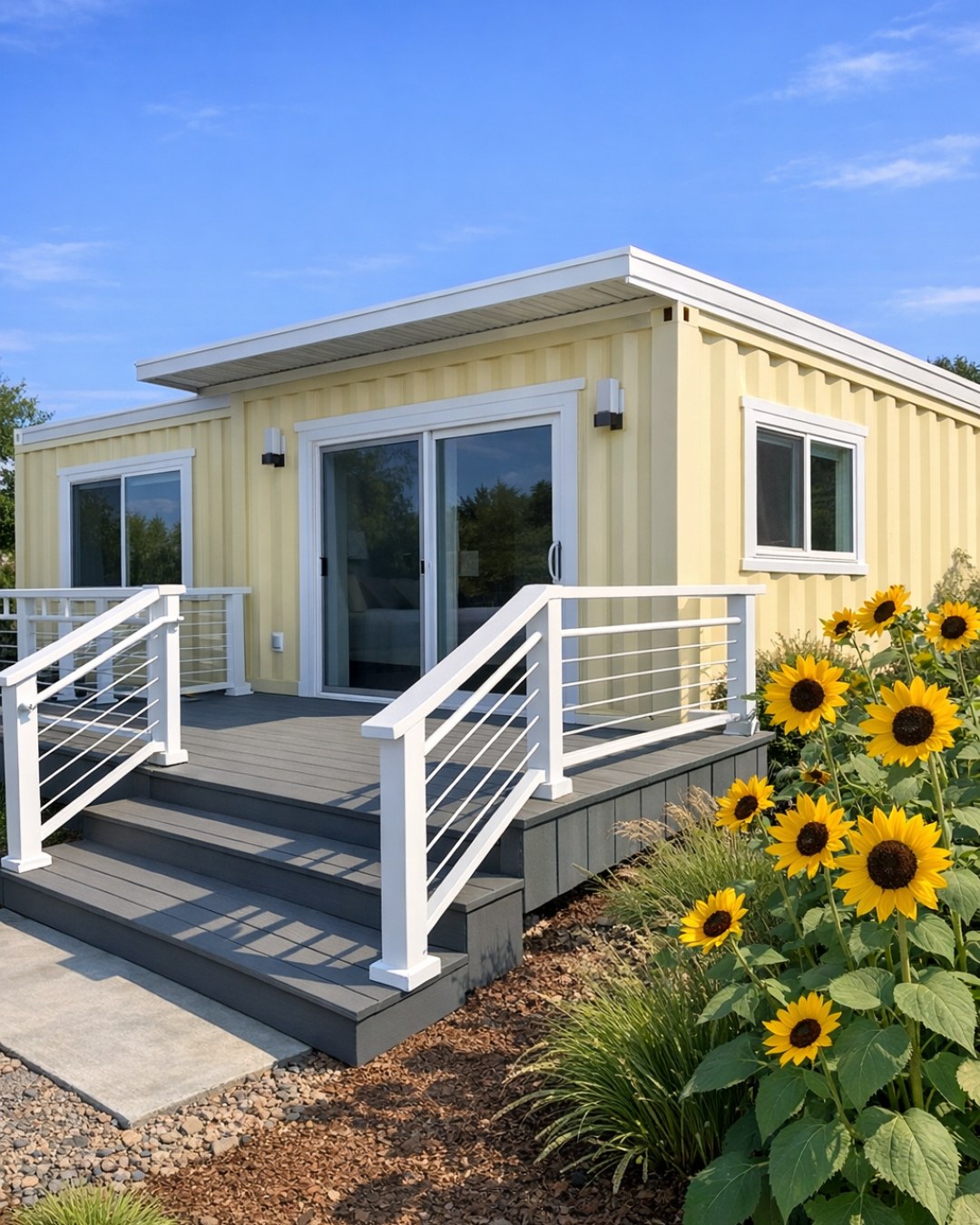
From the outside, the home reads as simple and disciplined, but not severe. The soft buttercream finish is the first thing that changes the conversation, wrapping the container form in a color that feels more like a farmhouse kitchen wall than a shipping yard. Low horizontal lines keep the house grounded, while black-framed windows give it just enough definition and contrast. A modest terrace in pale concrete or limestone-toned pavers helps bridge the architecture to the landscape, and I can easily imagine big clay planters, a wooden bench, and a pair of lantern-style sconces making the entry feel welcoming rather than formal.
What I like most is how the exterior respects the container structure without making a spectacle of it. You still sense the clean geometry and efficient footprint, but the finish palette gentles everything: creamy painted metal, warm timber around the doorway, and maybe a few slatted privacy panels that cast pretty stripes of shade in the afternoon. It has that tidy, practical Midwestern sensibility I have always admired, where every choice seems useful and handsome at once. Nothing is overdone, yet the whole composition feels polished, fresh, and quietly proud of itself.
Living Room
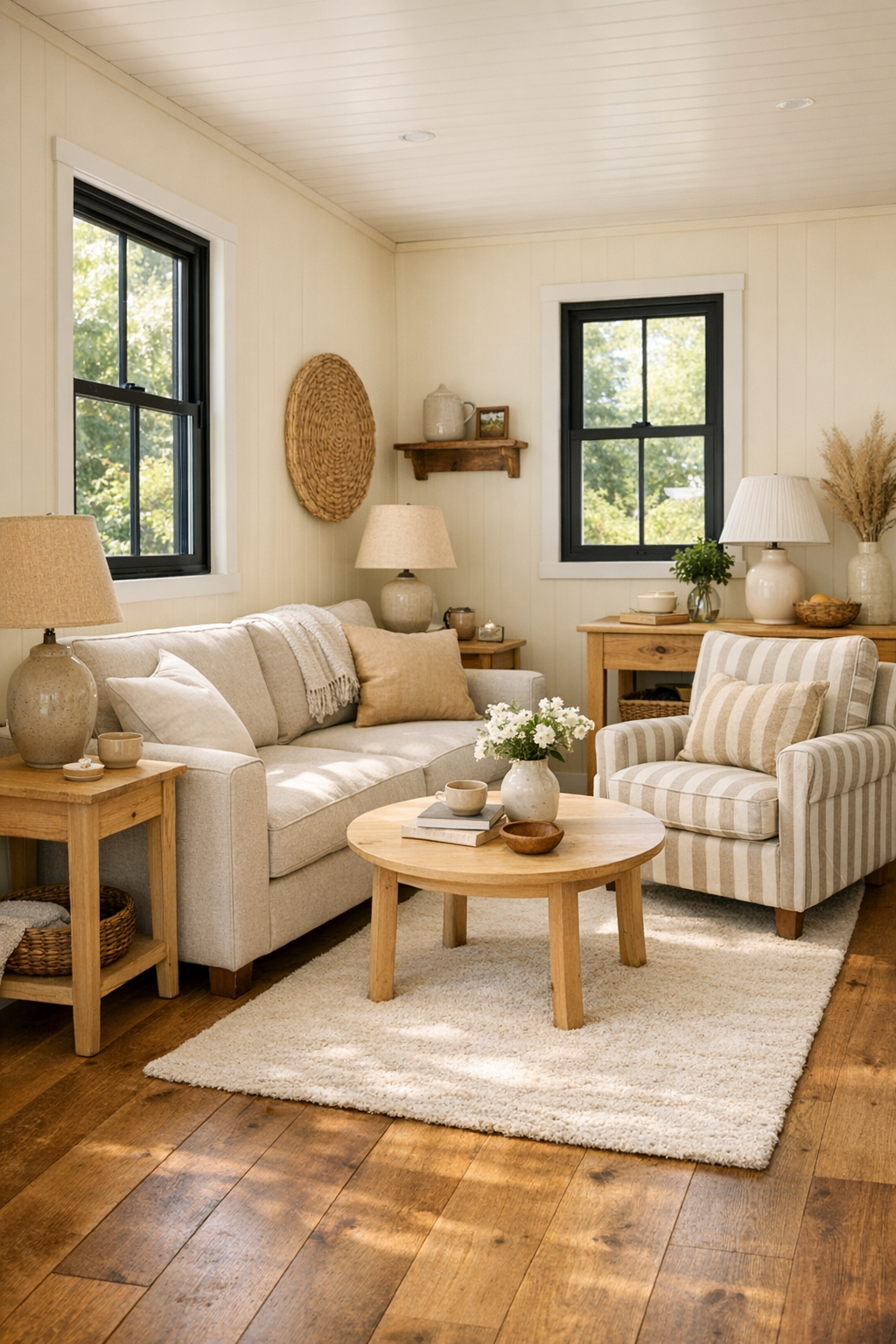
The living room is where the home truly opens its heart. I picture a compact but beautifully composed space with wide-plank oak floors underfoot, walls washed in warm ivory, and a ceiling kept simple so the natural light can do the talking. A generously cushioned sofa in oatmeal linen anchors the room, paired with a soft striped armchair and a nubby wool rug in cream and sand. The palette stays close to butter, flax, biscuit, and light honey, which gives the room that easy, settled feeling that makes you want to sit down for just a minute and wind up staying all afternoon.
Because container homes can sometimes feel narrow if handled poorly, this layout uses every trick with grace: low-profile furniture, leggy tables, airy drapery, and thoughtful spacing that lets your eye travel from one end of the room to the other. A pale wood coffee table and built-in shelving add function without visual clutter, and the lighting is layered kindly, with a central fixture in matte black or aged brass, a ceramic lamp on a side table, and soft wall washers to warm the corners by evening. It feels modern, yes, but with enough softness and texture to keep it from ever feeling cold.
Dining Room
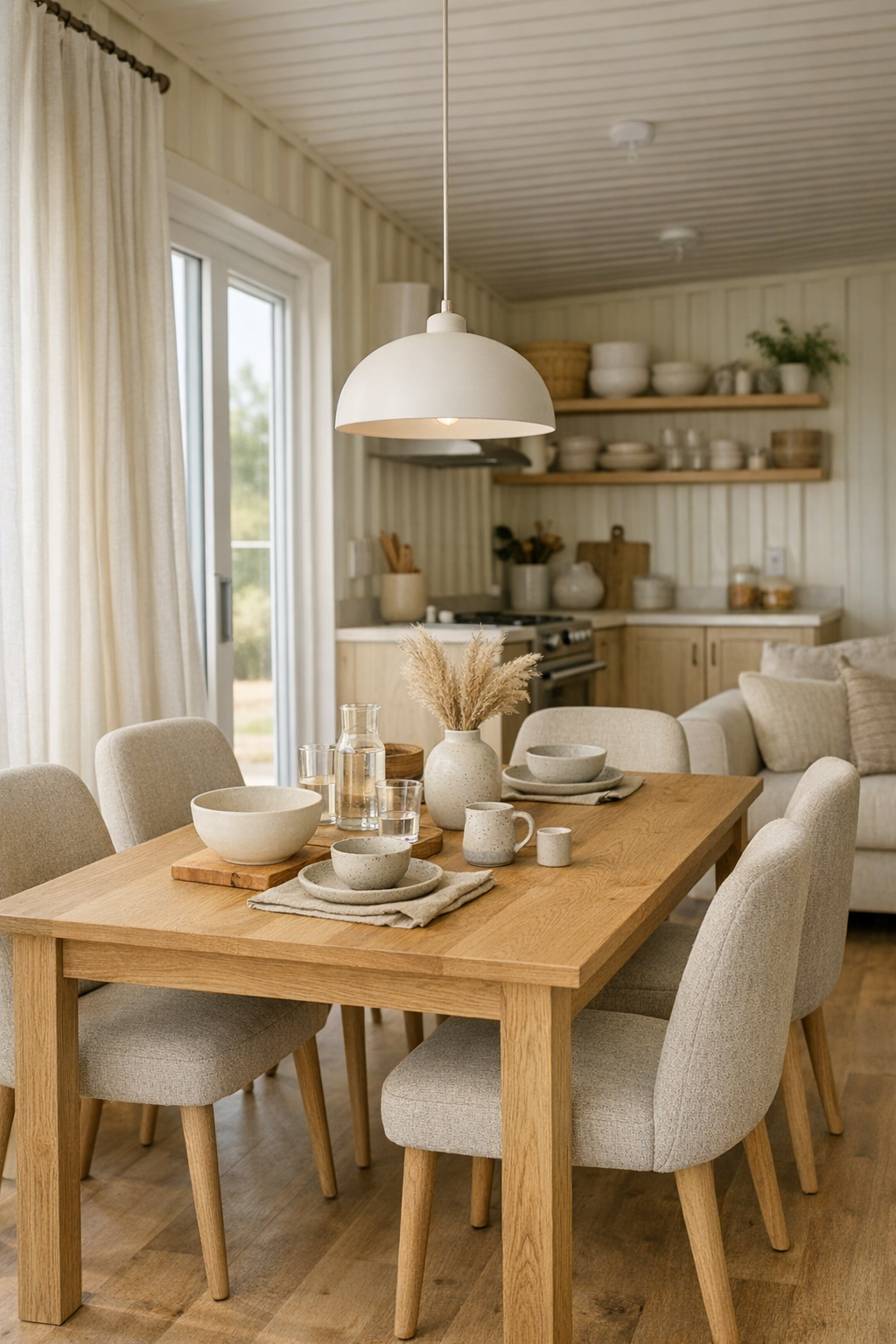
The dining area feels like an extension of the home’s generous spirit, even if the footprint is modest. I imagine a round or softly rectangular table in light oak placed near a window, where morning light can fall across simple stoneware and a bowl of pears. Upholstered dining chairs in a sandy fabric keep the look comfortable and quiet, while a woven runner or textured placemats introduce that touch of hand-finished charm I always think a dining space needs. There is nothing stiff about it; it is designed for real meals, long talks, and maybe a pie set in the middle to cool.
Above the table, I would expect a pendant with a sculptural but unfussy shape, perhaps in opal glass or a natural woven shade, giving the room a soft downward glow in the evening. The colors stay restrained and soothing, but there is depth in the materials: matte ceramics, softly grained wood, brushed metal details, and linen curtains that catch the light. Because the dining area likely sits within an open plan, its identity comes from proportion and texture rather than walls, and that makes it feel very contemporary while still carrying the familiar comfort of a true family table.
Kitchen
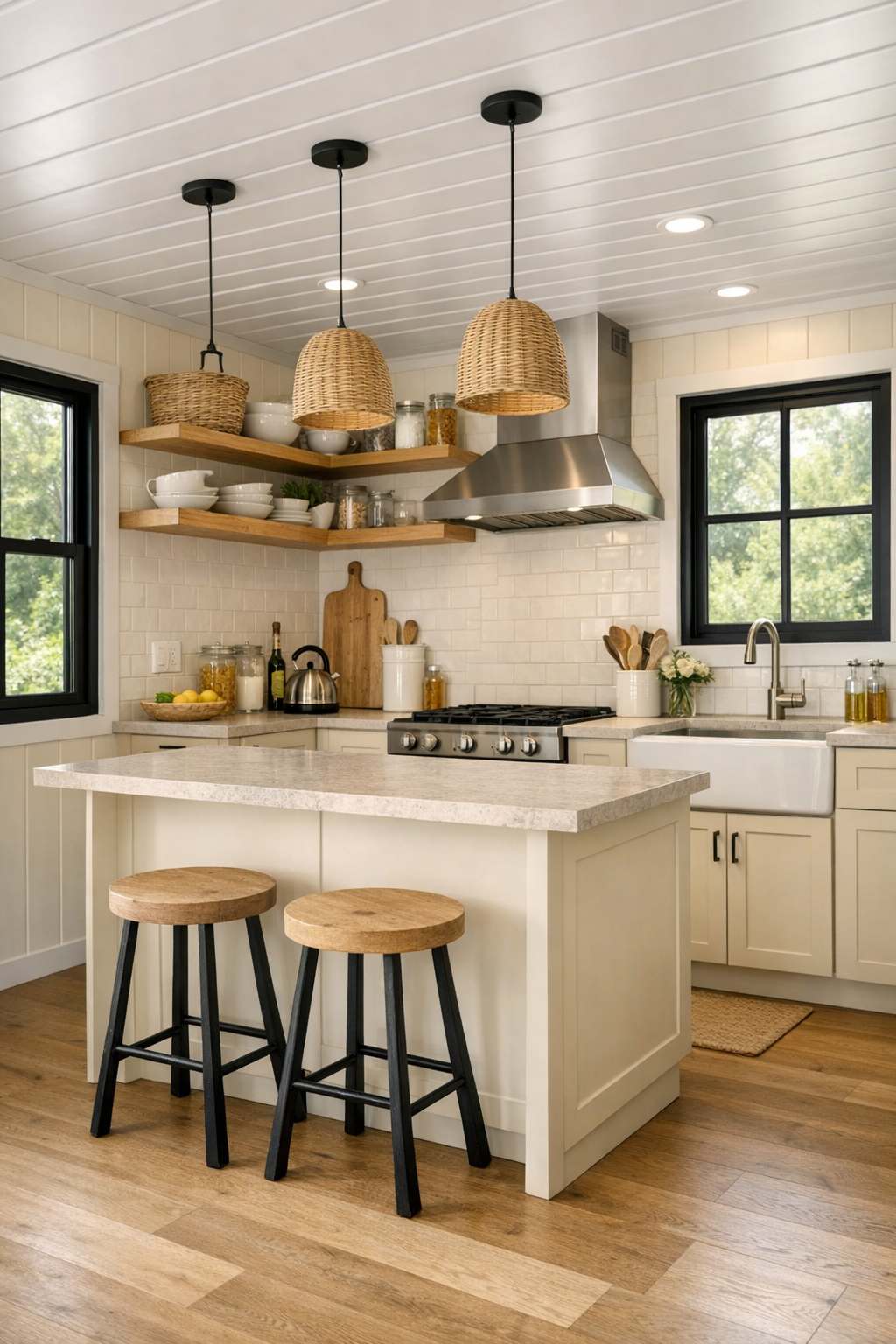
The kitchen may be one of my favorite parts of this home because it understands that small can still be deeply satisfying. Instead of crowding the room with upper cabinets, the design likely keeps the sightlines open with a mix of streamlined millwork and a few open shelves for everyday dishes. Cabinetry in creamy beige or pale mushroom tones blends beautifully with the buttercream mood of the house, while a warm quartz or lightly veined stone countertop adds brightness and durability. A backsplash in handmade-look tile, perhaps in an off-white glaze, would bring just enough movement and irregularity to keep the space from feeling too polished.
What makes it sing is the blend of efficiency and comfort. Integrated appliances preserve the quiet look, while brushed brass or black pulls give the cabinetry a crisp finish. Under-cabinet lighting washes the counters with a practical glow, and a small island or peninsula with wood stools turns the kitchen into a social space rather than just a workspace. I can imagine setting out biscuit dough there or cooling a pan of cornbread by the window. Even in a modern shell, this kitchen feels ready for the kind of cooking that gathers people close.
Bedroom
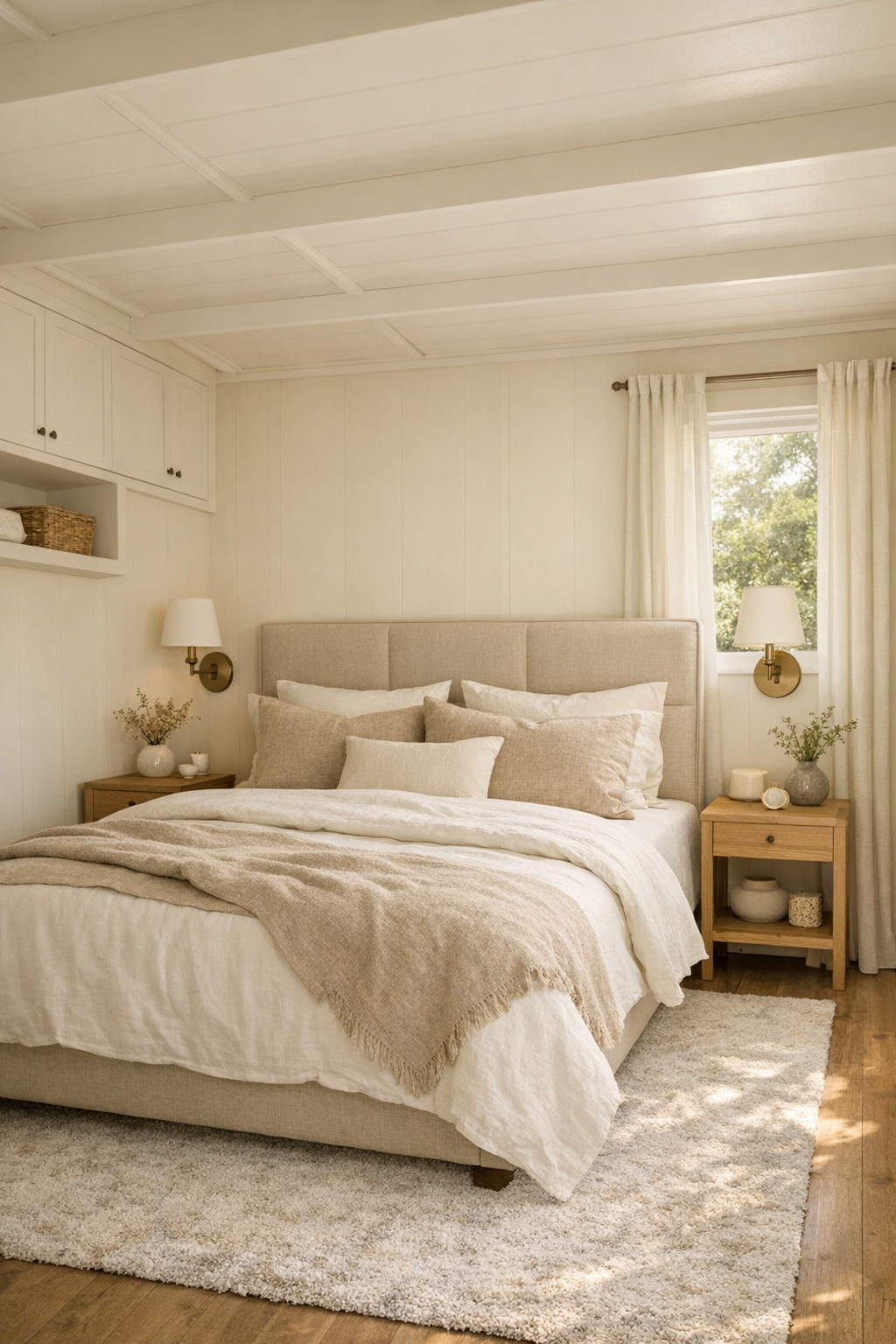
The bedroom takes the home’s soft palette and turns it even gentler. I picture a bed dressed in layered linen bedding in ivory, flax, and pale wheat, with a padded headboard in a warm neutral fabric that adds a little hush to the room. Because container dimensions encourage discipline, the furnishings are likely edited carefully: slim wood nightstands, understated sconces, and perhaps a built-in wardrobe finished to match the walls so it recedes quietly. That restraint gives the room a restful quality, and restfulness, to my mind, is one of the greatest luxuries a home can offer.
There is also something especially lovely about how texture does the decorating here. A soft area rug underfoot, a knitted throw at the end of the bed, and linen drapery pooling just slightly by the floor all help the room feel tender and calm. The light would be beautiful in a space like this, especially if the windows frame a bit of sky or field beyond. It is not grand in size, but it is gracious in spirit, and that can be far more meaningful than square footage ever is.
Bathroom
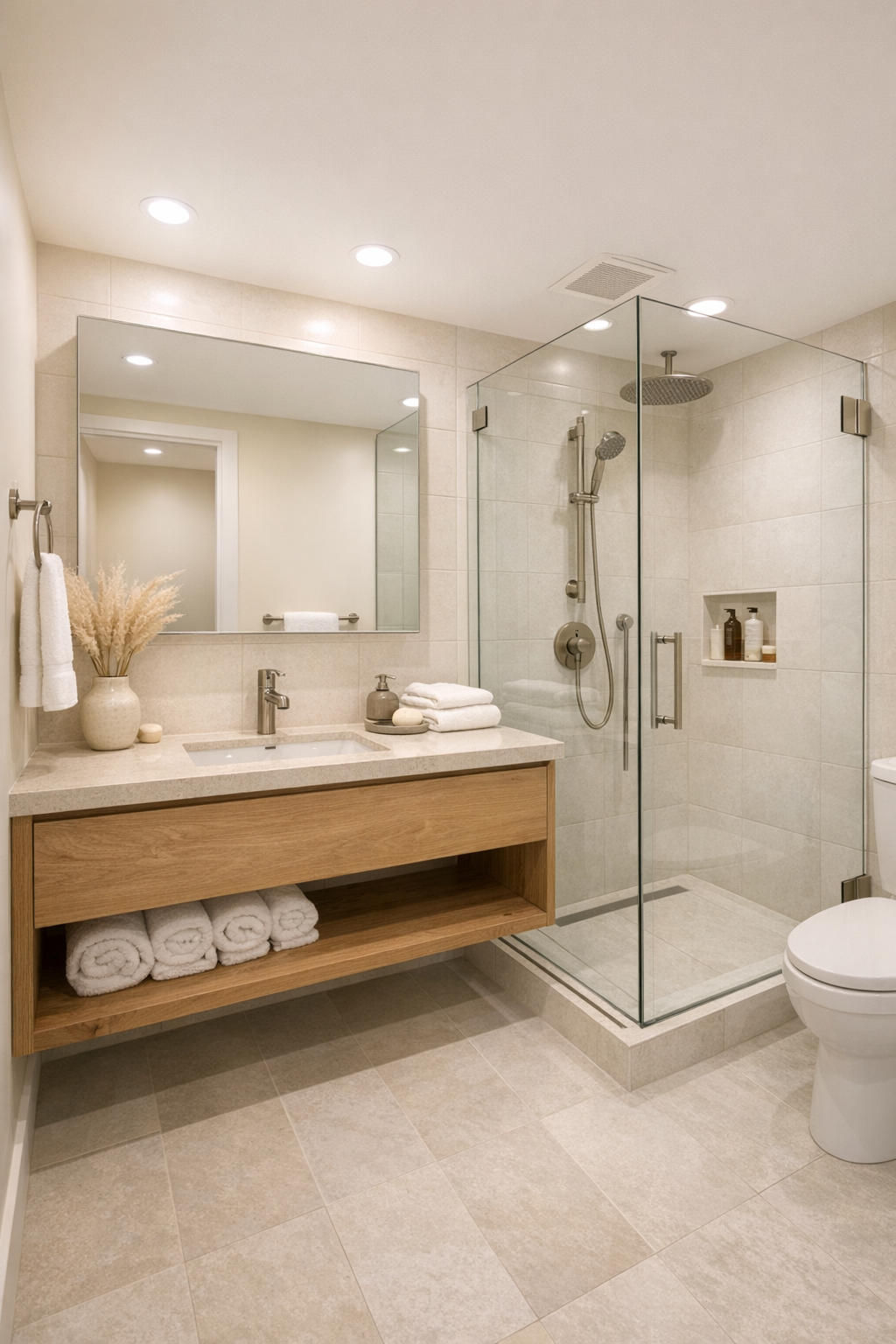
The bathroom continues the same thoughtful, soothing language, proving that utility can be beautiful when handled with care. I imagine a floating vanity in pale oak or whitewashed wood, topped with a creamy stone counter and paired with simple hardware in brushed brass or matte black. The walls might be lined in soft off-white tile, maybe with a handmade surface that catches light unevenly and gives the room life. A frameless glass shower keeps the footprint feeling open, while the mirror, likely rounded or gently arched, softens the room’s linear bones.
In a smaller home, bathrooms need to work hard, and this one seems designed to do so gracefully. Good lighting at the mirror, a niche in the shower, neatly integrated storage, and plush towels in oatmeal or white all contribute to an atmosphere that feels more boutique retreat than necessity. I especially like the idea of a little contrast here, perhaps a deeper stone floor tile or darker metal accents, just to ground all that creaminess. The result would be fresh, tidy, and wonderfully easy to live with day after day.
Other Areas
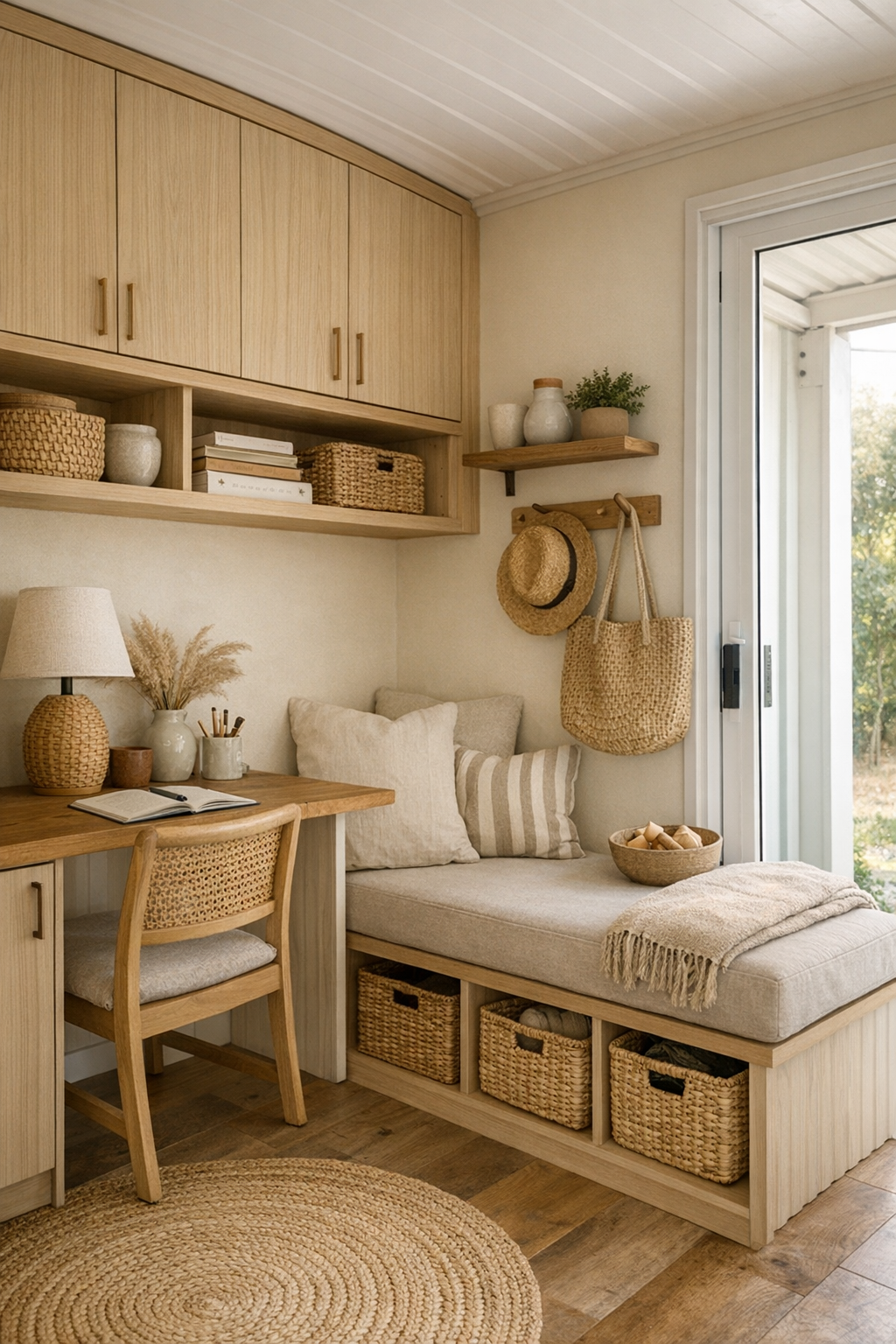
What I appreciate in a home like this are the in-between spaces, because they are often where smart design proves itself. A short corridor might include built-in cabinetry painted to blend with the walls, a small bench for pulling on shoes, or a peg rail that brings both order and charm. If there is a nook for reading or working, I imagine it dressed simply with a built-in desk in light wood, a comfortable chair, and a lamp with a soft pool of light. These little moments matter. They are what make a compact home feel complete rather than merely efficient.
Outdoor spillover likely plays a role too, even if it is modest. Sliding doors opening to a sheltered patio or narrow deck would extend the living area beautifully, especially with a pair of woven lounge chairs, a simple table, and potted herbs close at hand. In a single-story plan, circulation can feel especially easy and intuitive, and that ease shapes daily life in subtle but important ways. Nothing here feels wasted. Every corner has purpose, and because it is handled with such gentleness, the practical side of the design never overshadows its comfort.
Why You'd Live Here
You would live here because it offers something many homes chase and never quite catch: simplicity with soul. It is efficient without being austere, stylish without being showy, and compact without feeling cramped. The buttercream palette wraps the whole experience in warmth, and the interiors understand that beauty is often built from quiet things done well: good light, honest materials, useful storage, and rooms that invite you to exhale. I have seen plenty of spaces that impress at first glance, but this one feels as though it would keep comforting you long after the novelty wore off.
More than anything, this home makes a persuasive case for living with intention. It suggests that a smaller footprint can still hold grace, hospitality, and everyday pleasure, especially when the design leans into softness and care. There is a plainspoken goodness to that idea that I find very moving. In this house, modern container living is not treated as a stunt. It is turned into something welcoming, practical, and genuinely lovely, the sort of place where life could unfold in a steady, meaningful way.