
There is something about a soft willow palette that settles me right down, and this tiny home does it from the very first glance. Set in what feels like a quiet edge-of-meadow landscape, the house carries an easy grace: low, welcoming, and thoughtfully proportioned, with a gentle blend of pale green, warm wood, and creamy trim that makes the whole place feel rooted without ever feeling heavy. Though this is a concept design, it reads with the kind of practical beauty I have always admired most—the sort that makes daily life easier and lovelier at the very same time.
What makes this home special is not just that it is small, but that it is generous where it counts. Every threshold, turning radius, built-in, and sightline seems considered with real human comfort in mind, and that kind of care always shows. To me, it has the same wisdom as an old farmhouse kitchen arranged by someone who knew exactly where every hand would reach, only here that knowledge has been translated into a calm, accessible modern retreat with a tender, lived-in heart.
Exterior
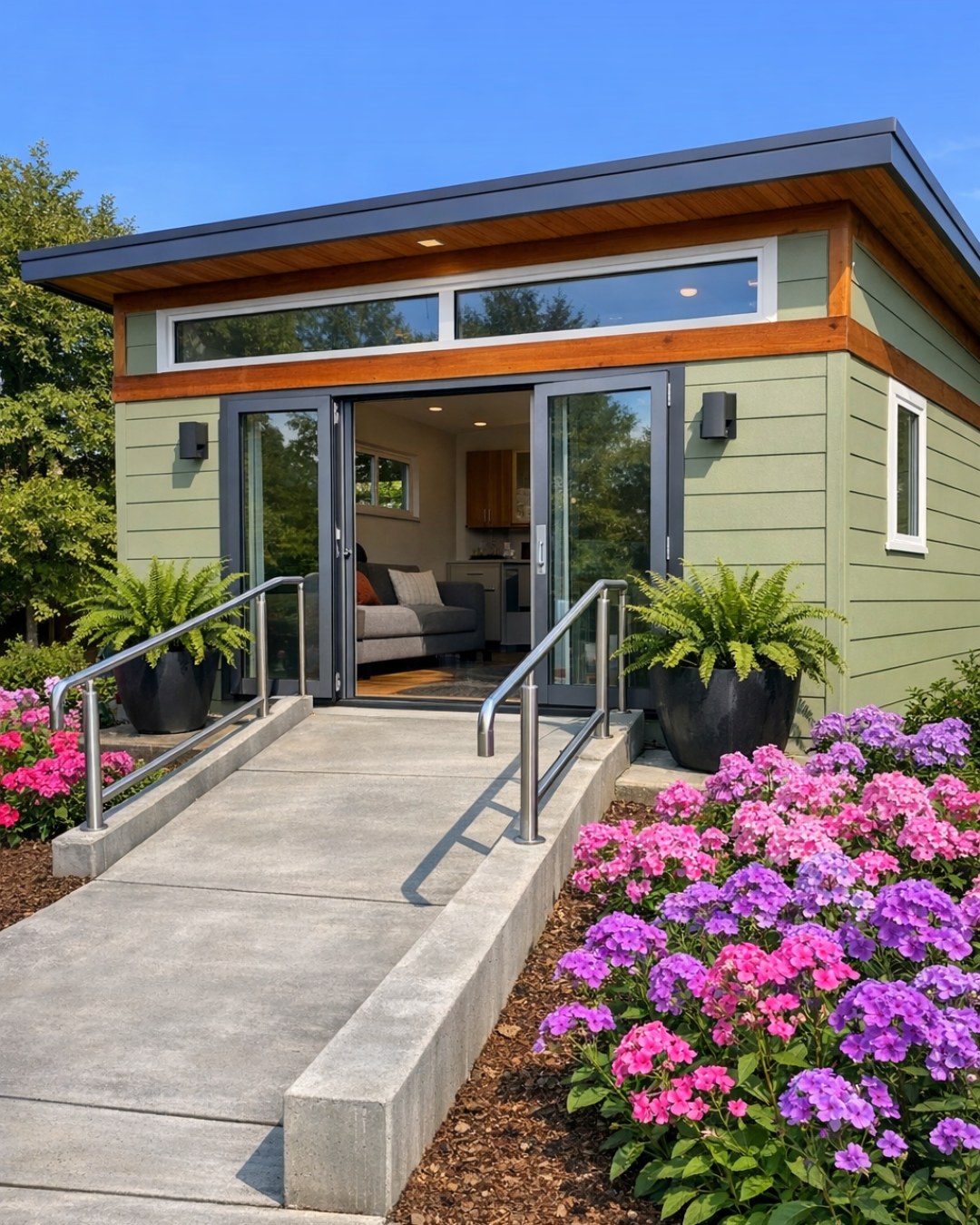
The exterior has the sweet, composed look of a cottage pared down to its essentials. Soft willow siding wraps the home in a muted green that changes beautifully with the light, while natural cedar accents at the entry and along the soffits lend a little warmth, like honey stirred into tea. The roofline stays simple and low, which helps the house feel approachable, and the windows are placed with a confidence I appreciate: broad enough to gather daylight, but balanced so the facade still feels tidy and intentional.
Accessibility is folded into the architecture so naturally that it never reads as an afterthought. The path to the front door is wide and level, the entrance is covered and easy to navigate, and the porch has room to pause, breathe, and turn comfortably. I especially like that the home does not announce its practicality with a fuss; instead, it offers dignity through quiet details—graceful railings, a no-step entry, and materials sturdy enough for weather and years, the way country homes ought to be.
Living Room
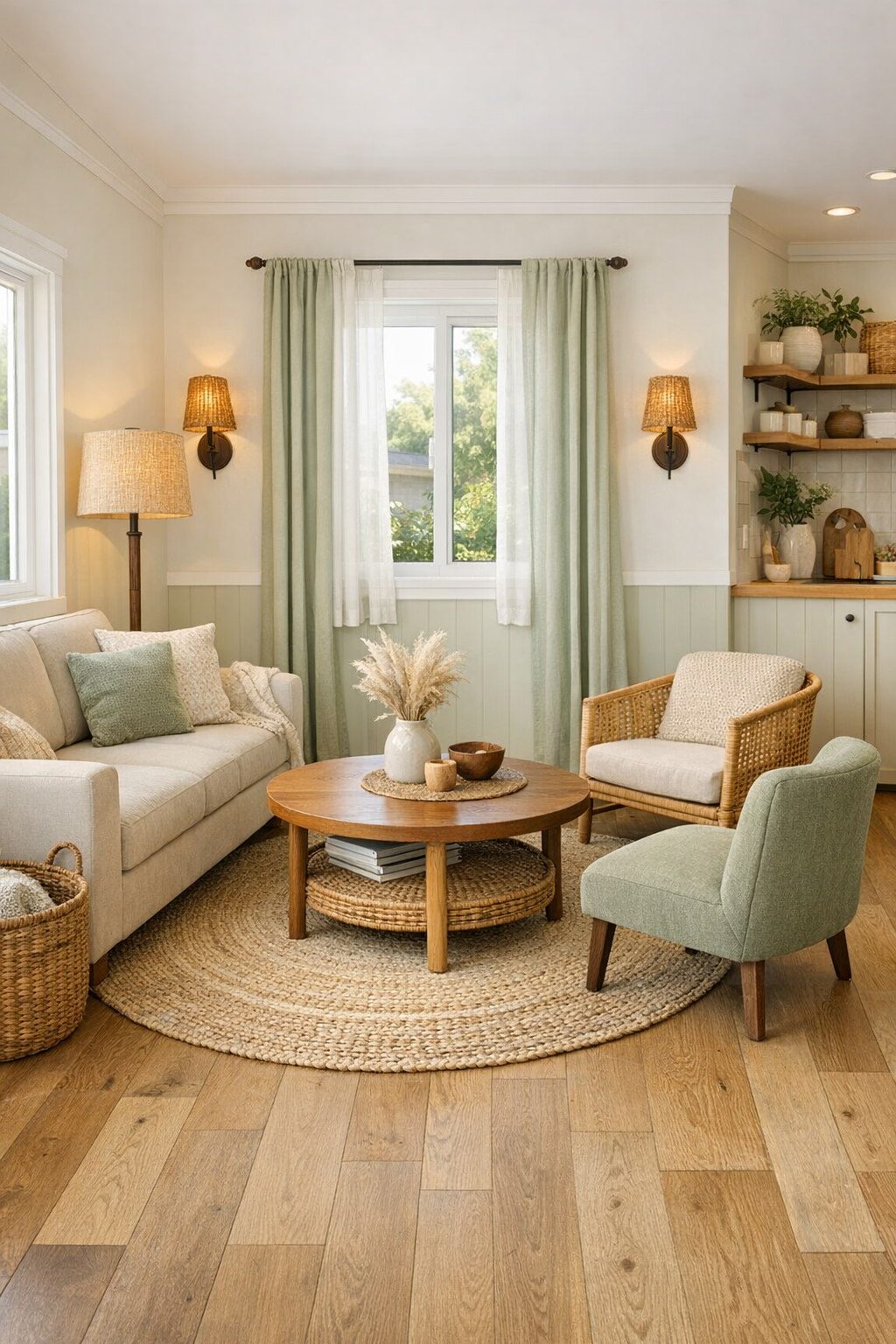
Inside, the living room feels bright in the most restful way, with soft willow undertones echoed in textiles and painted millwork while the main envelope stays creamy and light. Wide-plank oak flooring runs throughout, visually expanding the footprint, and the furniture is scaled just right: a tailored sofa with a supportive seat height, a pair of compact lounge chairs with open bases, and a rounded coffee table that keeps circulation easy. I noticed right away how the room avoids clutter without feeling spare, relying on texture—woven shades, nubby upholstery, a wool rug, and a basket or two—to bring warmth.
The layout is what truly makes the space sing. There is enough clear floor area to move comfortably, but the seating still gathers close enough for conversation, reading, or an evening cup of tea. Lighting comes from a mix of daylight, a simple linen-shaded floor lamp, and discreet sconces that wash the walls softly rather than glaring overhead. It reminds me of the old living rooms I grew up with, where people arranged furniture for visiting and comfort first, only now interpreted with cleaner lines and a lighter hand.
Dining Room
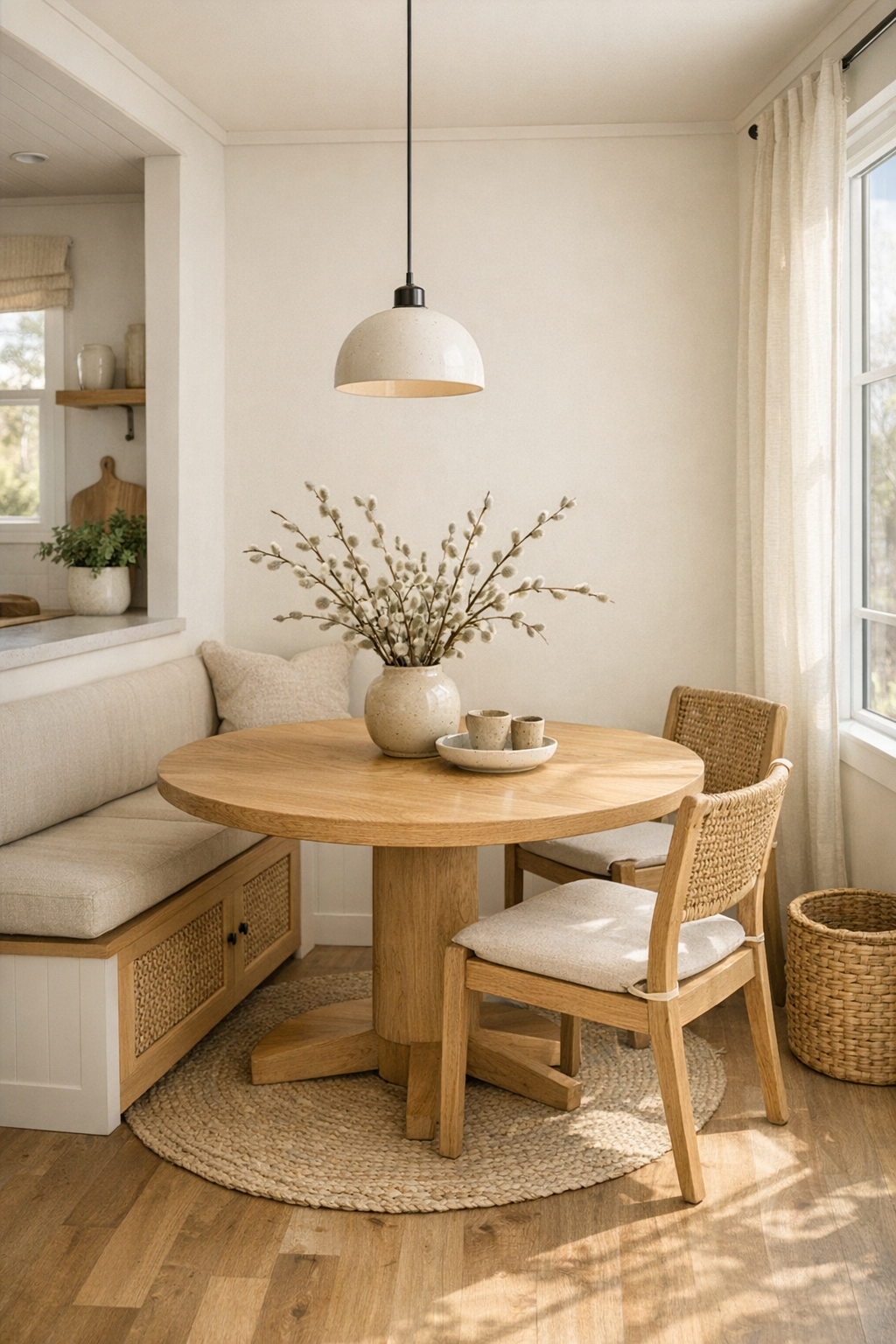
The dining area is tucked into the main living space, but it has its own identity thanks to a change in lighting and the grounding presence of a sturdy round table. I am fond of a round table in a small home because it softens corners and invites folks to settle in, and here it also helps with accessibility by making movement around it easier. The finish appears to be a pale natural oak with a matte seal, paired with simple chairs that have supportive backs and enough space between them to feel accommodating rather than cramped.
Above, a modest pendant in an opal or linen finish casts a mellow pool of light that makes the whole area feel intimate at supper time. A built-in banquette or shallow storage credenza along one wall adds function without crowding the footprint, and the palette stays beautifully quiet: willow, cream, oat, and touches of black in hardware for a little definition. It has that rare quality I always love in a dining nook—it feels suitable for both a quick bowl of oatmeal in the morning and a long, happy meal that stretches past dusk.
Kitchen
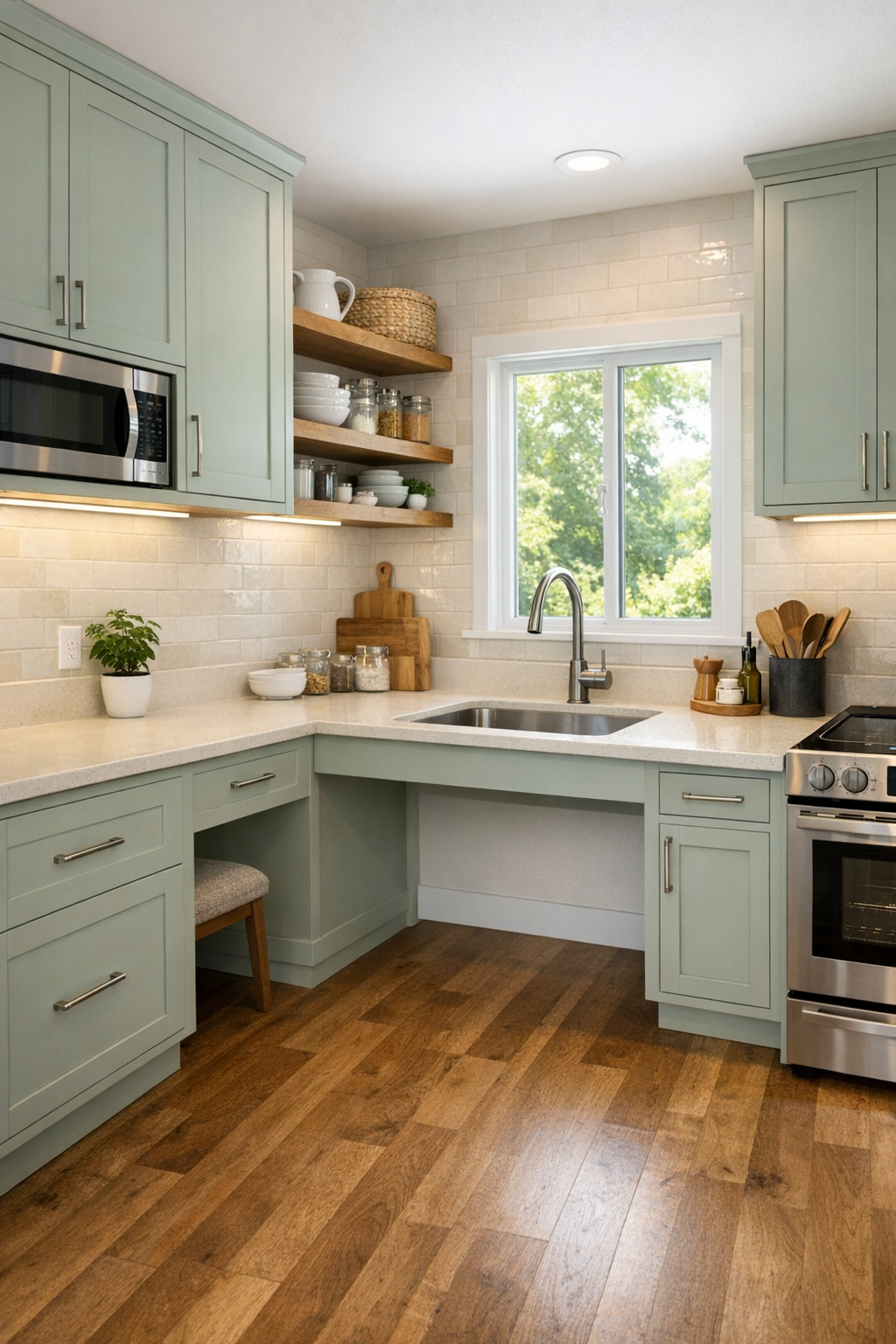
This kitchen is, to my eye, the true heart of the home. It is compact, yes, but arranged with the kind of common sense that comes from real cooking: generous counters where they matter most, storage within easy reach, and appliances integrated so they do not dominate the room. The cabinetry is painted in that same soft willow tone, quiet and fresh, with simple flat-front or lightly detailed shaker doors, warm wood open shelving, and a creamy solid-surface countertop that brightens the whole composition. A low-sheen tile backsplash catches the light without making a fuss.
What I admire most is how accessibility and beauty work hand in hand here. Knee space at one prep area, wide pathways, easy-pull hardware, layered task lighting, and drawers instead of awkward deep cupboards all make the kitchen feel sensible and gracious. I can imagine standing here with pie dough on the counter and soup on the stove, everything close at hand, the window over the sink bringing in the weather and the daylight. It has the same orderly comfort as the best old Midwestern kitchens, where thrift, usefulness, and hospitality all sat at the same table.
Bedroom
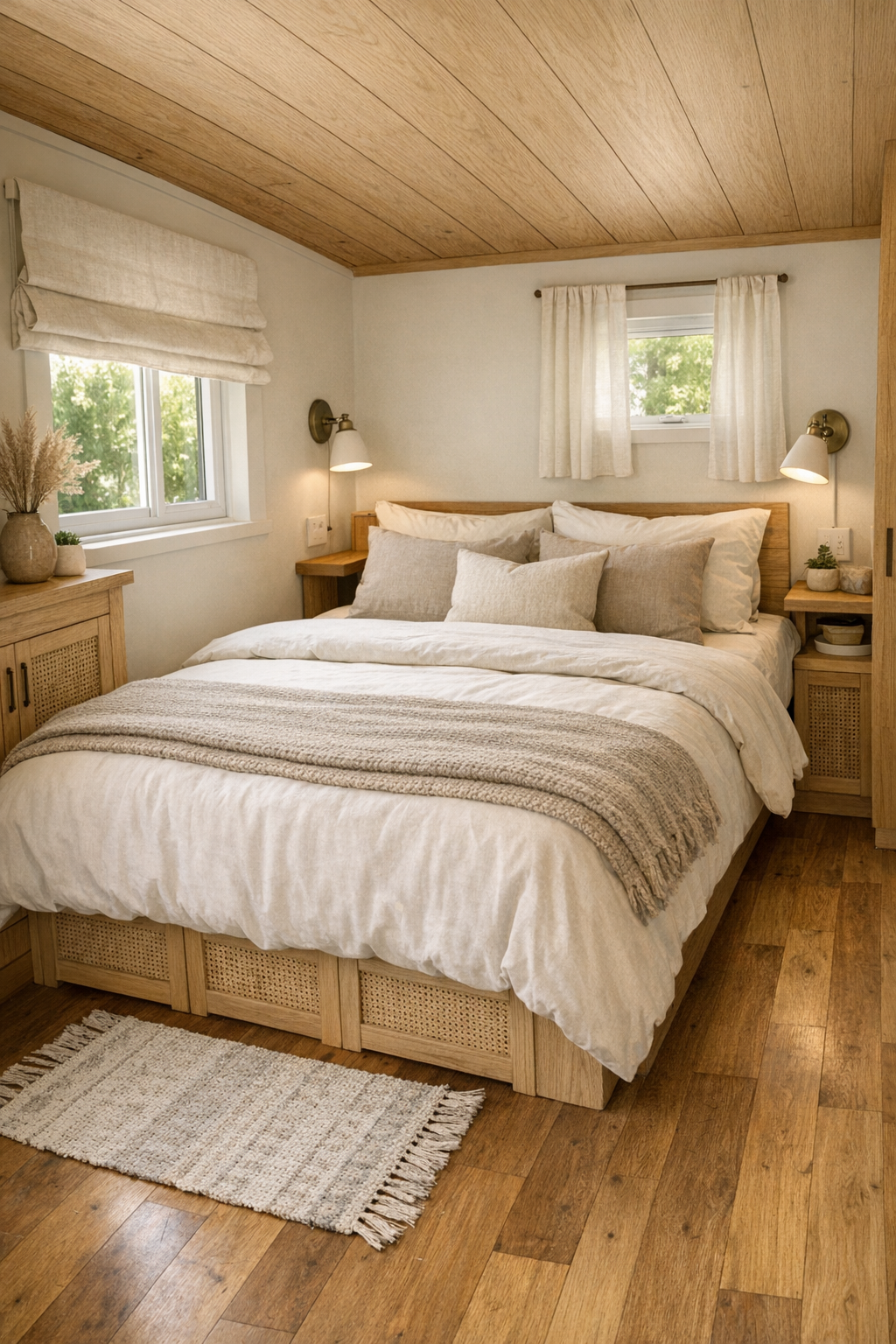
The bedroom proves that a small footprint does not have to feel tight if the proportions are handled with care. Here, the bed is placed to allow comfortable movement on either side, and that alone gives the room a sense of dignity. Upholstered textiles in oatmeal and soft cream keep the atmosphere hushed, while willow-painted accents or cabinetry tie it back to the rest of the house. Rather than crowding the room with extra furniture, the design relies on built-ins, wall-mounted lighting, and perhaps a narrow shelf or integrated nightstand to keep necessities close without closing in the air around the bed.
I especially like the way the textures do the emotional work in this room. Crisp bedding, a quilted throw, linen drapery, and a soft underfoot rug make the space feel nurturing, the way a bedroom should. Windows are likely dressed simply to preserve daylight and privacy at once, and the lighting is gentle and layered for evening reading or a quiet start to the morning. It feels peaceful in a very honest way, not staged or overdone, but thoughtfully made for rest.
Bathroom
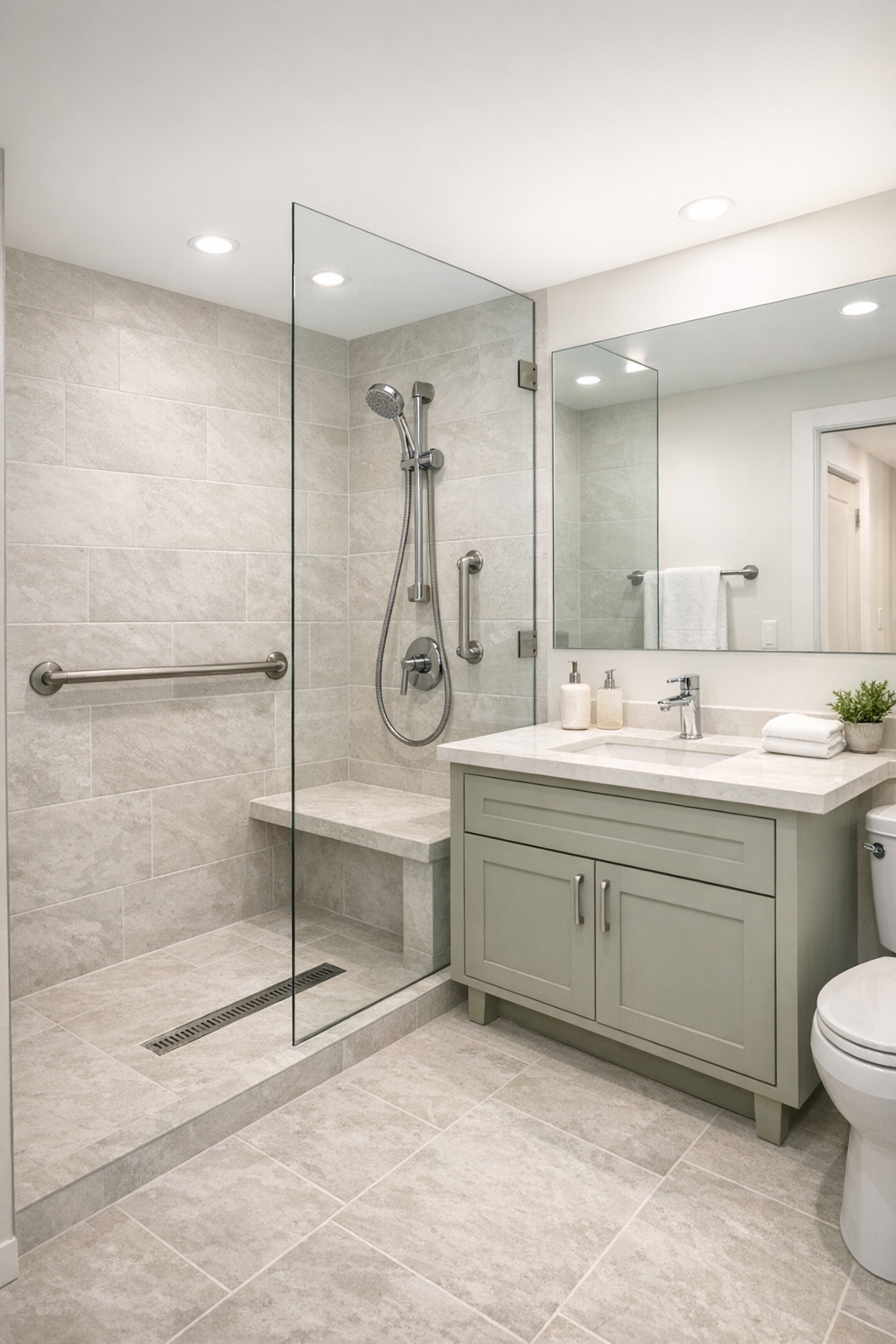
The bathroom carries the same restraint and softness as the rest of the house, which I think is exactly right. Large-format tile in a warm ivory or pale stone shade keeps the room feeling open, while willow cabinetry or painted trim adds a little personality without darkening the space. An accessible vanity with practical storage, a broad mirror, and good even lighting all help the room feel composed and easy to use. The fixtures appear simple and sturdy, in a brushed nickel or matte black finish, giving just enough contrast to sharpen the palette.
A curbless shower is the star here, and it is handled beautifully. Clear glass, a built-in bench, a handheld shower, and thoughtfully placed grab bars create a room that is safe and convenient while still looking clean and serene. I have always believed that bathrooms should feel straightforward and comforting, not cold, and this one does. It feels like a room built for real routines, where everything is within reach and nothing is needlessly complicated.
Other Areas
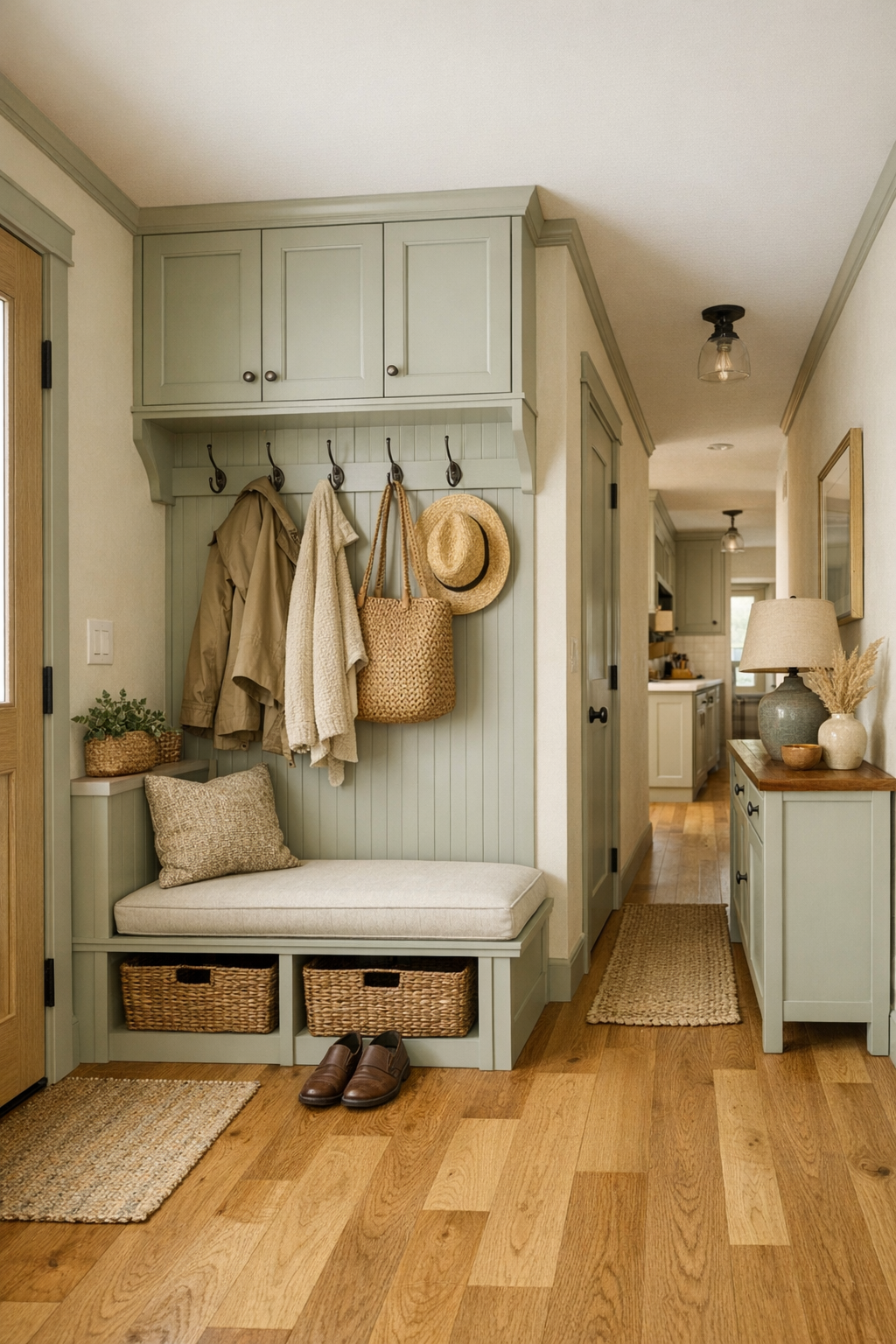
In a tiny home, the in-between spaces matter every bit as much as the main rooms, and this design seems to understand that deeply. The entry is likely fitted with a built-in bench, coat hooks, and concealed storage so shoes, bags, and everyday gear have a proper place to land. Hallway millwork may double as linen storage or pantry overflow, and every inch feels asked to do an honest job. Even a little reading corner, desk niche, or laundry cabinet can make a home feel settled, and this one appears to carve those functions in with uncommon grace.
What I appreciate most is that these supporting areas are not treated as leftovers. They are finished with the same oak flooring, the same willow and cream palette, and the same gentle, useful lighting that ties the whole home together. That continuity gives the interior its sense of peace. Like a well-run family kitchen where every drawer has its purpose, these smaller moments are what make the house feel not merely stylish, but truly livable.
Why You'd Live Here
You would live here because it offers something many larger homes never quite manage: ease. Not just visual calm, though it certainly has that, but physical ease, daily ease, the kind that lets a person move through the day with confidence and comfort. Every room seems shaped around real life rather than display, and I find that deeply appealing. The accessible features are integrated so gracefully that the house feels dignified, warm, and quietly wise.
You would also live here because it understands that small can still feel abundant. Abundant in light, in usefulness, in beauty, and in that hard-to-define sense of being cared for by a space. To my mind, this soft willow tiny home is at its best where all memorable homes are: in the details that support ordinary living. It is modest in size, generous in spirit, and lovely enough to make even the everyday moments feel a little more cherished.