
There is something instantly disarming about a converted bus in the middle of summer countryside. From the outside, it carries that unmistakable sense of adventure, but inside, this particular home leans into a softness that feels surprisingly refined. The overall look blends cottage warmth with smart tiny-home planning: sun-washed wood, creamy textiles, matte black accents, and just enough vintage character to make it feel collected instead of styled. I can picture arriving here after a long workweek, setting down my bag, and feeling my shoulders drop before I even reach the seating area.
What makes this place special is how gracefully it turns limitations into charm, and as a concept design, it feels especially well imagined. Every inch works hard without looking overly clever or cramped. The mood is airy, calm, and a little romantic, with windows framing green fields like living artwork and a layout that supports both quiet mornings and practical everyday routines. As someone who is always thinking about how a home handles real life, especially cooking, storage, and flow, I love how this one manages to feel both dreamy and genuinely livable.
Exterior

The exterior keeps the bus recognizable, which is part of the appeal, but it softens the utilitarian shell with a more welcoming, countryside sensibility. The body is painted in a warm ivory with slightly muted trim, so it glows rather than glares in bright summer light. Natural wood detailing around the entry and a small built-on stoop help bridge the gap between vehicle and home, while simple black hardware gives it a crisp finish. It is charming without trying too hard, and I think that balance is what makes it feel so believable.
Set against wild grasses and open fields, the bus looks especially lovely because the landscape does some of the decorating. Window boxes, a few potted herbs near the door, and gravel underfoot create a casual, low-maintenance arrival that suits the setting. I like that it does not rely on gimmicks; instead, it feels grounded and calm, like a tiny retreat designed for people who want beauty but still need things to be easy to care for. The whole scene suggests slow breakfasts outside and evenings with the door open, letting the last of the warm air drift through.
Living Room
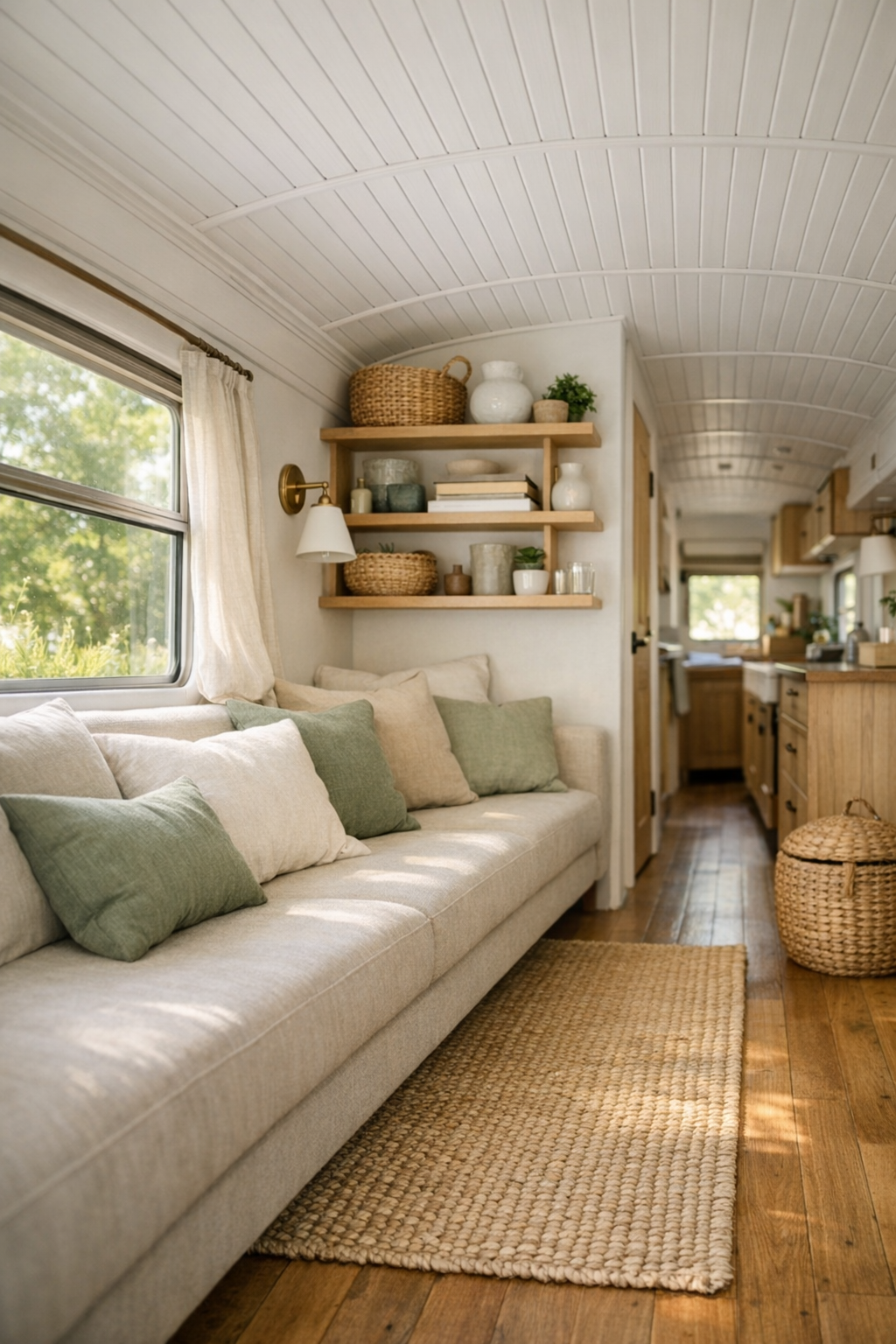
The living room makes the most of the bus’s narrow footprint by treating built-ins as part architecture, part furniture. A slim bench-style sofa runs along one side beneath the windows, upholstered in oatmeal linen with layered cushions in faded sage, clay, and soft cream. Opposite, shallow shelving in pale oak keeps books, ceramics, and baskets organized without crowding the aisle. The palette is gentle and sunlit, and because the seating stays low and streamlined, the whole room feels more open than you would expect in a converted vehicle.
What really sells the room is the texture. There is a woven rug underfoot, light wood planks on the floor, and a tongue-and-groove ceiling painted a warm white that bounces daylight around beautifully. Small sconces in aged brass add evening warmth without taking up valuable surface space, and a compact nesting table can shift around depending on whether you are having coffee, reading, or setting out a simple snack board. I always notice whether a small living area feels like a compromise, and this one does not. It feels intentional, cozy, and easy to use day to day.
Dining Room
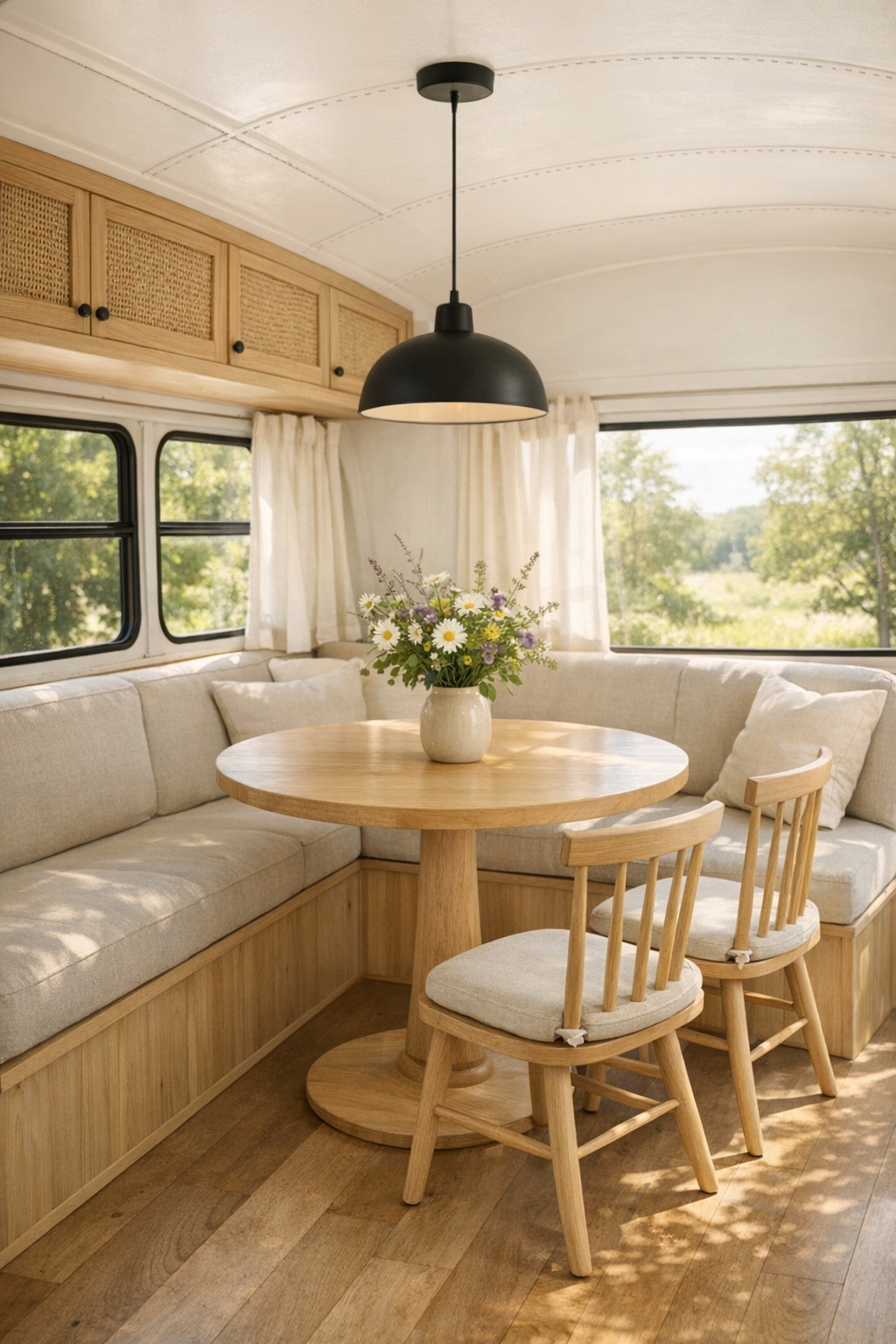
The dining area is compact but wonderfully inviting, tucked into a nook where the windows make every meal feel a little scenic. A built-in banquette with under-seat storage wraps one side of a small round pedestal table, and that choice is smart for circulation; there are no sharp corners to dodge in a tight space. The upholstery echoes the living room in a soft neutral fabric, while a couple of spindle-back chairs add contrast and make the setup feel less fixed. It is one of those spots that looks equally good with a weeknight pasta bowl or a laptop and a second cup of coffee.
I especially like the way the finishes keep it connected to the rest of the bus without becoming repetitive. The table has a lightly whitewashed oak top, the trim is clean and simple, and a petite pendant in matte black defines the zone without overwhelming it. A narrow ledge nearby holds a vase of field flowers and a stack of everyday dishes, which adds personality while keeping essentials close at hand. For anyone balancing busy routines, this kind of dining setup really works: it is intimate, practical, and pretty enough to make even a rushed breakfast feel more deliberate.
Kitchen
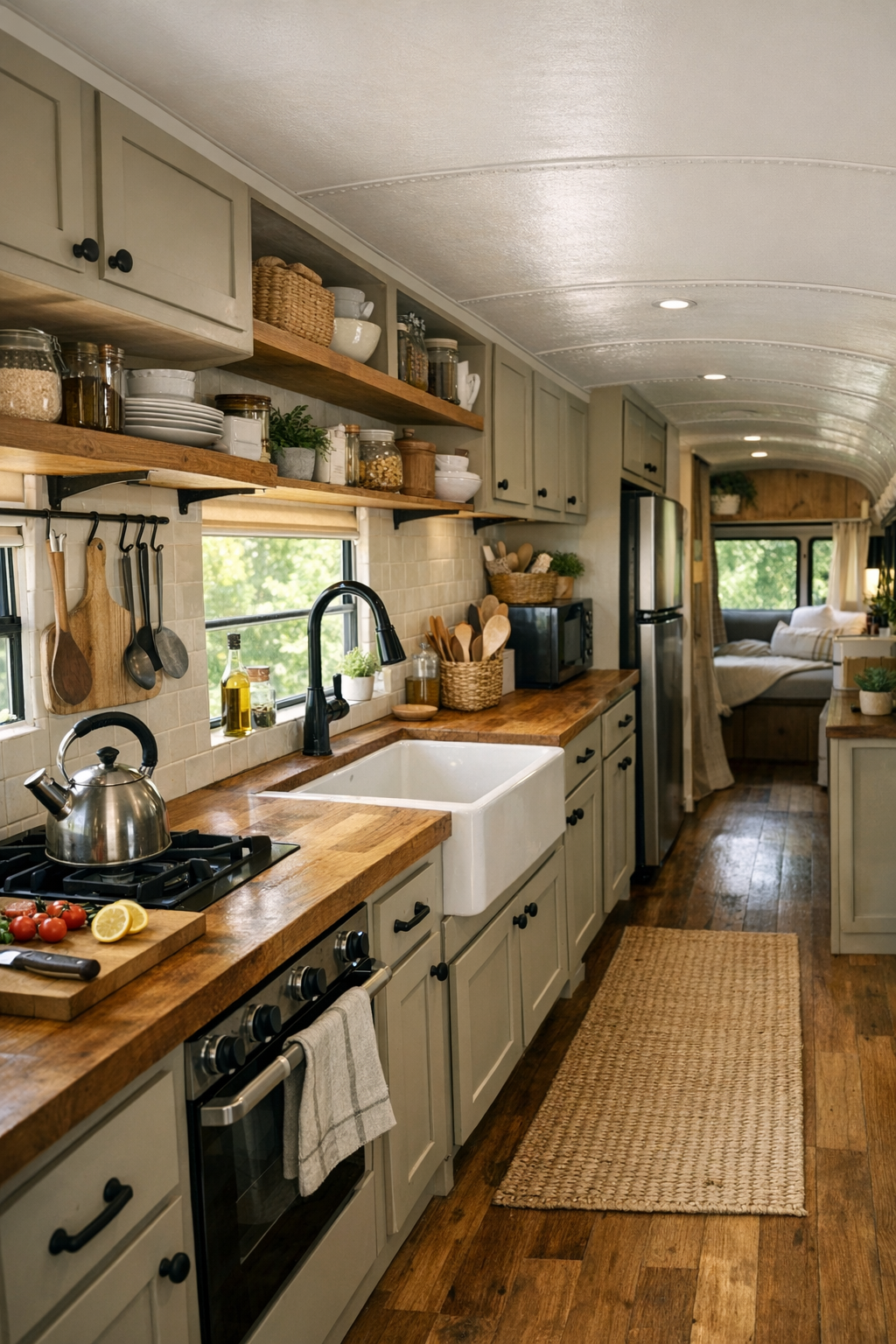
The kitchen is where this home really wins me over. It is narrow, of course, but it is laid out with the kind of efficiency that makes cooking feel possible rather than performative. One side is fitted with flat-front cabinetry in a muted putty tone, paired with butcher block counters that instantly warm up the space. Open shelves above hold everyday plates, glass jars, and a few cooking staples, while a compact range and deep farmhouse-style sink make the room feel genuinely functional. As someone who is always mentally measuring where I would chop vegetables and set down grocery bags, I can say this one passes the test.
There is also a thoughtful rhythm to the materials. A creamy tile backsplash reflects light and gives the kitchen a clean, classic backbone, while black cabinet pulls and a simple gooseneck faucet sharpen the look just enough. Small details do a lot here: a rail for hanging utensils, a cutting board tucked vertically beside the fridge, and baskets overhead for pantry overflow. I can imagine doing a little Sunday meal prep in this space with the windows cracked open, herbs within reach, and everything exactly where it needs to be. That is my favorite kind of tiny kitchen: efficient, beautiful, and not precious about being used.
Bedroom
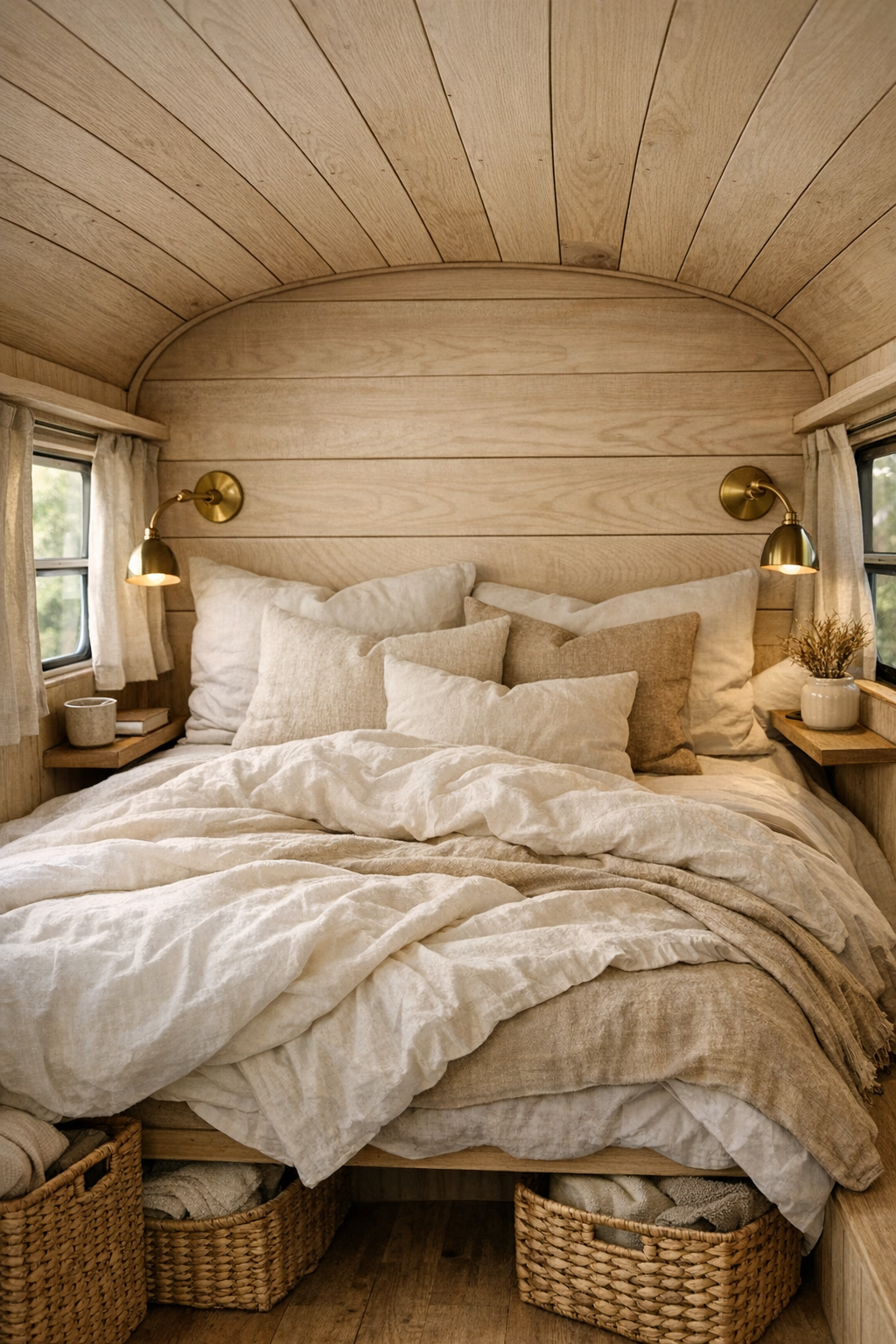
The bedroom trades excess space for atmosphere, and honestly, that feels like the right move. Positioned toward the quieter end of the bus, it features a built-in bed wrapped in soft linen bedding in shades of ivory, sand, and dusty olive. The wood surround gives it a cocooning effect, while small windows on either side keep it from feeling closed in. Instead of freestanding nightstands, there are inset ledges for books, a water glass, and a small lamp, which keeps the footprint clean and uncluttered.
This room’s charm comes from restraint. The finishes are simple and tactile, with light wood, brushed brass reading lights, and natural woven storage tucked below the bed platform. A linen curtain can be drawn for privacy without adding visual heaviness, and a soft runner underfoot makes the transition into the room feel gentle. I love bedrooms like this because they understand what matters: comfort, quiet, and a sense of retreat. After a full week of deadlines and errands, this is exactly the kind of space I would want to disappear into early with a book.
Bathroom
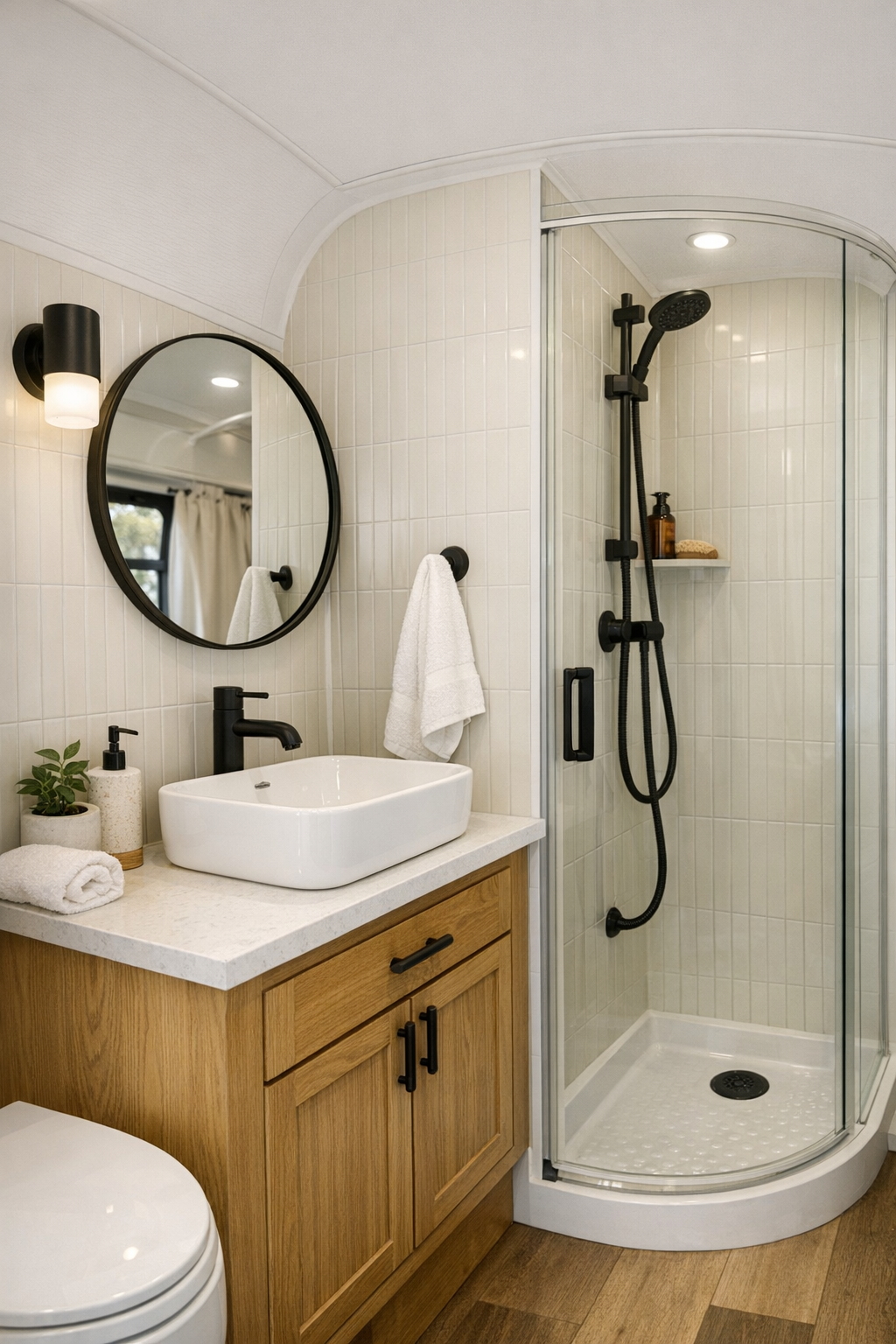
The bathroom is small, but it does not feel like an afterthought. It uses every visual trick in the book in the best way: soft tile, reflective surfaces, and a restrained palette that keeps the room open and calm. A compact vanity in natural oak supports a simple white basin, while the walls are clad in creamy vertical tile that subtly elongates the space. Black fixtures provide definition, and a rounded mirror helps soften all the tighter lines and corners.
The shower area is especially well handled, enclosed with clear glass so the room reads as one continuous volume. A niche lined in the same tile keeps bottles organized, and the floor shifts to a slightly darker stone-look surface for grip and contrast. A waffle-weave towel, a small branch in a vase, and one or two neatly chosen toiletries are all it takes to make the room feel complete. In a home this compact, bathrooms can easily go too utilitarian, but this one still feels fresh and cared for, which makes a big difference in everyday life.
Other Areas
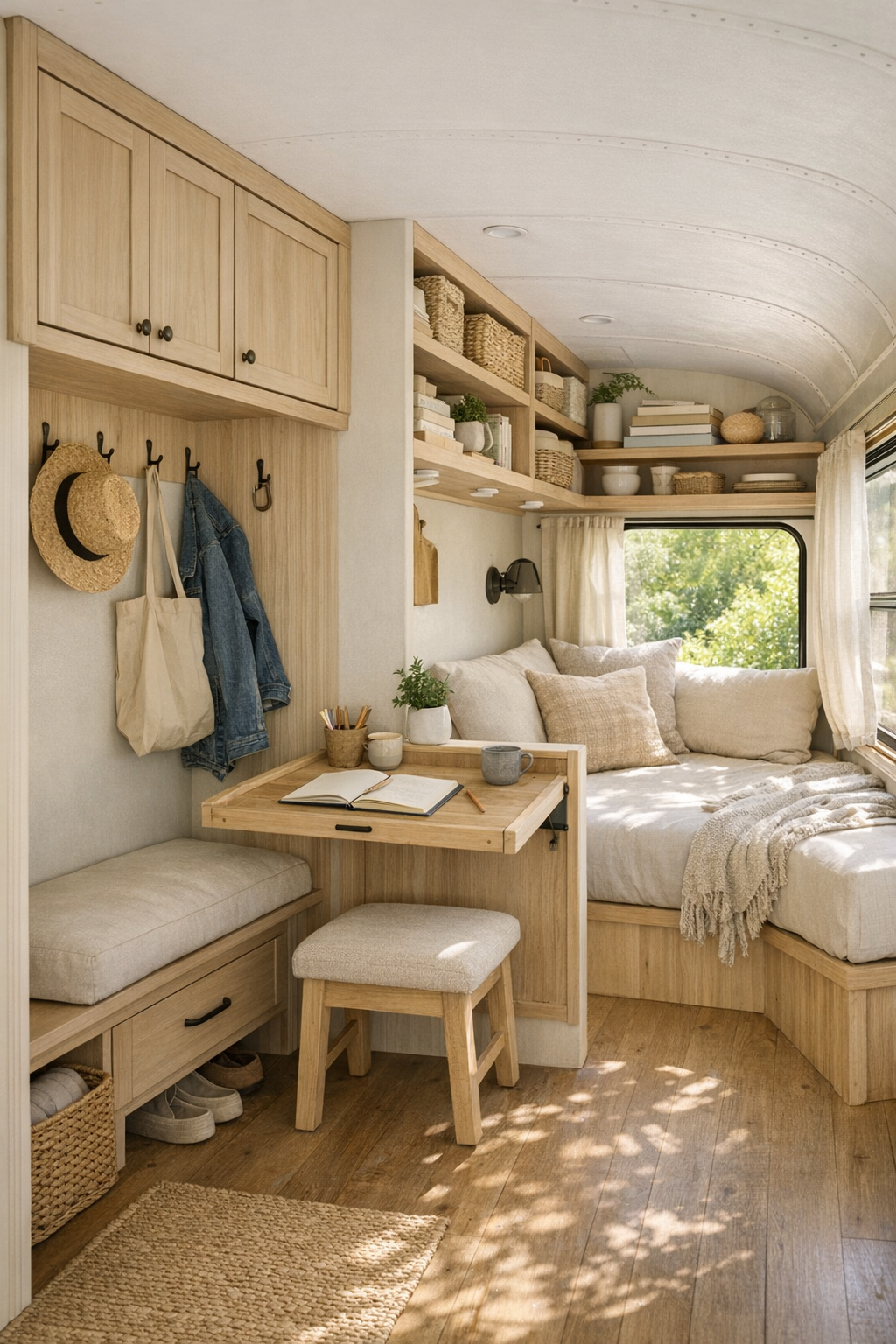
The transitional spaces are where this bus proves how carefully it has been designed. Hallway walls become storage, upper compartments are integrated neatly enough to resemble millwork, and awkward corners are turned into useful moments like hooks, shelves, or narrow cabinets. Near the entry, there is a petite drop zone with pegs for hats and market bags, plus a bench drawer for shoes. It sounds simple, but in a small home, those little daily landing spots are what keep the whole place feeling calm instead of chaotic.
I also love the small lifestyle touches woven throughout. A reading perch by the rear window, a fold-down desk for catching up on emails, and a slim shelf for cookbooks and baskets make the bus feel flexible rather than rigidly planned. Even the circulation space has been considered, with light colors and unobtrusive trim helping the interior breathe. This is the part of the tour that reminds me how often good design is really about relieving friction. Everything here seems set up to support routines, not interrupt them.
Why You'd Live Here
You would live here because it offers that rare combination of escape and usability. It is undeniably charming, with all the romance you want from a countryside bus conversion, but it also respects the realities of daily life. The storage is integrated, the kitchen is workable, the seating is comfortable, and the materials are warm without being fussy. To me, that is always the difference between a space that is fun to look at and one you can actually imagine returning to again and again.
More than anything, this home feels edited in the best sense. Nothing is wasted, nothing is shouting for attention, and every detail contributes to a quieter, easier rhythm. If you are drawn to small-space living but still want beauty, softness, and a sense of personality, this bus gets the balance just right. I can absolutely see why someone would choose it: not just for the novelty, but for the calm, capable way it turns a compact footprint into a genuinely lovely home.