
There is something instantly calming about a tiny home wrapped in natural pine, and this one leans all the way into that warmth. From the outside in, it feels handcrafted in the best sense of the word: thoughtful rather than flashy, simple without ever feeling plain. The whole house has that cozy, grounded mood I always crave after a long workday, with warm wood tones, compact rooms that still breathe, and details that make the space feel personal and deeply intentional.
Set up as a peaceful retreat with an Amish-built sensibility, this concept design stands out because every surface seems to celebrate honest materials and skilled workmanship. I love how it balances rustic character with the kind of practical layout that actually supports daily life, especially if you are like me and want a home to feel beautiful but also easy to cook in, clean up, and settle into. It is tiny living, yes, but with a level of care that makes the footprint feel like a feature instead of a compromise.
Exterior
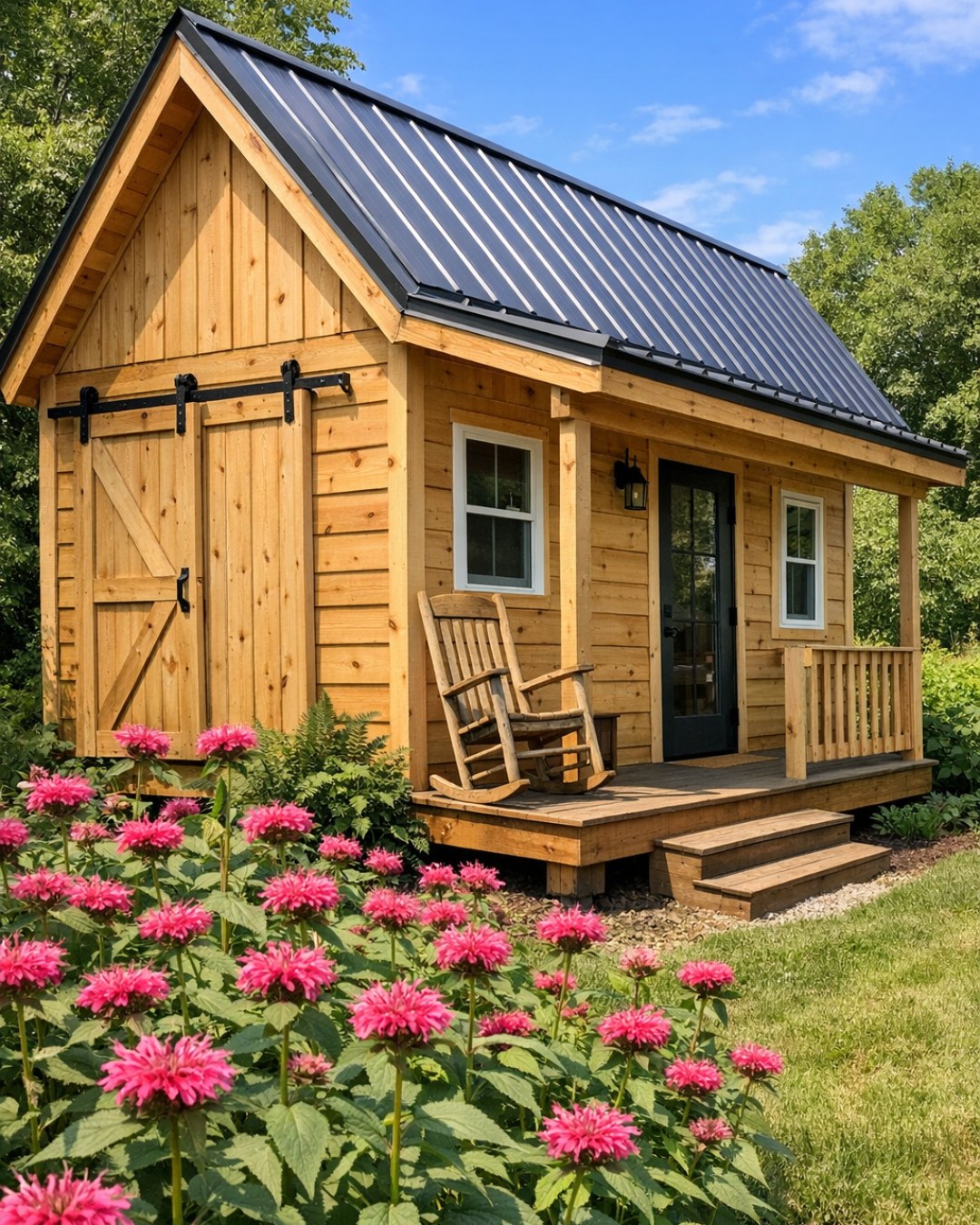
The exterior is all about clean lines, natural finishes, and a quiet confidence. Natural pine siding gives the home its signature warmth, and instead of covering that up, the design lets the grain and color shifts do the visual work. I imagine a soft matte protective finish that keeps the wood looking rich rather than shiny, paired with a dark metal roof for contrast. The trim is minimal, the windows are thoughtfully placed, and the proportions feel balanced in that way small homes need to if they are going to feel charming instead of cramped.
What really makes the outside memorable is the sense of craftsmanship. The porch posts, entry surround, and built-in steps all feel sturdy and handmade, with visible joinery details that hint at the skill behind the build. I can picture simple black lantern sconces by the door and maybe a pair of planters with herbs or trailing greenery to soften the edges. It has the kind of exterior that does not beg for attention but absolutely earns a second look, especially because the natural pine gives it such a welcoming, lived-with glow.
Living Room
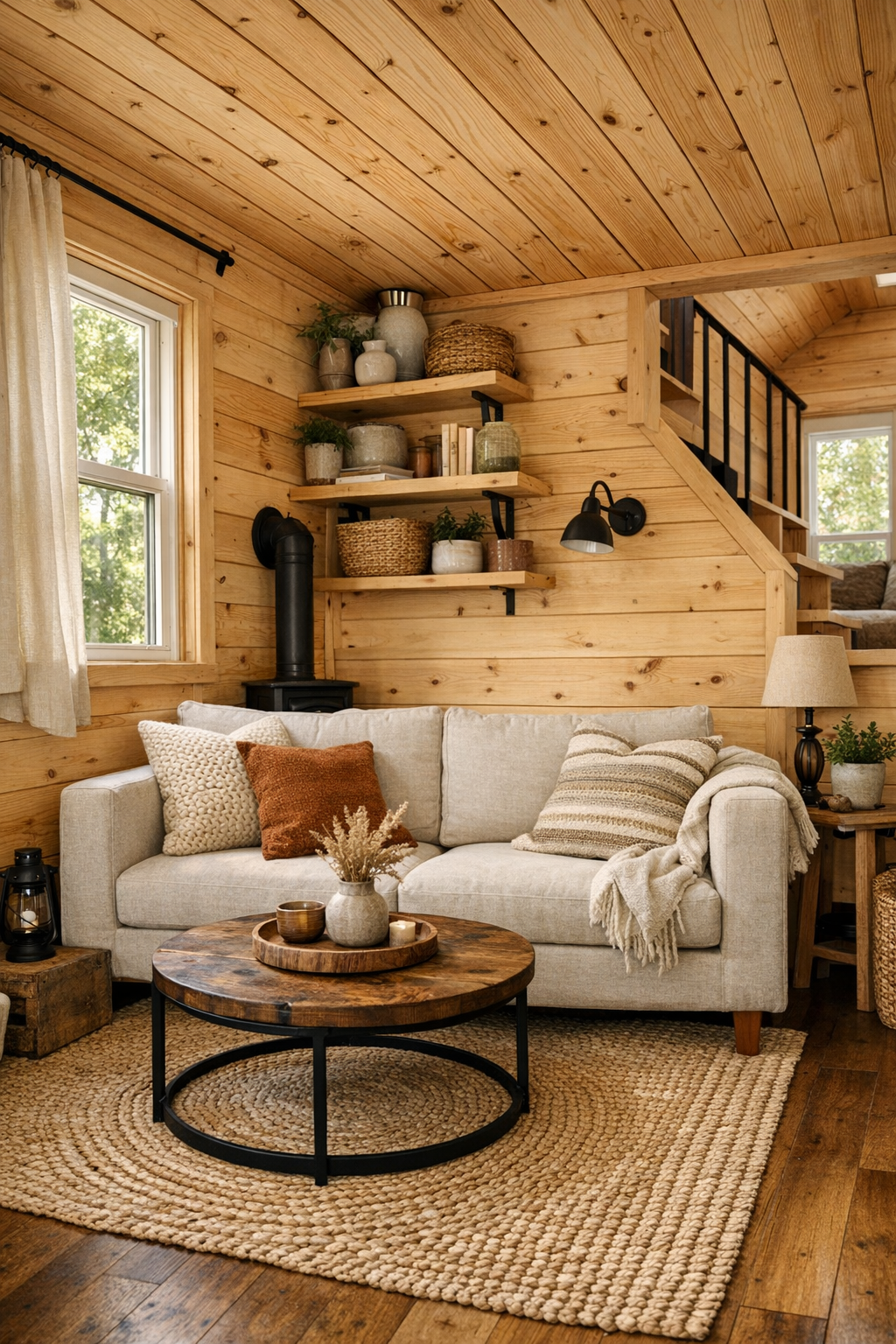
The living room makes the most of every inch without looking overplanned. Pine-clad walls and ceiling create an enveloping warmth, but the palette stays airy because the wood is kept light and natural rather than stained too dark. I would anchor the space with a compact linen sofa in oatmeal or warm ivory, layered with textured pillows in muted green, clay, and soft charcoal. A woven rug underfoot breaks up the wood-on-wood effect and adds a little softness, while a slim coffee table in blackened metal and wood brings in just enough contrast.
What I like most here is how the room would function in real life. Built-in shelving keeps books, baskets, and everyday items tucked in neatly, and I can easily imagine a window seat doubling as hidden storage for blankets or even those kitchen gadgets we all swear we use more often than we do. Lighting would be key: a mix of natural light from generous windows, a warm wall sconce or two, and maybe a petite overhead fixture with a simple iron profile. The result is cozy but not heavy, polished but still easygoing.
Dining Room
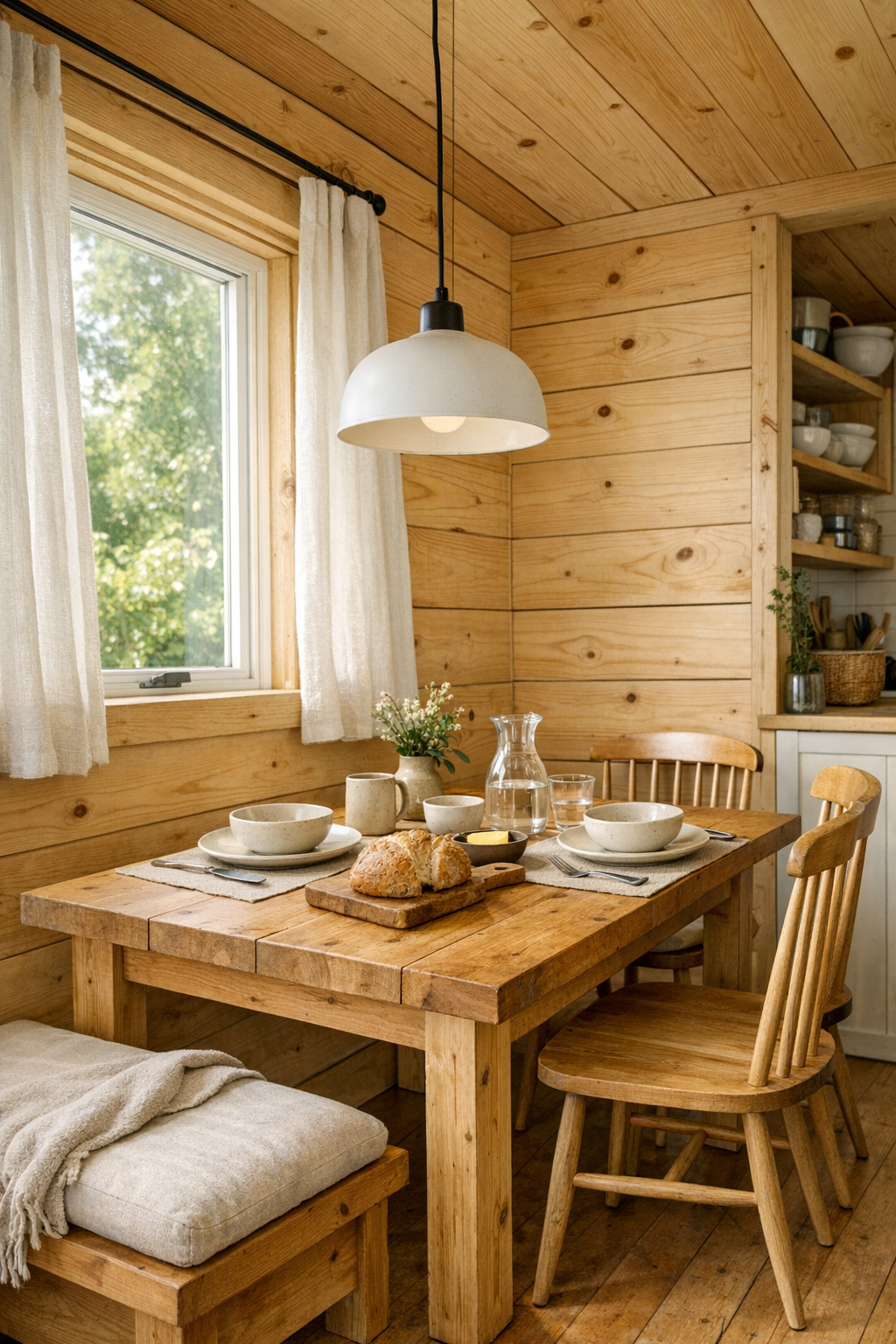
The dining area feels like an extension of the living space, which is exactly how it should in a tiny home. I picture a handcrafted pine table scaled just right for four, with a bench on one side and two simple spindle-back chairs on the other to keep the arrangement flexible. That mix gives the room a collected, lived-in feeling and also helps visually lighten the footprint. The wood tones stay consistent with the rest of the house, but I would bring in subtle variation through seat cushions in natural flax and a ceramic centerpiece that adds a soft, matte texture.
Because the space is compact, the details matter even more. A pendant light centered over the table could introduce a slightly more refined note, maybe in aged iron or milk glass, while still feeling in step with the home’s handcrafted character. I also love the idea of a nearby ledge or shallow hutch for stacked stoneware, linen napkins, and a small vase of grocery-store flowers. As someone who is always thinking about weeknight dinners and weekend baking projects, I appreciate a dining spot like this that feels intimate, unfussy, and ready to be used every single day.
Kitchen
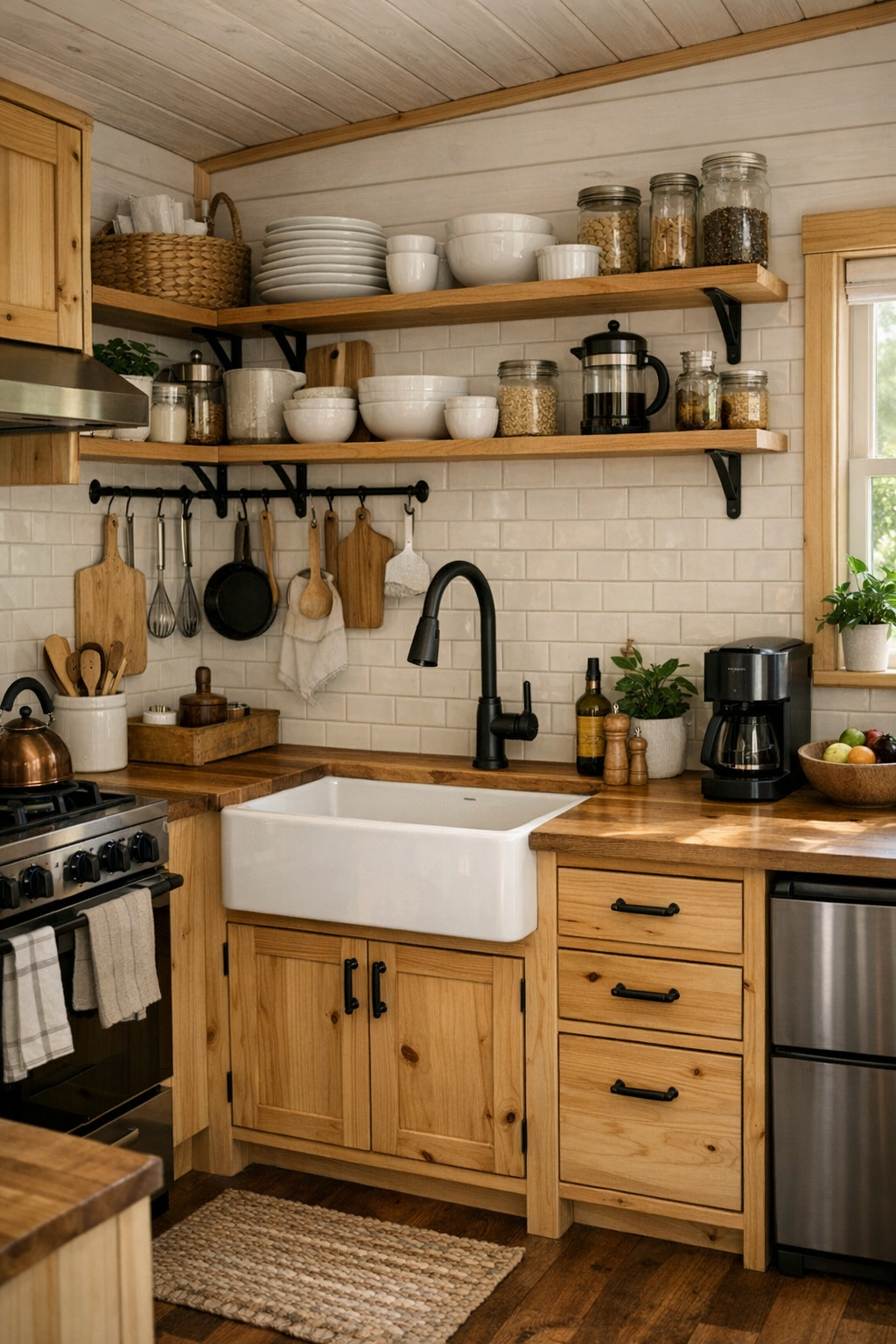
The kitchen is where this tiny home really wins me over. It is compact, but it does not feel like an afterthought. Pine cabinetry or open shelving ties it seamlessly to the architecture, while a butcher-block countertop keeps the room warm, durable, and approachable. I would expect a farmhouse-style sink, simple matte black hardware, and a classic tile backsplash in a creamy off-white to bring in a little brightness and wipe-clean practicality. Even if the footprint is small, careful vertical storage and a smart work triangle could make this a kitchen that truly works.
I always notice whether a kitchen seems designed for actual cooking, and this one absolutely does. There is room for stacked cutting boards, hanging utensils, pantry jars, and the kind of easy-to-reach storage that makes meal prep less chaotic on a busy Tuesday. Under-cabinet lighting would keep the counters functional, while windows would help bounce natural light off the pale tile and warm wood. The overall look is simple and honest, but not bare; it feels like a kitchen where soup can simmer, bread can cool on the counter, and cleanup still feels manageable at the end of the night.
Bedroom
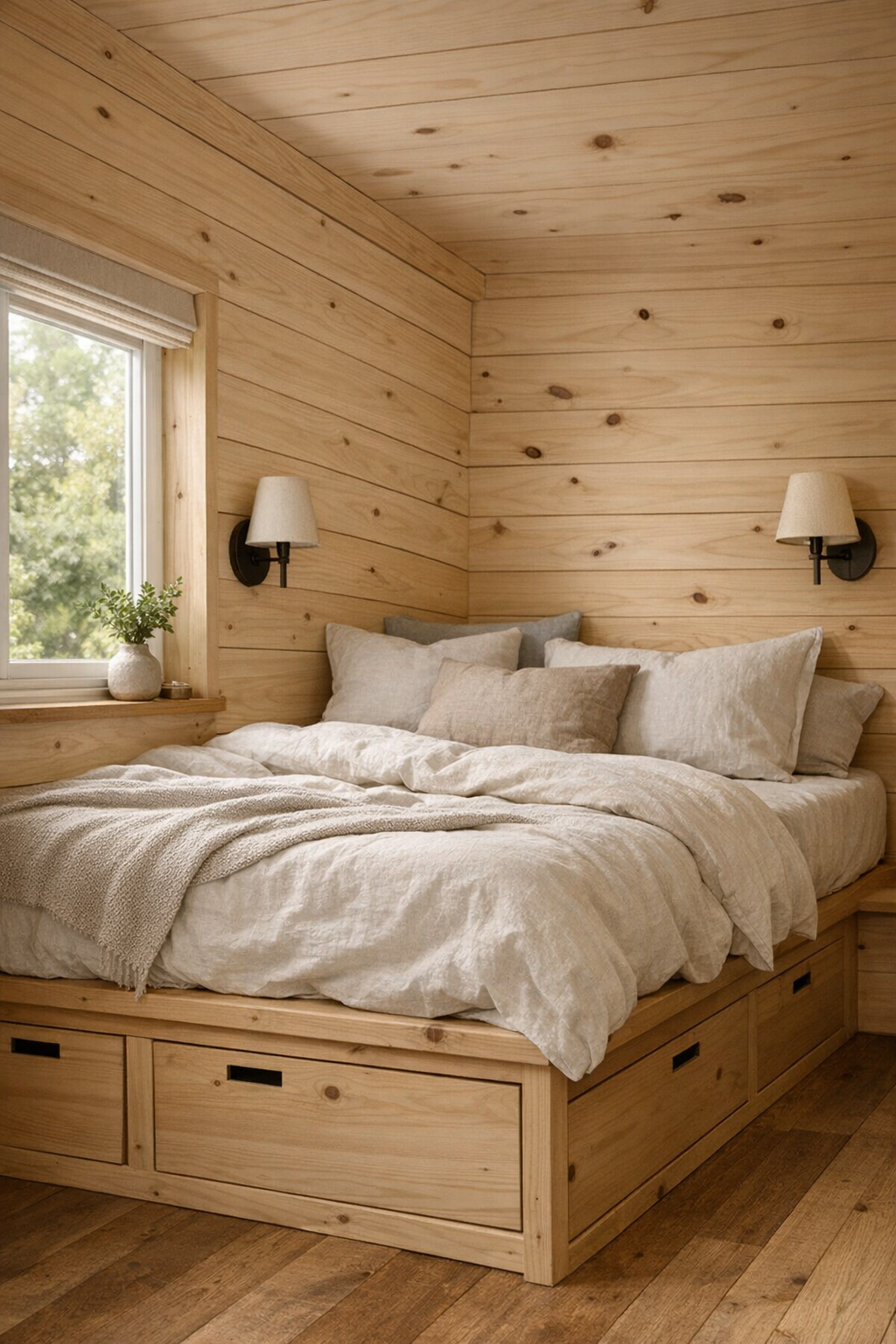
The bedroom keeps the same natural pine envelope but shifts the mood slightly quieter and softer. Whether it is a main-floor bedroom or a lofted sleeping nook, I imagine low-profile bedding in washed linen, layered in ivory, sand, and muted sage so the room feels restful rather than too matchy. A built-in bed platform would make perfect sense here, especially with drawers tucked underneath for clothing and extra blankets. In a small home, built-ins are not just nice to have, they are what keep the space feeling serene instead of cluttered.
I would also lean into subtle texture rather than lots of decor. A simple wool throw, a pair of compact sconces for reading, and maybe a narrow shelf for a book, a candle, and a small ceramic bowl would be enough. If there is a window near the bed, soft woven shades or airy linen curtains would filter the light beautifully against the pine walls. It is the kind of bedroom that encourages you to put your phone down a little earlier, exhale, and actually enjoy the quiet.
Bathroom
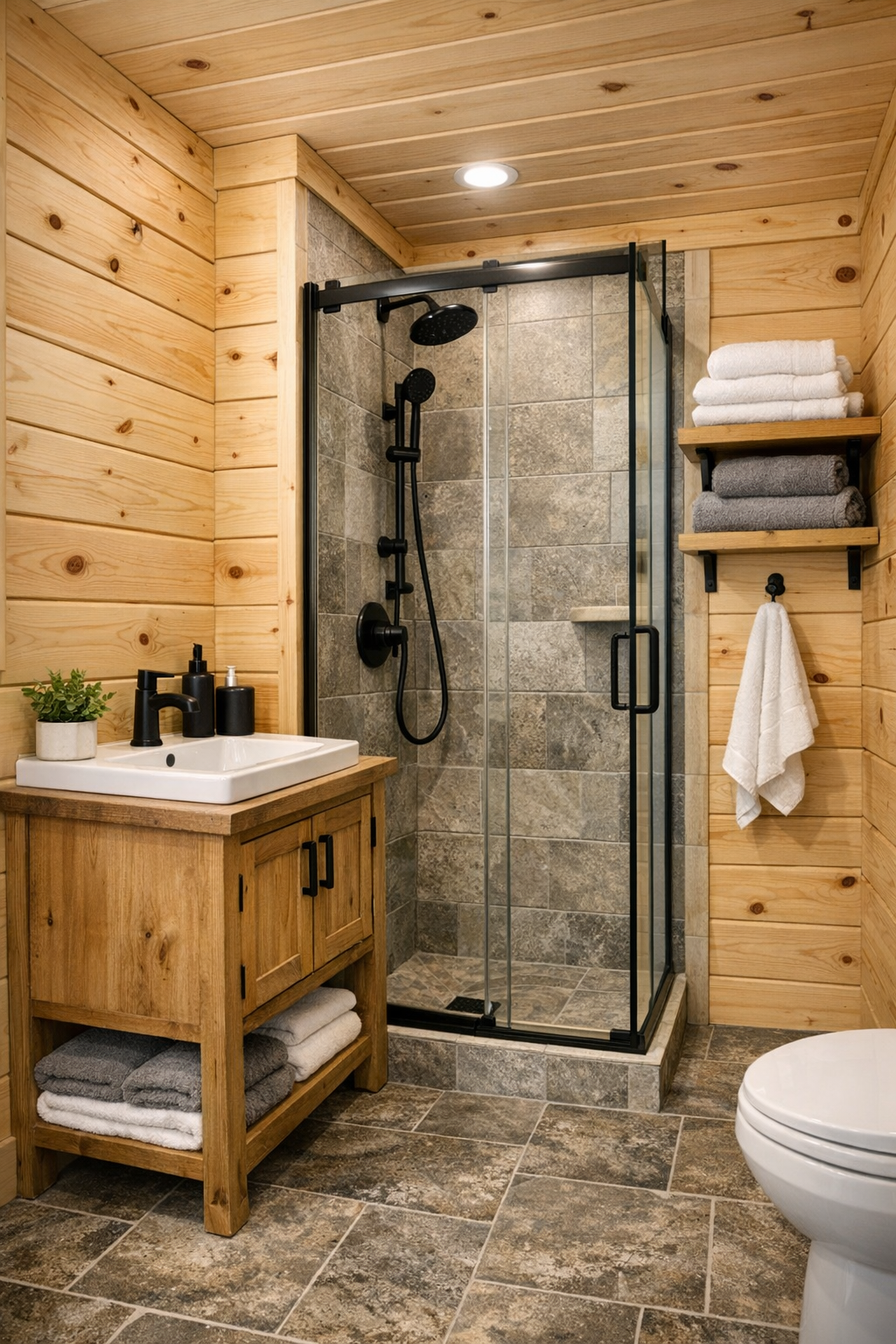
The bathroom looks like it understands the assignment: small, efficient, and still genuinely pretty. I love the contrast of natural pine trim with lighter wall surfaces, whether that is painted paneling, soft tile, or a combination of both. A compact vanity in wood, topped with a simple white sink, would keep the materials consistent while helping the room feel bright. Matte black or oil-rubbed bronze fixtures would add definition, and a framed mirror could bring just enough structure without making the room feel overdesigned.
In a tiny home bathroom, good storage and smart visual balance matter so much. A glass shower enclosure would help the room stay open, while niches for soap and shampoo keep essentials organized. I can also imagine neatly folded towels on a wall shelf, a small woven basket below the vanity, and a durable tile floor in a muted stone tone. It is practical, yes, but still warm and inviting, which is not always easy to pull off in a compact bath.
Other Areas
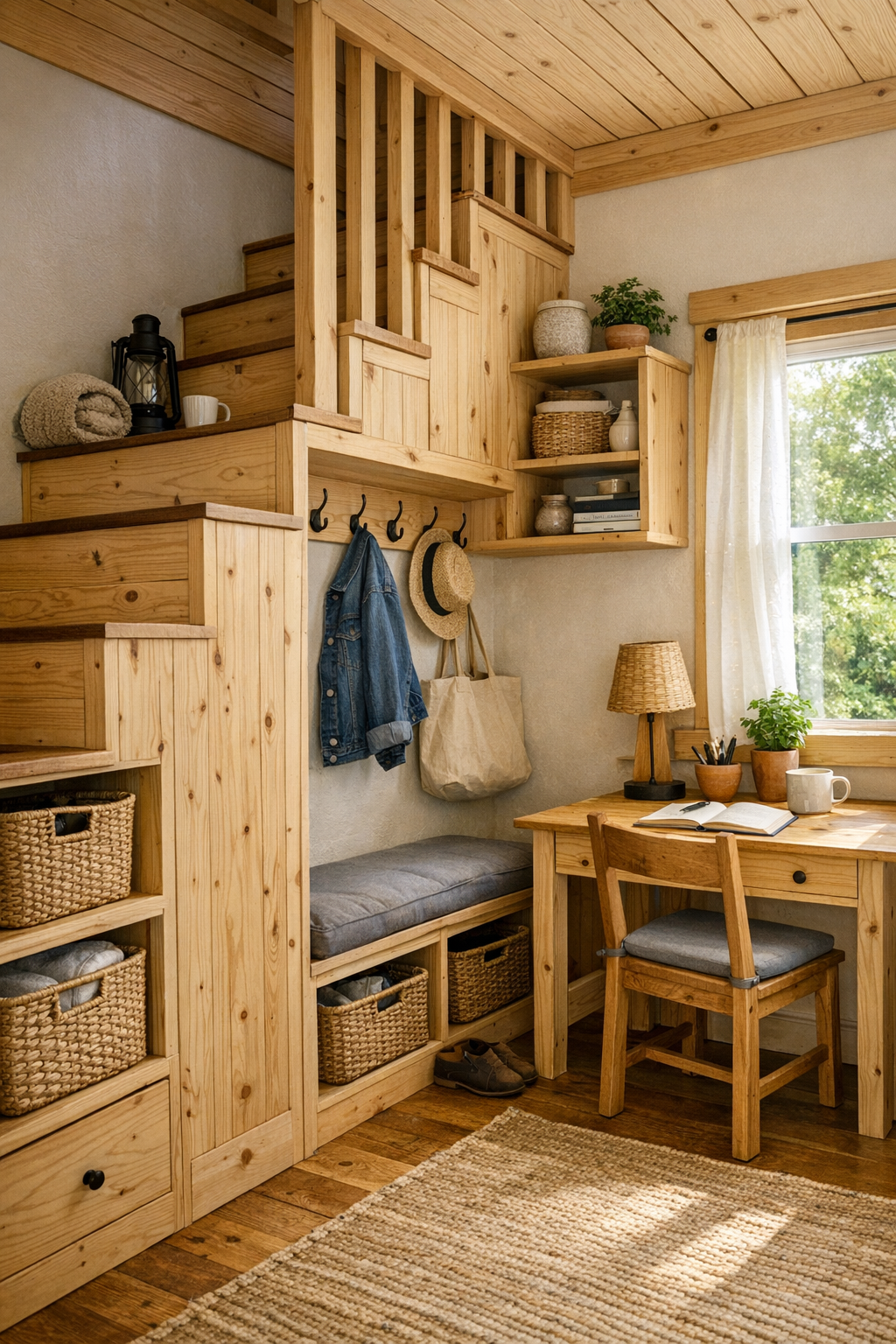
The extra spaces are where a tiny home like this really proves itself. I am thinking of a compact loft, a reading nook, stair storage, or a narrow entry drop zone with hooks and a built-in bench. These are the moments that make daily life easier, especially if you are carrying groceries, kicking off shoes, or trying to keep everything from mail to mixing bowls from taking over the main rooms. In a handcrafted home, these practical zones can be some of the most beautiful because they show how carefully the layout was considered.
I would expect more of that lovely pine here, maybe paired with beadboard accents, peg rails, or custom cubbies that feel true to the Amish-built spirit. A small desk surface tucked under a window could make working from home feel more intentional, while storage stairs or overhead cabinetry would help maximize every vertical inch. These in-between areas may not be flashy, but they are often what make a tiny home feel not just charming for a weekend, but genuinely livable for the long haul.
Why You'd Live Here
You would live here because it offers something a lot of bigger homes miss: clarity. Every finish, every built-in, and every carefully chosen material feels like it has a purpose, and that gives the whole home a calm, deeply comfortable rhythm. The natural pine brings warmth to even the smallest corners, and the handcrafted details make the space feel special in a way that mass-produced interiors rarely do.
For me, the appeal is that it does not ask you to sacrifice beauty for practicality. It is cozy, efficient, and full of character, with a layout that supports real routines like cooking dinner, putting things away, and winding down at the end of the day. If you love the idea of living with less but living more intentionally, this tiny home makes that lifestyle look incredibly inviting.