
There is something instantly charming about a home that asks you to slow down, and this rustic off-grid converted bus does exactly that. Set into a green July homestead with tall grasses, kitchen garden beds, and the soft kind of summer light that seems to linger all evening, it blends mobility and rootedness in a way I find incredibly appealing. From the outside, it carries that sturdy, honest silhouette of a bus, but inside it opens into a warm, handcrafted retreat layered with wood, linen, aged metal, and all the cozy practicality that makes a small home feel deeply intentional.
What makes this place special is how thoughtfully every inch has been considered without losing its easy, lived-in spirit. Even as a concept design, it feels believable in the best way: a home made for quiet mornings, productive afternoons, and dinners that start with herbs clipped just outside the door. I love how the design leans rustic without becoming heavy, and off-grid without feeling sparse, striking that sweet spot between independence, comfort, and beauty.
Exterior
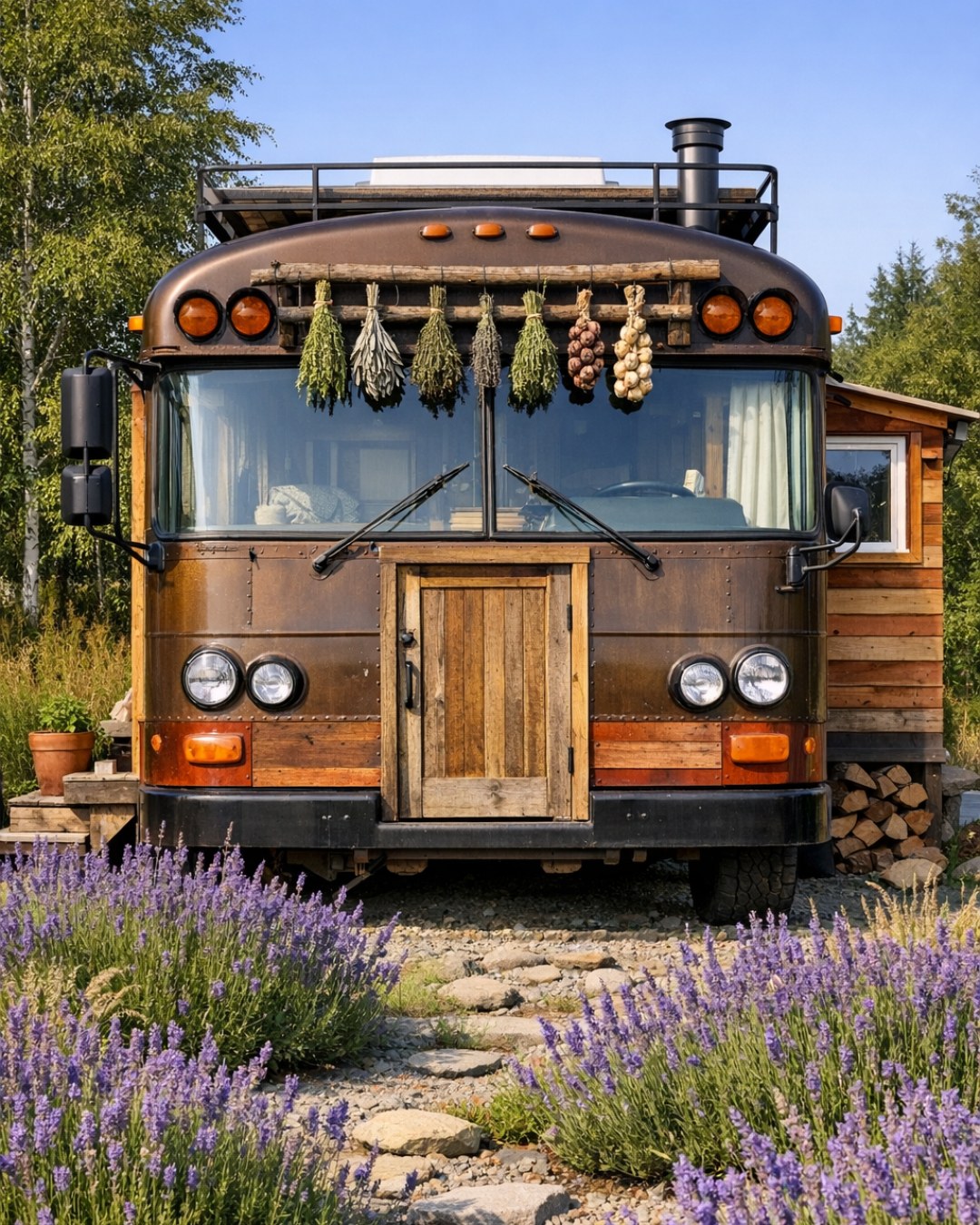
The exterior keeps the recognizable form of the original bus, but softens it with a homestead-ready finish that feels welcoming rather than novelty-driven. The body is painted in a chalky, muted cream with deep olive trim around the windows and wheel wells, giving it a sun-faded, almost heritage look that sits naturally against midsummer fields. A cedar-framed entry platform and a simple awning create a shaded threshold, while galvanized planters, stacked firewood, and a pair of weatherproof lantern sconces make the setting feel established and useful, not staged.
What I especially appreciate is how the design treats the bus as part of a larger landscape rather than an object dropped into it. Gravel underfoot keeps things practical, but the edges soften into wildflowers, potted tomatoes, and climbing beans trained up rustic trellises nearby. Solar panels are positioned with a clean, low profile, rainwater barrels tuck neatly into the side yard, and the whole composition feels balanced between self-sufficiency and visual warmth. It has that rare quality of looking both adventurous and completely at home.
Living Room
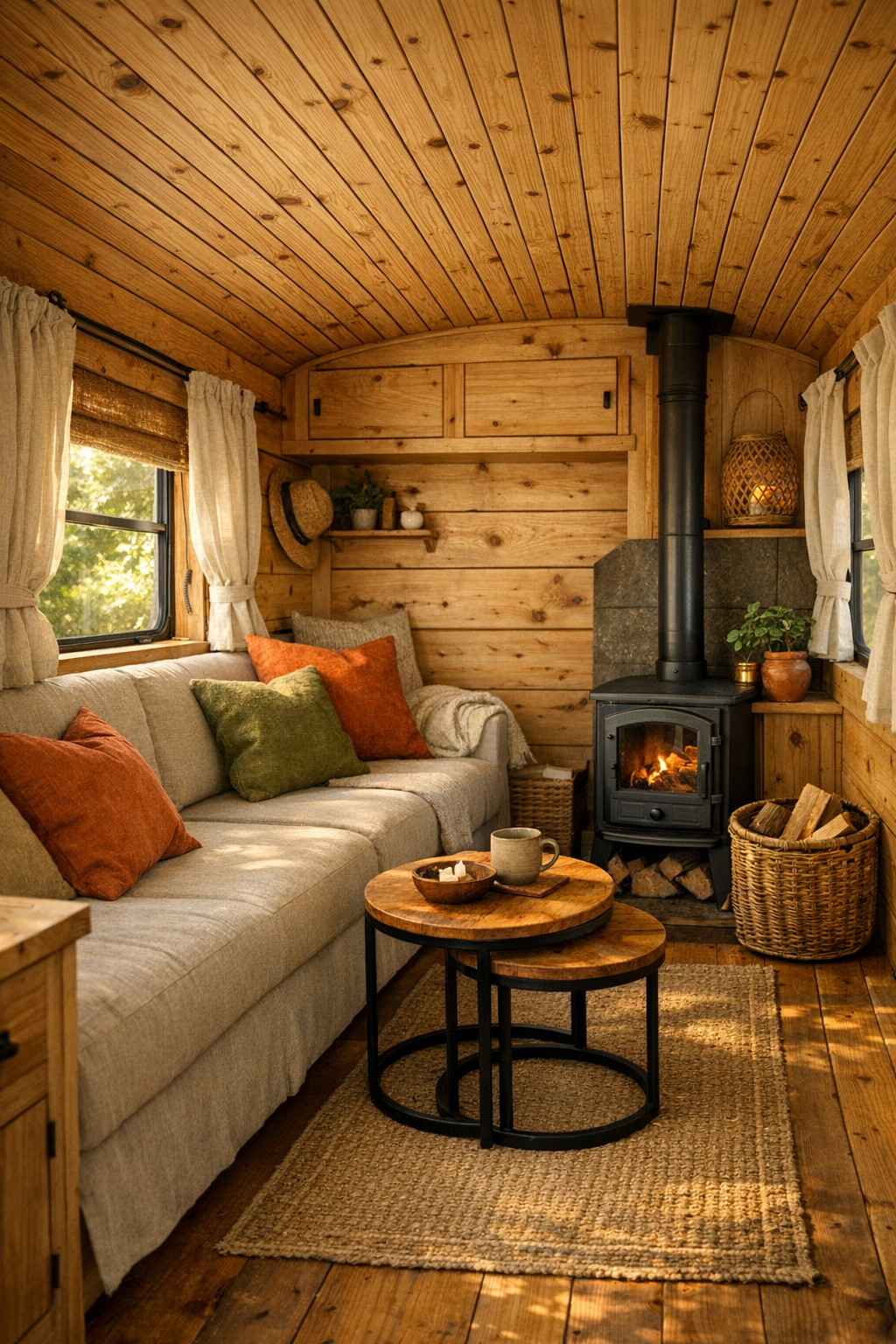
The living room is compact, of course, but it does not read small in a cramped way. Built along one side beneath the bus windows is a bench-style sofa with deep seat cushions in oatmeal linen and a mix of rust, moss, and faded plaid pillows that give the space a collected, layered look. The walls and ceiling are wrapped in warm knotty pine, and that honeyed wood tone immediately makes the room feel grounded. Opposite the seating, a slim black iron stove anchors the far corner, with a narrow ledge for books, a ceramic mug, and the kind of candle I would absolutely light while finishing work emails on a rainy afternoon.
The layout is smart and flexible, which is exactly what I want in a hard-working small home. Storage drawers are tucked invisibly under the bench, a small nesting coffee table can be shifted around as needed, and open shelves display stoneware, baskets, and a few practical essentials without tipping into clutter. Light pours in from the original bus windows, filtered by simple flax curtains that soften the edges without blocking the view. The overall effect is cozy, sun-washed, and surprisingly calm, like the room has figured out how to do more with less and still feel generous.
Dining Room
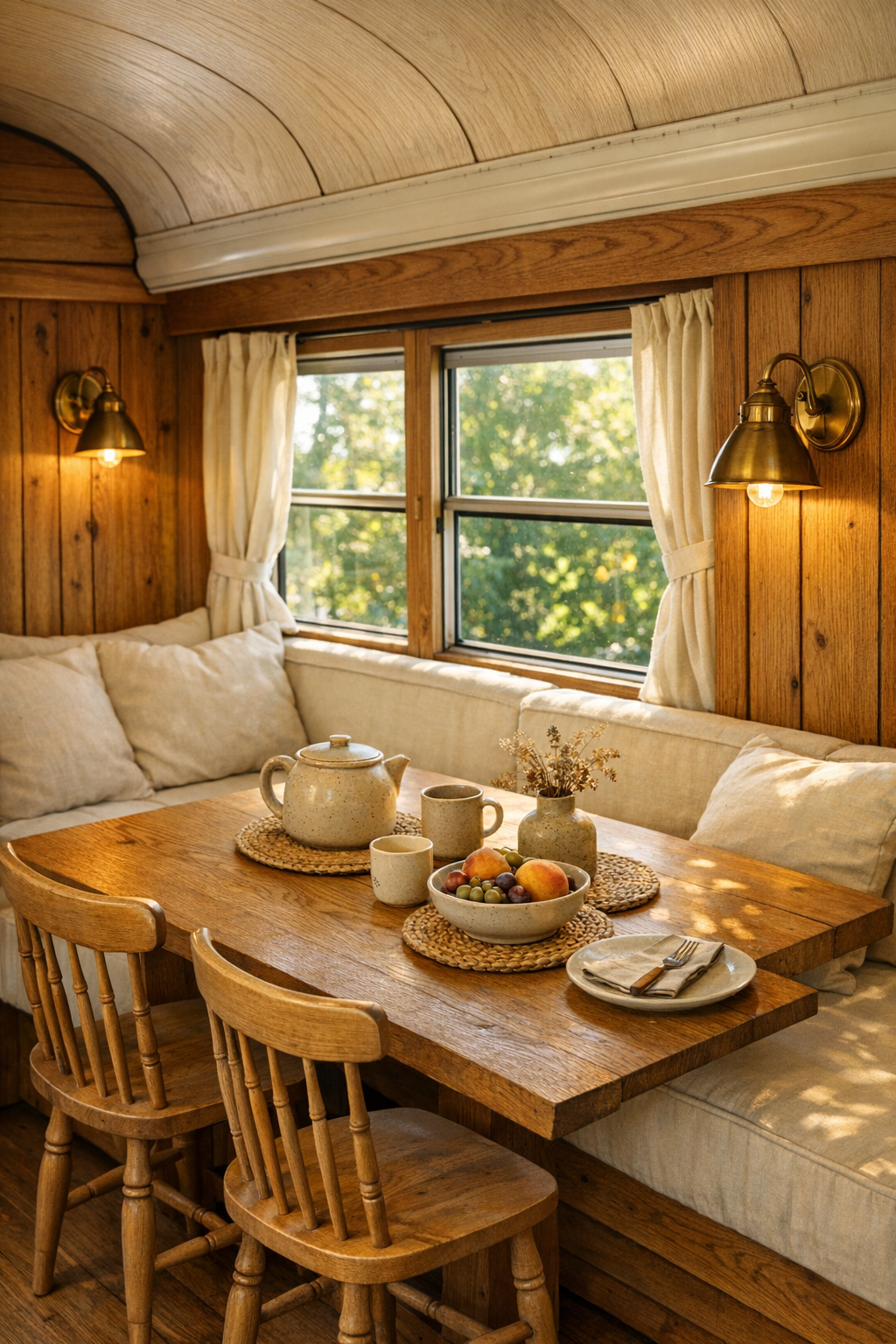
The dining area is integrated beautifully into the main living space, proof that small-scale design can still feel inviting enough for real meals and real conversation. A custom built-in table in natural oak sits beside the windows, paired with a fixed bench on one side and a pair of compact spindle-back chairs on the other. I can already picture a big salad bowl here, a loaf of something homemade, and somebody leaning in for seconds. The wood grain is left matte and natural, which keeps the room from feeling too polished and lets the craftsmanship speak for itself.
Above the table, a pair of petite aged-brass sconces and a slim overhead pendant create warm, focused light that would make even a simple weeknight dinner feel special. The palette stays earthy and easy: cream upholstery, wood tones, black metal accents, and a striped runner in muted clay and wheat. Nearby shelving holds everyday dishes, canning jars, and woven trivets, adding texture while keeping essentials close at hand. It is a dining space that feels grounded in daily life, and as someone who is always thinking about the next meal, I love that it makes eating feel central rather than squeezed in.
Kitchen
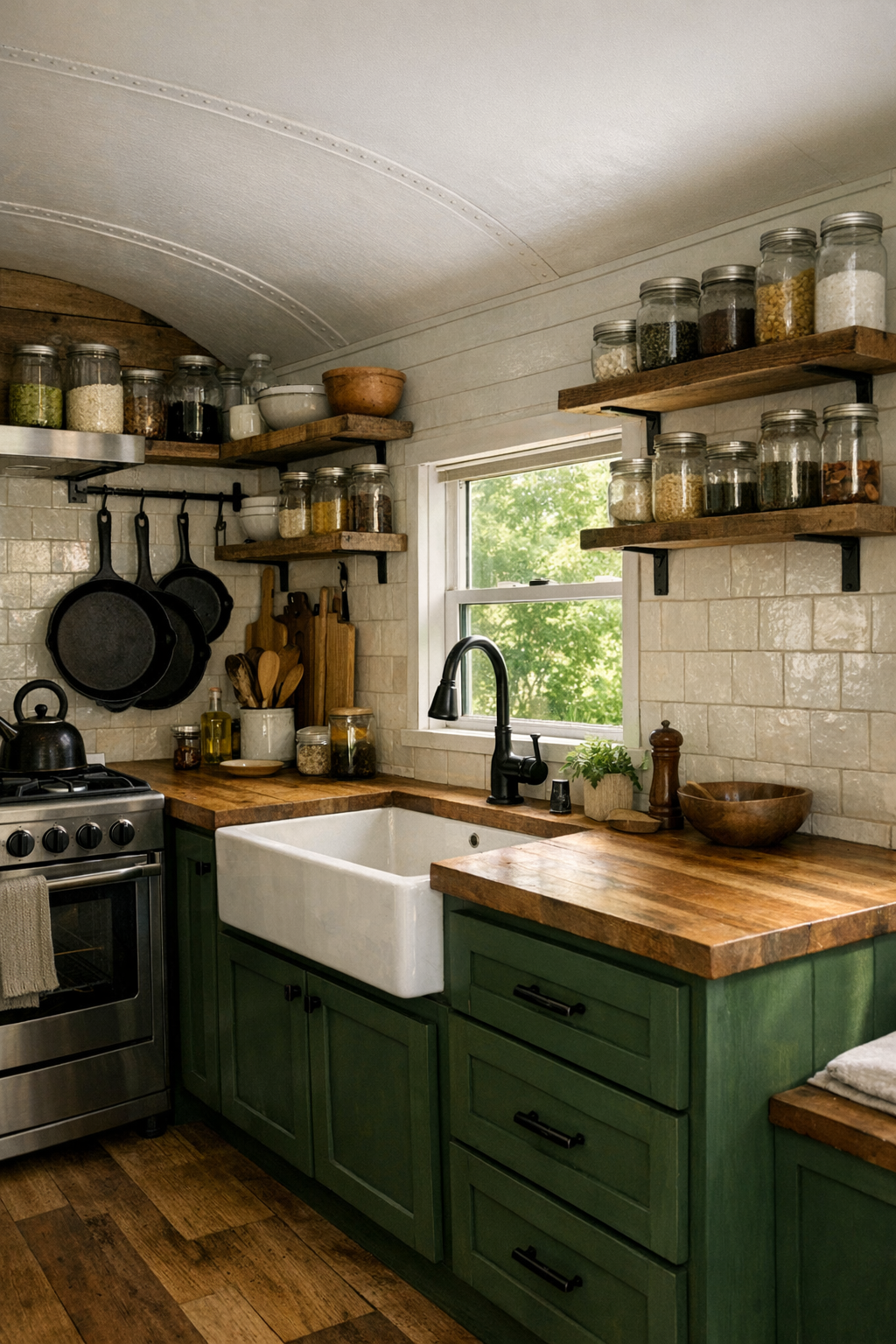
The kitchen is where this home really won me over. It is narrow and efficient, but every finish has been chosen to make it feel rich and tactile: butcher block counters, deep green lower cabinetry, open upper shelves in reclaimed wood, and a white apron-front sink positioned under a window. The backsplash is a hand-formed zellige-style tile in a soft off-white, catching the light with just enough variation to keep the small room from feeling flat. Black hardware and utilitarian rail hooks add that nice note of structure, while glass jars, cutting boards, and cast-iron pans make the space feel ready for actual cooking.
As someone who balances busy workdays with a real love of making dinner at home, I appreciate how practical this kitchen is. There is room for meal prep, smart vertical storage for dry goods and tools, and a compact undercounter refrigerator hidden behind matching cabinetry. A narrow pull-out pantry, a fold-down extension for extra prep surface, and baskets tucked overhead help the space function well beyond its footprint. It feels like the kind of kitchen where sourdough starter, farmers market produce, and a quick pasta on a Tuesday night can all coexist happily.
Bedroom
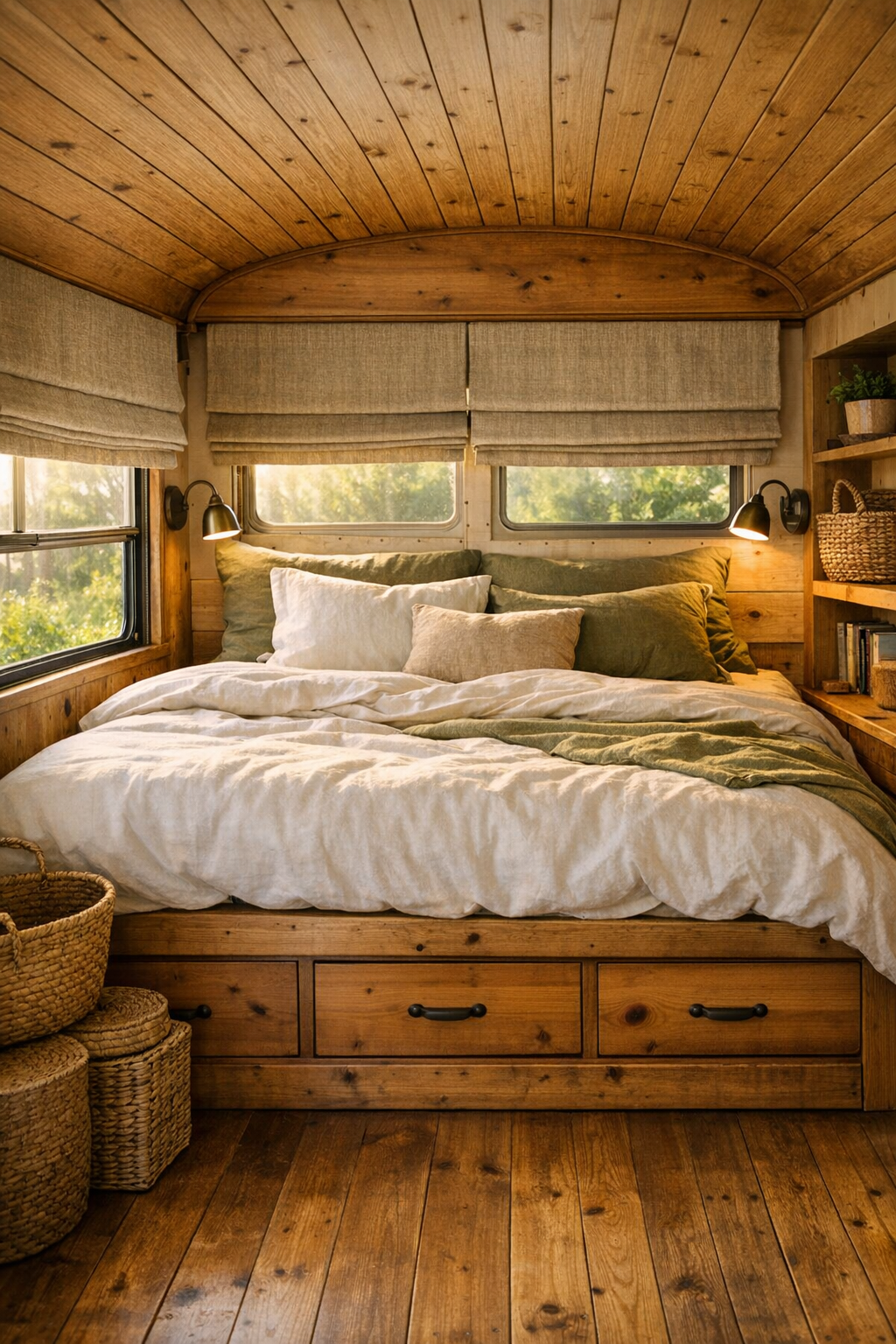
The bedroom sits at the quieter end of the bus and feels surprisingly serene, thanks to a restrained palette and some very smart built-ins. The bed platform is wrapped in the same warm wood used throughout the interior, with drawers below and small niches at the headboard for books, glasses, and a charging cord. Linen bedding in soft ivory and dusty olive keeps the look relaxed, while a wool throw at the foot adds just enough weight and texture. It is the kind of room that knows exactly what it needs and leaves out everything it does not.
I really like how the windows are handled here. Rather than over-dressing them, the design uses simple Roman shades in natural flax, which make the room feel private and cocooning at night but bright and airy in the morning. A pair of wall-mounted reading lamps frees up surface space, and woven baskets, peg rails, and upper cabinets provide hidden and open storage without crowding the sleeping area. The whole room feels gentle and restful, with that clean-sheet, open-window, midsummer-evening quality that is hard not to fall for.
Bathroom
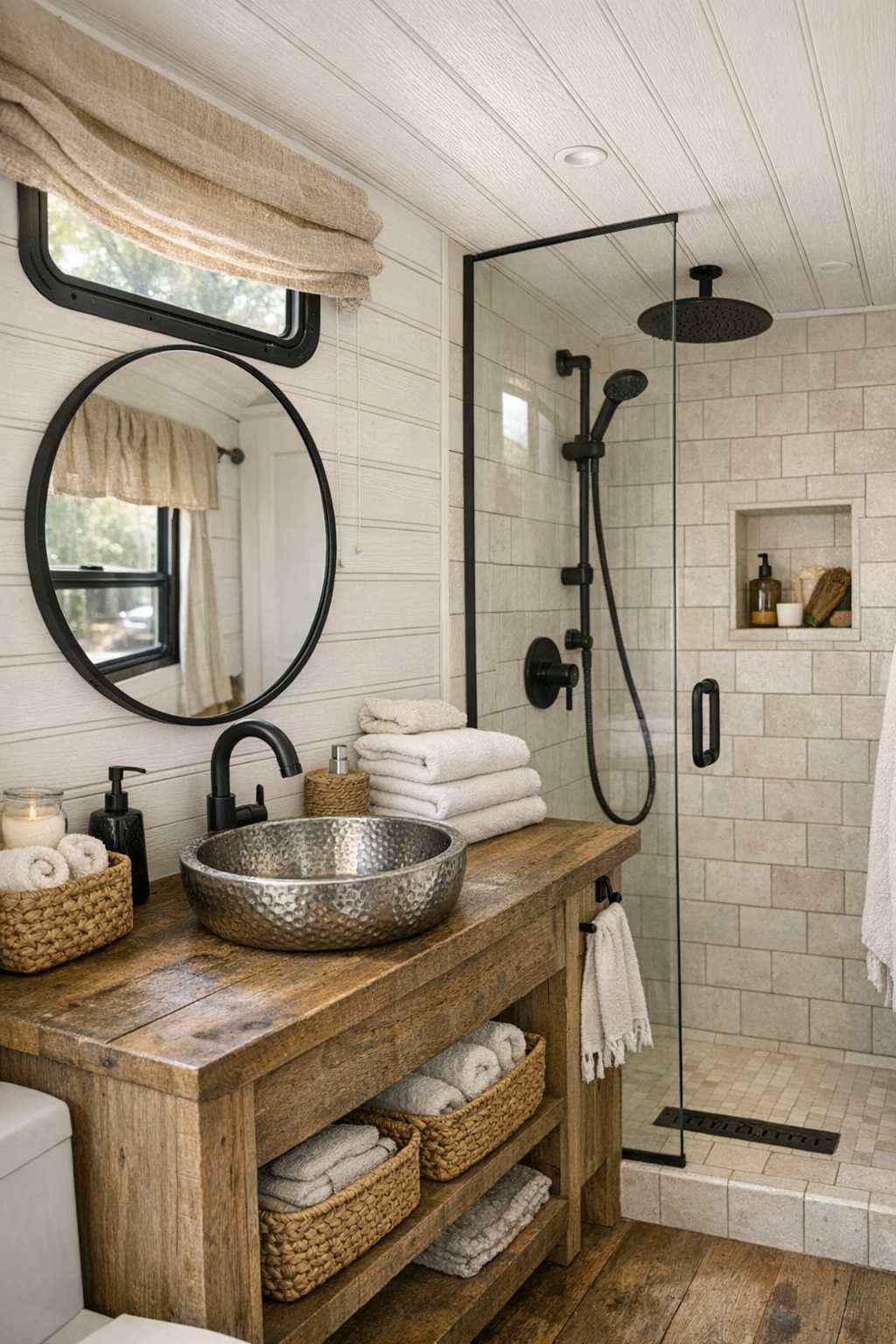
The bathroom is proof that rustic design can still feel clean and refined. It is compact but beautifully executed, with a small vanity in weathered oak, a round framed mirror, and a hammered metal sink that adds character without overpowering the room. The walls mix painted tongue-and-groove paneling with handmade tile in the shower area, giving the space both texture and a sense of durability. Matte black plumbing fixtures provide crisp contrast, and a soft, mineral-toned palette of white, sand, and gray keeps everything feeling fresh.
What stands out most is how the room balances utility with comfort. A shower with clear glass rather than a bulky enclosure helps preserve sightlines, while open shelves hold rolled towels, soap, and a few practical baskets. There is just enough styling to make it feel thoughtful: a small plant, a linen hand towel, a wooden stool tucked in the corner. In a home this size, bathrooms can easily feel like an afterthought, but this one feels composed and calming, the sort of place where even a quick morning routine would feel a little more peaceful.
Other Areas
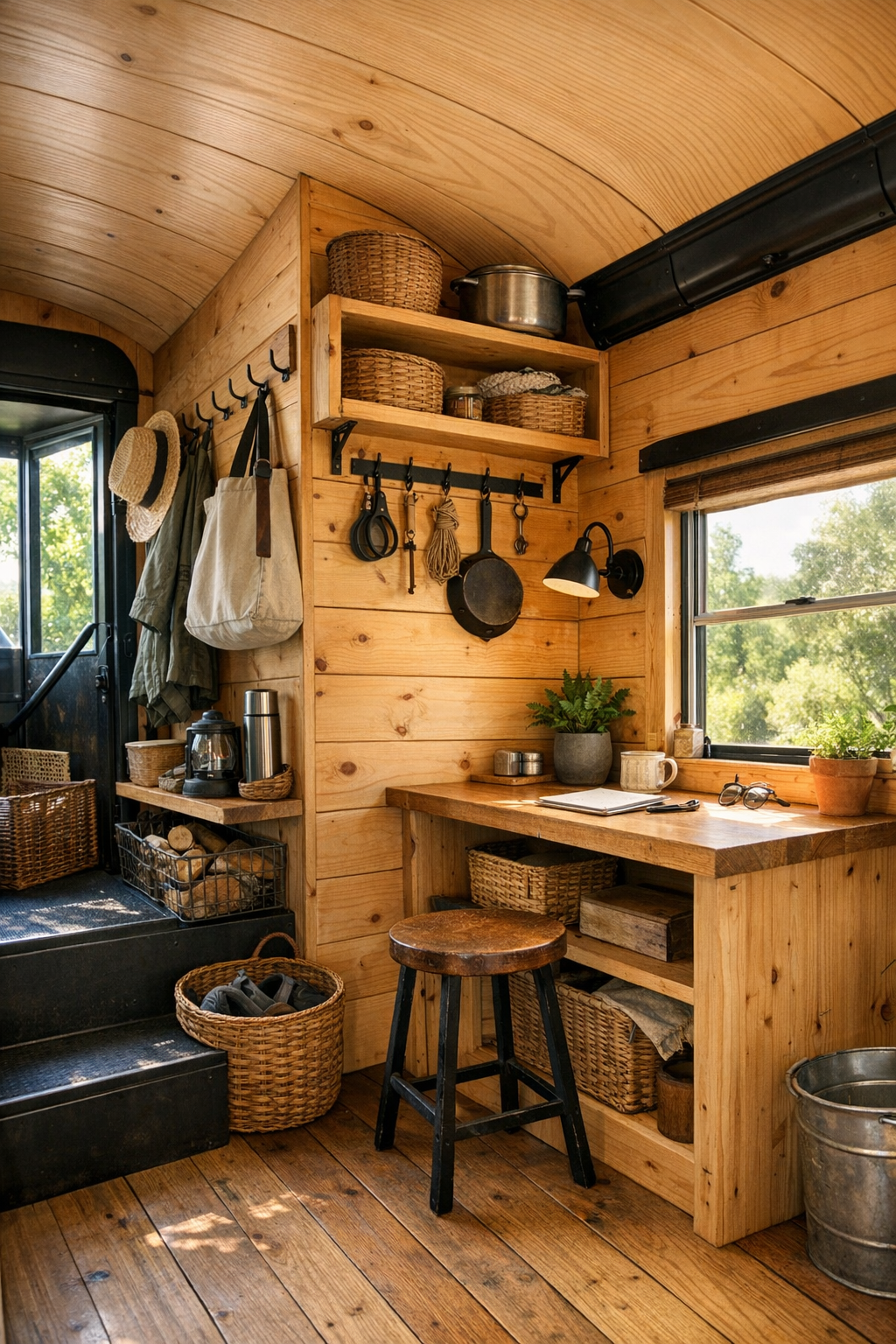
Some of my favorite moments in this home are the transitional ones. The narrow corridor spaces are turned into hardworking zones with peg rails, overhead cabinets, cubbies for shoes, and slim shelves for pantry overflow or garden baskets. Near the entry, there is a tiny mudroom moment with hooks for hats and aprons, a boot tray, and a bench that feels essential for homestead life. These details may not be flashy, but they are exactly what make a compact home livable day to day, especially if you are carrying in produce, laundry, or an armful of firewood.
There is also a sweet little lofted storage area and a tucked-away work nook that adds flexibility without disrupting the softness of the design. The desk is simple and built in, with a stool that slides underneath and a view out to the fields, which honestly sounds better than most offices I have seen lately. Throughout these extra spaces, the same materials continue—pine, black metal, linen, woven textures—so nothing feels disconnected. Instead, the entire bus reads as one cohesive, carefully edited home where every corner contributes something useful and beautiful.
Why You'd Live Here
You would live here because it offers something a lot of homes promise and very few actually deliver: simplicity with real comfort. It is beautiful, yes, but not in a precious way. The rustic finishes are durable, the off-grid features are thoughtfully integrated, and the layout supports the rhythms of everyday life, from cooking and working to resting and stepping outside with your coffee before the day gets busy. I can see the appeal immediately, especially for anyone craving a home that feels more connected to the seasons and less cluttered by excess.
More than anything, this converted bus feels personal. It invites you to live a little slower, use what you have well, and appreciate craftsmanship in the details you touch every day. For me, that is the real draw. It is not just the pine walls or the linen curtains or the dreamy July setting, though those certainly help. It is the feeling that this home has been shaped around a meaningful way of living, and that makes it absolutely breathtaking.