
There is something deeply comforting about a Victorian houseboat when it is handled with a gentle, practical hand, and this one does exactly that. Moored in a quiet waterside setting, the home blends the romance of painted trim, tall windows, and old-fashioned detailing with the ease of accessible living, creating rooms that feel both gracious and wonderfully usable. Even as a concept design, it feels lived-in in the best sense of the word, like a place where muddy boots can rest by the door, soup can simmer all afternoon, and the light off the water can do half the decorating for you.
What makes this home special to me is the way it refuses to choose between charm and comfort. The Victorian influence is present in the curve of the millwork, the soft color story, and the decorative fixtures, but the circulation is generous, the thresholds are easy, and every room seems arranged with calm intention. It has the sweetness of an old river town boarding house and the sensible warmth of a Midwestern family home, all carried by a palette of painted wood, brass, linen, and weathered finishes that seem to grow prettier with every passing season.
Exterior
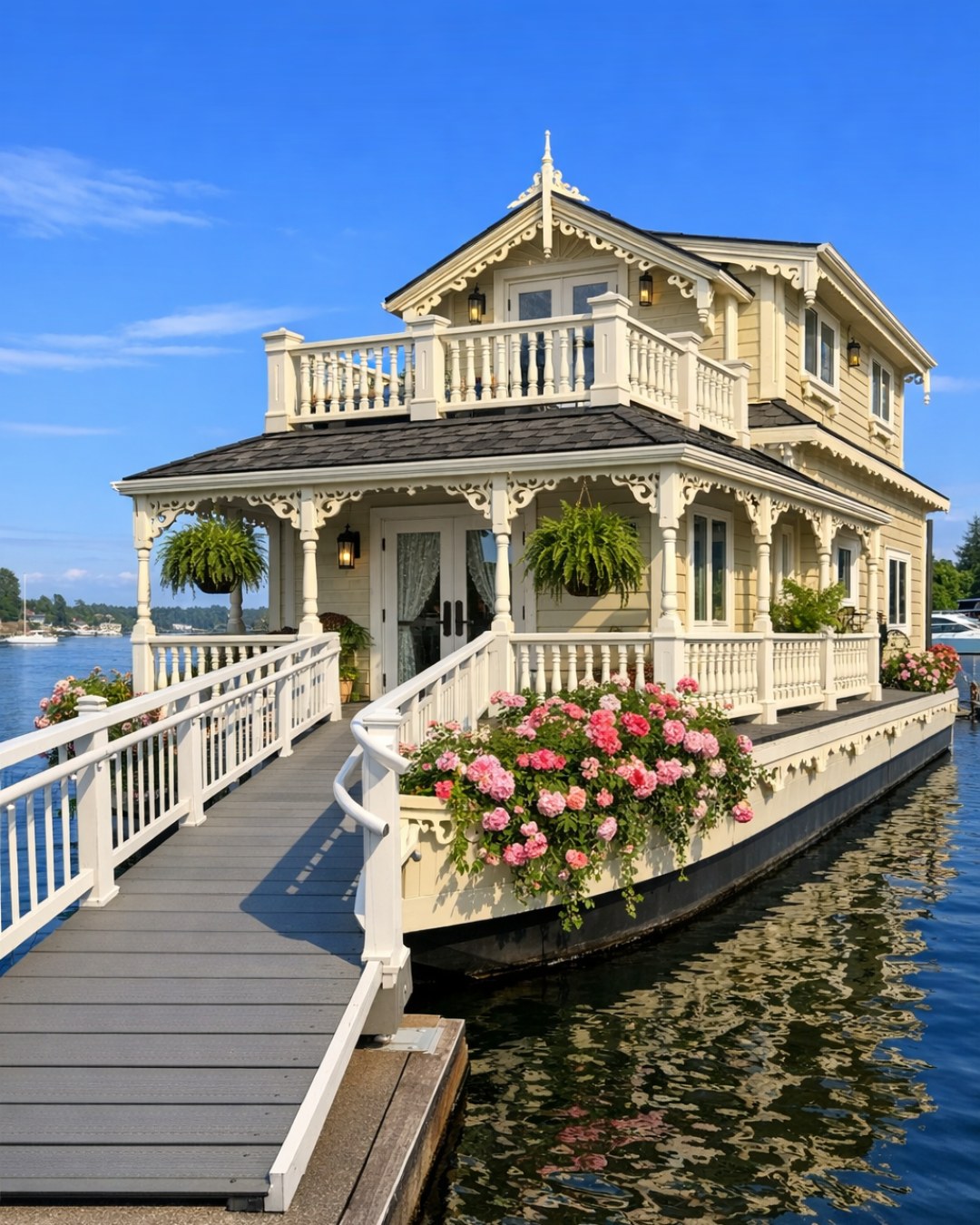
From the outside, the houseboat carries a lovely storybook presence without becoming fussy. The Victorian character shows in its narrow lap siding, delicately trimmed windows, petite brackets, and a muted paint palette that suits the water beautifully: creamy ivory, soft sage, and a dusty blue-gray that shifts with the sky. I can easily imagine the porch rail catching the morning sun while planters of herbs and trailing geraniums soften the edges. The lines are tidy and upright, but not severe, and that balance gives the home a welcoming face.
What I appreciate most is how accessibility has been folded into the design so naturally. The entry feels gracious rather than clinical, with a broad, gently sloped approach, sturdy railings worked into the decorative trim, and doors wide enough to move through comfortably. The exterior deck spaces appear level and easy to navigate, with room for a chair, a side table, and a pot of rosemary near the threshold. It is the sort of thoughtful design that does not announce itself loudly; it simply makes life easier while preserving every bit of the home's charm.
Living Room
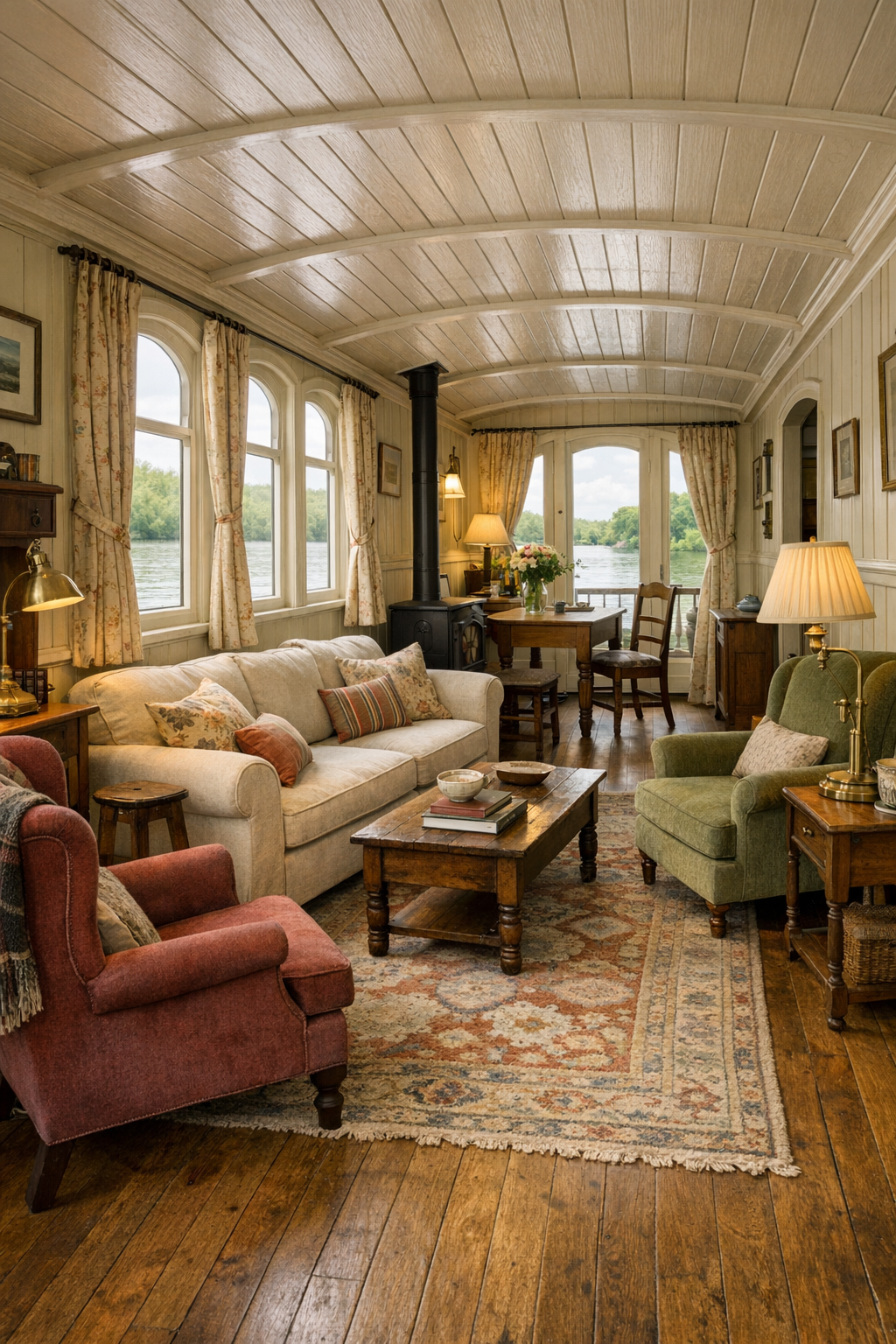
The living room has the sort of softness that makes you want to settle in before you have even taken off your coat. Tall windows pull in light from the water, and that shifting brightness plays across painted paneling in a pale cream tone, a warm oak floor, and a ceiling washed in the faintest blue. The furniture is arranged with real ease in mind: a generously scaled sofa with supportive arms, two upright club chairs, and plenty of clear space between pieces so movement feels natural. Brass reading lamps, a skirted ottoman, and a patterned wool rug in faded rose, sage, and tobacco lend the room its layered Victorian spirit without weighing it down.
What keeps the room from feeling overly precious is the honest mix of textures. There are nubby linens, smooth wood rails worn satin-soft, and just enough polish in the hardware and picture frames to catch the eye. I love the idea of built-in shelves tucked low and wide, easy to reach, holding books, blue-and-white pottery, and a few framed family photographs. The mood is restful and companionable, like the front room of an old farmhouse after supper, only here the water outside gives everything a lighter, floating calm.
Dining Room
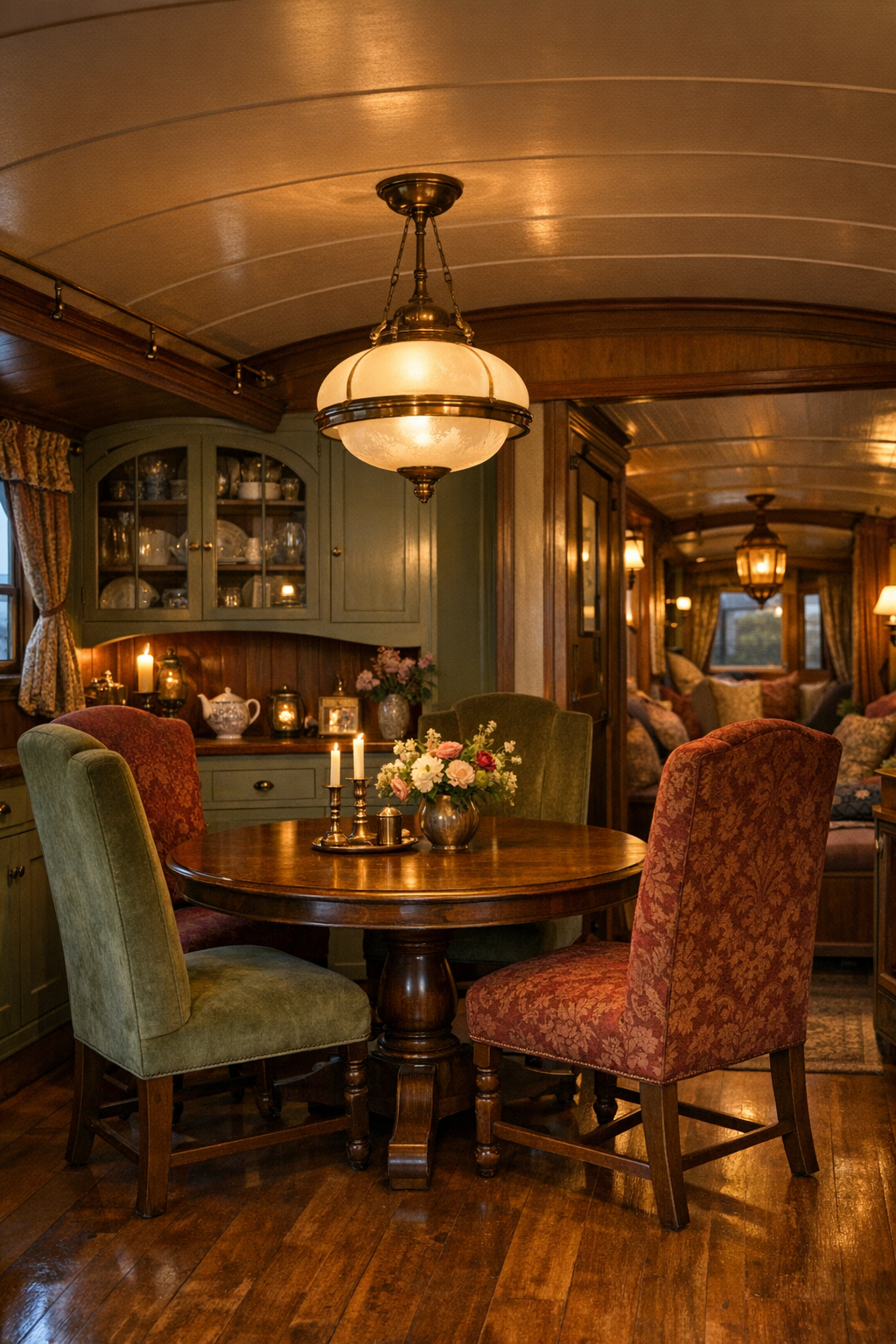
The dining room sits in that happy place between formal and familiar. It has a modest Victorian grace to it, with a round pedestal table that encourages easy conversation, high-back chairs with upholstered seats, and a built-in sideboard painted to match the trim. I can picture a bowl of late-summer tomatoes in the center and a checked runner laid across the table, simple things that always make a room feel loved. The palette continues the home's soft, river-washed colors, but here it deepens a little with muted cranberry, olive, and honey-toned wood.
Lighting matters so much in a dining room, and this one gets it right with a pendant overhead that nods to period style without becoming stiff. I imagine frosted glass, a warm brass stem, and dim, flattering light in the evening, while daylight from nearby windows keeps the room cheerful by morning. Circulation around the table is generous, and the chairs look easy to pull in and out, which is exactly the kind of practical detail I notice. It feels like a room made for coffee cake breakfasts, fish fries, birthday suppers, and all those ordinary meals that become the heart of a home.
Kitchen
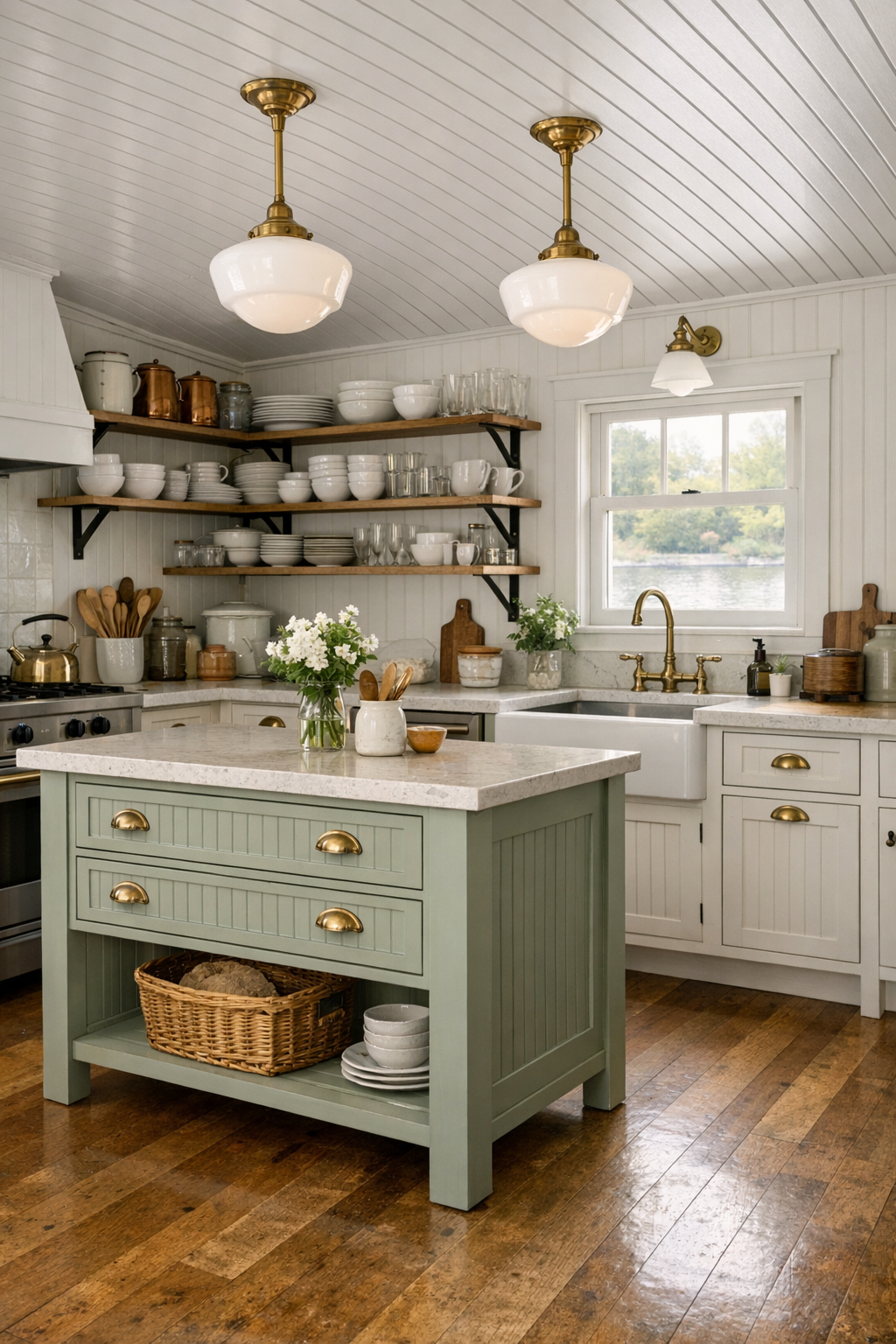
This kitchen is where the houseboat wins me over completely. It honors old-fashioned kitchen character with beadboard cabinetry, cup pulls in unlacquered brass, open shelves for everyday crockery, and counters that read as practical rather than flashy. I imagine a creamy quartz or honed stone surface paired with a pale sage island, all under windows that make dishwashing feel less like a chore and more like part of the day. The work zones are spread sensibly, with room to turn, reach, and move about without the cramped feeling that so many boat interiors can have.
There is a quiet Midwestern usefulness here that I truly admire. Lower storage looks thoughtfully arranged, drawers are broad and easy to access, and the hardware appears sturdy enough to serve for years. A vintage-style runner softens the floor, while schoolhouse pendants and under-cabinet lighting keep every corner bright. I can almost smell yeast rolls rising near the window and hear a kettle beginning to hum. For all its prettiness, this is still a working kitchen, made for pot roast, canning jars, pie crusts, and the kind of steady cooking that brings everyone to the table.
Bedroom
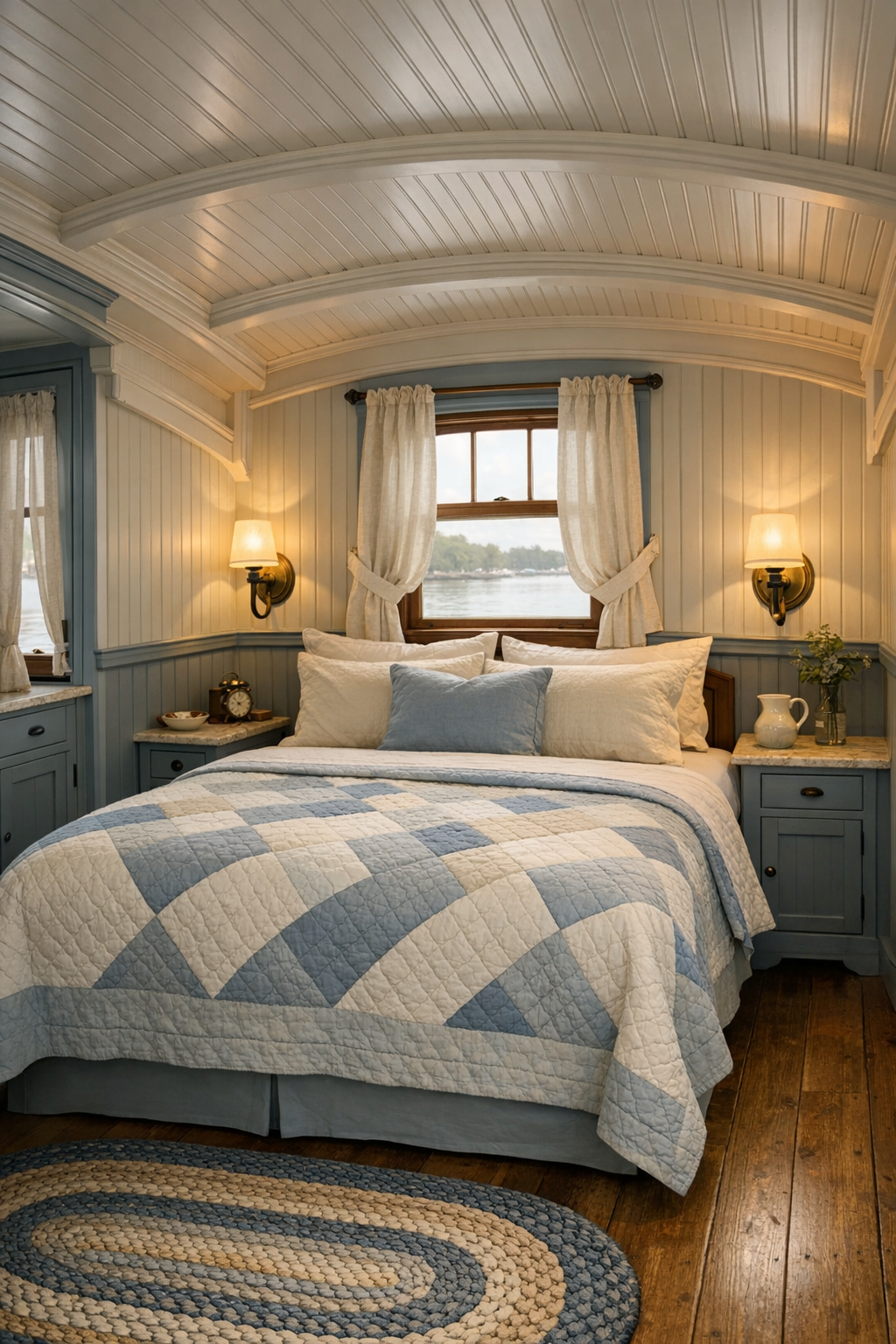
The bedroom has a tender, tucked-away quality that feels just right for life on the water. The bed is likely centered beneath a paneled wall or framed by windows with soft drapery in washed linen, creating a cocooning effect without making the room feel closed in. Painted wood trim, a quilted coverlet, and a pair of substantial bedside tables give the room a sense of permanence, which is no small gift in a floating home. The colors are hushed and sleepy: warm white, faded blue, lavender-gray, and the gentle brown of old wood.
I especially like how the room seems designed for comfort at every hour of the day. There is enough clearance to move around the bed easily, sconces are placed at a useful height, and storage feels integrated rather than crowded. A cushioned bench at the foot of the bed, a braided rug underfoot, and perhaps one good armchair by the window make the space feel personal and complete. It has the sweetness of a guest room in a beloved relative's house, but with a grown-up calm that invites real rest.
Bathroom
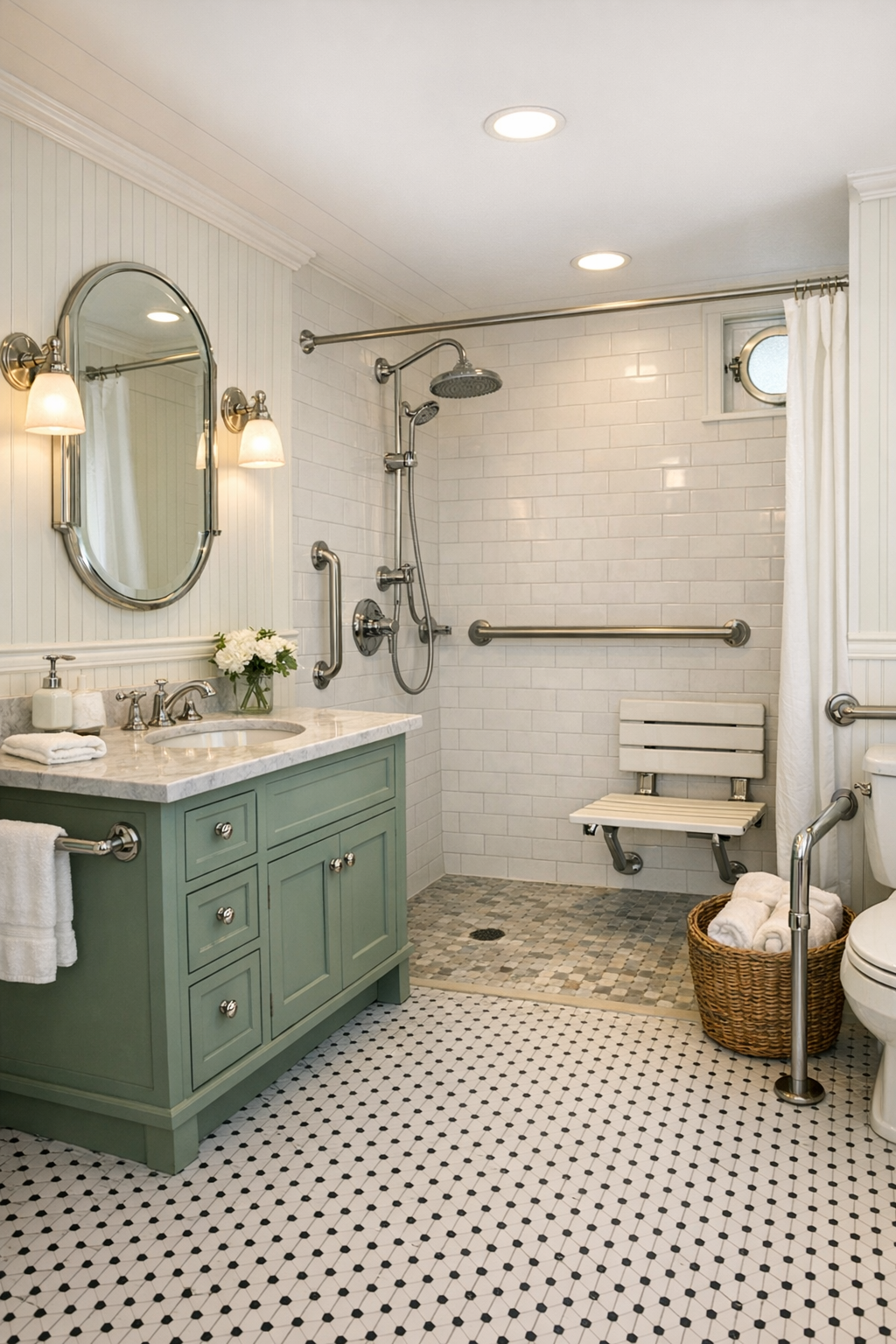
The bathroom is one of the smartest spaces in the home because it carries its accessibility with grace. The finishes lean classic: small-scale tile, polished nickel or aged brass fittings, beadboard wainscoting, and a vanity painted in a muted heritage tone. If I were walking through it, I think I would notice first how orderly and bright it feels, with every detail chosen to be both pretty and sensible. A curbless shower, supportive grab bars matched to the metal finish, and a broad mirror all fit neatly into the room's old-house spirit.
There is also a softness here that keeps the practicality from feeling stark. Good white towels, a glass shade wall sconce, and perhaps a floral-print Roman shade lend warmth, while the tile underfoot offers subtle pattern and traction. I appreciate bathrooms that understand their job and still manage to feel pleasant, and this one surely does. It would be easy to begin the day here with a little dignity and calm, and that sort of comfort matters more than folks sometimes realize.
Other Areas
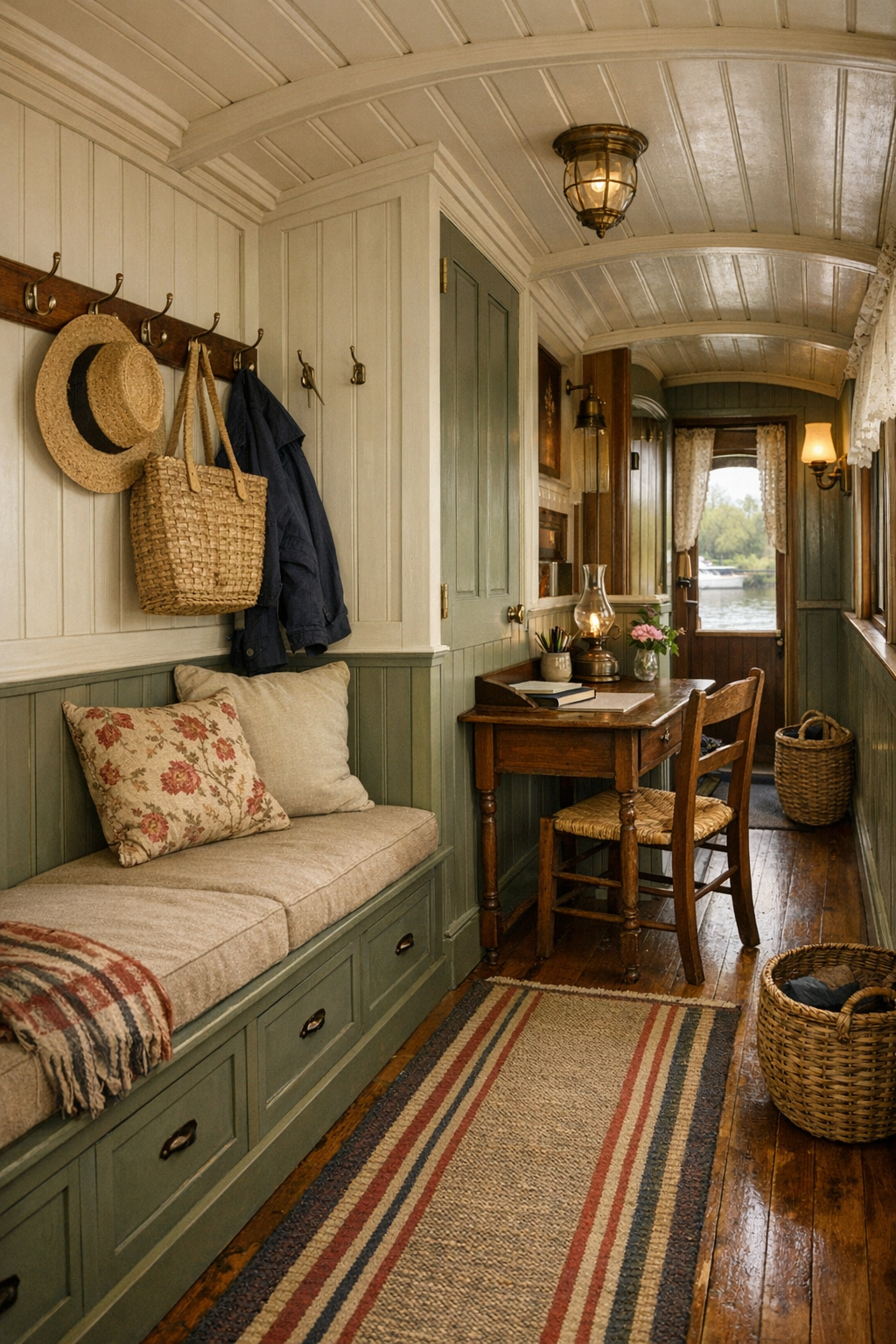
What rounds out the home are the in-between spaces, and in a well-designed house those areas are never an afterthought. Here, I imagine a narrow but generous-feeling corridor with painted paneling, well-placed handrails, and small windows that throw ribbons of light across the floor. There may be a reading nook tucked beside a window, a built-in bench with storage for blankets and shoes, or a compact office corner with a simple writing desk. These are the sorts of spots that make daily life easier and more companionable, the same way a good mudroom or back porch does in an old country house.
The deck and passage spaces likely carry the home's character just as beautifully as the main rooms. Wicker or painted wood seating, practical hooks, durable runners, and baskets for odds and ends would all feel right at home here. I am particularly fond of a house that gives you a place to pause, and this one seems full of little pauses: a bench to watch the water, a shelf for books and seed catalogs, a corner for folding laundry in the afternoon light. Those details may be quiet, but they are often what make a home truly lovable.
Why You'd Live Here
You would live here because it offers a rare kind of gentleness. It is romantic without being impractical, detailed without being crowded, and accessible without sacrificing a bit of beauty. So many homes manage one or two of those qualities, but this one gathers them together and makes them feel easy. That is no small accomplishment, and I think anyone who values thoughtful design would feel it the moment they stepped aboard.
I would also say you would live here for the mood of it all: the water outside the windows, the painted wood glowing in the light, the reassuring sturdiness of classic materials, and the sense that life could unfold here at a kinder pace. It feels like a home for people who still believe comfort is found in well-made things, clear pathways, warm rooms, and a place at the table for whoever drops by. In my book, that is about as charming as a home can be.