
There is something instantly grounding about this linen cream Amish bank barn tiny home. From the outside, it carries that honest, time-tested barn presence I always love, but the scale and detailing make it feel deeply personal rather than oversized or grand. Set against what I imagine as a quiet Midwest landscape, it balances rustic character with a softer, more polished sensibility—warm wood tones, creamy finishes, and handcrafted elements that make every corner feel intentional. Even as a concept design, it feels incredibly livable to me.
What makes this home special is the way it leans into craftsmanship without becoming precious. I can picture coming in after a long workday, setting down my bag, and immediately exhaling because the spaces feel calm, useful, and beautifully made. There is a simplicity here that does not read sparse; instead, it feels layered with texture, natural light, and practical comforts that would support real daily life, especially for someone like me who always ends up gravitating toward the kitchen.
Exterior
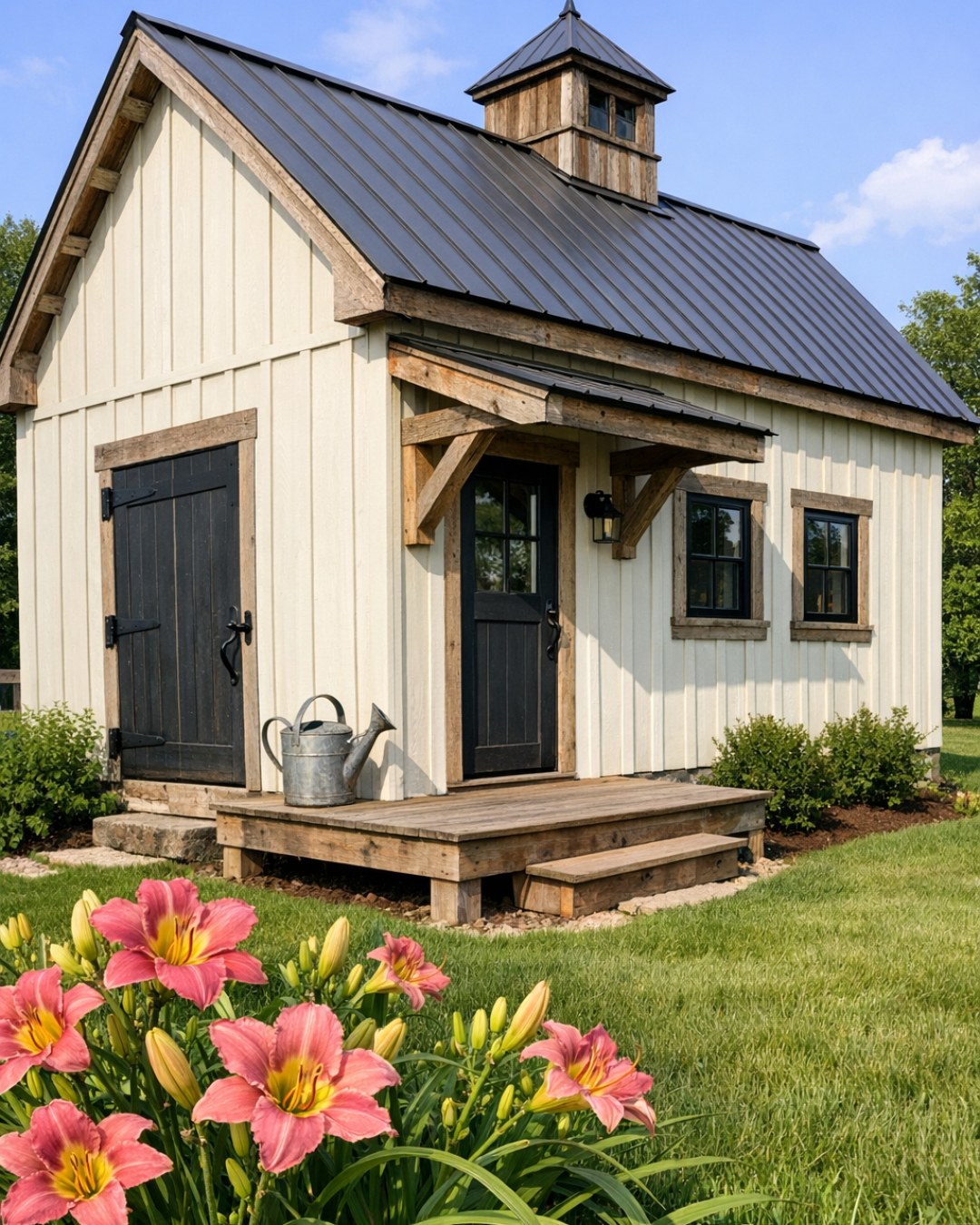
The exterior keeps the recognizable form of an Amish bank barn, but reinterprets it in a lighter, more refined way. The linen cream siding gives the house an airy softness, while the darker roof and understated trim add enough contrast to define the silhouette. I especially like the way the structure feels rooted to the land, with the banked foundation giving it that familiar barn geometry and a sense of shelter. It is modest in footprint, yet it still has presence.
What stands out most is the restraint. Instead of overloading the facade with decorative features, the design relies on proportion, natural materials, and thoughtful openings. Wood doors, simple black hardware, and a few perfectly placed windows do a lot of work here. The overall effect is clean and welcoming, like a home that would age gracefully through every season, from green summer fields to gray winter mornings.
Living Room
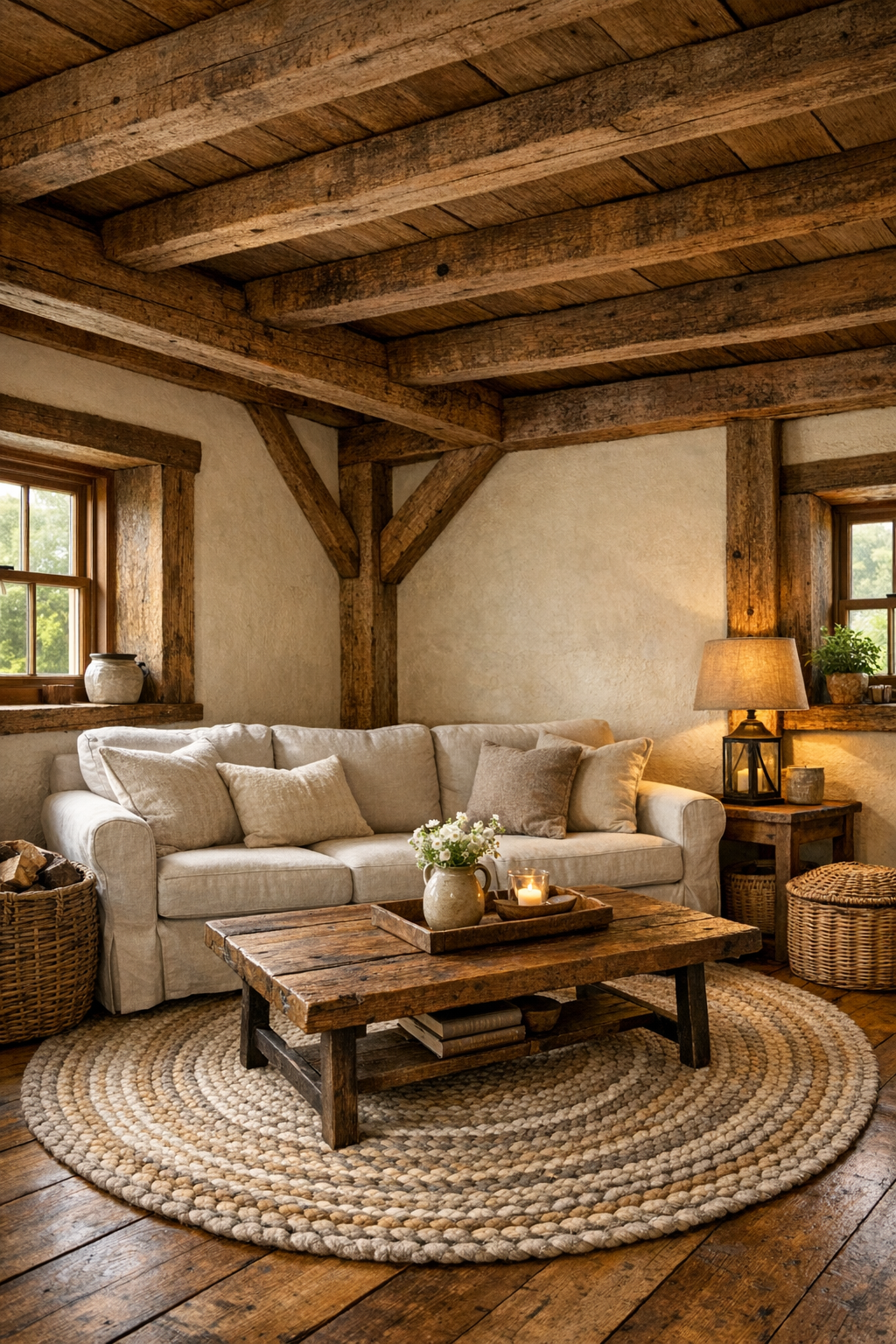
The living room feels like the heart of the tiny home in that cozy, pull-your-feet-up kind of way. Exposed wood beams draw the eye upward and keep the barn character front and center, while linen-toned walls and pale plaster finishes brighten the compact footprint. I can imagine a slipcovered sofa in oatmeal fabric, a low reclaimed wood coffee table, and a pair of spindle-back chairs tucked nearby for flexible seating. Nothing feels crowded, which is always the trick in a smaller home; the layout is edited, but it still feels generous.
Texture really carries this room. A braided wool rug softens the floor, woven baskets offer easy storage, and a mix of matte ceramics and old brass accents bring in that handcrafted look without tipping into theme-y rustic decor. Lighting would be key here too: maybe an iron chandelier overhead, warm sconces at eye level, and plenty of daylight filtering through deep-set windows. It is the kind of room where I could picture reading with coffee in the morning or winding down after dinner while something simmers for tomorrow’s lunch prep.
Dining Room
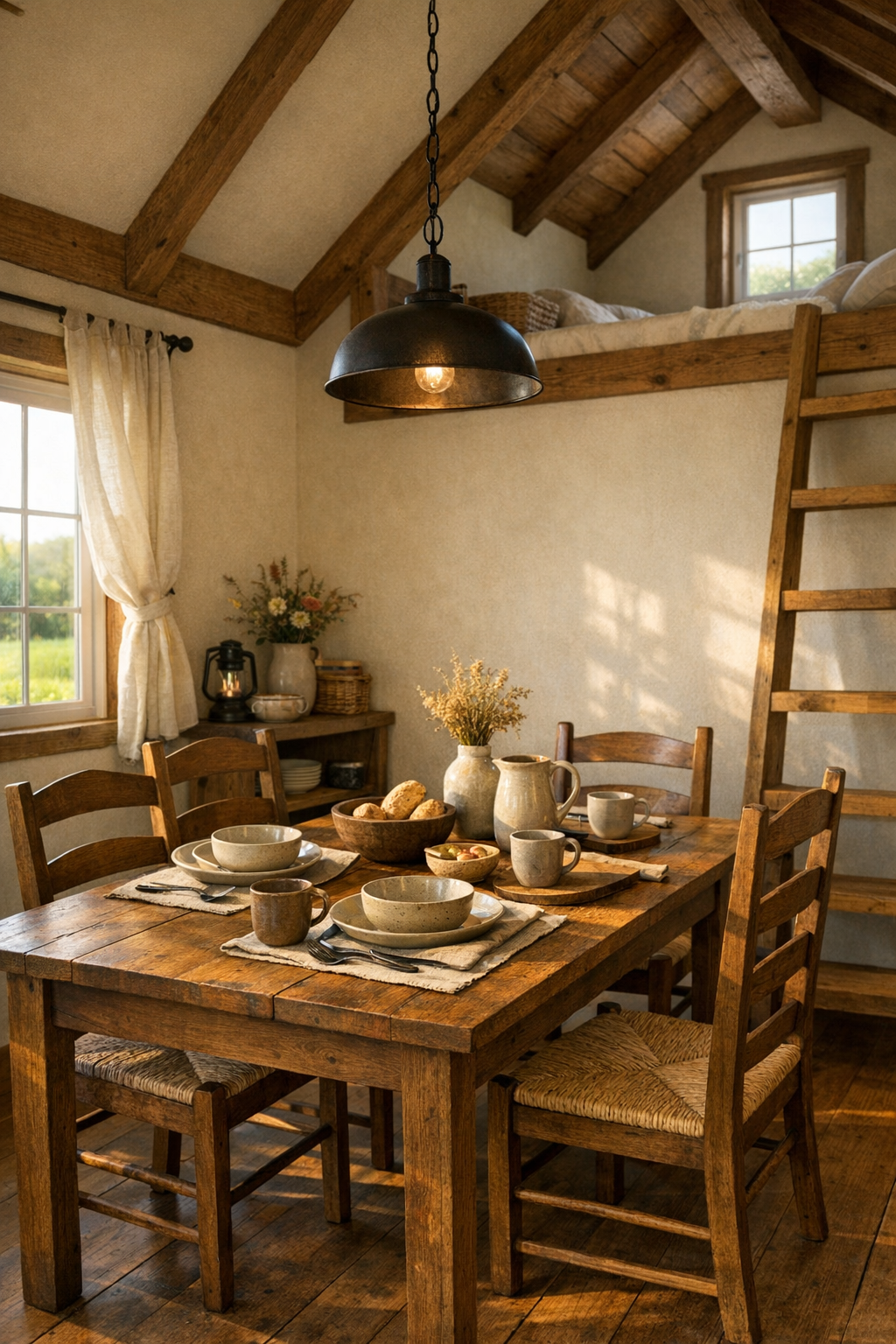
The dining area is small, but it feels wonderfully anchored, almost like a built-in gathering spot rather than a separate formal room. I picture a solid wood farmhouse table with a hand-rubbed finish, just large enough for weeknight dinners and weekend baking projects, paired with simple ladder-back chairs that nod to Amish craftsmanship. The linen cream backdrop keeps the room light, while darker stained wood pieces add definition and a little visual weight.
What I love most is how this space would likely multitask without losing its charm. It could easily become a homework table, a place to answer emails, or my favorite spot to chop vegetables with the windows open nearby. A single pendant in aged metal overhead would give the room focus, and a narrow shelf or hutch could hold everyday dishes, folded linens, and a few stoneware pitchers. It feels intimate and honest, which is exactly what I want in a dining space.
Kitchen
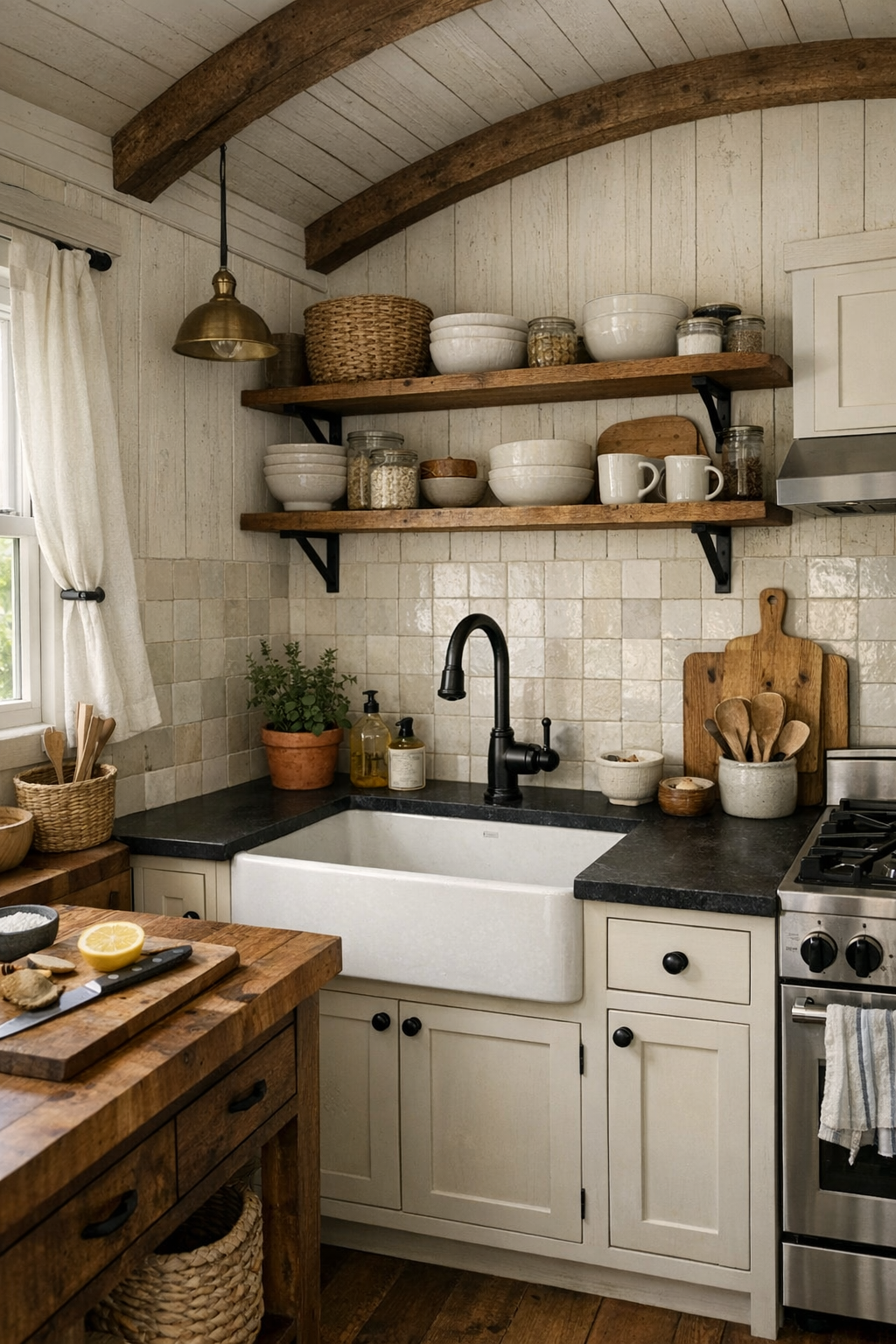
The kitchen is where this home really wins me over. In a tiny house, the kitchen cannot just be pretty—it has to work hard—and this one sounds like it would. I imagine custom cabinetry in a creamy painted finish, probably with inset doors and beautifully understated wood knobs or forged pulls. Soapstone or honed dark countertops would give the room that practical, durable feel I always appreciate, especially because they age so well and do not mind a busy cook.
Open shelving, beadboard accents, and a deep apron-front sink would reinforce the handcrafted aesthetic, but the layout would stay efficient with every inch considered. I can see a slim rolling island or a butcher-block prep counter, perfect for meal prep on a Sunday afternoon. Under-cabinet lighting would add warmth in the evenings, and a backsplash in handmade tile could bring just enough variation and character. It feels like a kitchen that understands real routines—coffee first, dinner next, leftovers packed before bed.
Bedroom
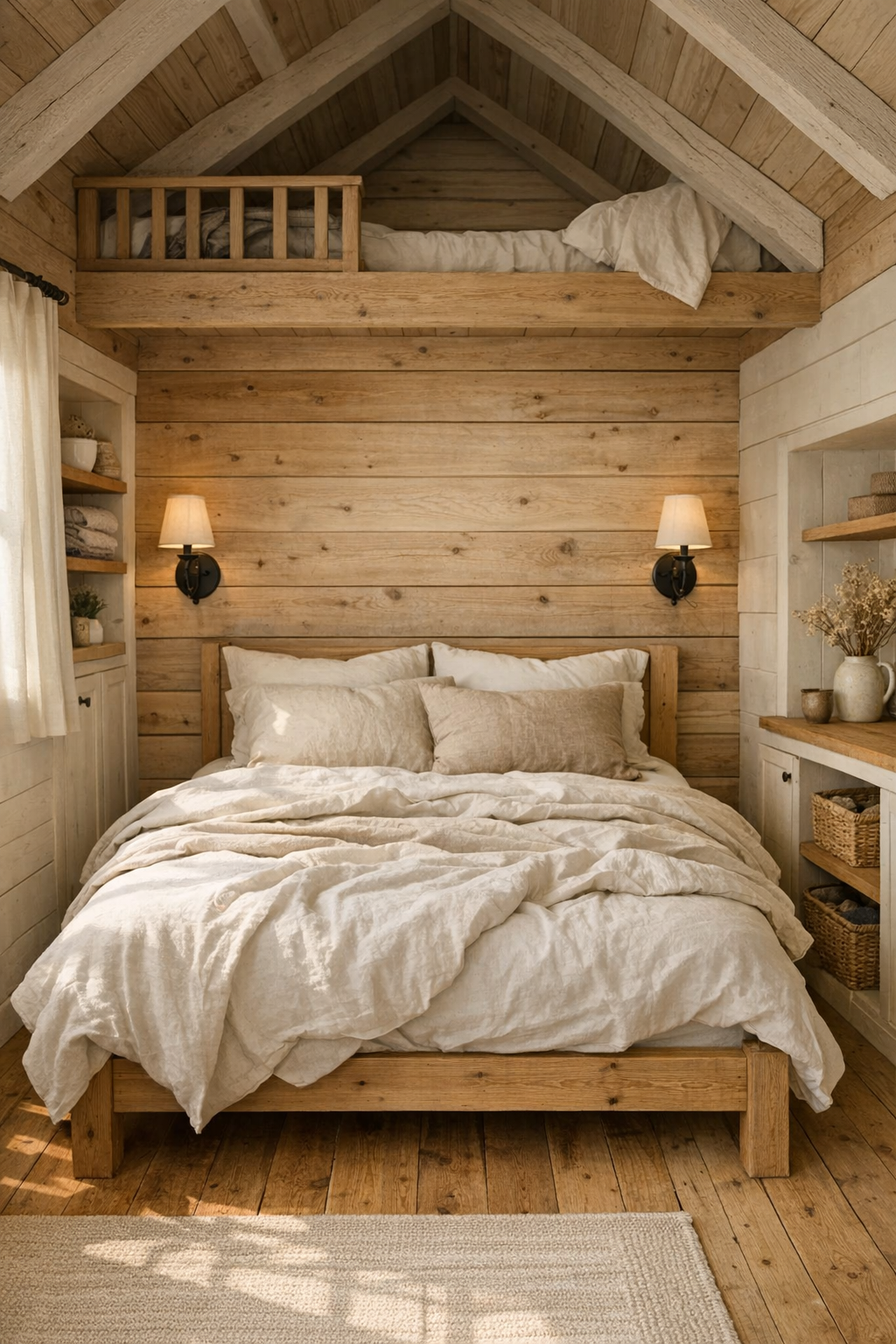
The bedroom looks like it would be the quietest space in the house, with that tucked-away, cocooning quality that tiny homes can do so well. I imagine soft white bedding layered with flax linen throws, a wood bed frame with simple lines, and warm plank walls or ceiling details that make the room feel enveloping without becoming heavy. The palette stays calm—cream, oat, weathered wood, and maybe a touch of charcoal in the lighting or hardware.
Because the footprint is compact, the design would rely on smart built-ins and thoughtful scale. A pair of petite sconces instead of table lamps, under-bed drawers, and a narrow ledge in place of bulky nightstands would all help keep the room open. I would also want one beautiful quilt folded at the foot of the bed, because spaces like this need softness as much as utility. It feels restful in a very real way, like a room designed to help you actually sleep, not just look pretty in photos.
Bathroom
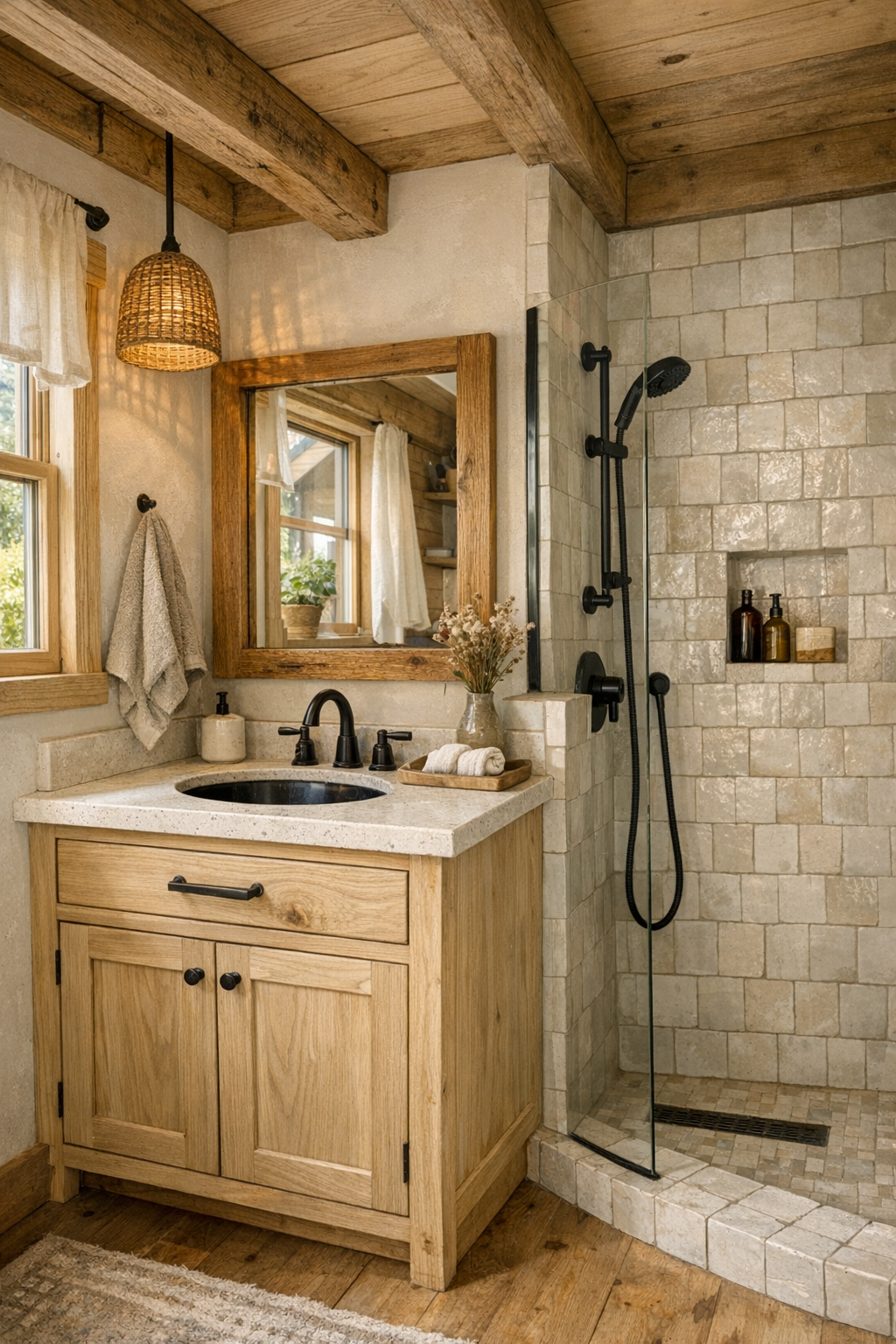
The bathroom carries the same handcrafted warmth, but with a slightly more tailored feel. I picture a compact vanity in painted cream or natural oak, topped with a simple stone surface and paired with unlacquered brass or black metal fixtures. A walk-in shower with zellige-style tile or vertically stacked handmade ceramic tile would add subtle movement, especially when light hits the uneven glaze. In a small home, details like that do so much to make the room feel special.
I also love the idea of mixing in practical, old-house-inspired touches: a framed mirror with a wood edge, wall hooks instead of bulky storage furniture, and a niche in the shower for soaps and shampoo. Good lighting is essential here, so I would expect soft sconces flanking the mirror and enough natural light to keep the room fresh and open. It sounds like the kind of bathroom that would make even a rushed weekday morning feel a little calmer.
Other Areas
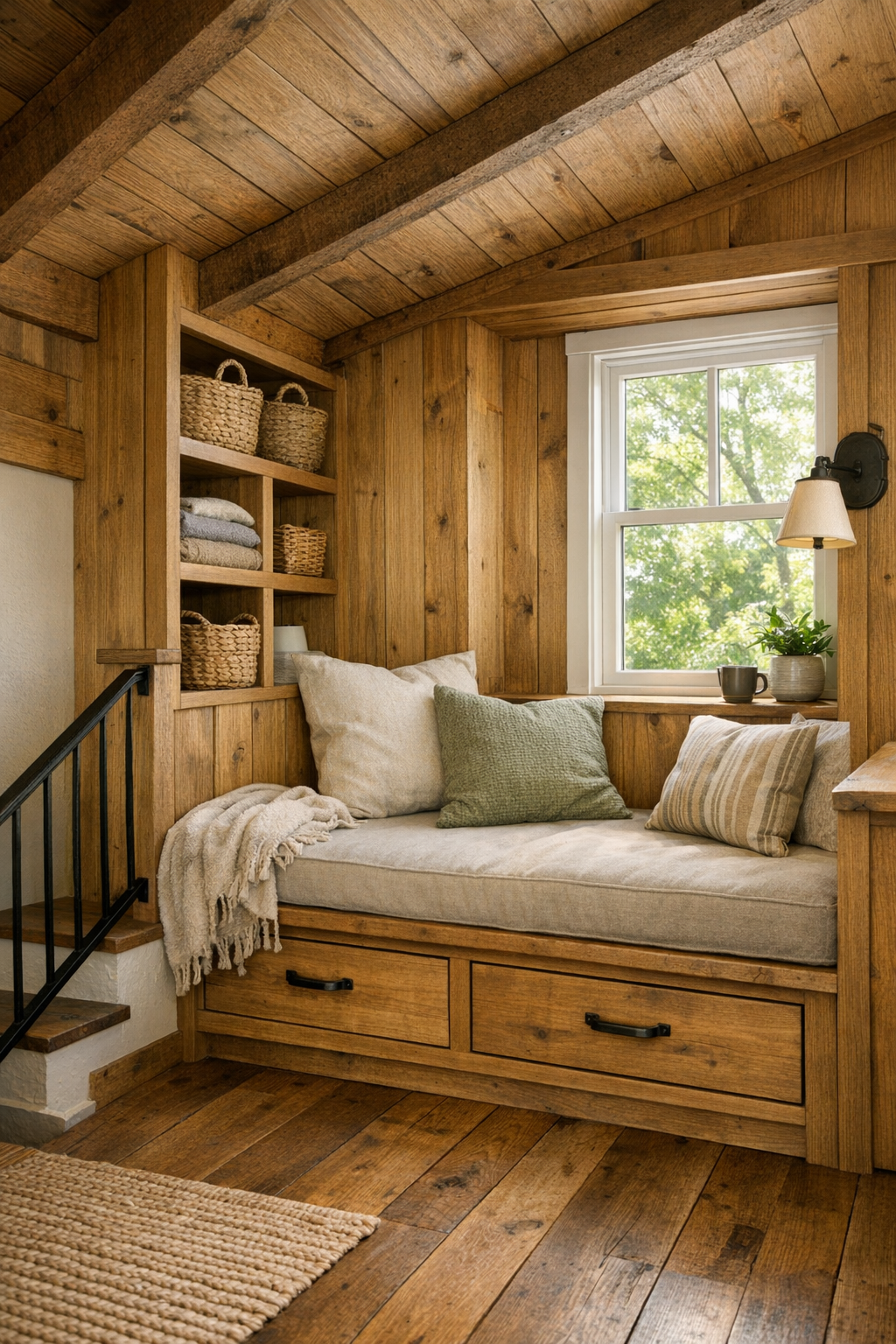
What really completes a home like this are the in-between spaces. In a bank barn layout, I can imagine a stair landing, loft nook, mudroom corner, or built-in reading bench all being handled with the same level of care as the main rooms. Even a hallway could become beautiful with tongue-and-groove paneling, pegs for coats, and a runner in muted natural tones. These are the spaces that make a tiny home feel not just efficient, but deeply personal.
I am especially drawn to the idea of integrated storage done beautifully—drawers tucked into stair risers, closed cabinets under eaves, and open cubbies for baskets and cookbooks. That kind of planning is what makes small-space living actually function day to day. It reminds me of the best meal-prep systems: if everything has a place, life runs smoother. Here, those practical choices are wrapped in craftsmanship, so even the hardest-working corners of the home still feel warm and finished.
Why You'd Live Here
You would live here because it proves small does not have to mean compromised. This home takes the familiar sturdiness of an Amish bank barn and softens it with creamy finishes, natural textures, and thoughtful craftsmanship that make everyday life feel easier and prettier at the same time. It is compact, yes, but it never feels stripped down or temporary. Instead, it feels deeply settled.
For me, the biggest draw is how this home seems designed around real rhythms—cooking, gathering, resting, storing what you need, and letting go of what you do not. It has charm, but it also has discipline, and that combination is hard to resist. If you love homes that feel handmade, calming, and genuinely usable, this one makes a very strong case for living beautifully with less.