
There’s something instantly comforting about a home that knows exactly what it wants to be, and this converted bus leans fully into a rustic, off-grid spirit without feeling rough or improvised. Set within a sunny summer homestead, it carries that lovely balance I always look for in family spaces: practical enough for everyday living, but warm enough to make even a simple breakfast feel a little more meaningful. As a concept design, it imagines tiny living at its most thoughtful, wrapping natural wood, hardworking storage, and soft country textures into one surprisingly graceful footprint.
What makes this home special to me is the way it turns limitations into charm. Instead of fighting the narrow proportions of the bus, the design uses them to create intimacy, flow, and a strong sense of purpose in every corner. The mood is calm and grounded, with sunlight washing over pine cabinetry, linen curtains stirring at the windows, and just enough handcrafted detail to make the whole place feel personal. It’s the kind of home that invites muddy boots at the door, fresh herbs on the counter, and long, easy meals with the people you love most.
Exterior
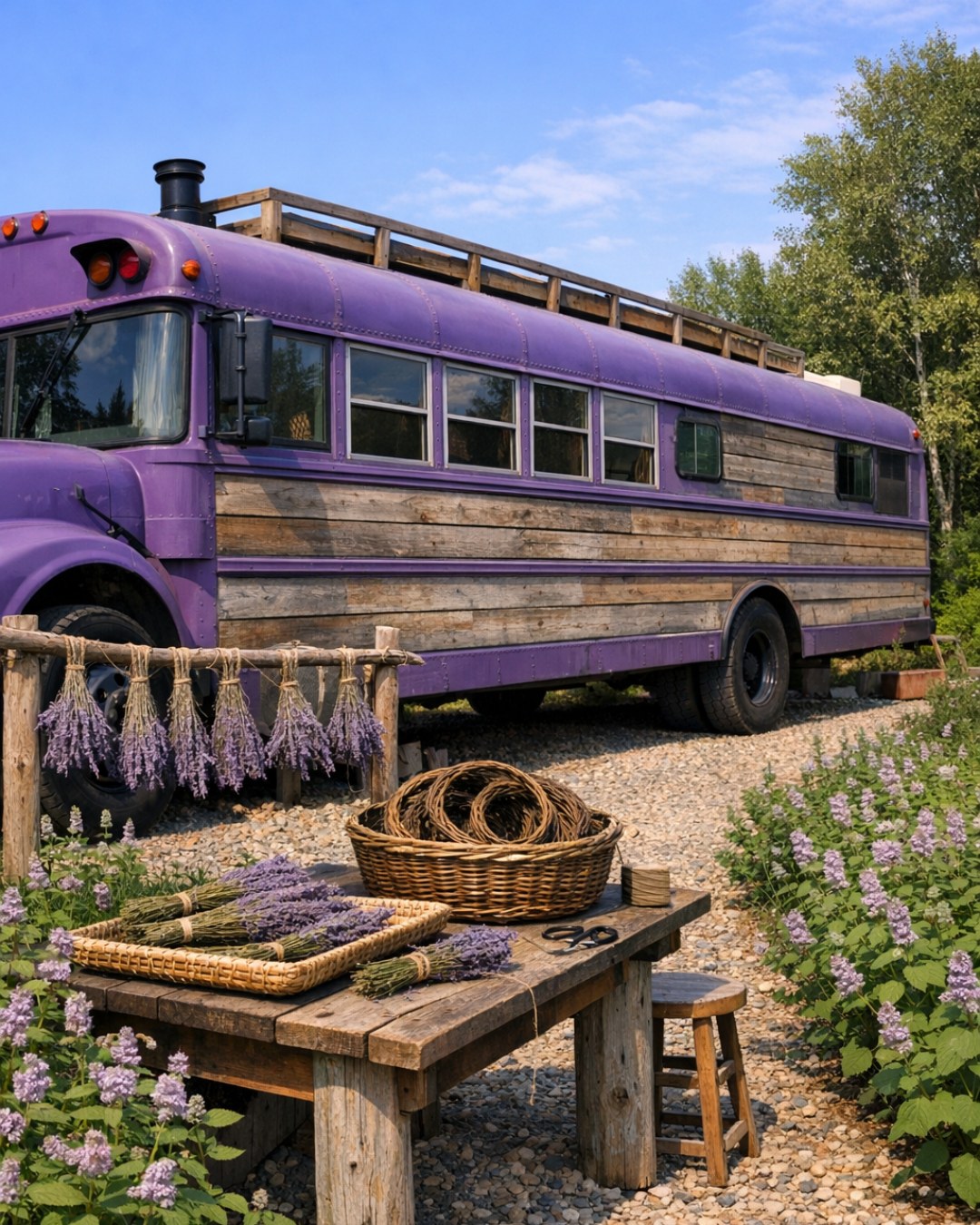
From the outside, the bus keeps its honest, recognizable shape, but it has been softened beautifully for homestead life. The original body is refinished in a muted cream with warm olive undertones, trimmed with weathered cedar accents around the entry and window frames. A simple wood deck extends from the side, grounding the bus in the landscape and giving it the feeling of a tiny cabin on wheels rather than a vehicle in disguise. Galvanized planters, a few climbing vines, and a shaded sitting area help the whole scene settle naturally into the summer grasses and kitchen garden around it.
I especially like that the exterior doesn’t over-style itself. The roofline is fitted with low-profile solar panels, and there’s a practical awning stretched over the outdoor seating area, making space for lemonade in the afternoon or dinner outside when the air cools off. The windows are generous, which hints at the brightness inside, and the entry door feels welcoming with its half-glass upper panel and sturdy black hardware. Everything suggests a home built for real living: self-sufficient, a little nostalgic, and deeply connected to the land around it.
Living Room
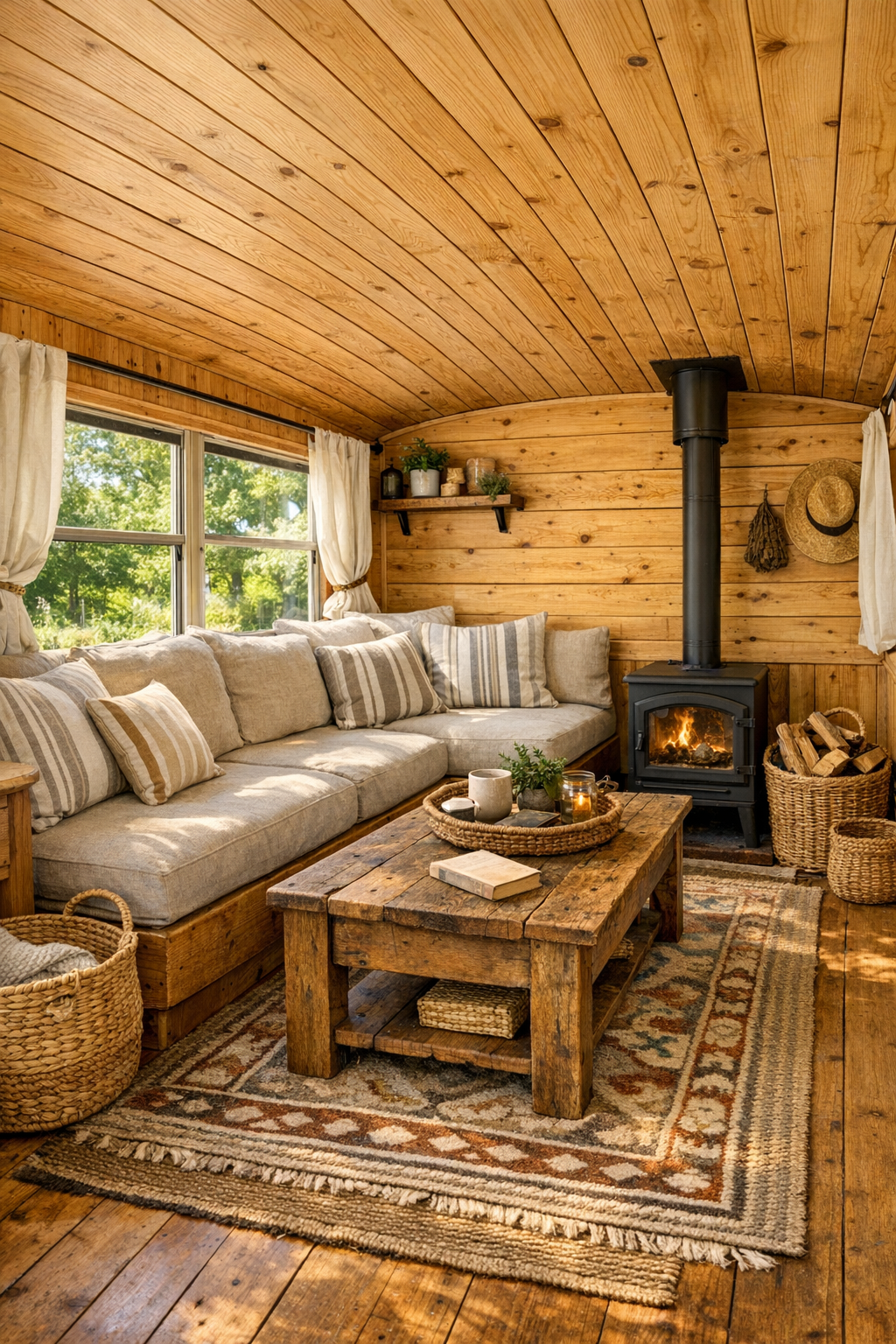
The living room sits at one end of the bus and makes a strong first impression by feeling far larger than it is. A built-in bench sofa runs beneath the windows, topped with oatmeal linen cushions, ticking-stripe pillows, and a folded quilt that adds just the right note of homestead coziness. The walls and ceiling are clad in honey-toned pine planks, which bounce light around the room and keep the narrow space from feeling closed in. A slim black wood stove anchors the corner, set against a heat-safe tile surround in soft clay and cream tones, giving the room both visual focus and real warmth.
What I love here is the way the furniture works hard without looking too busy. There’s a lift-top coffee table made from reclaimed wood for games, snacks, or homework, and drawers tucked into the seating platform for blankets and everyday essentials. Open shelves hold a tidy mix of books, baskets, and a few stoneware pieces, while woven textures underfoot soften the floor and make the room feel family-ready. If I were living here, I’d add a basket of favorite board books and keep the windows cracked open in the evening so the whole room could catch the breeze.
Dining Room
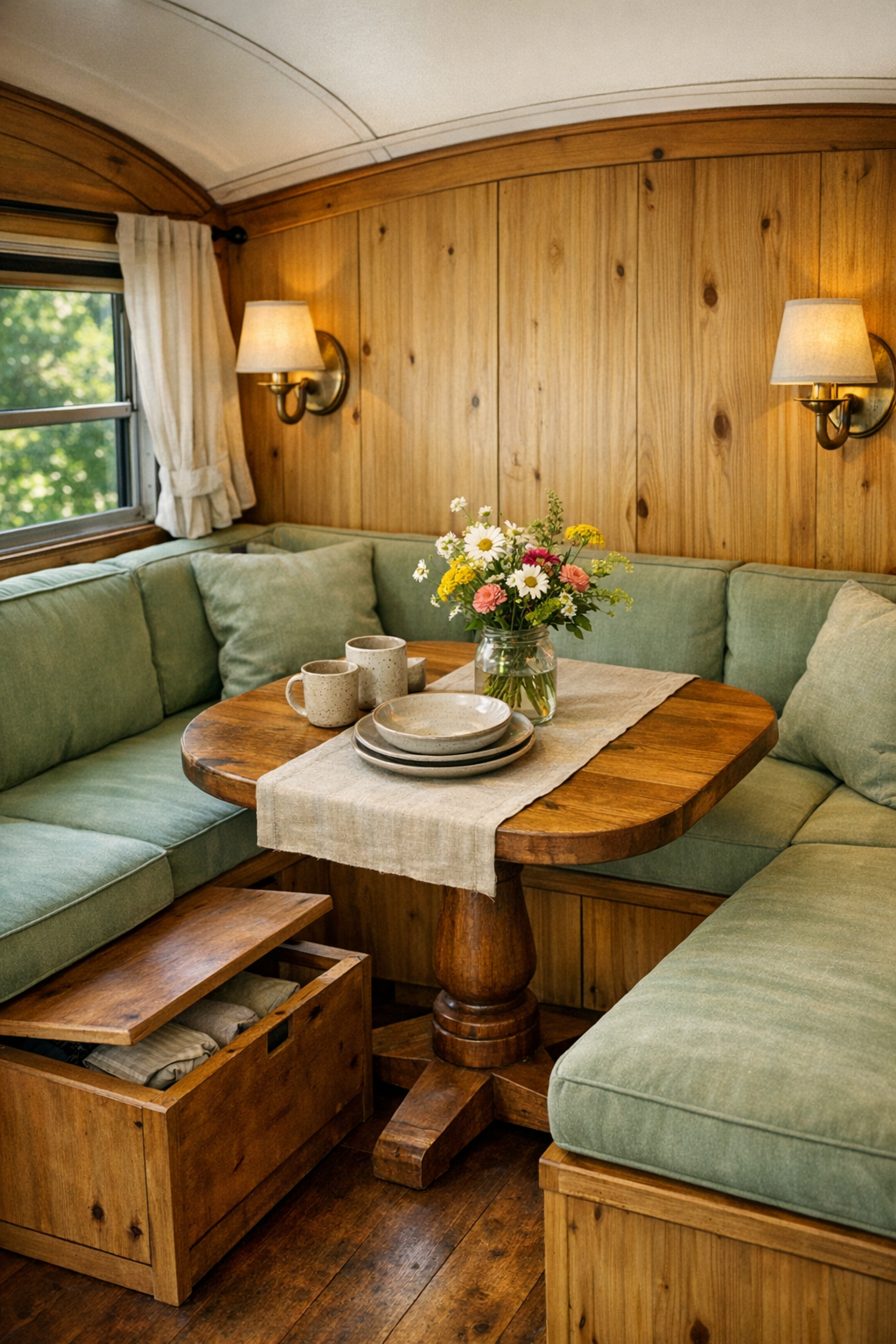
The dining area is woven neatly into the center of the bus, and it’s designed with the kind of flexibility I always appreciate in a small home. A compact banquette wraps around a rectangular pedestal table, creating a snug spot for shared meals without blocking circulation. The seat bases are fitted with hidden storage, which is exactly the sort of practical detail that makes off-grid living feel manageable. Soft sage upholstery, natural wood trim, and a simple linen runner keep the palette easygoing and fresh, like a farmhouse breakfast nook distilled down to its essentials.
This is also one of the sweetest spaces for making mealtime feel special, even when dinner is just soup and bread. A pair of wall sconces with warm brass finishes gives the area a gentle glow after sunset, and the nearby windows make daytime meals feel sunny and open. I can picture a crock of wildflowers in the center, enamel mugs on the table, and maybe a simple tray with toppings so everyone can customize their plate if you’re feeding a mix of adventurous eaters and picky ones. The scale is modest, but the atmosphere is generous, and that matters more than square footage ever will.
Kitchen
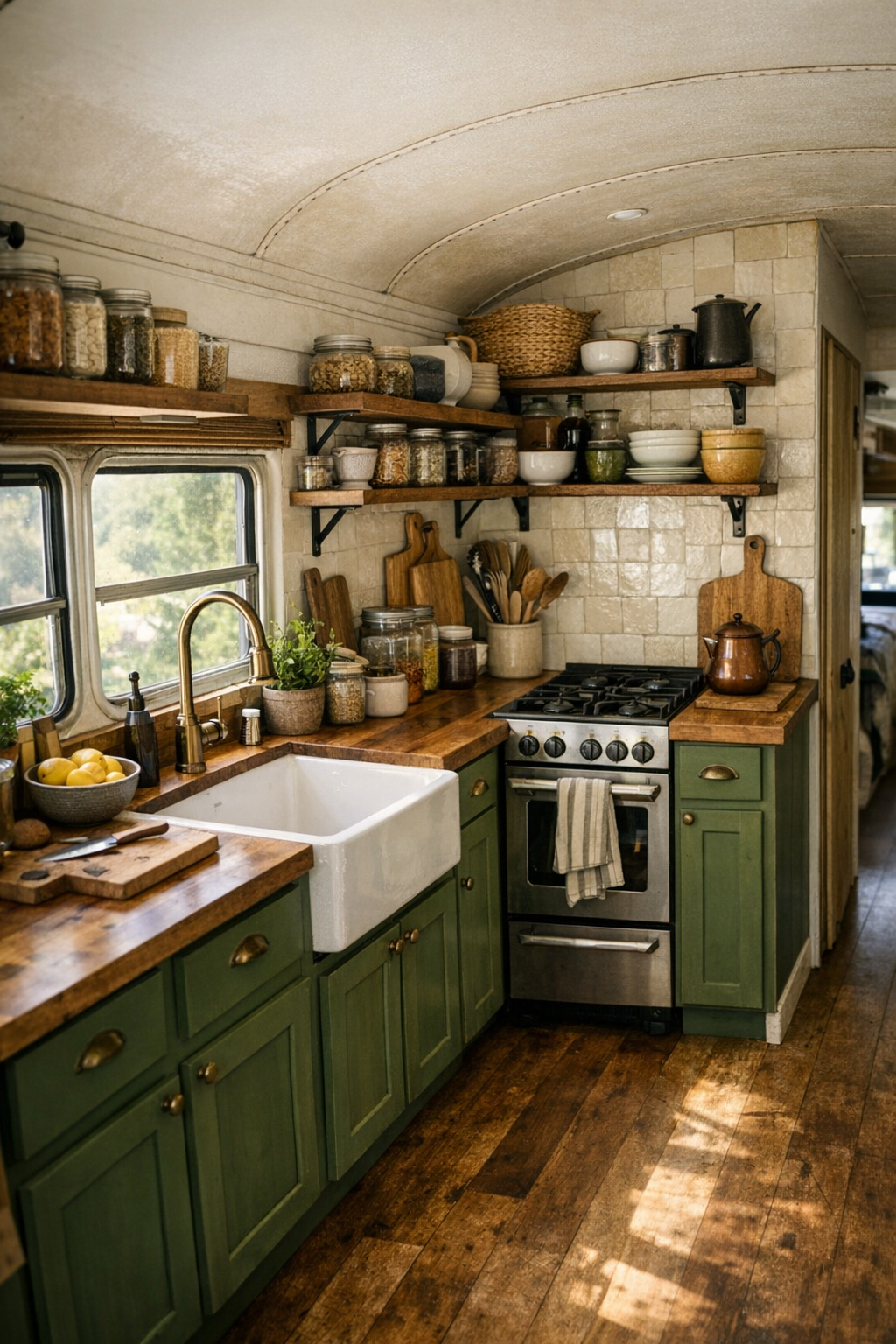
The kitchen is where this bus really shines, and I say that as someone who always notices whether a home makes cooking feel joyful or cramped. Here, the galley layout is treated with care, using every inch wisely while still leaving enough breathing room to work comfortably. Lower cabinets in a mossy green ground the space, while open upper shelving keeps the room visually light and lets everyday bowls, jars, and cutting boards become part of the decor. Butcher block counters bring warmth, a white farmhouse-style sink adds a familiar anchor, and a compact propane range is framed by creamy zellige tile that gives the whole area a handmade glow.
I appreciate how family-friendly the design feels without losing its charm. There’s a magnetic rail for utensils, baskets for produce, hooks for mugs, and deep drawers that would make it easy to organize everything from pancake tools to weeknight pasta supplies. A narrow counter extension by the window creates extra prep space, and I can just imagine setting out sandwich fixings there or a little yogurt-and-fruit station for slower summer mornings. Even in a small footprint, the kitchen feels capable, cheerful, and ready for real meals, which to me is one of the best measures of whether a home truly works.
Bedroom
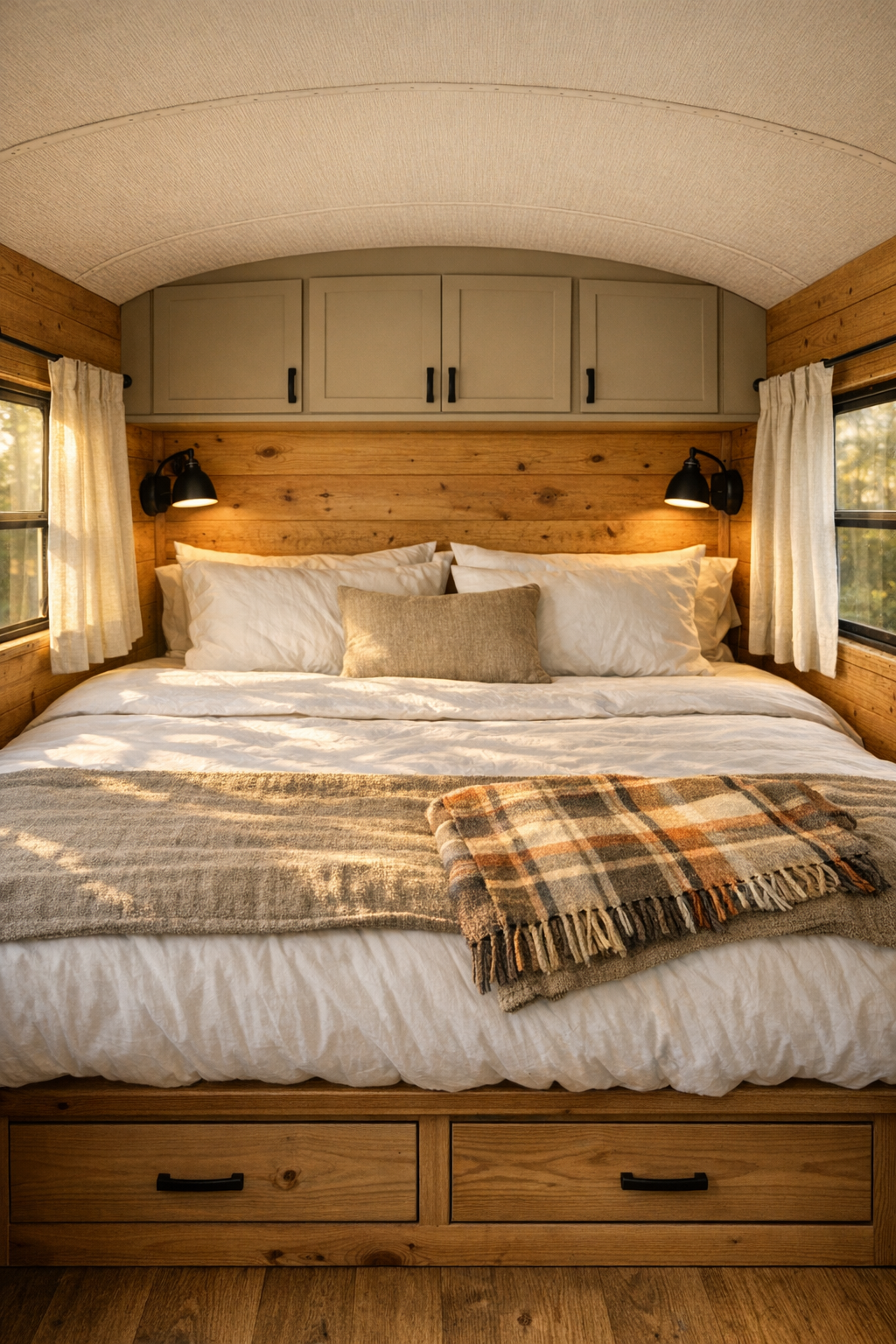
The bedroom is tucked toward the quietest end of the bus, and it feels restful in that simple, uncluttered way that really helps you exhale. The bed platform is built wall to wall, making the most of the bus width, with drawers below and a softly upholstered headboard above. Crisp white bedding is layered with a flax-colored coverlet and a plaid wool throw, giving the room that rustic summer-camp comfort without becoming too themed. Overhead cabinetry is streamlined and painted a warm putty shade, blending gently into the pine surroundings rather than looming over the bed.
Natural light is handled beautifully here. Windows on either side of the bed are dressed in light linen curtains that filter the sun instead of blocking it, so mornings would feel soft and calm rather than abrupt. Small reading sconces in matte black add useful task lighting, and a narrow ledge serves as a nightstand for books, glasses, and maybe a little pot of lavender. It’s a modest room, but it has everything it needs to feel cared for, and that sense of being intentionally arranged is often what makes a bedroom truly restorative.
Bathroom
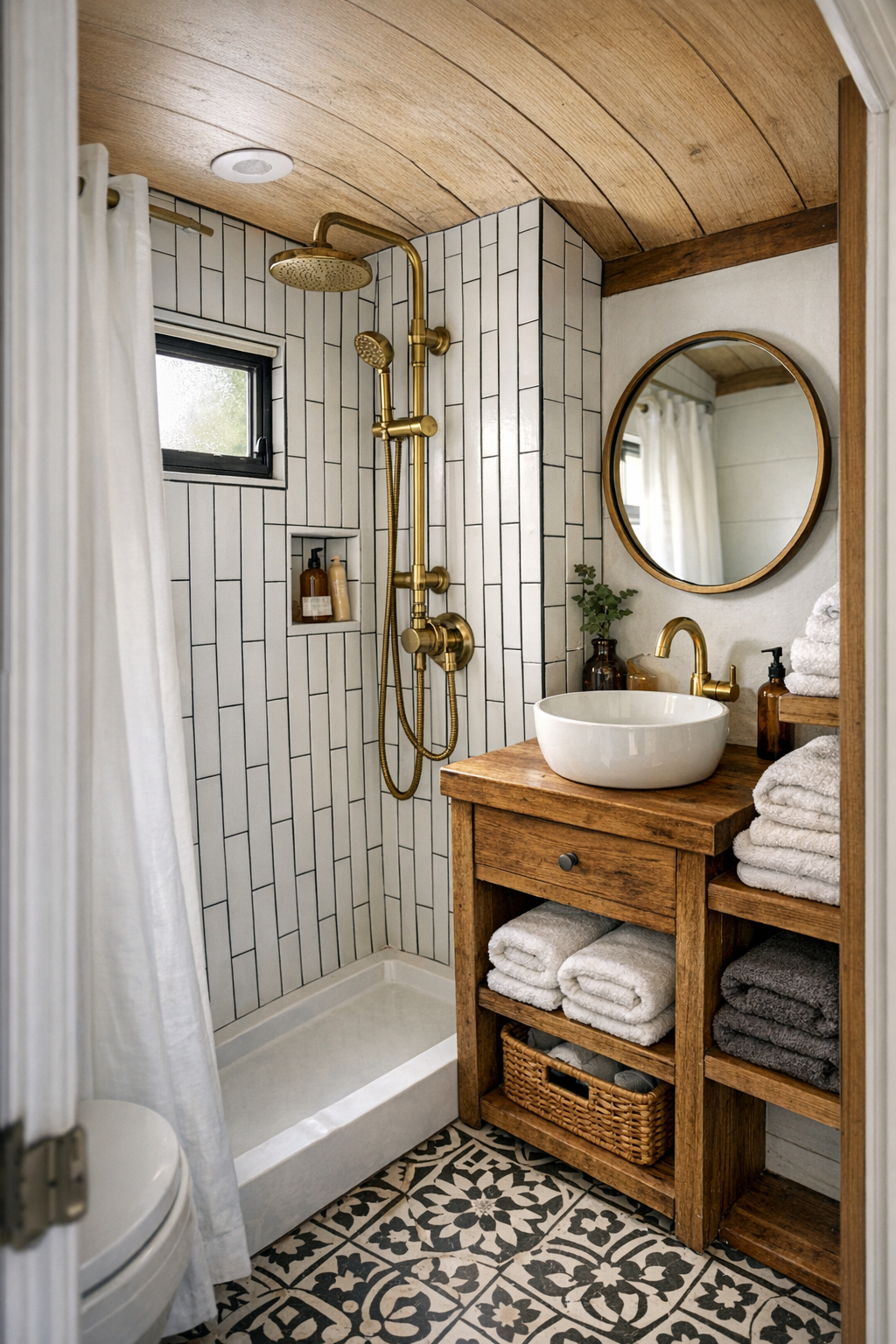
The bathroom proves that small spaces can still feel polished and inviting when the materials are chosen with care. A compact shower is lined in vertical white tile with dark grout, which gives it a crisp, clean structure while helping the ceiling feel taller. The vanity is petite but handsome, made from sealed wood with a stone-look countertop and a round mirror above it. Brass fixtures bring in a little warmth, and a small window keeps the space from feeling boxed in, especially when the afternoon light hits the tile and makes everything feel fresh.
I also like the practical touches that keep this room from feeling precious. There are hooks instead of bulky bars, recessed shelving for soaps and towels, and a woven hamper tucked neatly below a slim shelf. The floor is finished in patterned porcelain tile that hides wear well and adds a bit of personality underfoot, which is always a smart move in hardworking rooms. In a home like this, the bathroom needs to be easy to clean and pleasant to use every day, and this one manages both with a quiet confidence.
Other Areas
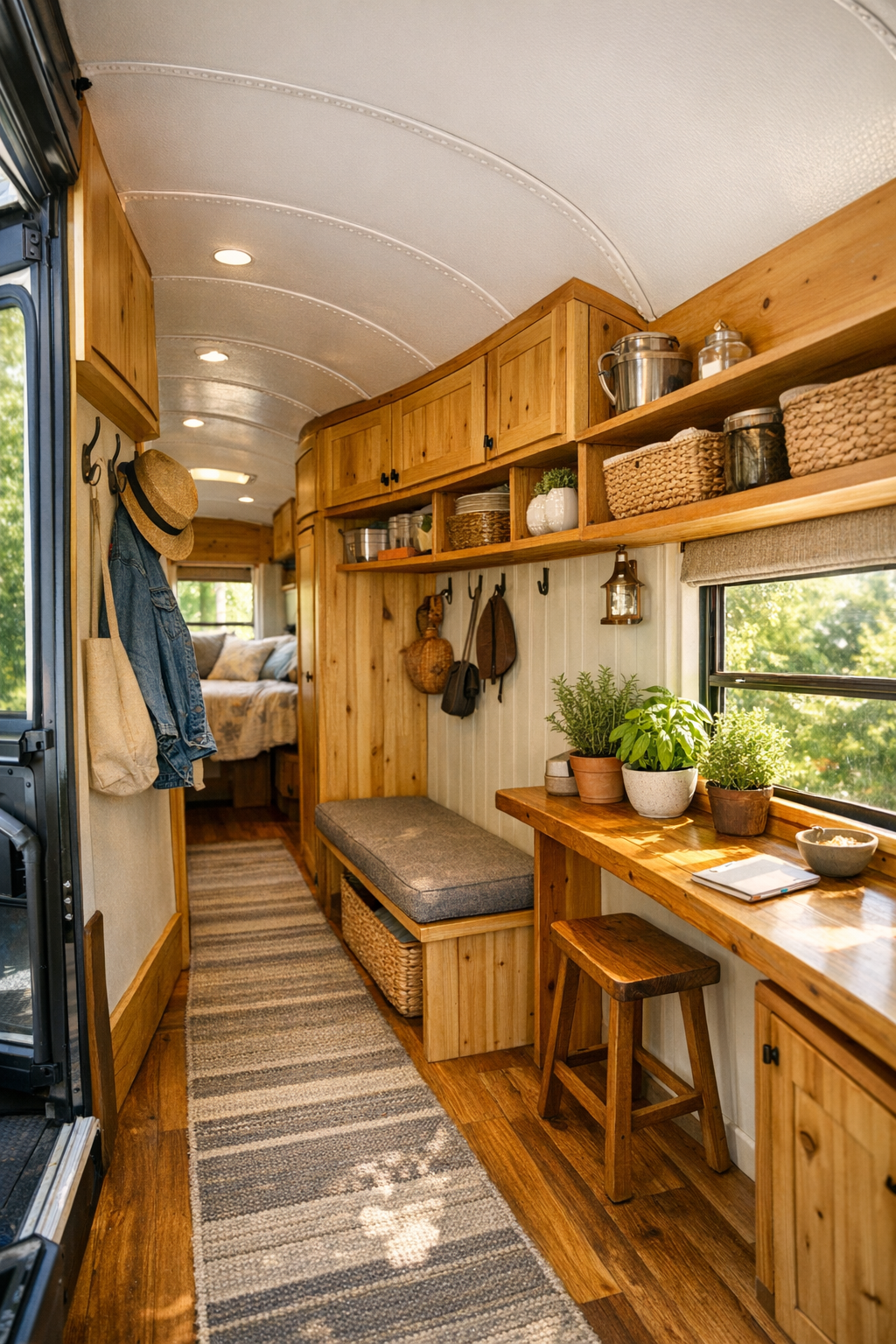
Some of the most charming moments in this bus are in the in-between spaces. The entry is simple but well resolved, with a durable runner, wall hooks for hats and bags, and a bench niche for slipping off shoes after time in the garden. Overhead, there are smartly integrated cabinets that follow the curve of the bus, and little pockets of open shelving keep the home from feeling overly closed in. I can imagine baskets labeled in my head for picnic supplies, craft items, or all those little family extras that somehow need a place even in the smallest homes.
There’s also a lovely sense of connection to outdoor living, which is essential in a compact off-grid setup. Transitional spots by the doors and windows are styled lightly, with potted herbs, folded throws, and a few hardworking stools that can move wherever they’re needed. A slim desk ledge doubles as a writing spot, bill station, or extra serving area when company comes by, and that kind of flexibility is gold. These supporting spaces may not be flashy, but they’re what allow the home to feel settled, usable, and kind to daily routines.
Why You'd Live Here
You’d live here because it proves that living smaller doesn’t have to mean living with less beauty, comfort, or usefulness. Every surface, built-in, and material choice works together to create a home that feels grounded and generous rather than tight or temporary. It offers that rare combination of self-sufficiency and softness, where solar panels and storage solutions sit comfortably alongside quilts, flowers, and a well-loved kitchen.
More than anything, this bus feels like a home that would support a meaningful rhythm of life. It encourages simpler routines, closer connection to the outdoors, and the kind of togetherness that happens naturally when spaces are designed with care. For anyone drawn to rustic living, family meals, and a slower summer pace, this is the sort of place that makes the dream feel not just beautiful, but entirely livable.