
There’s something deeply satisfying about a home that knows exactly what it is, and this converted bus does. Set into a lush summer homestead with tall grasses, garden beds, and the soft practical romance of off-grid living, it blends rustic resourcefulness with a surprising sense of calm refinement. From the outside, it reads as humble and hardworking; inside, the layout unfolds with a warmth and clarity that feels almost architectural in the best sense of the word.
What makes this place special is the way every inch has been asked to do real work without ever feeling pinched or improvised, even as a concept design. I’m drawn to homes like this because, much like a good pantry, they rely on thoughtful organization, honest materials, and a little ingenuity. Here, reclaimed wood, compact built-ins, layered textiles, and carefully placed windows turn a narrow shell into a home that feels grounded, breathable, and beautifully lived-in.
Exterior
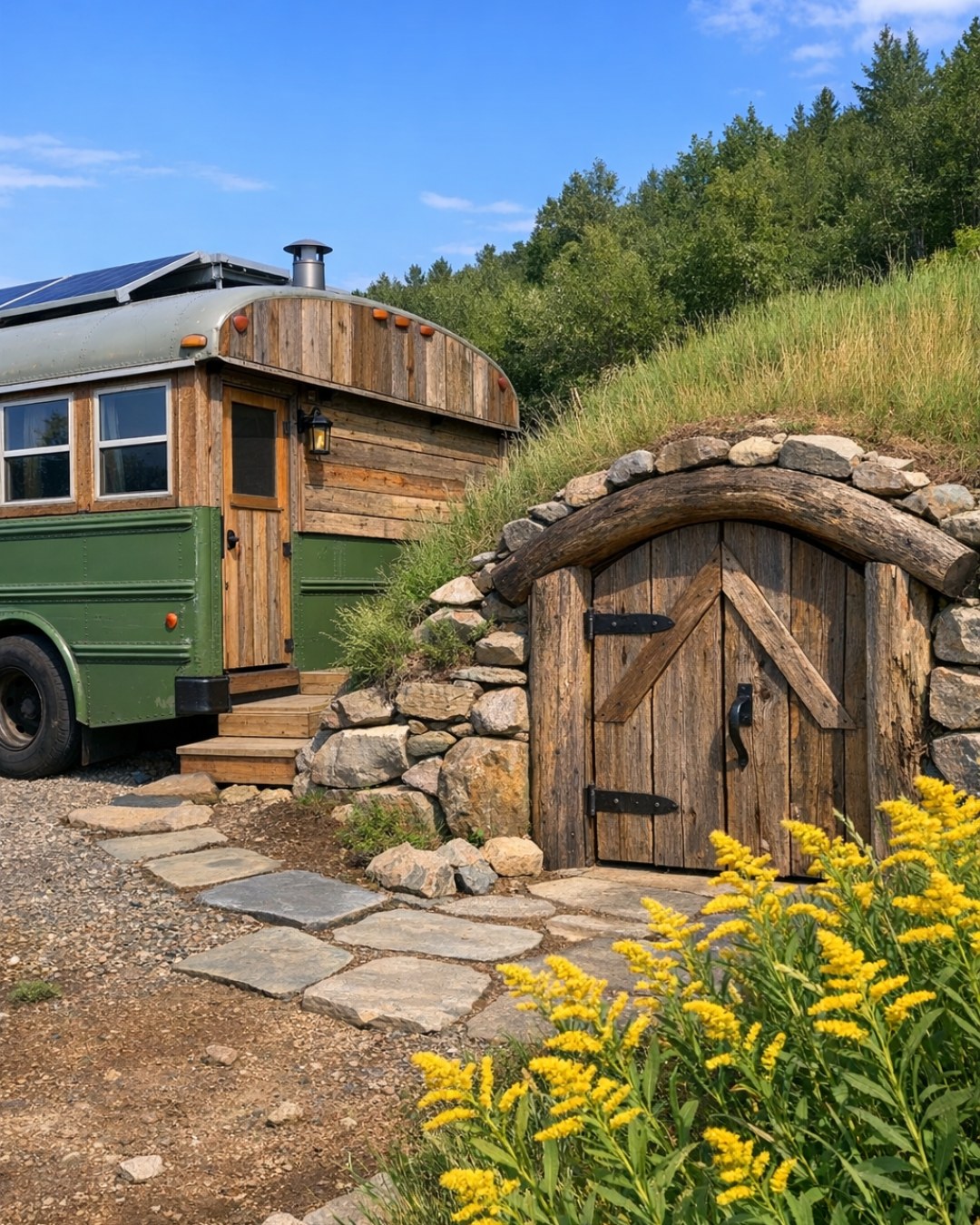
The bus exterior keeps its utilitarian bones, but the finish softens it into the landscape. The body is painted in a muted, chalky cream with weathered green trim, a combination that feels right at home among vegetable patches and gravel paths. Cedar cladding wraps select sections, especially around the entry, adding visual warmth and helping the structure feel less like a vehicle and more like a small cabin set on the land. A simple awning in faded canvas extends the living area outdoors, while galvanized planters, stacked firewood, and a small porch platform create a gentle threshold.
I like that the setting doesn’t try too hard. Solar panels sit matter-of-factly nearby, rain barrels tuck against the side, and the outdoor details are practical without looking makeshift. There’s a clothesline fluttering in the distance, a couple of worn wooden chairs positioned for evening light, and enough open ground around the bus to let the whole composition breathe. The mood is unpretentious and summery, with that quiet confidence I associate with well-used country kitchens and gardens that feed people.
Living Room
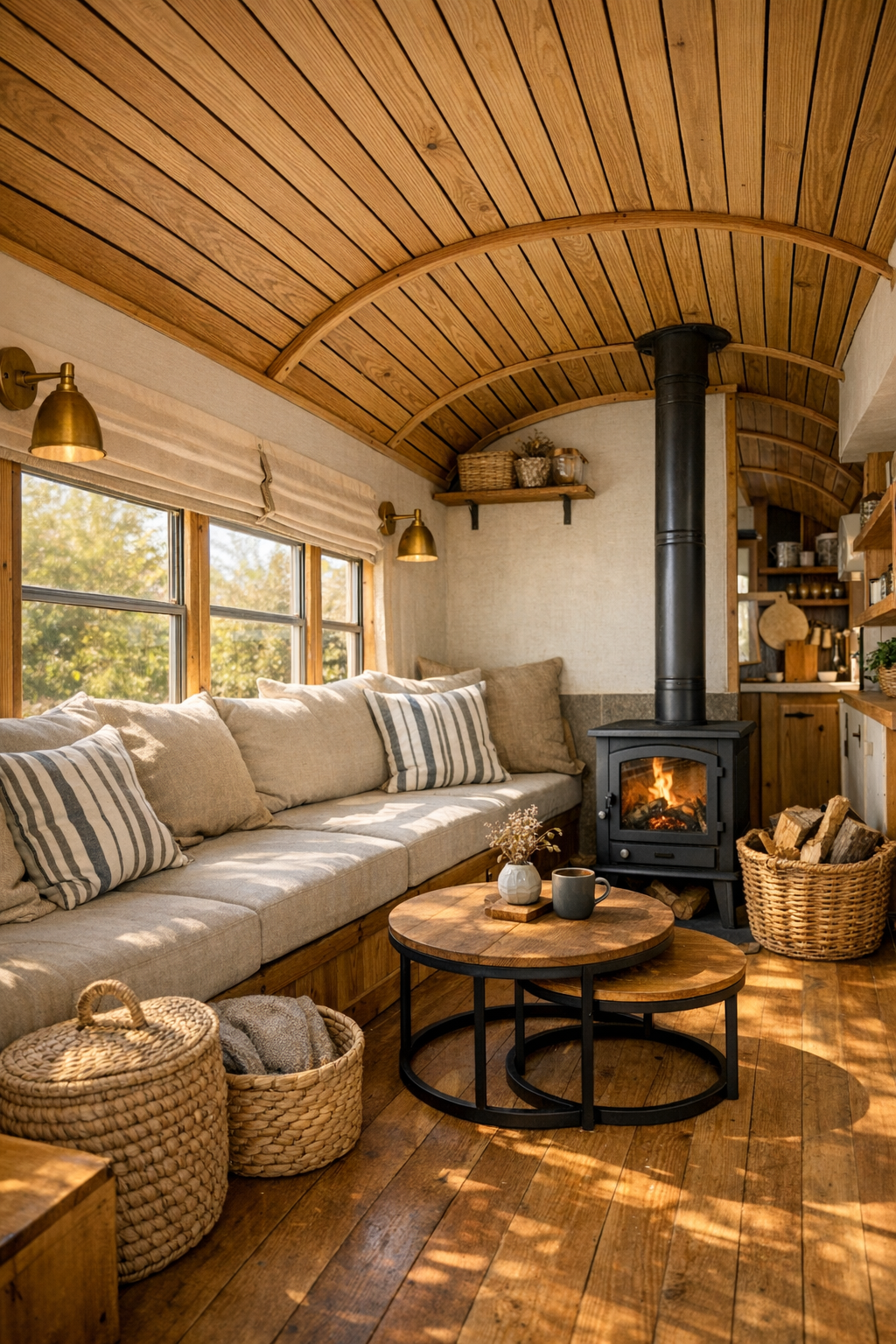
The living area makes a strong first impression because it uses proportion so intelligently. A built-in bench runs along one side beneath the windows, topped with flax-colored cushions and a mix of striped and nubby pillows in oat, rust, sage, and charcoal. Opposite, a compact woodstove anchors the room with matte black presence, set against a heat-safe backdrop of handmade zellige-look tile in soft ivory. The floor is wide-plank wood with a medium honey tone, and overhead, the original bus ceiling curve is celebrated with narrow wood slats that make the whole room feel taller and more finished.
What I find especially successful is the way this space handles comfort without clutter. There’s a small nesting coffee table, a wall-mounted shelf for books and ceramics, and woven baskets tucked neatly below the bench for blankets and daily storage. Natural light does most of the heavy lifting during the day, entering from both the side windows and a roof vent above, while in the evening, warm brass sconces and a shaded reading lamp give the room a low, amber glow. It feels like a place where you could read, shell peas, or sit with a mug of tea while rain taps on the roof.
Dining Room
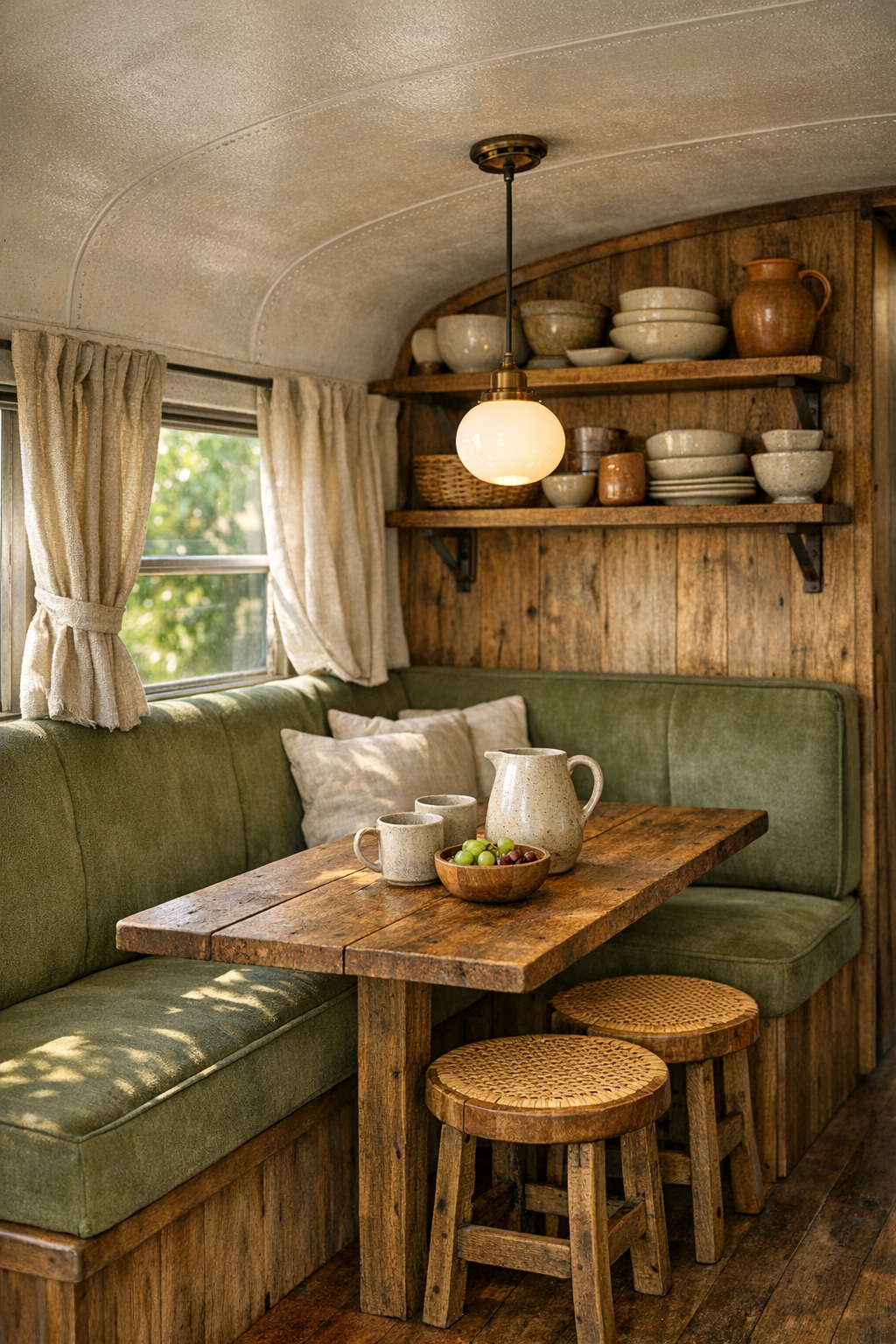
The dining area is tucked into the center of the bus, where circulation matters most, and that placement makes perfect sense. A custom banquette hugs one side, upholstered in durable olive-green fabric, while a slim rectangular table in reclaimed oak allows enough clearance to move through comfortably. On the opposite side, a pair of stools can tuck fully beneath the table when not in use, which is the kind of small-space discipline I always appreciate. The palette stays earthy and sun-washed, with linen curtains, black iron hardware, and a vintage runner softening the aisle.
This is one of those spaces that feels more generous than it is because the details are doing their job. The tabletop is large enough for a proper meal, but not oversized; the pendant above is scaled carefully, with an opal glass shade that diffuses light instead of dominating the room. Open shelving nearby holds stoneware, jam jars, and a few well-chosen serving pieces, giving the area the easy usefulness of a hardworking breakfast nook. I can picture summer salads here, bread still cooling, windows open, and the faint scent of tomato vines drifting in from outside.
Kitchen
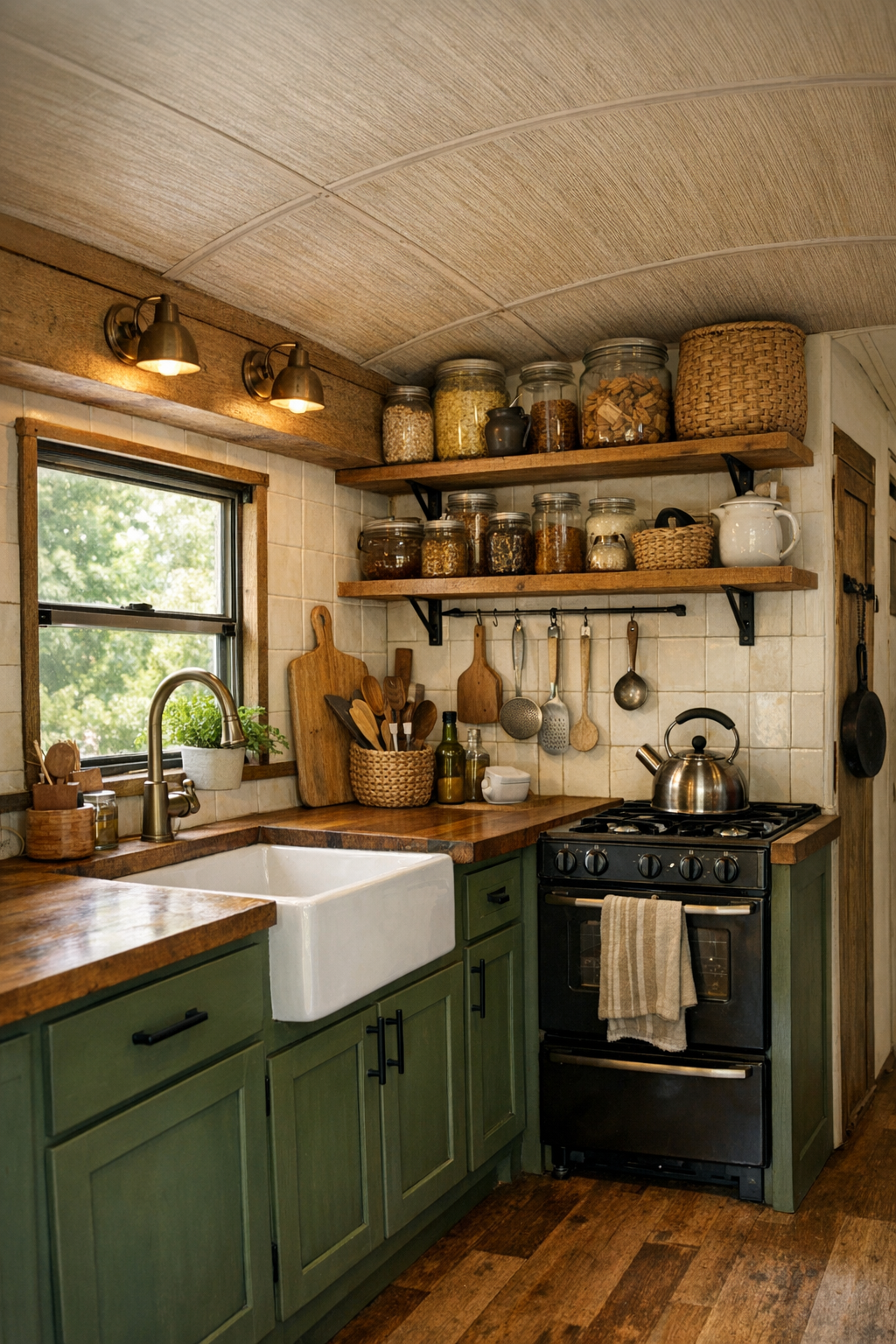
The kitchen is, unsurprisingly, the heart of this home, and it’s been planned with the seriousness of someone who actually cooks. Base cabinets in muted moss green are paired with butcher block counters that bring immediate warmth and a sense of use. A deep farmhouse sink sits below a window, which is exactly where I want it, and the backsplash is done in creamy square tile with dark grout for a slightly vintage, slightly practical effect. Open upper shelves replace bulky cabinetry, keeping sightlines open while displaying everyday dishes, spice jars, and pantry staples in an orderly way.
I admire how the kitchen balances charm with off-grid realism. There’s a compact propane range, a narrow undercounter refrigerator, peg rails for utensils and towels, and a dedicated stretch of counter that genuinely looks usable for prep. Woven produce baskets, glass storage jars, and a fold-down extension at the end of the counter make the room feel deeply functional rather than decorative. The lighting is layered well too: daylight from the side window, under-shelf task lighting for evening chopping, and a small ceiling fixture that casts an even, practical glow. It’s the kind of kitchen where you could cook lentils from scratch, pickle cucumbers, or bake biscuits without ever feeling deprived.
Bedroom
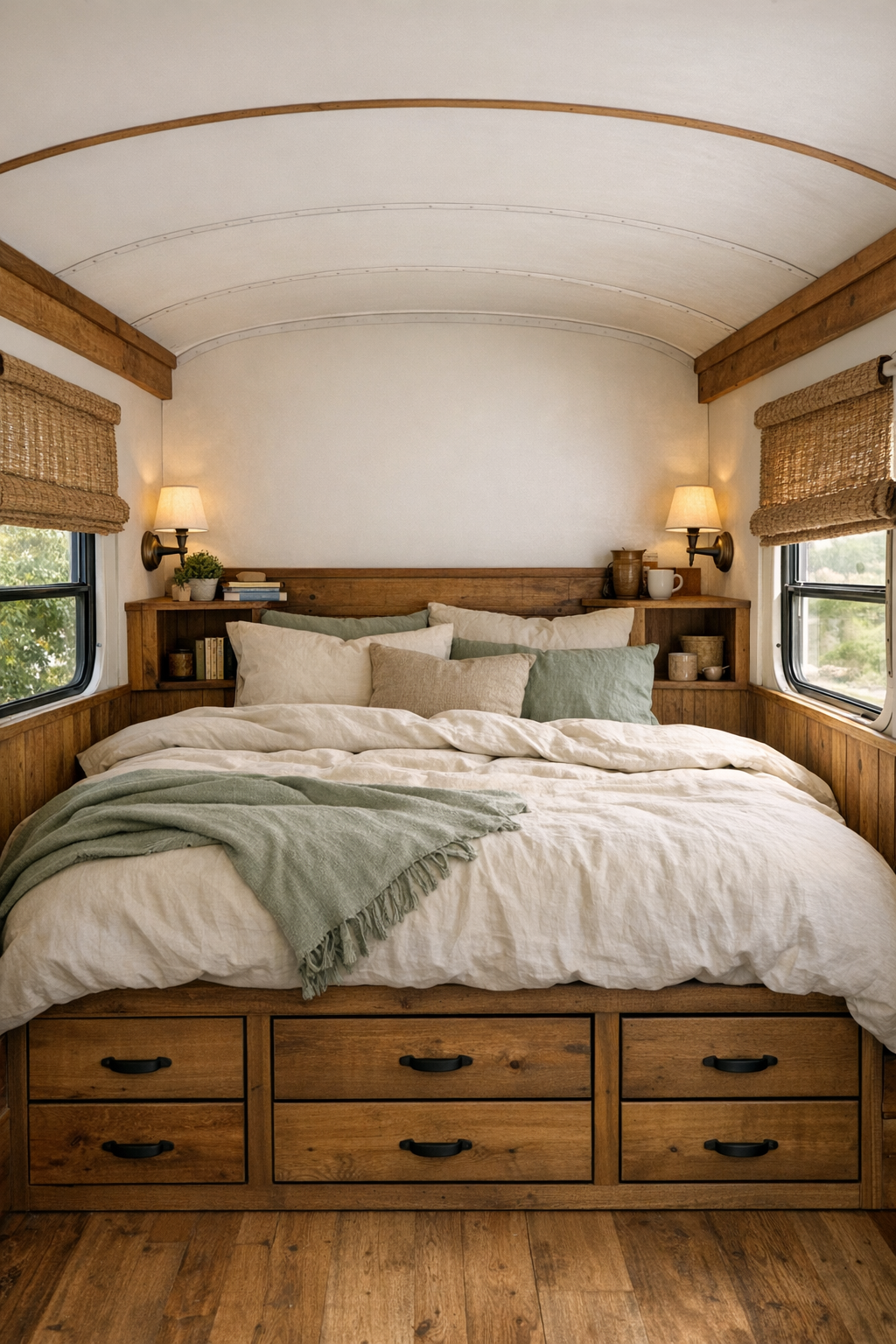
The bedroom occupies the quiet end of the bus and manages to feel genuinely restful despite its compact footprint. A raised bed platform spans the width, dressed in washed linen bedding in ivory, clay, and muted sage, with a quilt folded at the foot for texture and weight. Beneath the bed, deep drawers handle bulk storage cleanly, while small cubbies at the headboard hold books, a water glass, and the sorts of things one reaches for before sleep. The walls are kept light, but not stark, in a warm white that reflects daylight beautifully and lets the wood details do the warming.
What makes this room succeed is its restraint. Rather than crowding it with decorative gestures, the design relies on material contrast: soft textiles, smooth painted surfaces, and the tactile grain of wood framing the windows and bed base. A pair of petite sconces frees up surface space, and simple woven shades provide privacy without heaviness. There’s just enough room to stand, turn, and settle in, which is really all a bedroom needs if it’s composed with care. The atmosphere is quiet, airy, and cocooning, like a guest room at a very thoughtful country inn.
Bathroom
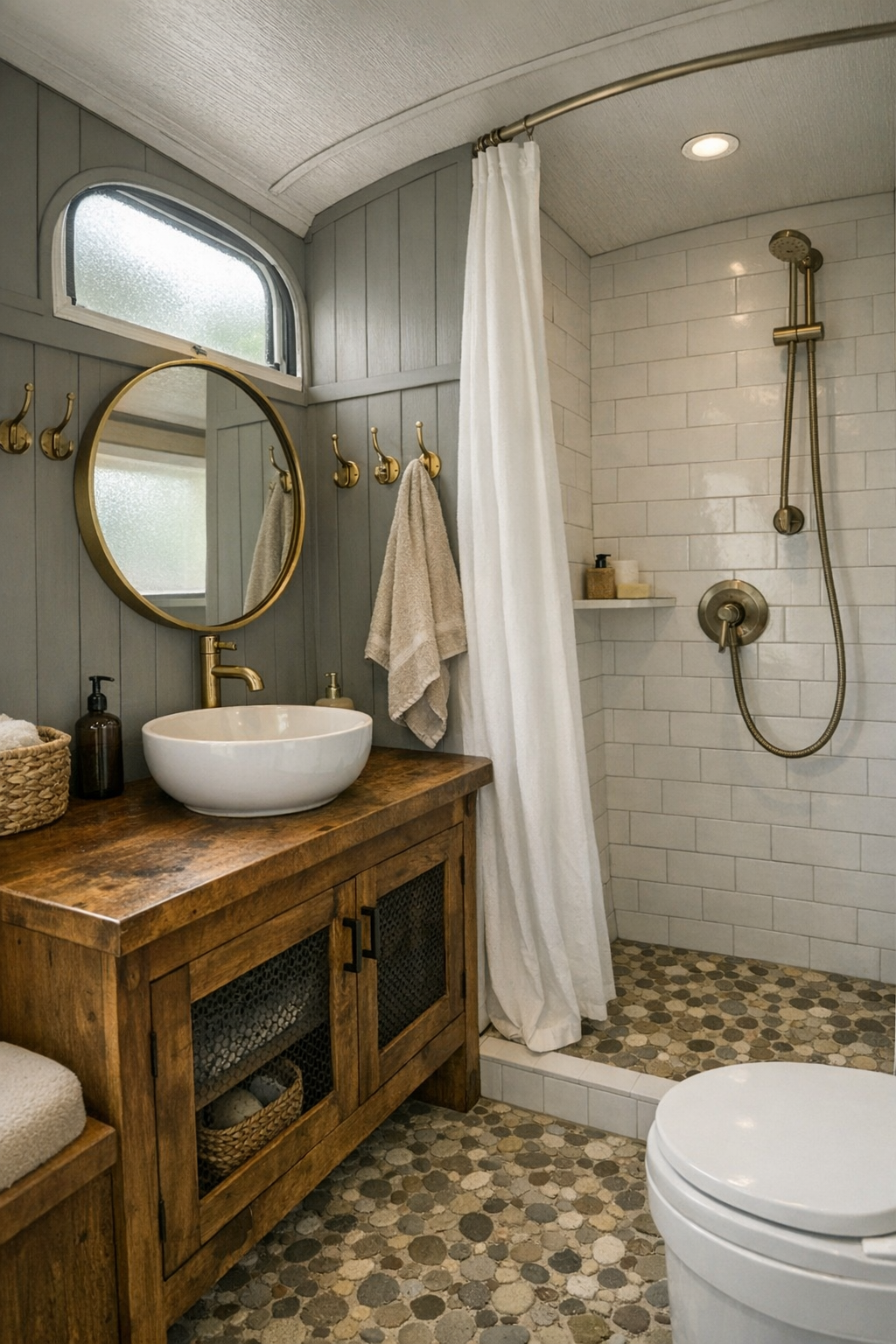
The bathroom is compact, of course, but it doesn’t feel apologetic about it. A small vanity in stained wood supports a stone-look vessel sink, while the wall behind it is finished in vertical tongue-and-groove paneling painted a soft clay gray. Brass hooks, a rounded mirror, and a narrow shelf for soap and folded towels add just enough polish. In the shower zone, simple white tile and a pebble-toned floor bring brightness and a bit of spa-like texture without straying from the home’s rustic language.
I particularly like the balance of rugged and refined here. Black fixtures ground the space, the shower curtain is a sturdy natural canvas, and a frosted window admits daylight while preserving privacy. Every element seems chosen for durability: easy-clean surfaces, compact storage, and finishes that will age gracefully rather than look precious. The room feels fresh, neat, and surprisingly calm, which is often the real luxury in a small off-grid home.
Other Areas
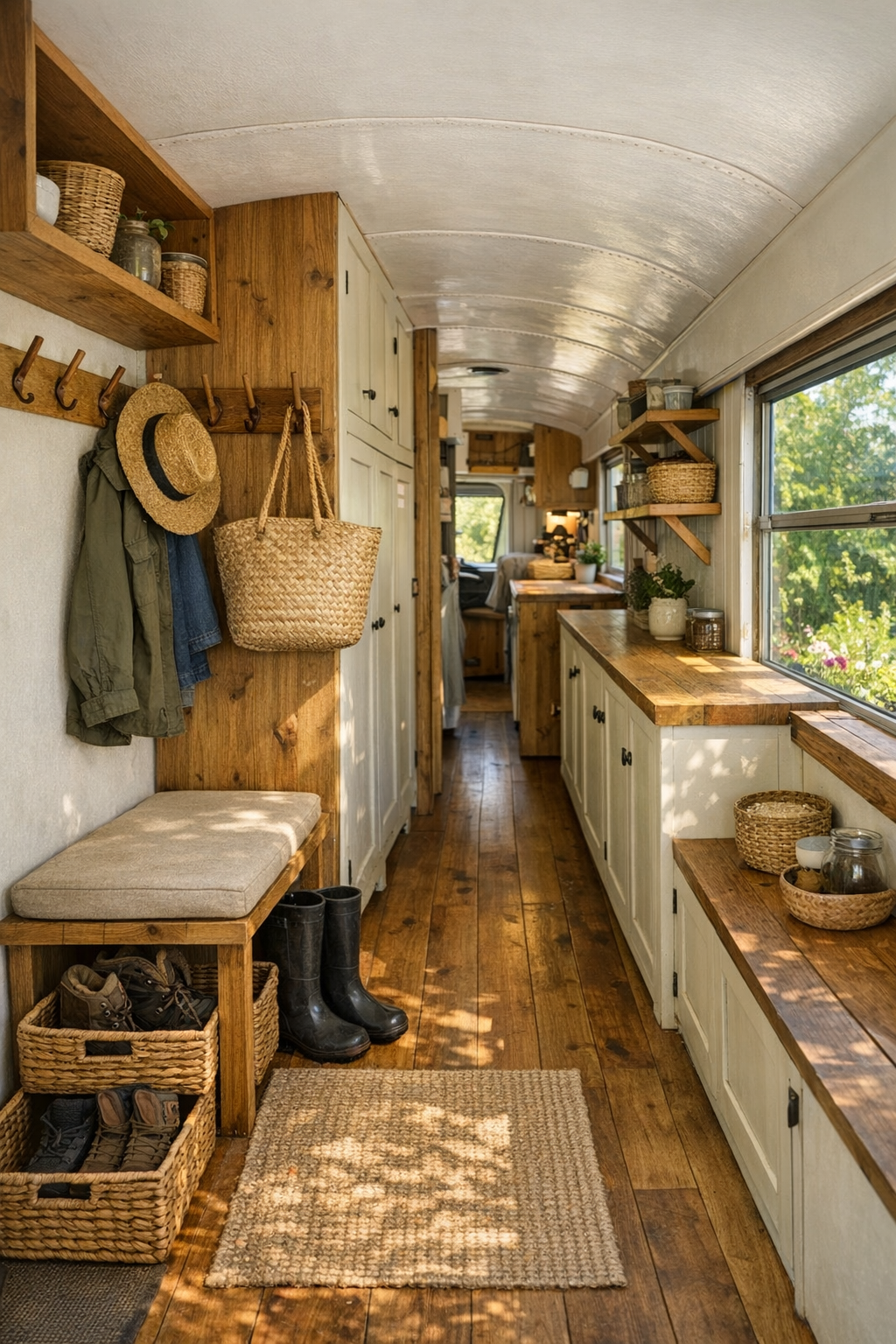
The transition spaces are some of the smartest parts of the bus. The entry includes a hardworking mudroom moment with boot storage, pegs for hats and aprons, and a bench sturdy enough for baskets of produce or gardening tools. Overhead compartments have been refined into clean built-ins, and even the corridor walls contribute storage with shallow cabinets and open ledges. In a home this size, circulation can easily feel like wasted space, but here it becomes part of the design’s usefulness.
There’s also a lovely connection to the outdoors that extends beyond the main rooms. Near the door, a fold-out work surface can function as a potting station, writing desk, or extra kitchen landing zone, and windows are placed to frame garden views at nearly every turn. I’m always impressed when a small home remembers to create moments, not just functions, and this one does: a reading perch by a window, a spot to leave sun hats, a shelf for preserving jars and seed packets. Those everyday details give the whole bus a lived rhythm that feels authentic and deeply appealing.
Why You'd Live Here
You’d live here because it proves that self-sufficiency and beauty do not have to be opposing ideas. This bus takes a compact, practical shell and turns it into a home with real atmosphere, real utility, and a clear sense of values. It offers the pleasures that matter: light in the morning, a place to cook well, storage where you need it, materials that feel honest in the hand, and a daily connection to the landscape just outside.
For me, the appeal is very much like the appeal of a well-run kitchen: nothing excessive, everything considered, and every element supporting the life you actually want to live. The rustic finishes keep it warm, the layout keeps it efficient, and the summer homestead setting gives it a sense of freedom that many much larger homes never manage to achieve. Small though it is, this is a place with presence, and that’s what makes it so memorable.