
There is something downright heartening about a home that knows exactly what it wants to be, and this converted bus does. It carries the easy soul of a rural homestead into a compact, beautifully considered shell, pairing practical sustainability with a tenderness for natural materials, soft light, and honest craftsmanship. Parked in a peaceful setting that feels close to open fields and kitchen gardens, it has the kind of quiet presence I always admire: modest at first glance, but deeply comforting once you begin to notice the details.
Though it is a concept design, it feels grounded in real living, the sort of place where muddy boots by the door and a loaf cooling on the counter would look perfectly at home. What makes it special is the way it borrows from farmhouse traditions without becoming precious about them, blending efficient modern planning with warm wood tones, useful built-ins, and a calm palette that lets the whole interior breathe.
Exterior
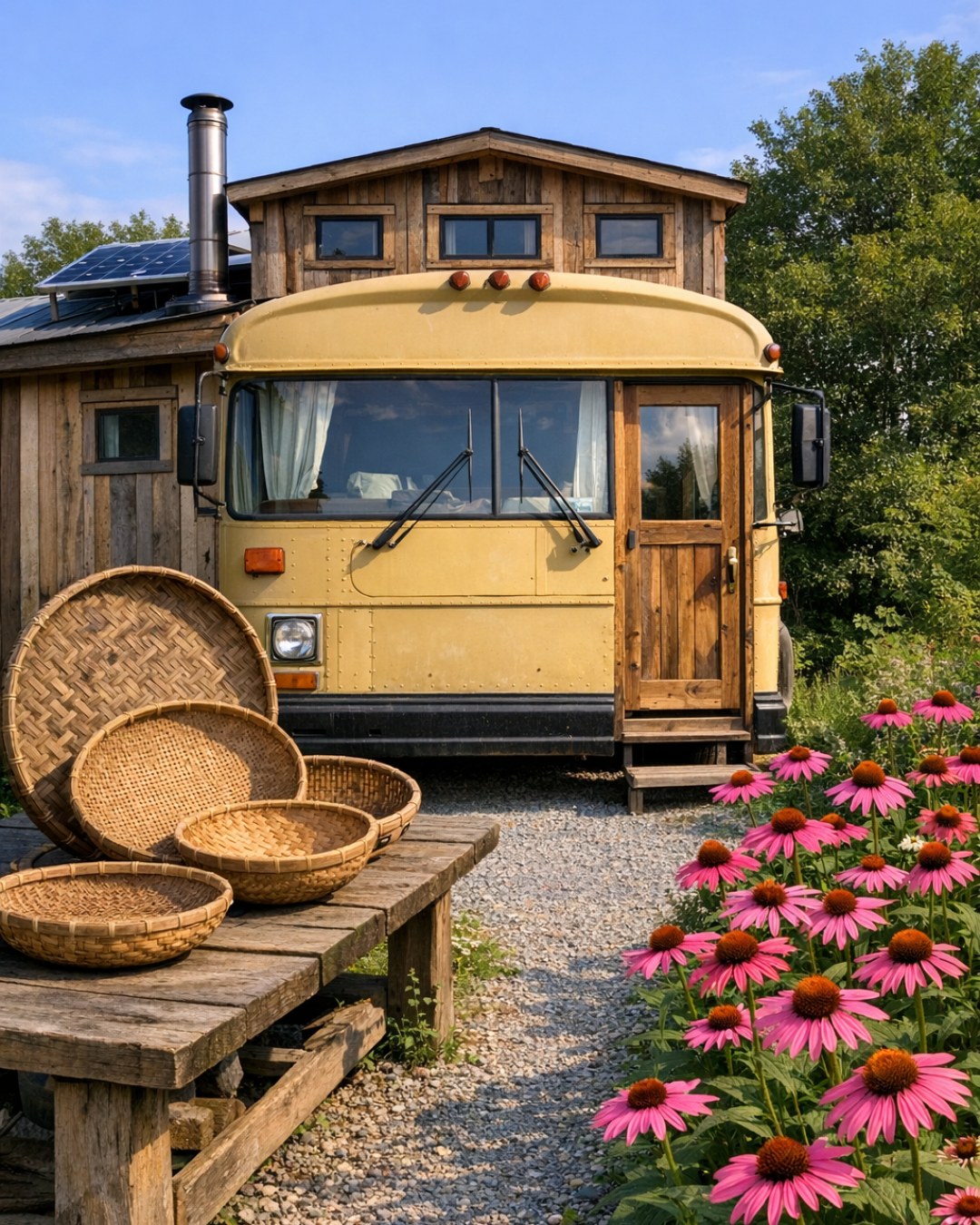
From the outside, the bus keeps enough of its original character to feel resourceful and true, but it has been softened into something altogether more welcoming. The body is finished in a muted, chalky cream with deep olive trim, a combination that reminds me of old enamelware and weathered barn paint. Cedar cladding wraps selected portions of the exterior to break up the metal shell and lend it a handmade quality, while matte black hardware, simple sconces, and sturdy steps give it a practical, no-nonsense finish that suits a country life.
The overall silhouette is still unmistakably a bus, yet the design eases that long, narrow form with thoughtful touches: planter boxes beneath a few windows, a small awning for shade, and a tidy little landing that acts almost like a front porch. I especially like the way the windows are treated, framed neatly so they read more like house windows than vehicle glass. The result feels both inventive and familiar, as if an old workhorse had been gently taught some new graces.
Living Room
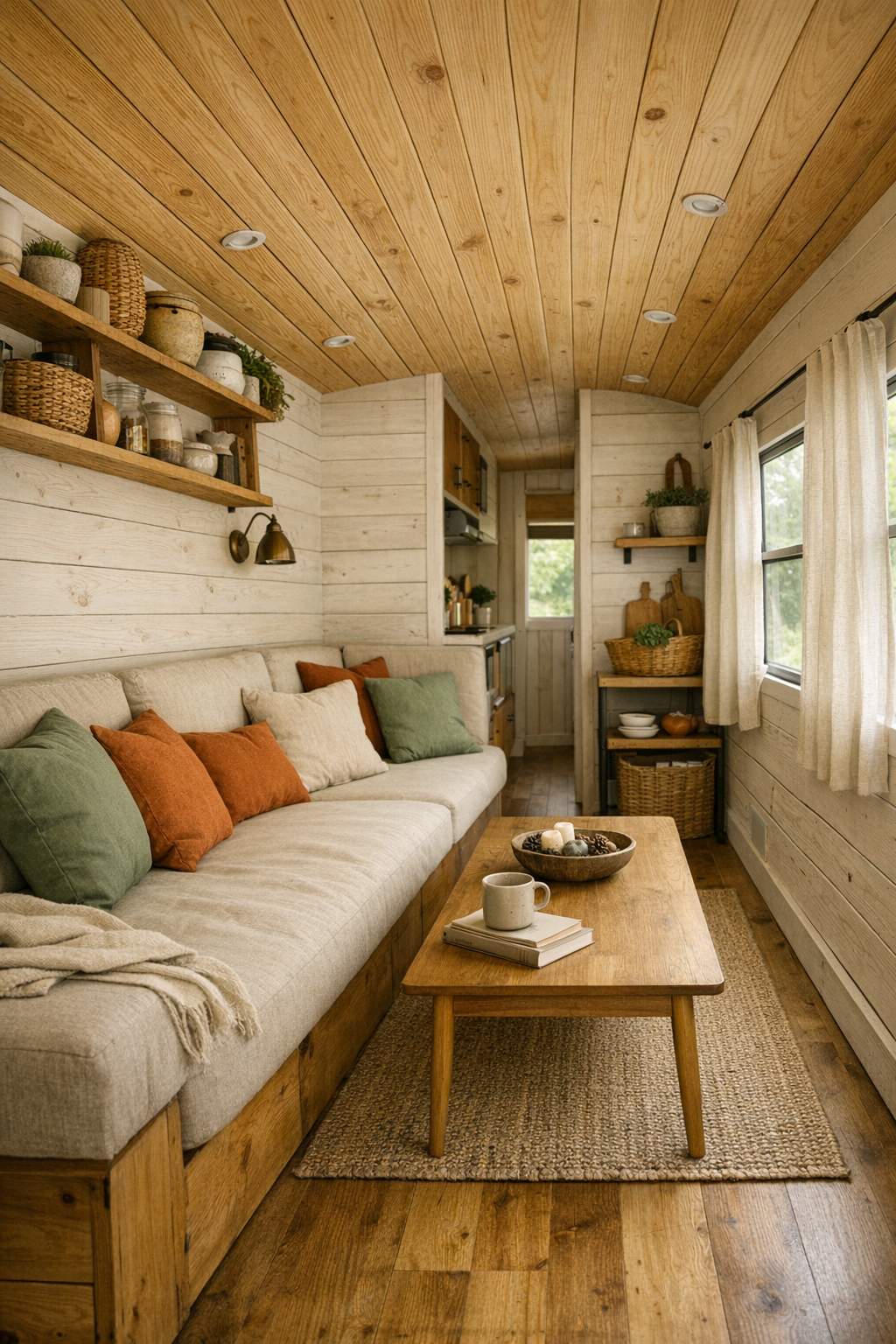
The living room sits at the heart of the bus like a well-loved sitting nook, scaled carefully but never feeling cramped. A built-in bench sofa runs beneath the windows, upholstered in warm oatmeal linen with deep sage and rust cushions that bring just enough color without fuss. Whitewashed pine walls and a honey-toned wood ceiling keep the space light, while the floor in matte, medium oak adds a steadier note underfoot. I can almost imagine settling there at dusk with a quilt over my knees and the lamplight turning everything golden.
Because every inch matters in a home like this, the furnishings are hardworking as well as handsome. A slim nesting coffee table in natural ash can be tucked away when needed, and open shelving with a small rail keeps books, crocks, and a few treasured pieces from shifting while the look remains tidy. Lighting comes from a mix of black reading sconces and small recessed ceiling lights, but it is the daylight that really does the heavy lifting here, pouring in from both sides and making the room feel broader than it is.
Dining Room
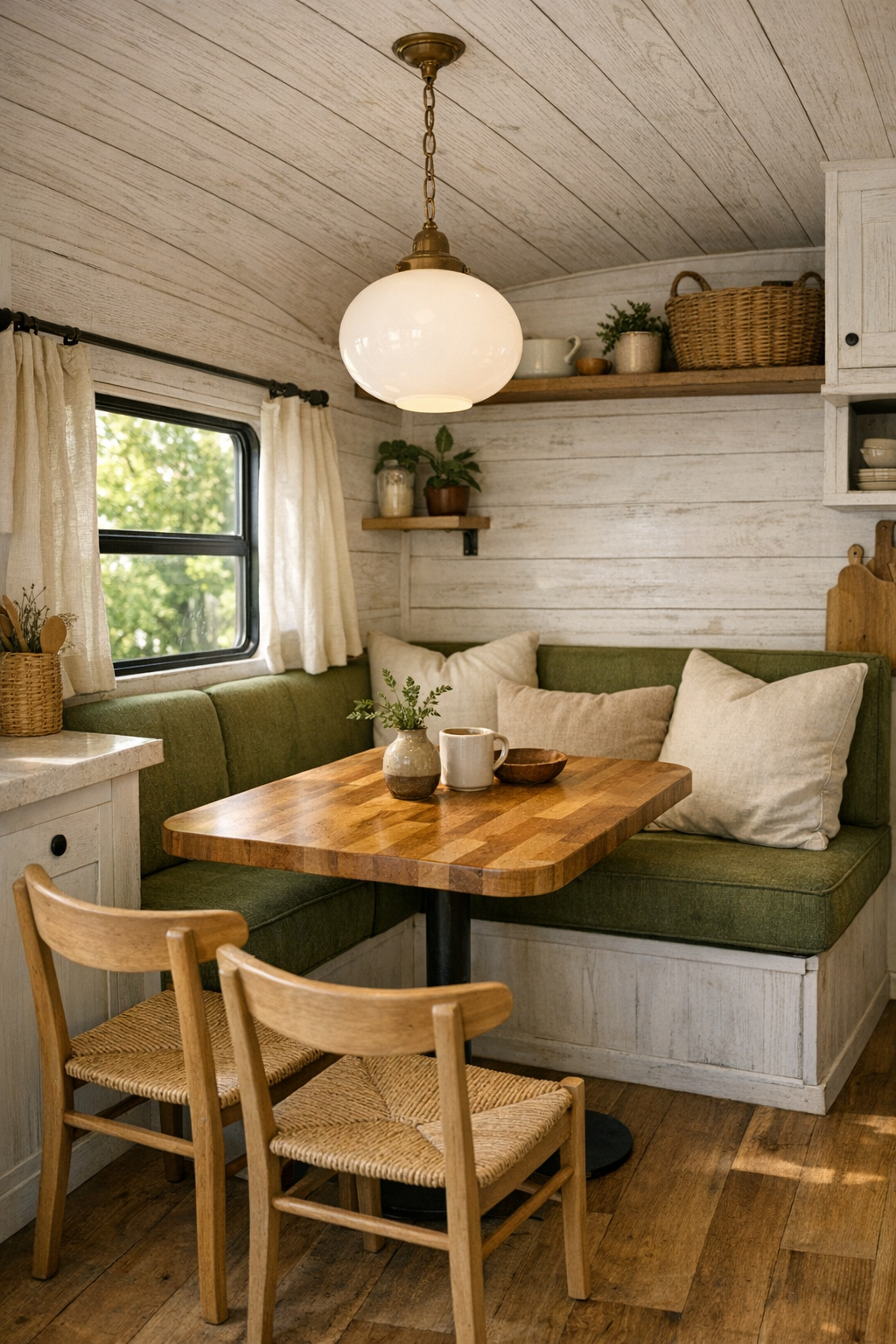
The dining area is small, as it must be, but it has the snug charm of a breakfast corner designed for lingering. A built-in banquette hugs one wall, its base painted a soft mossy green and topped with seat cushions in a simple cream fabric. Opposite, a pair of lightweight wooden chairs can be moved about as needed, while a rectangular table with rounded edges keeps circulation easy in the narrow footprint. It is the sort of arrangement that encourages closeness in the nicest possible way, the kind of table where coffee turns into conversation before anyone notices the time.
What keeps the space from feeling overfitted is the restraint in the finishes. The tabletop is sealed butcher block, pleasantly grainy and durable, and above it hangs a single opal glass pendant that casts a gentle, domestic glow. A narrow ledge by the window holds a stoneware pitcher, a small jar of dried herbs, and perhaps one bunch of wildflowers, never too much. In a home shaped by efficiency, this dining corner still manages to feel ceremonial, as though supper would always be served with a little care.
Kitchen
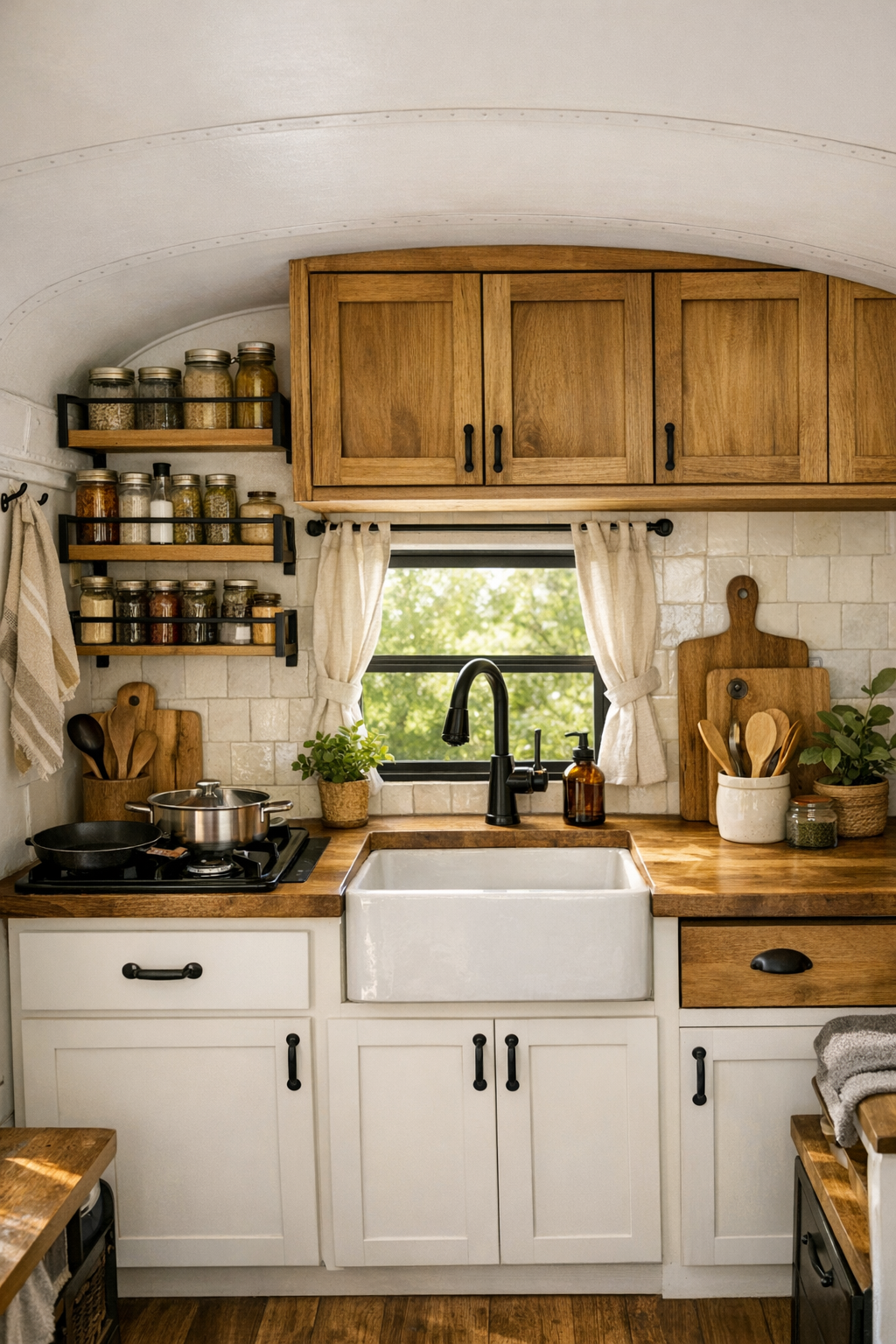
The kitchen is where this bus truly wins me over, because it understands that a hardworking kitchen need not be large to be deeply satisfying. Cabinetry is done in a soft warm white below and natural wood above, creating a layered look that feels collected rather than flat. The counters appear to be butcher block, oiled to a mellow finish, and the backsplash is a creamy handmade tile with just enough variation to catch the light. A compact apron-front sink beneath the window gives the whole room a farmhouse note that I find irresistible.
Storage is cleverly stitched into every available space, with narrow pull-outs, open spice shelves, hooks for everyday utensils, and deep drawers fitted for pans and dry goods. The hardware is blackened metal, simple and sturdy, and the appliances are scaled for bus living without sacrificing usefulness. I like that the styling stays practical: a crock of wooden spoons, folded tea towels, a loaf board, and maybe a basket of onions tucked under the bench. It feels like a kitchen built for actual cooking, not just admiring, and that is always where my heart lands.
Bedroom
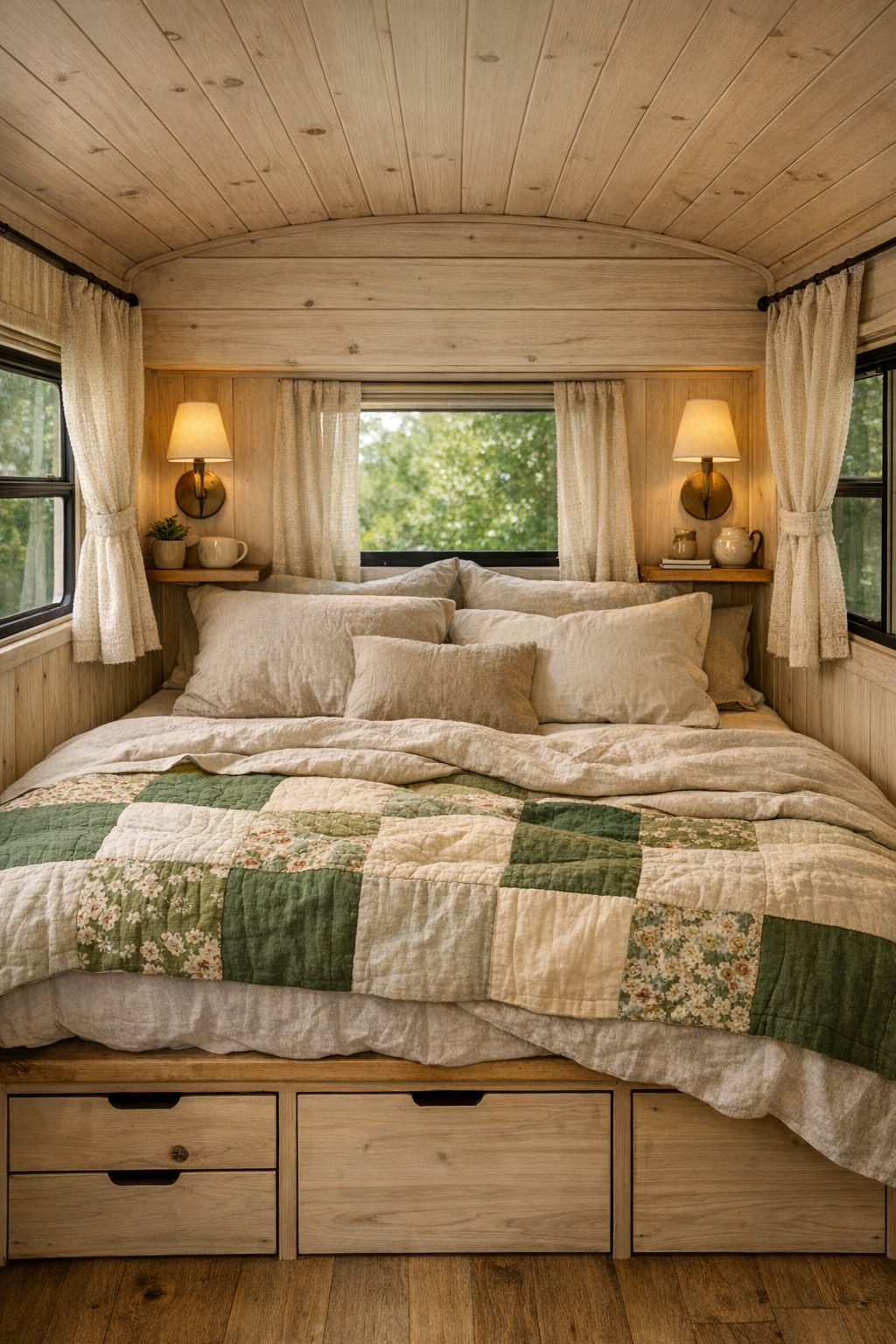
The bedroom is tucked into the bus with a quiet, tucked-away feeling that reminds me a bit of sleeping lofts and old back rooms in country houses, where rest came easy because the space asked so little of you. The bed platform is built in wall to wall, dressed in soft flax-colored linen and layered with a quilt in faded green and cream. Wood paneling continues here, but in slightly lighter tones, helping the room feel airy and calm. There is no clutter, only the essentials arranged with care.
What I appreciate most is the balance between coziness and utility. Drawers are hidden beneath the bed, narrow shelves are set into the wall for books and a small lamp, and blackout curtains in a textured natural weave can close the room off into a cocoon at night. A pair of small reading sconces saves surface space while making the room feel finished. In such a compact home, the bedroom could easily feel like an afterthought, but here it becomes one of the gentlest spaces of all.
Bathroom
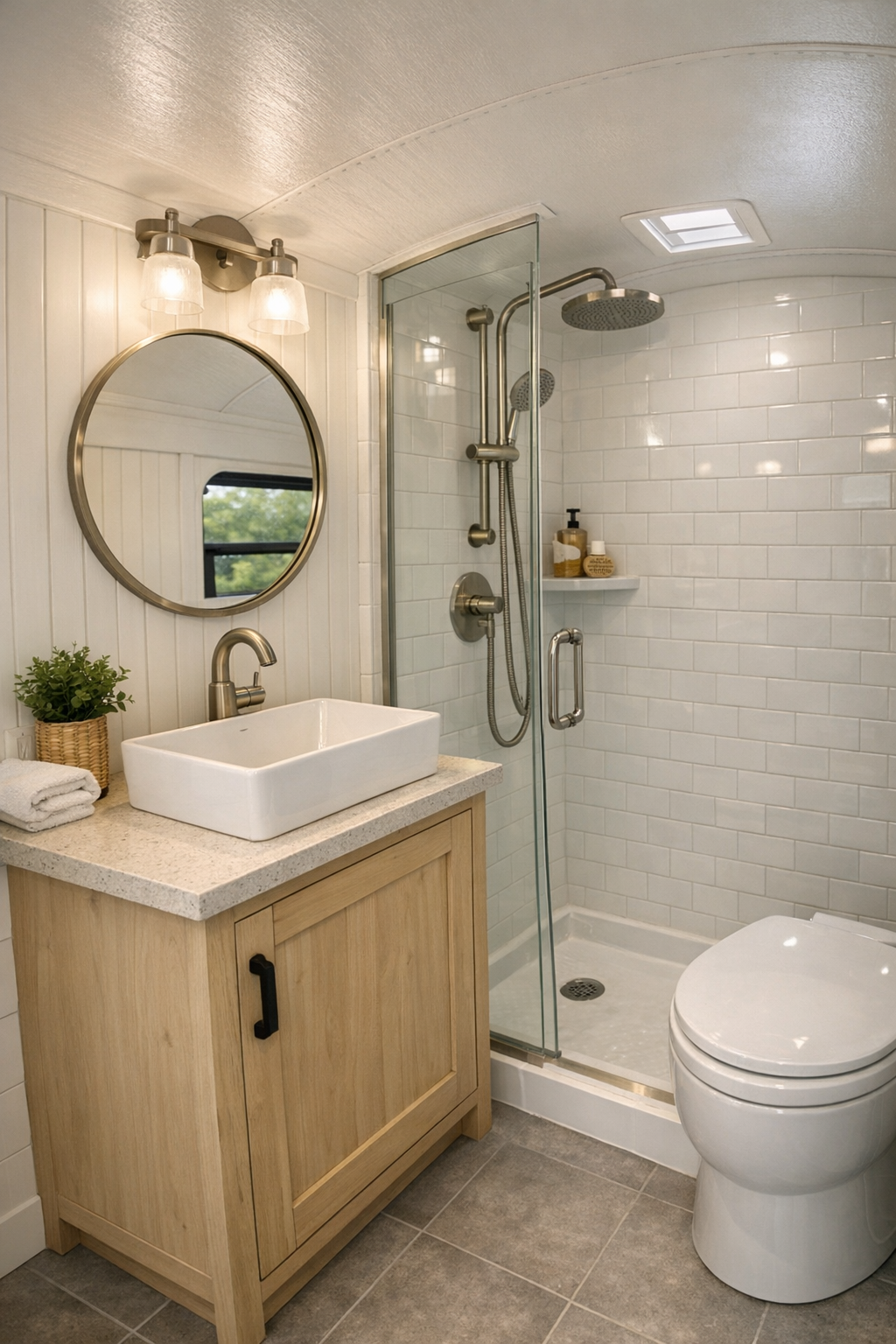
The bathroom is a lovely lesson in making small spaces feel composed rather than squeezed. It uses a palette of warm white, pale wood, and muted stone tones, which immediately gives the room a cleaner, quieter presence. A compact vanity with a wood base and simple white basin keeps the look grounded, while the wall behind it is finished in vertical paneling or narrow tile that visually lifts the ceiling. I have always believed a bathroom should feel fresh first and fussy never, and this one gets that balance just right.
The shower is enclosed in clear glass to preserve openness, with brushed metal fixtures and a niche for soaps built neatly into the wall. Small-format floor tile in a soft gray adds grip and texture, and a round mirror softens all the straight lines. There may only be room for the essentials, but they have been chosen with a sure hand: a woven basket for towels, a peg rail for robes, and one small sconce with flattering light. It feels simple, honest, and entirely in keeping with the rest of the bus.
Other Areas
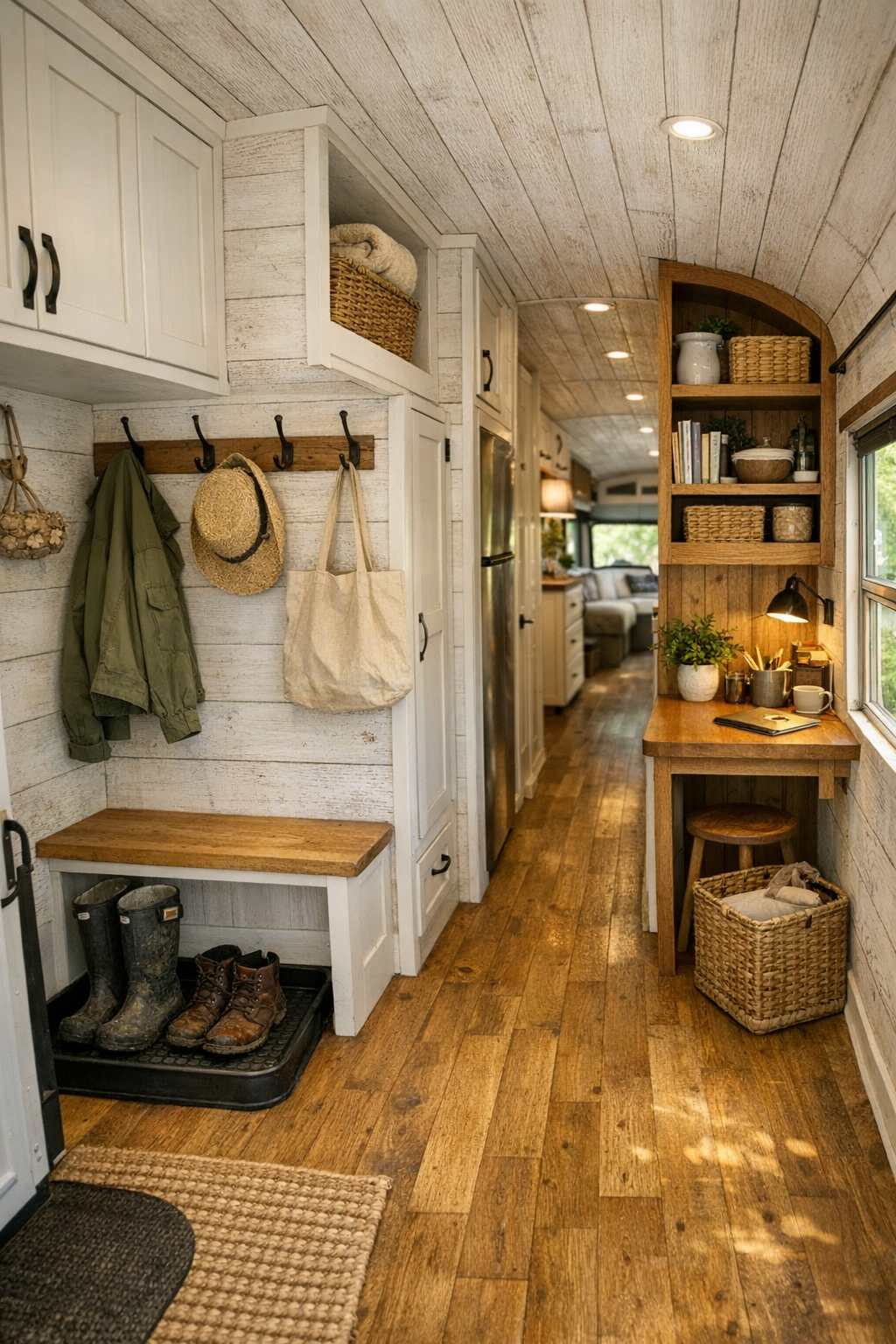
In a home like this, the in-between spaces matter just as much as the main rooms, and they have been handled beautifully. The entry is modest but sensible, with hooks for hats and coats, a narrow boot tray, and perhaps a bench lid that opens for storage. Hallway moments are used for built-in cabinetry, stacked shelves, and little ledges where daily life can land without making the home feel cluttered. Every passage has a purpose, yet nothing feels overworked.
I am especially fond of the bus's utility-minded details: overhead cabinets that read as part of the architecture, a petite desk nook for writing or planning the week, and perhaps even a corner dedicated to pantry overflow or laundry essentials. These are the sorts of things that make a small home truly livable. Instead of chasing excess, the design leans into sufficiency, and there is a quiet dignity in that which feels very close to old farm wisdom.
Why You'd Live Here
You would live here if you believe comfort has more to do with thoughtfulness than square footage. This bus offers the pleasures that matter most: good light, natural materials, sensible storage, and rooms that invite real routines instead of performance. It takes the old homestead values of thrift, usefulness, and warmth, then reshapes them into something nimble enough for a more intentional way of living.
To my eye, that is the real beauty of the place. It is sustainable without feeling severe, charming without slipping into cliché, and compact without surrendering grace. I can picture a life here that is pared down but full, with meals cooked from scratch, windows open to the breeze, and every object earning its keep. That kind of home stays with you, because it speaks to the part of us that still longs for simplicity done well.