
There’s a special kind of quiet that settles over a houseboat, and this accessible Dutch barge captures it beautifully. From the outside, it carries that handsome working-boat character I’ve always admired—long, low, and gracefully practical—but inside it opens into rooms that feel soft, thoughtful, and unexpectedly refined. Moored against a calm waterside setting, the home balances sturdy nautical heritage with the kind of comfort that makes you want to put the kettle on, sit a spell, and watch the light move across the water.
What makes this place so memorable, to my eye, is the way accessibility has been folded into the design without sacrificing one ounce of charm; even as a concept home, it feels deeply livable. The palette is gentle and grounded, with warm woods, painted cabinetry, textured linens, and well-placed brass details giving the interiors a glow that feels both fresh and familiar. It reminds me of the best old kitchens and sunrooms I’ve known in the Midwest—rooms made for everyday ease—only here that spirit has been translated into a floating home with remarkable grace.
Exterior
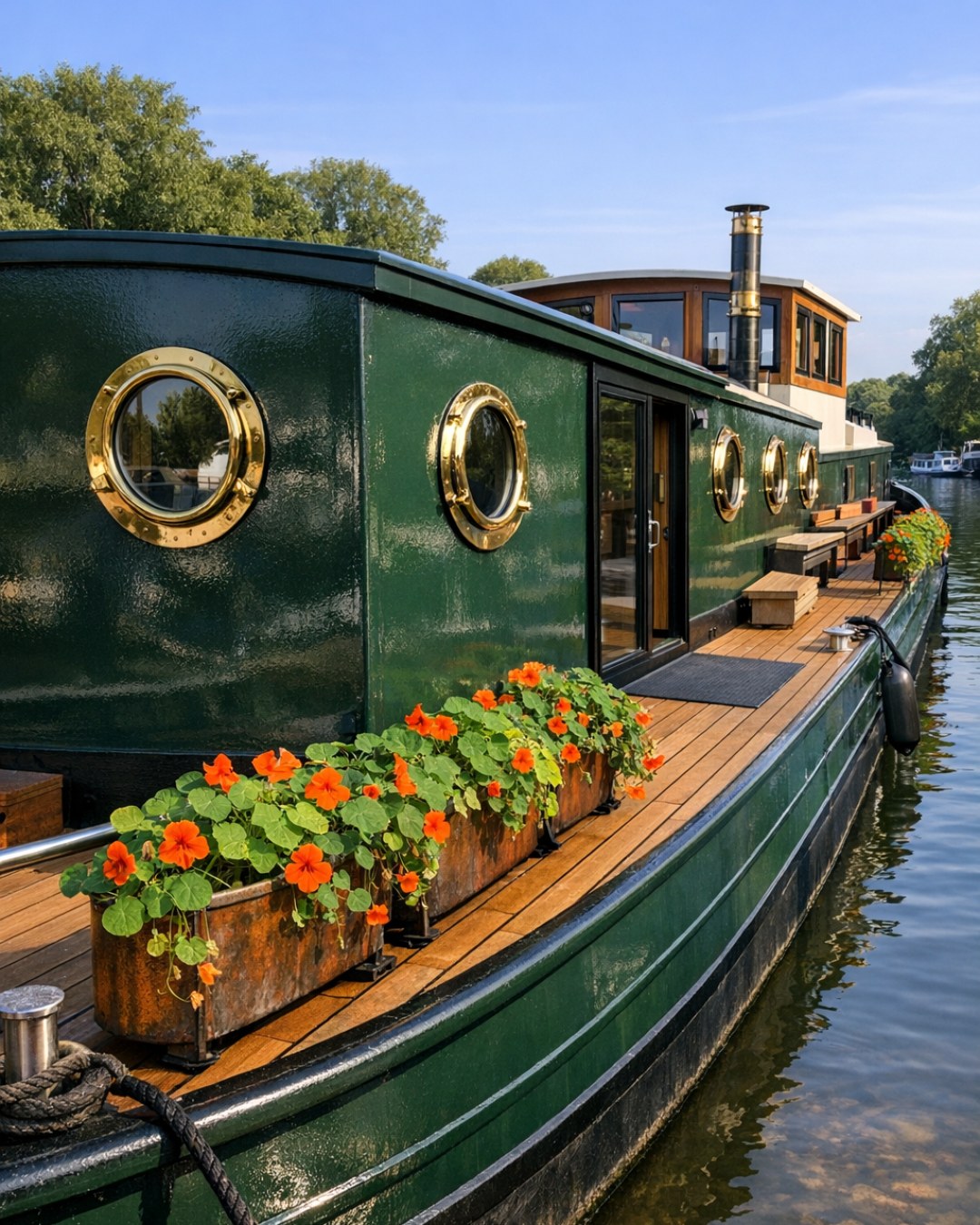
The exterior keeps the classic Dutch barge silhouette intact, which is part of its enchantment. The hull is finished in a deep inky charcoal with cream trim and softened black metalwork, giving it a timeless, almost tailored look against the water. Wide side decks and subtly integrated railings make movement around the boat feel secure and generous, while the entry points are designed with level transitions and broad clearances that speak to accessibility in a calm, unshowy way. I appreciate that nothing feels added on as an afterthought; it all belongs to the boat’s original language.
Above, the wheelhouse and roofline are handled with a light touch, using painted wood, glass, and compact outdoor fittings that keep the whole profile clean. Large windows punch brightness into the interior and lend the barge a welcoming face, especially when warm light begins to gather at dusk. There’s a practical beauty here I find awfully endearing—like a well-made farmhouse table or a cast-iron pot that’s been used for years. This exterior promises durability and ease, but it also hints at the gentleness waiting inside.
Living Room
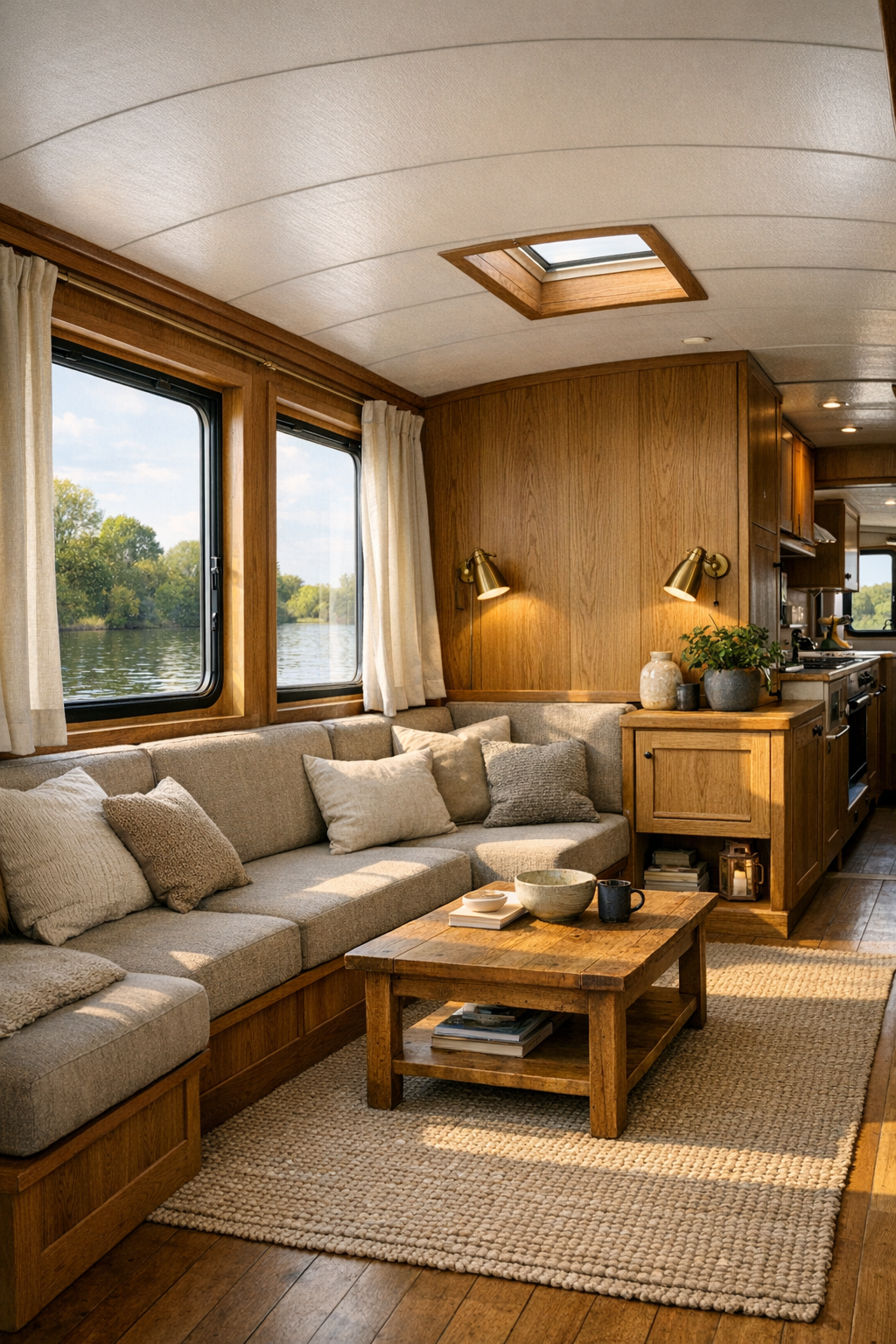
The living room is where the barge’s long shape becomes a real gift. Built-in seating runs neatly along one wall in a way that preserves circulation, and the layout leaves a smooth, open path through the center so the room feels easy to navigate. Upholstery in oatmeal and soft flax tones keeps things airy, while muted blue and moss-green pillows bring in the colors of water and reeds without turning the space thematic. Underfoot, a low-pile woven rug adds texture without interrupting movement, and every edge—from the coffee table to the cabinetry—seems gently considered.
What I love most is the joinery. There’s honeyed oak throughout, likely matte-finished so the grain can do the talking, paired with painted panels in a warm white that catches the daylight beautifully. Brass reading sconces, shaded table lamps, and concealed ambient lighting soften the boat’s curves by evening, so the room glows instead of glaring. It feels intimate but not cramped, polished but still ready for real life—the sort of room where you could read, mend, visit, or nap to the small rhythm of the water against the hull.
Dining Room
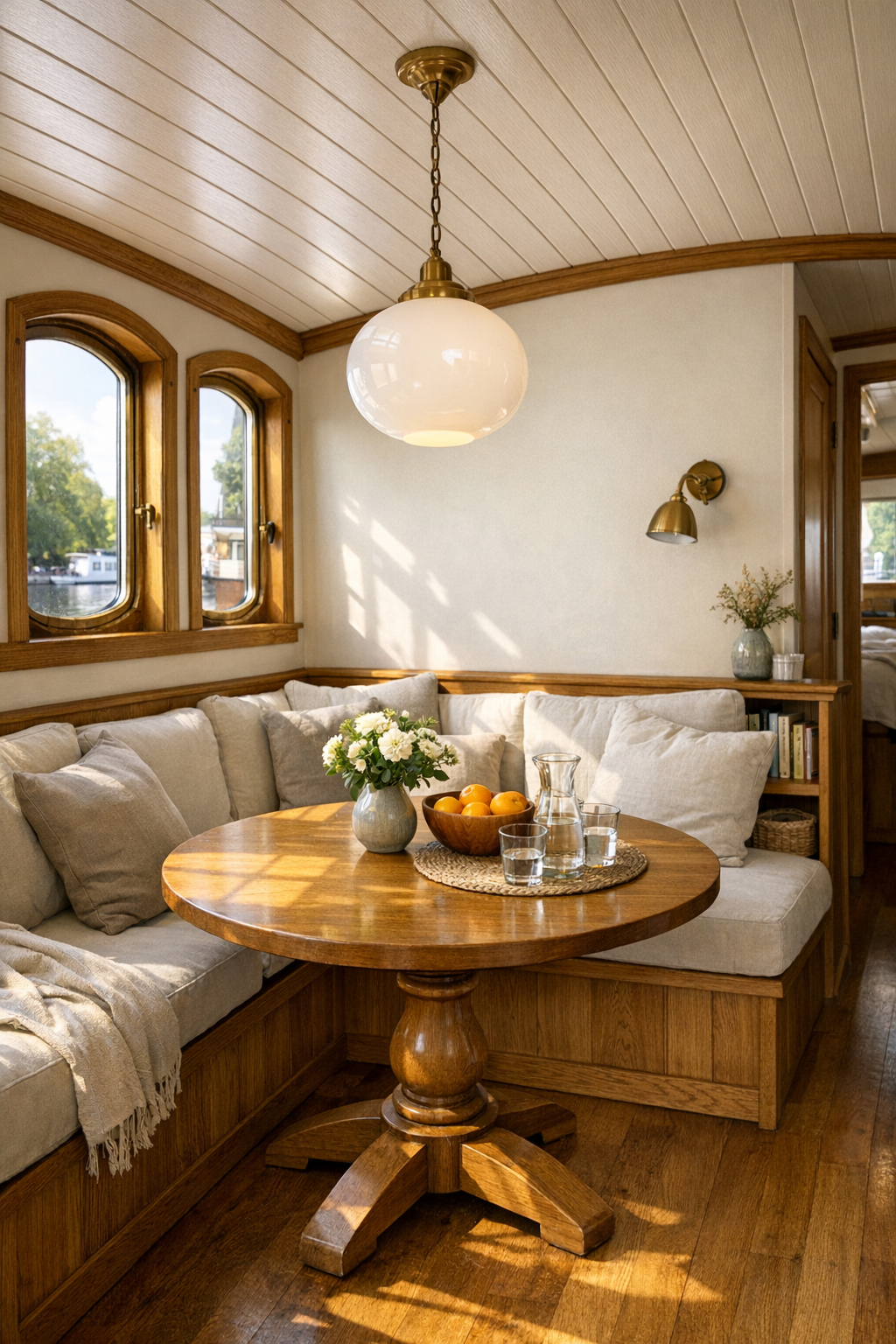
The dining area is compact in the way all good boat spaces must be, but it never feels pinched. A round pedestal table is an especially smart choice here, eliminating awkward corners and making it easier to move around comfortably. I can just imagine the pleasant sound of coffee cups set down on a solid wood top, with daylight pouring in from nearby windows and bouncing off painted walls in creamy white. Built-in banquette seating gives the room both softness and efficiency, and the seat cushions in woven stripe or heathered linen add that homey note I’m always drawn to.
Above the table, a modest pendant in opal glass or aged brass anchors the space without hanging too low or feeling fussy. The room is tuned to conversation: close enough to the kitchen for easy serving, open enough to the living area to keep everyone connected. There’s a tidy elegance in the details—simple trim, a narrow shelf for pottery or books, perhaps a vase of greenery from the dockside. It feels like a place where supper would stretch pleasantly into the evening, the kind of room that invites lingering.
Kitchen
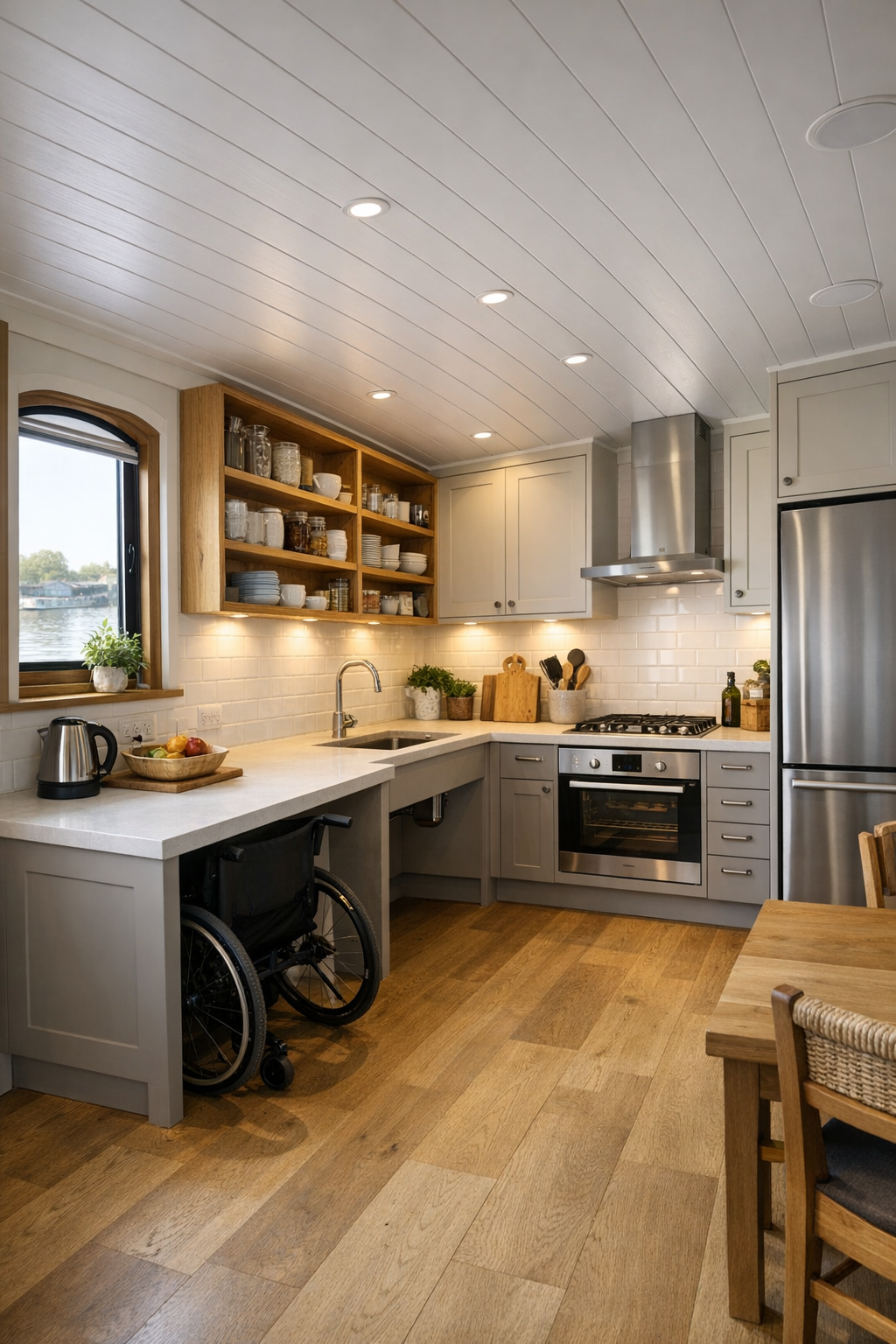
The kitchen may be my favorite part, perhaps because I’ve spent so much of my life noticing whether a kitchen truly works. This one does. The cabinetry is fitted and efficient, painted a soft mushroom or warm ivory, with oak drawer fronts or open shelves to keep it from feeling too uniform. Countertops in pale honed stone or composite lend a clean, durable work surface, and the hardware is comfortably grippable rather than dainty. There’s room to turn, room to reach, and room to prepare a meal without feeling hemmed in, which is no small accomplishment on a houseboat.
Accessibility here seems to come through in the most sensible ways: lowered work zones where needed, broad passageways, easy-to-operate fixtures, and storage designed to come to the cook rather than making the cook chase after it. A simple backsplash in handmade-look tile brings in a bit of texture, and under-cabinet lighting brightens the work surfaces without harshness. I can picture a Dutch oven on the stove, a loaf cooling near the window, and a bowl of apples set out where the afternoon light can find them. It’s a modest kitchen in scale, but in feeling it is generous.
Bedroom
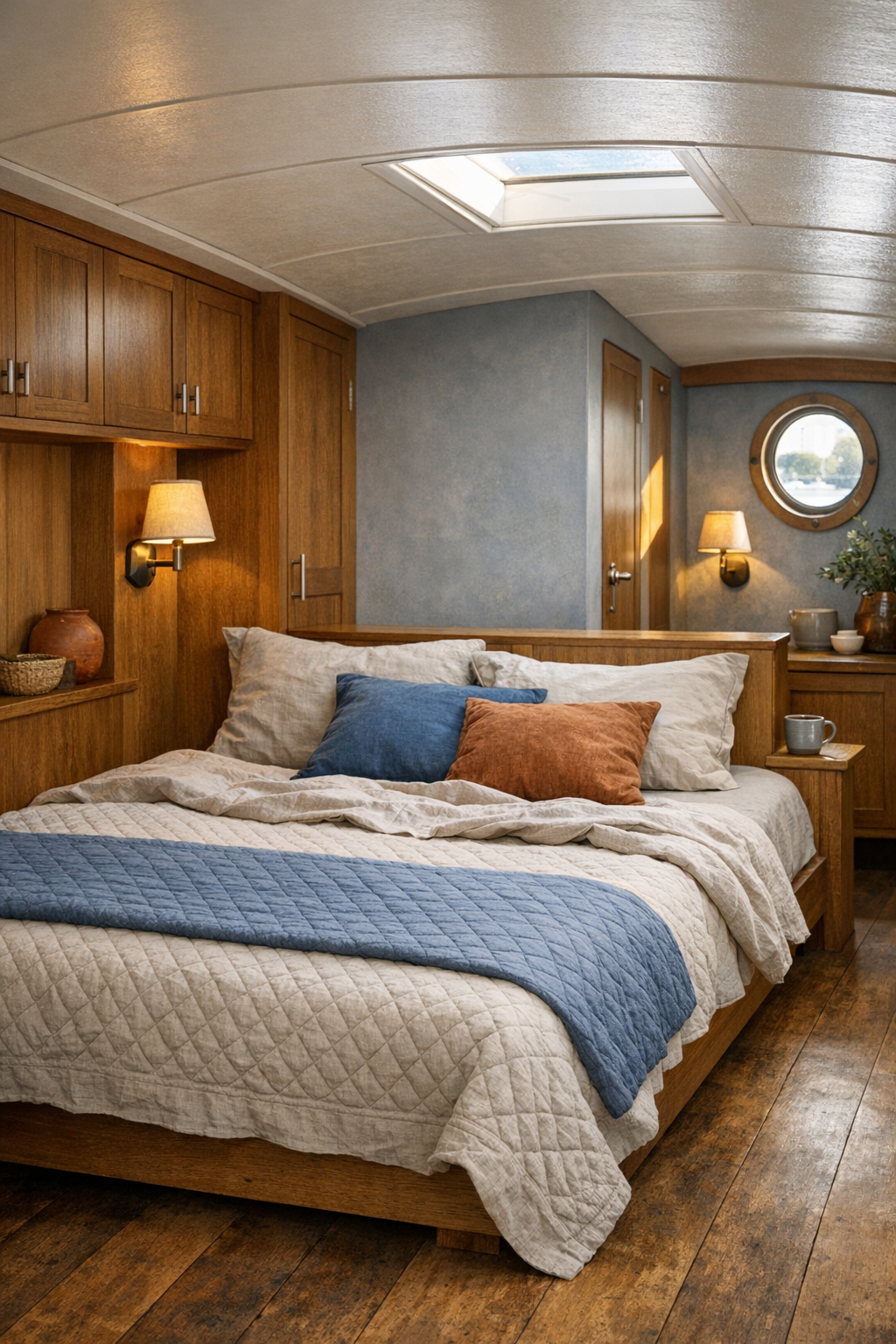
The bedroom is handled with a lovely restraint that makes it feel restful the moment you imagine stepping inside. Rather than crowding the room with furniture, the design leans on built-ins and careful proportion: a bed set low for easy access, integrated night ledges, and wardrobes tucked neatly along the curve of the hull. The palette turns a touch deeper here—soft clay, weathered blue, warm cream, and natural wood—so the room feels cocooning without becoming dark. Linen bedding, a quilted coverlet, and simple curtains lend the kind of layered softness that always makes a sleeping space feel cared for.
Lighting is especially important in a room like this, and it’s done beautifully. Wall-mounted sconces free up surfaces, dimmable overhead fixtures keep the mood gentle, and any task lighting is placed right where it’s needed. There’s likely a window positioned to catch early morning light off the water, which would make the whole room shimmer softly. It has the plainspoken serenity of a guest room in an old lakeside inn, only better thought through—less clutter, more grace, and a strong sense that every inch has a purpose.
Bathroom
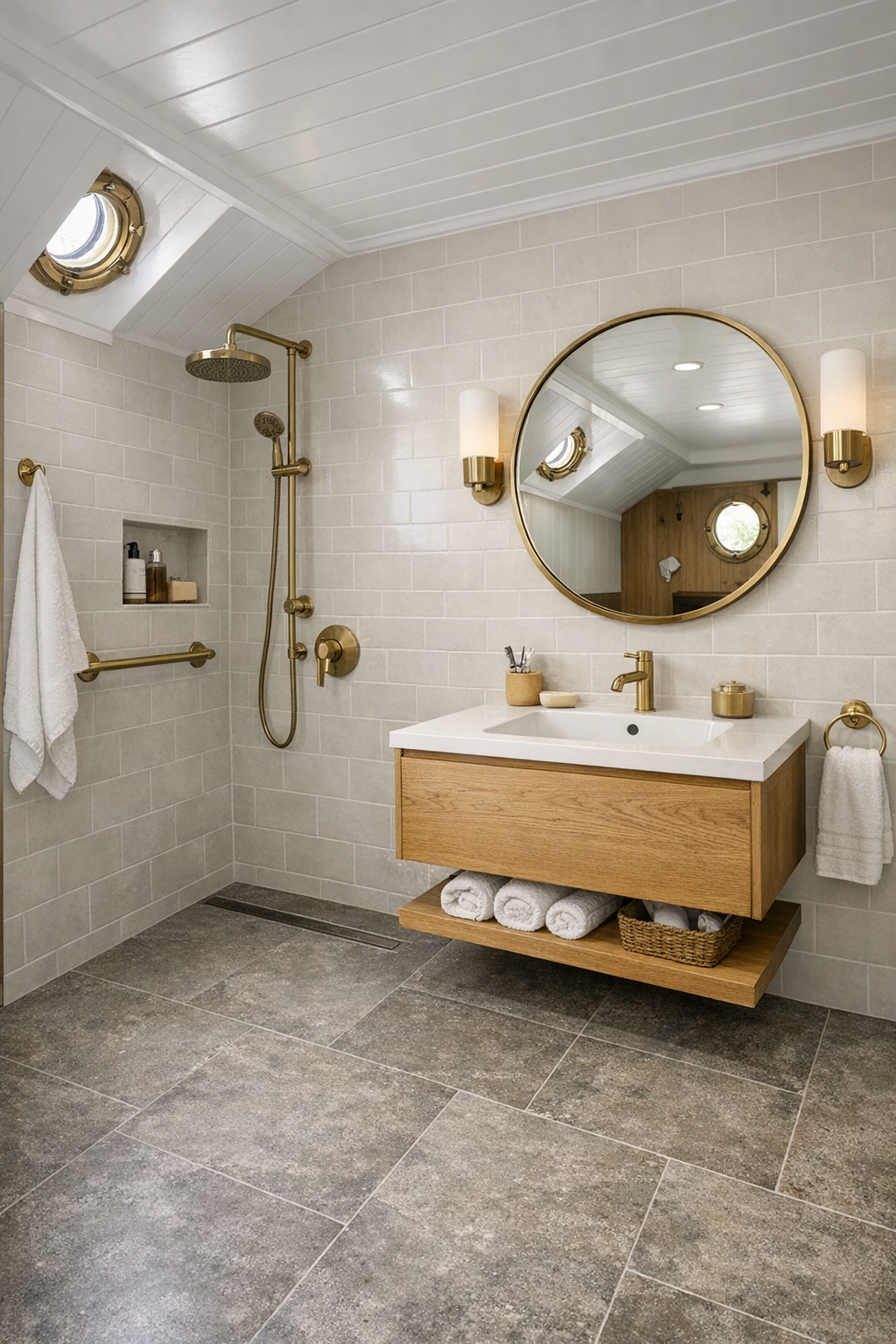
The bathroom is where practical design can so often turn cold, but not here. This one keeps its usefulness while still feeling warm and attractive, with slip-resistant flooring in a stone-look finish, a curbless shower, and walls clad in pale tile that reflect light around the room. A floating vanity in oak or oak-look wood lightens the visual weight and makes the space feel more open, while a simple white basin and easy-handle fittings keep everything clear and functional. The whole room appears designed for confidence and comfort, not simply compliance.
I’m especially fond of the way texture is used to soften the hard-working materials. Brushed brass or matte black fixtures give a little definition, fluffy cotton towels warm the palette, and a mirror with rounded corners echoes the boat’s gentle geometry. Good bathroom lighting can make all the difference, and I imagine a combination of concealed glow and bright vanity illumination that feels flattering rather than clinical. For a small space, it has an impressive sense of ease—clean-lined, sensible, and pleasing in equal measure.
Other Areas
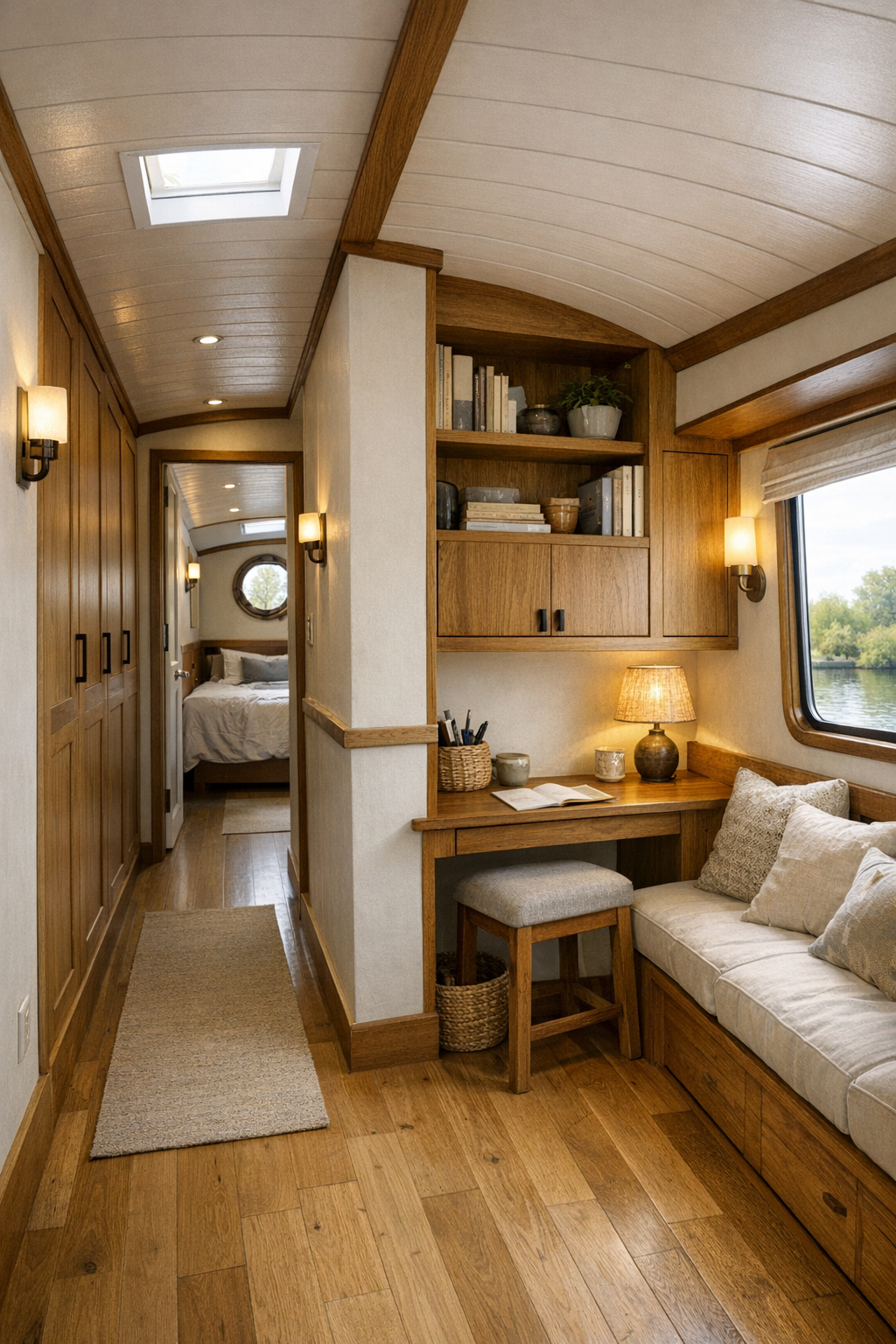
Beyond the main rooms, what gives this barge so much soul are the transitional spaces. The corridor is not treated as leftover square footage but as part of the experience, with carefully placed handrails, slim built-in storage, and warm wall lighting that guides the eye along the boat’s length. Near the entry, I can imagine a compact mudroom moment—just enough for coats, boots, and baskets—handled with the same tidy craftsmanship seen elsewhere. Even the wheelhouse or small sitting nook seems likely to have been considered as usable living space, not merely circulation.
These are the places where the design’s hospitality really comes through. A little desk by a window, a reading chair tucked into a corner, a bench with drawers beneath, perhaps a shelf for cookbooks or old river maps—none of it extravagant, all of it useful. On a floating home, every square foot has to earn its keep, and here it does so gracefully. The result is a house that feels complete rather than compressed, with thoughtful pauses and practical comforts stitched all the way through.
Why You'd Live Here
You’d live here because it offers something rare: character without inconvenience, and accessibility without sterility. Too often, practical design is treated as if it must be plain or joyless, but this home proves otherwise. It keeps the romance of life on the water—the changing reflections, the nearness of sky, the snugness of a well-made room—while making daily movement feel easy and natural. To my mind, that’s not just good design; that’s kindness built into the walls.
You’d also live here because it feels deeply human. It isn’t trying to impress with excess, and that’s part of its charm. Instead, it focuses on comfort, craftsmanship, and a rhythm of living that feels slower, simpler, and more attentive. I think many of us long for homes that support us gently and beautifully at once, and this Dutch barge does just that. It has the soul of an old vessel and the welcome of a beloved family kitchen, and that’s a combination mighty hard to resist.