
There is something about a craftsman home in a soft sage green that settles me the minute I see it. Even in the smaller footprint of a park model RV, this one carries the quiet dignity of an old Midwestern bungalow, with its honest lines, welcoming porch presence, and a palette that feels borrowed from summer fields after a gentle rain. As a concept design, it imagines just how much beauty and comfort can be gathered into a compact home without ever feeling pinched or overly clever.
What makes this home special to me is the way it honors tradition while making peace with modern living. It does not chase trends or show off. Instead, it leans into the things that have always mattered in a home: warm wood, useful built-ins, good light, sturdy finishes, and rooms that feel made for everyday life. I can almost picture a pie cooling by the window and a well-worn quilt folded over a chair, which is about the highest compliment I know to give a house.
Exterior
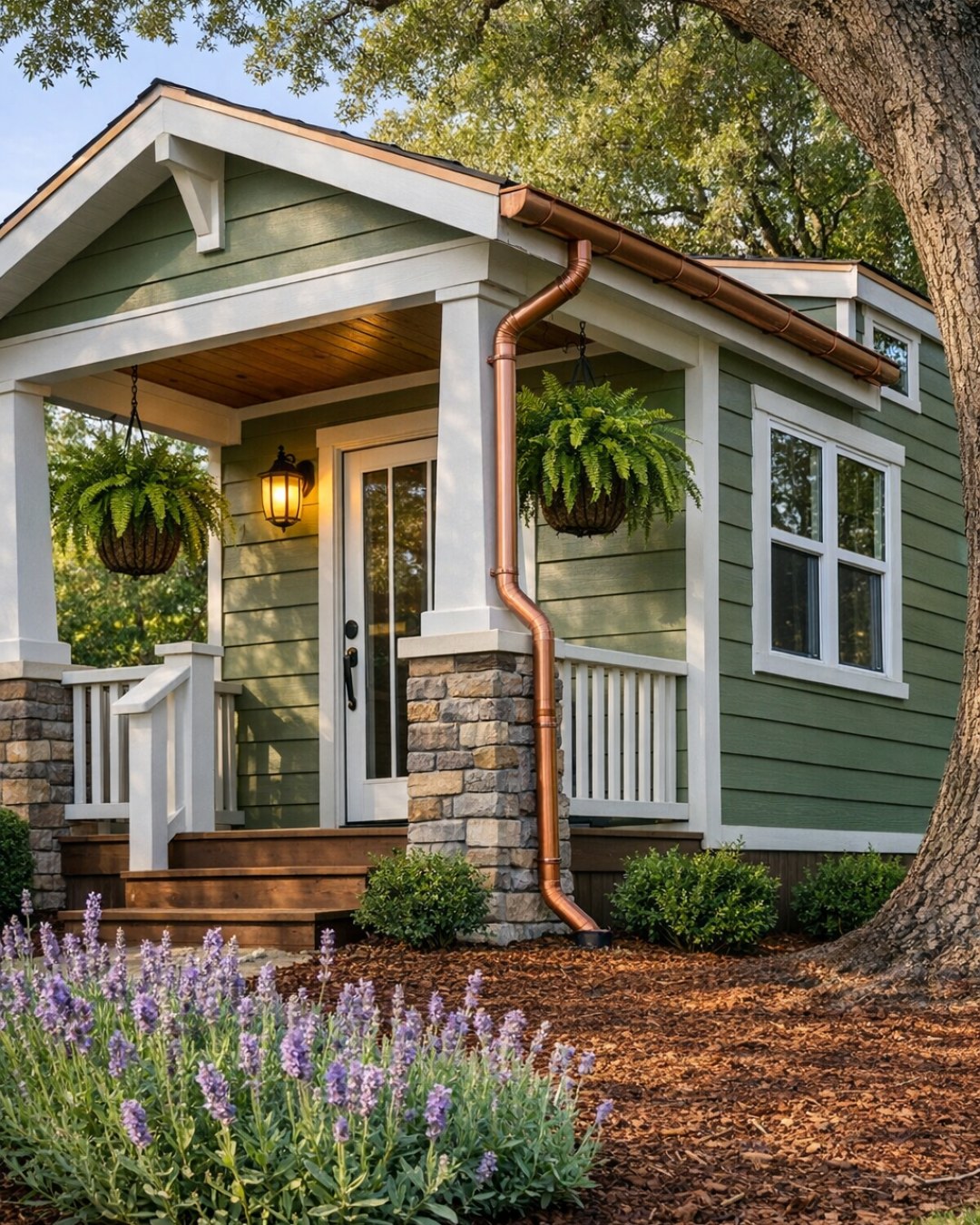
The exterior is full of craftsman character, scaled thoughtfully for park model living. The sage green siding gives the whole structure a calm, grounded feeling, while crisp cream trim outlines the windows and roofline with just enough contrast to keep it feeling fresh. Natural wood accents at the porch posts and front door bring in that hand-touched quality craftsman homes do so well, and the brackets and trim details add charm without becoming fussy. The roofline has a clean, practical silhouette, but there is still a sweetness to it, like a cottage built with real care.
I especially like how the materials work together to soften the RV format and make it read more like a true little home. A stone-look skirt or foundation treatment would give it a planted, permanent look, and black or oil-rubbed bronze fixtures would lend a touch of age and substance. Window boxes, porch lanterns, and a few rocking chairs would not feel out of place here. Altogether, the exterior promises exactly what I hope for before stepping inside: comfort, simplicity, and a bit of old-fashioned grace.
Living Room
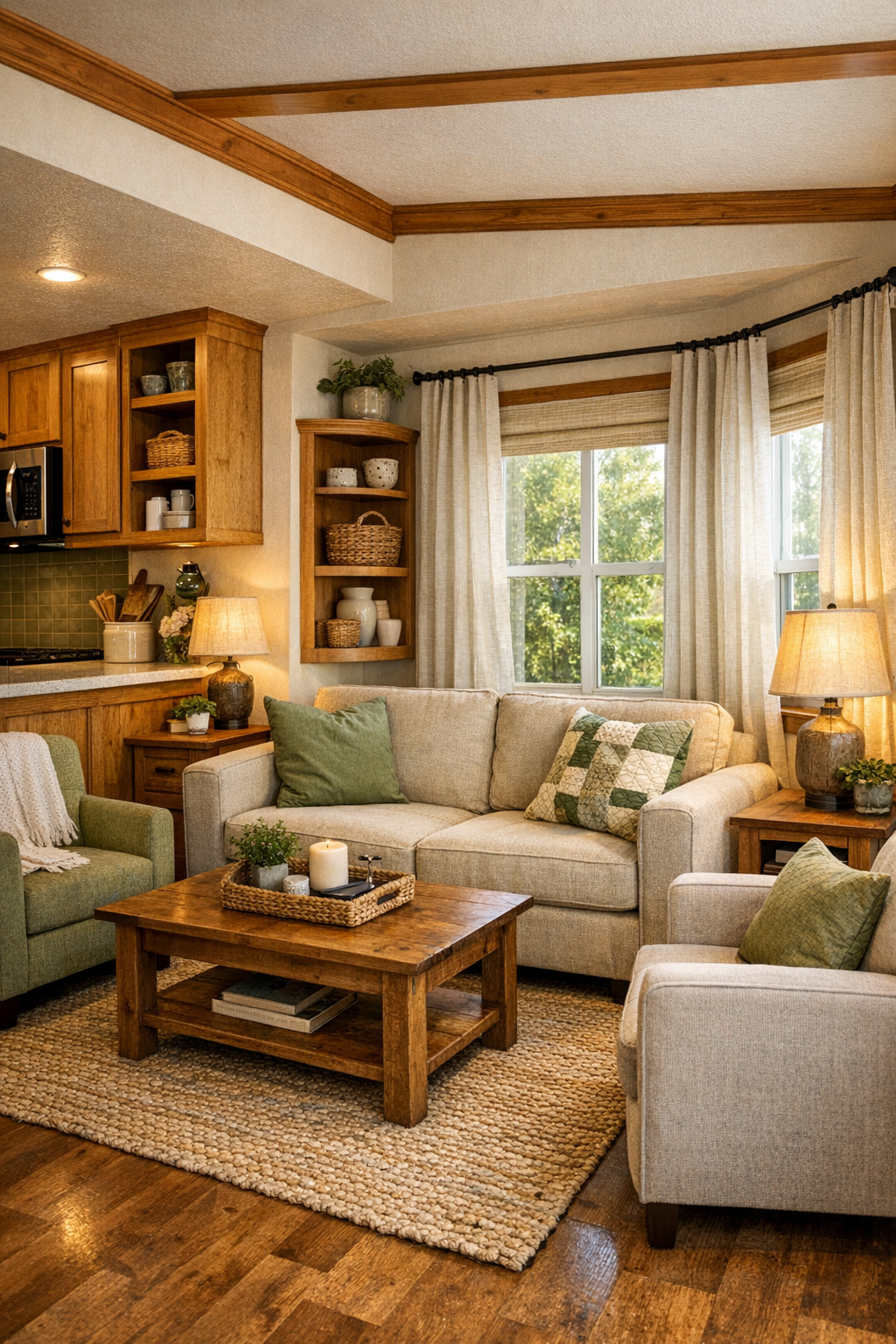
The living room is where this home’s craftsman soul really begins to show itself. I imagine walls in a warm creamy white or the palest putty, balanced by honey-toned wood trim and built-in shelving that looks as though it has always belonged there. Because the footprint is modest, the furniture would need to be chosen with care: a small upholstered sofa in oatmeal or faded olive, a pair of compact armchairs, and a sturdy wood coffee table with visible grain and softened edges. Nothing too sleek, nothing too formal. The room should feel collected, useful, and ready for a long visit.
Lighting would do a great deal of the heavy lifting here. A pair of shaded sconces, a simple ceiling fixture with craftsman lines, and the natural light from well-placed windows would keep the room bright without stripping away its coziness. I would want texture everywhere the eye lands: woven baskets, linen drapery panels, a wool area rug underfoot, and maybe a quilt folded over the sofa arm. The layout likely opens gently toward the kitchen and dining area, which helps the whole home breathe. In a small space, that sense of visual generosity matters, and here it would feel calm rather than crowded.
Dining Room
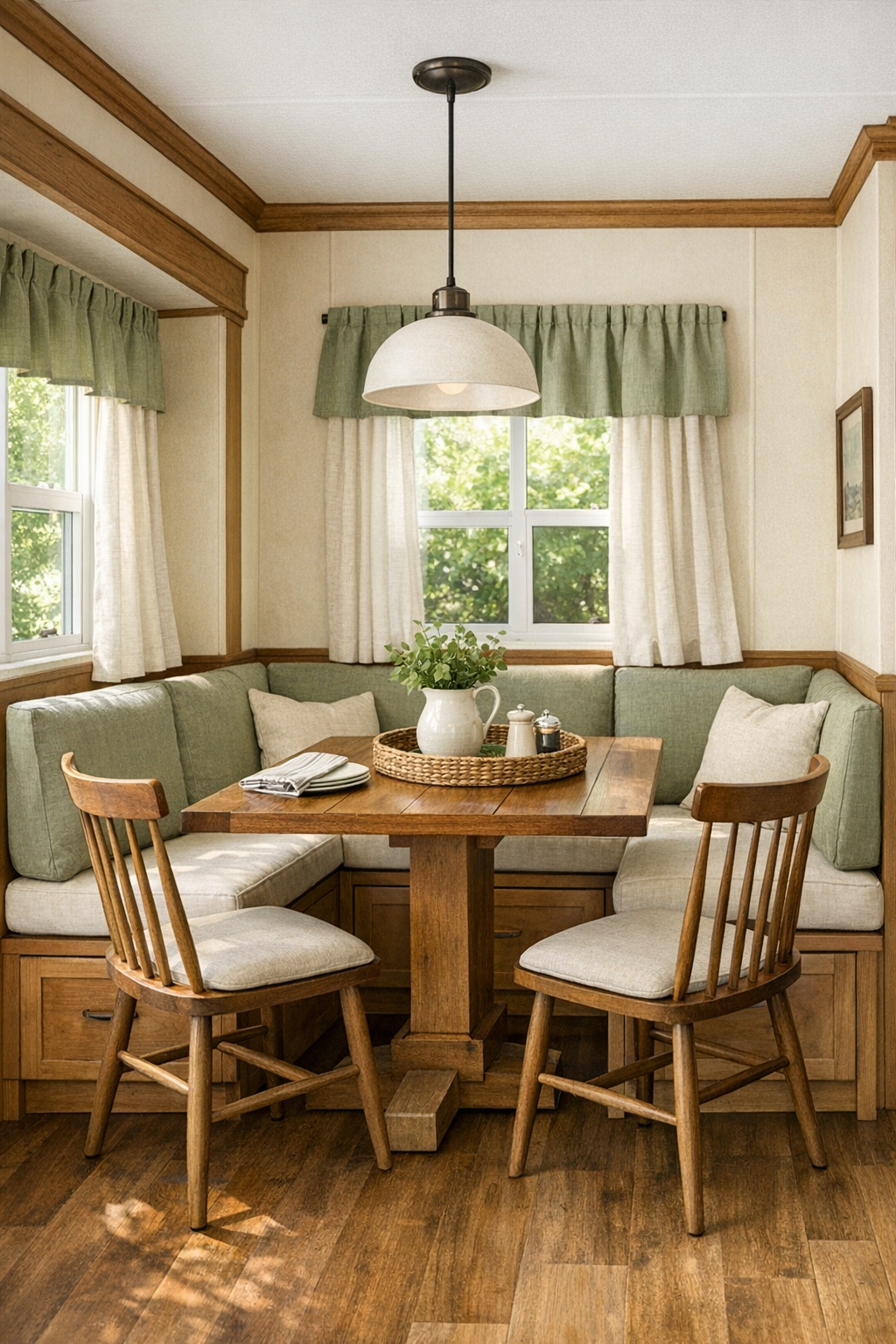
In a home like this, the dining area does not need to be grand to feel deeply inviting. I picture a built-in banquette tucked beside a window, painted in a muted olive or soft cream, with a solid wood table at its center and perhaps one or two spindle-back chairs completing the arrangement. That kind of seating is practical, space-saving, and wonderfully nostalgic. It reminds me of family kitchens where someone was always shelling peas, writing a grocery list, or pouring one more cup of coffee. The scale would be intimate, but the design would make it feel generous.
The finishes are what keep the room from feeling too plain. A simple pendant in milk glass or aged bronze overhead would cast a warm pool of light in the evening, while striped seat cushions or small floral prints could lend a lived-in softness. I would love to see wood wainscoting or trim nearby to tie it back to the craftsman language of the rest of the house. Even if this dining area shares space with the kitchen, it should still feel defined, like a proper place to sit down and linger over supper instead of just passing through.
Kitchen
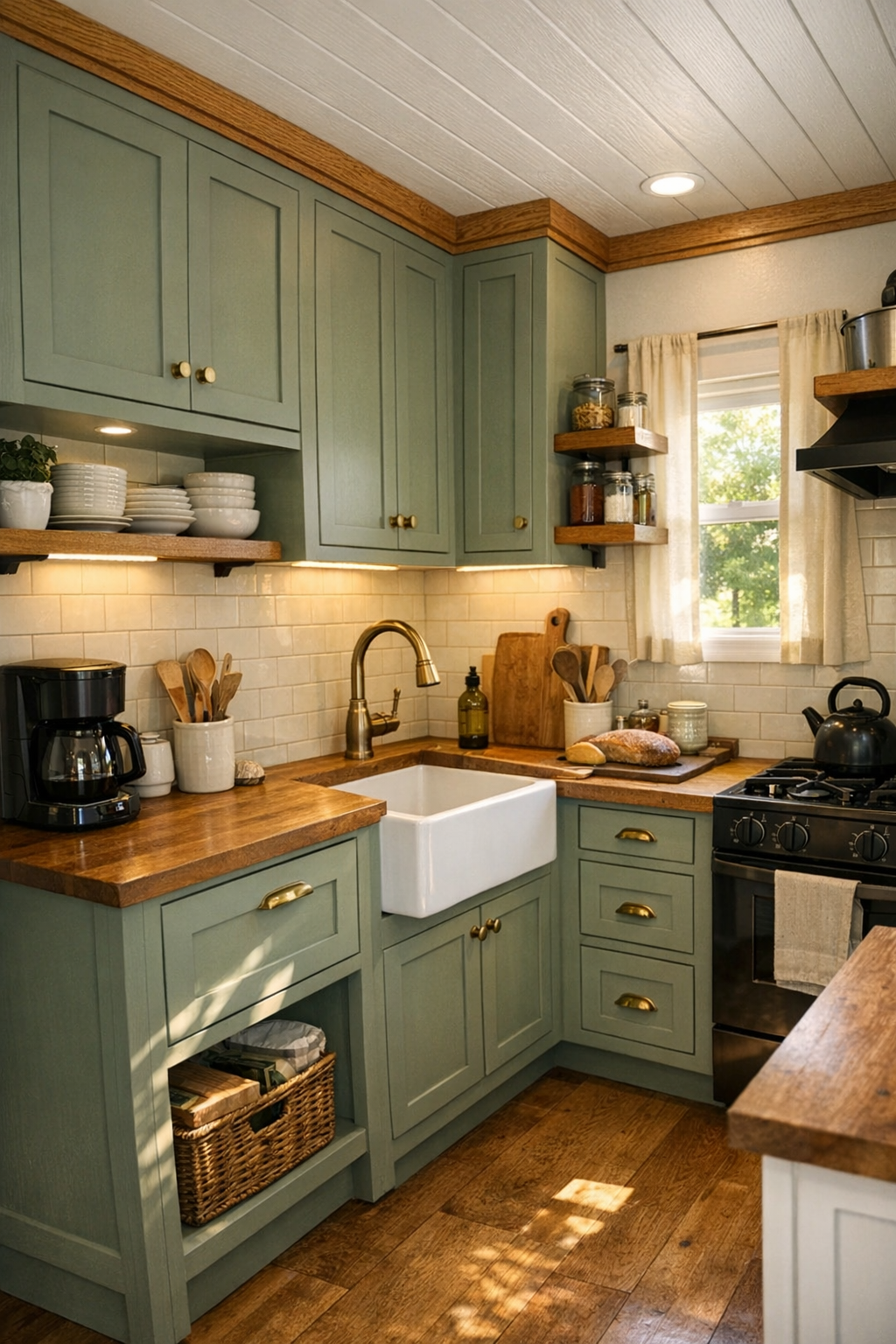
The kitchen is likely the heart of this little home, and I say that as a woman who has spent most of her life believing the kitchen tells the truth about how a house really lives. Here, I imagine shaker-style cabinetry in a soft sage or warm cream, paired with butcher block counters or a lightly veined quartz that mimics the gentle look of old soapstone. A farmhouse-inspired sink would be especially charming, though even a compact apron-front version would be enough to carry the feeling. Open shelves, if used sparingly, could hold everyday dishes and stoneware crocks without making the room feel busy.
Because the home is small, every inch should be both beautiful and hardworking. Under-cabinet lighting, drawers planned for actual cookware, and tall pantry storage would make the room efficient in the best possible way. I would want aged brass or matte black hardware, a simple tile backsplash in a creamy handmade finish, and wood floors continuing through the space to keep it connected to the rest of the interior. It is easy to imagine biscuits in the oven, soup on the stove, and morning light coming across the counters. That kind of kitchen does not just function well; it makes daily life feel richer.
Bedroom
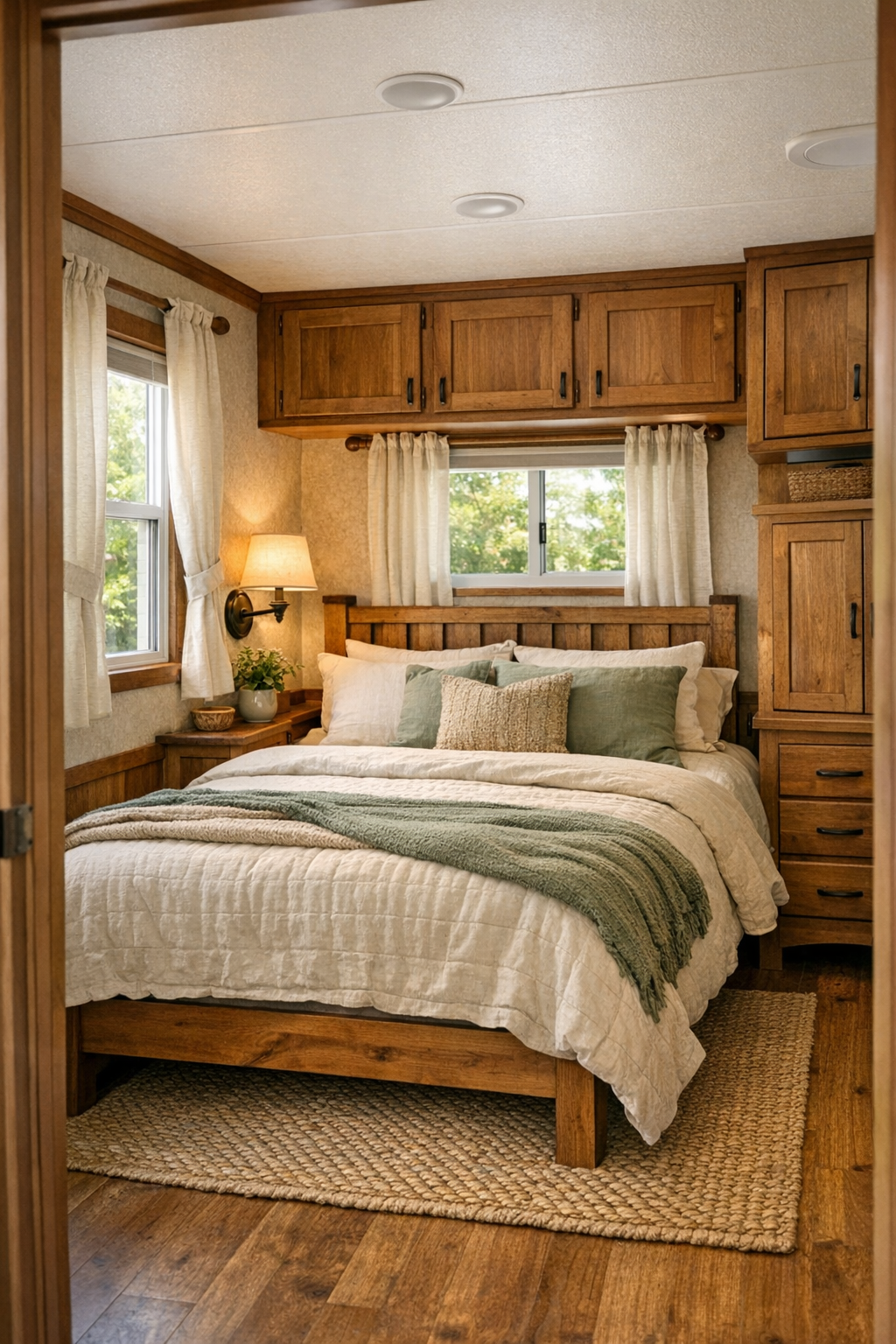
The bedroom would need to feel restful above all else, and I think this design would accomplish that through restraint. A bed framed in natural wood or painted a soft neutral would sit beneath windows dressed in light linen curtains, with bedding in layers of cream, sage, oatmeal, and perhaps a faded floral print. I would keep the furnishings simple: maybe a narrow nightstand, a small reading lamp, and built-in storage instead of too many freestanding pieces. In a room this size, clutter would spoil the mood in a hurry, so built-ins would be worth their weight in gold.
What I would hope for most is a sense of quiet. Soft wall color, warm wood, and gentle lighting can make even a compact bedroom feel like a retreat. A woven rug underfoot, beadboard or paneled detailing behind the bed, and a few carefully chosen hooks or shelves would add character without crowding the room. This is the sort of bedroom that would encourage early nights, open windows, and a good book before sleep. It would not need to be large to feel deeply comforting.
Bathroom
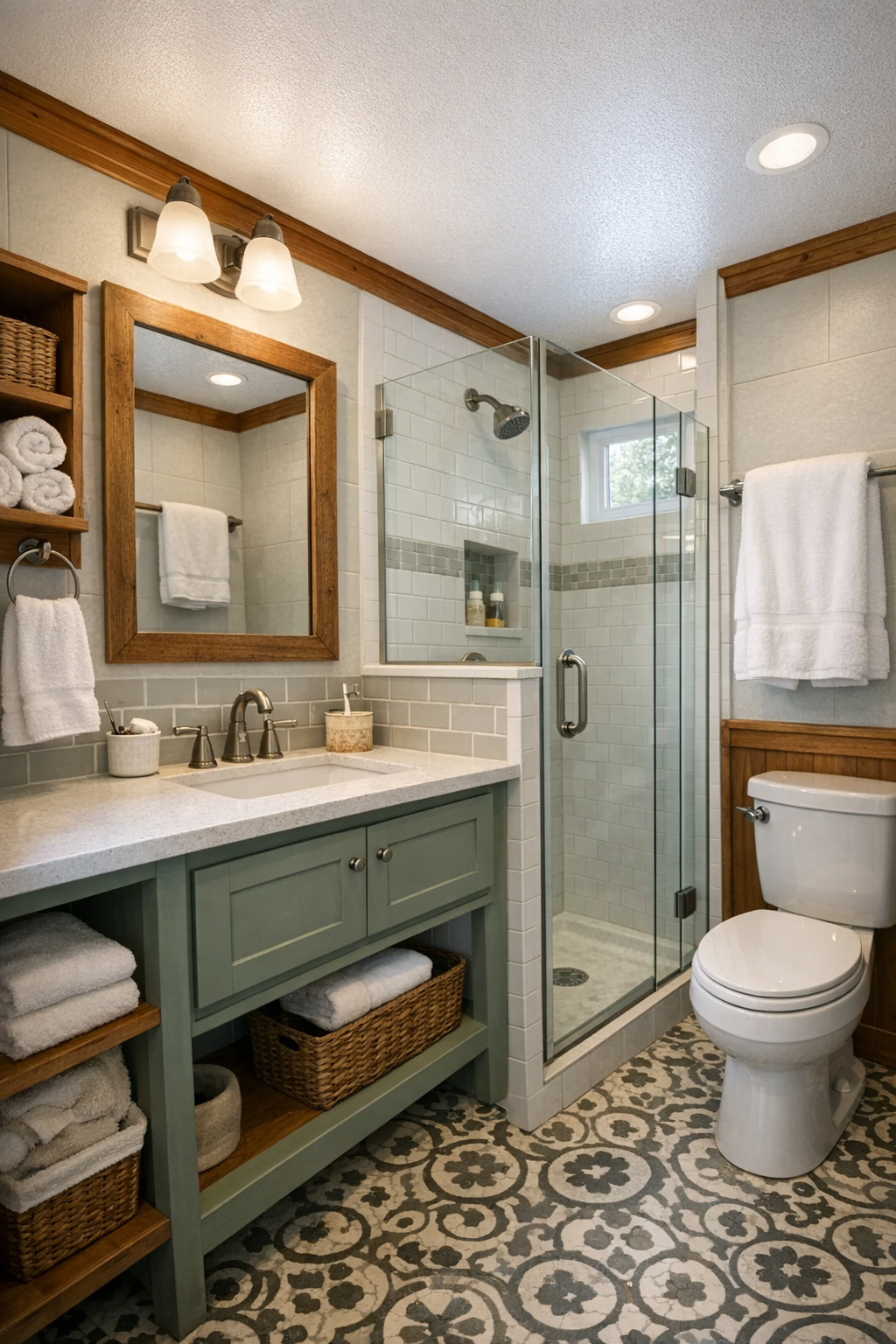
A well-designed bathroom in a small home is a blessing, and this one has every reason to be lovely. I imagine a vanity in painted wood, perhaps in a muted green-gray or creamy white, topped with a simple counter and a practical undermount sink. The mirror could be framed in wood to echo the rest of the home, and the lighting might come from a pair of sconces that cast a flattering, gentle glow. A walk-in shower with white or pale gray tile would keep the room feeling open, and a little pattern underfoot in a vintage-style floor tile would add just enough personality.
Good bathrooms make use of texture as much as color, and I would want that here. Matte tile, brushed metal fixtures, cotton towels, a small wooden stool, and perhaps beadboard detailing on the wall would give the room warmth that many RV bathrooms lack. Storage would be tucked thoughtfully wherever possible, because calm depends on order in a room like this. Altogether, it would feel fresh, tidy, and quietly polished, like a country inn bathroom scaled for everyday living.
Other Areas
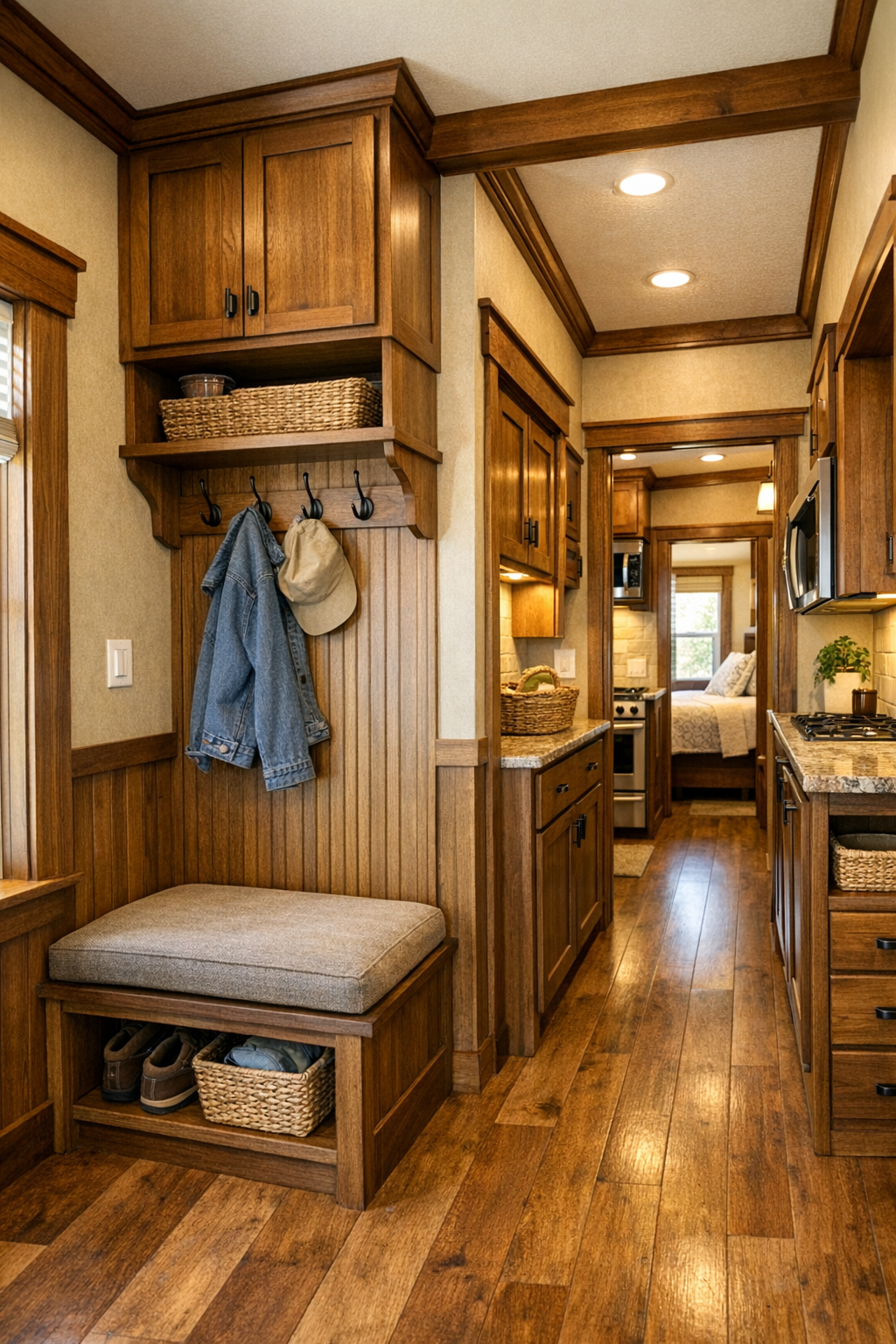
In a park model RV, the in-between spaces often matter just as much as the main rooms, and this design could make them feel purposeful rather than leftover. I think of a tidy entry with hooks for coats, a bench for slipping off muddy shoes, and overhead cabinetry that keeps daily necessities close at hand. If there is a loft, it could be charming indeed, with low ceilings, tucked-away beds or reading cushions, and little windows that make it feel like a treehouse for grandchildren. Hallways and transitions would likely be slim, but good trim work and consistent flooring could make them feel considered.
I would also expect this home to use built-ins beautifully: shelves fitted around doorways, drawers beneath seating, and narrow nooks turned into real storage. These are the details that separate a merely small home from one that feels wise. A stacked washer unit hidden behind paneled doors, a writing ledge by a window, or a little open shelf for cookbooks would all contribute to the sense that life has been truly planned for here. It is that practical graciousness I find so appealing, the kind that reminds me of older homes where every corner earned its keep.
Why You'd Live Here
You would live here because it proves small does not have to mean stark, disposable, or impersonal. This home wraps a compact footprint in the language of craftsmanship, warmth, and memory. The sage green exterior is gentle and inviting, and inside, every finish and furnishing choice seems to say that comfort is worth making room for. It respects the rituals of daily life, from cooking and gathering to resting and storing the things a household truly uses.
More than that, you would live here because it feels like home in the oldest and best sense of the word. It offers beauty without vanity, practicality without coldness, and charm without pretense. To my eye, that is a rare combination. In a world that often mistakes bigger for better, this little craftsman park model RV makes a finer argument: that a well-made home, however modest, can still take your breath away.