
There’s something instantly calming about a home that knows exactly what it wants to be, and this converted bus delivers that feeling from the first glance. Set in a soft countryside landscape and shaped by an off-grid mindset, it blends rustic warmth with clever modern restraint in a way I find incredibly appealing. The overall look is cozy but not cramped, practical but still full of charm, with natural wood tones, matte black accents, and layered textiles giving the whole space a collected, lived-in ease.
What makes this home especially memorable is how thoughtfully every inch has been used without ever feeling overly engineered, even as a concept design. I’m always drawn to interiors that support real daily routines, especially cooking, working, and winding down at the end of a long day, and this one feels designed around exactly that kind of balance. It has the romance of slow country living, but the layout is what really wins me over: everything is compact, efficient, and surprisingly beautiful.
Exterior

From the outside, the bus keeps its recognizable silhouette, but it’s been softened and elevated with a restrained palette that helps it sit naturally in the landscape. The body is finished in a muted sage-gray with warm cedar detailing around the entry and window frames, which gives it a custom, residential feel rather than a novelty look. A simple fold-out deck extends the living space outdoors, and I can easily imagine setting down a mug of coffee there in the morning while the fields are still quiet. Matte black hardware, practical exterior lighting, and a discreet roof setup for solar panels complete the off-grid story without making the home look too technical.
The styling outside is intentionally unfussy, which I think is exactly right for a countryside setting. A gravel pad, a few galvanized planters, and a compact wood storage bench keep the scene grounded and useful, while linen-toned outdoor cushions and a small bistro table add just enough softness. Even the windows seem carefully considered, positioned to bring in light while framing views across the land. The result is a tiny home exterior that feels both adventurous and settled, like it belongs to someone who values simplicity but still wants things to be beautiful.
Living Room
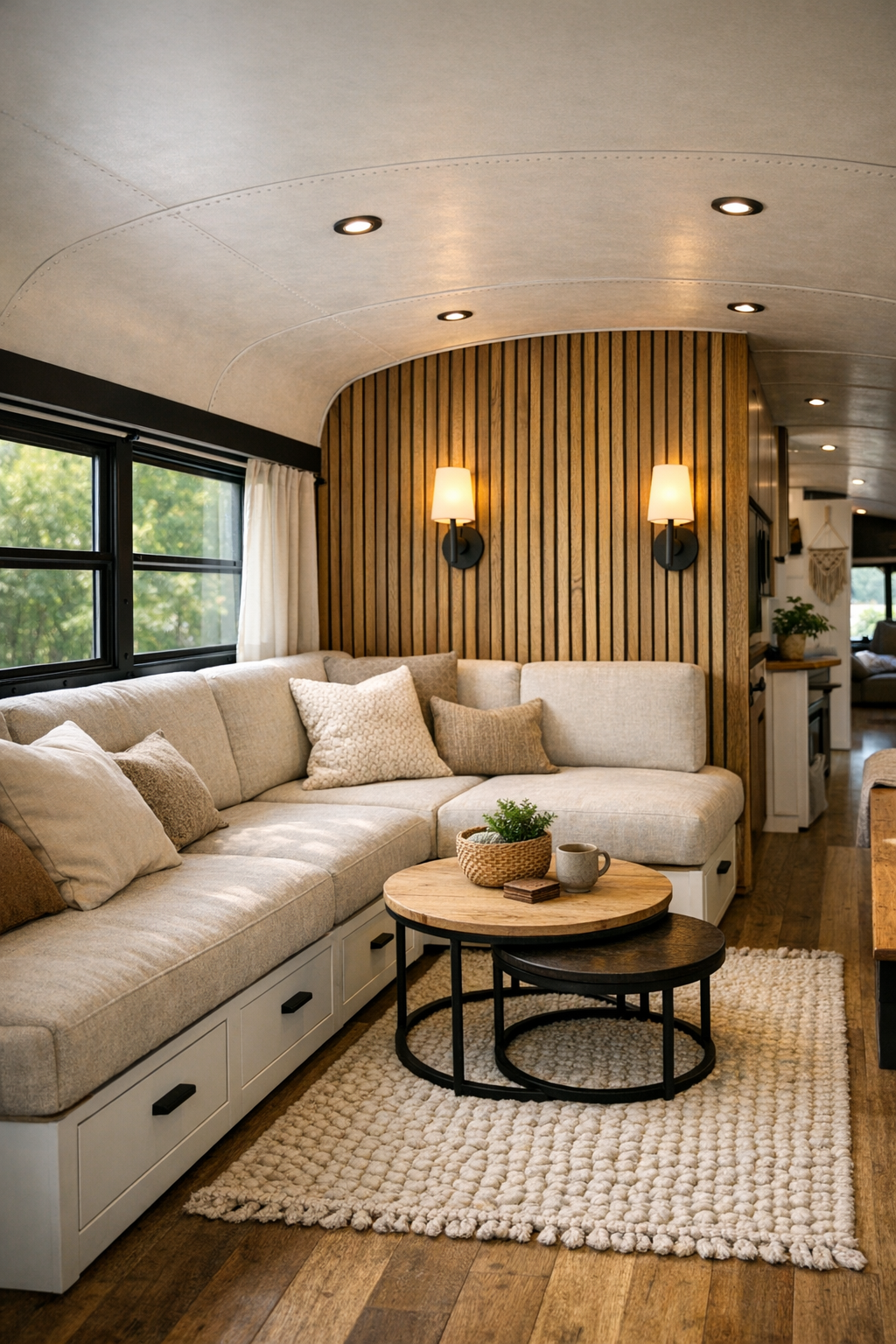
The living area is where the converted layout really starts to shine. Built along one side of the bus, a streamlined bench sofa in oatmeal-colored performance fabric provides generous seating without visually overwhelming the narrow footprint. Under-seat storage keeps everyday clutter tucked away, and a wall of vertical oak slats behind the sofa adds warmth, texture, and a subtle sense of architecture. I love how the palette stays light and grounded here: creamy upholstery, honey-toned wood, charcoal metal details, and a few deep green accents that connect the room to the landscape outside.
Because this is such a compact home, lighting and scale matter so much, and both have been handled beautifully. Slim wall sconces with opal glass globes free up surface space while casting a soft evening glow, and the large side windows make the whole room feel bigger than it is. A petite nesting coffee table, a woven wool rug, and a couple of linen throw pillows bring in just enough layering to make it feel comfortable without crowding the floor. It reminds me of the kind of room where I’d answer emails for a while, then shift straight into a cozy movie night without changing a thing.
Dining Room
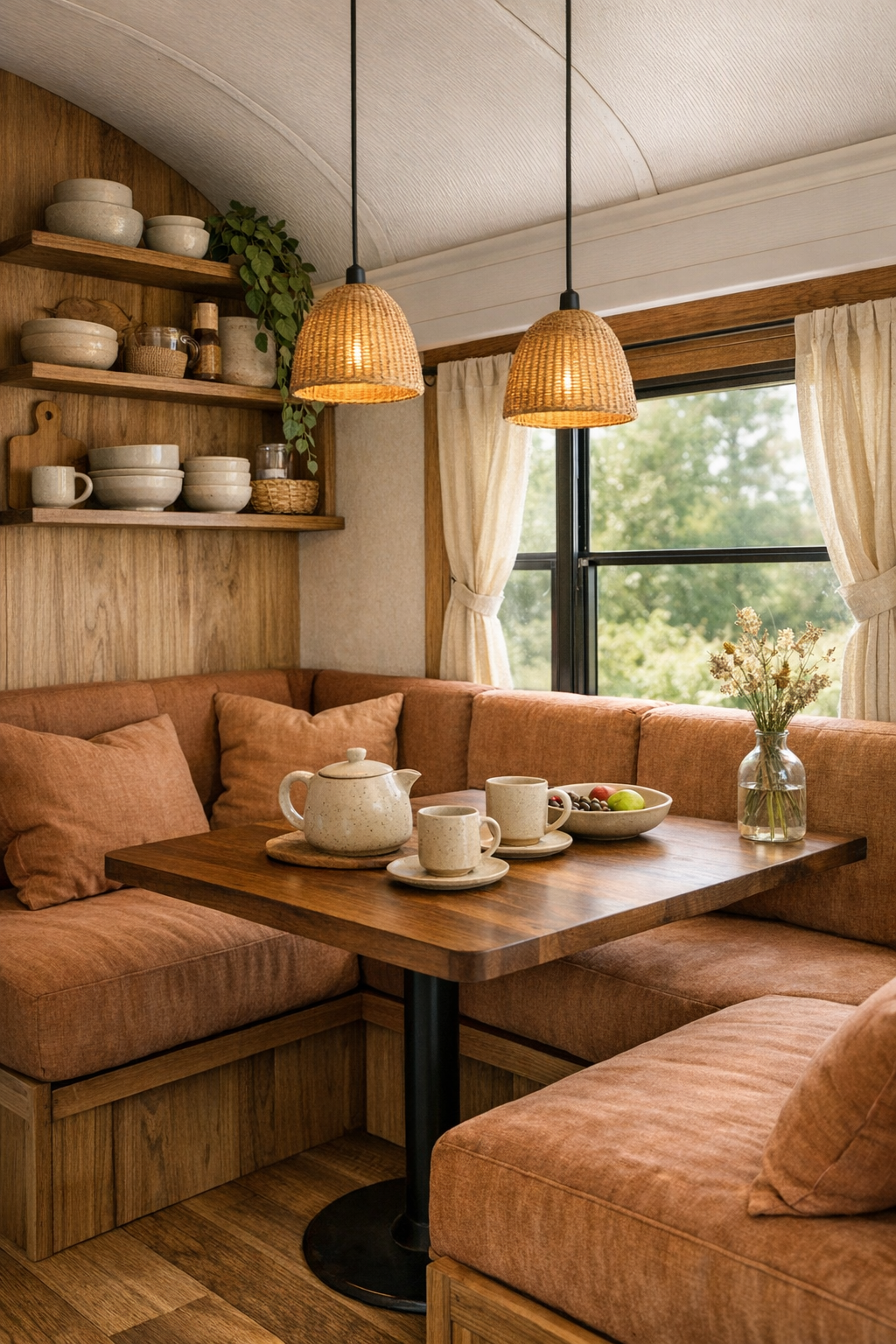
The dining space is integrated beautifully into the central portion of the bus, acting almost like the heart of the home. A built-in banquette wraps one side of a compact rectangular table, maximizing seating while keeping circulation open, and I can’t help appreciating that kind of practical planning. The upholstery is a warm clay-toned linen that adds a little color without overpowering the room, while the tabletop, finished in richly grained walnut, introduces a deeper note among the lighter woods. It’s intimate in the best way, the sort of spot that makes even a simple weeknight dinner feel intentional.
Above the table, a pair of small pendant lights with matte white shades bring focus downward and make the dining nook feel distinct from the living area. Open shelving nearby holds everyday ceramics, glass jars, and a few neatly stacked cookbooks, which gives the space personality while keeping it useful. I’m always thinking about how a home supports actual routines, and this is the kind of setup that would make meal prep, serving, and cleanup feel easy. Even in a narrow bus footprint, it manages to feel inviting enough for slow breakfasts and catch-up conversations at the end of the day.
Kitchen
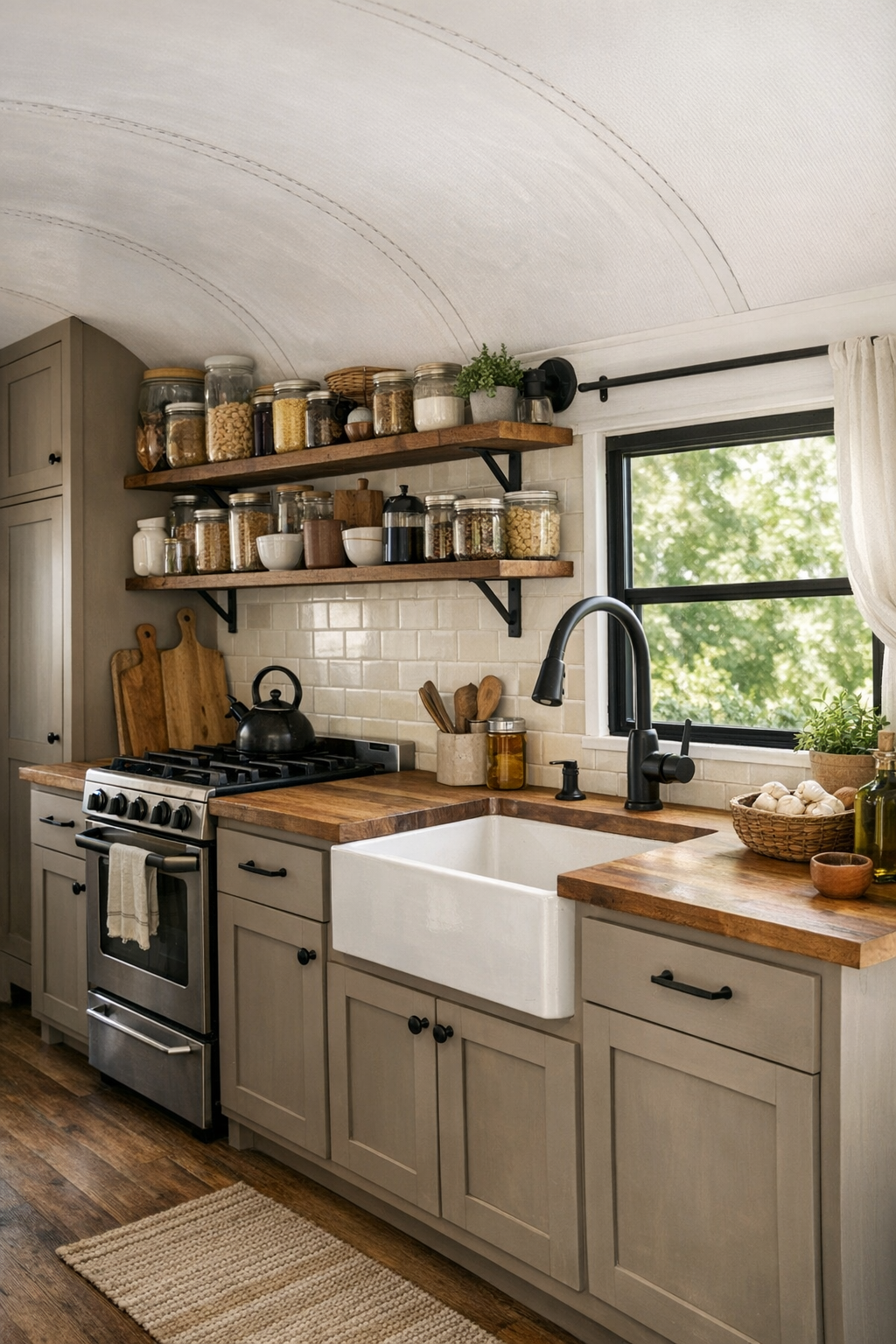
The kitchen is easily one of my favorite parts of the home because it proves that small-space cooking can still feel generous. One wall is lined with flat-front cabinetry in a warm mushroom tone, paired with butcher block counters and a creamy zellige-style backsplash that catches the light in a really lovely way. There’s a compact propane range, a deep farmhouse sink, and just enough prep space between them to make the workflow feel efficient. As someone who’s always thinking about what’s for dinner between meetings, I immediately notice how usable this layout is.
Upper shelving keeps the kitchen airy, with baskets, pantry jars, and everyday cookware displayed in a tidy but approachable way. A slim pull-out pantry and integrated drawer storage make the most of every inch, while black gooseneck fixtures and understated hardware add a crisp edge to the softer finishes. The windows do a lot of work here too, bringing in natural light that keeps the galley from feeling closed in. It’s a kitchen that seems made for real life: soup simmering on the stove, bread cooling by the window, and meal prep fitting neatly into a busy weekday.
Bedroom
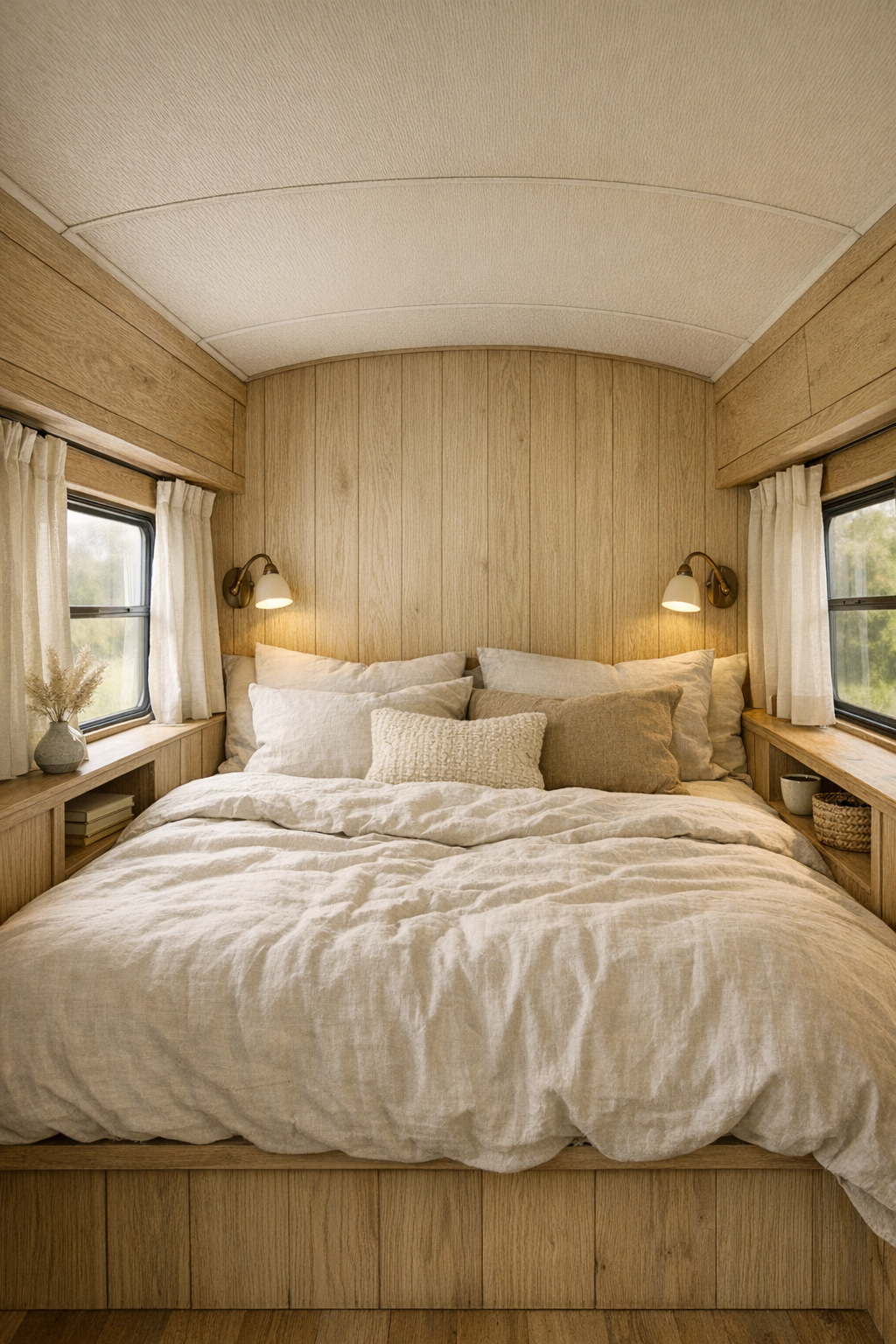
Tucked toward the rear, the bedroom feels surprisingly serene and private. The bed platform spans the width of the bus, creating a snug sleeping area framed by light oak paneling and soft neutral bedding. I like that the design doesn’t fight the compact dimensions but instead leans into them, using symmetry and simple materials to create calm. Built-in cubbies, reading lights, and drawers beneath the bed make the room highly functional, while a muted palette of ivory, flax, and weathered wood keeps it restful.
There’s also a lovely sense of retreat here that balances the bus’s more hardworking zones. Small windows on either side of the bed let in daylight without sacrificing the cocoon-like mood, and linen curtains add softness and privacy. A narrow ledge for books, a ceramic vase, or even just a glass of water makes the space feel considered down to the last detail. It has that clean, uncluttered feeling I always crave in a bedroom, especially after a packed week when I just want everything around me to feel quiet and easy.
Bathroom
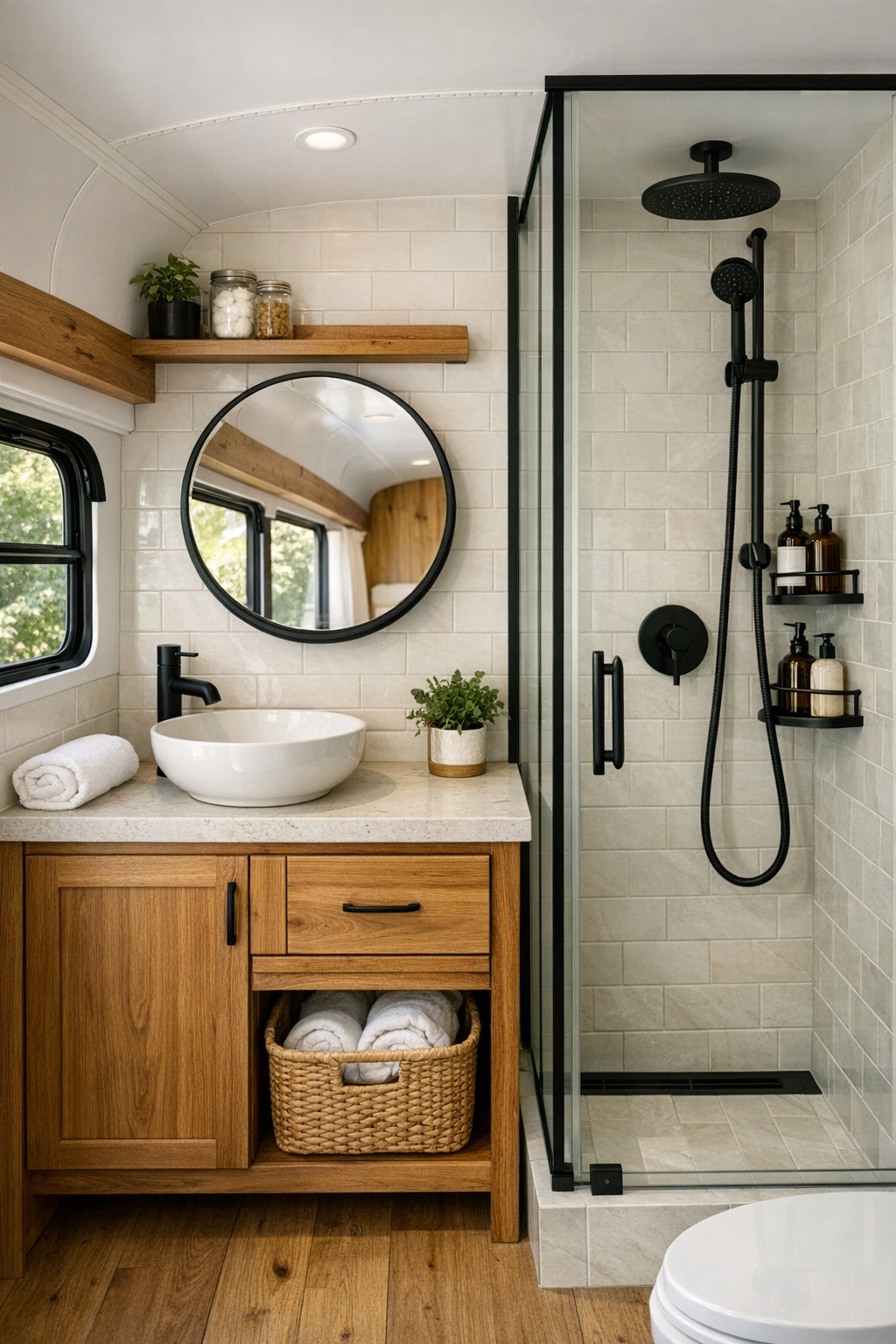
The bathroom is compact, but it’s handled with a level of material warmth that makes it feel much more elevated than purely utilitarian. A small vanity in natural wood is topped with a pale stone surface, and a round mirror helps soften the tighter geometry of the space. The walls are finished in a mix of vertical wood cladding and light tile, which keeps the room feeling bright while still tying it back to the rest of the bus. Every finish choice seems aimed at making the smallest room in the home feel calm, clean, and easy to maintain.
The shower area is especially well done, with black fixtures, clear glass, and subtle built-in niches that avoid visual clutter. I also appreciate the practical touches: hooks exactly where you’d want them, hidden storage for toiletries, and enough contrast in the materials to define each zone without chopping up the space. A small window brings in natural light, which is always a game changer in bathrooms, especially in tiny homes. It feels simple, efficient, and polished, with none of that improvised feeling compact bathrooms sometimes have.
Other Areas
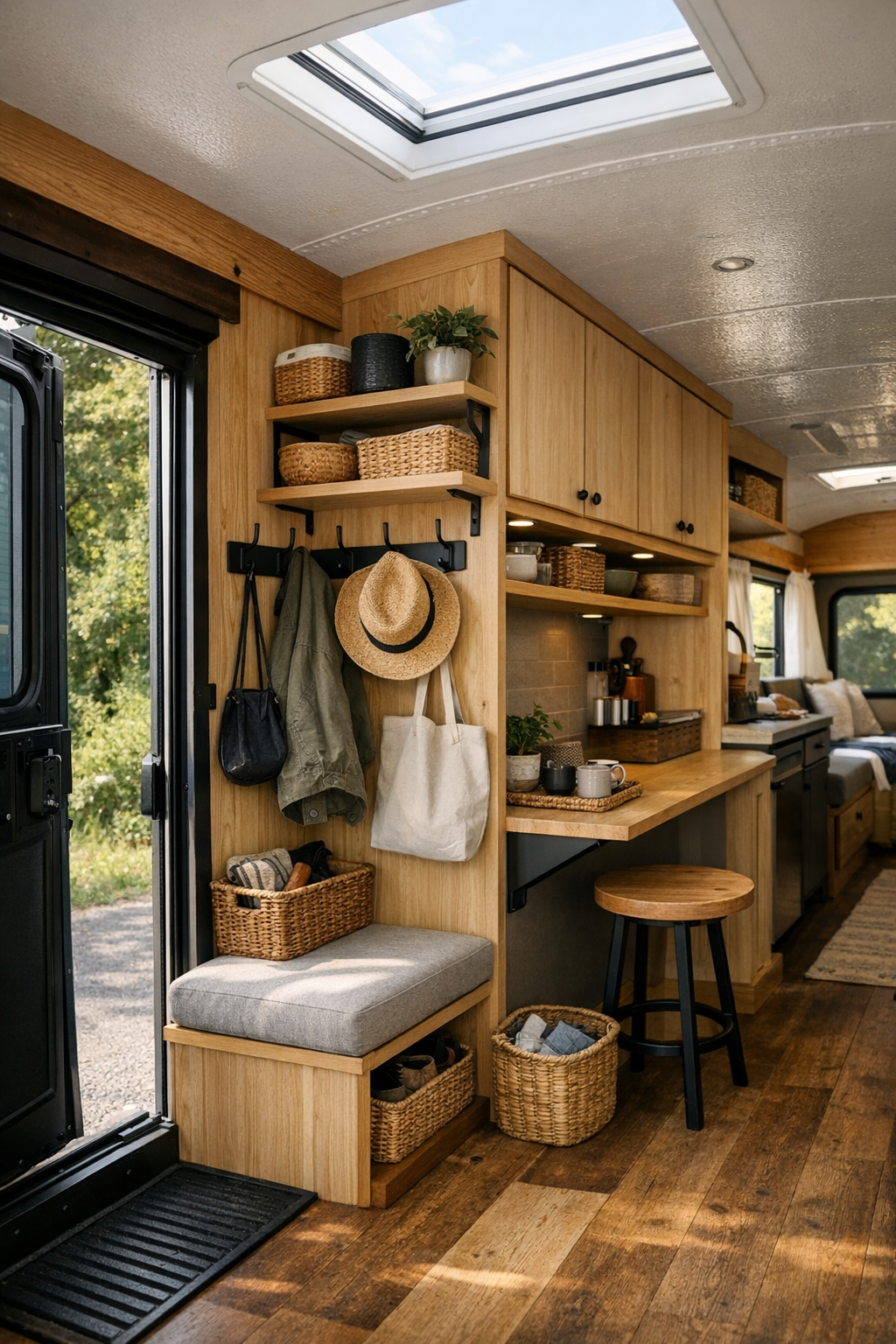
What really sells this home for me are the transitional and multifunctional zones that make daily life run smoothly. Near the entry, there’s a smart drop zone with hooks, a bench, and concealed storage for shoes, outerwear, and everyday gear, which is one of those details that matters so much in a small home. Overhead cabinetry follows the curve of the bus roofline, turning awkward space into useful storage while maintaining a seamless built-in look. Even the circulation path feels intentional, with enough openness to move comfortably from one zone to the next.
There’s also a compact workspace tucked into an underused corner, with a slim desk surface, a stool, and shelving above for supplies or pantry overflow. I can picture this spot doing double duty all the time, from paying bills to planning meals for the week, which honestly feels very realistic to me. Skylights and carefully placed windows keep these smaller areas from fading into the background, and the consistent palette ties everything together beautifully. It’s proof that in a well-designed small home, the in-between spaces can be just as important as the main rooms.
Why You'd Live Here
This home makes a strong case for living with less without giving up comfort, beauty, or daily function. What I find most compelling is how it turns a narrow bus shell into a home that supports cooking, resting, hosting, working, and simply slowing down. The off-grid setup adds independence, but it’s the design choices, the warm materials, the clear layout, and the thoughtful storage, that make it feel genuinely livable rather than just clever.
If you’ve ever wanted a home that encourages a simpler rhythm while still feeling polished and personal, this one would be hard to resist. It has the kind of charm that feels approachable instead of precious, and every area seems designed to make everyday routines easier. For me, that’s always the real test of a beautiful space: not just whether it photographs well, but whether you can imagine yourself happily making dinner, folding laundry, reading before bed, and doing ordinary life there every single day.