
I’m always drawn to homes that feel smart and welcoming at the same time, and this chestnut brown accessible container home absolutely nails that balance. From the outside, it has that clean, modern geometry container architecture does so well, but the warm finish softens everything and makes it feel grounded, almost cozy before you even step inside. Set in a calm suburban landscape with simple planting and easy paths, the whole place gives off an unfussy, lived-in mood that I love.
What makes this home especially memorable is how accessibility is treated as part of the beauty rather than an afterthought, and in this concept design, that approach feels refreshingly natural. The layout is open without feeling empty, the materials are durable but still polished, and every room seems designed to make daily life smoother, whether you’re hosting family, meal-prepping for the week, or just trying to get through a busy Tuesday with a little more ease.
Exterior
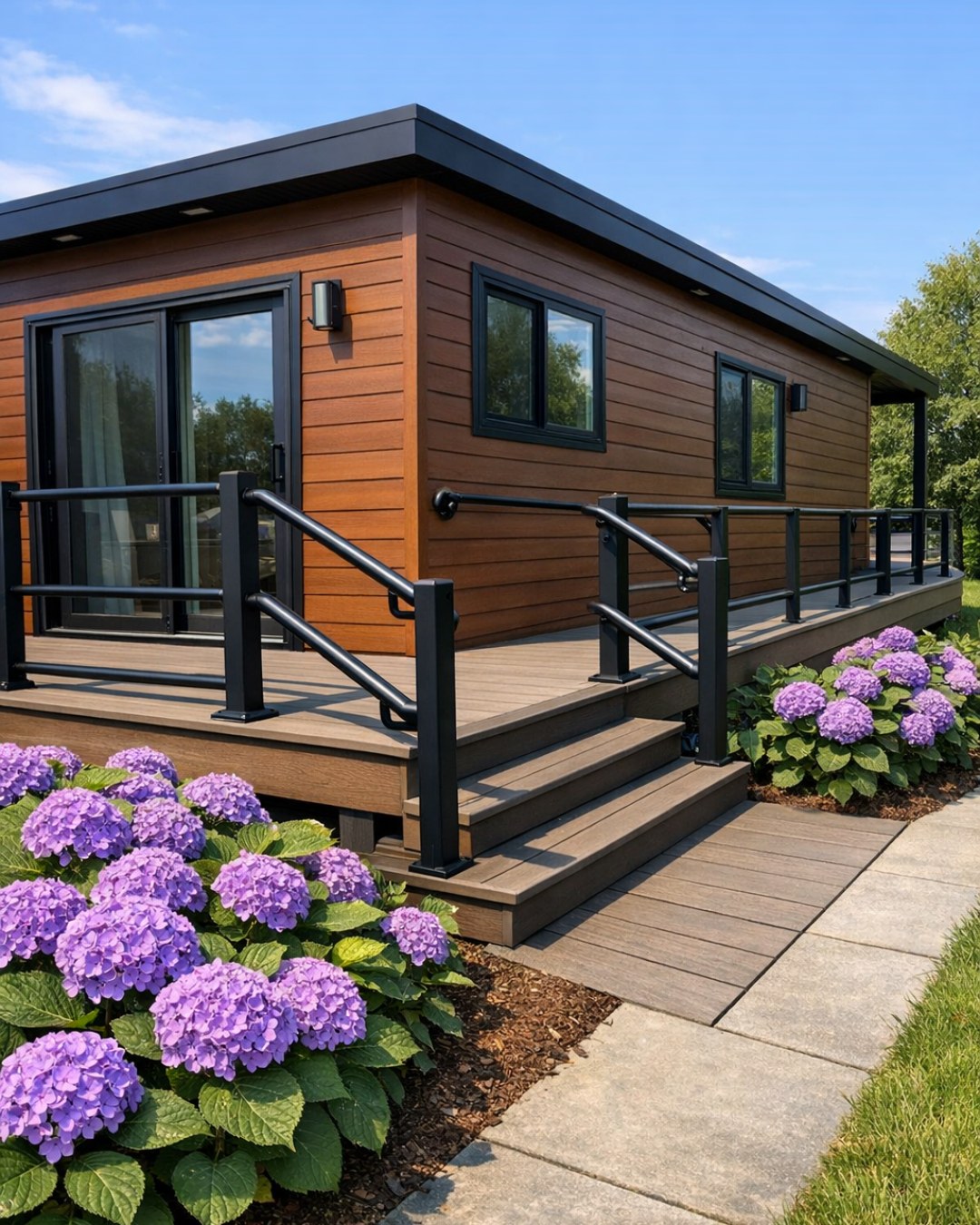
The exterior leans into the container structure in a really confident way, with chestnut brown cladding that highlights the long horizontal lines while adding a rich, earthy warmth. Black-framed windows sharpen the silhouette, and the contrast keeps the home feeling contemporary instead of rustic. I like that the entrance is easy to read from a distance, with a wide approach, low-profile landscaping, and a gently graded path that feels seamless rather than clinical.
There’s also a thoughtful simplicity to the materials palette outside. Smooth metal, stained wood accents, concrete pavers, and matte black hardware all work together to create a look that’s tidy and durable. Nothing feels overly decorative, which honestly suits the style. It’s the kind of exterior that promises low maintenance and easy living, and as someone who appreciates anything that makes life run a little more smoothly, I find that very appealing.
Living Room
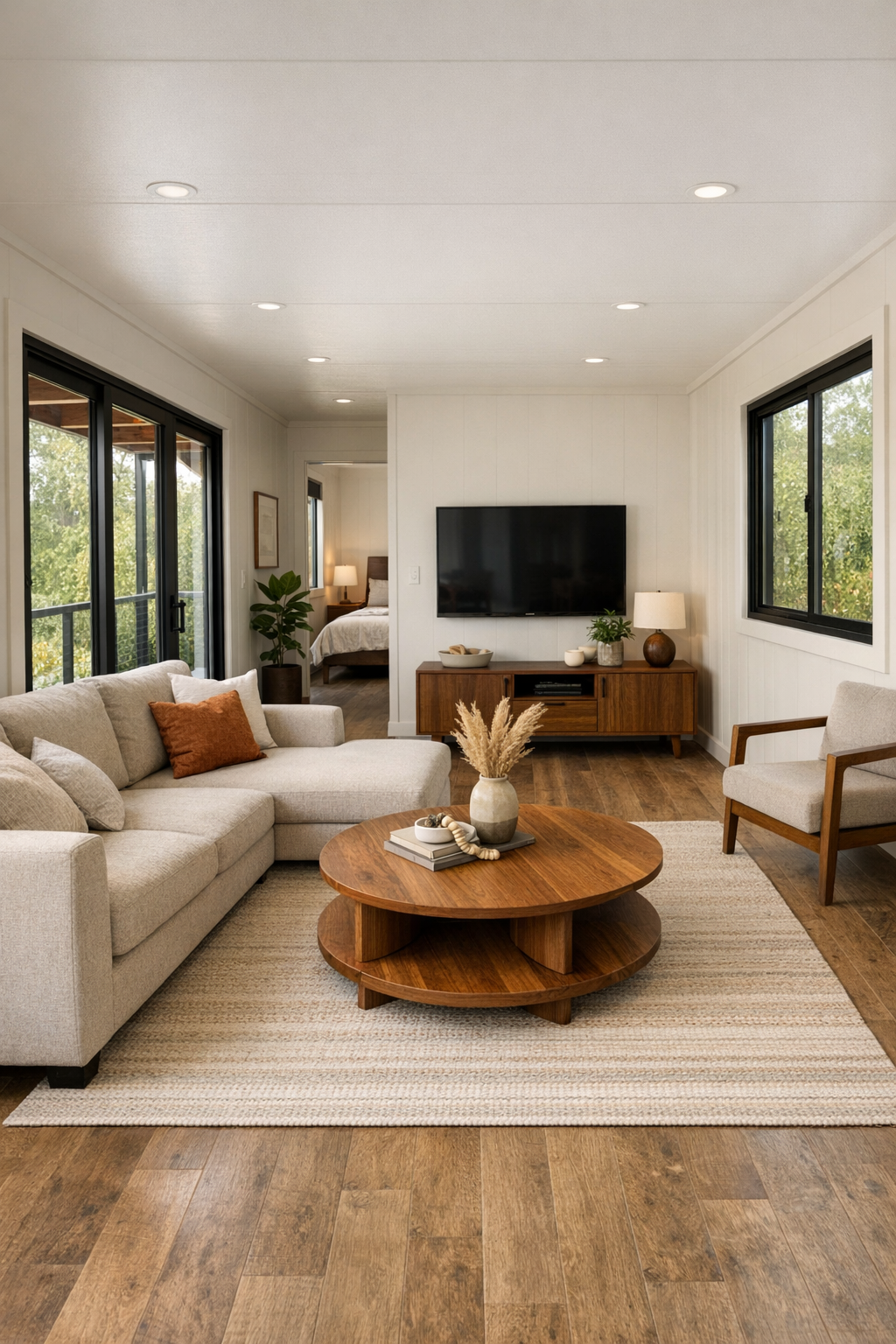
The living room opens up with a sense of ease that immediately stands out. Wide circulation paths, flush flooring transitions, and a furniture layout that never feels cramped make the room feel generous even within the compact footprint. A soft oatmeal sectional anchors the space, paired with a rounded wood coffee table and a low media console in walnut. The chestnut tones from the exterior echo subtly inside, which helps the whole home feel cohesive.
What I really love here is the mix of comfort and clarity. The walls are kept a warm white, letting natural light bounce across the room, while textured throws, woven pillows, and a flatweave rug add softness without creating visual clutter. Recessed ceiling lights keep things bright and practical, and a floor lamp near the seating area adds a nice pool of evening light for reading or unwinding after work. It feels like a room where you could host friends for soup and wine one night, then fold laundry and answer emails the next morning without missing a beat.
Dining Room
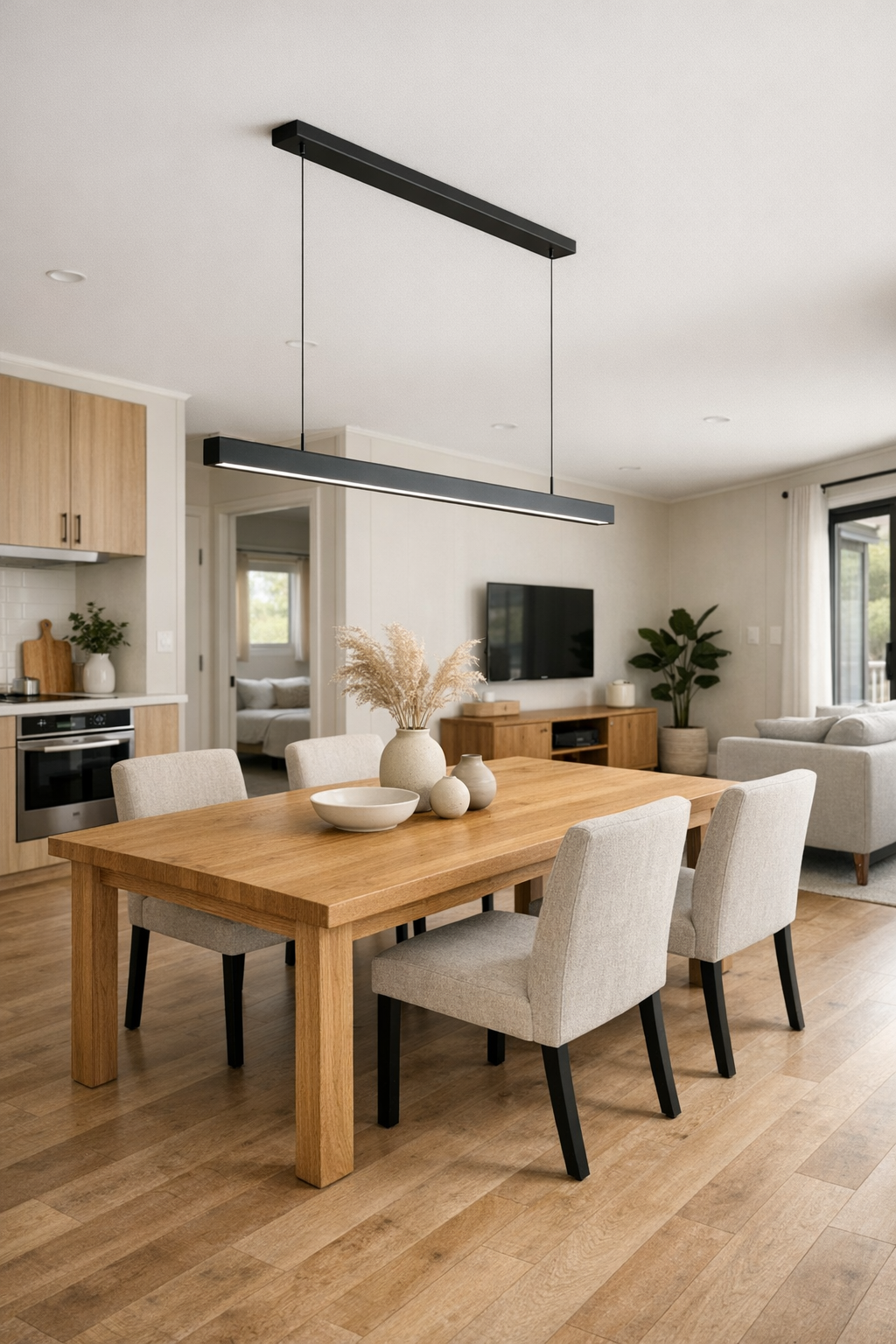
The dining area is integrated beautifully into the open main living space, but it still feels distinct thanks to lighting and furniture choice. A rectangular dining table in medium-toned oak sits comfortably in the center, surrounded by supportive upholstered chairs with streamlined arms and enough spacing to move around easily. I can instantly picture weeknight dinners here, or a Sunday afternoon spent assembling meals for the week while someone else sets out snacks and catches up on life.
Above the table, a simple linear pendant in matte black gives the area definition without blocking sightlines. The palette stays calm with soft beige textiles, natural wood grain, and a few ceramic accessories in sandy gray and cream. The room doesn’t rely on heavy styling tricks, which I think is part of its charm. It feels intentional, approachable, and easy to keep looking good even when life gets busy.
Kitchen
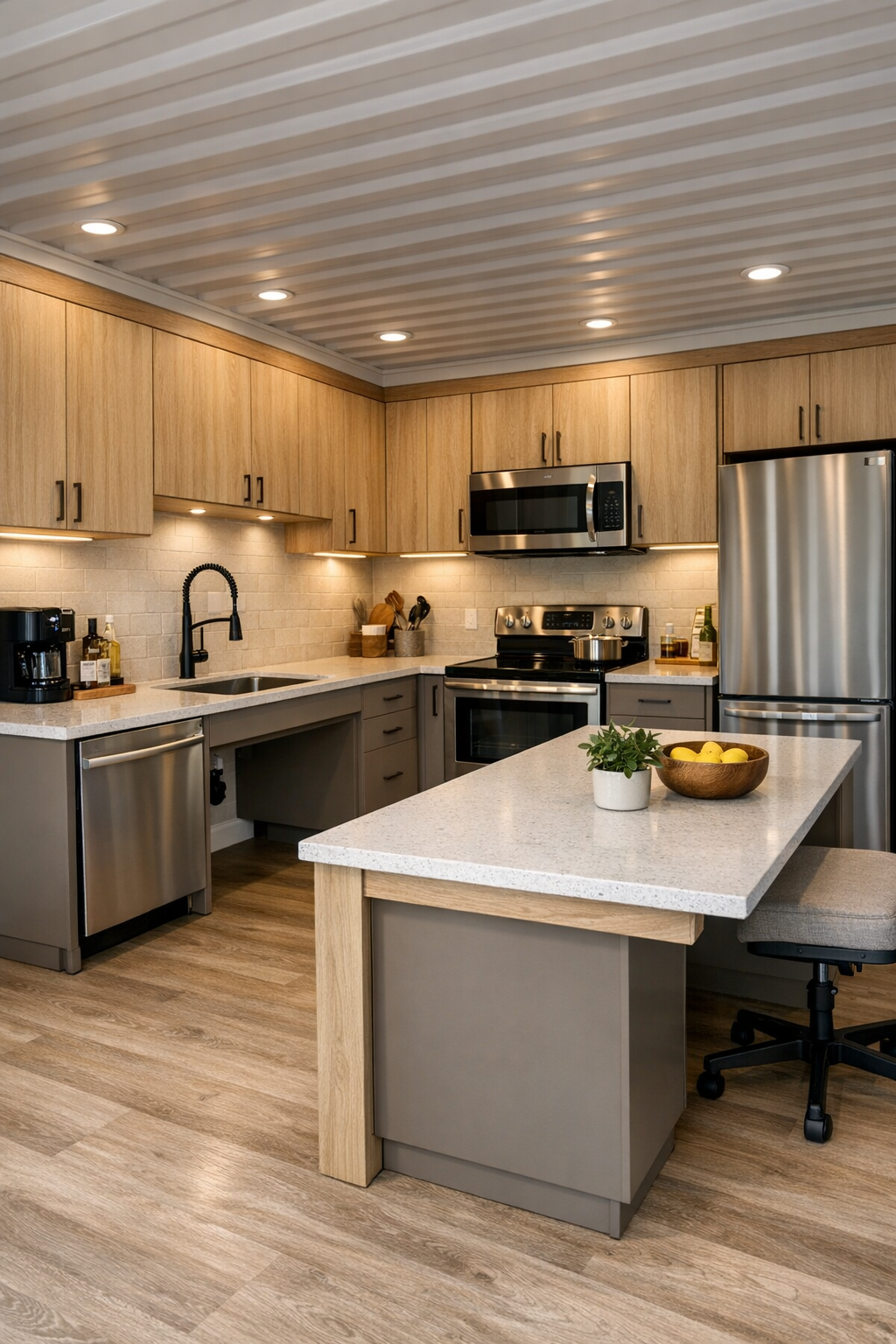
If I’m being honest, the kitchen is the room that won me over most. It’s designed with real daily use in mind, and as someone who is always thinking about what’s for dinner and how to prep ahead, I notice that immediately. The cabinetry is a beautiful mix of smooth taupe lower cabinets and lighter wood uppers, with long black pulls that are easy to grasp and visually crisp. Quartz countertops in a soft stone tone keep everything bright, and the backsplash is done in elongated matte tile that adds just enough texture.
The layout is especially strong: generous turning space, wide passages, easy-to-reach storage, and an island that works for prep, serving, or a quick breakfast without crowding the room. Under-cabinet lighting adds clean task illumination, and integrated appliances keep the lines neat. I also love the little practical details, like open shelf moments for everyday bowls and jars, which make the kitchen feel personal rather than showroom-perfect. This is the kind of space that could handle a big batch-cooking session on a Sunday and still look calm by Monday morning.
Bedroom
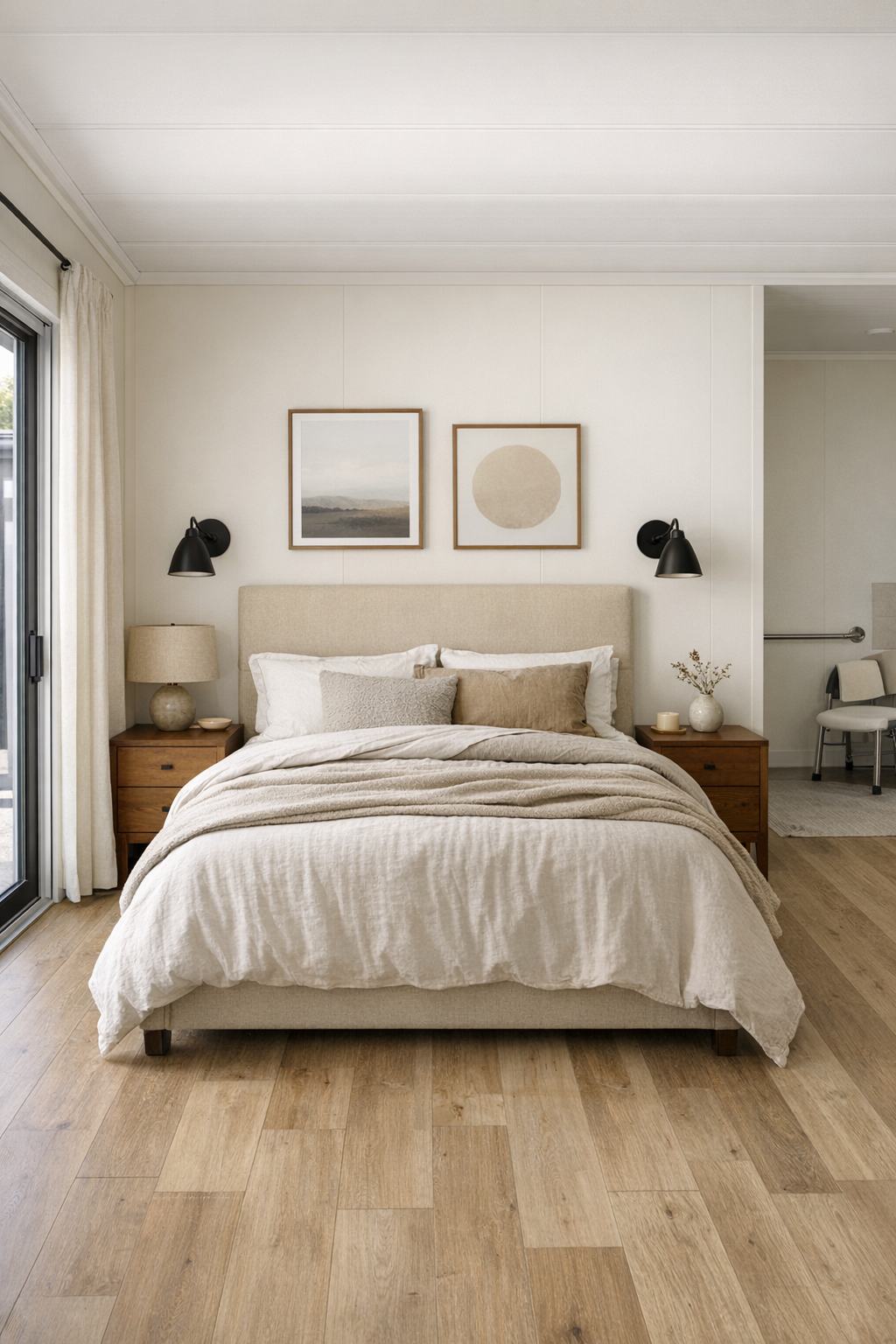
The bedroom takes a quieter turn, and I think that shift is exactly right. The palette softens into layered neutrals: creamy walls, a padded headboard in warm beige, chestnut wood nightstands, and bedding in shades of ivory, flax, and muted clay. It feels restful without becoming bland. There’s enough contrast from black reading sconces and slim window frames to keep the room visually grounded, but the overall impression is calm and unhurried.
Functionally, the room is just as thoughtful as the shared spaces. There’s ample clearance around the bed, easy access to storage, and a layout that avoids awkward pinch points. I appreciate that the design doesn’t sacrifice comfort for practicality. A soft area rug underfoot, blackout drapery layered with light-filtering shades, and simple art above the bed make it feel complete. It’s the sort of bedroom that encourages an earlier bedtime, which, honestly, always sounds like luxury to me.
Bathroom
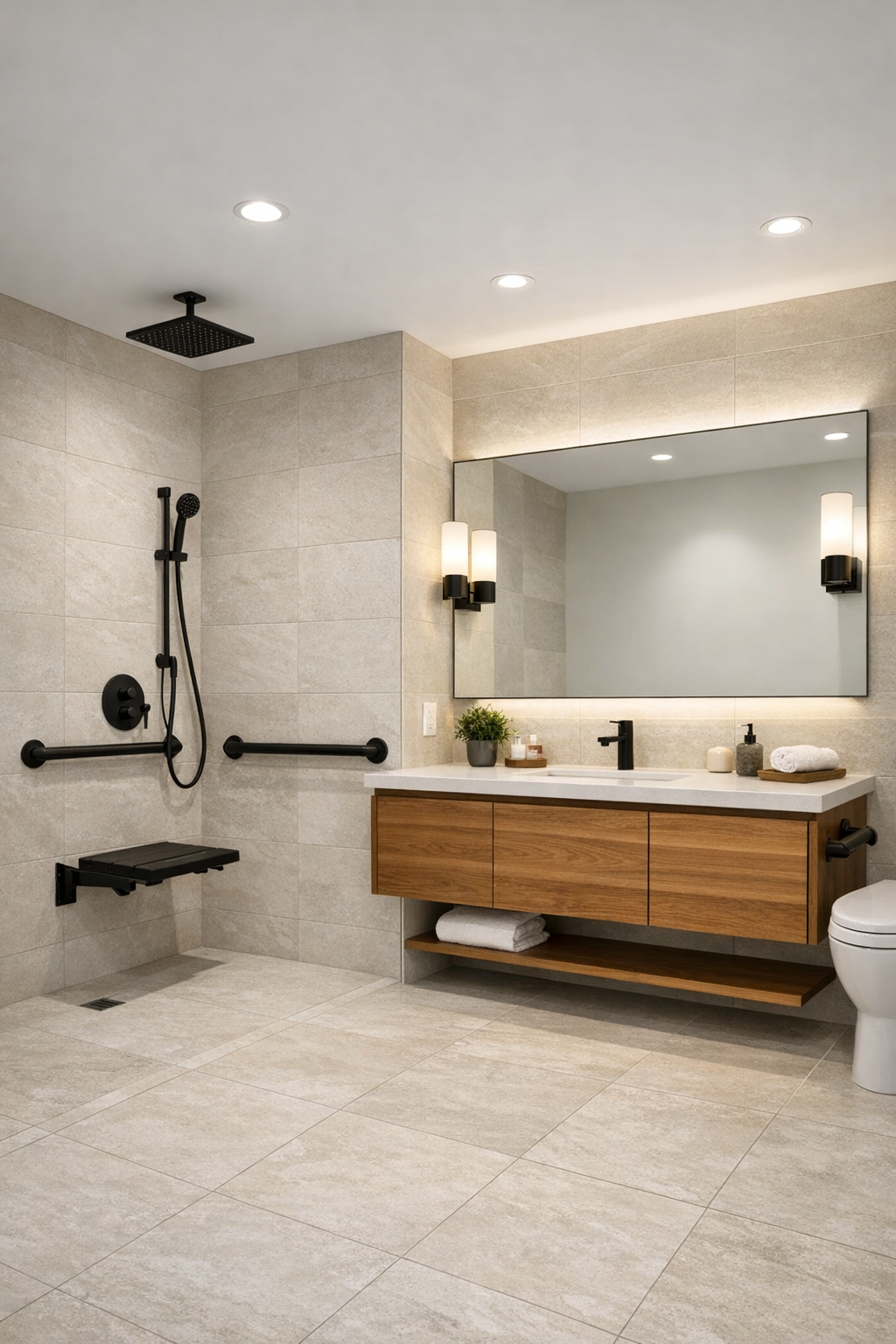
The bathroom is where the home’s accessible planning really shines in a polished, understated way. Large-format porcelain tile in a pale stone finish covers the floor and shower walls, creating a clean, continuous look that also helps the room feel bigger. A floating vanity in warm wood adds welcome contrast, topped with a white solid-surface counter and a wide mirror that bounces light across the room. Everything feels crisp, but not cold.
I especially like the curbless shower, clear glass partition, and carefully placed fixtures that make the space easy to navigate while still feeling spa-like. Matte black hardware ties it back to the rest of the home, and soft layered lighting keeps the room flattering and practical. Open lower space at the vanity and well-placed storage niches show the same thoughtful approach seen throughout the house. It’s one of those bathrooms that would genuinely make everyday routines simpler, which is often the most luxurious thing of all.
Other Areas
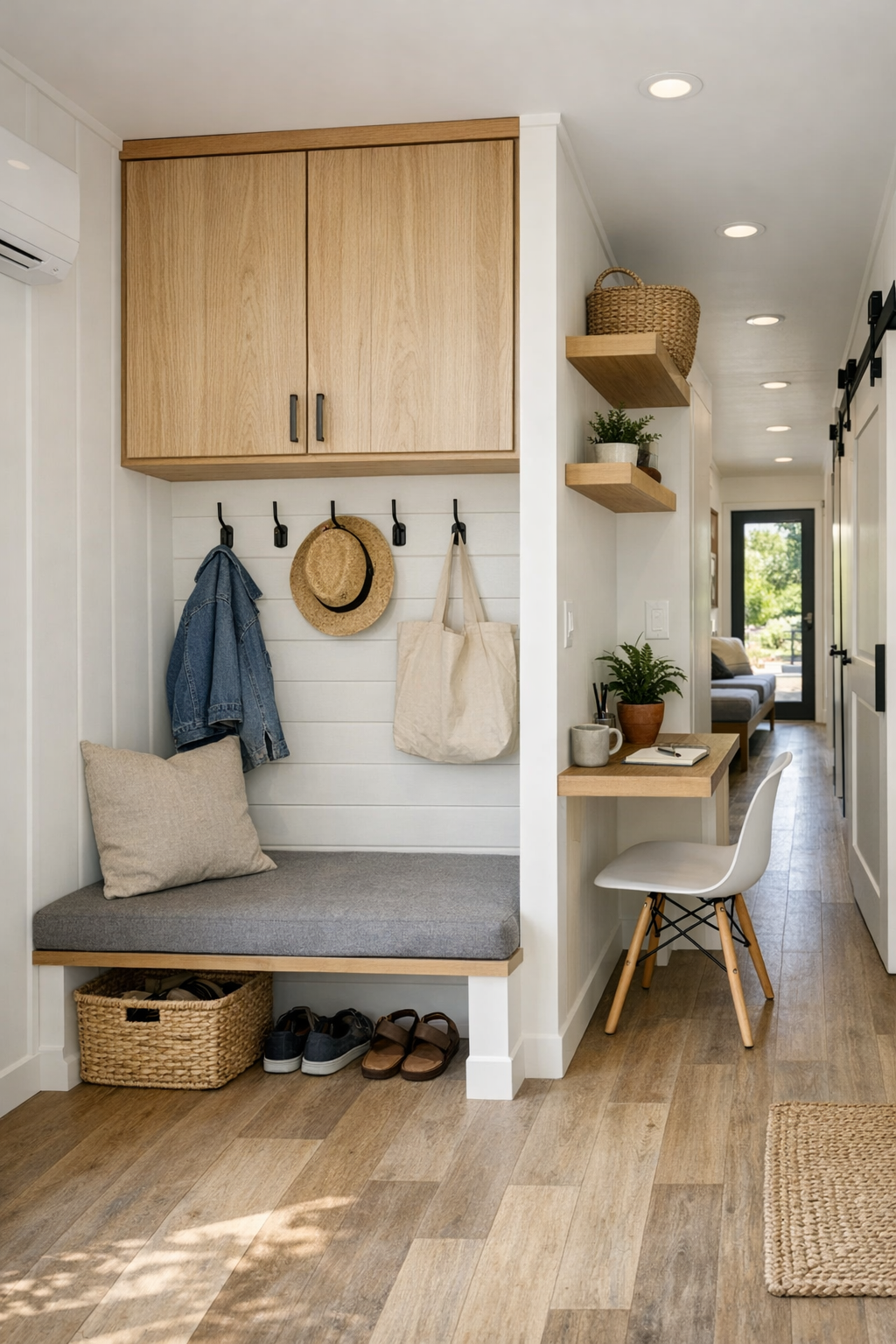
Beyond the main rooms, this home uses every in-between space wisely. A compact entry zone includes a built-in bench, wall hooks, and closed storage for shoes and bags, which is exactly the kind of feature I’m always grateful for in real life. There’s likely a small hallway nook or flexible workstation as well, fitted with a slim desk surface, open shelving, and good task lighting. In a home with a modest footprint, these secondary spaces have to work hard, and here they absolutely do.
I also love the way circulation areas aren’t treated like leftovers. The hallways are bright, the doorways feel generous, and even utility storage seems integrated into the design language with matching wood finishes and simple hardware. These details might not be the first thing people notice, but they’re what make a home feel easy day after day. It reminds me a lot of the best meal prep systems: when everything has a place and flows well, daily life becomes so much less stressful.
Why You'd Live Here
You’d live here because it proves a compact home can still feel warm, polished, and genuinely comfortable. The design never chases style at the expense of usability, and that’s what makes it so compelling. From the chestnut exterior to the soft neutral interiors, every choice feels calm, cohesive, and grounded in real life.
For me, the biggest draw is how effortless the house seems to make everyday routines. Cooking, moving through the space, hosting, resting, storing the practical stuff of life—it all feels considered. This is the kind of home that doesn’t just photograph well; it supports the rhythm of a busy life in a beautiful way, and that’s always what sticks with me most.