
There is something mighty comforting about a home that knows exactly what it wants to be, and this muted teal container house does just that. Set against what I imagine as a quiet open stretch of land, it carries a clean modern shape without feeling cold or fussy. The color alone gives it a softness I don’t often see in container homes, and paired with its accessible, easy-flowing layout, the whole place feels thoughtful in the most human way. Even as a concept design, it has that rare sense of being fully imagined for real daily life.
What struck me first was how the design balances practicality with beauty, the way a good farmhouse kitchen used to do without ever calling attention to itself. Wide passages, gentle transitions between rooms, and a calm, grounded palette make the home feel welcoming from the start. It is bright without being glaring, modern without losing warmth, and full of those little visual comforts—wood tones, natural textiles, soft light—that make a person feel they could settle in, set the kettle on, and stay a good long while.
Exterior
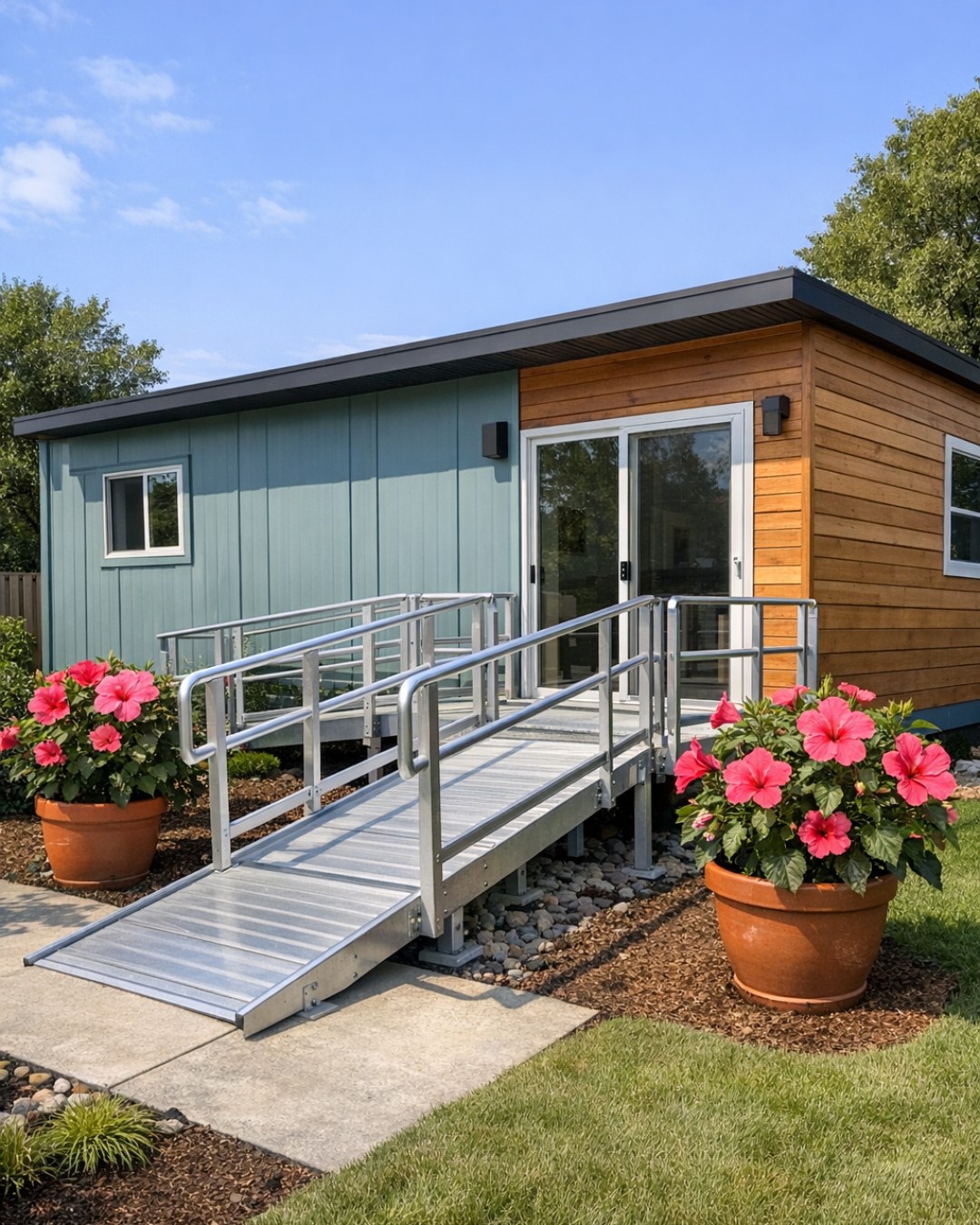
From the outside, the home keeps the strong, tidy geometry of its container origins, but the muted teal finish transforms it into something almost tender. Rather than looking industrial, the exterior feels composed and fresh, with crisp trim, generous windows, and a low-profile entry that suggests ease before you even reach the door. I can picture a smooth walkway leading right up to it, broad enough for mobility needs and graceful enough that it simply reads as good design. That, to me, is always the best kind of accessibility—when it is integrated so naturally that beauty and usefulness go hand in hand.
The materials appear simple but carefully chosen: metal cladding softened by warm wood details, black-framed glazing for definition, and understated outdoor lighting that gives the facade a gentle evening glow. The lines are clean, but the color keeps them from feeling severe. There is a pleasing Midwestern honesty to it all, like a practical structure dressed for company. It does not try to imitate a grand old house; instead, it honors its form and lets proportion, color, and restraint do the work.
Living Room
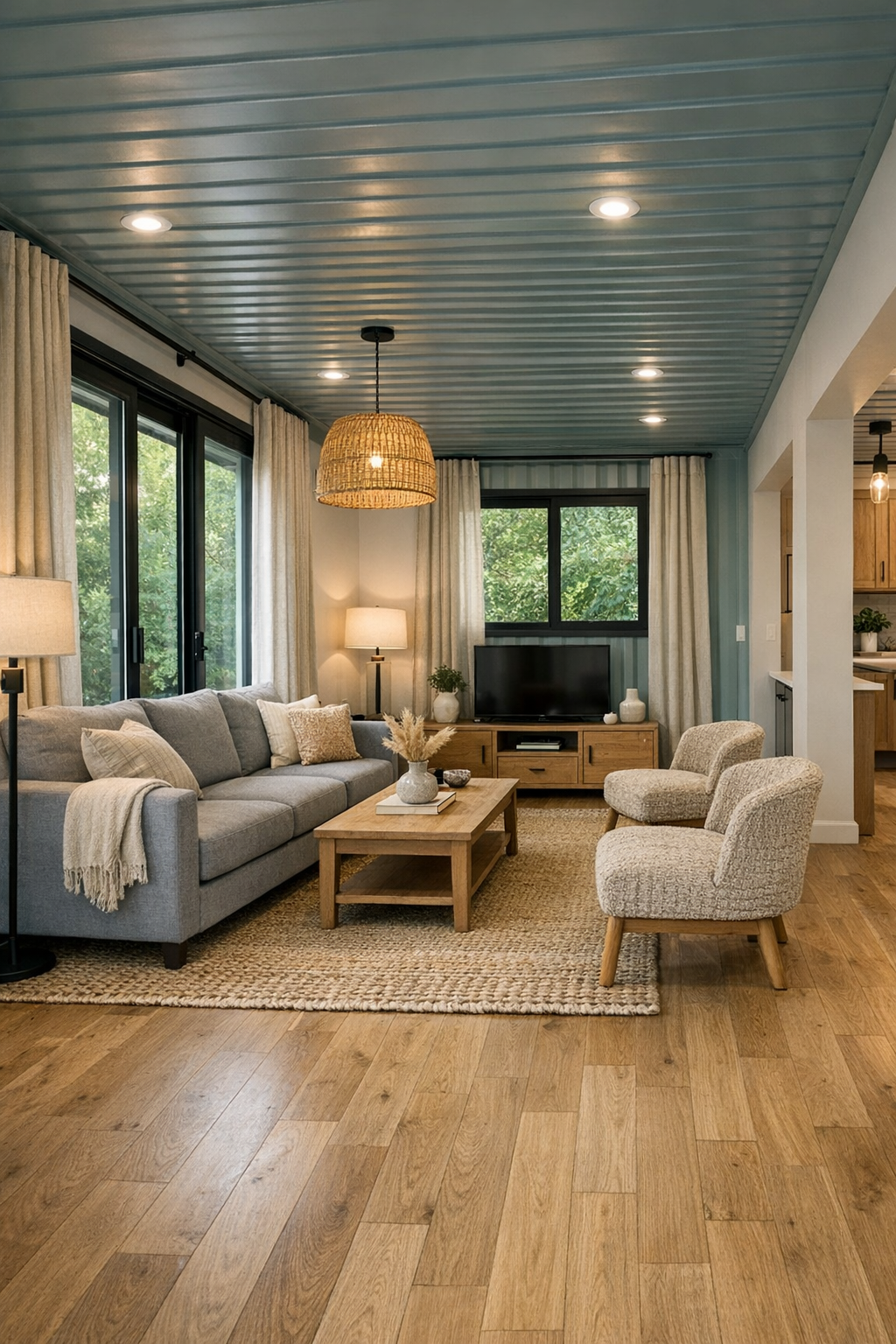
Inside, the living room opens with a sense of calm that I find deeply appealing. The palette leans on warm whites, weathered oak, muted teal accents, and soft stone-gray upholstery, creating a room that feels airy but still anchored. A low-profile sofa with broad cushions faces a simple media wall and a modest fireplace, while side chairs in textured fabric are placed with enough breathing room for easy movement. Nothing crowds the floor plan, and that open circulation gives the room a quiet dignity along with everyday comfort.
What really makes this space sing is the layering of texture. Light filters in through large windows and lands on linen drapery, woven baskets, a nubby area rug, and wood surfaces with visible grain. The lighting appears soft and practical—recessed ceiling lights for general illumination, with a floor lamp and table lamps to warm the corners after dusk. It reminds me of the kind of room where family conversation would come easily, where nobody feels they must perch carefully, and where comfort is built right into the bones of the design.
Dining Room
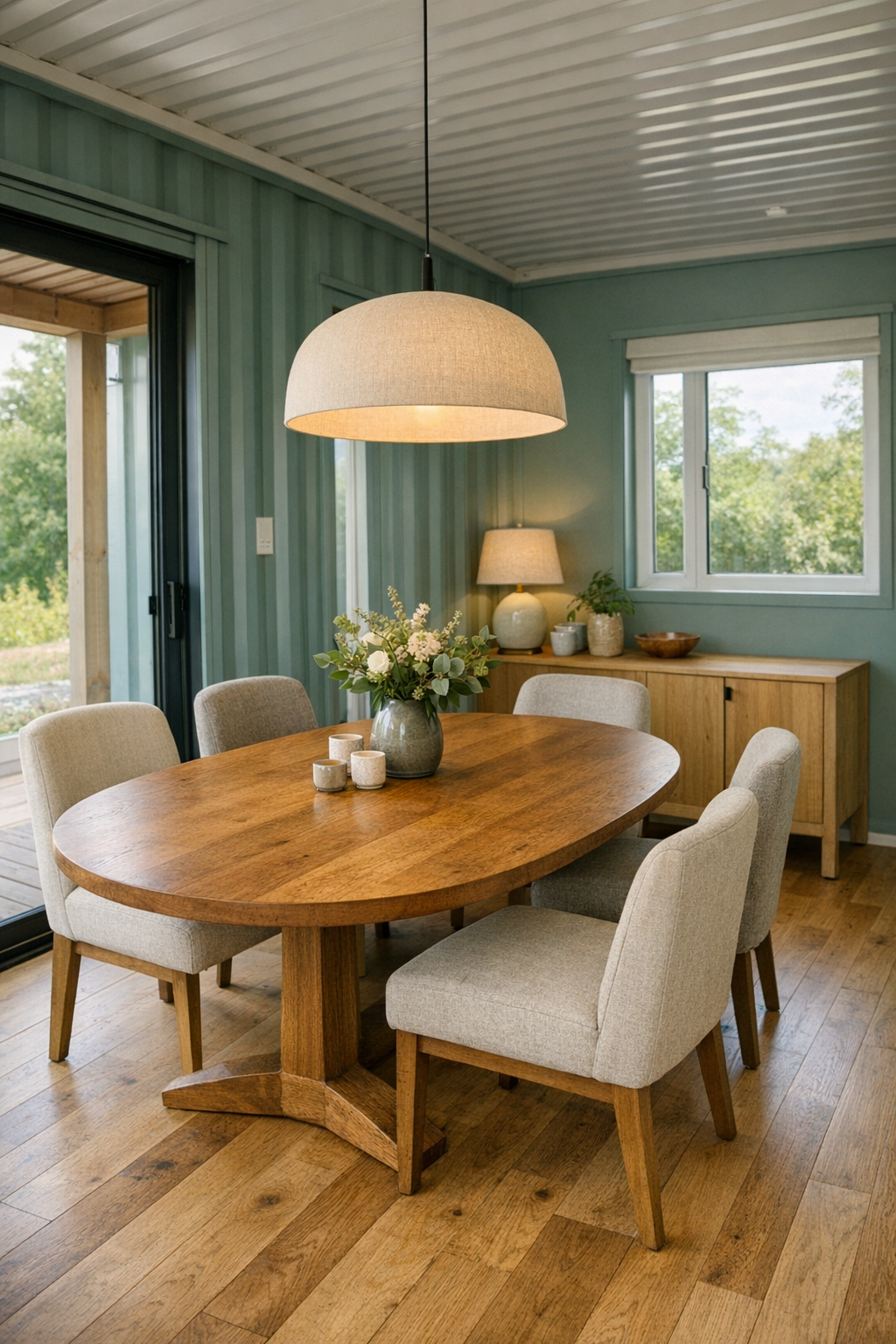
The dining room carries the same easygoing spirit, with enough polish to feel special and enough simplicity to use every day. I picture a round or softly oval table in warm wood, the kind that encourages long meals and easy passing of dishes, paired with comfortable upholstered chairs that are sturdy and generous in scale. The room is likely open to the kitchen and living area, but it still feels distinct through lighting and placement, almost like a quiet pause in the larger plan.
Above the table, a sculptural but unfussy pendant gives the space a center point, while the rest of the finishes remain restrained—matte surfaces, pale walls, and touches of black or bronze for contrast. There might be a sideboard with simple lines, topped with stoneware, a lamp, or a bowl of branches, adding that little note of life every dining room needs. I appreciate that the space seems designed for real meals rather than formal display. It has room for celebration, certainly, but it also feels ready for soup suppers, birthday cakes, and the sort of everyday gatherings that matter most.
Kitchen
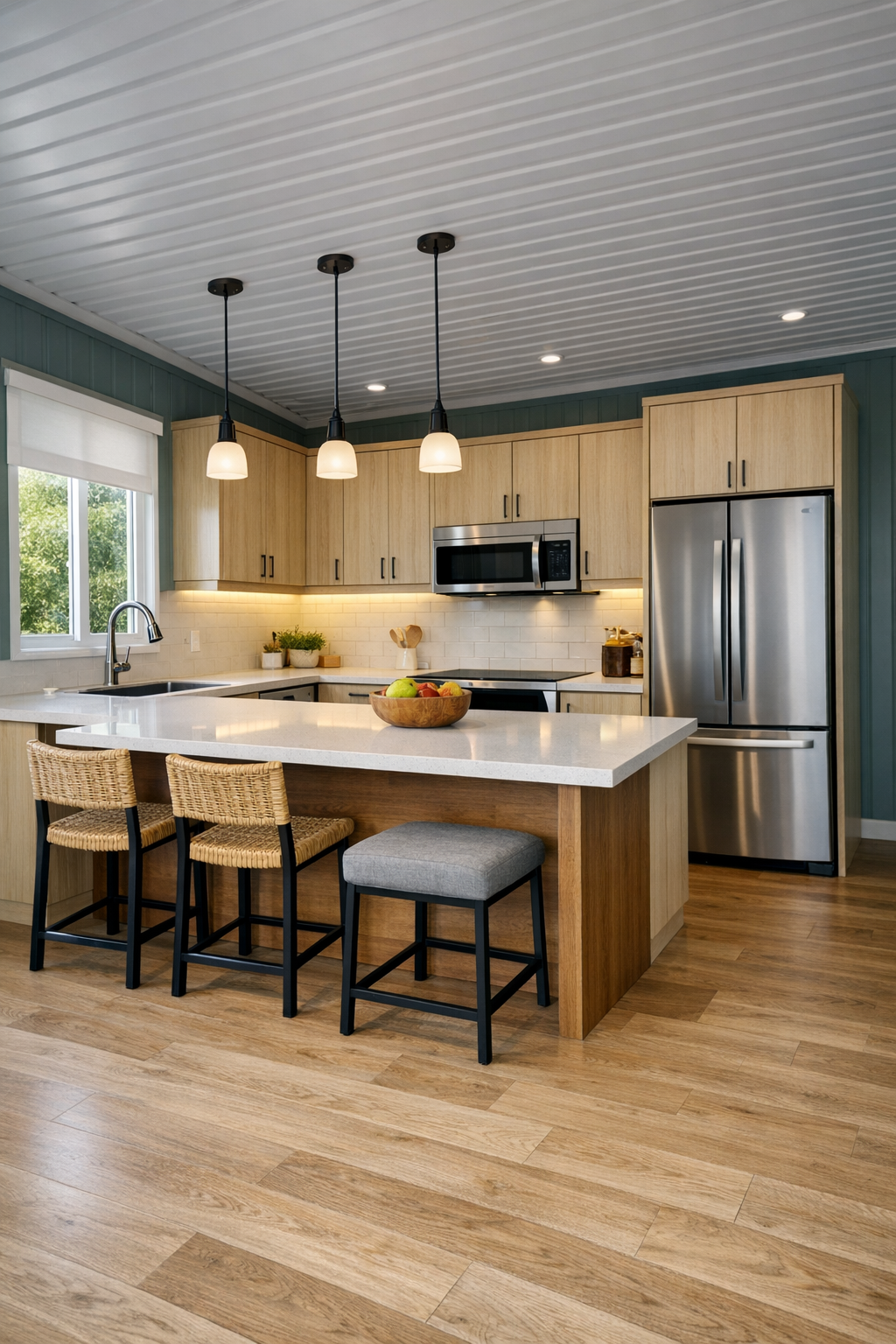
Now this kitchen, I will admit, is where my heart settles in. A woman who has spent a lifetime cooking notices right away when a kitchen has been arranged by someone who understands work as much as appearance. The cabinetry seems clean-lined and practical, perhaps in a soft painted tone with wood accents, while the counters look durable and uncluttered, likely quartz or a lightly veined stone that reflects light without demanding constant fuss. Everything appears within easy reach, and the wide layout allows for graceful movement whether one is carrying a stockpot or simply making morning coffee.
The details are what make it memorable: open shelving used sparingly, matte hardware, under-cabinet lighting, and a backsplash that adds a quiet note of texture without overwhelming the room. I can imagine a generous island with seating tucked neatly beneath, giving family or guests a place to linger without getting underfoot. The appliances are integrated in a way that keeps the look calm and cohesive, and the overall palette—teal accents, warm wood, soft white, and charcoal touches—feels both current and grounded. It is a kitchen built for cooking, and that always earns my respect.
Bedroom
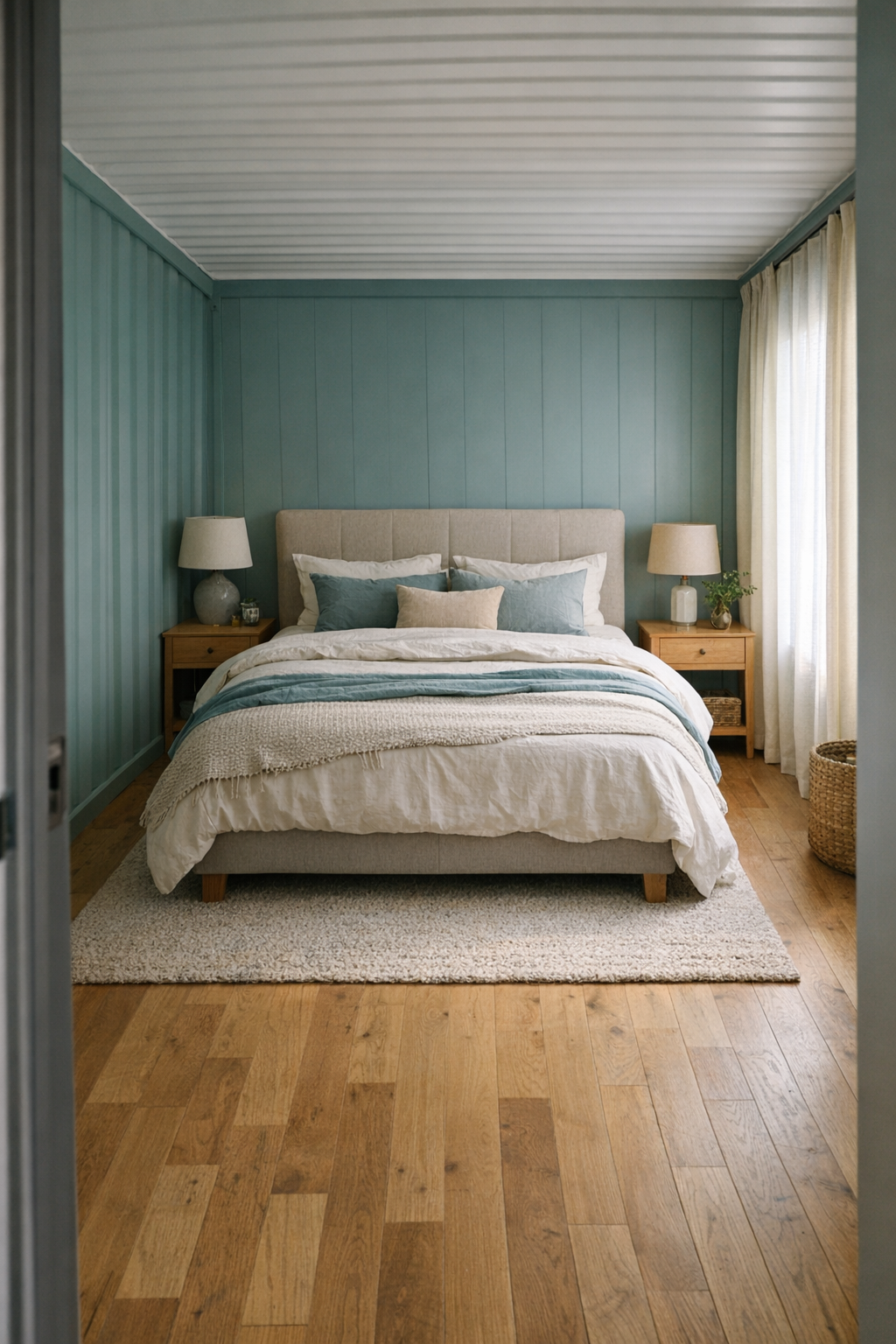
The bedroom looks to be designed as a true retreat, and I am always glad to see that in a compact home. Rather than filling the room with too much furniture, the design lets space and softness do the heavy lifting. A substantial bed with a cushioned headboard anchors the room, dressed in layered neutrals—perhaps cream, oatmeal, and a touch of faded teal—while simple nightstands and easy-to-reach lighting keep the arrangement balanced and practical. The circulation space around the bed feels intentional, making the room not only restful but easy to move through.
There is a gentle hush to the finishes here: wood flooring softened by a broad rug, curtains that filter light rather than block it harshly, and walls in a pale tone that invite rather than impress. Storage is likely built in, helping the room stay uncluttered and serene. If the rest of the house speaks in clear, confident lines, the bedroom softens that language into something almost tender. It feels like the sort of room where one would wake slowly, hear the weather outside, and feel grateful for a home that understands peace.
Bathroom
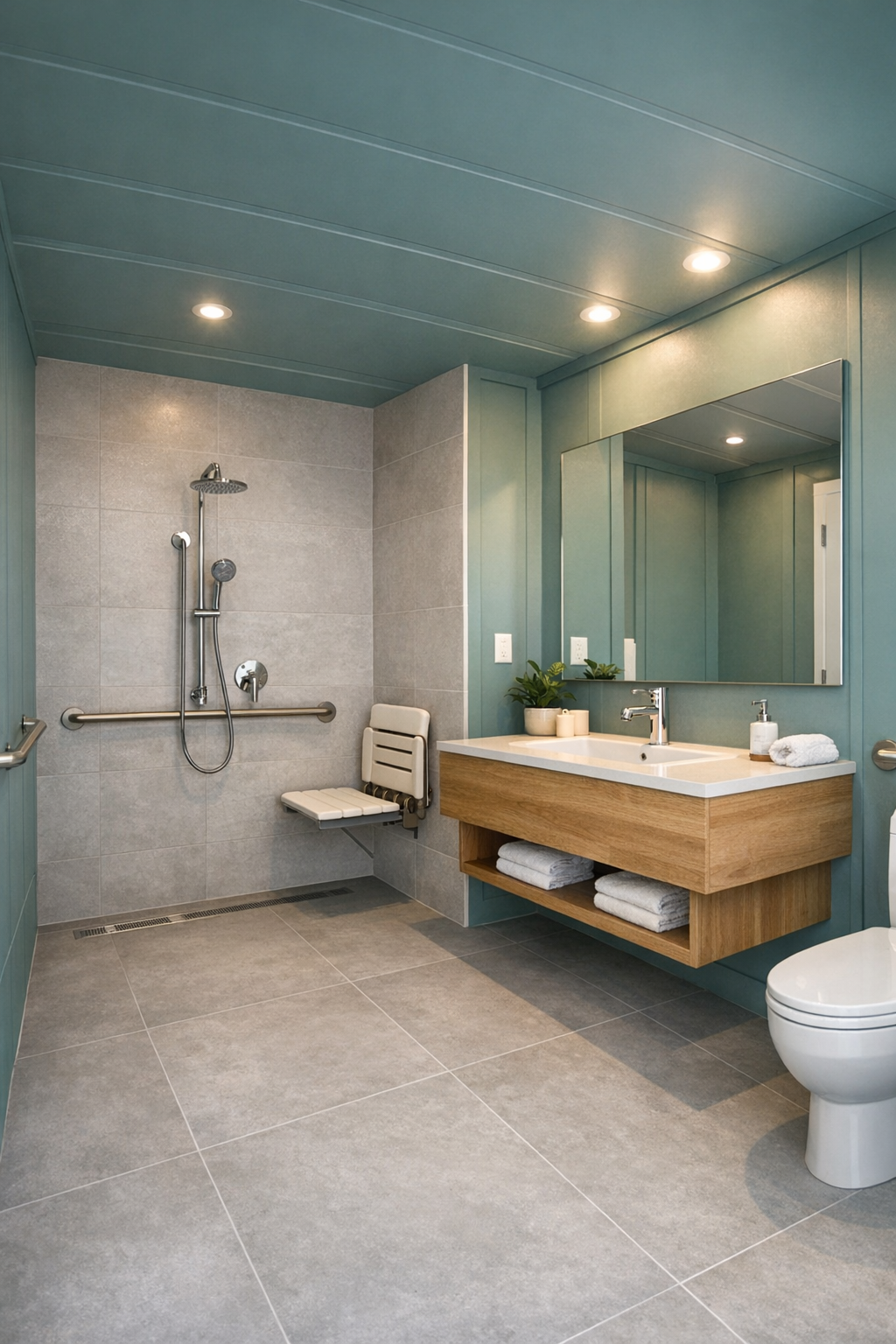
The bathroom continues the home’s steady, unfussy elegance. It appears bright and spacious, with a curbless shower that fits beautifully into the overall accessible plan rather than standing apart from it. I can imagine large-format tile in a warm pale gray, a floating vanity in wood or wood-look finish, and a broad mirror that reflects light across the room. The fittings are likely matte black or brushed metal, adding crisp definition against the softer background tones.
What I appreciate most is the sense of ease. There is no cluttered ornament, no overcomplication—just good materials, good light, and room to move comfortably. Plush towels, a niche in the shower, perhaps a small stool or bench, and careful lighting around the mirror make the space feel quietly luxurious. It has the same quality I admire throughout this home: practical choices elevated through proportion, finish, and a calm eye.
Other Areas
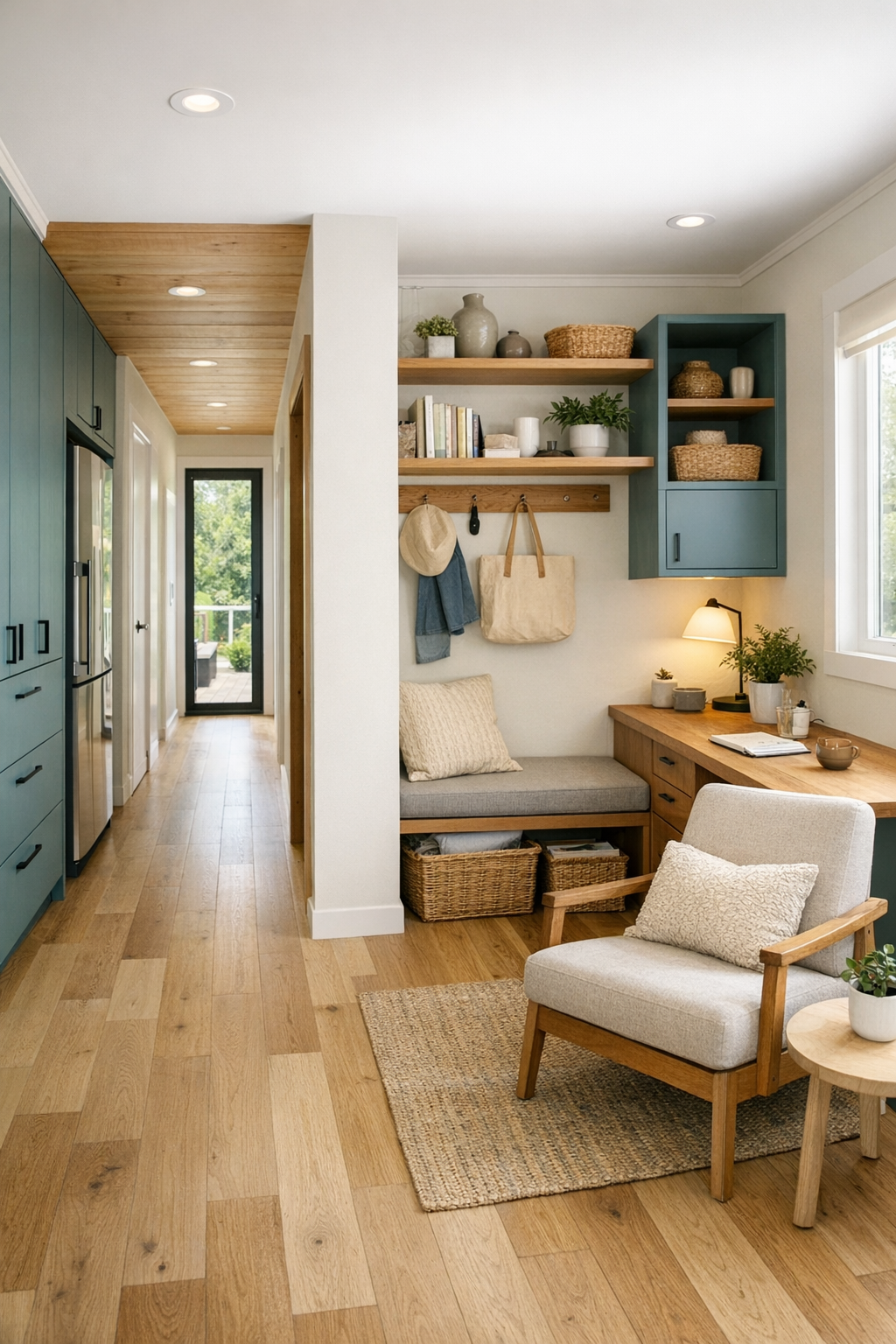
In a home like this, the supporting spaces matter just as much as the showpieces, and they seem especially well considered. Hallways are likely kept wider and brighter than usual, with minimal thresholds and smart built-in storage that helps daily life run smoothly. A small entry zone may include a bench, hooks, and closed cabinetry for coats and shoes, while a laundry nook or utility area is tucked neatly into the plan without feeling like an afterthought. These are the spaces that truly reveal whether a house understands living, and this one certainly seems to.
I also imagine a flexible corner for reading, desk work, or hobbies—something modest but deeply useful, with natural light, a comfortable chair, and shelving that keeps things orderly. Even transitional spots would benefit from the same warm materials and quiet palette, so the entire home feels cohesive from end to end. That continuity is what makes a smaller footprint feel generous. Nothing jars, nothing begs for attention, and every part seems to offer a purpose along with a little grace.
Why You'd Live Here
You would live here because it offers something many homes promise and few deliver: simplicity that does not feel sparse, accessibility that does not sacrifice beauty, and modern design with a genuinely livable heart. Every room appears to have been shaped around comfort, clarity, and ease, which in my book is worth more than any passing trend. It is a home that respects the rhythms of ordinary life and makes them feel just a little more beautiful.
More than that, this house has warmth. For all its clean lines and contemporary structure, it still feels welcoming in the old-fashioned sense of the word. I can imagine muddy shoes by the door, supper simmering in the kitchen, lamplight in the evening, and a peaceful night’s rest at the end of the day. That is what makes this muted teal container home so memorable to me: it looks fresh and forward-thinking, yet it still understands the timeless comfort of being truly at home.