
I love a home that surprises me, and this accessible saltbox houseboat does exactly that. From the outside, it has that storybook New England silhouette everyone recognizes, but set on the water it feels fresh, practical, and quietly adventurous. The whole place balances charm and function in a way that immediately puts me at ease, with soft coastal colors, light-filled rooms, and thoughtful circulation that makes daily life feel simpler instead of more complicated.
What makes this home especially memorable is how it translates the cozy familiarity of a saltbox into a floating retreat that still feels grounded and livable; as a concept design, it’s wonderfully believable. I can picture coming in after a long workday, setting down groceries, and exhaling the minute I see the sunlight bouncing off pale wood floors and calm blue-gray walls. It has that rare mix of efficiency and romance, where every inch feels considered without losing warmth.
Exterior
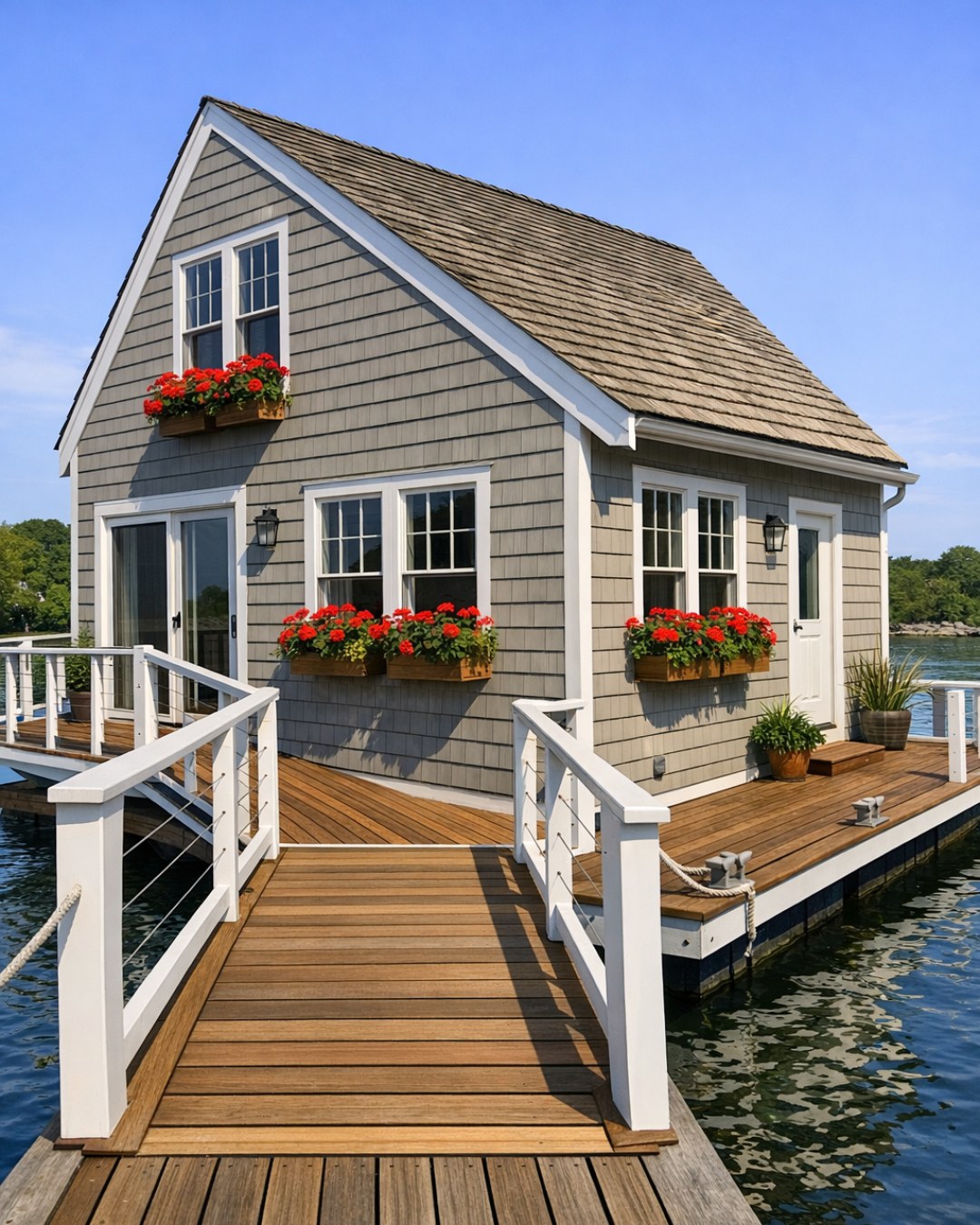
The exterior keeps the classic saltbox profile intact, with a long sloping roofline, crisp lap siding, and neatly framed windows that give the houseboat a timeless personality. I like that it doesn’t lean too hard into a nautical theme. Instead, the palette stays restrained with weathered white, muted slate blue, and natural wood trim, so the home feels sophisticated rather than themed. The boarding approach is generous and easy, with a wide, gently graded entry and rail details that look integrated into the architecture instead of added on as an afterthought.
What really sells it for me is the way the structure meets the water with confidence and grace. There’s a compact wrap of deck space for sitting outside, container herbs, and maybe a couple of folding chairs for coffee in the morning, but it never feels cluttered. The windows are placed to pull in views while preserving a sense of privacy, and the whole composition has that neat, tucked-in quality I always appreciate in smaller homes. It’s charming, yes, but it also looks capable, which matters even more on the water.
Living Room
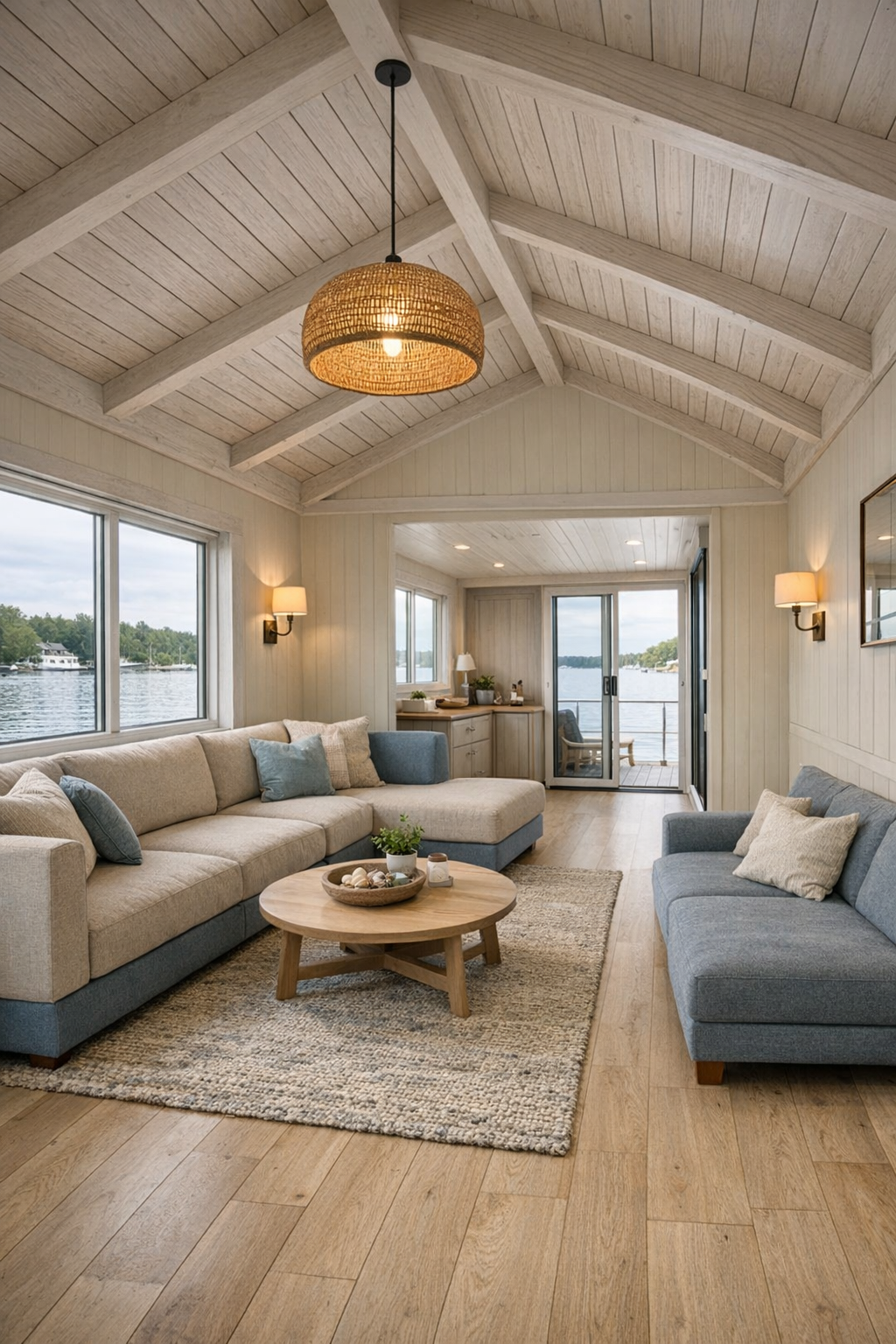
The living room is where the houseboat’s personality really opens up. A vaulted portion of the saltbox roof gives this space more breathing room, and the ceiling treatment in painted tongue-and-groove adds cottage character without making it feel fussy. The palette is calm and layered: creamy white walls, driftwood-toned flooring, and upholstery in oat, fog blue, and soft flax. I’m especially drawn to the low-profile seating, which keeps sightlines clear and makes the room feel open, along with a textured area rug that quietly anchors everything.
Because this is an accessible layout, the furniture arrangement feels generous and intentional, with wide pathways and easy turning space that never reads as empty. A pair of slim wall sconces and a central shaded pendant give the room warm evening light, while daylight from the larger windows does most of the heavy lifting during the day. I can imagine curling up here with a cup of tea after dinner, watching the water move just beyond the glass. It’s cozy in the way a good living room should be, but also uncluttered and practical enough for real life.
Dining Room
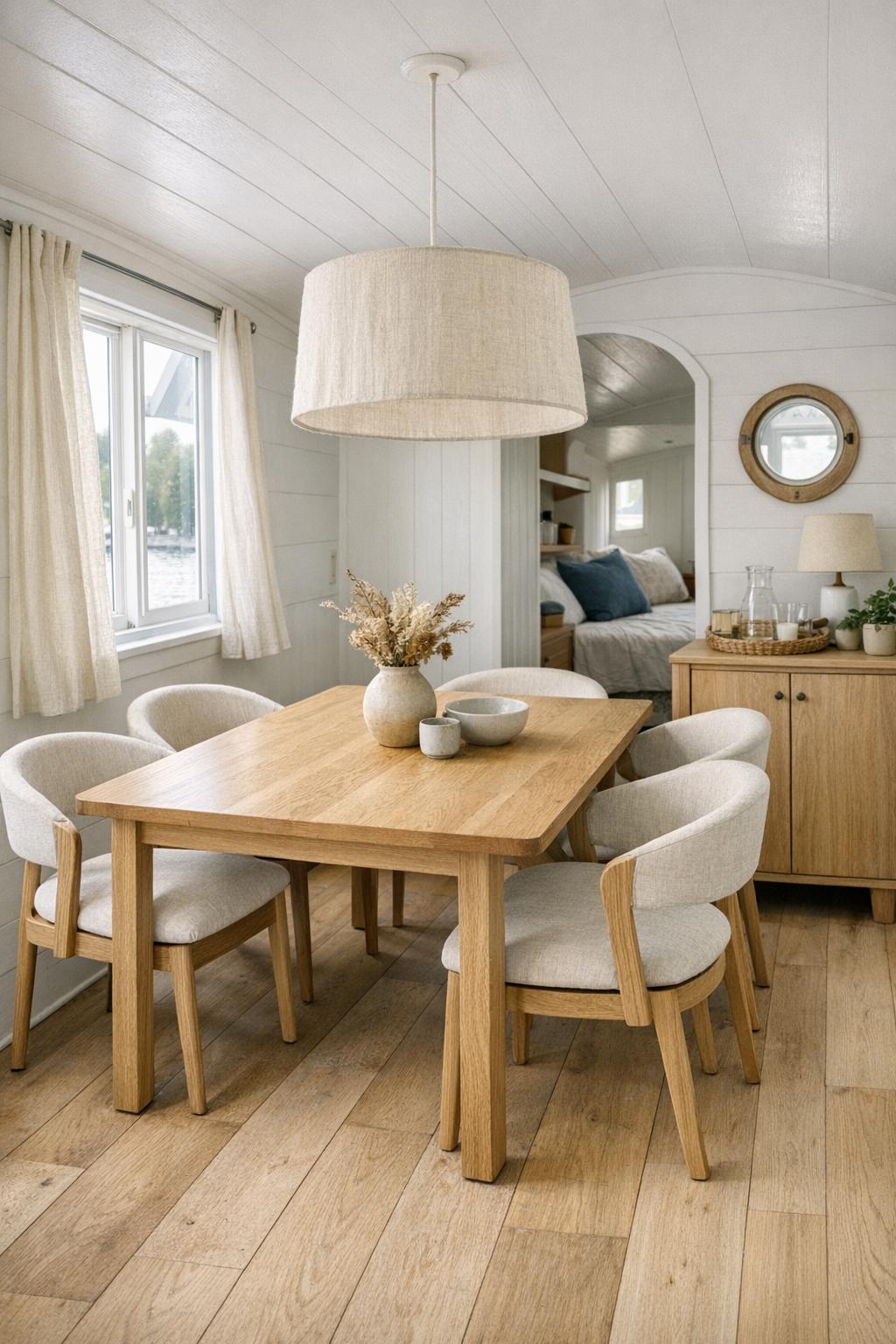
The dining area feels integrated rather than formal, which is honestly how I think most of us want to live now. It sits comfortably between the living room and kitchen, defined by a simple rectangular table in light oak and chairs with supportive curved backs that are easy to slide in and out. I appreciate the lack of visual heaviness here. Open leg furniture, a narrow sideboard, and a softly patterned runner keep the room feeling airy, even when it’s fully in use.
There’s also a lovely sense of occasion in the details. A linen pendant centered over the table softens the angles in the room, and the nearby windows reflect light across matte finishes so everything glows instead of shines. If I were setting this up for my own life, this is exactly where I’d do a quick weeknight pasta, Sunday muffin prep, or a laptop work session with a second cup of coffee. It’s the kind of dining space that adapts easily, which makes a compact home feel much more generous.
Kitchen
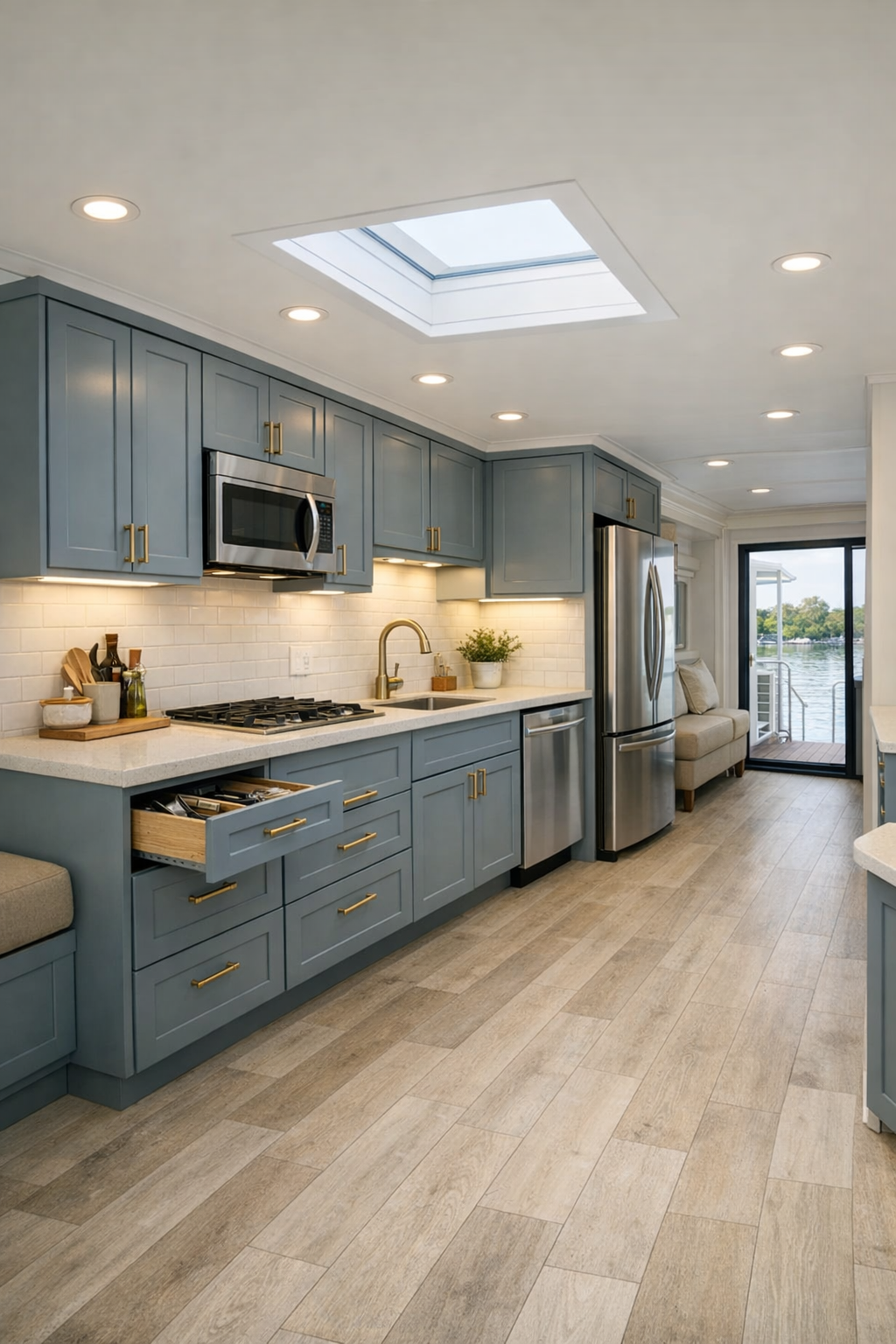
The kitchen might be my favorite space because it proves that compact and hardworking can still be beautiful. The cabinetry is a shaker style in a muted blue-gray, paired with warm brass pulls and creamy quartz counters that bounce light around the room. I love the practical choices here: wide passage space, lower reachable storage, a cooktop with open knee space nearby, and drawers instead of hard-to-reach upper compartments for everyday tools. It feels designed by someone who actually cooks, which I always notice right away.
The finishes keep the room cheerful and easy to maintain, from the satin backsplash tile to the durable wood-look flooring that runs continuously from the main living spaces. Open shelving is used sparingly for dishes and a few everyday bowls, so the kitchen never tips into clutter. If I were meal-prepping for the week, this layout would make it so much easier to move from sink to prep zone to stove without wasted steps. Even the lighting is smart: under-cabinet illumination for tasks, a small skylight overhead, and enough ambient light to make the whole room feel clean and uplifting.
Bedroom
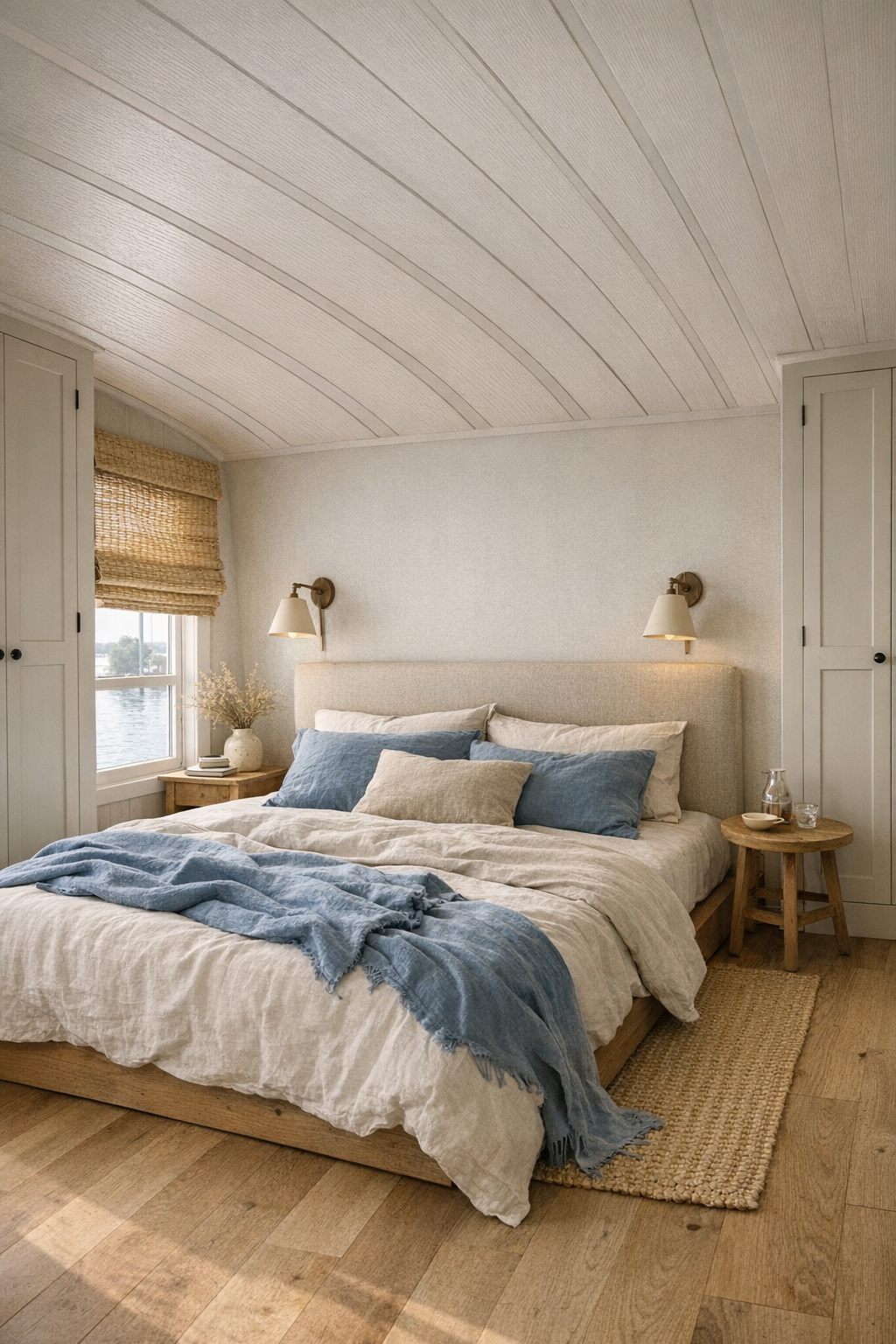
The bedroom takes a softer turn, leaning into rest without becoming overly precious. The bed is positioned to capture water views, and the low platform frame helps the room feel open while supporting the accessible layout. I love the mix of textures here: a tailored upholstered headboard, washed linen bedding, a knit throw, and simple woven shades that filter the morning light beautifully. The colors stay hushed, mostly sandy neutrals with a little dusty blue, which makes the room feel instantly calming.
Storage is handled in a clean, built-in way that keeps the footprint uncluttered, with integrated wardrobes and bedside ledges instead of bulky tables. A pair of compact reading sconces frees up surface space, and the lighting overall is warm and flattering rather than stark. This is the kind of bedroom that would actually help me wind down after a busy day, not distract me with too much stuff. It feels airy, private, and cocooning all at once, which is a tricky balance and one this home gets exactly right.
Bathroom
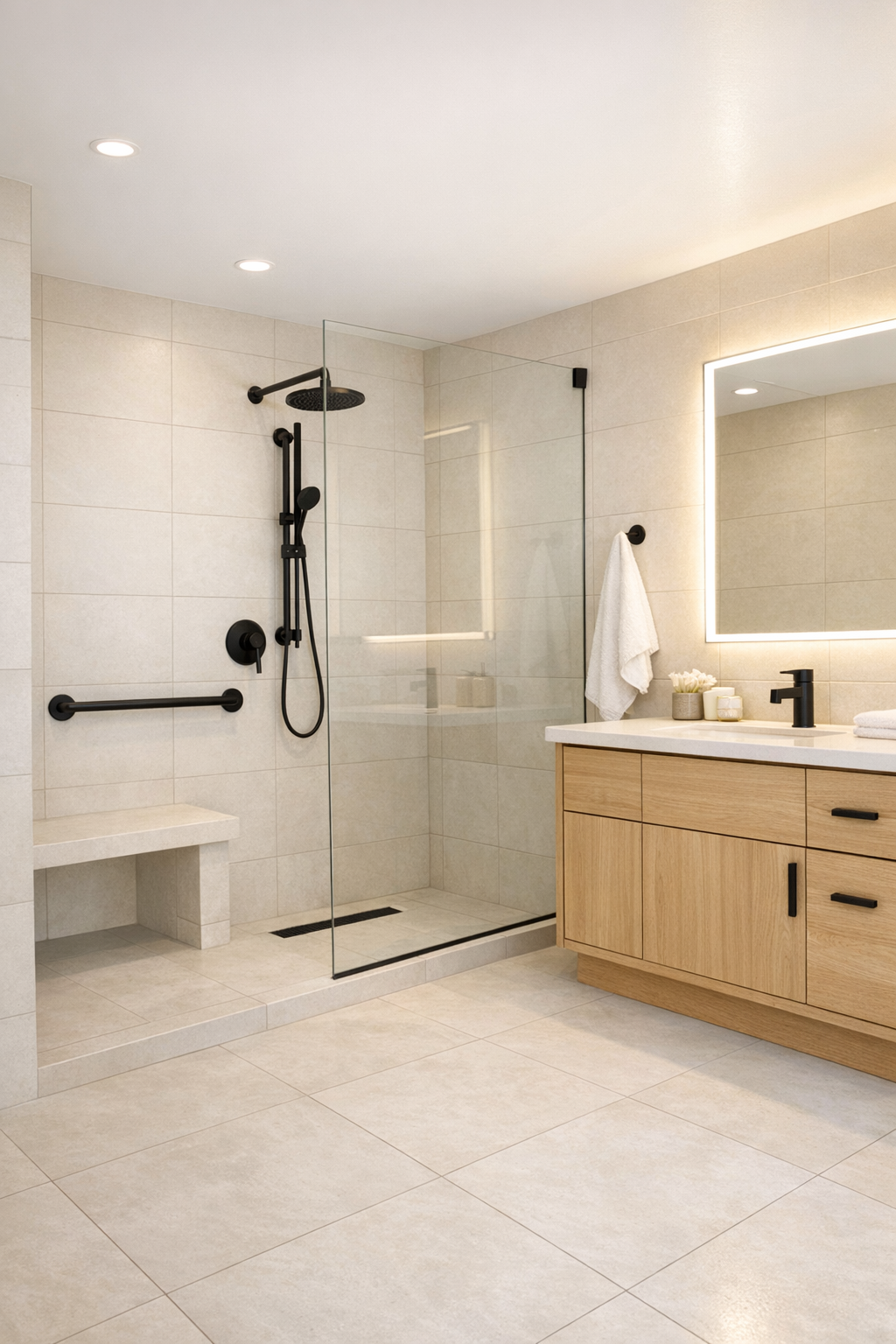
The bathroom is one of the best examples of how accessibility can look polished and inviting. Instead of feeling clinical, it uses beautiful everyday materials: large-format warm white tile, pale grout, light oak cabinetry, and a solid-surface vanity top with softly rounded edges. The zero-threshold shower is seamlessly integrated, with a frameless glass panel, a built-in bench, and subtle grab supports that blend into the overall design. Everything feels easy to use, but nothing feels visually interrupted.
I also appreciate how the room uses contrast and texture to create depth in a compact footprint. Matte black fixtures add definition, while a gently lit mirror and recessed ceiling lights keep the space bright without glare. There’s enough open floor area to move comfortably, and practical details like recessed niches and easy-reach towel storage make the room feel truly thought through. If you’ve ever tried to make a small bathroom feel both functional and calm, you know how impressive that is.
Other Areas
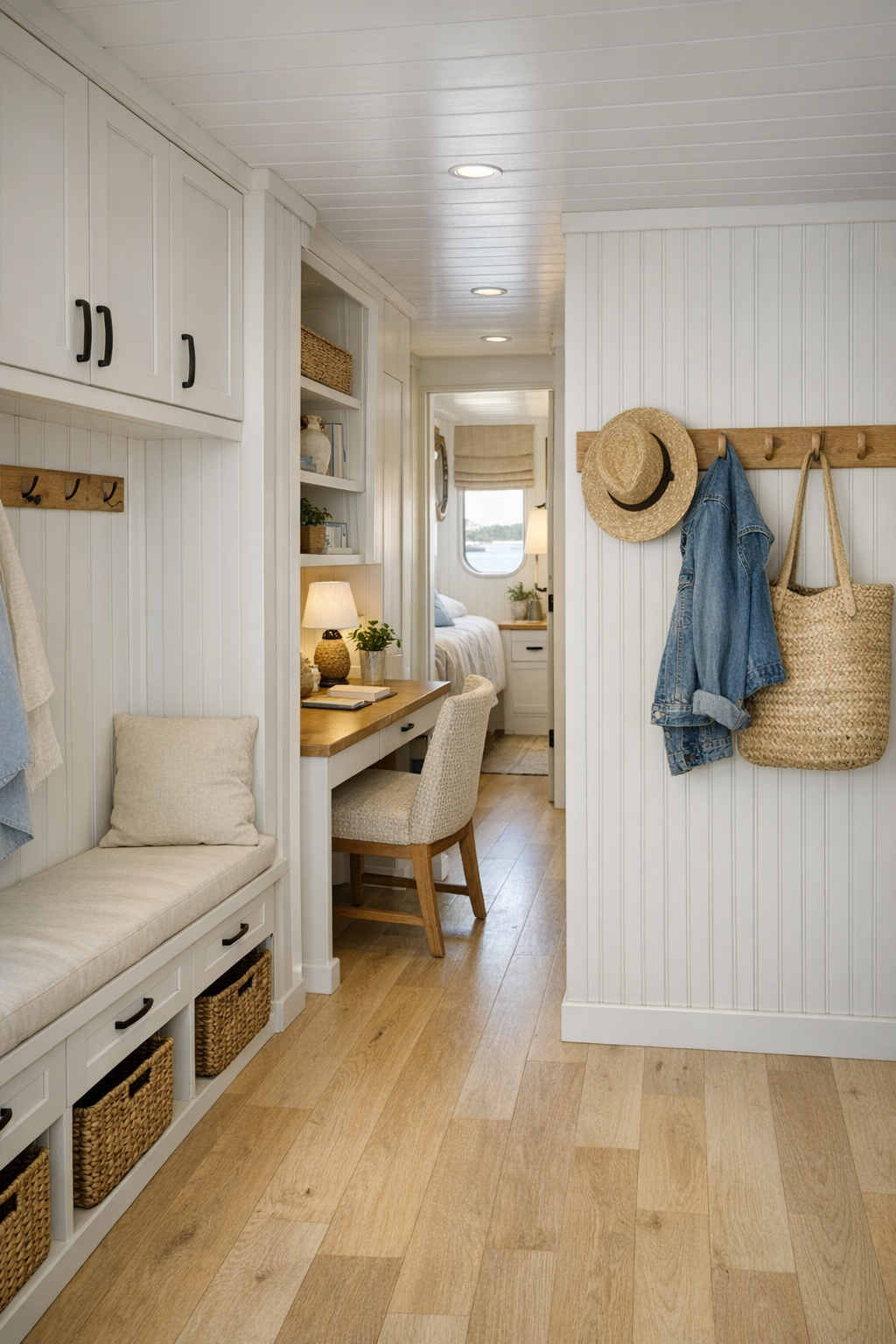
What I like most about the supporting spaces is that they’re handled with the same care as the main rooms. The circulation areas are not just leftover square footage; they’re bright, usable passages with built-in storage, durable finishes, and small moments of personality like beadboard paneling or a row of hooks in natural wood. There’s likely a compact entry zone for shoes, coats, and tote bags, which I always think makes a home function better from day one. On a houseboat especially, having a tidy landing spot for everyday gear is such a gift.
There’s also room here for a few flexible extras, whether that’s a reading nook beneath the slope of the roof, a petite workspace with a water view, or a laundry closet hidden behind matching cabinetry. These are the spaces that make a home feel lived-in instead of staged. I can imagine using a built-in bench to unload groceries or sort through mail before starting dinner, and that kind of practical comfort goes a long way. Every corner seems to do a job while still contributing to the home’s easy, coastal mood.
Why You'd Live Here
You’d live here because it offers something a lot of homes promise but don’t always deliver: real comfort without wasted space. It’s beautiful in a relaxed, approachable way, and every design decision seems to support daily routines, from cooking and hosting to resting and simply moving through the rooms with ease. I think that’s what makes it so appealing. It doesn’t ask you to choose between charm and practicality.
For me, this houseboat stands out because it feels like a retreat that would still work on an ordinary Wednesday. You get the romance of water views, the coziness of a saltbox silhouette, and the reassurance of an accessible layout that’s baked into the design from the beginning. That combination is hard to resist. It’s sweet, smart, and wonderfully livable, which is exactly the kind of home I keep coming back to.