
Set on a working homestead with open sky, packed earth paths, and the steady rhythm of daily chores, this converted bus leans into rustic living without feeling rough around the edges. What struck me right away is how thoughtfully the design balances utility and comfort: weathered wood, matte black metal, soft textiles, and clever built-ins all tucked into a narrow footprint that somehow feels welcoming instead of cramped. It has that rare kind of character that makes you want to slow down, kick off your boots, and stay awhile.
Though this home is a concept design, it feels grounded in the real pleasures of country life, especially for anyone who loves a home that works hard and still knows how to be beautiful. I can easily picture muddy hands setting down baskets of eggs by the door, soup simmering on the stove, and family gathering around a small table at the end of the day. The surprise here is not just that a bus can become a home, but that it can become one with this much warmth, charm, and intention.
Exterior
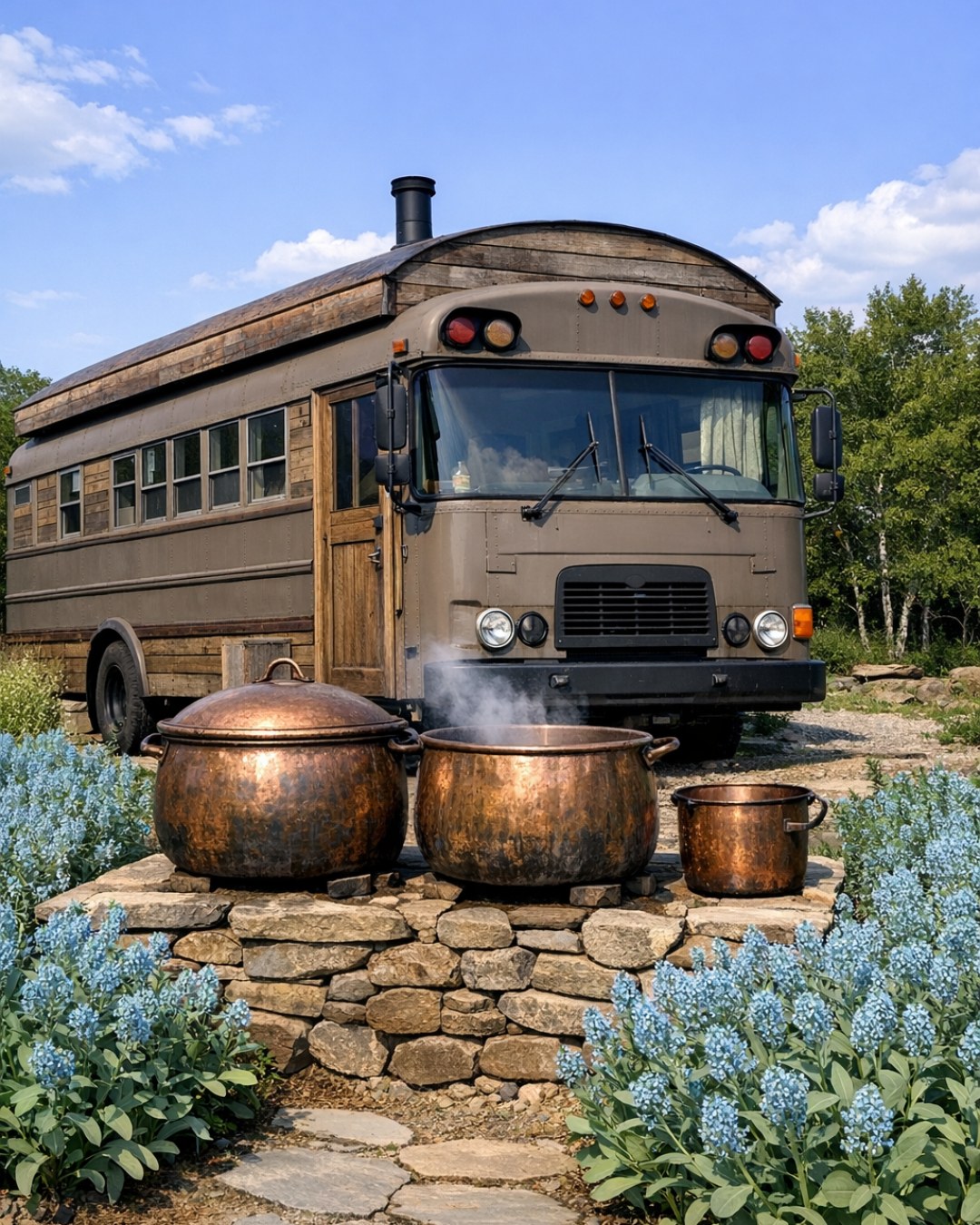
From the outside, the bus keeps much of its original silhouette, which gives the whole property a nice sense of honesty. Instead of trying to disguise what it once was, the design celebrates it with a softened, homestead-friendly finish: muted olive and cream paint, cedar trim around the entry, black iron hardware, and a simple wood stair that leads up to the door. A shallow awning extends the welcome, creating a practical little buffer for rainy days, muddy boots, and baskets of produce headed in from the garden.
The setting does a lot of beautiful work here too. Raised beds, a chicken run, stacked firewood, and a gravel seating area make the bus feel stitched into the landscape rather than dropped onto it. I especially like the way the rustic materials age together—corrugated metal, rough-sawn lumber, stone pavers, and galvanized planters all speaking the same language. It feels hardy and lived-in, with the kind of outdoor charm that tells me this home is meant to be used every day, not just admired from a distance.
Living Room
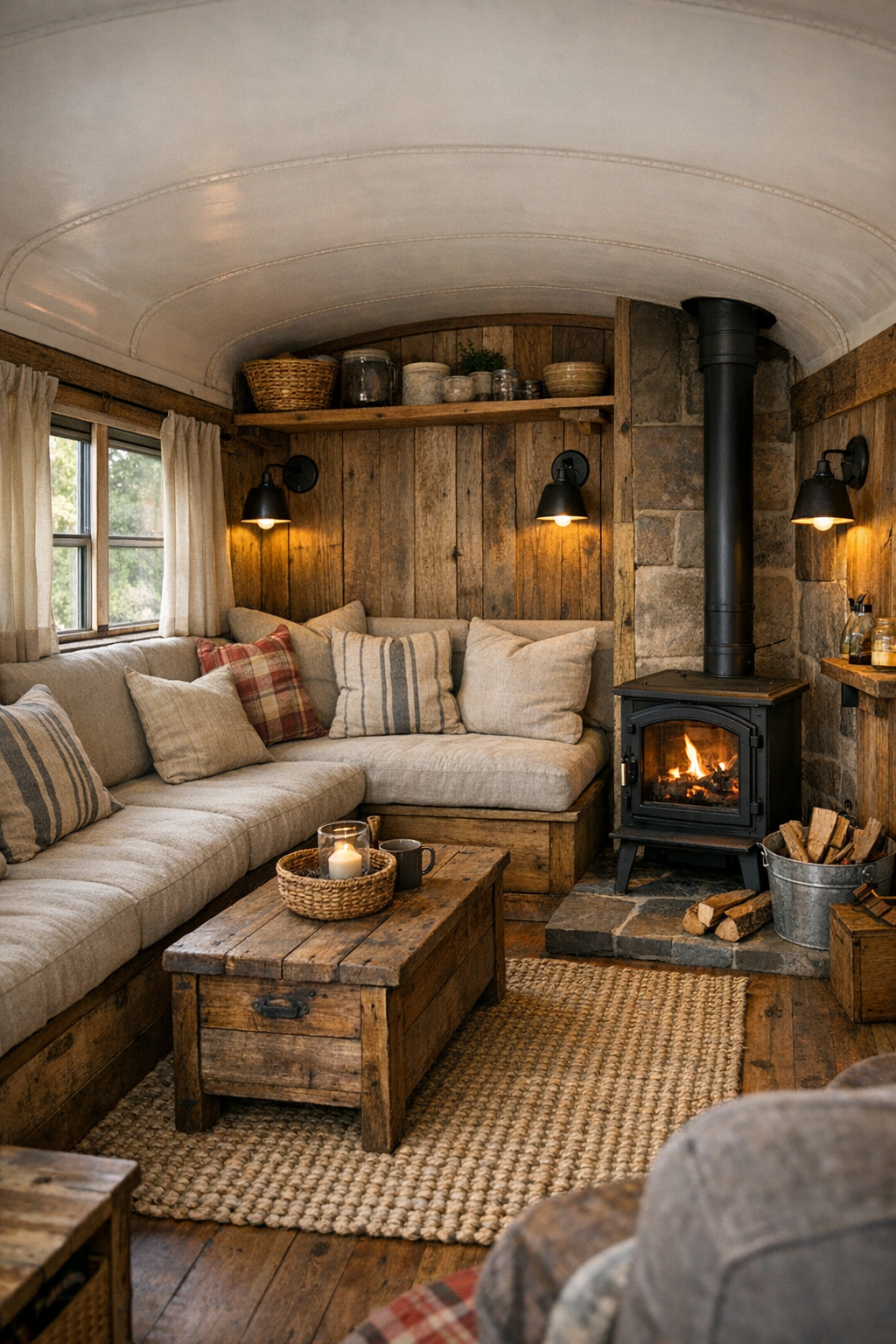
Inside, the living room is one of the sweetest surprises in the whole bus. A built-in bench sofa runs along one wall beneath the windows, topped with deep seat cushions in oatmeal linen and a mix of plaid, ticking stripe, and knit pillows in rust, cream, and soft green. The wood-paneled walls bring instant warmth, while the ceiling is painted a light ivory that helps keep the narrow space feeling open. I love that the coffee table is scaled just right—a sturdy reclaimed-wood piece with rounded corners and hidden storage underneath for games, blankets, or all the little things a family tends to gather.
There is a woodstove tucked into one corner on a compact hearth, and it gives the room a heart. Even when I imagine it unlit, it still anchors the whole seating area in such a comforting way. Open shelves display practical stoneware, a few well-loved books, and small potted herbs, which keeps the room personal without cluttering it up. For families, this kind of room really works: soft lighting from black metal sconces, durable woven rugs underfoot, and enough texture everywhere that the space feels layered and cozy from morning coffee through late-night storytelling.
Dining Room
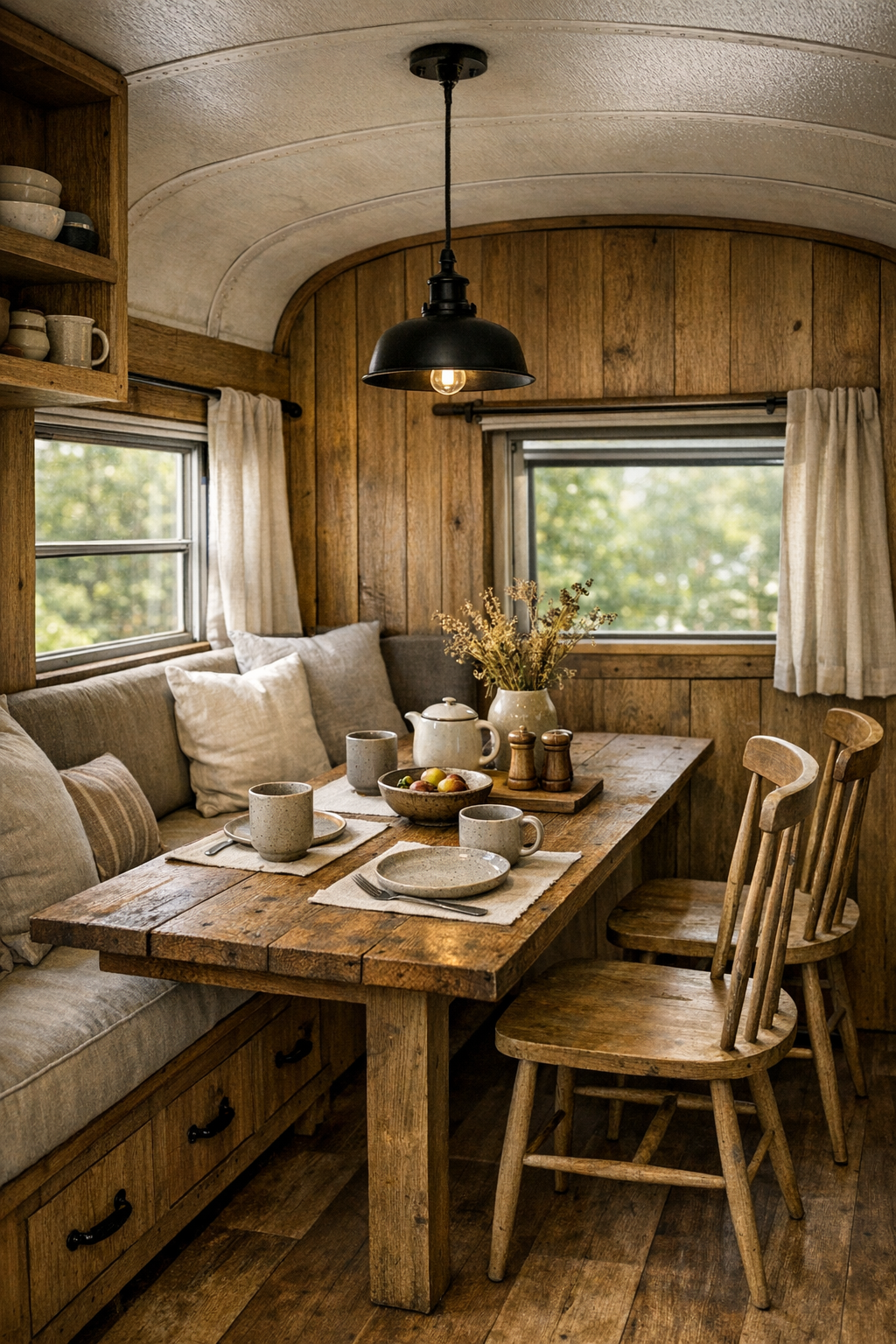
The dining area is compact, but it is designed with so much care that it feels like the true gathering spot of the bus. A narrow farmhouse-style table sits beside the windows, paired with a built-in banquette on one side and two simple spindle-back chairs on the other. That combination is such a smart family-friendly move because it saves space while still making room for shared meals, homework, or an afternoon baking project. The wood tones are slightly varied rather than perfectly matched, which gives the room a collected, natural look that feels very at home on a working property.
Above the table, a modest metal pendant casts a focused pool of light that makes the whole area feel intimate at night. I can just imagine setting it with everyday stoneware, a crock of wildflowers, and a big bowl of stew with cornbread on the side. For picky eaters, this is the kind of table where it would be easy to serve a meal family-style and let everyone build their own plate, and I think the design supports that easy togetherness beautifully. Under the seat, hidden storage keeps linens and pantry overflow tucked away, which is exactly the kind of practical detail small-space living needs.
Kitchen
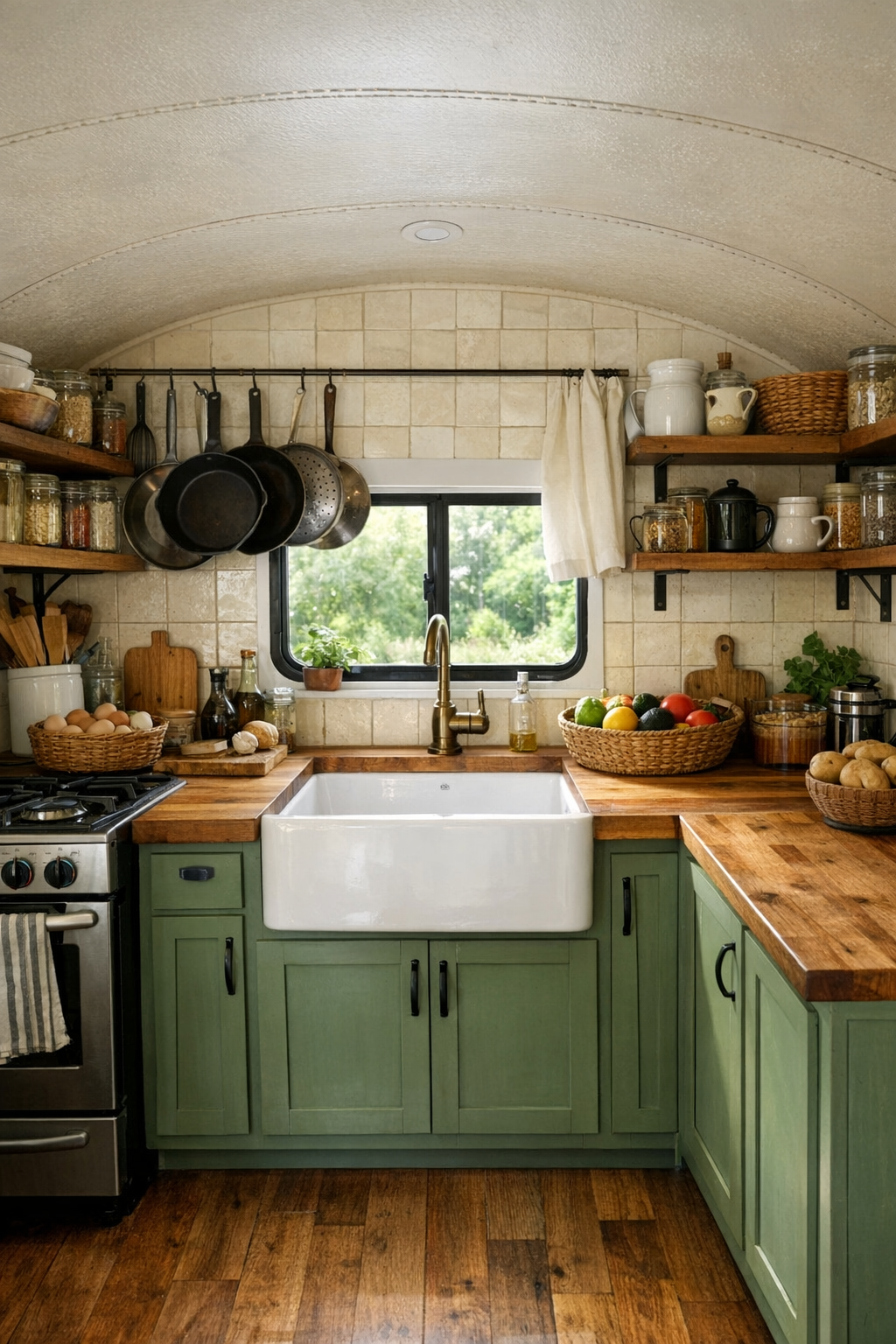
The kitchen makes wonderful use of every inch, and as someone who spends a lot of time feeding people, I find it especially charming. One side holds butcher-block counters, sage green lower cabinets, and open upper shelving lined with jars, enamelware, and everyday dishes. The backsplash is done in creamy handmade-look tile with visible variation, which adds that slightly imperfect touch rustic spaces need to feel genuine. A deep apron-front sink sits under a window, and that placement alone makes the kitchen feel more generous, because washing vegetables or stirring something at the counter comes with a view out to the homestead.
The opposite side includes a compact range, a small prep counter, and smart vertical storage for utensils, cutting boards, and hanging pans. It is the kind of kitchen where a pot of chili, a tray of biscuits, or a simple pasta supper would all feel right at home, and the finishes are durable enough to stand up to real cooking. I appreciate that the design avoids overcomplicating things: warm wood, soft green paint, black hardware, and a few baskets for produce are enough. If I were cooking here for a mixed crowd of adventurous eaters and cautious little ones, I could easily picture serving a big main dish with simple sides everyone can choose from.
Bedroom
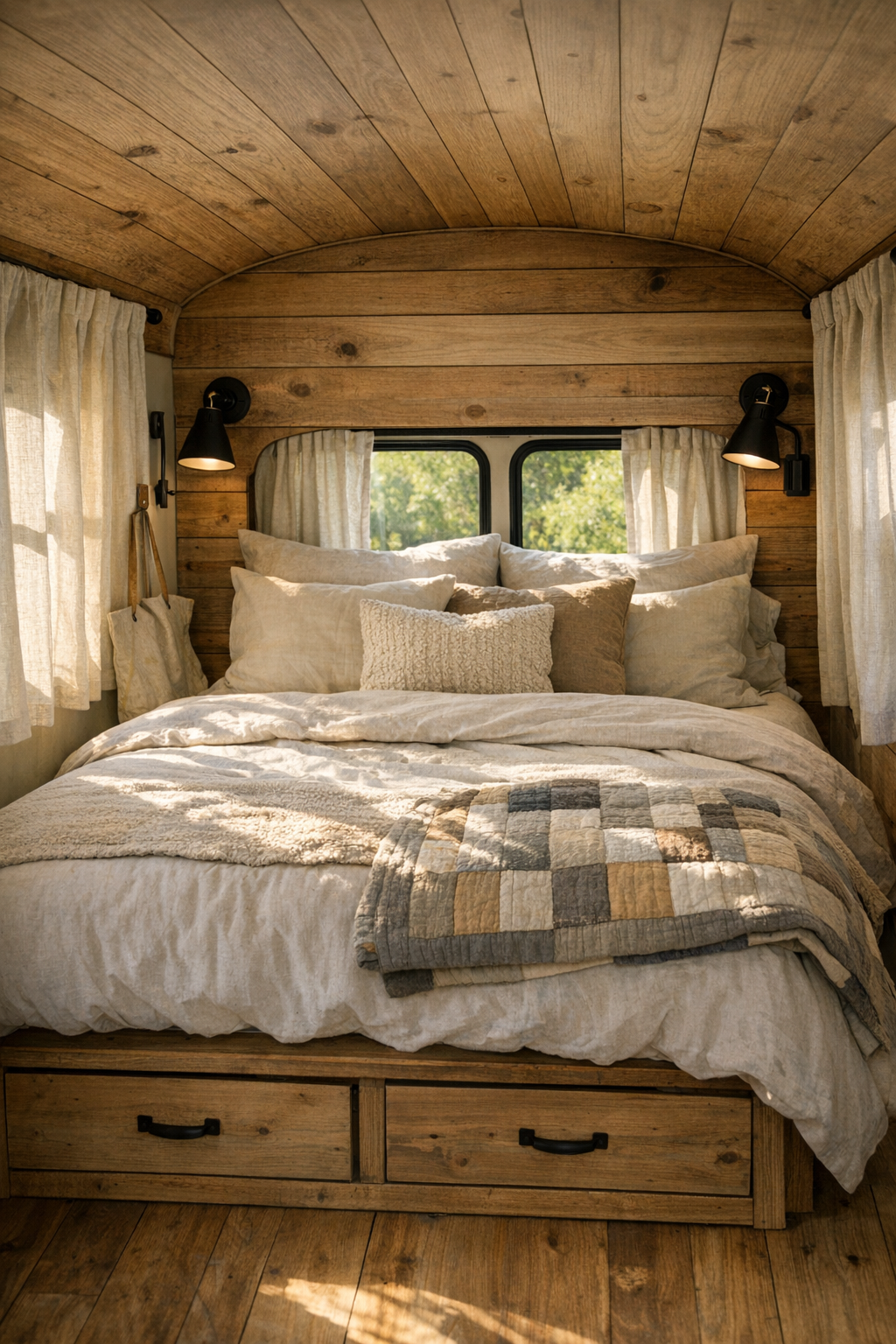
The bedroom proves that small can still feel deeply restful. A full bed is tucked neatly into the rear of the bus, framed by wood walls and layered in soft neutral bedding with a quilt folded across the foot. Instead of crowding the room with too much furniture, the design relies on built-in night ledges, under-bed drawers, and wall hooks, which keeps the space airy and calm. I love the palette here most of all: warm white, weathered pine, faded clay, and touches of mossy green that echo the land outside.
Natural light filters in through linen curtains, softening the edges of the room and making it feel cocooning rather than tight. Small reading sconces mounted above the bed free up surface space and bring a practical glow for winding down at the end of the day. This is the sort of bedroom that understands what comfort really means—not excess, but thoughtful texture, good storage, and quiet visual rhythm. It feels like a place where you would sleep hard after a long day outdoors and wake up ready to start breakfast before the rest of the house stirs.
Bathroom
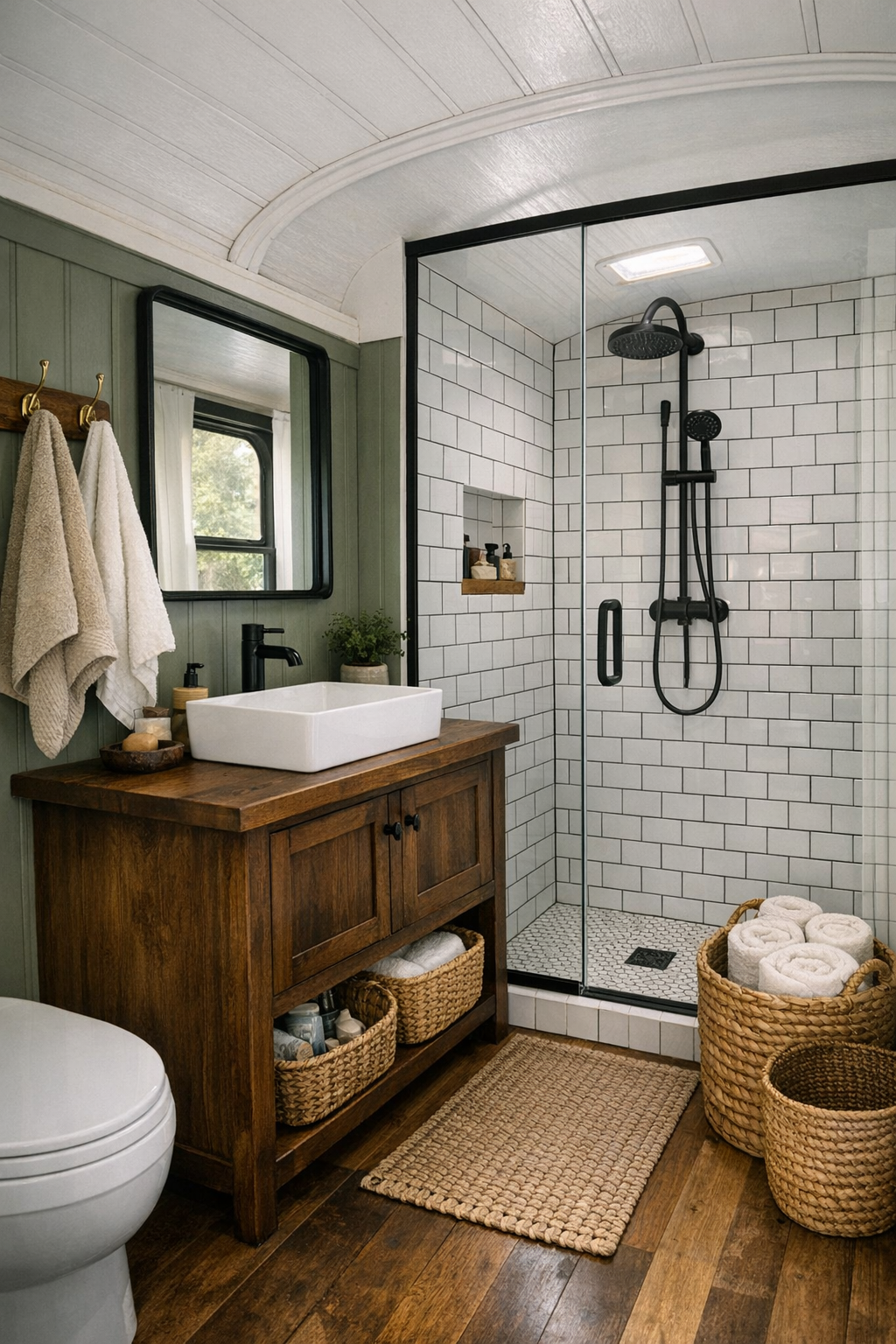
The bathroom is small, of course, but it is finished with the same thoughtful hand as the rest of the bus. A compact vanity in dark-stained wood supports a simple white basin, and above it hangs a black-framed mirror that helps bounce light around the room. The walls are part painted paneling and part small-scale tile, a combination that adds texture without making the space feel busy. Brass hooks, woven baskets, and neatly folded cotton towels make it feel cared for, which matters so much in a room this size.
The shower is especially well handled, enclosed in glass so the space stays visually open. White tile with dark grout keeps the look crisp, while a pebble-style shower floor adds an earthy note that connects nicely back to the homestead setting. I also like that there is enough shelf space for the practical things a family actually uses, not just decorative bottles. It feels clean, simple, and hardworking—the kind of bathroom that invites a quick rinse after garden work and still feels pleasant enough for a slow evening soak-your-feet kind of routine.
Other Areas
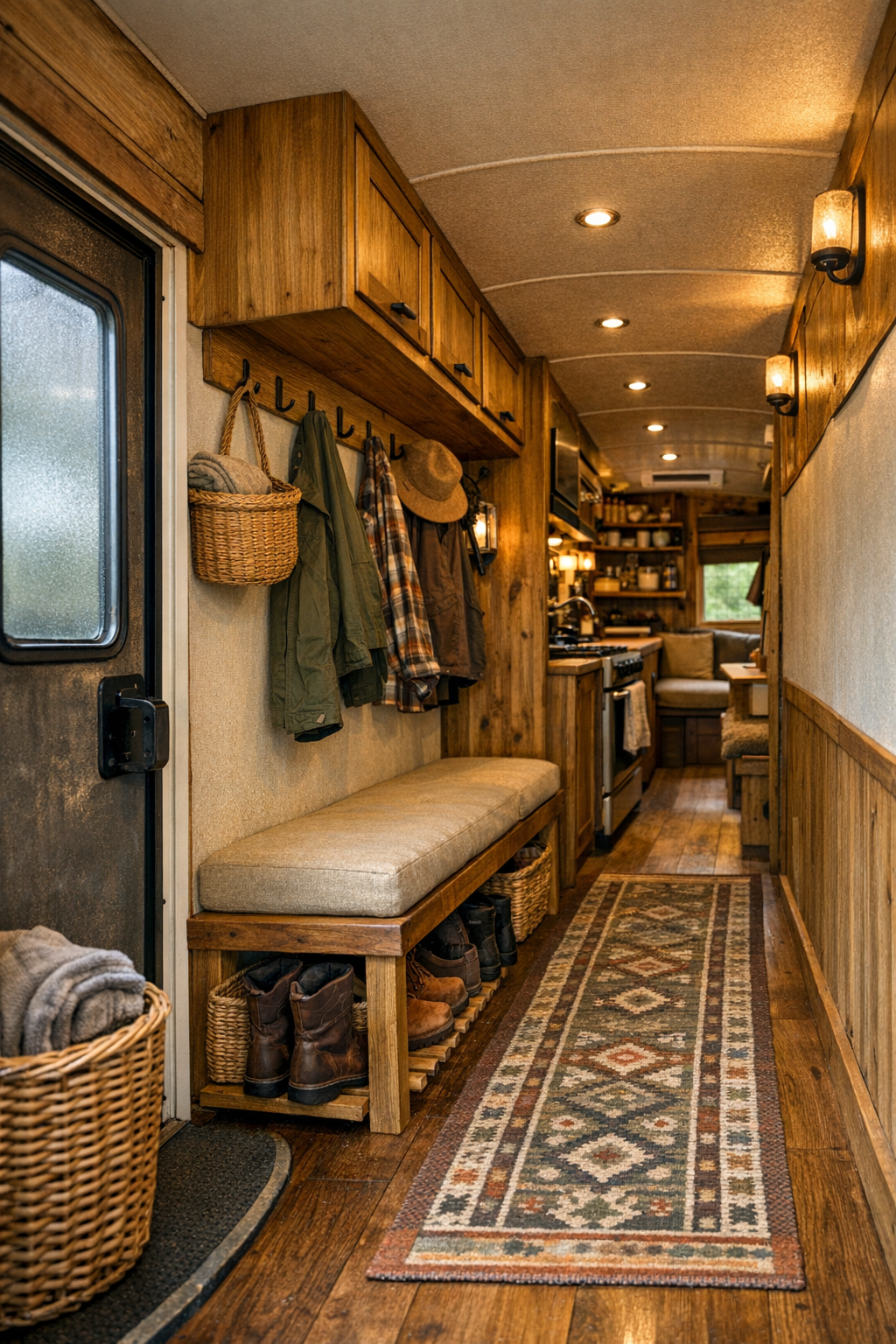
What makes this bus feel truly livable are the in-between spaces. The entry corner includes a petite mudroom moment with boot storage, coat hooks, and a bench that feels absolutely essential on a working homestead. Above, there may be overhead compartments repurposed for pantry goods, board games, and seasonal gear, and that reuse gives the bus such a satisfying sense of continuity. Even the hallway is doing quiet design work with runner rugs, wall-mounted lighting, and just enough open shelving to feel useful rather than crowded.
There is also a strong relationship between indoors and out, which I think is one of the home's best qualities. A side door opening toward a small deck or gravel sitting area extends the living space beautifully, especially for family suppers, shelling peas, or simply catching a breeze at the end of the day. In a home like this, every area has to earn its keep, and these secondary zones absolutely do. They support the rhythms of real life while keeping the overall atmosphere soft, organized, and deeply welcoming.
Why You'd Live Here
You would live here because it turns simplicity into something generous. This bus does not offer endless square footage, but it offers intention at every turn: a place for muddy boots, a table for shared meals, a kitchen that invites real cooking, and rooms layered with enough warmth to make everyday routines feel special. I think that matters more than people sometimes realize. A home does not have to be large to support family life beautifully; it just has to be thoughtful.
You would also live here for the feeling. There is a steadiness to this rustic off-grid design that feels deeply appealing in a busy world, and I can imagine it suiting anyone who wants to stay close to the land without giving up comfort. It is surprising in all the best ways—resourceful, charming, and genuinely cozy. For me, that combination is what makes this home memorable: it works hard, welcomes everyone in, and still leaves room for beauty at the table.