
I’m always drawn to homes that know exactly what they are, and this buttermilk cream Amish Quaker tiny home has that kind of quiet confidence. It feels rooted and gentle from the start, with its classic silhouette, soft cream exterior, and handcrafted detailing that give it a settled, almost storybook presence. Even before stepping inside, I can picture the slower pace it invites: morning light on painted siding, a warm mug in hand, and the kind of compact living that feels edited instead of limited.
What makes this place special is the way it blends simplicity with real warmth. As a concept design, it imagines tiny living through a handmade, deeply practical lens, where every finish feels chosen with care and every inch works hard without looking fussy. I love that balance. It has the calm honesty of traditional craftsmanship, but the interiors still feel bright, livable, and ready for modern daily routines, especially if, like me, you believe a home should make everyday tasks feel a little more beautiful.
Exterior
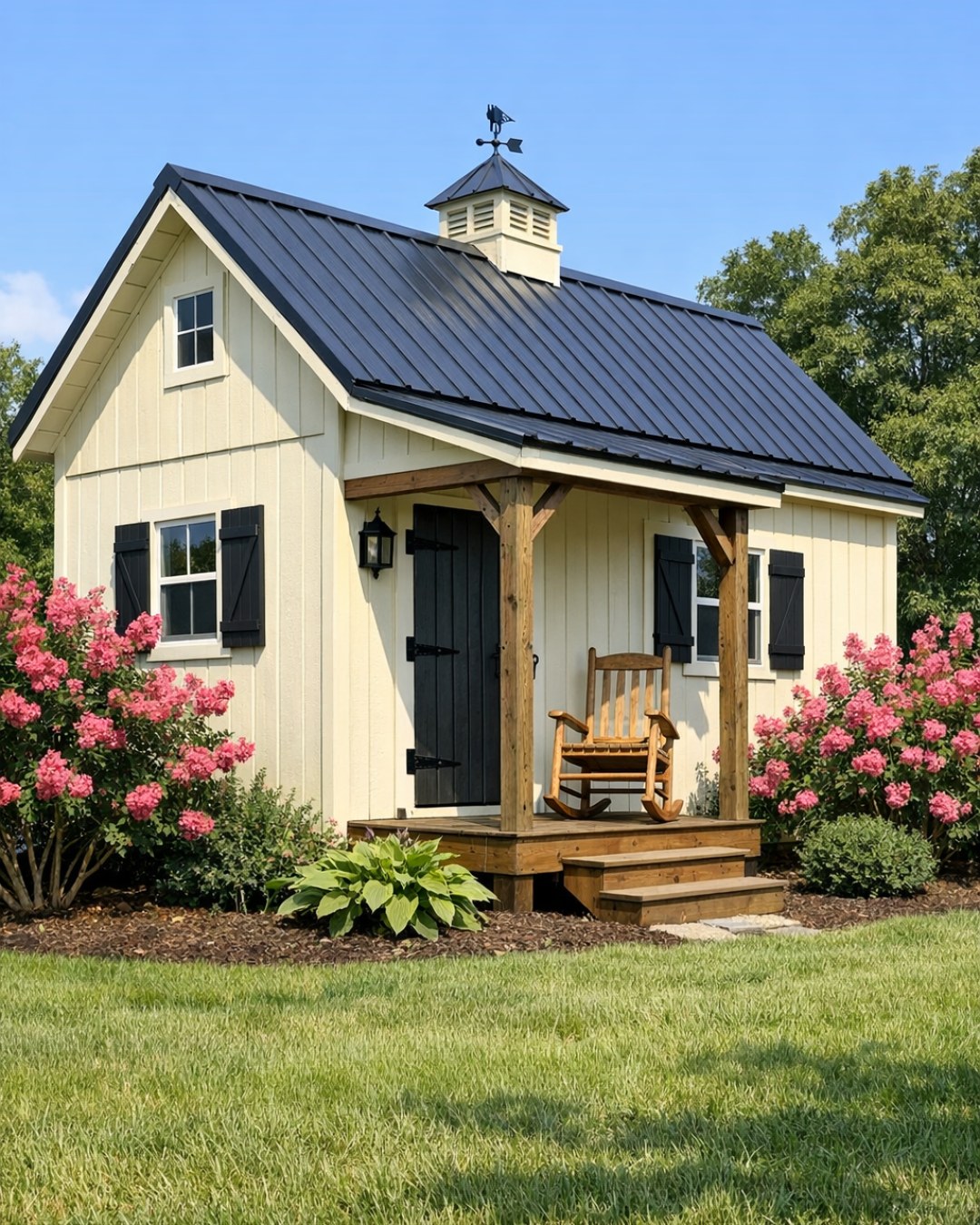
The exterior has that unmistakable Amish Quaker character: a compact form with a barn-inspired roofline, clean trim, and windows placed with restraint so the facade stays pleasingly balanced. The buttermilk cream siding softens the structure and gives it a welcoming, sun-washed look, while white-painted casings and a darker roof add enough contrast to keep everything crisp. I can easily imagine this tucked at the edge of a meadow or on a quiet Midwestern lot, where the home would look especially lovely against green grass, gravel paths, and a few simple planting beds full of herbs and hardy perennials.
What I appreciate most is that nothing on the outside feels overdone. The charm comes from proportion, craftsmanship, and materials that age gracefully rather than flashy styling. A modest entry porch, wood steps, black iron hardware, and lantern-style sconces would be all this home needs. The result is tidy and timeless, with the kind of understated curb appeal that makes you think the inside is probably just as thoughtful as the exterior promises.
Living Room
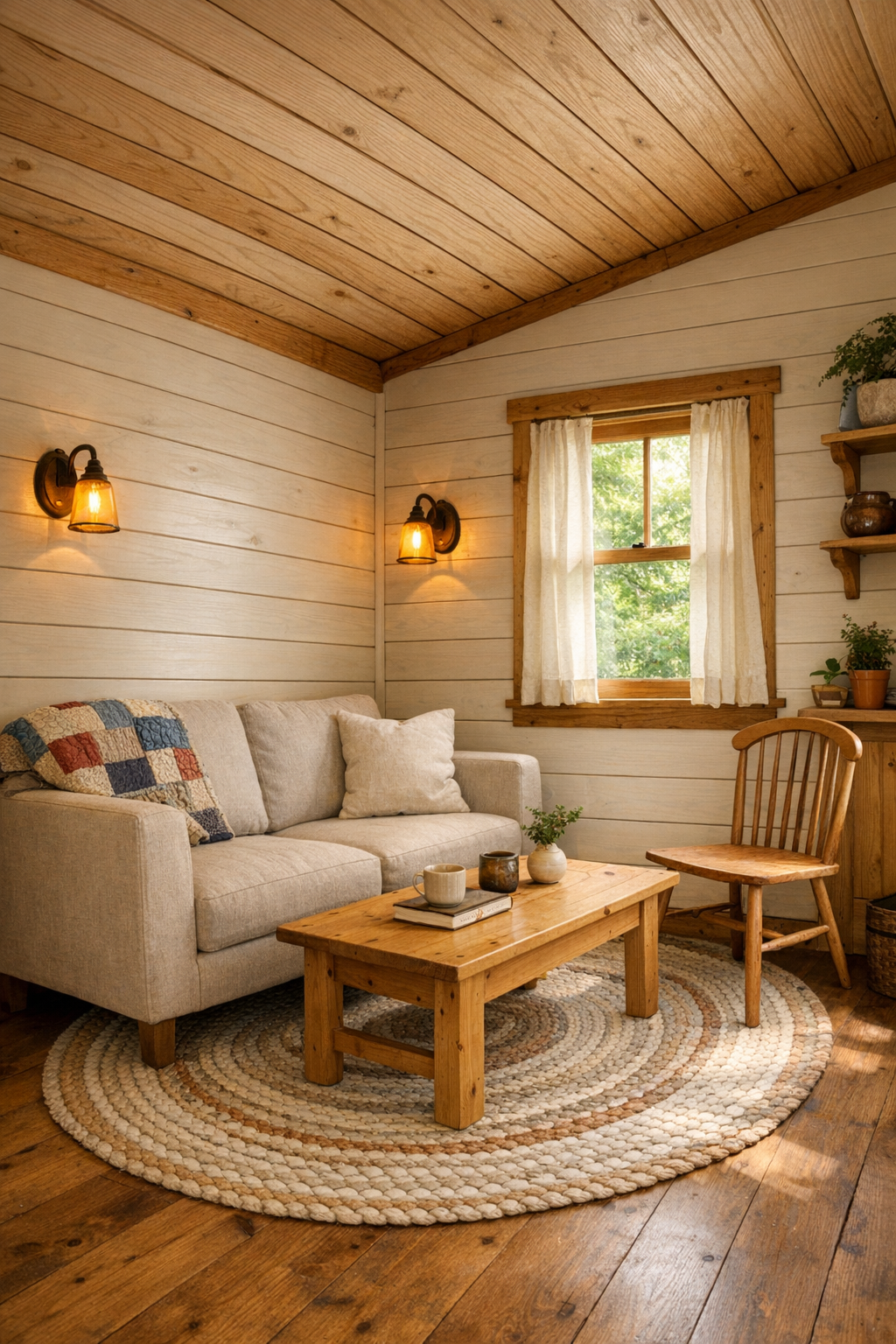
The living room is where the handcrafted quality of the home really starts to shine. I’d dress this space with painted tongue-and-groove walls in a warm cream tone, wide-plank wood floors underfoot, and a ceiling lined in natural-stained boards to bring in a little contrast overhead. Because the footprint is small, the furniture needs to be scaled carefully, so I’m picturing a slim rolled-arm loveseat in oatmeal linen, a spindle-back accent chair, and a compact pine coffee table with softly worn edges. Every piece would feel useful, familiar, and just rustic enough without tipping into theme-y territory.
Lighting does a lot of emotional work here. During the day, the room would glow with natural light bouncing off pale walls and simple cotton curtains, and at night I’d rely on a pair of warm sconces and a small table lamp with a pleated shade to create that cozy, tucked-in feeling tiny homes do so well. A braided wool rug, a quilt folded over the arm of the sofa, and a few open shelves for cookbooks, pottery, and baskets would make the room feel lived in. It’s the kind of space where I can imagine answering emails in the morning and then curling up after dinner with a cup of tea, happy to have everything I need within reach.
Dining Room
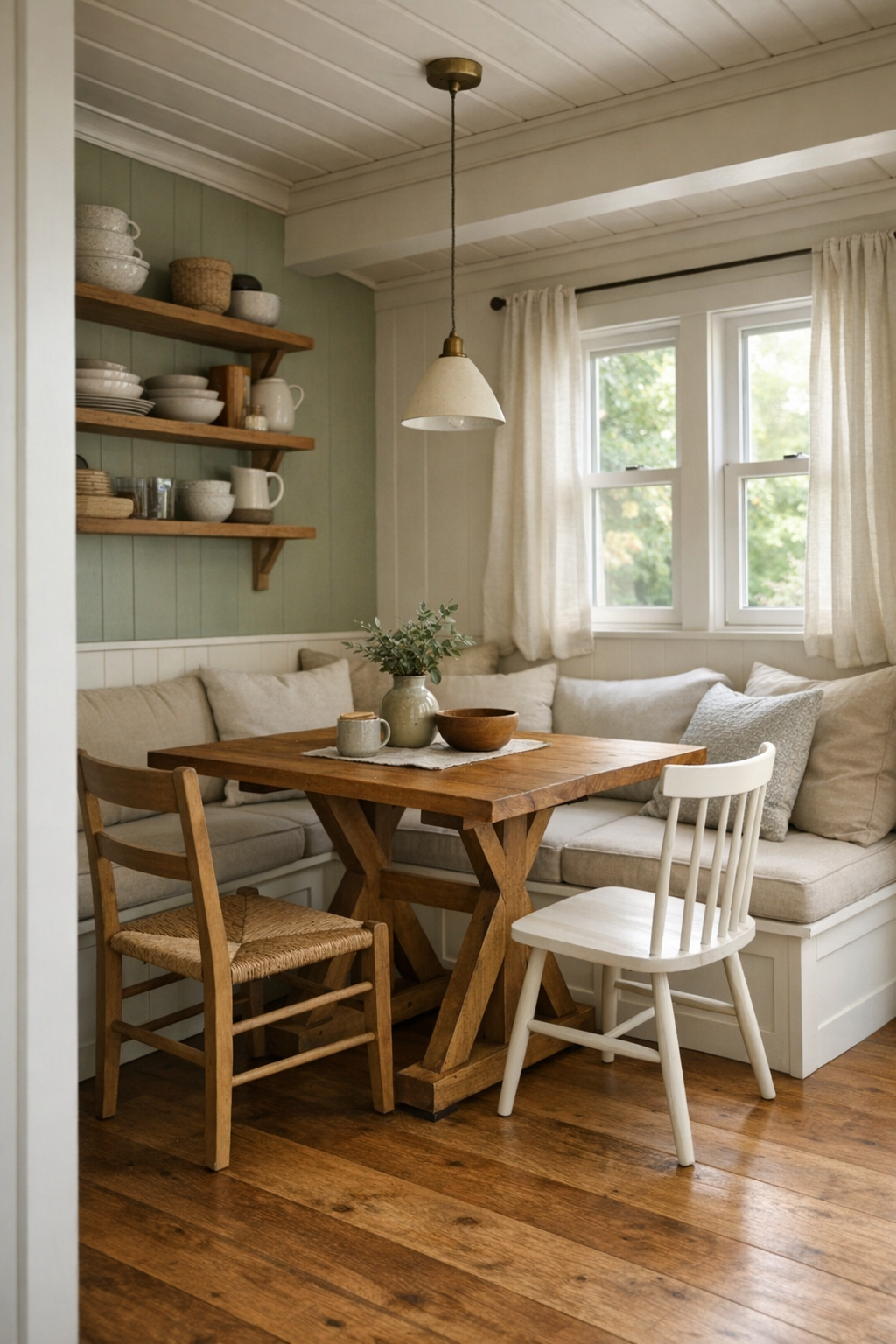
In a tiny home like this, the dining area works best when it feels integrated rather than formal, and I love the idea of it sitting just off the living room near a bank of windows. A built-in banquette would be my first choice because it instantly makes the most of limited square footage while adding that custom, handcrafted feel. Painted in the same creamy tone as the trim and topped with neutral seat cushions, it could be paired with a small rectangular trestle table in warm wood and a pair of classic chairs on the open side. That mix keeps the room visually light while still offering enough seating for a casual dinner or a weekend baking session.
The palette here should stay soft and edible, if that makes sense, because dining spaces always feel better to me when they’re connected to food and comfort. Pale cream, honey wood, flax, and muted sage accents would be beautiful, especially with simple ceramic dishes on open shelving or a narrow plate rack. A modest pendant in blackened metal or antique brass would define the zone without overwhelming it. This is exactly the kind of dining spot where I’d picture setting out a quick soup-and-bread dinner on a weeknight and still feeling like the table deserves a candle and a cloth napkin.
Kitchen
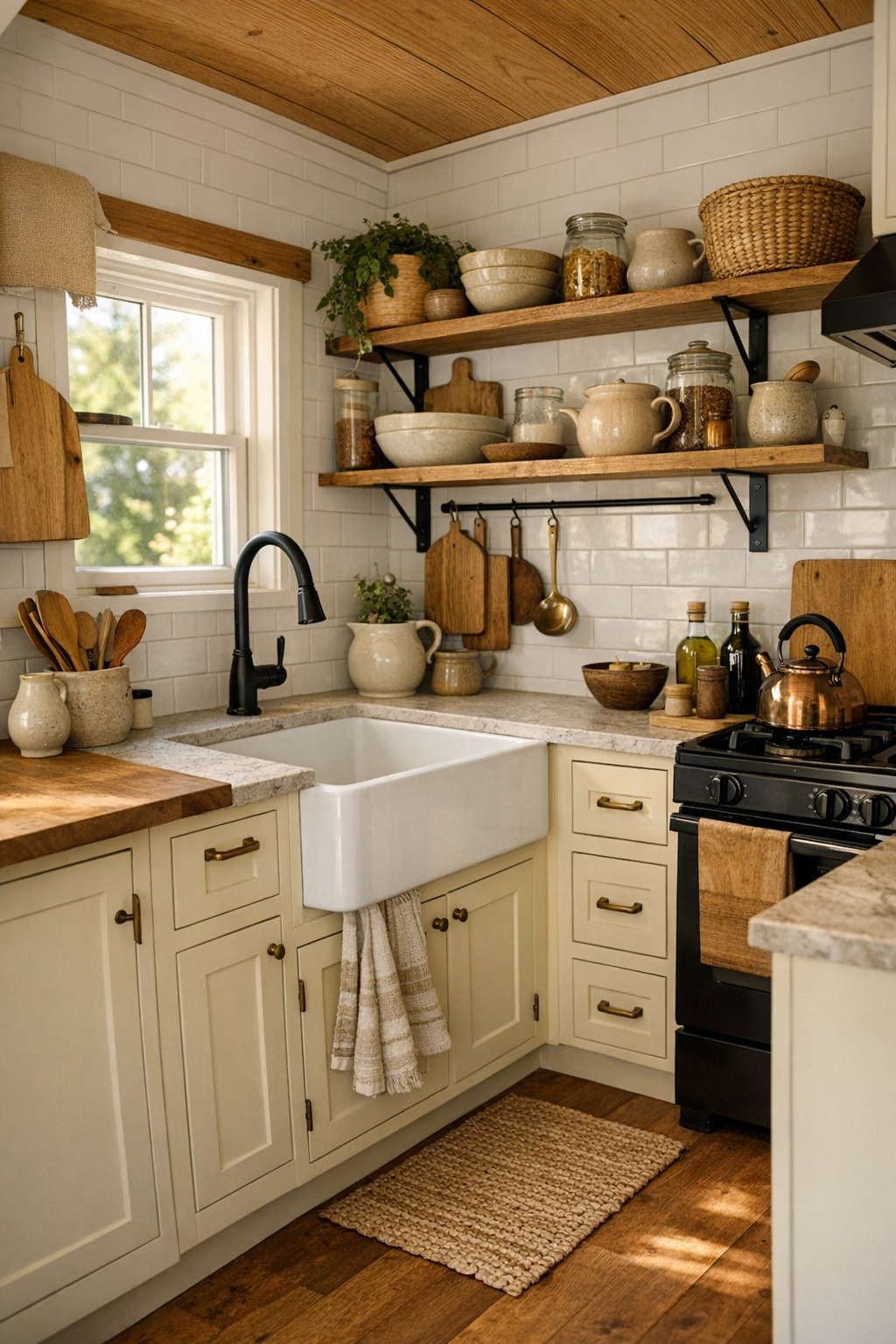
The kitchen is easily my favorite room in a tiny home when it’s done well, and this one has all the ingredients to be both beautiful and hardworking. I’m picturing custom shaker cabinetry in a soft buttermilk tone, soapstone-look countertops, and a white apron-front sink set under a window so even washing produce feels a little special. Open upper shelving would keep the room from feeling boxed in, while lower cabinets and deep drawers would handle the practical side of daily life. Because I spend a lot of time cooking, I always notice whether a kitchen would support real use, and this layout absolutely could with a compact but efficient work triangle and a stretch of uninterrupted prep space.
To keep the handmade character front and center, I’d add unlacquered brass or matte black hardware, a simple subway tile backsplash with slightly irregular edges, and wood elements that bring warmth back into the room. Maybe a narrow rail for hanging towels and utensils, a cutting board propped by the range, and a few stoneware crocks that are genuinely useful, not just decorative. Under-cabinet lighting and a pair of small windows would brighten every corner, making the kitchen feel open despite its size. It has that rare mix of polish and humility, like a room designed by someone who knows dinner still has to get on the table after a long workday.
Bedroom
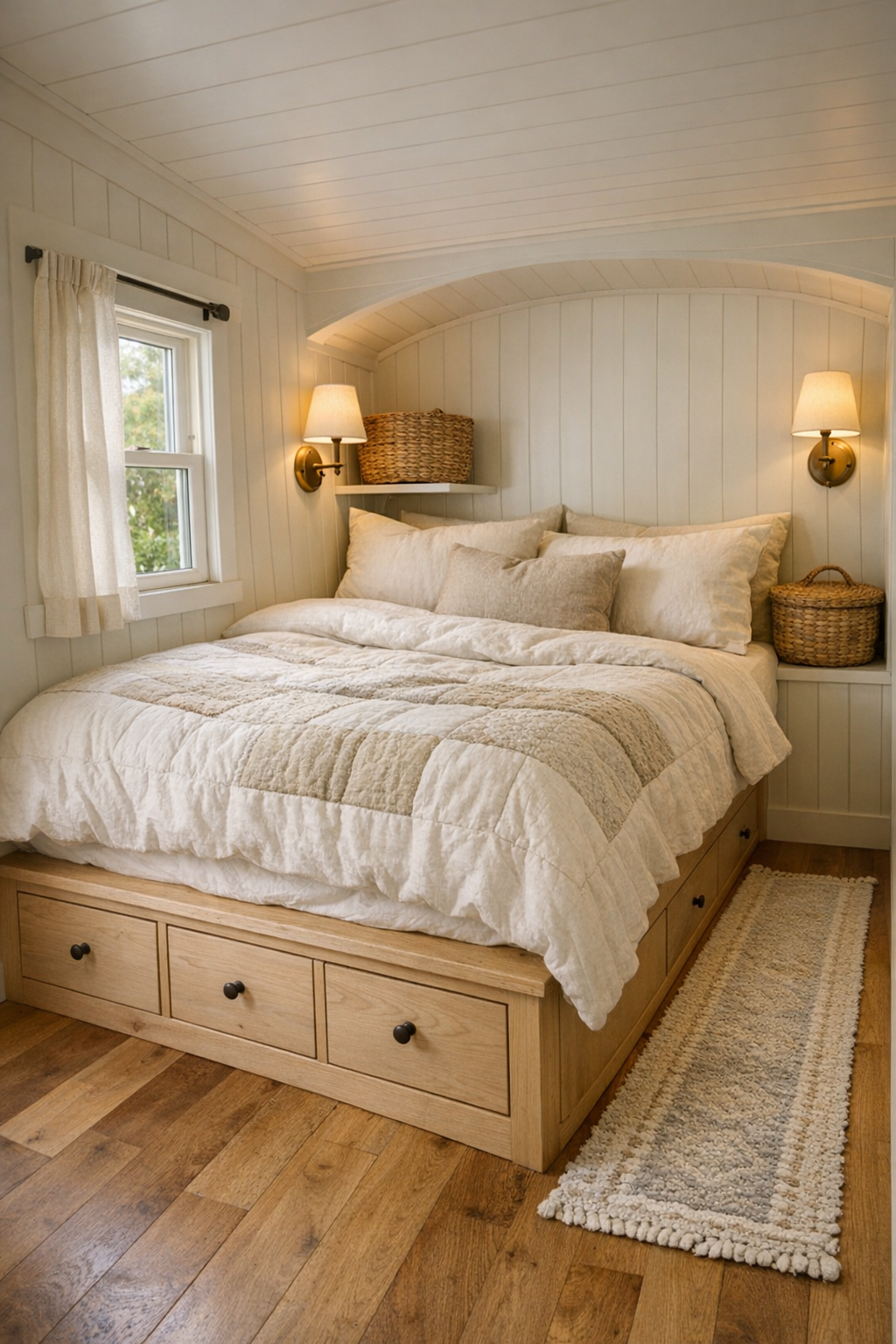
The bedroom should feel hushed and restorative, and in this home I’d keep it deliberately simple. A built-in bed frame in painted wood or lightly stained pine would make the most of the room, ideally with drawers below for extra storage and wall sconces above to free up surface space. The bedding would stay tonal and soft: ivory linen, a stitched quilt, and maybe a stripe or small floral in muted blue or sage for a little pattern. Tiny bedrooms can feel cramped fast, so I’d lean into vertical paneling, a pale palette, and minimal but meaningful decor to keep the room airy.
What really elevates a small sleeping space is texture, and this room has so much potential for it. I can see woven baskets tucked neatly underneath, a small wool runner beside the bed, and simple peg rails for hanging a robe or tomorrow’s outfit. If there’s a dormer or even just one well-placed window, natural light would skim across the cream walls and make the whole room feel peaceful instead of tight. It’s the kind of bedroom that encourages earlier nights, slower mornings, and a little less screen time, which honestly sounds pretty ideal to me.
Bathroom
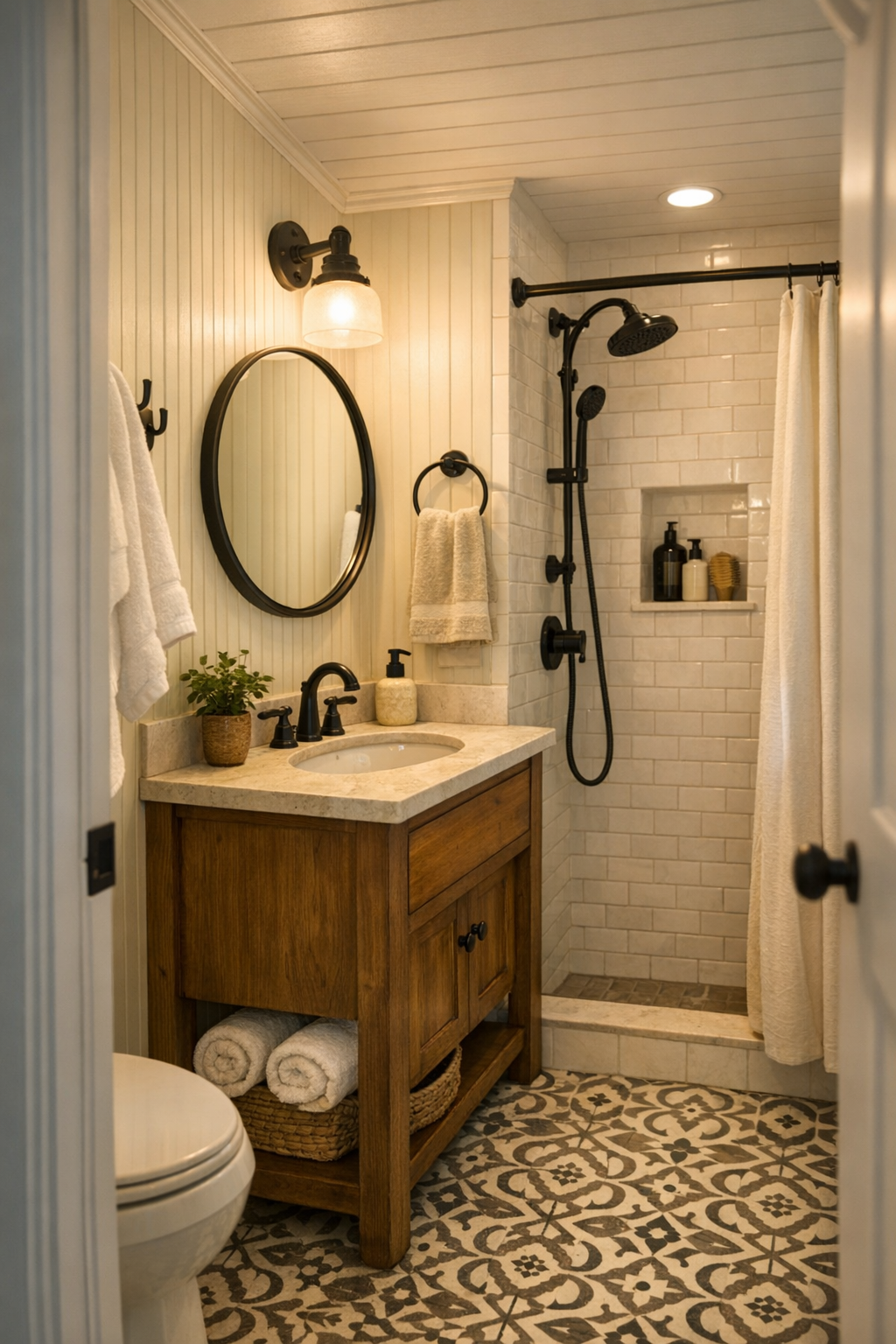
The bathroom carries the same handcrafted spirit but shifts slightly crisper in mood, which I think is exactly right. I’d use painted beadboard or narrow paneling on the walls, a compact vanity in warm wood or cream paint, and a countertop in pale stone or durable quartz with subtle veining. A simple round mirror softens all the straight lines, while black metal hooks, a rail for hand towels, and a glass-front sconce bring in just enough contrast. In a tiny home, bathrooms need to feel very orderly, so every detail here should be easy to wipe down, easy to store, and easy to live with.
For the shower, I imagine classic white tile with darker grout and maybe a niche lined in the same stone as the vanity for continuity. A small patterned floor tile would add personality without crowding the room, especially if the rest of the palette stays restrained with cream, white, soft gray, and touches of warm wood. Good lighting is essential, but I’d still want the room to feel calm rather than clinical, so warm bulbs and a little natural light would make a big difference. This is one of those bathrooms that proves small can still feel thoughtful, polished, and quietly luxurious.
Other Areas
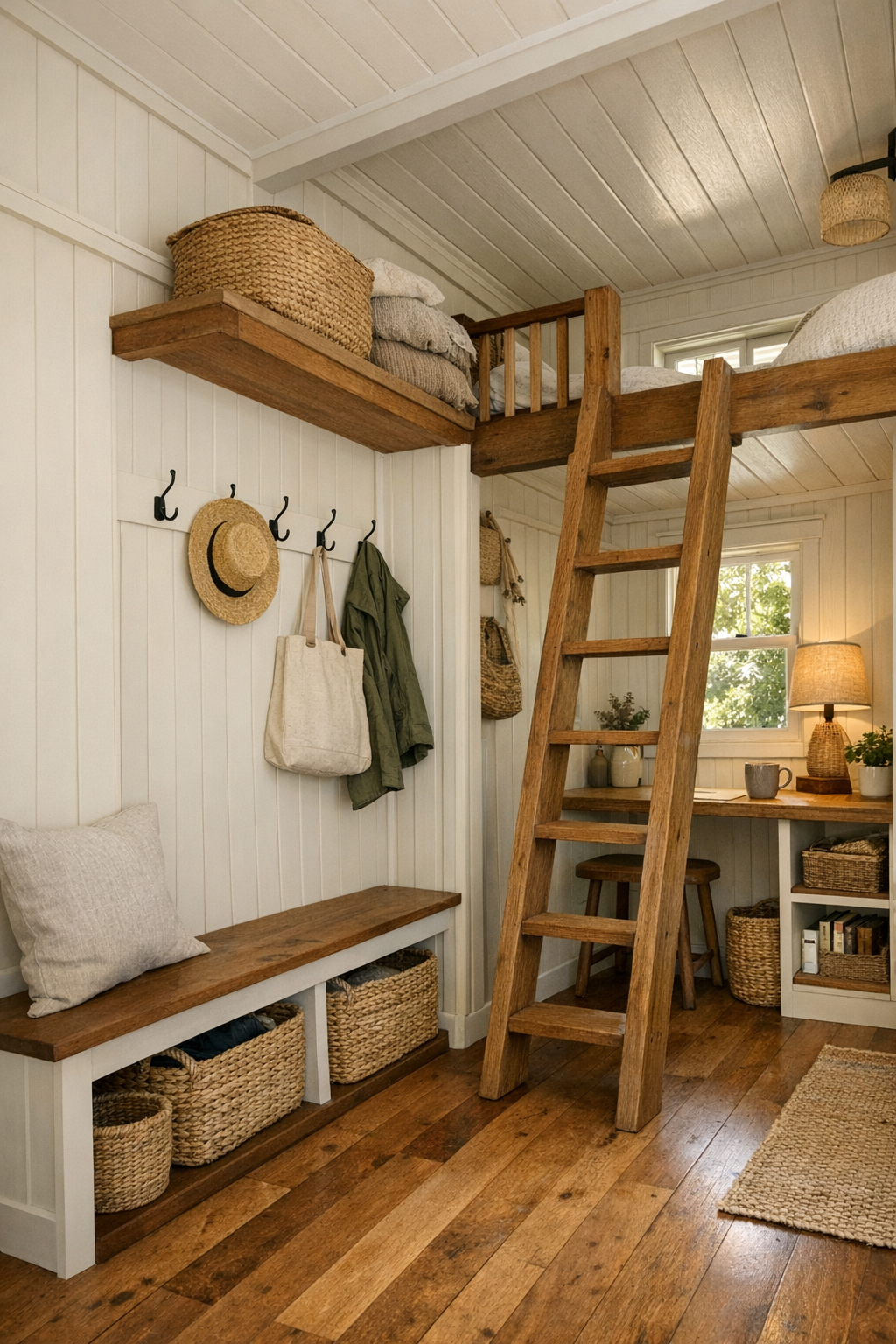
In a home this size, the in-between spaces matter just as much as the main rooms. I’d expect to see a petite entry with built-in hooks, a narrow bench, and cubbies for shoes or market totes, because tiny homes function best when clutter is handled the second you walk in. A ladder-access loft or overhead sleeping/storage nook could add flexibility without breaking the visual charm, especially if it’s finished in the same cream-and-wood palette so it feels like a seamless continuation of the home rather than an afterthought. Even the staircase, if there is one, should work overtime with hidden drawers or cabinet fronts tucked into each step.
I also love the possibility of a small reading corner, desk ledge, or multi-use landing carved out near a window. As someone who’s always balancing work and home life, I notice when a design makes room for those in-between moments, like replying to messages, planning meals, or flipping through a cookbook before making a grocery list. These extra zones don’t need much: a wooden stool, a wall shelf, a task light, maybe a woven basket underneath. But in a tiny home, those details can completely change how easy and enjoyable the house feels on an everyday basis.
Why You'd Live Here
You’d live here because it offers something a lot of larger homes miss: clarity. Every finish, every built-in, and every material choice feels intentional, so the house supports daily life instead of distracting from it. The buttermilk cream palette keeps everything bright and uplifting, while the Amish Quaker influence brings in that reassuring sense of craftsmanship and permanence. It’s small, yes, but it doesn’t feel deprived. It feels edited, warm, and beautifully human.
For me, the biggest draw is how this home turns ordinary routines into something more grounded. Cooking dinner, folding laundry, opening the windows, putting away groceries, lighting a lamp at the end of the day, all of it would feel a little calmer here. If you’re craving a home that values quality over excess and comfort over showiness, this tiny house makes a very compelling case. It proves that thoughtful design and handcrafted character can make even the smallest footprint feel deeply satisfying.