
This houseboat takes the familiar language of an Adirondack lodge and translates it into something wonderfully intimate, practical, and calming on the water. From the outside, it has that sturdy, welcoming character I associate with lake country retreats—timber detailing, warm natural finishes, generous glazing—but inside, everything feels more carefully edited, more nimble, and more attentive to daily comfort. What makes it sing for me is the balance: rustic without heaviness, compact without feeling cramped, and unmistakably cozy without slipping into cliché.
Because this is a concept design, there is a little freedom in how gracefully every detail comes together, and that sense of possibility is part of the appeal. Set against a quiet shoreline or moored in a protected marina, the home feels designed for people who want the romance of a lodge and the ease of accessible living in one thoughtful package. As someone who spends a lot of time thinking about how spaces support real routines—cooking, gathering, resting, moving comfortably—I found plenty here to admire.
Exterior
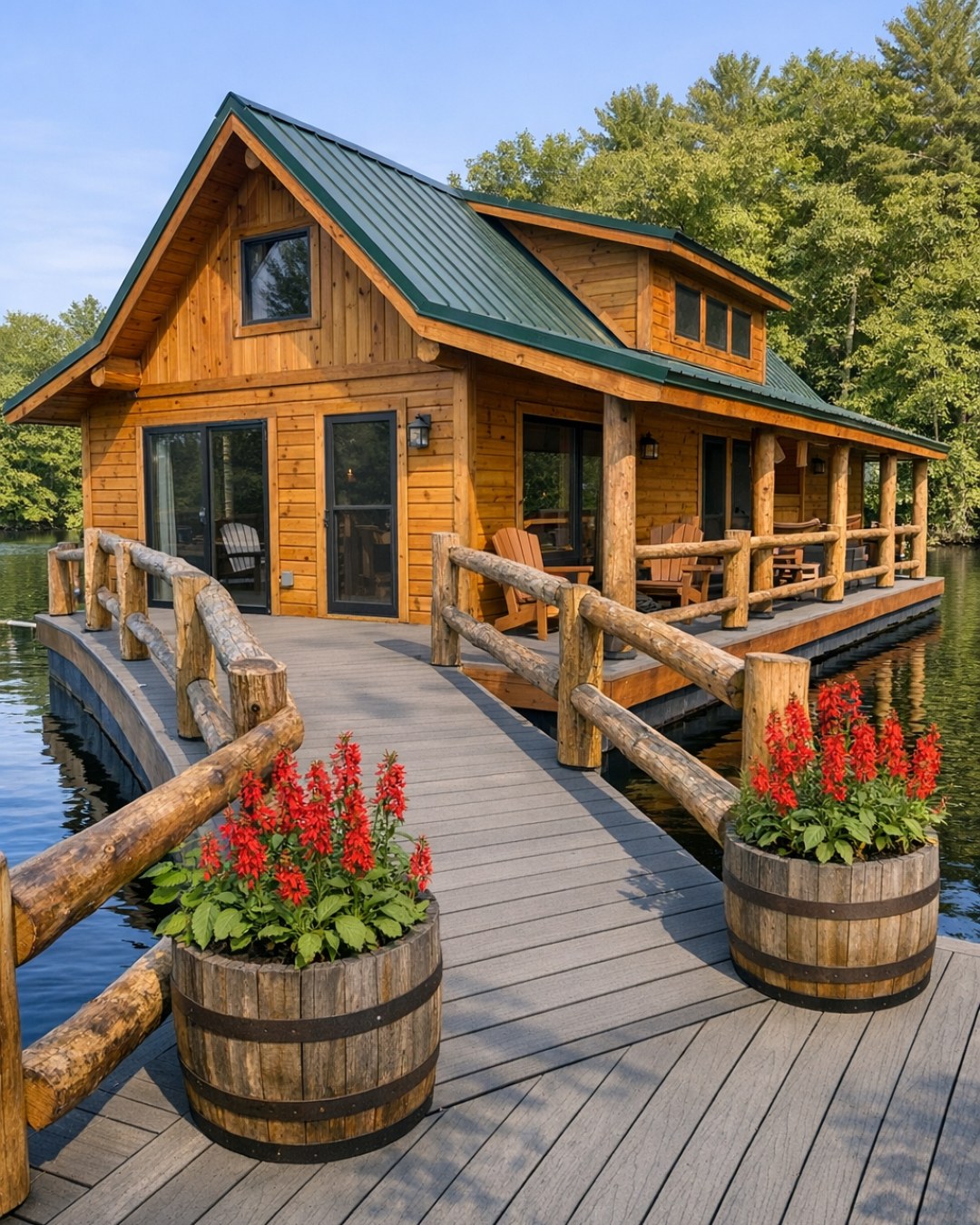
The exterior gives you the first clear clue that this is not a standard houseboat dressed up with a few rustic gestures. Its massing is low and grounded, with a broad roofline and deep overhangs that echo classic Adirondack camp architecture, while the floating base keeps the profile streamlined and contemporary. Cladding in stained cedar and stone-look composite panels creates a layered, tactile façade, and the palette stays close to nature: bark brown, weathered charcoal, soft moss, and the warm amber tone of sealed wood after rain.
What I especially like is how accessibility appears integrated rather than added on. The boarding approach feels generous, with a gentle, well-proportioned ramp, substantial railings, and wide deck circulation that reads as part of the design language. Large black-framed windows break up the rustic envelope with crisp modern lines, bringing in light and reflecting the water, while sheltered porches at either end create a sense of arrival and pause. It feels secure, handsome, and quietly luxurious in the way good lodge architecture often does.
Living Room
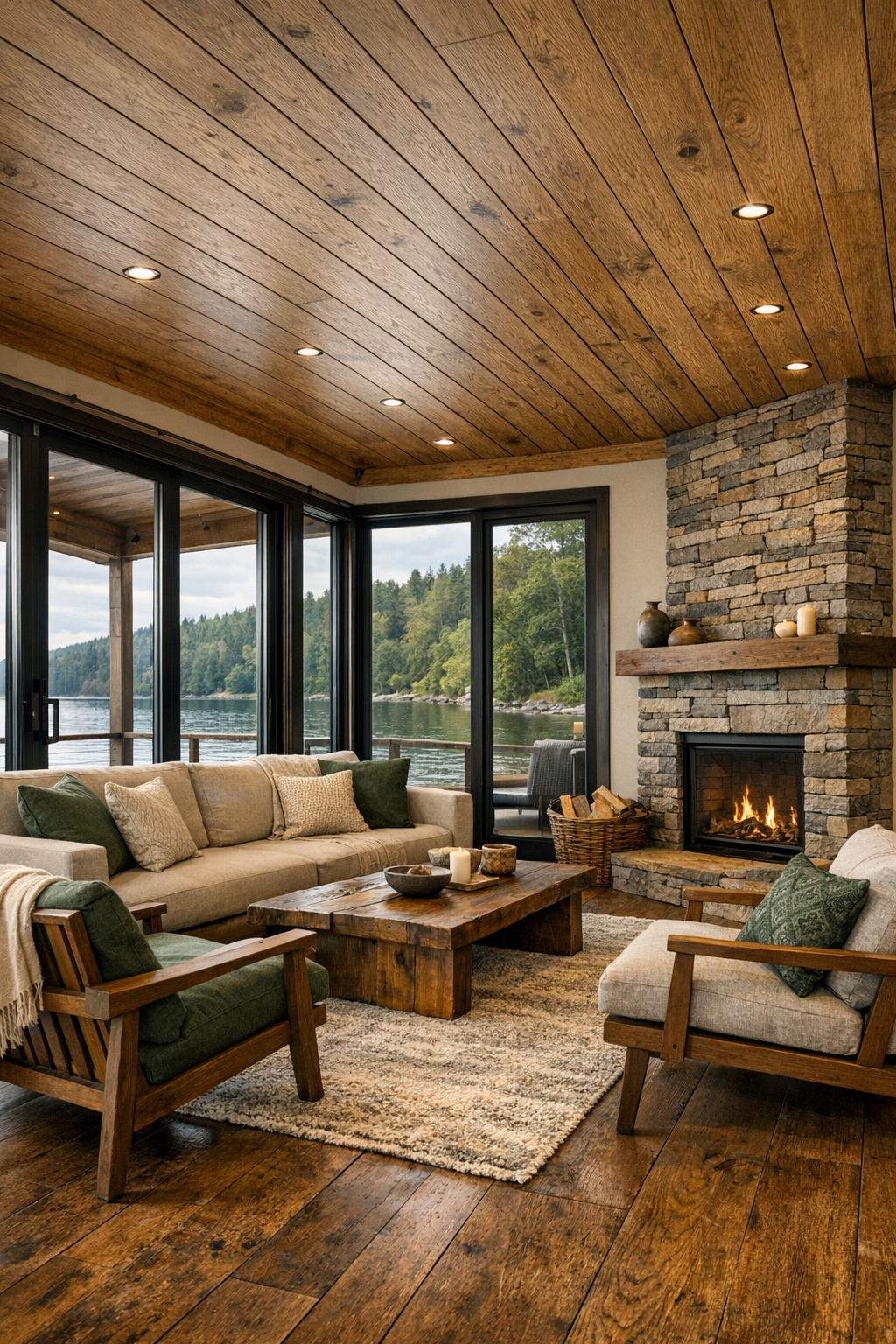
The living room is where the lodge inspiration becomes deeply inviting. A wall of windows keeps the water in constant view, but the room itself is anchored by tactile, comforting materials: knotty oak ceiling planks, lightly hand-scraped wood flooring in a mid-tone finish, and a fireplace surround in stacked fieldstone rendered in a slimmer, more tailored profile than you might expect in a mountain cabin. The color palette leans into cream, tobacco, heather gray, and deep forest green, which gives the room warmth without making it feel dark.
The furniture arrangement is clearly planned for both conversation and easy movement. A low-profile sofa with supportive cushions, two broad lounge chairs with exposed wood arms, and a pair of movable ottomans keep circulation open while still making the room feel complete. I can imagine this being the kind of place where morning coffee tastes better just because of the light. Layered wool and flatweave textiles soften the acoustics, and the lighting mix—iron sconces, a shaded central fixture, and warm recessed ceiling lights—adds evening glow without glare.
Dining Room
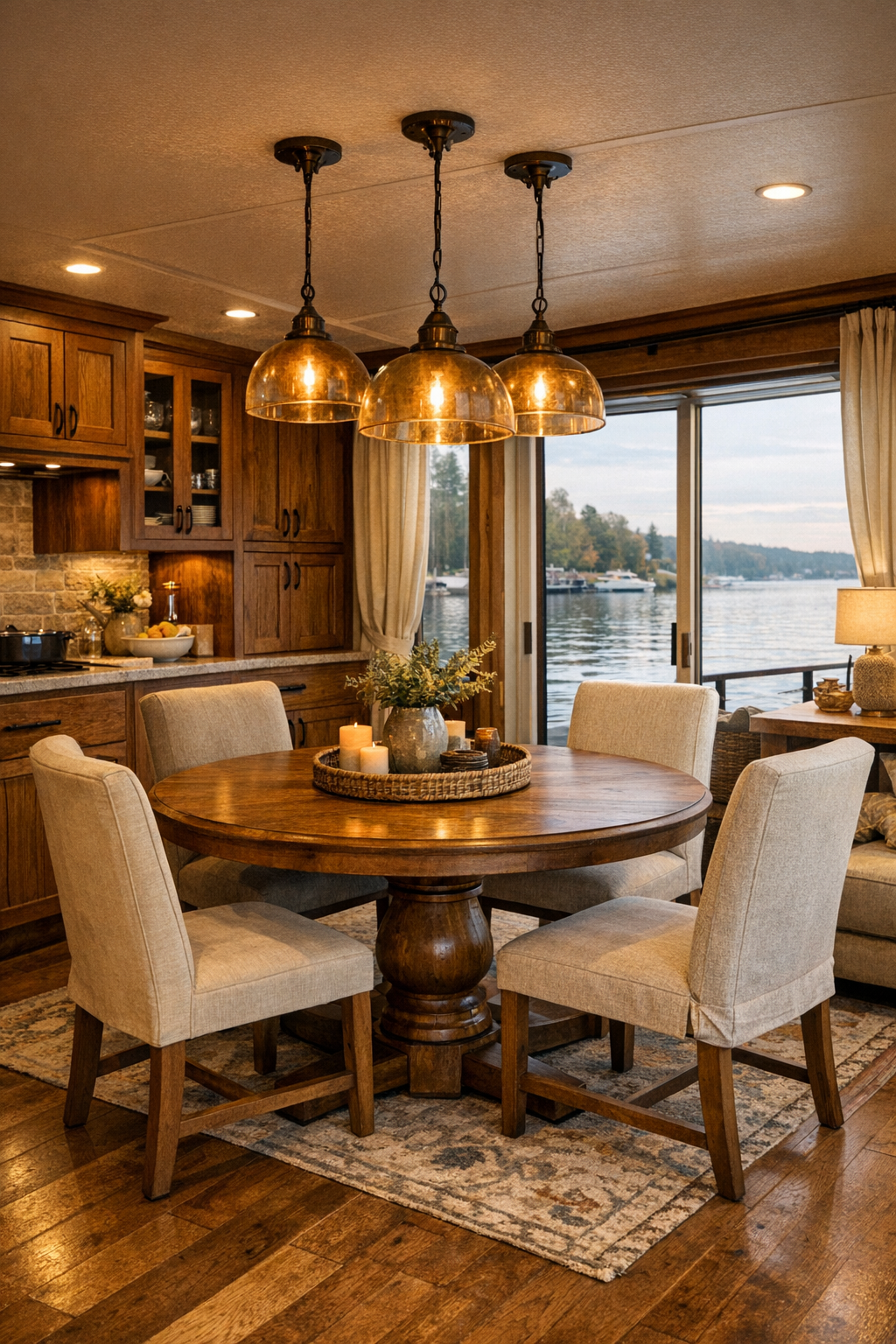
The dining area sits comfortably between the living space and kitchen, and that placement makes perfect sense in a home where entertaining would likely revolve around simple, satisfying meals and long conversations. Rather than forcing in a formal table, the design uses a round or softly oval table with a pedestal base, which is one of those choices I always appreciate in tighter footprints because it improves legroom and circulation all at once. Upholstered dining chairs in a durable woven fabric keep the room soft and livable, while their sturdy silhouettes echo lodge furniture without feeling bulky.
There is also a lovely sense of occasion here, created less by size than by detail. A pendant with mica-inspired panels or seeded glass casts a warm, flattering light over the tabletop, and built-in cabinetry in stained wood provides storage for linens, serving pieces, and everyday dishes. I can easily picture a hearty soup supper here in late fall, with the windows catching the blue of the water at dusk. The finishes stay consistent with the rest of the houseboat, which helps the dining room feel connected rather than cordoned off.
Kitchen
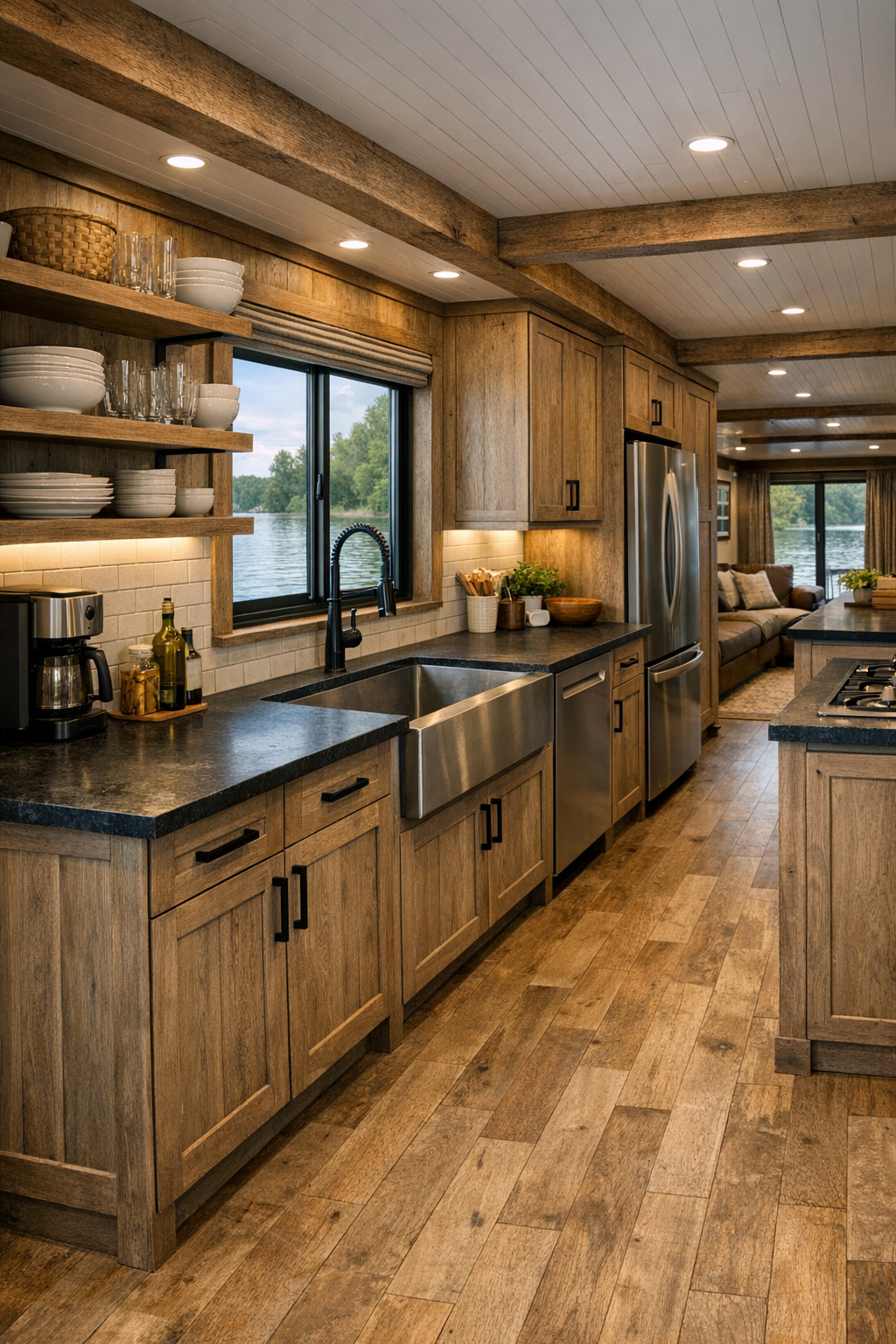
As an experienced cook, I tend to judge a home quickly by its kitchen, and this one is thoughtful in all the right ways. The layout appears galley-inspired but widened enough to allow comfortable turning space, with lower countertops, broad walkways, and storage planned for easy reach. Cabinetry in a muted mushroom or weathered pine tone keeps the room bright, while honed dark soapstone or quartz counters ground the space beautifully. The backsplash, likely handmade-look tile in a soft cream, reflects light without becoming shiny or fussy.
What elevates the kitchen is how it combines utility with the lodge atmosphere. Open shelving for everyday ceramics, matte black hardware, and a substantial sink under a window give it character, but the real success is in the working details: under-cabinet lighting, accessible appliance placement, and an island or peninsula that doubles as prep surface and casual seating. It feels like a kitchen where you could braise, bake, chop, and serve comfortably, with enough warmth in the materials to keep it from reading as purely functional.
Bedroom
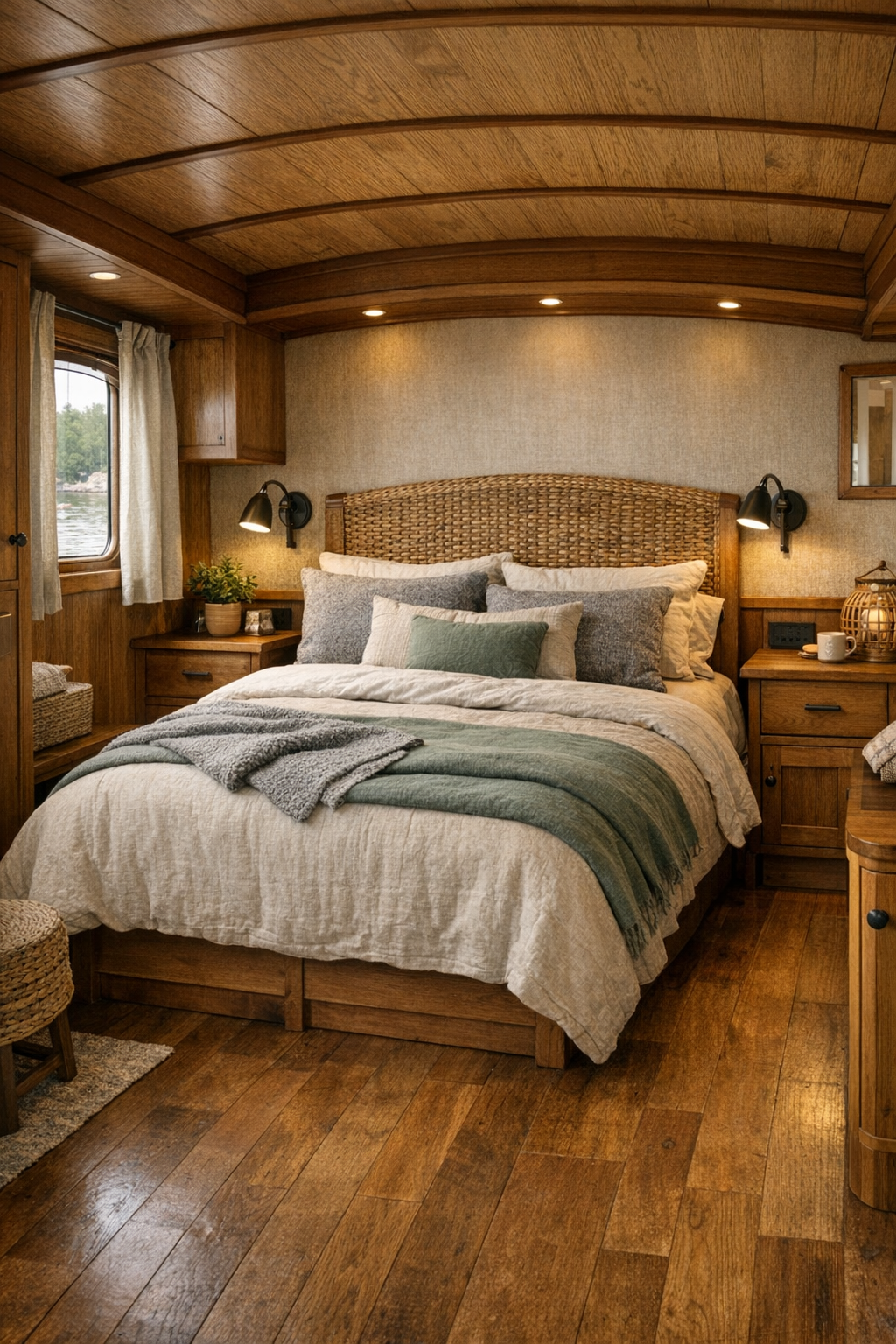
The bedroom takes the coziest parts of the lodge idea and pares them back to their most restful expression. Instead of heavy log-cabin theatrics, the room uses quiet texture: upholstered wall panels or a woven headboard, warm wood trim, soft bedding in oatmeal and slate, and curtains that frame the windows without blocking too much natural light. The proportions seem carefully managed, with enough clearance around the bed for easy movement and integrated storage that avoids crowding the walls with extra furniture.
I like that the room does not try too hard. A pair of compact sconces or pendant reading lights frees the bedside surfaces, and a built-in wardrobe in matching wood tones makes the room feel orderly and custom. There is likely a bench, drawer base, or low cabinet tucked under a window, adding function without interrupting the calm. Altogether, it feels sheltered and deeply comfortable—the sort of room where the sound of water against the hull might become part of your nightly routine.
Bathroom
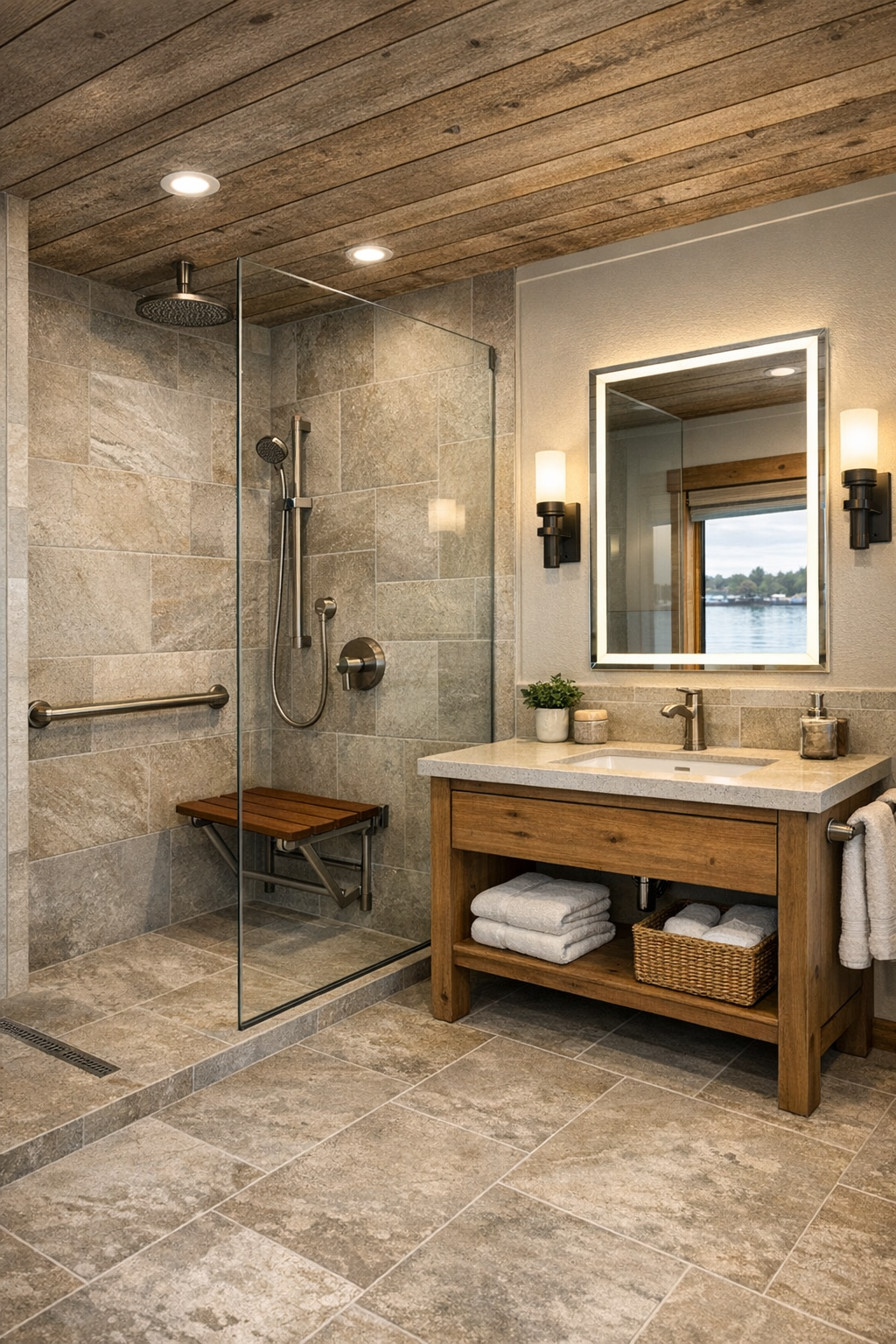
The bathroom is one of the strongest examples of how accessibility and style can genuinely support each other. A curbless shower with large-format stone-look tile immediately makes the room feel more expansive, and a frameless glass panel keeps sightlines open. The vanity is designed with practical clearance in mind, but it does not sacrifice character; wood cabinetry, a honed counter, and a simple rectangular sink give it a furniture-like quality. Finishes in warm gray, sand, and off-white keep the space bright and easy on the eyes.
Good bathroom design always comes down to confidence in the details, and this one seems to understand that. Grab bars are integrated in finishes that match the plumbing hardware, the mirror is broad and well lit, and the shower niche and shelving are positioned for genuine usability. I also imagine radiant flooring here, or at least a surface that feels substantial underfoot, because that small note of comfort matters. The room feels clean, secure, and serene rather than clinical, which is exactly the right outcome.
Other Areas
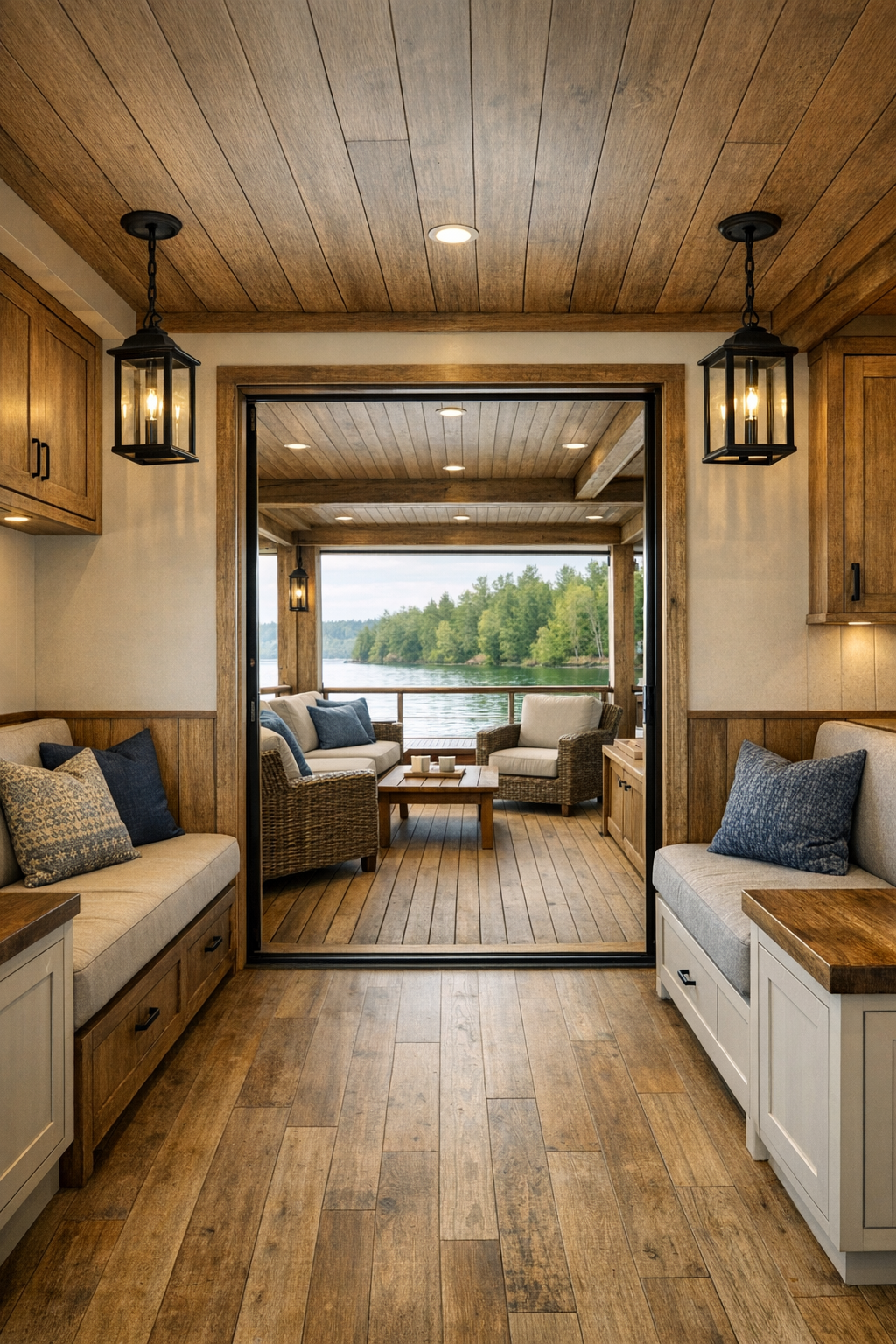
The secondary spaces are where this houseboat proves how fully the design has been considered. Hallways are kept wide and uncluttered, with continuous flooring and subtle transitions that make movement feel effortless. Built-in benches, shallow storage cabinets, and wall hooks near the entry help manage coats, shoes, and outdoor gear without visual chaos. On a home like this, where every square foot needs to earn its keep, that kind of integrated storage is more than convenient—it is essential.
I would also expect the deck and transitional zones to be especially appealing. A covered outdoor sitting area with durable lodge-style seating, simple lantern lighting, and easy access from the main living area would extend the home beautifully in good weather. Even utility-minded spaces could be handsome here, with wood slat accents, practical marine-grade finishes, and a restrained palette that ties back to the interior. The result is a houseboat that feels complete from edge to edge, not just polished in the main rooms.
Why You'd Live Here
You would live here because it offers a rare combination of atmosphere and ease. So many homes manage to be picturesque or practical; this one comes across as both. It has the soul of a lakeside lodge, with all the warmth that suggests, but it is organized around accessibility, comfort, and the realities of everyday life. That is not just smart design—it is generous design.
For me, the biggest draw is how livable it feels. I can imagine cooking in that kitchen, settling into the living room as the light shifts over the water, and moving through the space without friction. The materials are comforting, the rooms are cohesive, and the overall mood is grounded and restorative. If you love the idea of cabin character but want it in a more flexible, carefully resolved setting, this houseboat makes a very persuasive case.