
This dusty lavender container home has a softness to it that immediately caught my eye. From the outside, the clean modular lines feel modern and grounded, but inside, the mood turns gentle, welcoming, and wonderfully livable. Set up to support easy movement and everyday comfort, it blends accessibility with a pretty, family-friendly warmth that never feels clinical or overly designed.
What makes this home special to me is how thoughtfully every inch seems to work, especially in a compact footprint. Even as a concept design, it feels believable in the best way: a place where wide transitions, practical storage, and calming finishes come together with a little bit of personality. The dusty lavender thread running through the palette gives the whole house a quiet charm, like someone finally decided functional design could also feel tender and inviting.
Exterior
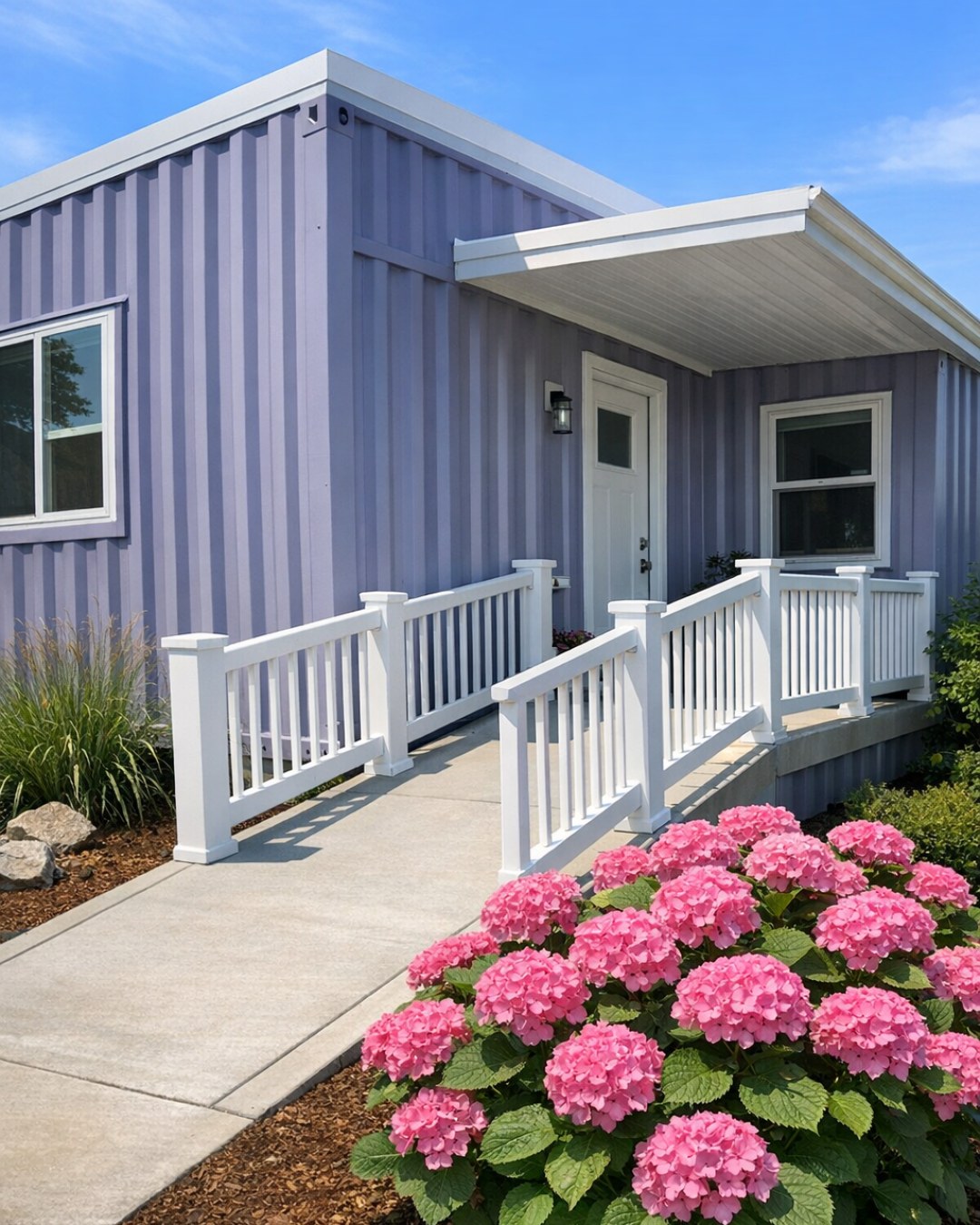
The exterior balances industrial roots with a softened, approachable finish. The container structure is painted in a muted dusty lavender that shifts beautifully in natural light, reading slightly gray in the morning and warmer toward sunset. Slim black-framed windows break up the façade with crisp definition, while pale wood cladding panels and a gently sloped entry path help the home feel less utilitarian and more tucked-in and residential.
I especially appreciate the accessible approach here. The front entry is flush and welcoming, with a broad walkway, integrated rail details, and a covered porch that makes arrival feel easy in every season. Low-maintenance landscaping with silvery grasses, herbs, and small flowering plants echoes the lavender tone without getting fussy, and the overall impression is clean, calm, and surprisingly graceful for a container build.
Living Room
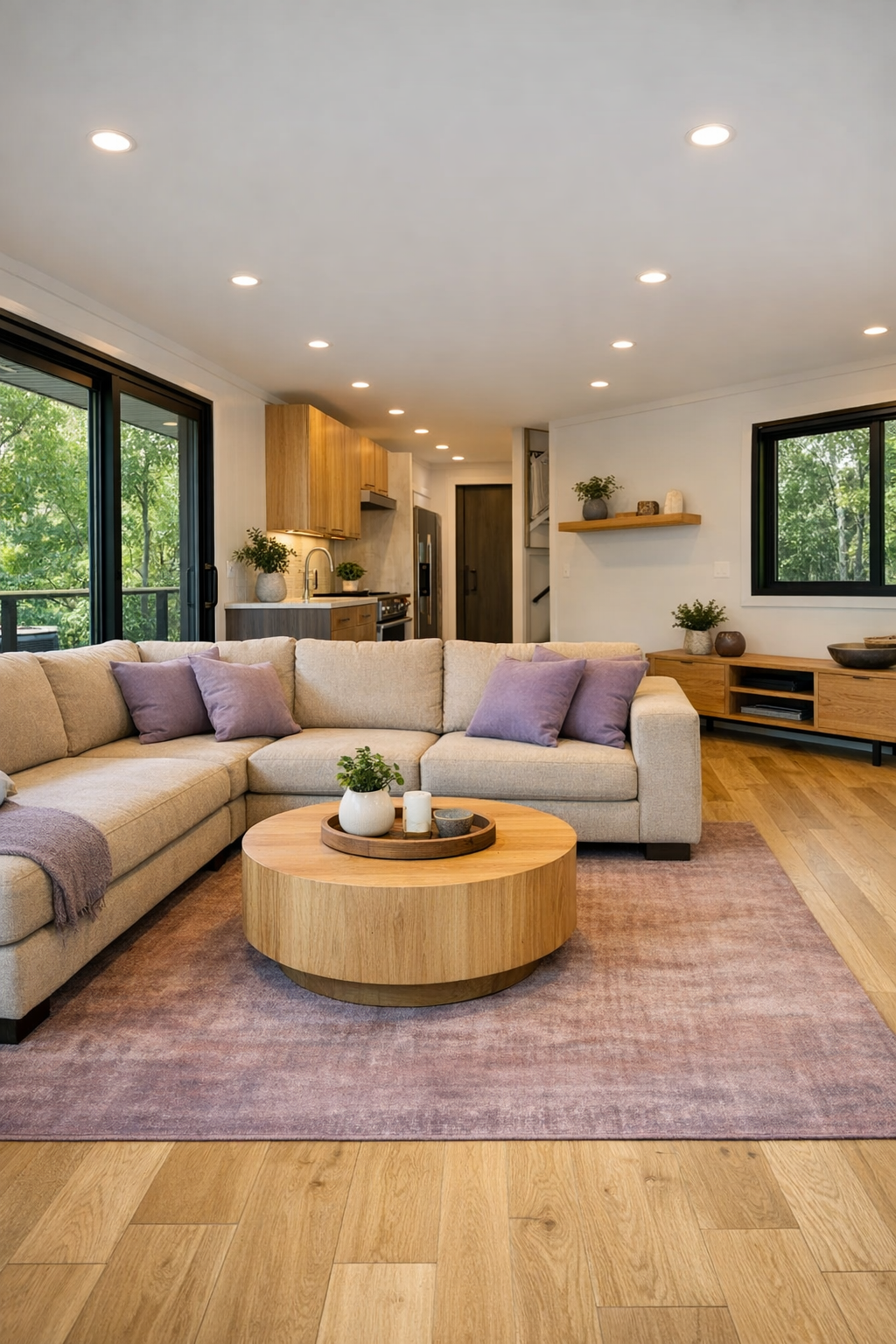
The living room is open, bright, and arranged with real everyday ease in mind. A low-profile sectional in warm oatmeal linen anchors the space, layered with dusty lavender pillows, soft knit throws, and a washable area rug in faded mauve and cream. The circulation path is generous, which matters so much in a home designed for accessibility, and the furniture stays scaled and uncluttered so the room feels breathable rather than crowded.
Material contrast gives this room its personality. The floors appear to be a light oak-look surface with a matte finish, while one wall carries subtle textural paneling in a pale putty tone that adds depth without noise. A rounded coffee table softens the straight architectural lines, and lighting comes from recessed ceiling fixtures paired with a sculptural floor lamp and wall sconces that cast a gentle evening glow. It feels like the kind of room where I’d happily gather everybody after dinner with dessert, a board game, and enough blanket space for all.
Dining Room
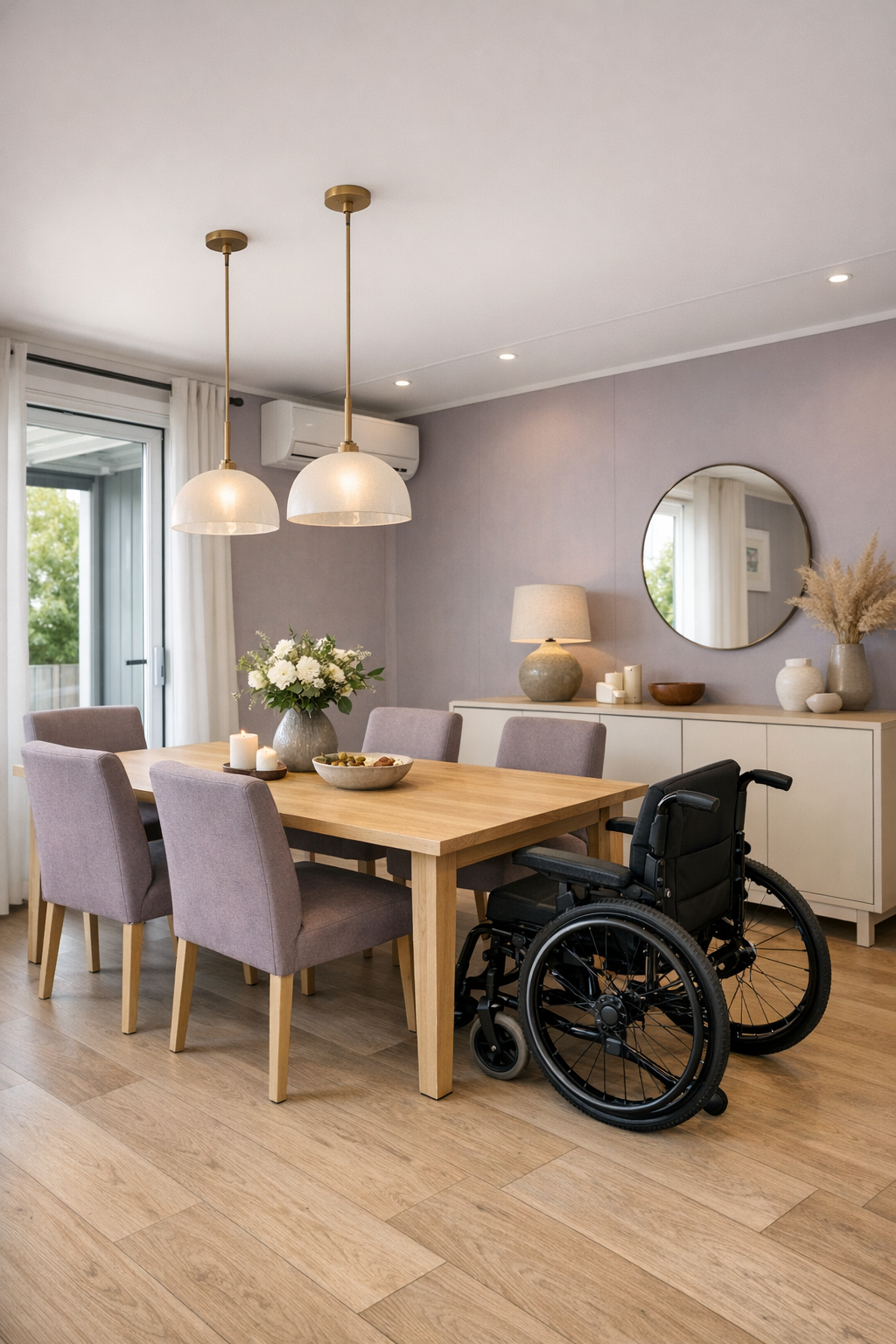
The dining area flows naturally from the living room and kitchen, and I love how it keeps the same soft palette while introducing just enough structure to feel distinct. A rectangular dining table in pale natural wood sits centered under a simple linear pendant, with comfortable upholstered chairs in a muted taupe-lavender fabric. There’s plenty of room to move around the table, which is not only practical but makes family meals feel more relaxed and inclusive.
What really makes the room shine is its balance of simplicity and warmth. The wall treatment stays minimal, letting the natural textures do the work, while a sideboard in a creamy matte finish adds storage for placemats, serving dishes, and all those little things that make hosting smoother. If I were setting this table, I’d lean into soft ceramics, linen napkins, and maybe a bowl of fruit or a plate of rolls right in the center—because spaces like this deserve meals that feel easy, generous, and shared.
Kitchen
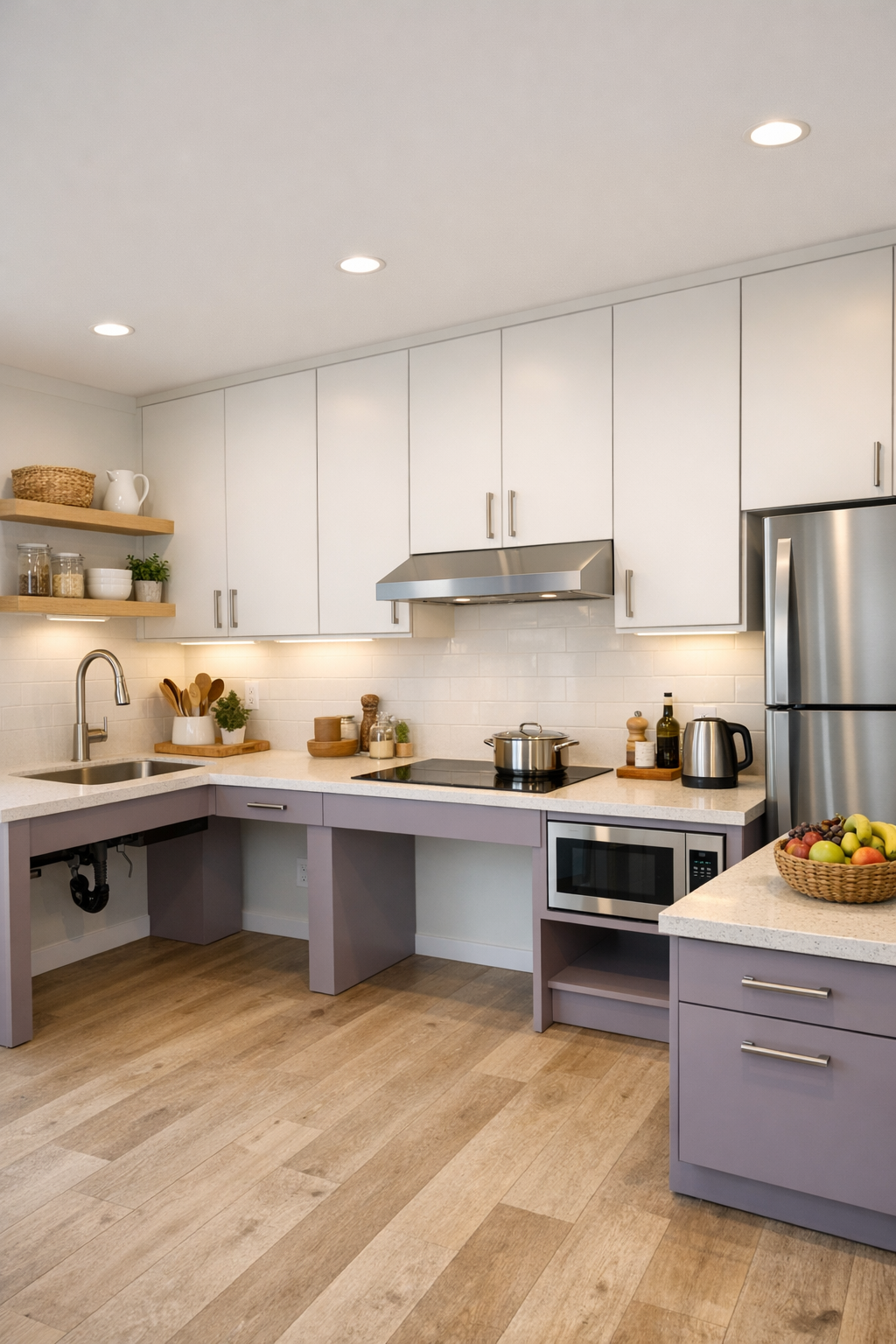
The kitchen is where this home really wins me over. It’s designed with accessibility in a way that still feels beautiful, with broad work zones, easy-to-reach storage, and a layout that keeps everything comfortable and efficient. Flat-panel cabinetry in a warm off-white is paired with lower cabinets in a muted dusty lavender, and the combination is lovely—fresh, gentle, and a little unexpected without being too precious. The counters are a pale quartz with soft veining, brightening the room and giving it a durable, family-proof finish.
I can picture cooking here without bumping into anything or feeling boxed in, which is such a gift in a compact house. Open shelving in light wood keeps everyday dishes handy, and brushed nickel hardware adds a practical polish. Under-cabinet lighting washes the backsplash in a flattering glow, and the rounded edges on the island or peninsula help the whole room feel safer and softer. For a family like mine, this kitchen would be ideal for everything from pancake breakfasts to build-your-own taco night, with enough flexibility to keep things fun even if one kid wants plain cheese and another wants every topping in sight.
Bedroom
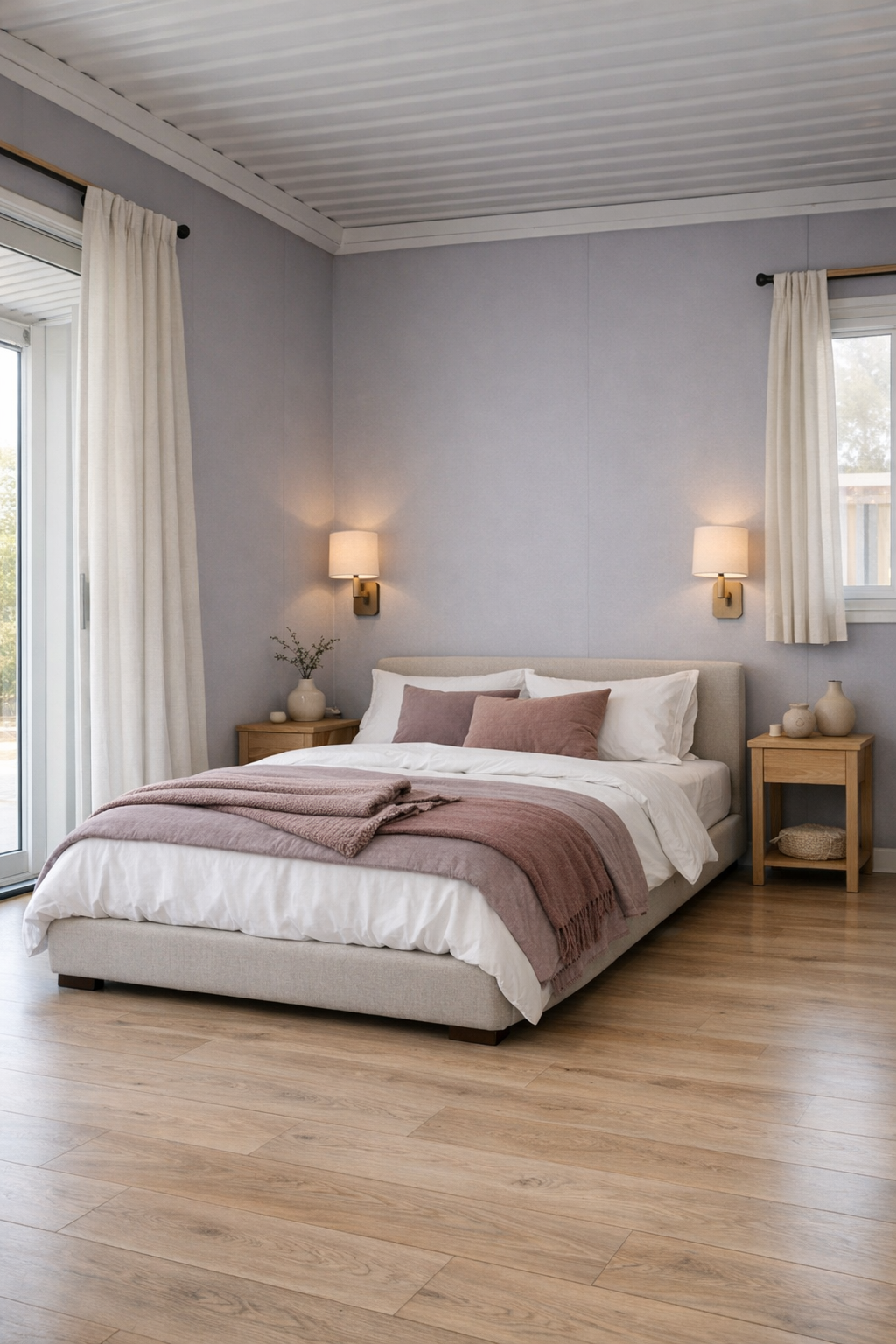
The bedroom carries the same calm spirit as the rest of the home, but in a quieter, more restful way. A low bed with an upholstered headboard in a soft greige fabric sits against a wall washed in the faintest lavender-gray, creating a cocooning backdrop without making the room dark. Crisp white bedding is layered with a quilt in dusty mauve and a knit throw at the foot, which gives the room that lived-in softness I always think a bedroom needs.
Accessibility shows up here through thoughtful spacing, easy bedside reach, and furnishings that don’t crowd the floor. Wall-mounted sconces free up the nightstands, a built-in closet system keeps storage efficient, and blackout curtains in a linen blend add both softness and function. The overall look is uncluttered but not stark, and that’s a hard balance to get right. It feels like a room meant for true rest, the kind where you can finally exhale at the end of a full day.
Bathroom
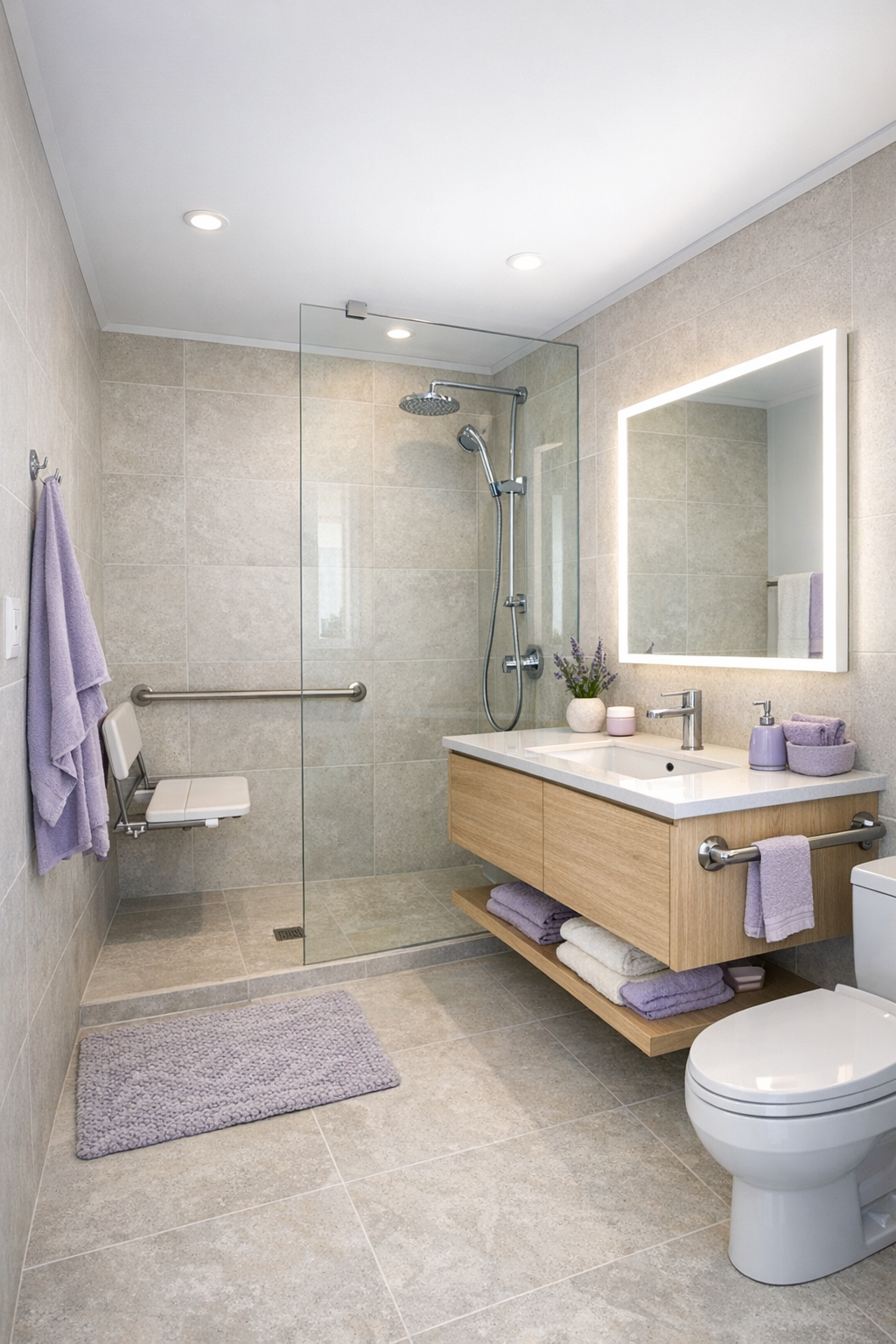
The bathroom is one of the smartest spaces in the home, and it proves that accessible design can still feel spa-like. Large-format porcelain tile in a pale stone tone keeps the room seamless and easy to maintain, while a curbless shower with a clear glass panel helps the footprint feel more open. A floating vanity in light wood brings warmth under a solid-surface countertop, and the dusty lavender note appears again in textiles and subtle wall color rather than anything too theme-driven.
I also like the way the fixtures are handled here. Matte black or brushed nickel fittings would both work beautifully against the soft palette, and practical additions like a built-in shower bench, handheld spray, and ample mirror lighting make the room far more comfortable day to day. Nothing feels oversized or sterile. Instead, it feels considered, clean, and soothing—the kind of bathroom where a quick morning routine could just as easily turn into a long evening soak and a little peace and quiet.
Other Areas
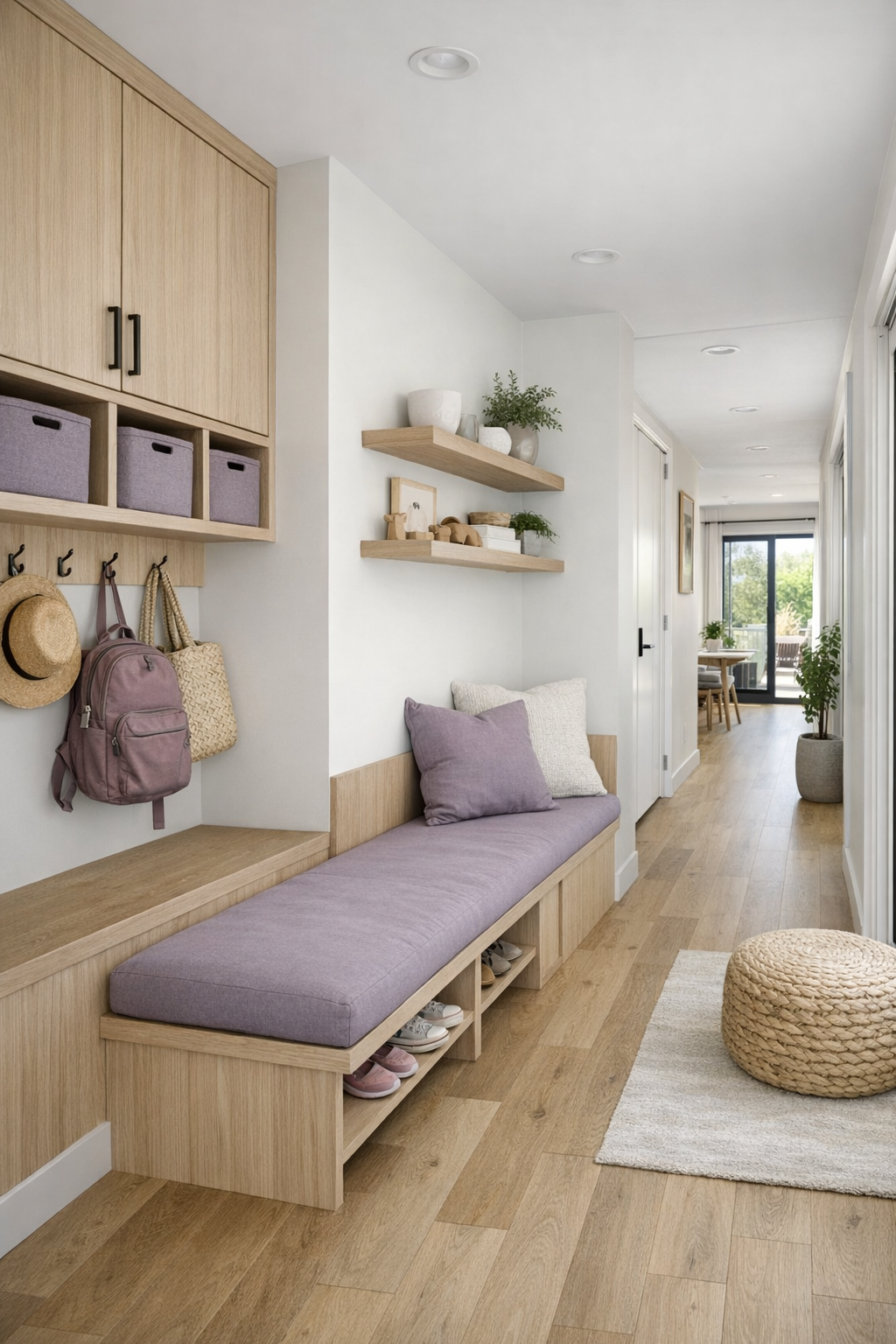
In a compact home like this, the in-between spaces matter just as much as the main rooms, and here they’re handled beautifully. Hallways are wide enough to feel intentional rather than leftover, with continuous flooring that helps the whole interior read as one connected space. Built-in storage nooks, a slim bench near the entry, and thoughtfully placed hooks or cabinets make daily routines easier without introducing visual clutter.
If this home includes a small laundry nook, office corner, or reading alcove, I imagine them treated with the same discipline and softness as the rest of the house. Maybe there’s a sunny window seat with a washable cushion, or a fold-down desk finished in pale wood for managing homework, grocery lists, or recipes. These secondary spaces are often what make a home truly function for family life, and here they seem designed to support the practical rhythm of real days while still looking polished and calm.
Why You'd Live Here
You’d live here because it makes a strong case that smaller, smarter homes can still feel beautiful and deeply comforting. The accessible layout supports ease and independence, while the dusty lavender palette gives the architecture a tenderness that keeps the industrial shell from ever feeling hard. Every room seems to understand that good design is not just about appearance—it’s about helping people move through daily life with a little more grace.
I think that’s what I find most appealing. This home feels ready for real meals, real conversations, and the kind of daily routines that hold a family together. It’s stylish without being fussy, modern without being cold, and practical in all the ways that truly matter. For anyone wanting a home that feels calm, capable, and quietly special, this one would be easy to say yes to.