
There’s something immediately calming about this oatmeal cream Amish lean-to tiny home. From the outside in, it carries that rare mix of simplicity and soul: soft, warm siding, beautifully proportioned windows, and a handcrafted character that feels grounded rather than styled for show. Set against a quiet natural backdrop, the home has the kind of presence I always notice first when life feels busy—it looks like a place where the pace automatically slows down and everything has a purpose.
What makes this little home special is how thoughtfully every inch seems considered, from the joinery details to the gentle, layered palette that keeps the rooms feeling airy instead of cramped. Even as a concept design, it feels deeply livable to me, especially as someone who is always thinking about how a home can support real routines like cooking, working, and winding down at the end of a long day.
Exterior
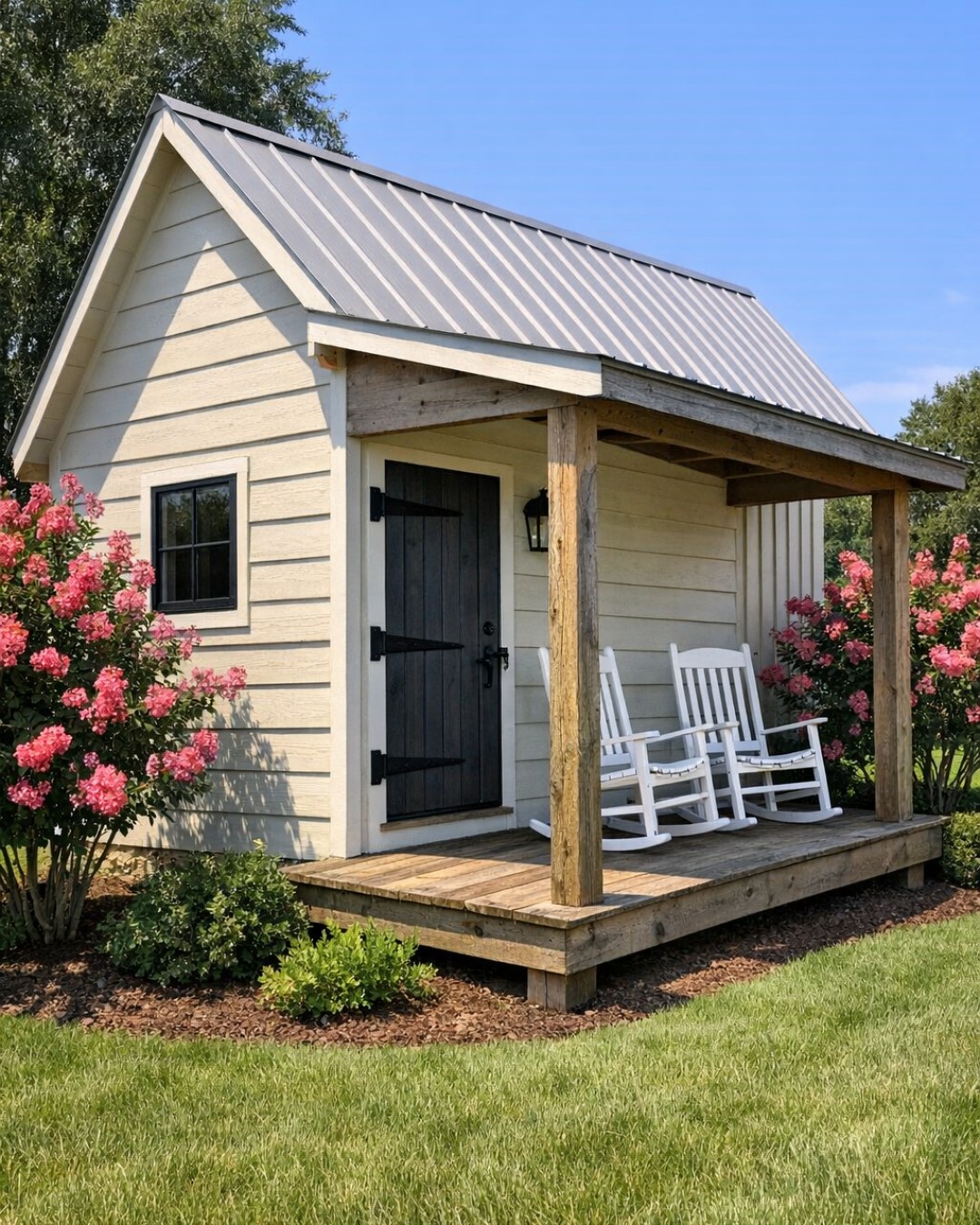
The exterior leans into a classic Amish-inspired sensibility with an oatmeal cream finish that softens the home’s compact shape and makes it feel welcoming instead of overly rustic. The lean-to roofline gives it an understated profile, while natural wood trim and dark metal accents provide just enough contrast to keep the facade from feeling flat. I love how the materials look honest and hardworking—painted wood siding, solid timber detailing, black hardware, and a porch structure that feels built by hand rather than assembled from a catalog.
What really elevates the exterior is the balance between practicality and charm. The covered entry adds a sense of shelter and creates a moment of transition before stepping inside, while the windows are placed to bring in generous daylight without overwhelming the scale of the home. Planters, a gravel path, and simple outdoor seating would fit beautifully here, but even without much added decoration, the architecture carries the look. It has that quiet confidence I always associate with homes that are designed around craftsmanship first.
Living Room
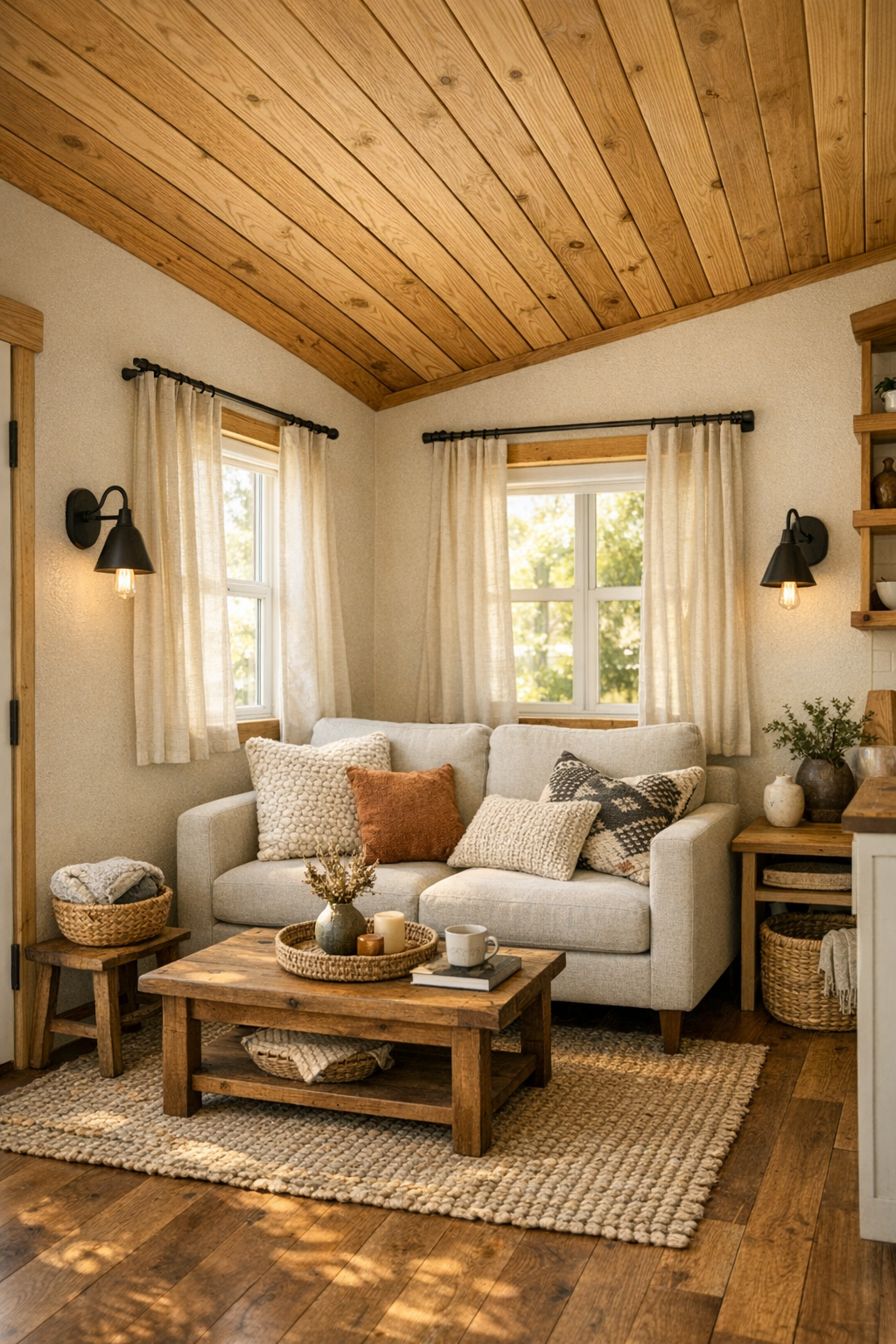
Inside the living room, the oatmeal cream palette continues in a way that feels warm and enveloping rather than monotone. The walls are kept light, likely in a soft matte finish, and paired with honeyed wood ceiling planks and medium-tone wood flooring that adds richness underfoot. In a compact home like this, I always appreciate furniture that works hard without looking bulky, and this room feels ideally suited to a tailored loveseat, a sturdy accent chair, and a slim coffee table with visible grain and slightly worn edges. The layered textures do a lot of the heavy lifting: woven throws, nubby cushions, and a flatweave rug that defines the seating area without making the room feel visually crowded.
The lighting would be everything here, especially in the early morning or late afternoon when natural light can really show off the handmade finishes. I imagine black metal sconces, a simple linen-shaded lamp, and sunlight filtering through soft café curtains or woven Roman shades. The layout appears to be straightforward and efficient, with enough breathing room to move comfortably while still feeling intimate. It’s the sort of room where I can picture myself answering emails with a mug of coffee in the morning and then circling back at night with a blanket and whatever easy one-pan dinner I managed to pull together.
Dining Room
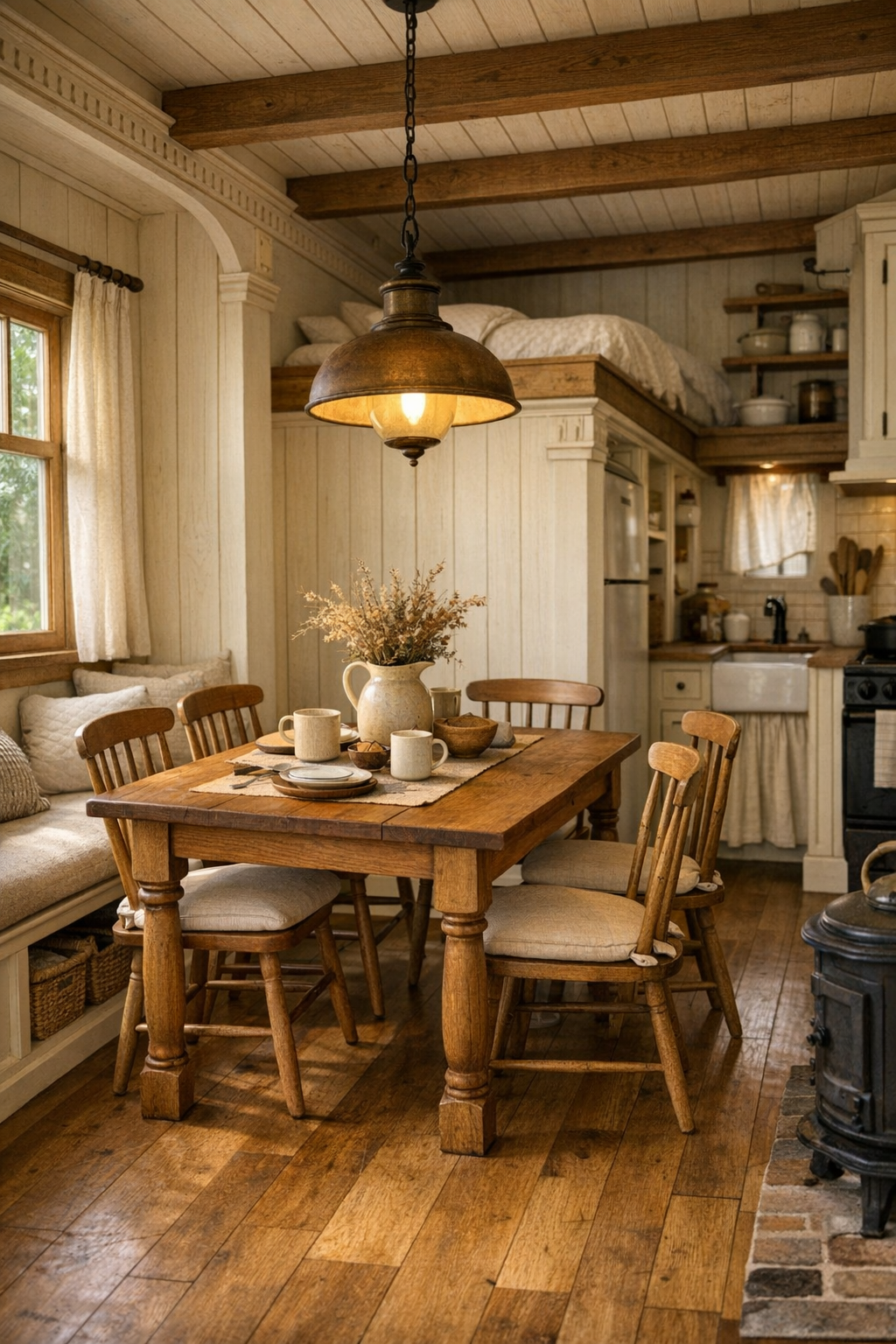
The dining area feels like an extension of the living space, but with just enough definition to make it feel intentional. I picture a solid wood table, likely rectangular and modest in scale, paired with spindle-back chairs or a built-in bench that saves space while adding charm. In a tiny home, I think the dining zone has to do several jobs, and this one seems ready for all of them—quick breakfasts, weekend baking projects, a laptop landing spot, or even meal prep overflow when the kitchen gets busy. The same creamy wall tone and wood trim help the area feel cohesive, while a slightly darker tabletop or aged finish grounds it visually.
Above the table, a single pendant in blackened metal or seeded glass would create a focal point without overwhelming the room. I’d also expect a few practical details that make daily life easier: maybe a narrow shelf for ceramics, a small sideboard, or hooks nearby for baskets and linens. What I like most is that it doesn’t feel overly formal. It feels approachable, like the kind of space where dinner can be homemade soup one night and takeout the next, and both still feel right at home.
Kitchen
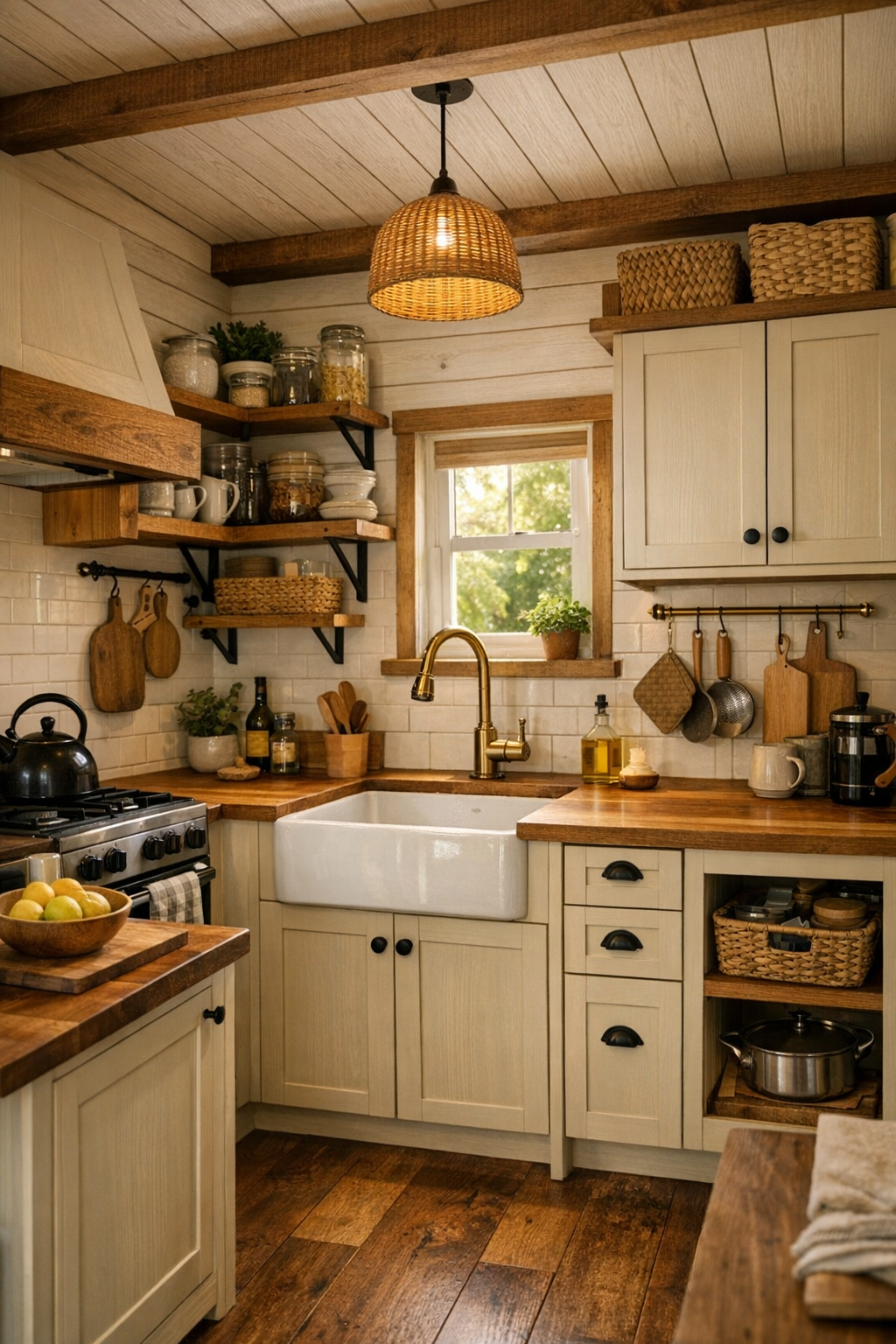
The kitchen is where this home really wins me over, mostly because it looks designed for someone who actually cooks. Even in a compact footprint, there’s a sense of efficiency in the cabinet layout, with every storage opportunity likely built in and tailored to the space. I imagine painted cabinetry in a creamy oat tone, butcher block or lightly honed stone counters, and open shelving that displays everyday essentials without feeling cluttered. A deep farmhouse-style sink would make perfect sense here, especially paired with unlacquered brass or matte black hardware that adds patina and contrast.
The finishes strike me as practical but beautiful, which is honestly my favorite combination. The backsplash could be simple subway tile or a handmade ceramic with slight variation, giving the room subtle movement and texture. Good task lighting matters so much in a small kitchen, and I can easily see under-cabinet lighting, a centered window over the sink, and one statement pendant tying it all together. As someone who is constantly trying to prep ahead for the week, I love a kitchen that feels calm instead of chaotic, and this one seems set up to make chopping vegetables, packing lunches, or simmering something cozy feel easy.
Bedroom
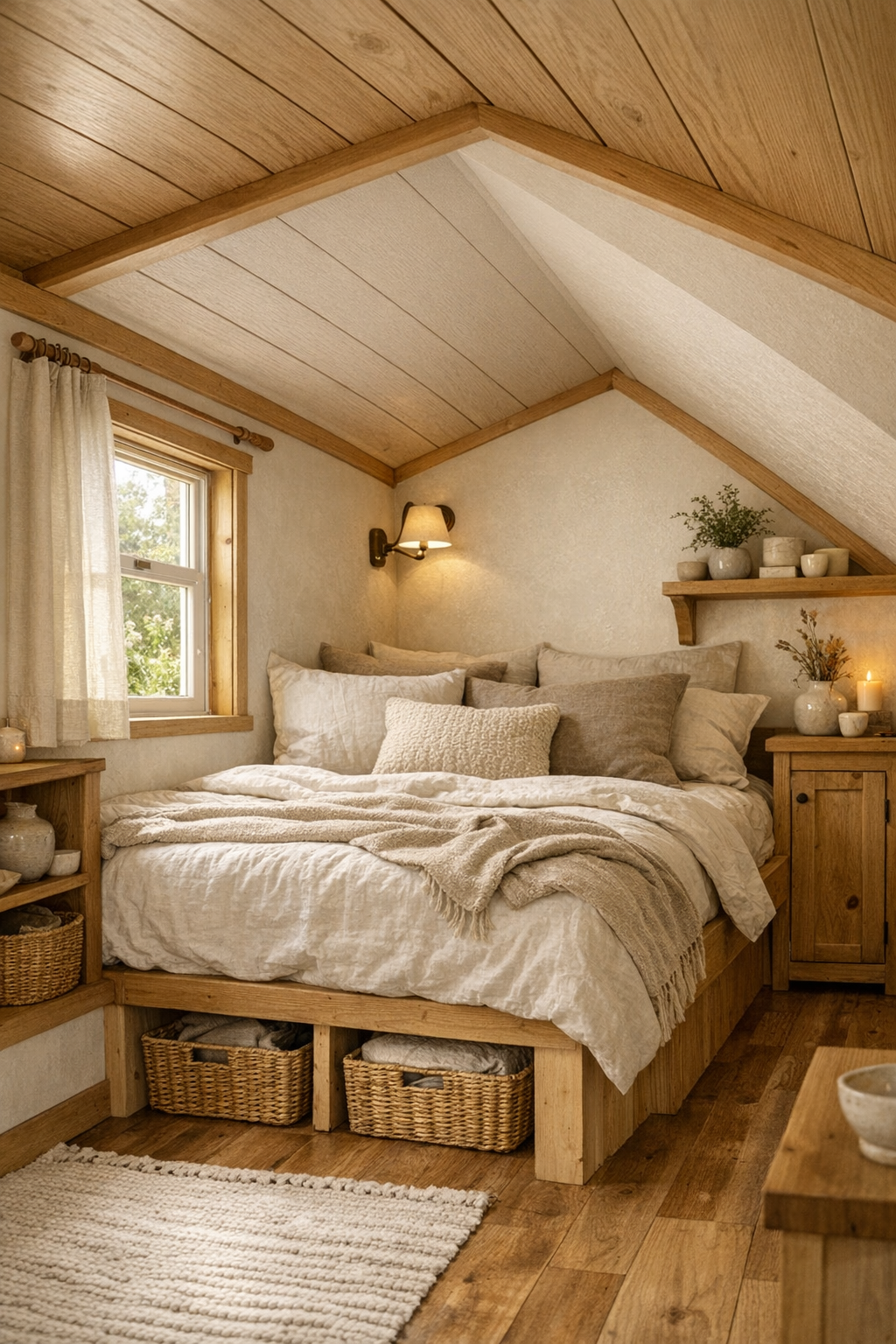
The bedroom carries the same quiet, handcrafted mood, but in an even softer way. In a tiny home, a sleeping space has to feel restful without wasting an inch, so I imagine a built-in bed platform, integrated drawers, and wall-mounted lighting instead of bulky nightstands. The palette here would stay neutral—cream, flax, soft taupe, warm wood—with bedding that adds dimension through texture rather than color overload. A quilt, linen duvet, and a small lumbar pillow are probably all this room needs to look complete.
What I find most appealing is the sense of coziness without heaviness. The sloped ceiling from the lean-to structure could make the room feel tucked in and intimate, while windows placed at just the right height would keep it bright and open during the day. A simple woven shade, a peg rail, and maybe a small ledge for books or a candle would reinforce that handmade simplicity. It feels like the kind of bedroom where you can actually switch off, which, honestly, is half the design battle in a busy season of life.
Bathroom
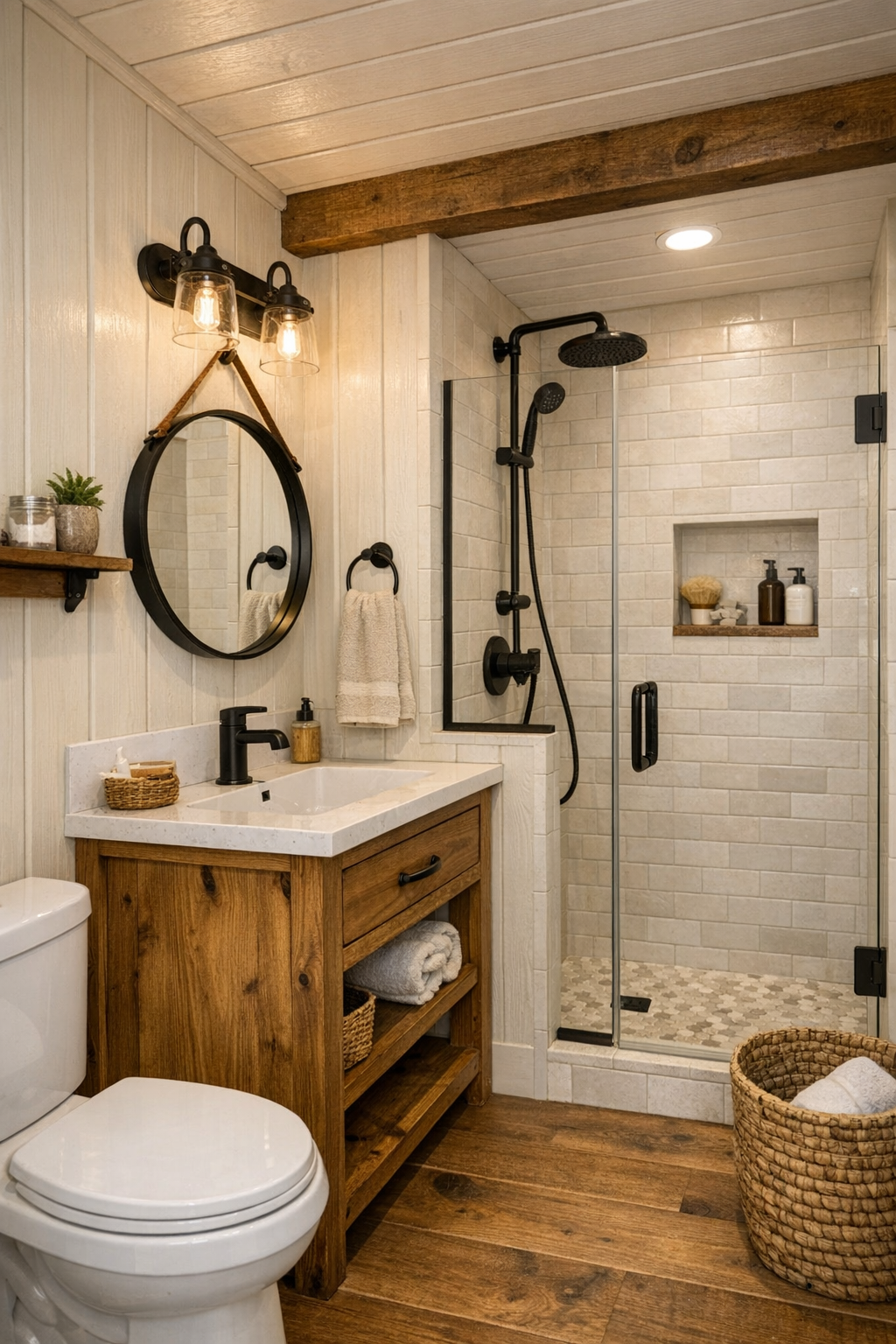
The bathroom looks like it would be small but beautifully resolved, which is often where good design shows itself most clearly. I picture a compact vanity in painted wood, a stone or composite countertop, and simple fixtures in matte black for a crisp contrast against the softer finishes. Vertical paneling or shiplap on the walls would nod to the home’s handcrafted roots, while a mirror with a wood frame could add warmth and keep the room from feeling too stark. In a small footprint, every material choice matters, and here they seem selected to make the room feel clean, bright, and timeless.
The shower is probably where the texture comes in—perhaps white or cream tile with subtle tonal variation, paired with a niche for storage and just enough black trim to define the lines. Good lighting would be essential, especially if there’s only a modest window, so I’d expect a combination of sconce lighting and reflective surfaces to bounce brightness around the room. It has that polished, practical feel I always appreciate in a bathroom: easy to maintain, easy to use, and still pleasant enough to make a rushed weekday morning feel a little more put together.
Other Areas
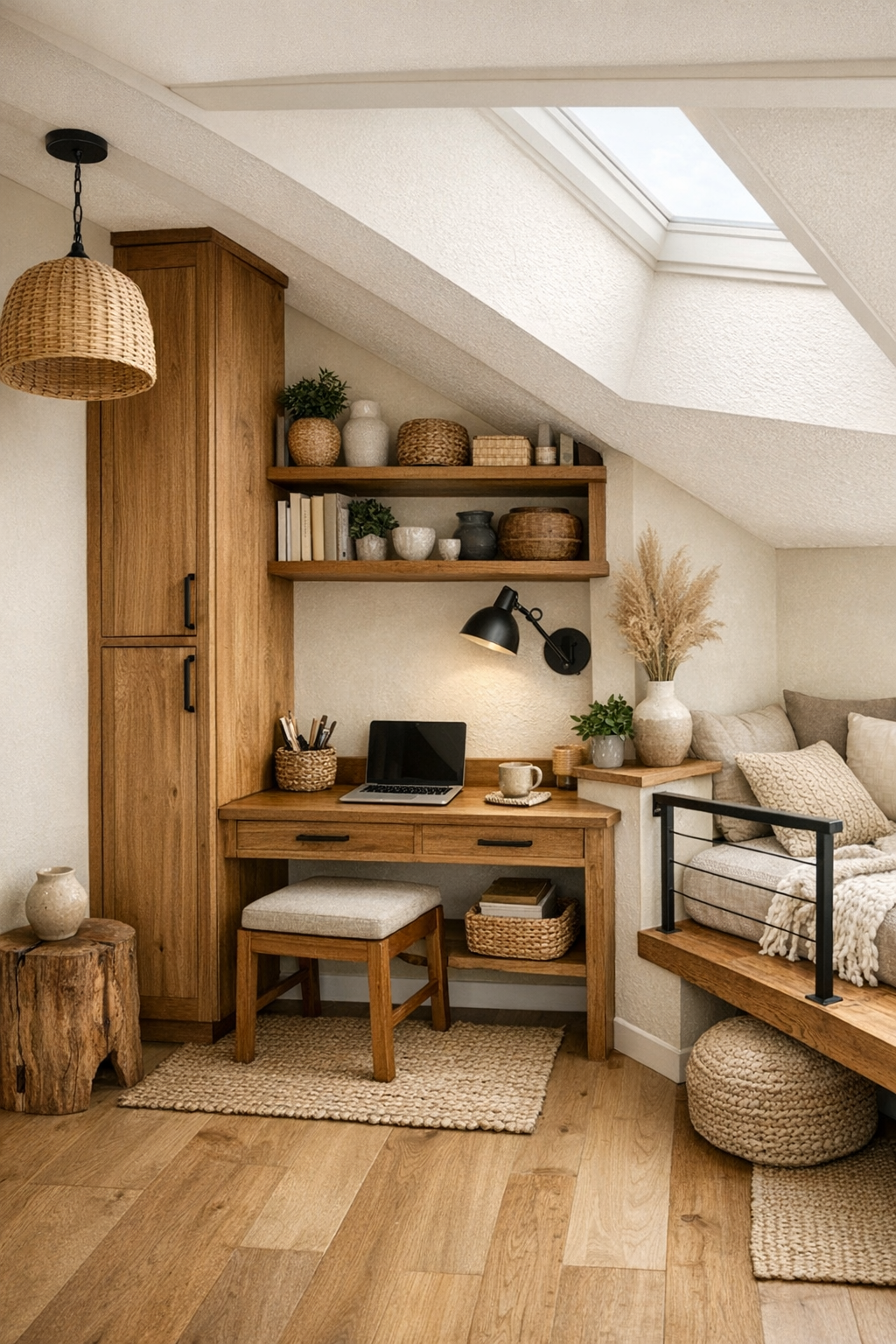
The in-between spaces in a tiny home are never really just in-between, and that’s part of what makes this design feel so smart. I can imagine a loft nook, entry storage, or a compact work corner tucked under the roofline, each one shaped by custom millwork and thoughtful proportions. Built-in shelving, pegs for coats or aprons, under-stair drawers, and bench seating would all make perfect sense here. These are the areas that quietly keep everyday life running smoother, especially when square footage is limited and clutter can build up fast.
Even circulation spaces seem likely to carry the same careful finish language as the main rooms: creamy walls, warm wood, black metal touches, and natural fiber baskets or runners to soften the edges. What I appreciate most is that none of it feels like filler. Every corner appears to have purpose, but it still feels charming and personal. It reminds me a little of the best kind of meal prep—everything thought through ahead of time so the day itself feels simpler and more relaxed.
Why You'd Live Here
You’d live here because it proves small doesn’t have to mean compromised. This home feels intentional in all the right ways, with a soothing palette, practical layout, and handmade details that give everyday routines a little more beauty. It offers that sweet spot so many of us are after—a house that looks lovely, works hard, and doesn’t ask for more maintenance or space than you realistically want to give.
For me, the biggest draw is how livable it feels. The kitchen seems ready for real cooking, the storage appears genuinely useful, and the materials have enough warmth to make the whole home feel comforting year-round. It’s the kind of place that supports a busy life while still encouraging slower moments, and that combination is always what makes a home memorable.