
There’s something deeply calming about a houseboat that embraces restraint, and this accessible shaker style version does exactly that. Moored in a quiet urban marina with skyline views softened by reeds and water, it balances classic Shaker discipline with the easy practicality that life on the water demands. As a concept design, it feels unusually resolved: pared back but not severe, warm without fuss, and planned with an intelligence that makes every inch count.
What struck me first was how naturally the home folds accessibility into its aesthetic language rather than treating it as an add-on. Wide circulation paths, gentle thresholds, integrated storage, and thoughtful reach heights are handled with such grace that the interiors simply feel serene and well mannered. The palette is built from painted timber, pale oak, brushed metal, soft linen, and stone-toned surfaces, creating rooms that feel bright, sturdy, and quietly beautiful in every kind of light.
Exterior
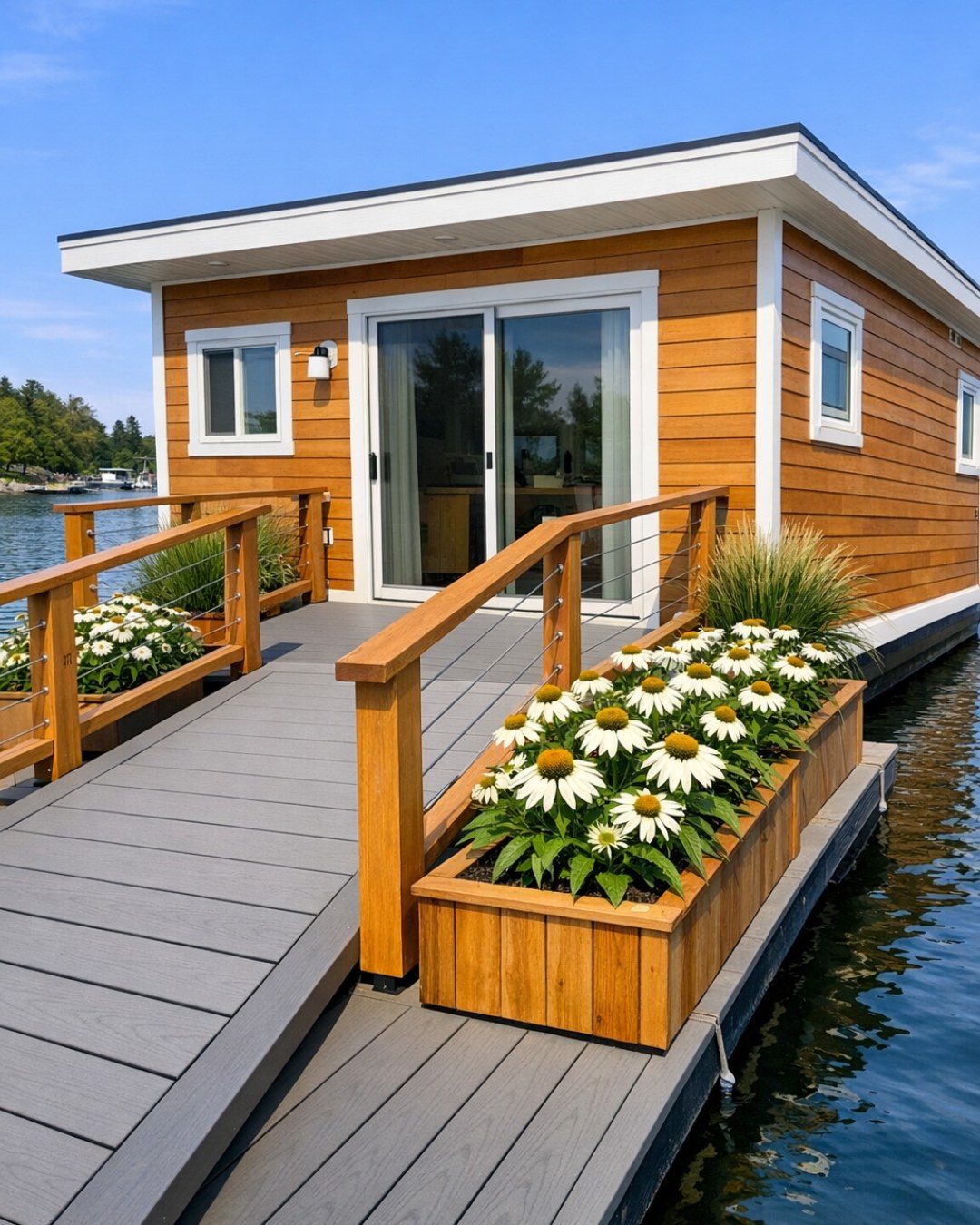
From the dock, the houseboat presents a crisp, almost archetypal silhouette, with the balanced proportions and honest simplicity I associate with Shaker design at its best. Vertical timber cladding painted a soft warm white is trimmed in muted taupe-gray, while the roofline remains clean and uncomplicated, avoiding anything overly nautical or decorative. The windows are generously sized and carefully aligned, giving the façade a composed rhythm, and the low-reflective glazing keeps the whole structure feeling grounded rather than flashy.
Accessibility is elegantly embedded into the exterior layout. A broad entry deck with flush transitions, sturdy railings, and a gently graded boarding connection makes arrival feel easy and dignified, while built-in bench seating and weatherproof planters soften the edges. I like the way the outdoor materials have been chosen to age well: slip-resistant composite decking in a driftwood tone, matte black marine hardware, and simple lantern-style sconces that cast a warm glow at dusk without disrupting the home’s disciplined lines.
Living Room
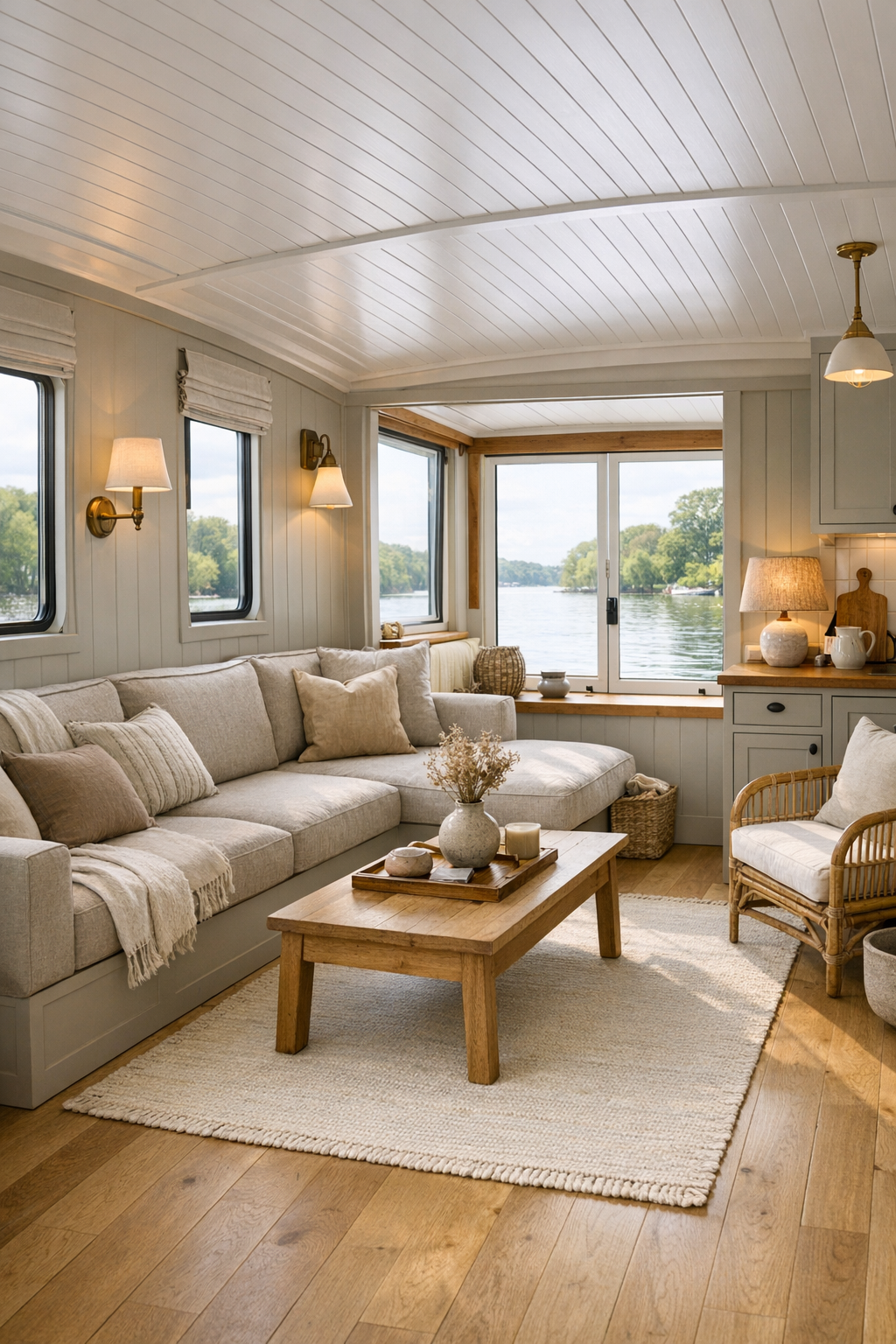
The living room is the heart of the houseboat, and it uses Shaker principles beautifully: nothing extraneous, every element purposeful, and yet the whole space feels welcoming rather than austere. A built-in sofa with a supportive seat height anchors one wall, upholstered in a flax-colored performance fabric that can stand up to real daily life. Opposite, low-profile cabinetry in painted putty gray conceals media, books, and practical storage, while open ledges display a few restrained objects in wood and ceramic, enough to give the room personality without cluttering the sightlines.
Because the footprint is compact, the layout relies on clarity and ease of movement, with broad pathways and rounded furniture corners that make the room more navigable and more relaxed to occupy. Pale oak floors run uninterrupted through the space, reflecting light from the waterside windows, and a flat-woven wool rug in cream and sand adds softness without becoming a trip hazard. I’m especially fond of the lighting here: a pair of simple wall sconces, discreet recessed ceiling lights, and a shaded table lamp by the window create layers that feel as thoughtful as a well-seasoned dish.
Dining Room
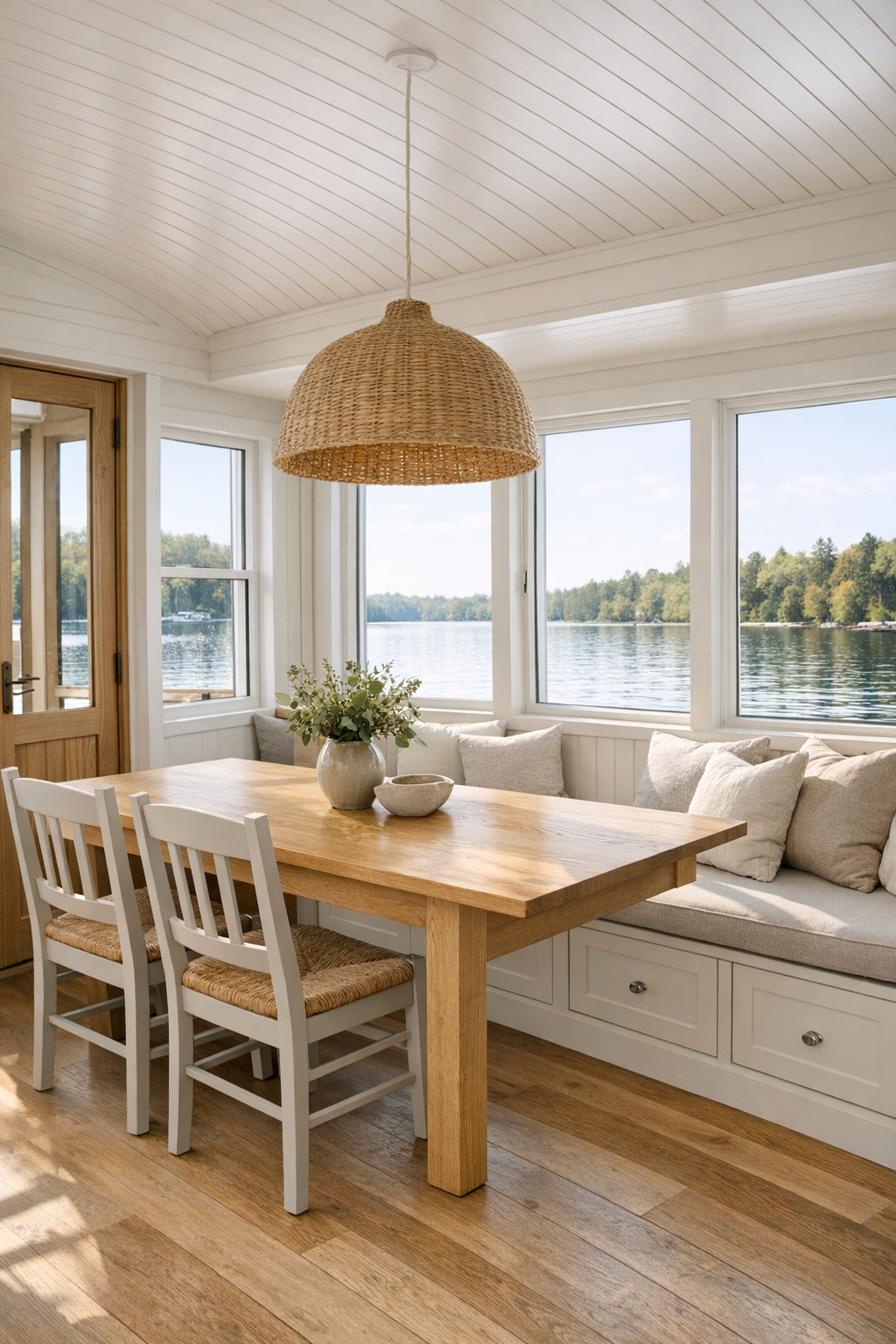
The dining area sits just off the living room in a way that feels open but still distinct, defined by a change in lighting and the quiet presence of built-in millwork. A rectangular oak table with softly eased edges provides generous knee clearance and comfortable circulation all around, while Shaker-style chairs in a painted mushroom finish bring a touch of tradition without visual heaviness. Along one side, a fitted bench with hidden storage makes smart use of the wall, and I can easily imagine it holding extra linens, serving pieces, or the sort of practical tableware I always like to keep close at hand.
The materials are restrained, but they never feel flat. The grain of the oak table adds warmth, the chalky painted woodwork gives the room a dry, tailored elegance, and a woven pendant in a natural fiber introduces just enough texture overhead. Windows wrap the dining corner so meals are accompanied by water reflections and changing sky, and that shifting light enlivens the subdued palette of cream, oat, fog gray, and weathered wood. It’s a room that would suit a quick breakfast as well as a long supper with dishes passed slowly across the table.
Kitchen
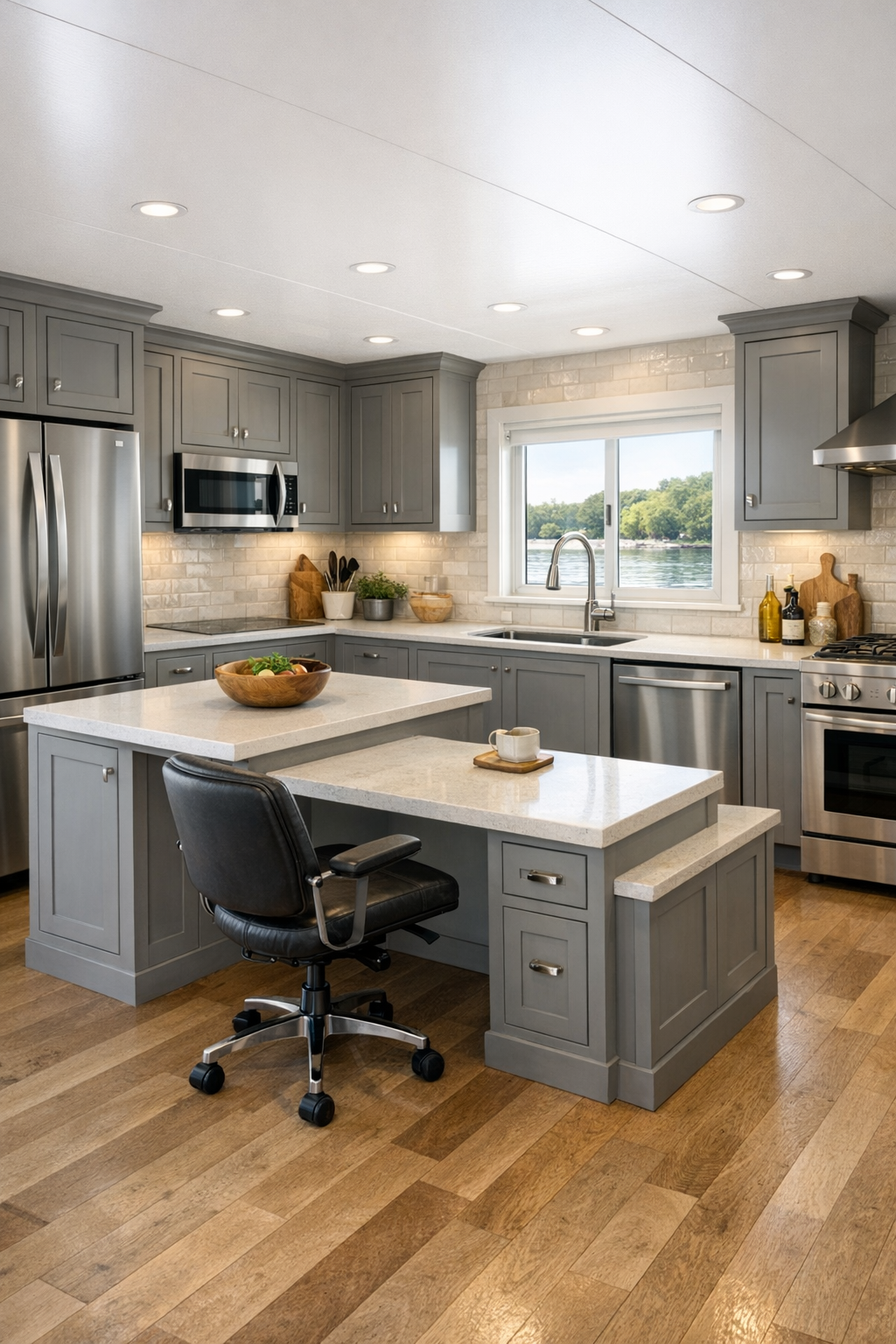
As someone who cooks seriously, I always look first at how a kitchen handles workflow, and this one is exceptionally well judged. The cabinetry is true to the Shaker spirit, with recessed-panel fronts painted a soft stone color, long brushed-nickel pulls that are easy to grip, and drawers prioritized over deep cupboards for better access. Countertops in a pale honed quartz read like soapstone’s quieter cousin, and the backsplash is finished in glossy handmade-look tile that catches light beautifully without becoming busy.
The plan is compact but generous in use, with a single-wall run paired with an island designed for multiple working heights and seated prep. There’s enough open turning space to keep movement easy, and appliances are integrated with unusual care: a side-opening oven, induction cooktop, undercounter refrigeration drawers, and a shallow apron-front sink positioned beneath a window so even routine prep feels pleasant. I appreciate kitchens that understand both technique and temperament, and this one does; it would support anything from kneading dough to rolling sushi with calm efficiency.
Bedroom
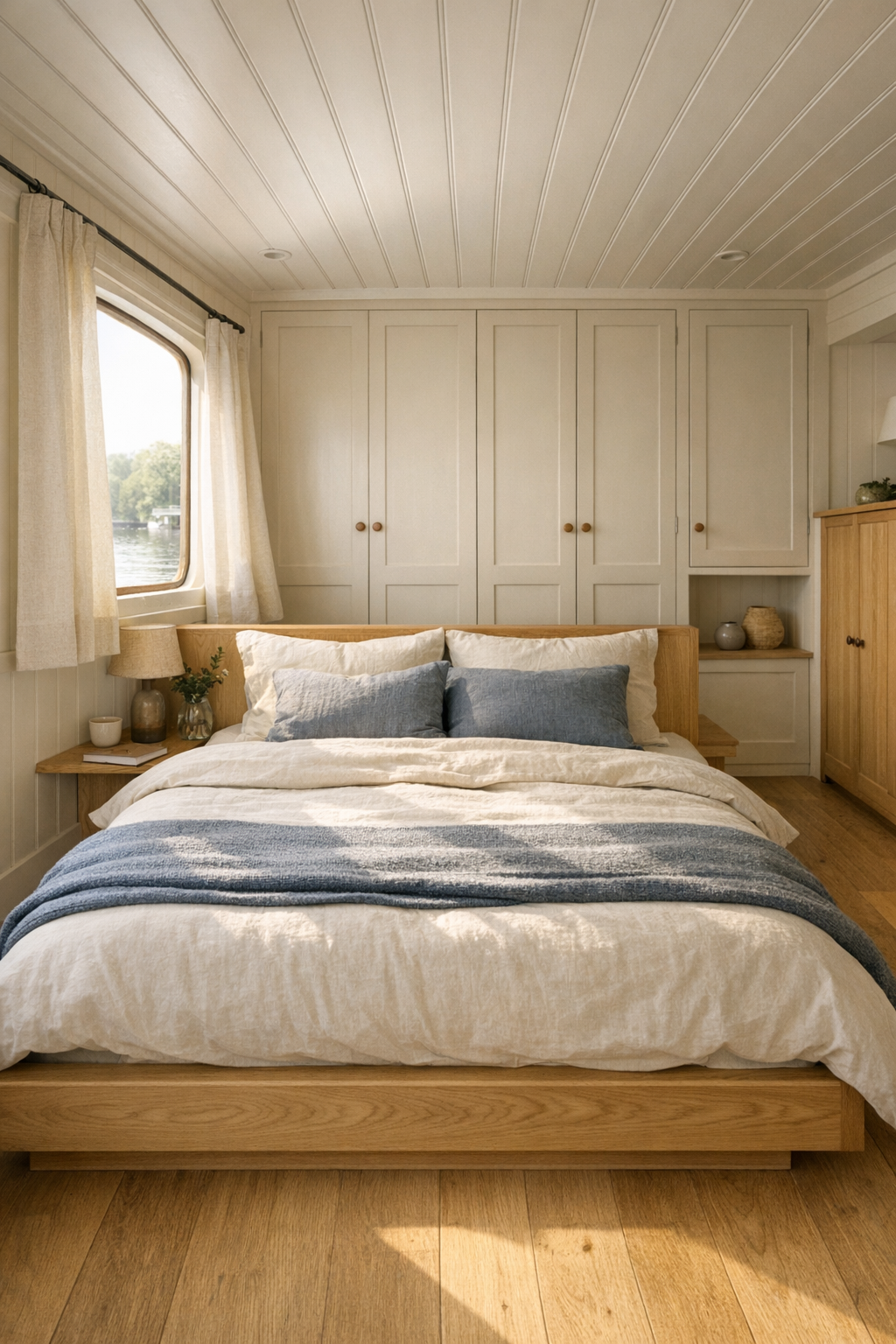
The bedroom carries the same disciplined simplicity as the main living spaces, but with a softer hand. A low platform bed in pale oak is centered against a paneled wall painted in a warm ivory, and instead of freestanding furniture crowding the room, storage is integrated into full-height wardrobes with neatly divided interior compartments. The bedding is layered in washed linen and cotton in shades of cream, barley, and soft gray-blue, creating that inviting, slightly rumpled look that always makes a room feel habitable rather than staged.
What makes the room especially successful is the way it supports ease without sacrificing atmosphere. There is generous clearance on both sides of the bed, sliding wardrobe doors save space, and the nightstands are really built-in ledges with drawers, keeping the floor clear and the silhouette calm. A woven wool throw, blackout-lined drapery, and a subtle upholstered headboard provide tactile comfort, while reading sconces and concealed cove lighting add a gentle glow that feels wonderfully restorative after a long day.
Bathroom
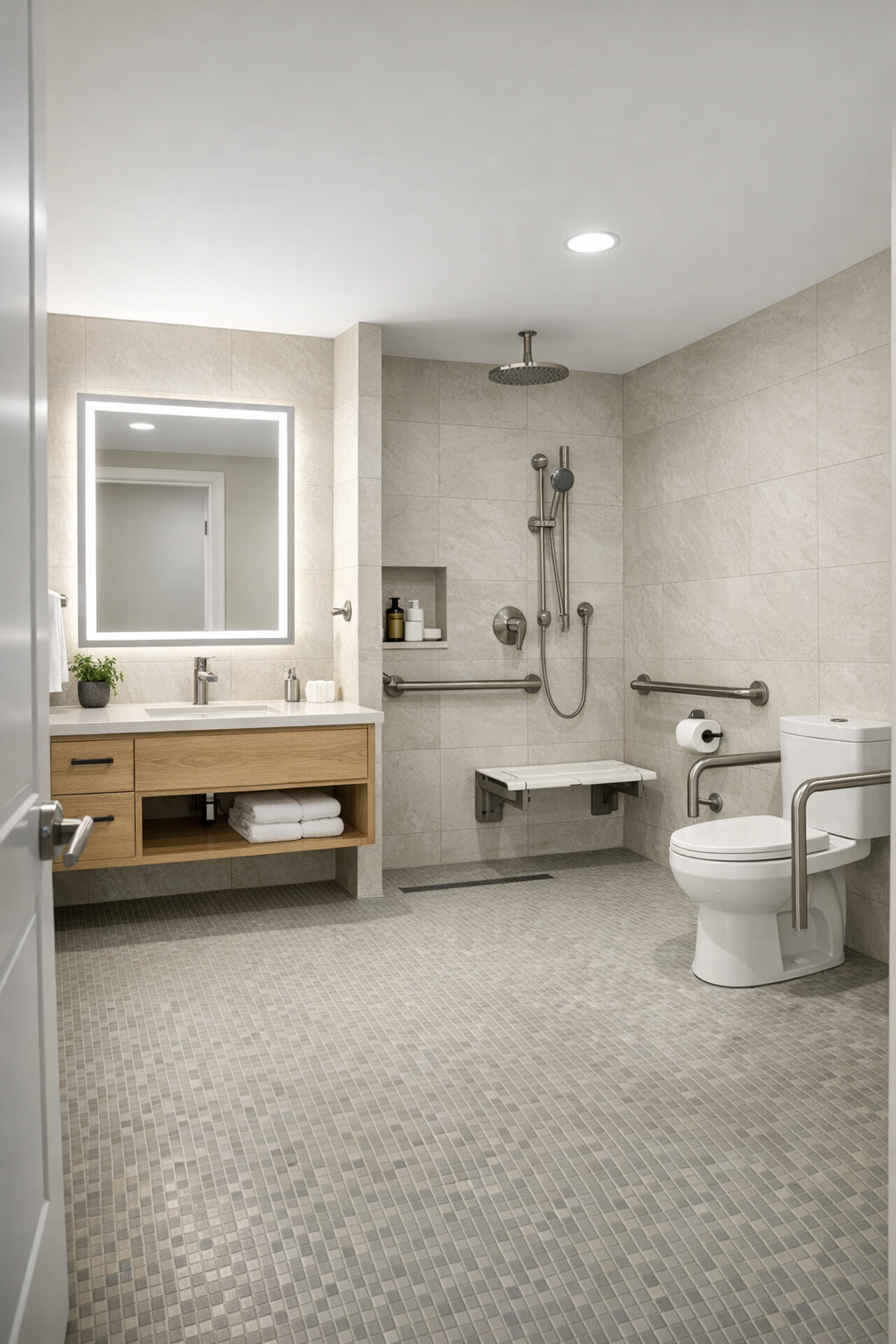
The bathroom is where the design’s practicality becomes especially impressive. Finished in a restrained palette of warm white, sandy beige, and pale gray, it feels airy and composed rather than clinical, thanks to the use of texture and well-balanced contrast. A floating vanity in white oak with a slab front keeps the lines simple, and the basin is paired with a wall-mounted faucet in brushed stainless steel, freeing counter space and making the overall composition feel lighter.
The shower is fully level entry, enclosed with minimal glass, and lined in large-format porcelain tile with subtle tonal variation that mimics honed stone. A fold-down teak seat, integrated grab supports in a matching metal finish, and a handheld shower on an adjustable rail are all beautifully incorporated, while under-vanity lighting and a backlit mirror give the room a quiet hotel-like polish. I also like the matte mosaic flooring underfoot; it adds grip, visual depth, and a pleasing shift in scale that keeps the room from feeling too monolithic.
Other Areas
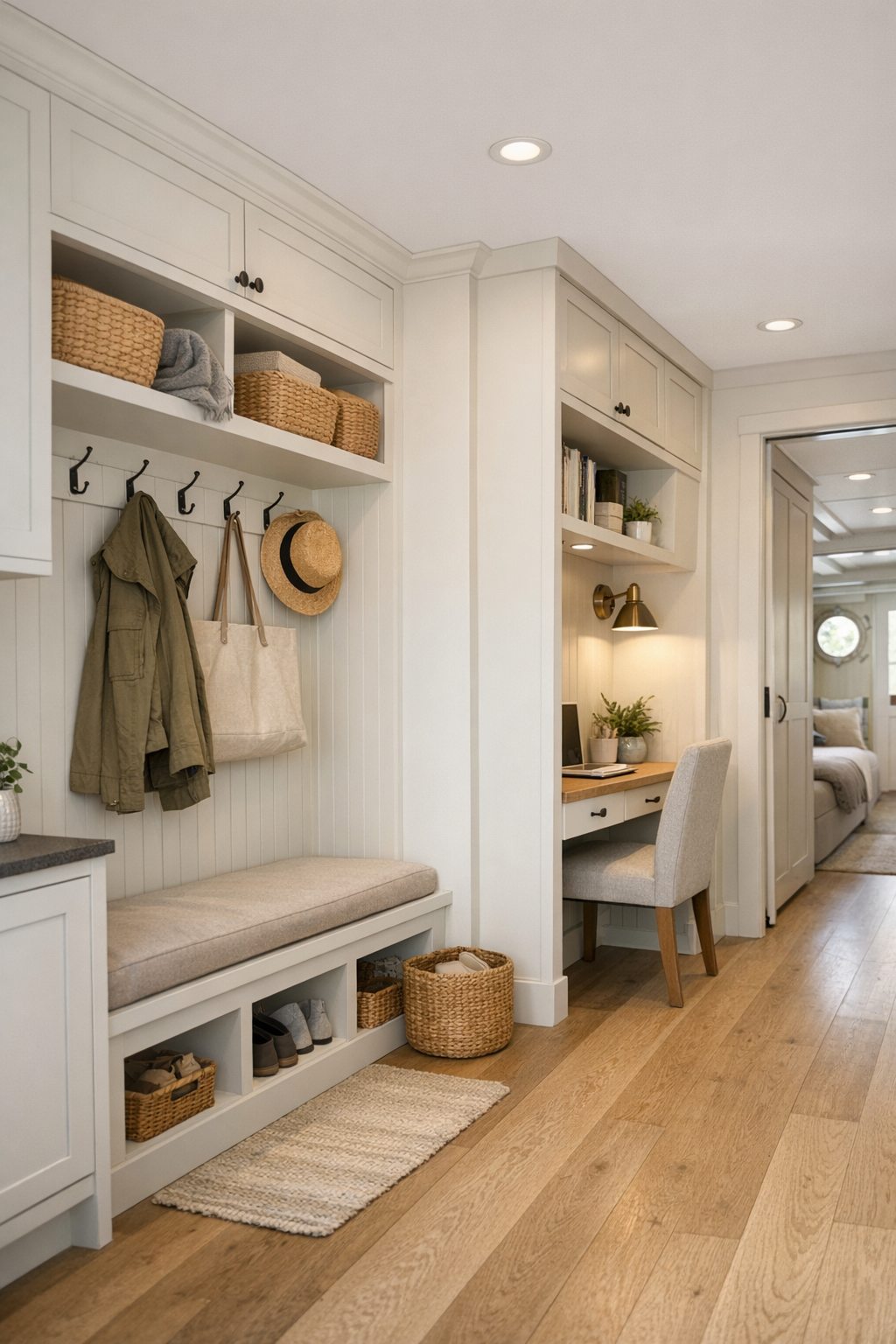
What elevates this houseboat beyond its primary rooms are the transition spaces, which have been treated with as much care as the main destinations. The entry passage includes a built-in hall tree with hooks, cubbies, and a bench at an easy transfer height, all executed in the same painted timber as the rest of the joinery so it reads as architecture rather than equipment. Even the circulation corridor feels considered, with hand-friendly trim profiles, well-placed lighting, and enough wall space for a few framed botanical prints that add interest without crowding the route.
There’s also a small study nook and utility zone that I found particularly clever. The desk folds seamlessly into a run of cabinetry, creating a place to write, plan meals, or simply sit with a cup of tea and look out at the water, while the adjacent laundry storage hides practical necessities behind tidy Shaker fronts. On a compact home, these secondary areas often reveal whether the design truly understands daily life, and here they absolutely do; every surface seems to know its job.
Why You'd Live Here
You’d live here because it proves that accessibility, beauty, and disciplined design can belong to the same conversation without compromise. The Shaker language gives the home moral clarity and visual calm, while the houseboat setting adds a softness and fluidity that keeps everything from feeling too rigid. I find that combination immensely appealing: practical enough for everyday routines, but poetic enough to change the pace of how you move through them.
You’d also live here because the spaces are genuinely usable, not merely attractive in photographs. The kitchen works, the storage is believable, the materials are durable, and the rooms feel settled in their proportions and purpose. For me, that’s always the mark of a memorable home: one that doesn’t just look composed, but makes daily life easier, quieter, and a little more gracious.