
There is something immediately grounding about a saltbox silhouette, and in this tiny home, that familiar profile feels both deeply traditional and unexpectedly refined. Clad in natural cedar and shaped with the plainspoken confidence of Amish craftsmanship, the house settles into its setting with a quiet warmth that I find irresistible. It has the kind of presence that does not need ornament to make an impression; the beauty comes from proportion, honest materials, and the soft weathering that cedar promises over time.
What makes this home especially memorable is the way its modest footprint is handled with such care inside, where every surface seems touched by a craftsperson’s hand. Though this is a concept design, it feels entirely livable: intimate without being cramped, rustic without slipping into nostalgia, and thoughtful in the way a well-planned kitchen is thoughtful when every tool has its place. I am always drawn to homes that understand restraint, and this one does so beautifully.
Exterior
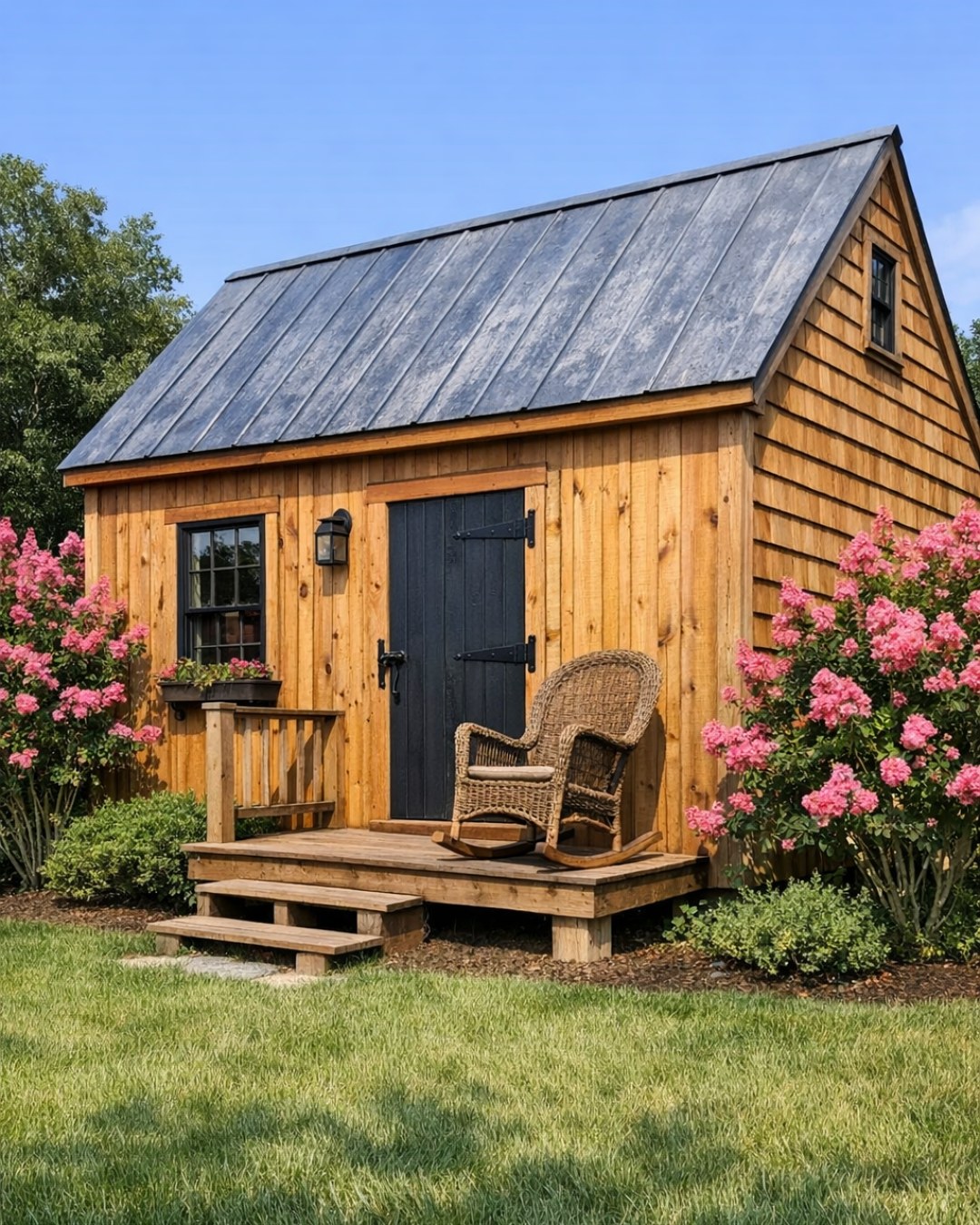
The exterior leans into the saltbox form with admirable discipline. The long rear roofline gives the home its unmistakable character, while the cedar cladding brings a honeyed, softly aromatic richness that would only grow better with age. I imagine the boards finished lightly enough to let the grain remain visible, with trim kept simple and matte so the wood can be the star. Small-paned windows and a sturdy entry door reinforce the handcrafted sensibility, and the scale remains pleasantly human from every angle.
What I appreciate most is how the house avoids theatrical rusticity. There is no excess here, just a balanced composition of warm timber, crisp roof geometry, and a structure that appears built to last for generations. A stone path, perhaps a few native grasses, and understated exterior lanterns would be enough to complete the picture. Like a good loaf made from excellent flour, water, salt, and time, it proves that simple ingredients can still yield something deeply satisfying.
Living Room
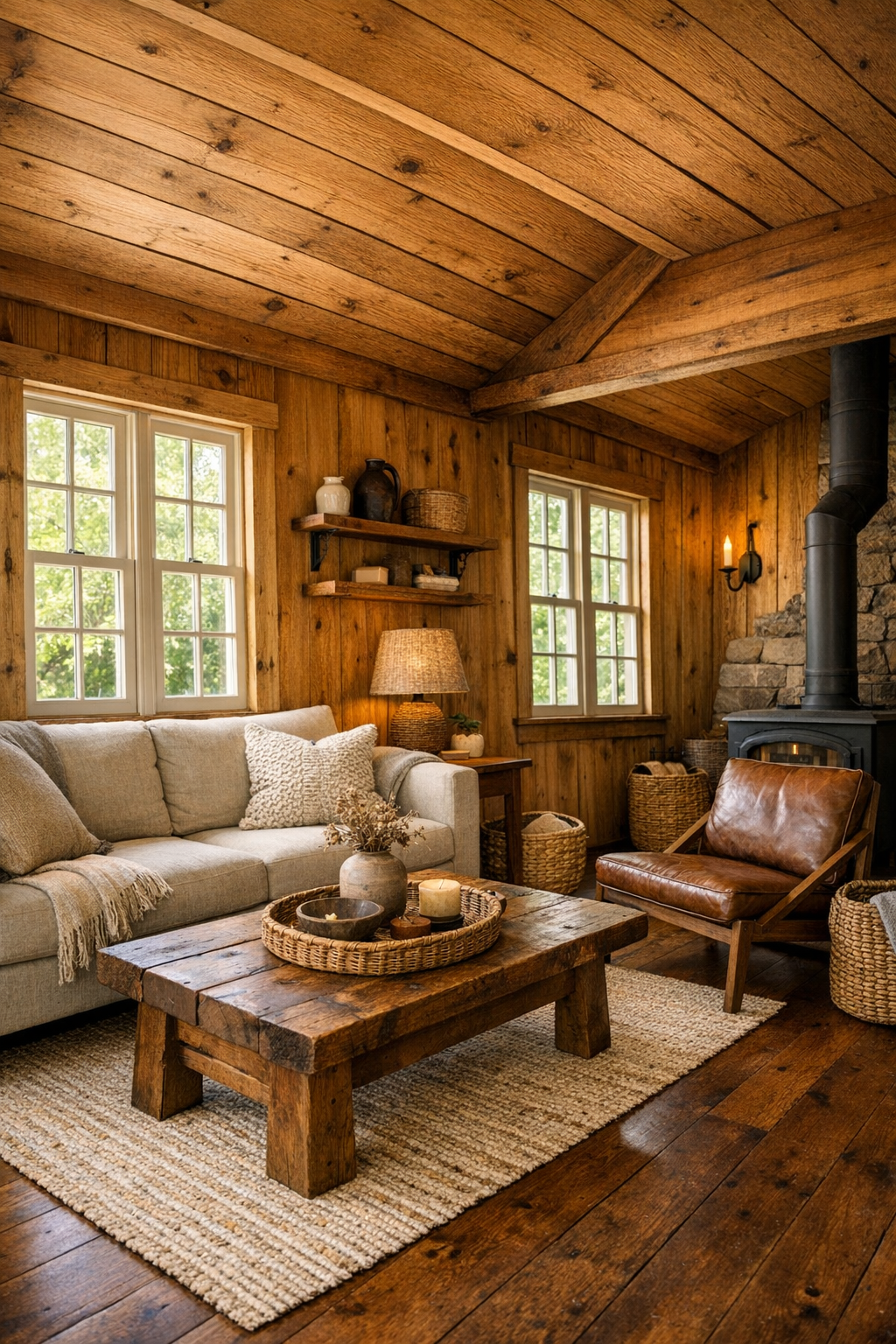
The living room feels like the heartwood of the house, wrapped in exposed timber tones that make the compact footprint read as cozy rather than confined. Walls and ceiling in warm cedar create a continuous envelope, while the floor underfoot appears slightly deeper in tone for contrast, grounding the room. I would expect a compact sofa in oatmeal or flax linen, a sturdy leather chair with a softened patina, and a hand-finished coffee table that shows subtle joinery details. The palette stays close to nature: cedar gold, mushroom, cream, iron black, and a few muted green accents that echo the outdoors.
Light matters enormously in a small home, and here it would be used to great effect. Natural light filtering through divided-light windows would animate the grain in the wood throughout the day, while wall sconces and a modest pendant keep evenings gentle and intimate. Textures do the decorative work: a nubby wool throw, woven baskets, a braided rug, and maybe a ceramic crock or two on a shelf. The room would feel calm, handcrafted, and deeply functional, with every piece chosen the way I choose tools in my kitchen: beautiful, useful, and worth keeping.
Dining Room
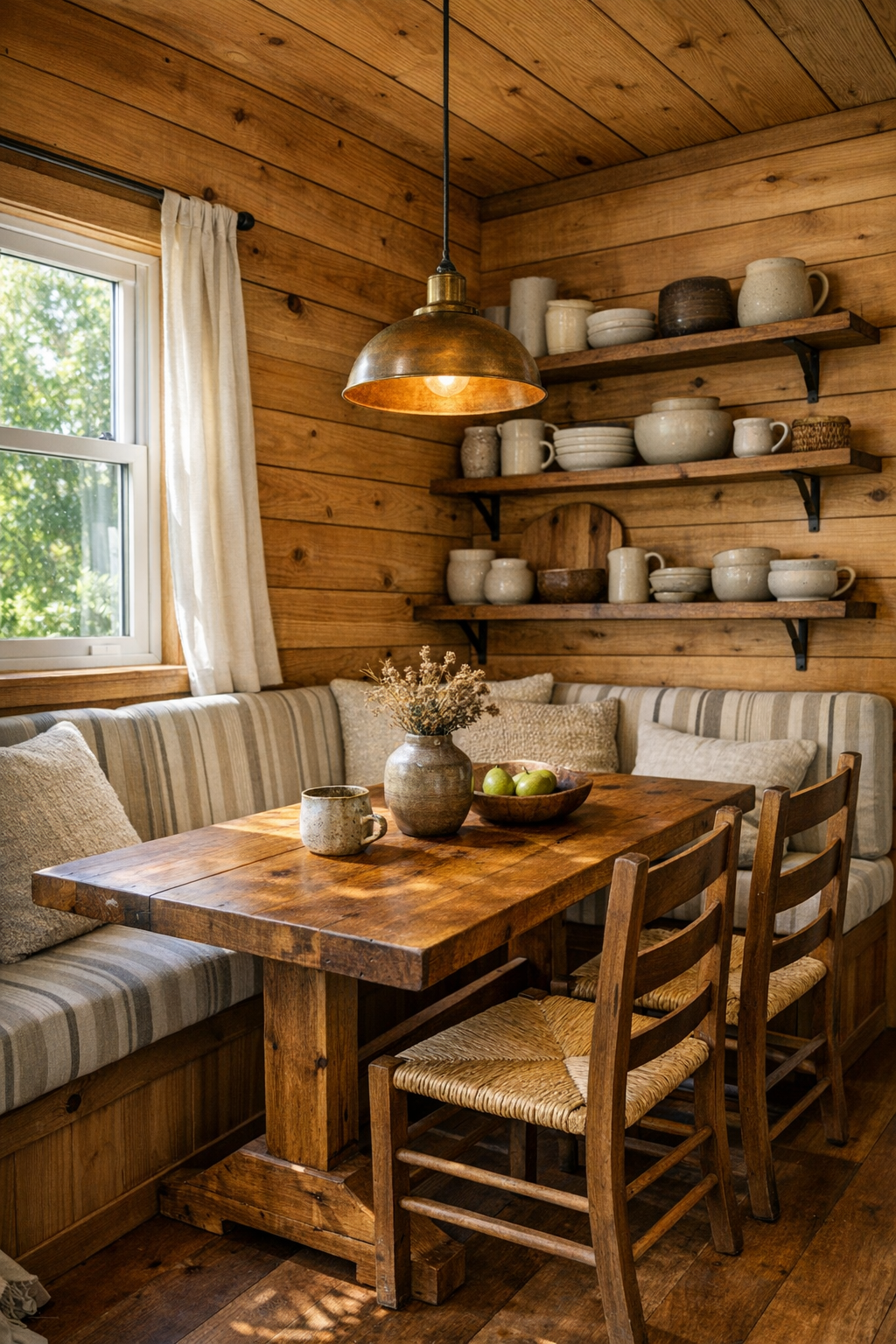
In a home this size, the dining area needs to earn its place, and this one does so through craftsmanship and flexibility. I picture a built-in banquette tucked beneath a window or along one wall, paired with a solid wood table that has enough heft to feel substantial without overwhelming the room. The seating might mix a bench with two simple ladder-back chairs, nodding to Amish furniture traditions while keeping the arrangement relaxed. A cushion in striped ticking or natural canvas would soften the wood and add just enough pattern.
Because I love spaces where meals naturally become long conversations, I am especially charmed by the intimacy this dining room would create. A small iron or aged brass pendant hung low over the table would make the area feel anchored, while open shelving nearby could display everyday stoneware, clear jars, and a few beautiful serving pieces. The effect is unfussy but deeply welcoming, the kind of place where a bowl of soup, fresh bread, and candlelight would feel entirely at home.
Kitchen
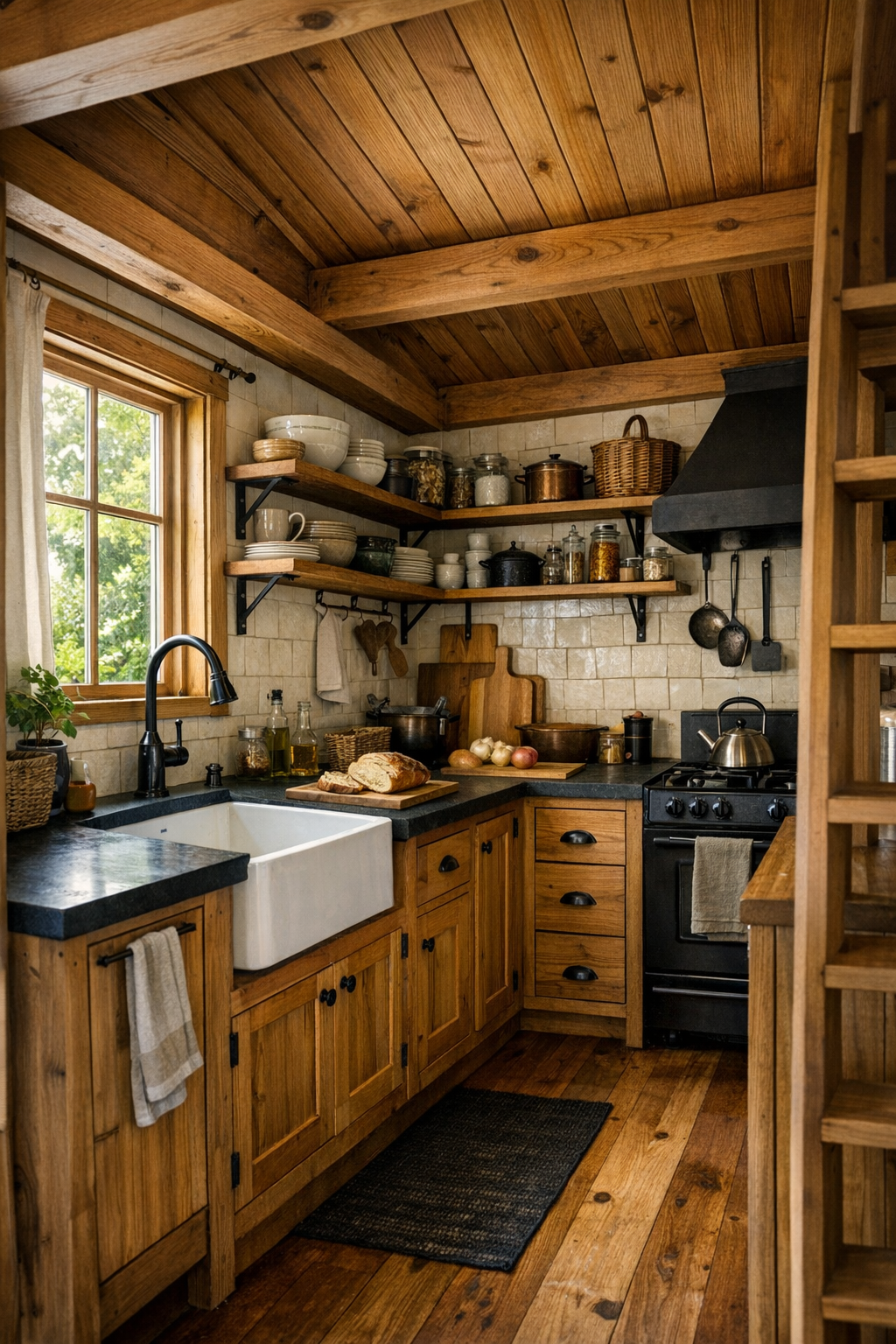
The kitchen is where this home really wins me over. As someone who cooks seriously, I am always looking for whether a compact kitchen has been planned by someone who understands movement, storage, and prep space, and this one certainly feels that way. Cabinetry in natural or lightly oiled wood would blend seamlessly with the architecture, perhaps offset by soapstone or honed dark counters that can stand up to real use. Open shelves keep daily items close at hand, and I can easily imagine neatly stacked plates, crocks of utensils, jars of grains, and a cutting board always within reach.
What keeps the room from feeling overly rustic is the discipline of the finishes. A simple apron-front sink, aged metal hardware, and a backsplash of creamy handmade tile would introduce variation without clutter. Under-cabinet lighting and daylight from a well-placed window would make the work surfaces shine, while smart built-ins would tuck away pantry goods, cookware, and small appliances. It is the sort of kitchen that invites practical cooking: simmered broths, buttered noodles, quick pickles, and yeasted dough rising beside the window.
Bedroom
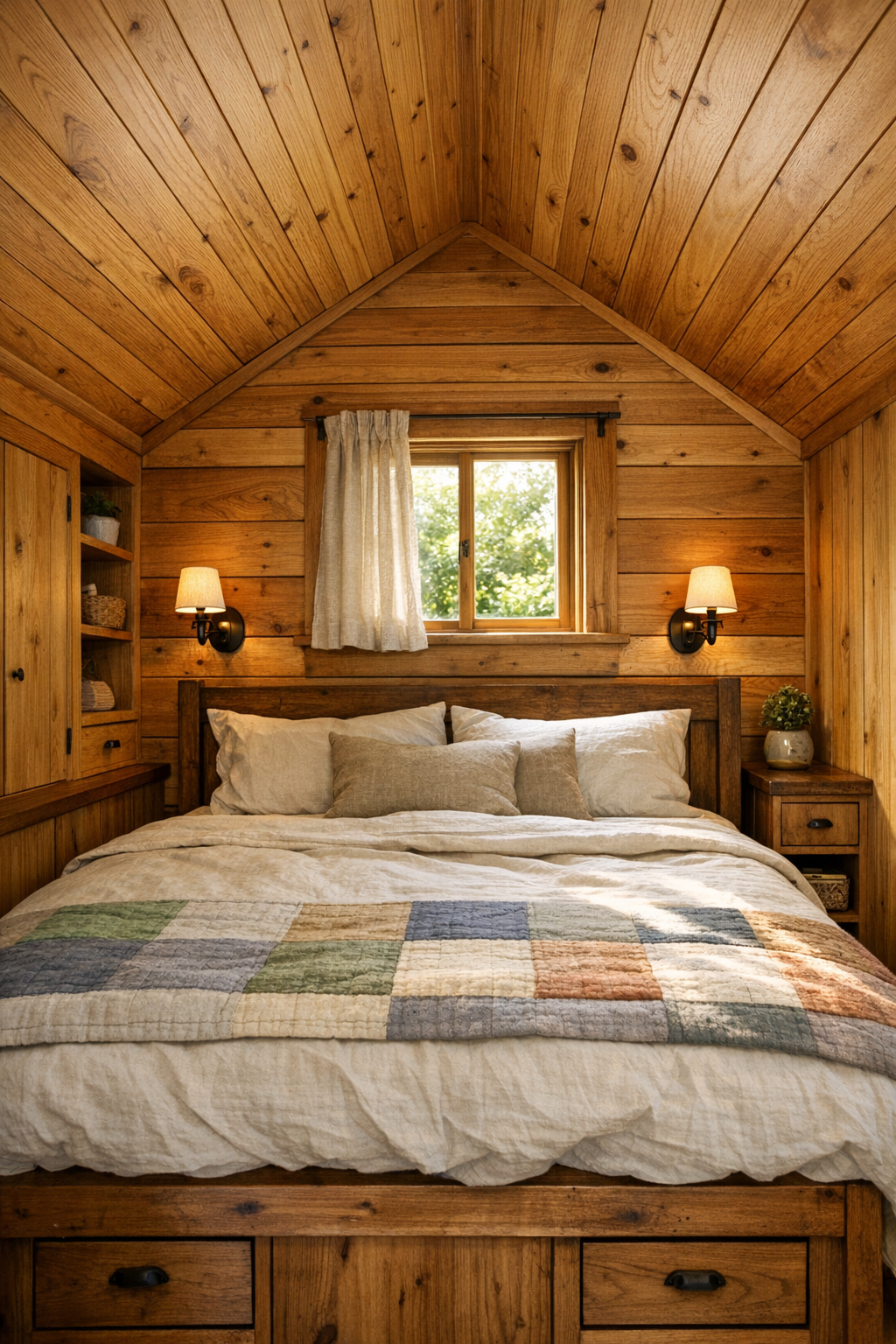
The bedroom appears designed to quiet the mind the moment you step into it. In a tiny home, that usually means reducing visual noise, and here the cedar envelope would do much of the work, wrapping the room in warmth and continuity. A simple bed frame in stained wood, layered with ivory linen, a quilt in muted earth tones, and perhaps a wool blanket folded at the foot would be more than enough. Rather than crowding the space with furniture, I imagine a pair of compact night ledges, a wall sconce on each side, and carefully integrated storage tucked beneath the bed or along the eaves.
What makes the room breathe is the balance between rustic materiality and restraint. The grain of the wood becomes the decoration, and any additional accents would be minimal: a ceramic vase, a woven shade, maybe a small hooked rug beside the bed. If this is a lofted bedroom, the sloped saltbox roof would make it especially atmospheric, giving the room a cocooning quality that feels protective rather than compressed. It is the kind of sleeping space that encourages earlier nights and slower mornings.
Bathroom
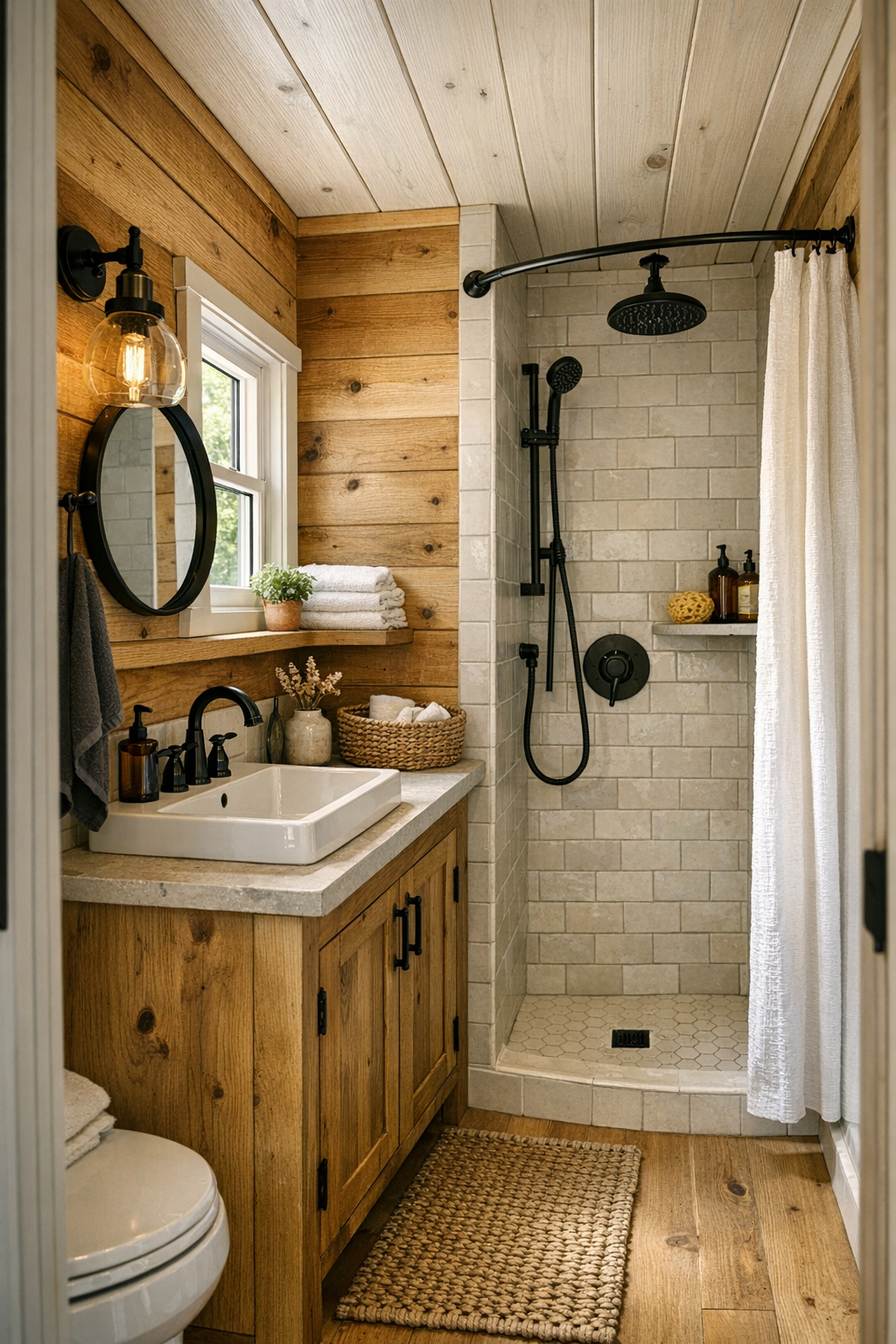
The bathroom continues the home’s handmade language while introducing a slightly cleaner, more utilitarian rhythm. I picture vertical wood paneling balanced with pale plaster or tile, so the room does not become too visually heavy. A compact vanity in natural wood, topped with stone or a simple solid surface, would keep the palette consistent, and a deep porcelain sink would add a note of old-house practicality. Metal finishes in blackened steel or antique brass would bring just enough edge.
For the shower, a tiled enclosure in soft white, sandy beige, or muted gray would reflect light and make the room feel larger. Good lighting near the mirror is essential, and in a home like this I would want it warm and flattering rather than stark. A woven basket for towels, a peg rail for robes, and perhaps one small window framing trees or sky would complete the experience. The mood would be clean, restorative, and gently rustic, never fussy.
Other Areas
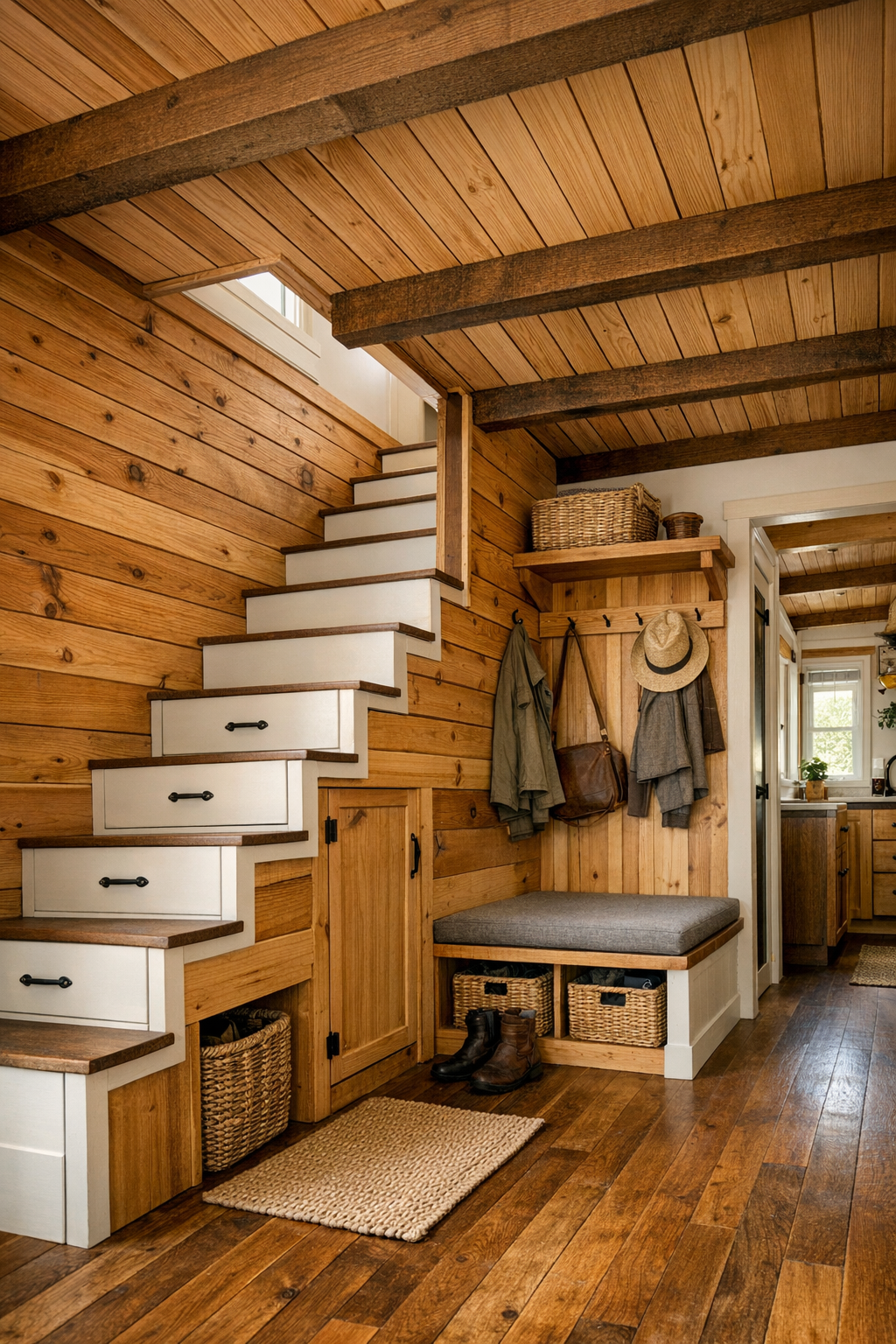
What often distinguishes a truly successful tiny home is not one standout room but the in-between spaces, and I suspect that is especially true here. A stair with integrated drawers, a loft landing with a built-in book nook, or a narrow entry fitted with pegs, bench seating, and shoe storage would all feel entirely in character. These are the details that turn a compact shell into a home that supports daily life gracefully. Amish-inspired craftsmanship shines in these moments, where joinery, proportion, and practical intelligence become visible.
I would also expect thoughtful ceiling treatments, exposed beams, and small alcoves that give the eye places to rest. Even a corridor can feel meaningful when trimmed in cedar and lit with care. In homes like this, circulation becomes part of the design story, not leftover space. That is something I always admire, because it mirrors good cooking: nothing wasted, every element carrying flavor and purpose.
Why You'd Live Here
You would live here if you believe a home should feel honest in the hand and calm to the eye. This tiny saltbox offers warmth without clutter, craftsmanship without showiness, and a layout that respects everyday rituals, from morning coffee to evening reading to cooking a real meal in a compact but capable kitchen. I think many people are hungry for exactly this kind of simplicity, one that is rooted in quality rather than austerity.
More than anything, this home makes a compelling case for living with fewer but better things. The cedar, the handmade details, the restrained palette, and the thoughtful use of every inch all create an atmosphere that feels enduring rather than trendy. For anyone drawn to timeless forms and rooms that work hard while staying beautiful, this would be an easy place to say yes to.