
Set on a working summer homestead, this converted bus has the kind of quiet confidence I always admire in small-space design. From the outside, it reads as practical and a little nostalgic, but step inside and the atmosphere shifts into something deeply considered: warm wood, soft daylight, compact built-ins, and a layout that makes daily life feel calm instead of crowded. It balances rustic simplicity with a level of finish that feels remarkably intentional, as though every inch has been asked to earn its place.
What makes this home especially memorable is how gracefully it translates off-grid living into a space that still feels welcoming, stylish, and genuinely livable; it is, of course, a concept design, but one grounded in believable detail. I am especially drawn to homes like this because they remind me of a well-run kitchen: limited space, clear purpose, and no tolerance for waste. Here, utility is not hidden, but folded beautifully into the design, creating a home that feels connected to the land around it without giving up comfort.
Exterior
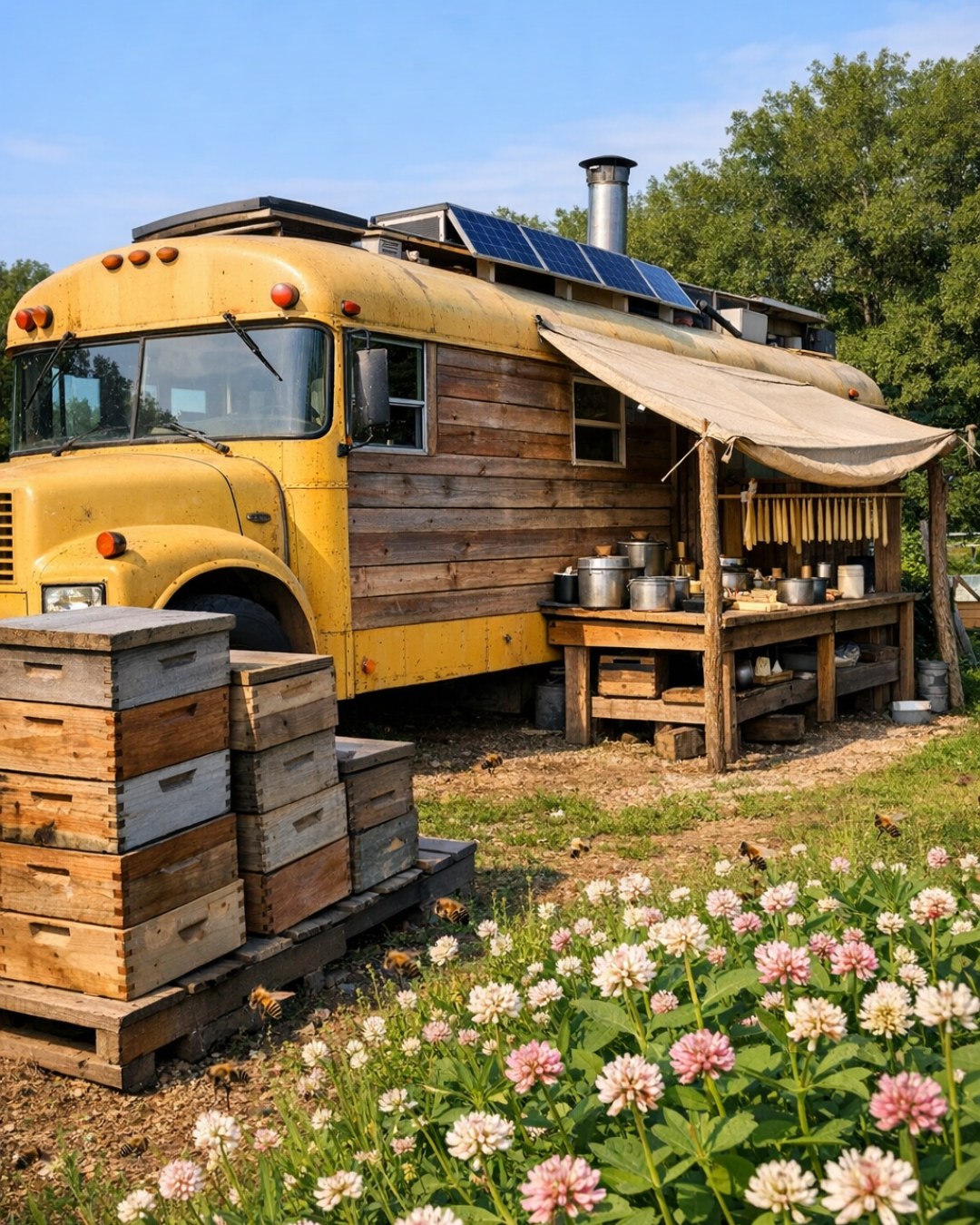
The bus exterior keeps much of its original silhouette, which gives the home its charm, but the finish has been refined with a softer, homestead-friendly character. I imagine a muted cream or weathered sage body with contrasting black window trim and natural cedar accents at the entry, allowing the structure to sit comfortably among garden beds, tool sheds, and open summer fields. A simple awning extends the living space outdoors, and the entry stair feels more like a porch landing than a vehicle step, which helps the transition from working farm life to domestic interior feel natural and inviting.
What I like most is that the bus does not try too hard to disguise what it once was. Instead, the design works with its curved roofline and rhythmic window spacing, using those recognizable features as part of the visual identity. Potted herbs, galvanized planters, a stack of firewood nearby, and perhaps a gravel path worn smooth by muddy boots all reinforce the sense that this is a real place for hands-on living. The overall effect is charming but not precious, polished but still ready for the practical demands of a summer homestead.
Living Room
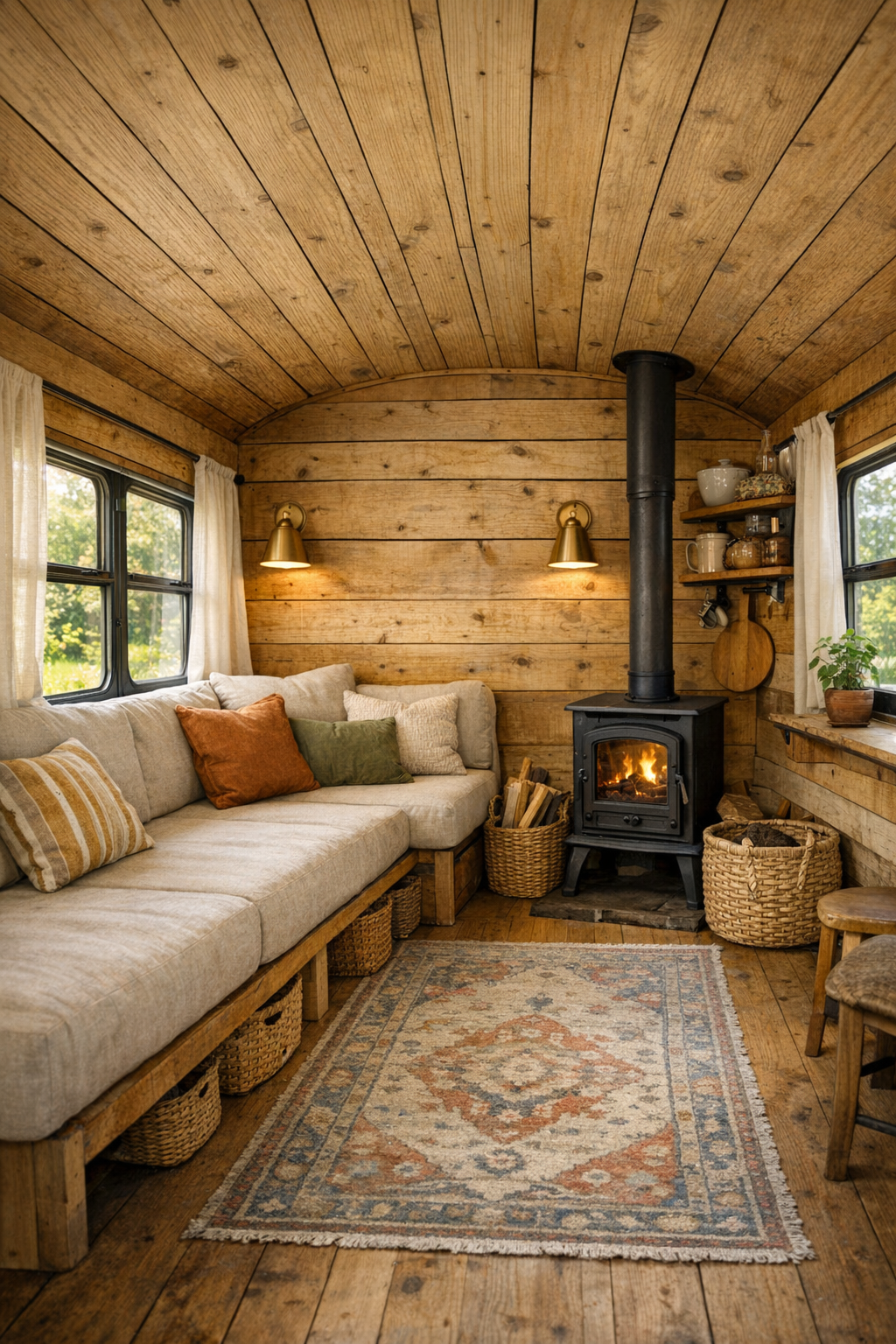
The living area makes excellent use of the bus's narrow footprint by treating the main seating zone almost like a built-in banquette. A compact sofa in oatmeal linen sits beneath the windows, layered with clay, moss, and faded indigo cushions that echo the landscape outside. The walls and ceiling are wrapped in honey-toned wood planks, and that continuity of material gives the room warmth without visual clutter. I can easily picture a small iron stove at one end, not oversized or theatrical, just enough to anchor the room and add texture against the softer finishes.
Lighting is where this space really earns its charm. Daylight pours in from both sides, bouncing off pale upholstery and matte brass sconces so the room feels bright even with a restrained palette. The furniture is necessarily minimal, but it does not feel sparse: a slim nesting table, woven storage baskets tucked below a bench, and a vintage-style rug with a gently faded pattern all add personality. There is a discipline to the layout that I appreciate, the same kind of discipline I rely on in a small kitchen, where ease of movement matters just as much as beauty.
Dining Room
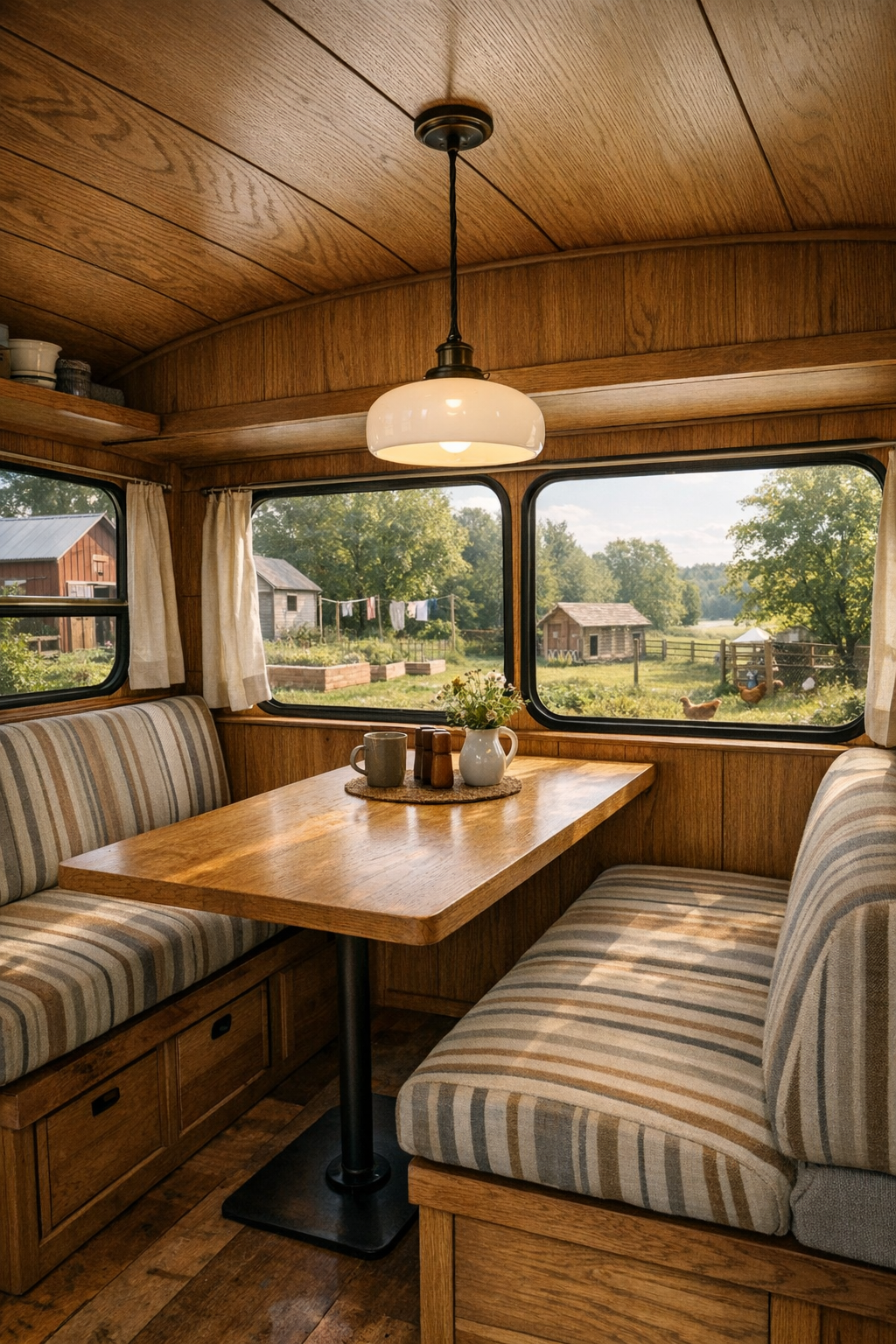
The dining area is compact, but it has been handled with real finesse. Rather than forcing in a standard table, the design uses a built-in dining nook with a slim rectangular top, likely in oiled oak or ash, paired with bench seating that doubles as storage. This is exactly the kind of solution I love because it respects the proportions of the home while still making room for lingering meals, canning projects, or a loaf of bread cooling on a towel. The seat cushions in muted stripe or simple ticking fabric add a touch of softness without drifting into a fussy cottage look.
Visually, the nook benefits from being framed by the bus windows, which turn every meal into a view of the homestead. A modest pendant in enamel or opal glass centers the space and makes it feel distinct from the living area, even if the footprint is only a few feet away. I would expect to see a narrow shelf nearby holding crockery, preserved goods, and a ceramic pitcher with clipped herbs, all reinforcing the home's working rhythm. It feels intimate in the best way, like a place where supper is simple, seasonal, and always close to the garden.
Kitchen
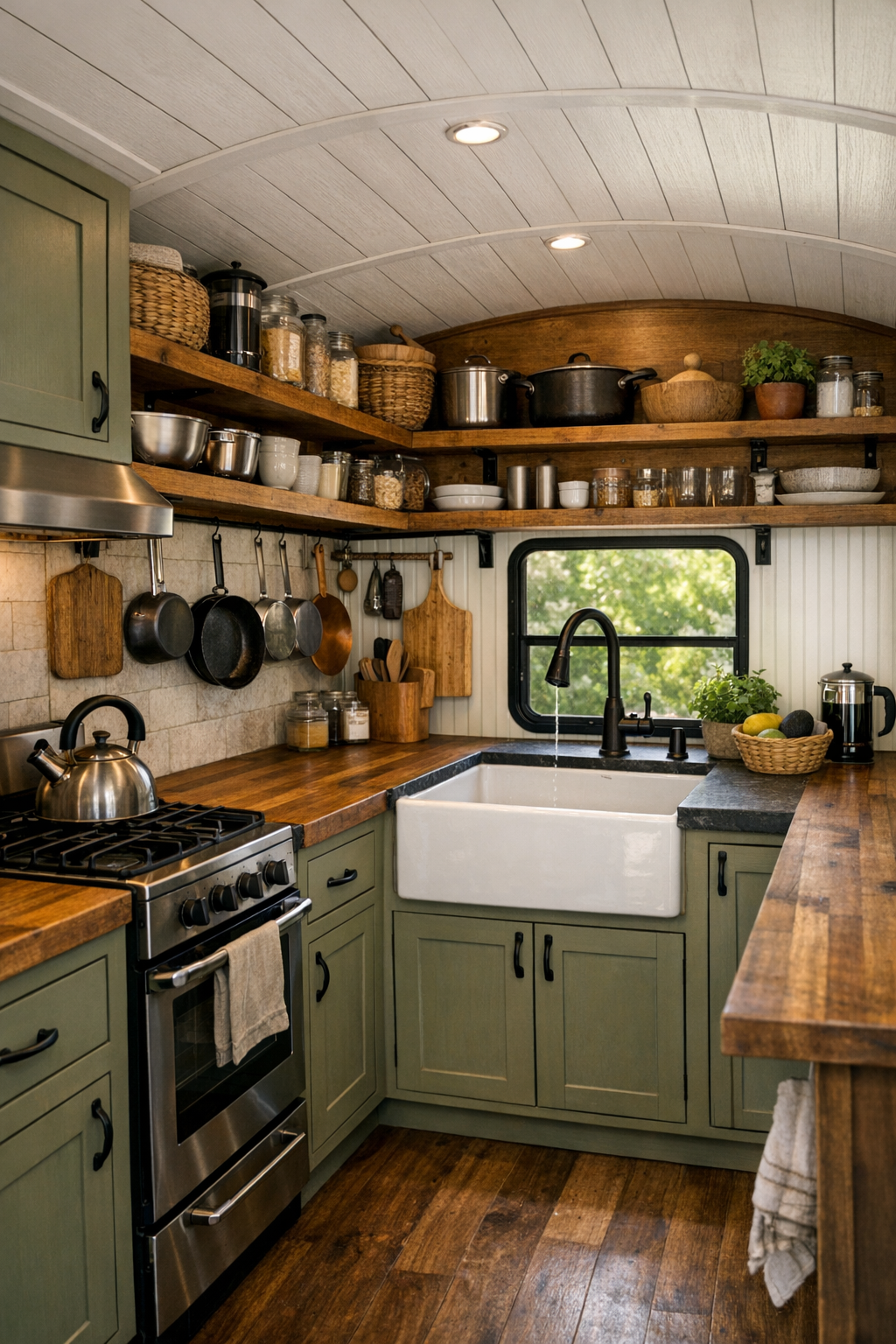
The kitchen is, unsurprisingly, the part of this home I study most closely, and it is exceptionally well resolved. The cabinetry appears custom-built to fit the bus shell precisely, with flat-panel fronts in painted sage or warm putty and counters in butcher block or soapstone for a durable, tactile finish. Open shelving keeps the upper half of the room from feeling boxed in, and I can imagine it styled with practical things rather than decorative filler: spice jars, enamelware, dried beans, crock bowls, and a few everyday pans within easy reach. It has the feel of a hardworking galley, but one designed by someone who understands that function and beauty do not need to compete.
Because this is an off-grid home, the appliances are likely compact and intentional, perhaps a small propane range, an undercounter refrigerator, and a deep farmhouse-style sink adapted to the narrower scale. I appreciate the likely emphasis on prep space, because in small kitchens that matters more than sheer appliance count. A rail for utensils, hooks for towels, and inset drawers sized for real cooking tools would make the room feel genuinely useful to someone who actually cooks, rather than merely assembles meals. The palette of wood, muted paint, dark metal, and soft natural light gives the kitchen a grounded, almost pantry-like comfort that I find deeply appealing.
Bedroom
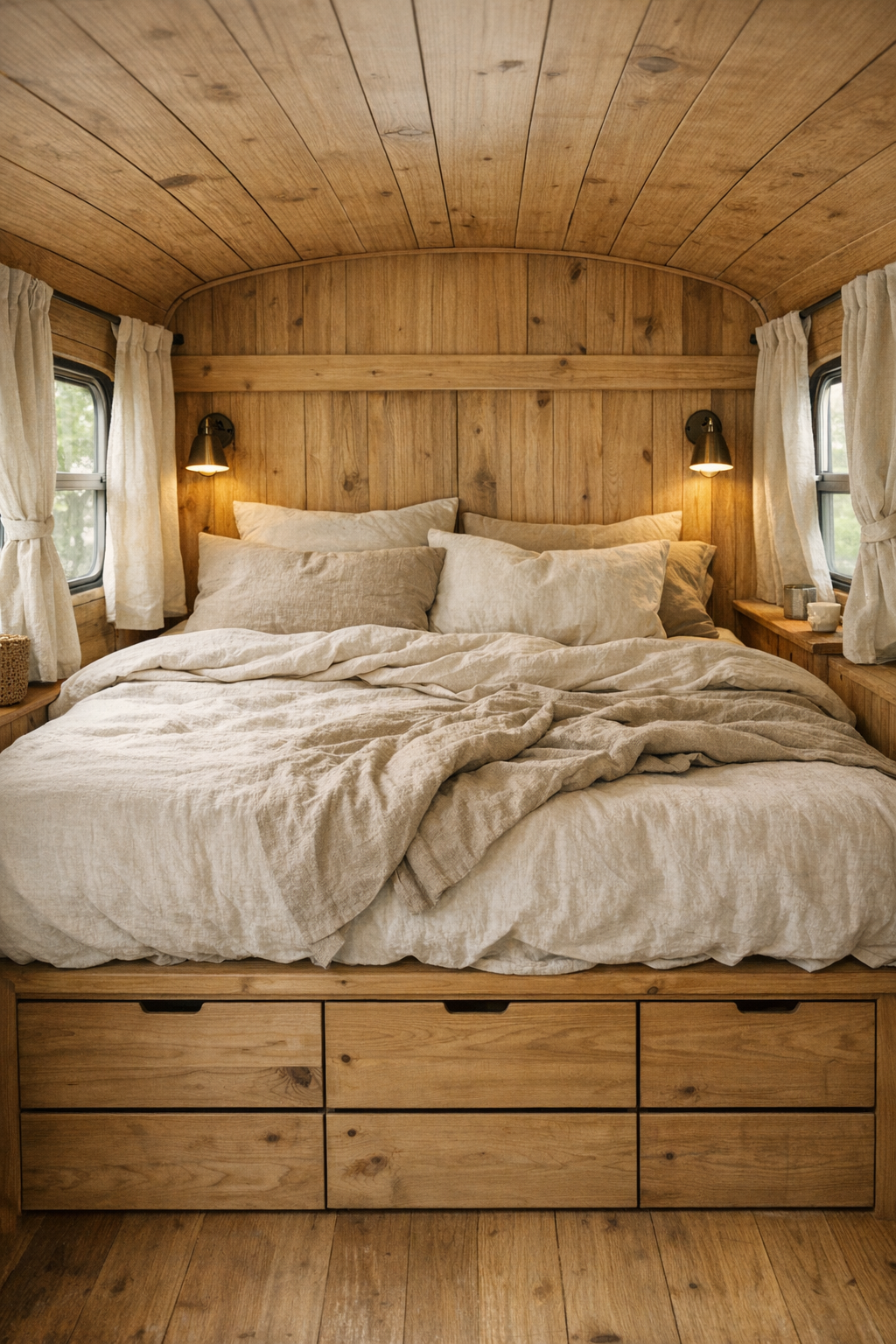
The bedroom takes advantage of the bus's tapered proportions by leaning into coziness instead of fighting it. A built-in bed platform, likely raised to allow for storage drawers beneath, is dressed simply in washed linen and soft wool layers in cream, flax, and muted forest tones. The wood-paneled envelope continues here, but perhaps with lighter bedding and a slightly quieter palette so the room feels restful rather than visually busy. I suspect the windows are fitted with tailored curtains or Roman shades in natural canvas, enough to soften the light while preserving the clean lines of the space.
What I find particularly successful is the likely absence of unnecessary furniture. In a room this size, every object needs to support calm, and built-in ledges, reading sconces, and wall hooks do that much better than freestanding pieces ever could. The result is a bedroom that feels almost cabin-like, insulated from the more active zones of the home even though it is only a few steps away. It is modest, certainly, but not deprived; it offers exactly what a sleeping space should, which is comfort, quiet, and a sense of retreat.
Bathroom
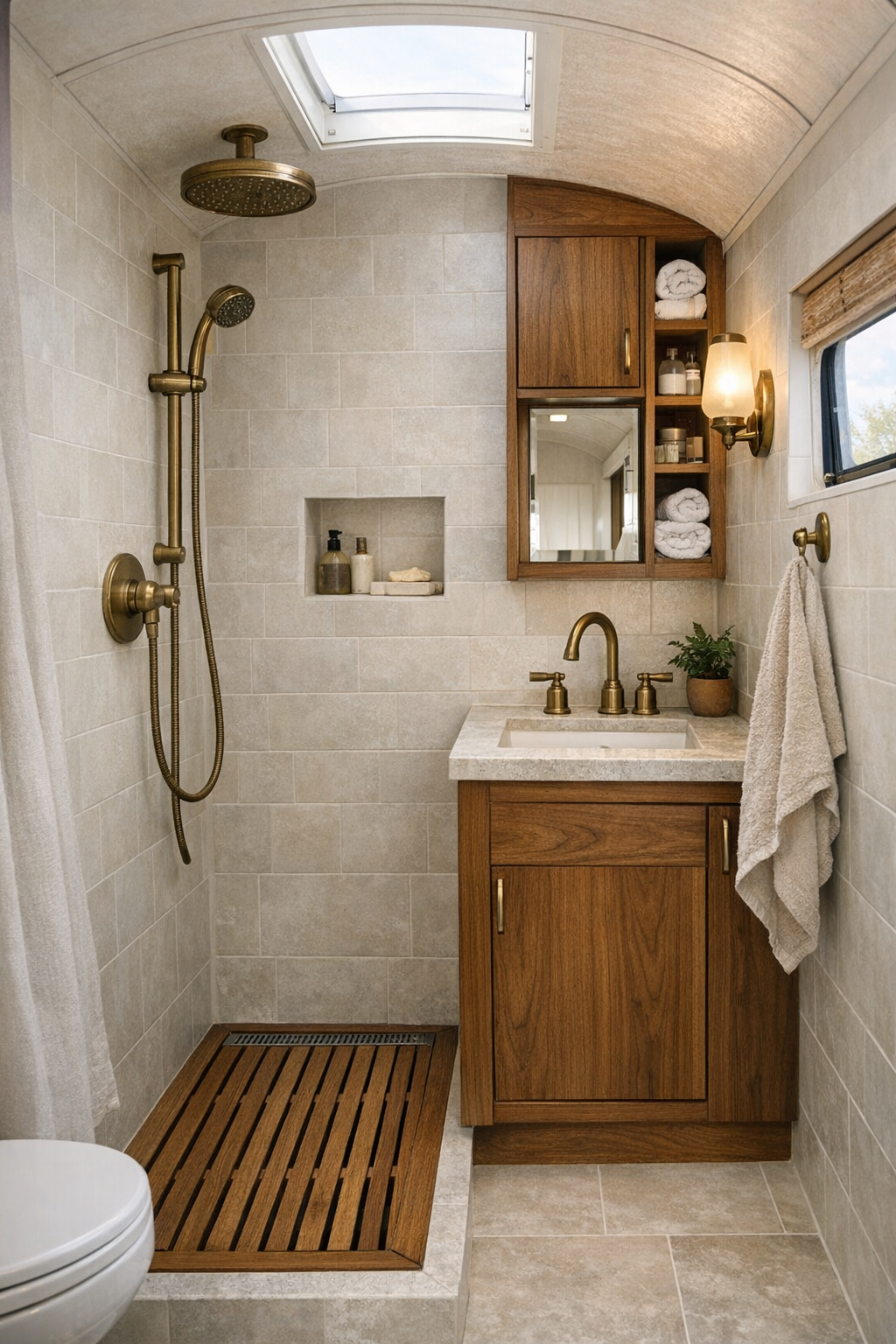
The bathroom is where small homes either become awkward or reveal just how thoughtful they really are, and this one feels firmly in the second category. I imagine a compact wet-room approach with a narrow vanity in sealed wood, a stone or composite countertop, and aged brass fixtures that add warmth against tile. The walls might be finished in small-format ceramic tile, perhaps a soft white, pale gray, or muted green, which would reflect light and help the room feel fresh and clean. In a space this tight, consistency of materials matters tremendously, and the restrained palette would keep everything feeling cohesive.
There is likely smart storage tucked into every available recess: a mirrored cabinet, open cubbies for towels, maybe a ledge for soap and a plant that tolerates humidity well. What I appreciate here is the probable balance between utility and comfort. Off-grid living can sometimes lead designers toward a look that feels too makeshift, but this bathroom sounds much more composed than that. With good ventilation, a clear glass partition or curtain, and a few tactile elements like linen towels and a slatted teak mat, the room would feel surprisingly polished.
Other Areas
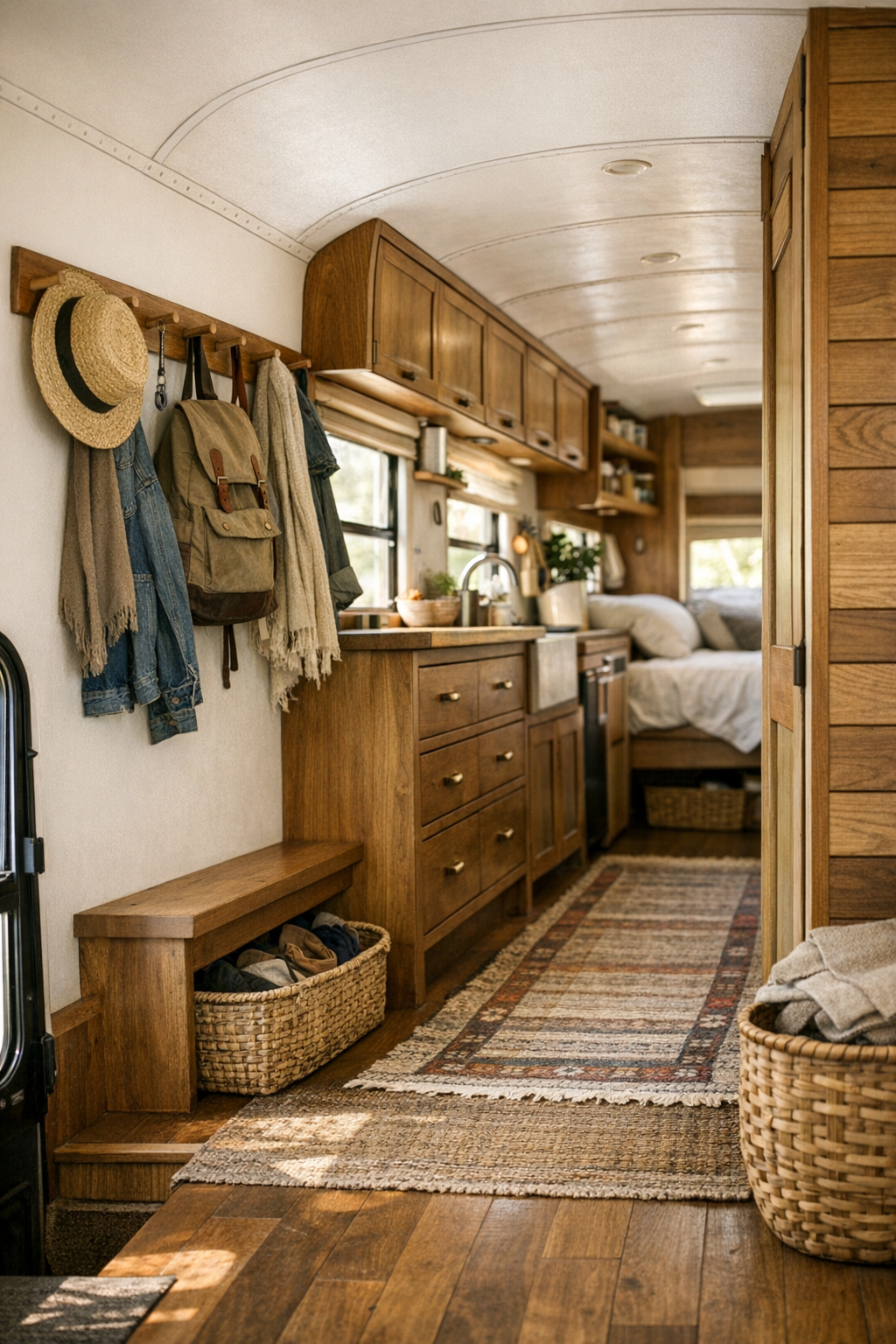
In a home like this, the in-between spaces matter as much as the main rooms. The corridor, entry zone, and any overhead or under-bench storage must work incredibly hard, and from what I can picture, they do so elegantly. There are likely peg rails for hats and aprons, drawers hidden beneath steps, and upper cabinets that follow the bus's curve without overwhelming the eye. Even the thresholds between zones probably carry subtle design cues, such as a change in rug texture, a shift in millwork detail, or a small shelf for jars, books, or harvested produce.
I also imagine the outdoor extension of the home as part of these "other areas," particularly if the awning shelters a small deck or gravel sitting space. That outdoor room is essential on a summer homestead because it gives the interior breathing room, whether for boot removal, washing garden vegetables, or simply drinking coffee at first light. The best small homes always understand that square footage is not only about enclosed walls. Here, storage, circulation, and the indoor-outdoor threshold all seem designed with the same careful hand as the major rooms, and that consistency is what makes the whole home feel so resolved.
Why You'd Live Here
You would live here if you value intention more than excess. This bus offers a version of home life that feels pared back, but not impoverished, connected to work and weather, but still deeply comfortable. Every material appears chosen for warmth and durability, every built-in seems to answer a real need, and every room contributes to a way of living that is slower, more attentive, and far less wasteful. For anyone who has ever believed that beauty should support daily life rather than distract from it, this home makes a convincing case.
I also think you would live here for the mood it creates. There is something restorative about a place that asks you to keep only what matters and arrange it well. As someone who spends a great deal of time thinking about how a kitchen functions, I find this entire home persuasive for the same reason a well-designed cooking space is persuasive: it respects effort, rewards organization, and turns ordinary routines into something satisfying. On a working summer homestead, that kind of design is not just attractive, it is genuinely meaningful.