
This muted periwinkle accessible container home feels like the kind of place that instantly lowers your shoulders the minute you step inside. Set against a simple, open landscape, it blends clean industrial lines with a softness that I honestly didn’t expect from a container build. The color alone gives it a calm, almost powdery presence, and inside, that quiet mood carries through in layered neutrals, rounded edges, and a layout that feels thoughtful instead of flashy. As a concept design, it imagines accessibility and beauty working hand in hand in a way that feels refreshingly natural.
What makes this home special to me is how it solves real-life needs without ever feeling clinical. I’m always drawn to spaces that make a busy day easier, and this one does that with wide circulation paths, easy transitions from room to room, durable finishes, and a warm palette that still feels elevated. There’s a subtle confidence here: nothing is overdone, but every material, every fixture, and every sightline seems carefully chosen to support comfort, independence, and everyday living.
Exterior
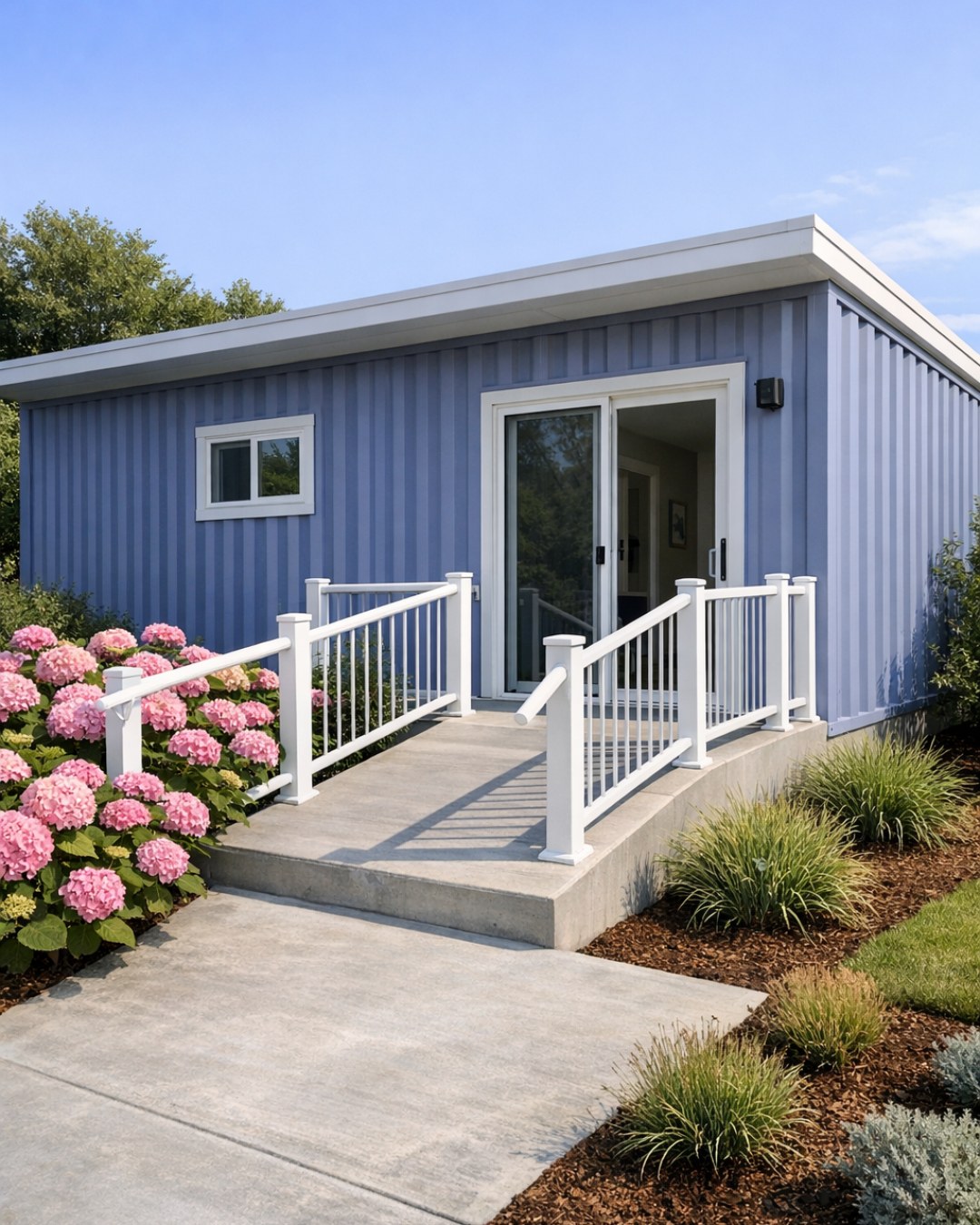
From the outside, the home keeps the recognizable rhythm of stacked and joined shipping containers, but the design softens that structure beautifully. The muted periwinkle finish reads almost like a dusty pastel, which gives the metal shell a more residential, welcoming character. Black-framed windows add crisp contrast, while pale wood slat detailing at the entry and along a small privacy screen introduces warmth and breaks up the linear geometry. A gently sloped walkway replaces steps, and it’s integrated so seamlessly into the landscaping that it feels like part of the architecture rather than an afterthought.
I also love how the exterior avoids the cold, overly industrial look that container homes can sometimes lean into. The roofline is clean and minimal, with deep enough overhangs to sharpen the silhouette and offer a little weather protection at the entrance. Low native grasses, smooth concrete pavers, and gravel planting beds keep maintenance practical, which honestly matters more than people admit. The whole composition feels calm, modern, and highly intentional, with accessibility folded into the design from the very first impression.
Living Room
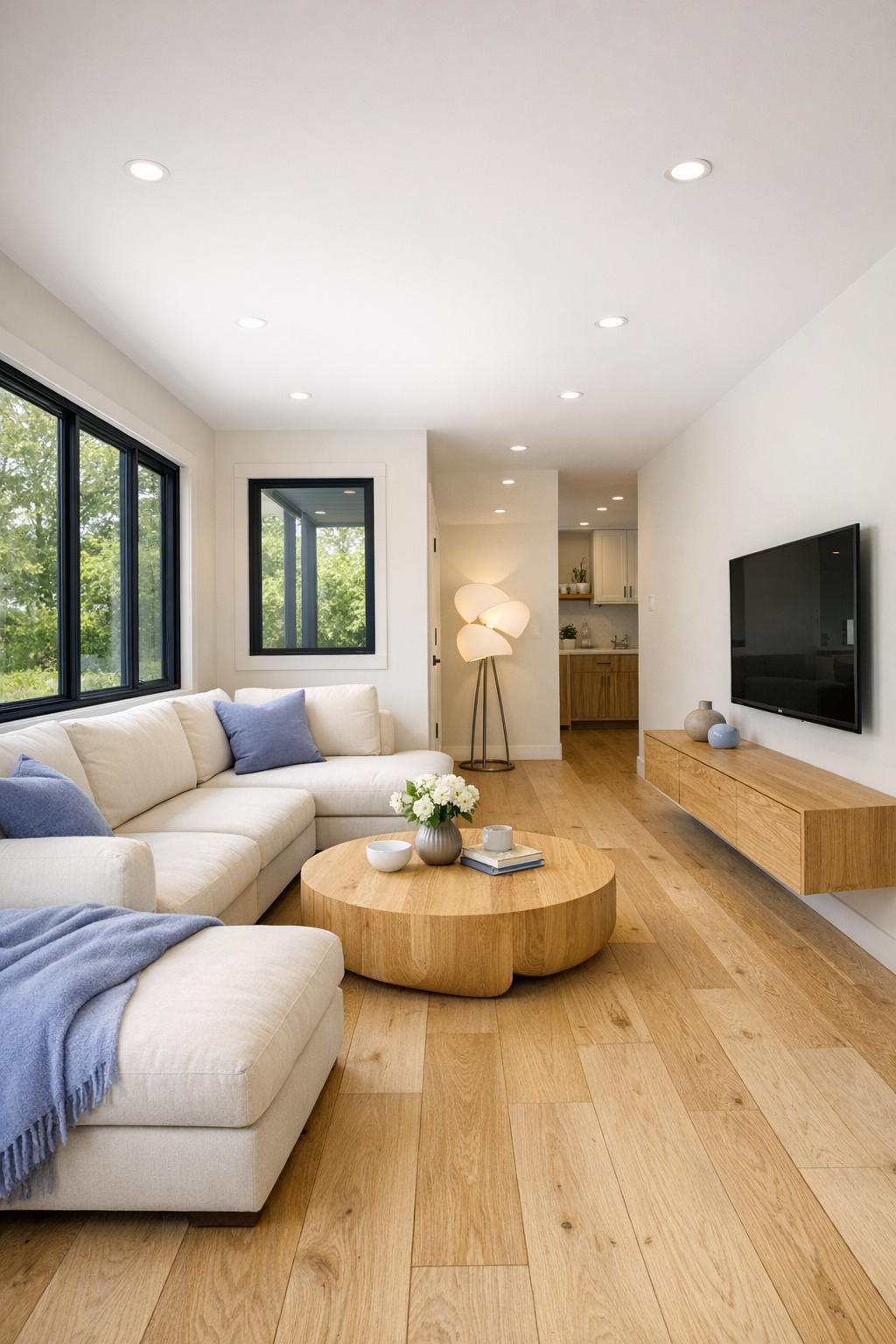
The living room is where the home’s softness really comes through. Wide-plank white oak flooring stretches wall to wall, visually widening the space, while the container’s structural lines are balanced by rounded furniture and a creamy, low-profile sectional that leaves plenty of maneuvering room. The palette stays gentle: warm white walls, muted gray upholstery, touches of periwinkle in the textiles, and pale taupe drapery that filters light without making the room feel heavy. A curved edge coffee table in light ash wood keeps circulation easy, and I appreciate that nothing here feels crowded or precious.
Lighting does a lot of work in this room without calling attention to itself. Slim recessed fixtures wash the ceiling evenly, a sculptural floor lamp adds a cozy evening layer, and daylight pours through oversized windows that make the metal shell feel surprisingly airy. The media wall is handled with restraint, featuring a floating oak console and textured plaster backdrop instead of bulky built-ins. It’s the kind of living room I can imagine using every day, whether you’re reading for twenty quiet minutes before work or collapsing onto the sofa after making dinner.
Dining Room
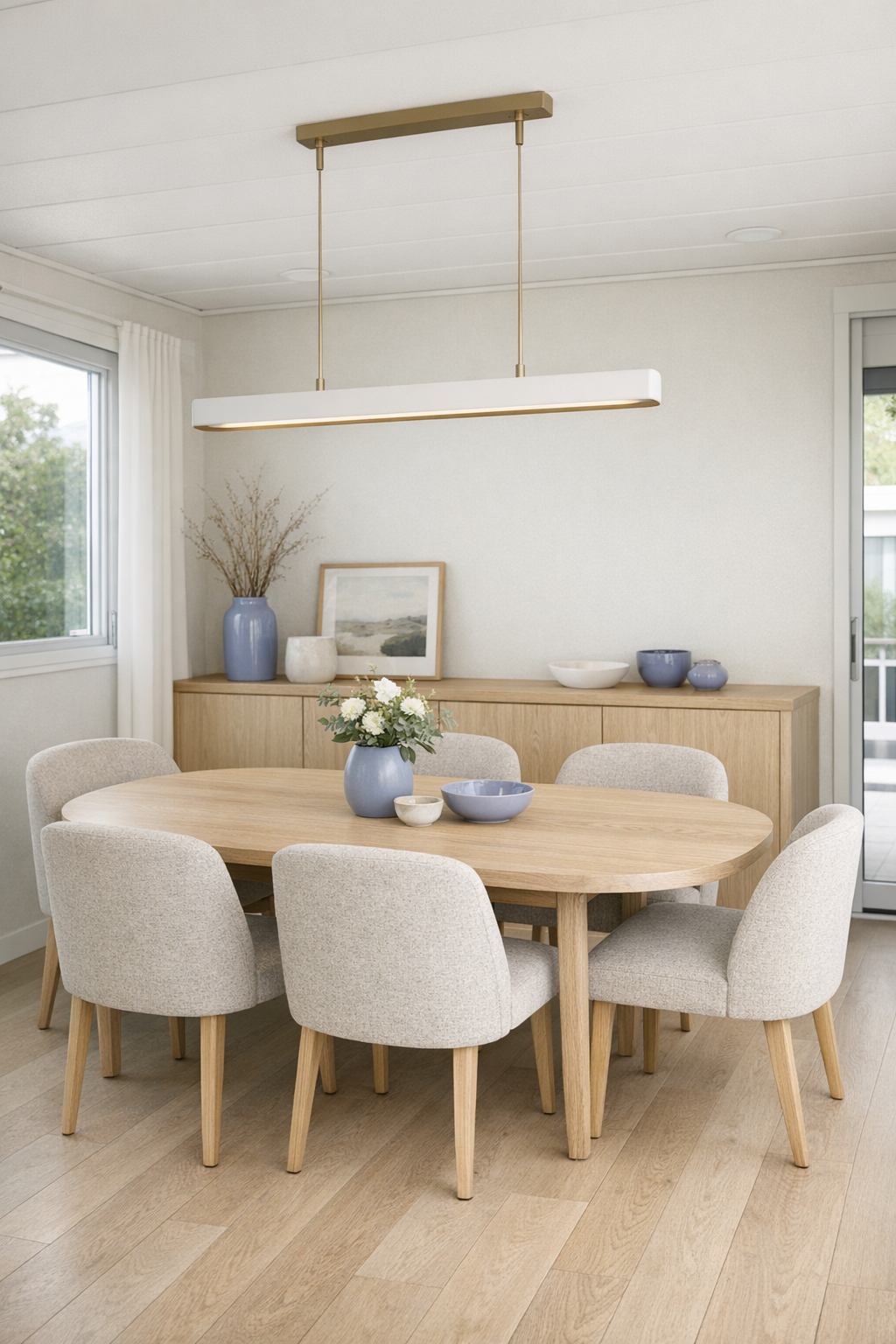
The dining area sits in easy conversation with the living room and kitchen, and that openness makes the whole home feel larger than its footprint. A rounded rectangular dining table in pale oak anchors the space, with enough clearance all around to move comfortably and pull up seating without hassle. Upholstered dining chairs in a textured oatmeal fabric keep the look soft and comfortable, and I like that the table edges are gently eased rather than sharp. It feels polished, but also like a place where you could actually linger over takeout on a Tuesday or host a relaxed weekend brunch.
Above the table, a linear pendant in matte white and brushed brass adds definition without visual heaviness. One wall features a built-in shallow credenza with push-latch doors, perfect for keeping daily clutter tucked away while maintaining those clean lines. The colors stay intentionally quiet, with warm neutrals, pale wood, and just enough cool undertone from the adjacent periwinkle notes to tie everything together. If you’re someone who likes spaces that multitask, this room absolutely gets it right.
Kitchen
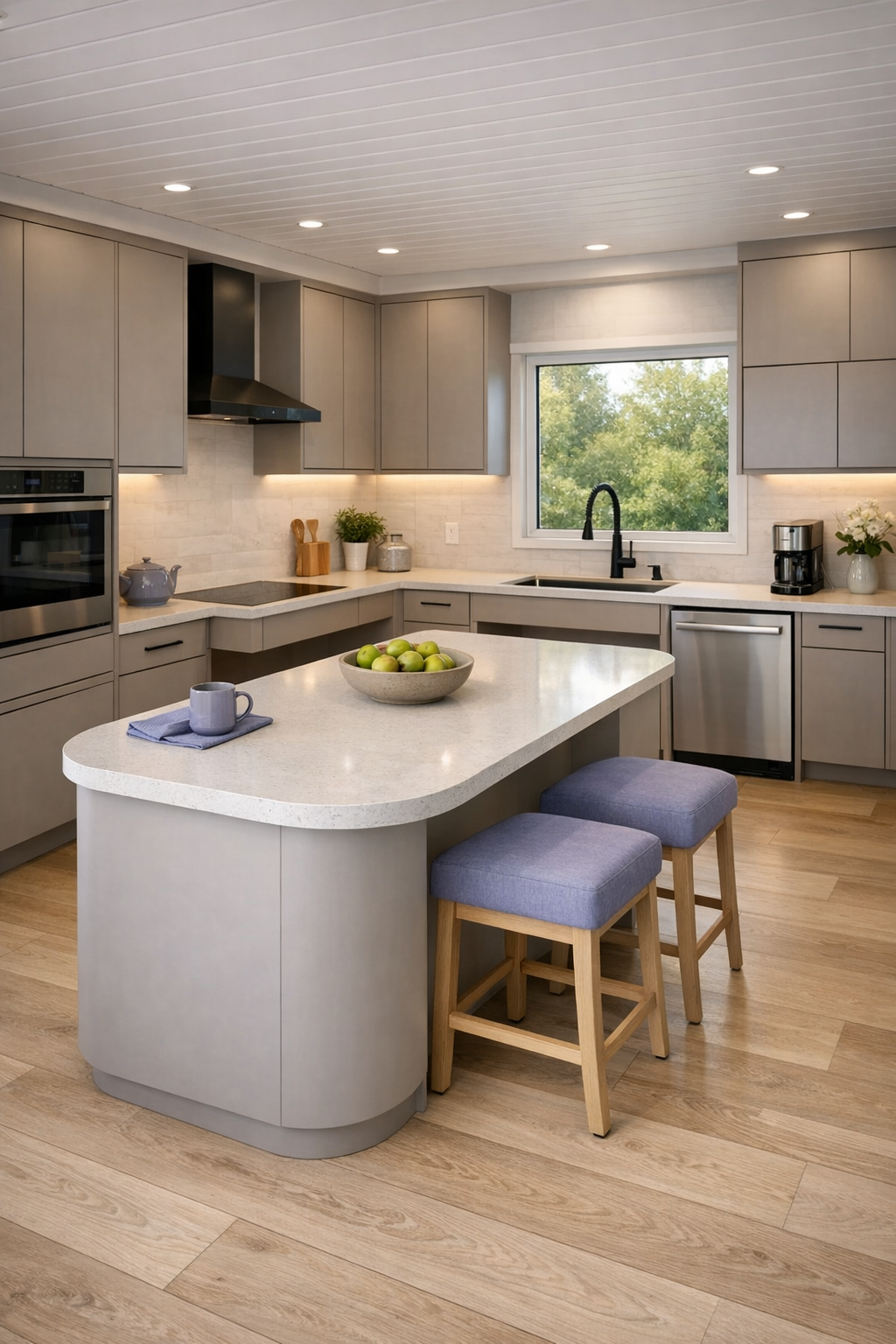
The kitchen is probably the space I’d talk about the most if a friend came over, because it’s equal parts beautiful and practical. Flat-panel cabinetry in a warm mushroom tone gives the room depth without making it feel dark, and the lowers are paired with open breathing room rather than excessive upper cabinets. The countertops are a soft white quartz with faint gray veining, and the backsplash runs in the same material for a clean, uninterrupted surface that feels easy to maintain. Everything is laid out with efficiency in mind, from the wide aisles to the varied counter heights that make prep more comfortable and flexible.
One of my favorite details is the island, which has rounded corners, a waterfall edge, and space that feels intentionally designed for gathering as well as working. Integrated appliances keep the lines sleek, while matte black pulls and fixtures add just enough contrast against the muted finishes. Under-cabinet lighting brightens the work surfaces beautifully, and a large window near the sink keeps the room from ever feeling boxed in. As someone who is always thinking about meal prep and weekday functionality, I can see this kitchen making everyday routines smoother in the best possible way.
Bedroom
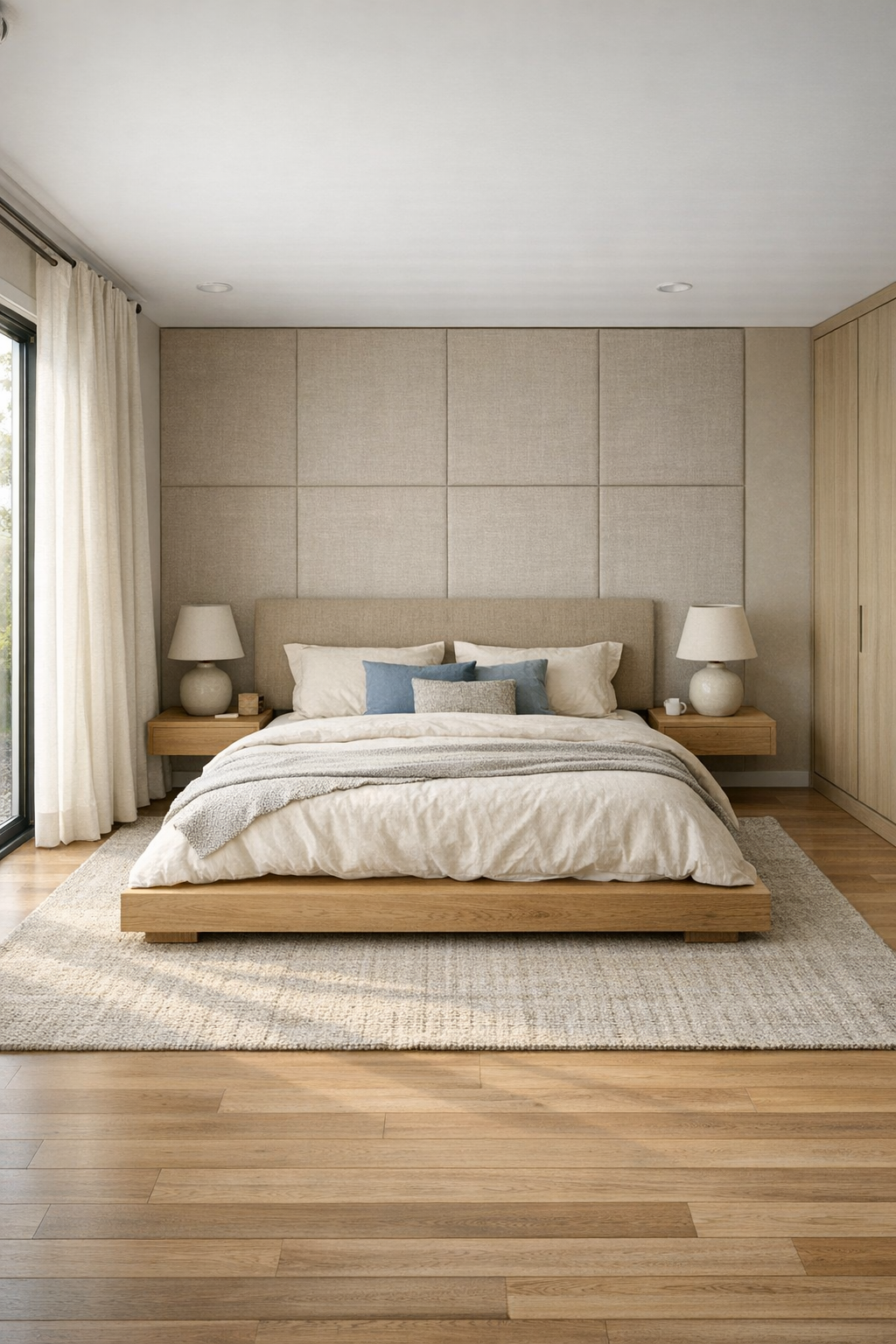
The bedroom takes the home’s quiet palette and makes it feel even more restful. A low platform bed in light oak sits against a softly upholstered headboard wall in a warm greige fabric, and the bedding layers ivory, stone, and faded blue for a look that feels serene without turning flat. There’s ample clearance on both sides of the bed, which helps the room feel open and easy to navigate, and the furniture is kept intentionally minimal. Instead of crowding the space with heavy dressers, storage is integrated into a streamlined wardrobe wall with simple touch-latch panels.
I especially like the way texture carries the room. Linen drapes, a nubby area rug, matte ceramic bedside lamps, and lightly limewashed walls create depth while staying tonal and calm. The windows are placed to bring in soft morning light, and blackout shades tuck away neatly when not in use. It’s one of those bedrooms that doesn’t ask much of you; it just feels peaceful, functional, and genuinely restorative, which is honestly what I want most at the end of a long day.
Bathroom
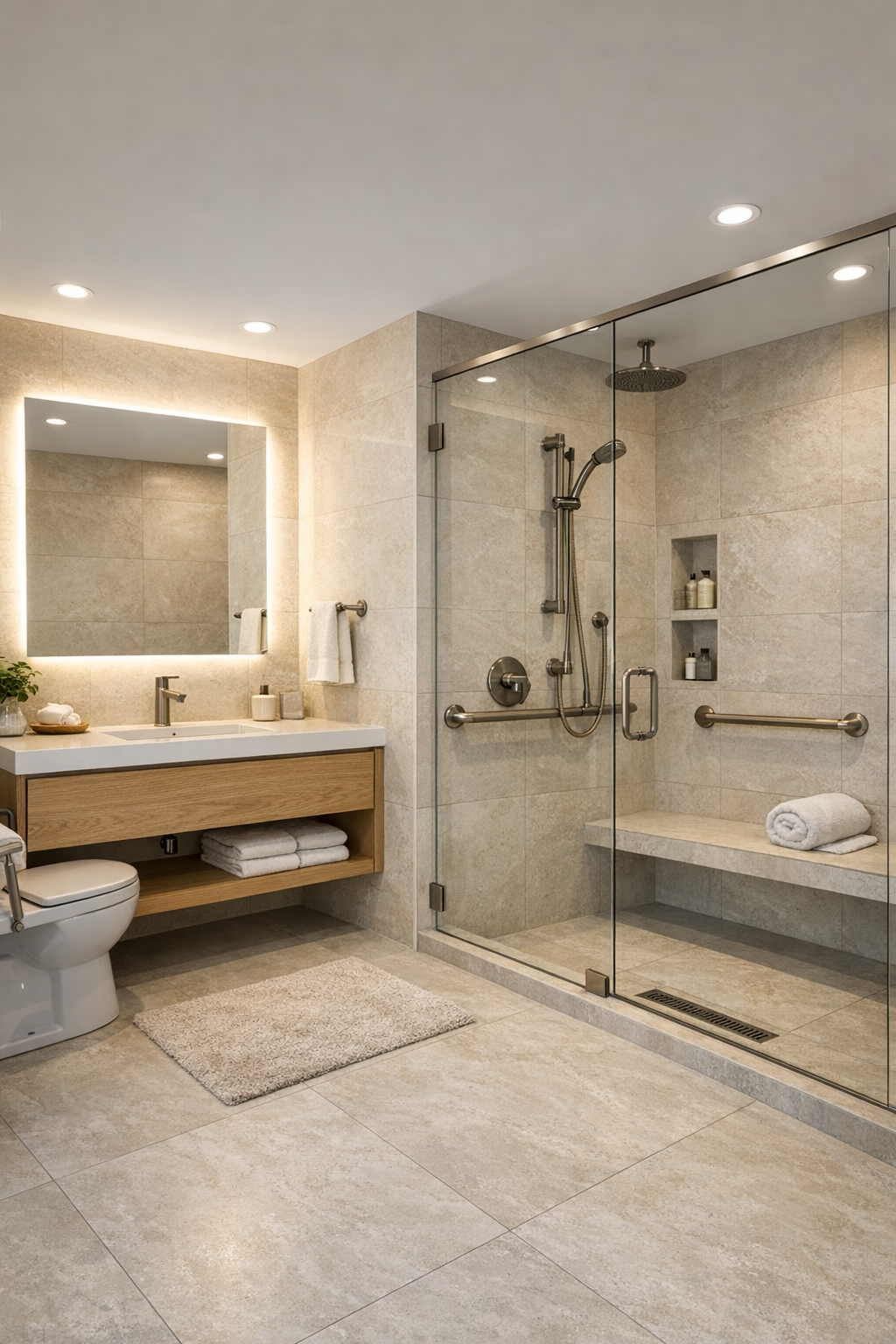
The bathroom is where the accessible design language becomes especially elegant. Large-format porcelain tile in a pale limestone tone covers the floors and walls, creating a seamless look that visually expands the room and minimizes transitions. A floating white oak vanity with integrated pulls keeps the floor area open, and the countertop is a soft solid surface with gently rounded corners that echo details found elsewhere in the house. The mirror is oversized and backlit, which adds both function and a subtle glow that flatters the space beautifully.
The shower is curbless and generously proportioned, enclosed with a single glass panel so the room stays open and easy to move through. Brushed nickel fixtures, a built-in bench, hand shower, and thoughtfully placed niche shelving make it practical without sacrificing style. I also appreciate the softer pieces here, like the woven bath textiles and the way the lighting is layered between recessed ceiling fixtures and wall-mounted illumination. It feels spa-like, but not in a fussy way—more like a room designed to make daily routines smoother and calmer.
Other Areas
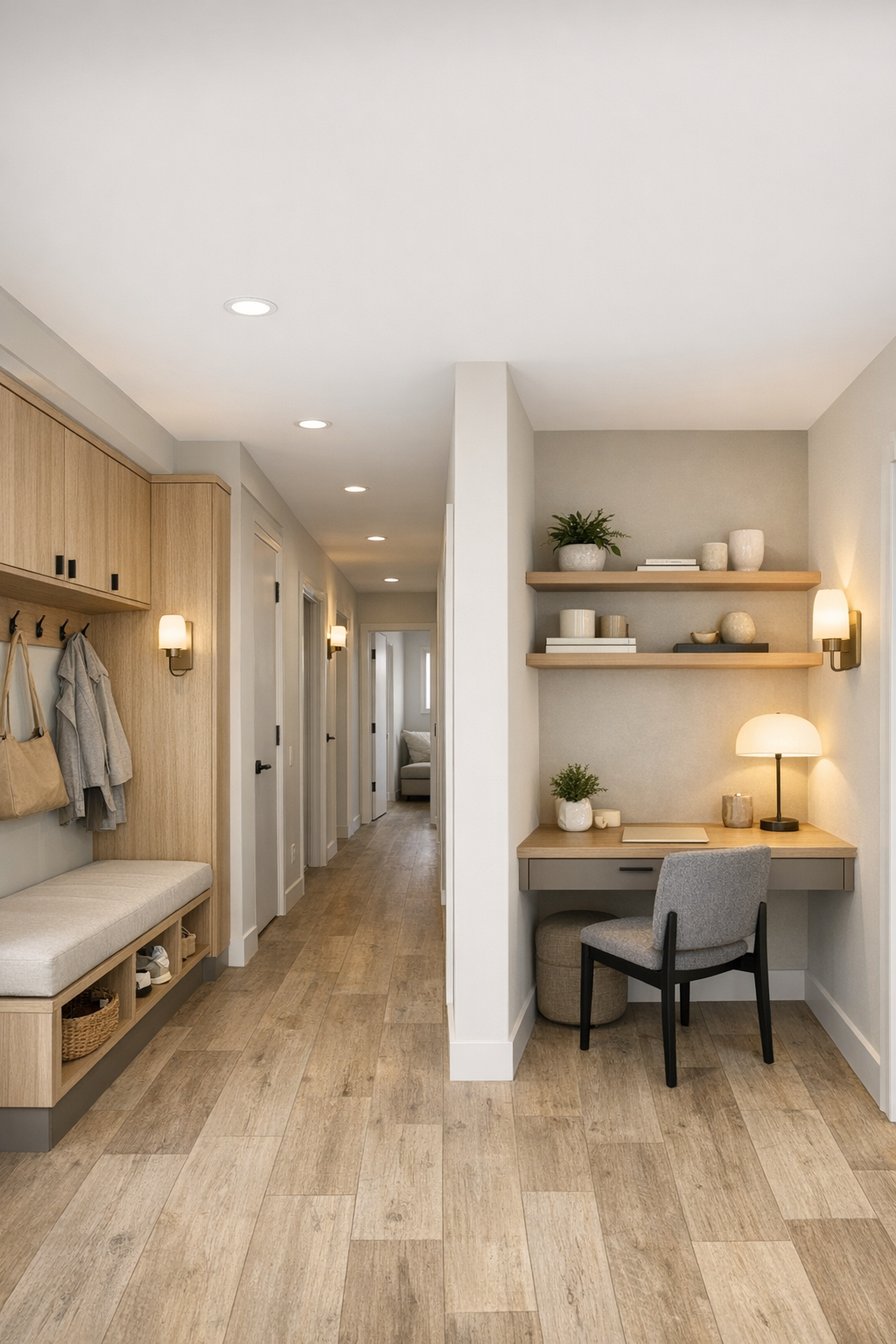
Beyond the main rooms, this home includes the kind of supporting spaces that make everyday life easier, and I always notice when those are handled well. A compact entry zone uses a built-in bench, hooks, and closed storage in matching oak and painted millwork, giving the home a clean drop spot without eating up valuable square footage. The hallway is wider than usual and lined with low-profile sconces, which keeps movement comfortable and the mood consistent. There’s also a small flex nook that could function as a home office, reading corner, or planning station, with a floating desk and open shelves that don’t visually clutter the wall.
The laundry area is tucked behind pocket-style doors and fitted with side-by-side appliances, a folding counter, and tall utility storage in the same mushroom finish as the kitchen. Even these secondary spaces feel cohesive, with durable flooring, rounded hardware, and a restrained material palette that makes the whole interior feel intentional. That continuity matters in a home like this. It keeps the design from feeling pieced together and instead gives it the quiet confidence of a place where every inch has been considered.
Why You'd Live Here
You’d live here because it proves that practical design can still feel beautiful, warm, and deeply personal. The accessible layout isn’t treated as a limitation or a visual compromise; it’s actually what makes the home feel so easy, generous, and livable. Between the soft periwinkle exterior, the restrained material palette, and the smart use of every square foot, this is a home that feels prepared for real life in a way I find incredibly appealing.
For me, the biggest draw is that nothing about it feels performative. It’s stylish, yes, but it’s also calm, efficient, and clearly designed for daily routines rather than just photos. I can imagine cooking here after work, leaving things neatly tucked away, and moving through each room without friction. That balance of comfort, beauty, and usability is hard to pull off, and this home does it with a kind of quiet grace that really stays with you.