
There is something immediately comforting about a container home that trades industrial severity for warmth, and this one does it with unusual grace. Wrapped in a soft apricot exterior and shaped with accessibility at the center, the house feels sunny, practical, and quietly elegant all at once. I’m especially drawn to the way the design balances clean modular lines with a palette that feels almost culinary to me—like diluted terracotta, oat cream, honeyed oak, and a little brushed brass folded in for richness. As a concept design, it still reads with the conviction of a place that understands daily life.
Set as though it belongs on the edge of a calm urban lot or a lightly wooded Midwest retreat, the home has a grounded, low-profile presence that feels easy rather than showy. Wide passages, level transitions, generous glazing, and an open flow give it a sense of welcome that goes beyond aesthetics. What makes it special, to my eye, is that accessibility is not treated as an afterthought to be disguised, but as the source of the home’s beauty: everything is intuitive, comfortable, and resolved with the same care as the finishes.
Exterior
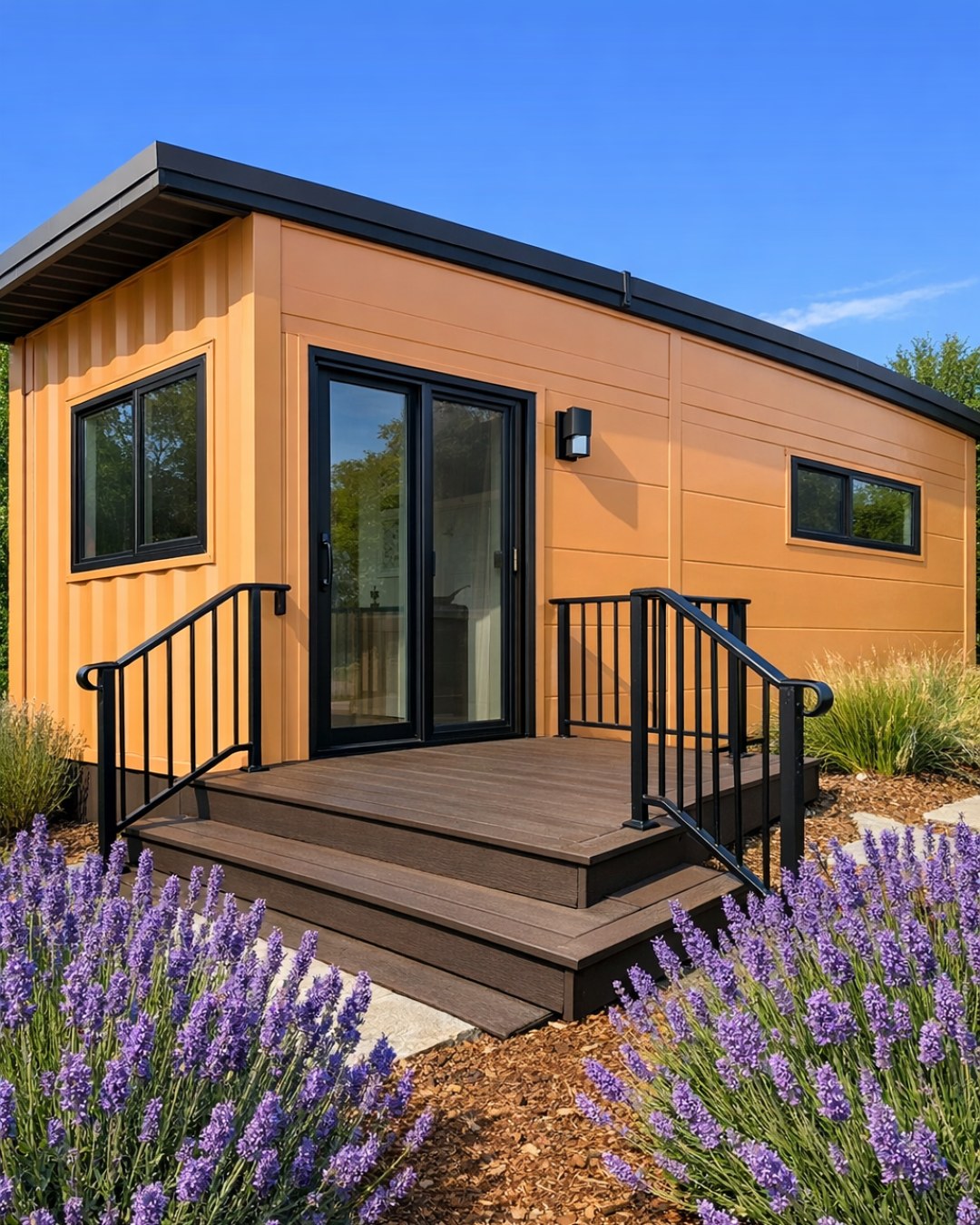
The exterior keeps the recognizable geometry of shipping containers, but softens it with color and proportion. That warm apricot finish changes character with the light, reading peachy and cheerful in the morning and deeper, almost clay-like, by late afternoon. Slim black window frames give definition without harshness, while natural wood cladding at the entry and soffits adds a tactile note that takes the edge off the metal shell. The overall composition is horizontal and calm, with thoughtful cutouts for larger windows and a sheltered entrance that feels inviting instead of purely utilitarian.
Accessibility shapes the approach in a beautifully integrated way. A gently sloped walkway is folded into the landscape rather than attached as a secondary feature, and the front threshold appears flush, clean, and effortless. Low-maintenance planting in silvery greens and soft grasses complements the apricot siding beautifully, creating a palette that feels warm but never overly sweet. Outdoor lighting is discreet—recessed path lights, understated sconces, and a subtle wash at the entry—so the home glows rather than announces itself.
Living Room
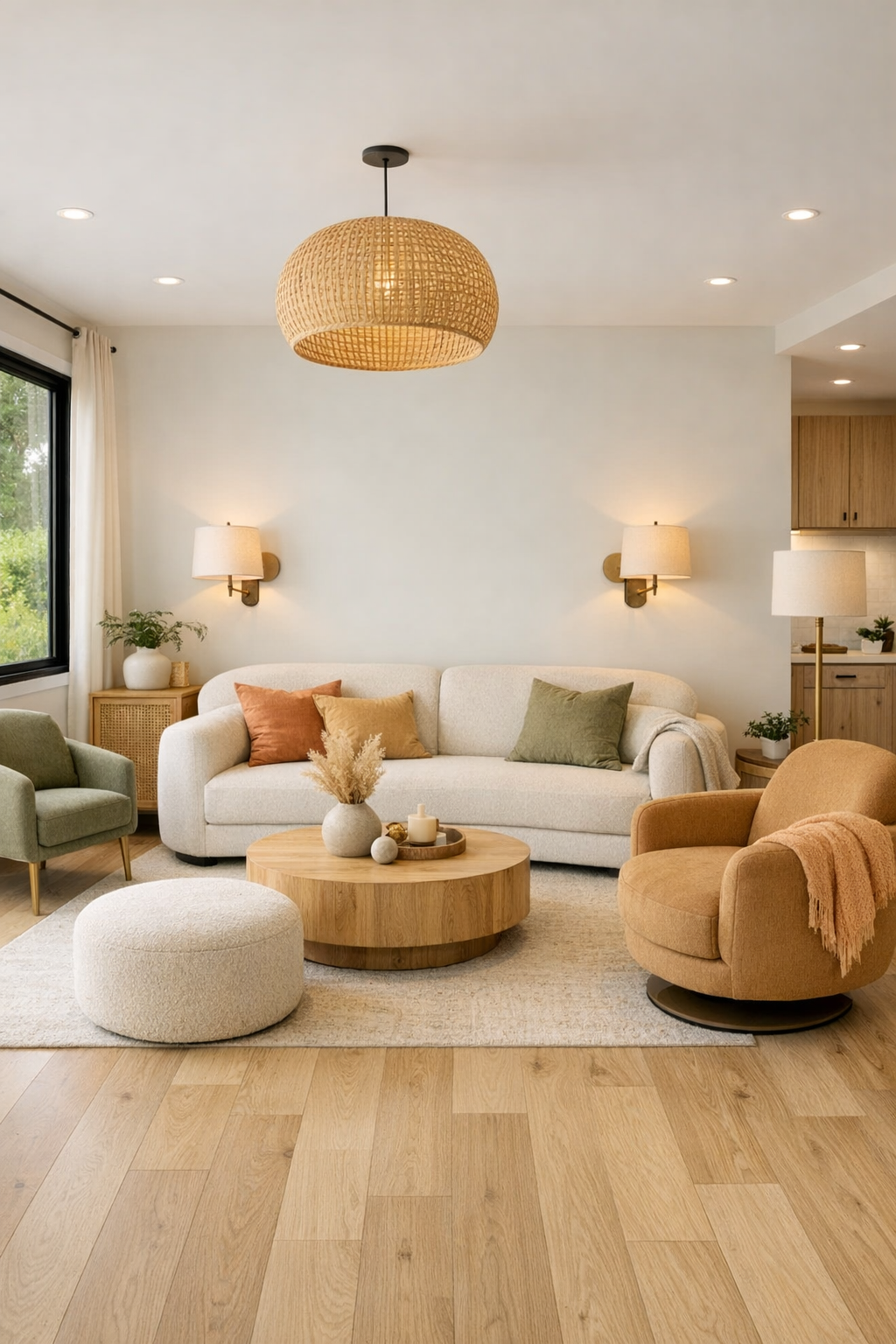
The living room is where the home’s warmth fully settles in. The container structure lends a pleasing linearity, but the interior treatment keeps it from ever feeling narrow or rigid. Pale oak flooring runs continuously through the space, visually widening it, while walls in a creamy mineral white bounce light around without turning stark. The apricot note from outside returns in a more diluted way through upholstery, pillows, and a textured wool throw, paired with camel, sand, and muted olive accents that make the room feel mature and restful.
I like how the furniture arrangement honors accessibility without sacrificing style. A low-profile sofa with rounded arms faces a slender media wall and a pair of generous swivel chairs, leaving wide, easy circulation around every piece. The coffee table is oval rather than angular, which softens the layout and makes movement more intuitive. Layered lighting does a lot of the emotional work here: a linen-shaded floor lamp, recessed ceiling lights, and a hidden cove wash that grazes the wall in the evening. It’s the kind of room that feels equally suited to morning coffee, conversation, or stretching out after a long day.
Dining Room
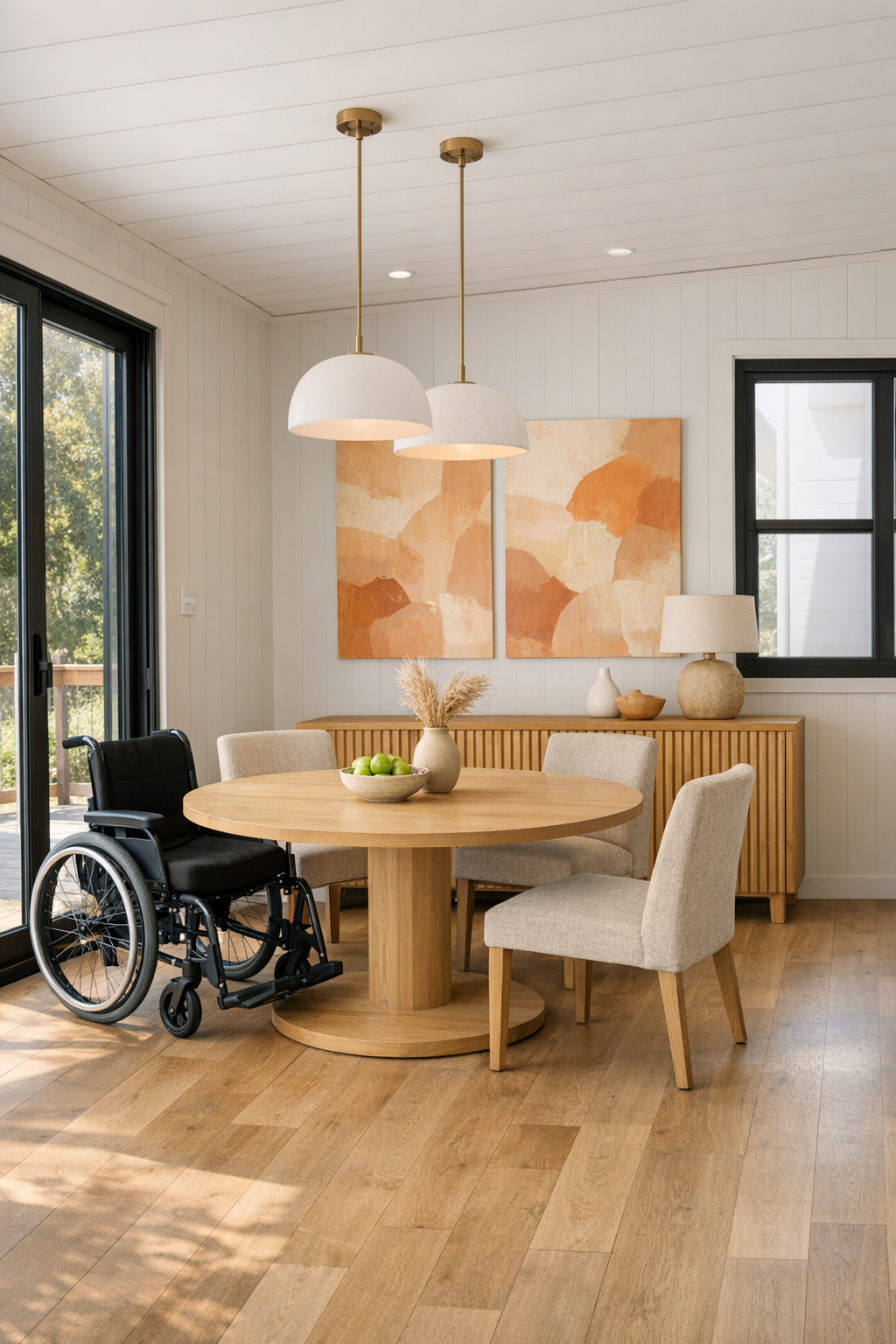
The dining area continues the open-plan flow, positioned so it feels connected to both the kitchen and living room without being swallowed by either. A round dining table is the smartest move here—it keeps traffic smooth, eliminates sharp corners, and creates a more conversational atmosphere. The tabletop appears to be light-toned wood with a matte finish, paired with upholstered dining chairs in a warm oatmeal fabric that add comfort and a little visual softness against the home’s cleaner architectural lines.
Above the table, I imagine a sculptural pendant in frosted glass or opal acrylic, something that diffuses light evenly and keeps glare low. One of the pleasures of this room is its restraint: no unnecessary bulk, no fussy decorative gestures, just a few beautifully chosen elements. A slim sideboard in ribbed oak provides storage while introducing subtle texture, and a large piece of abstract art in apricot, rust, and chalky beige quietly ties the palette together. The room feels ideal for both weeknight meals and slower dinners where no one is in a hurry to get up from the table.
Kitchen
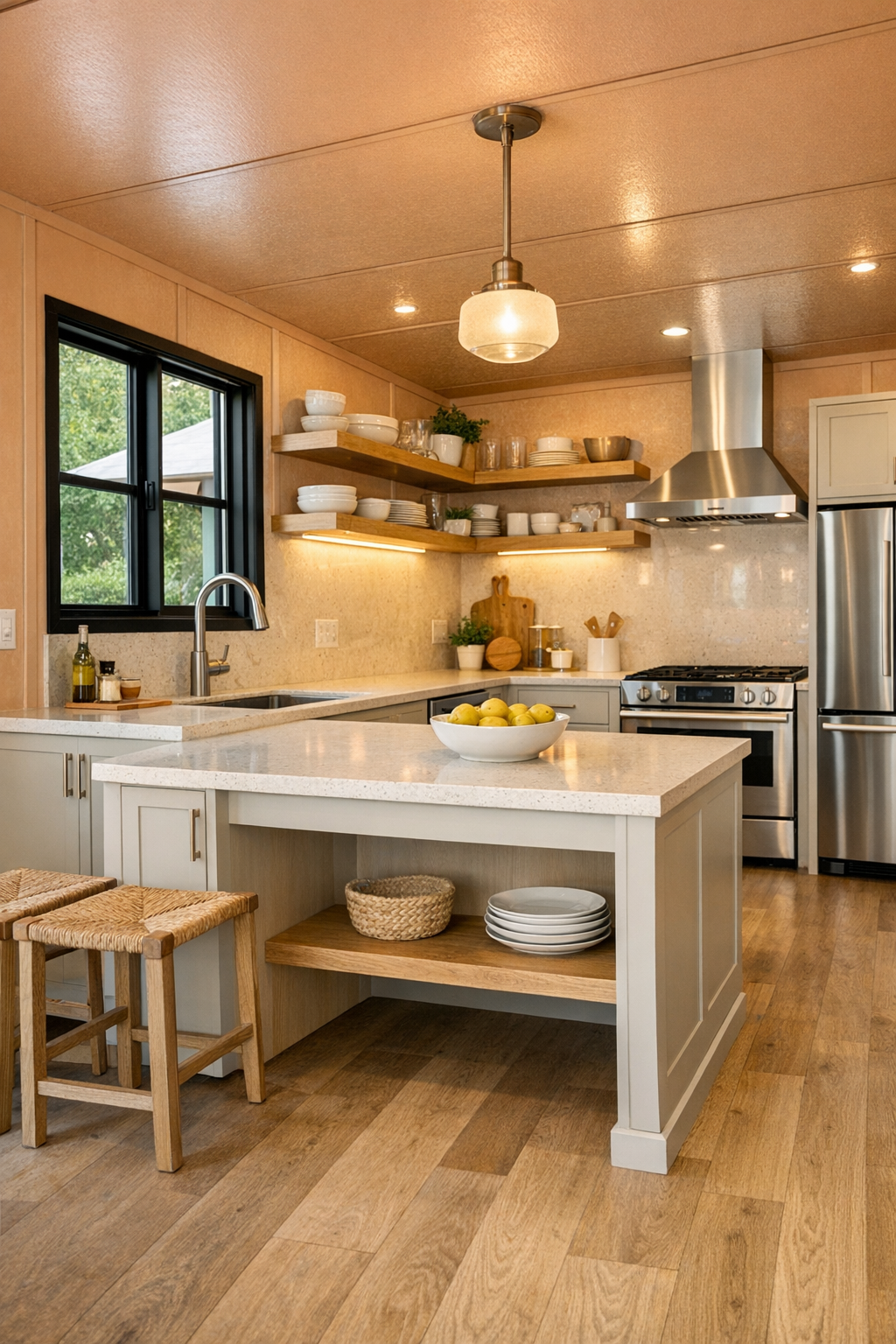
As someone who spends a lot of time thinking about how kitchens actually function, this one is especially satisfying. The layout appears to prioritize clear movement and reachable storage, with broad passageways, generous turning space, and a streamlined work triangle that would make cooking feel fluid rather than cramped. Flat-panel cabinetry in a pale putty or warm mushroom tone keeps the room soft, while open sections in natural oak prevent the millwork from feeling too monolithic. The counters look like a lightly veined quartz in a creamy shade, and the backsplash is simple but handsome—perhaps a handmade-look tile with just enough variation to catch the light.
The island is likely the room’s hardest-working feature, designed with seating on one side and comfortable knee clearance or varied counter heights to make it more flexible. I appreciate kitchens that don’t confuse luxury with excess, and this one seems to understand that beautifully. Brushed nickel or soft brass hardware, integrated appliances, under-cabinet lighting, and a deep sink set beneath a broad window all contribute to a polished but deeply usable space. It feels like a kitchen where you could dice onions, roll dough, and set out a spread of small plates without ever feeling pressed for room.
Bedroom
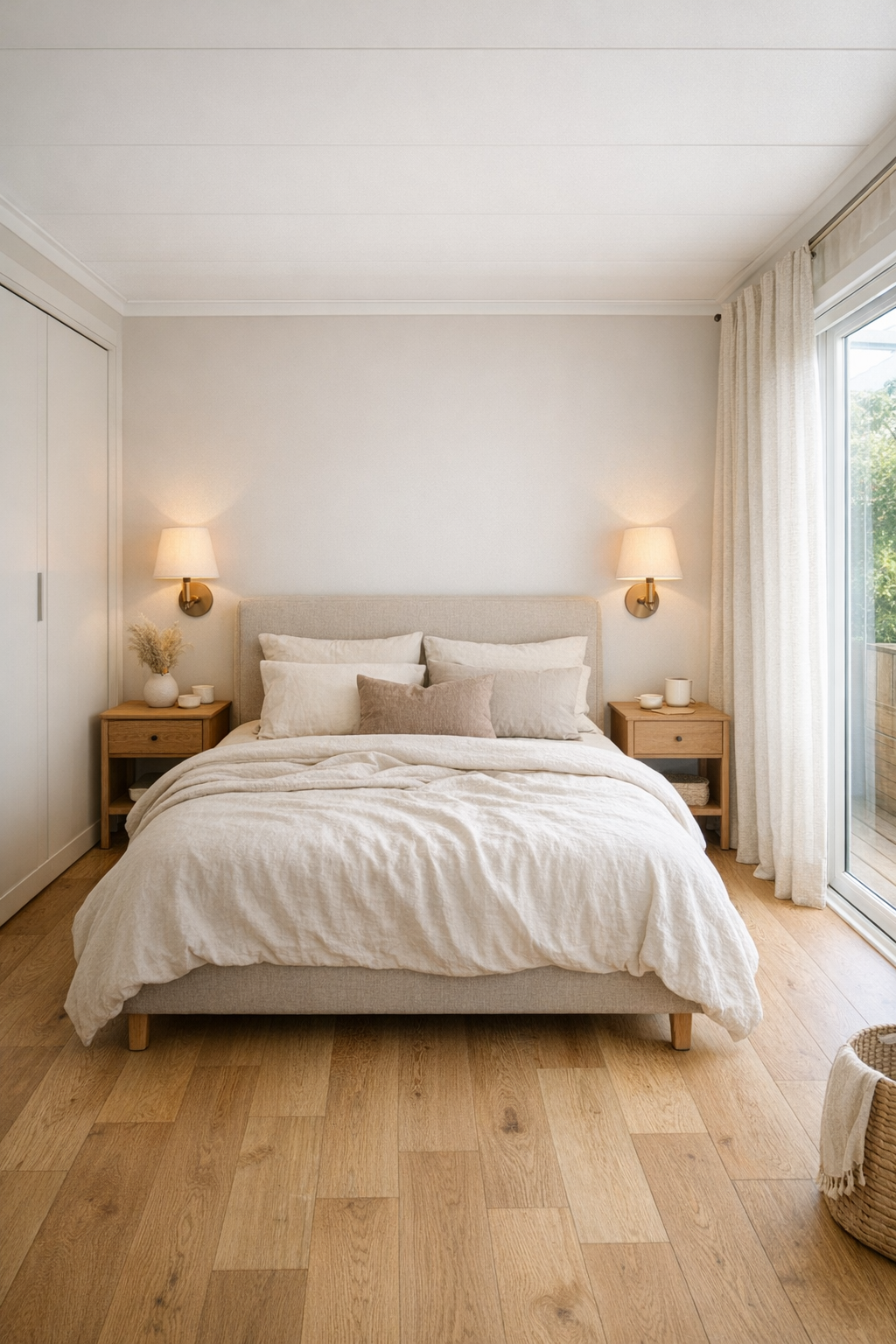
The bedroom takes a quieter approach, leaning into softness and visual calm. Here, the palette recedes into layered neutrals—ivory, flax, pale clay, and the faintest whisper of apricot—so the room feels restful from the moment you enter. An upholstered bed in a textured fabric anchors the space without heaviness, and the bedding looks intentionally tonal rather than overly styled, with washed linen, a quilted coverlet, and a knit throw that makes the room feel genuinely habitable.
From a design standpoint, I admire the way spaciousness is preserved. There’s ample clearance around the bed, nightstands are pared down and likely wall-mounted or slim enough to keep movement easy, and storage seems integrated rather than bulky. Window treatments in a soft woven fabric filter light without making the room feel sealed off. A pair of warm bedside sconces, a simple bench at the foot of the bed, and one large piece of calming art complete the composition. It’s serene without becoming bland, which is a harder balance to strike than it looks.
Bathroom
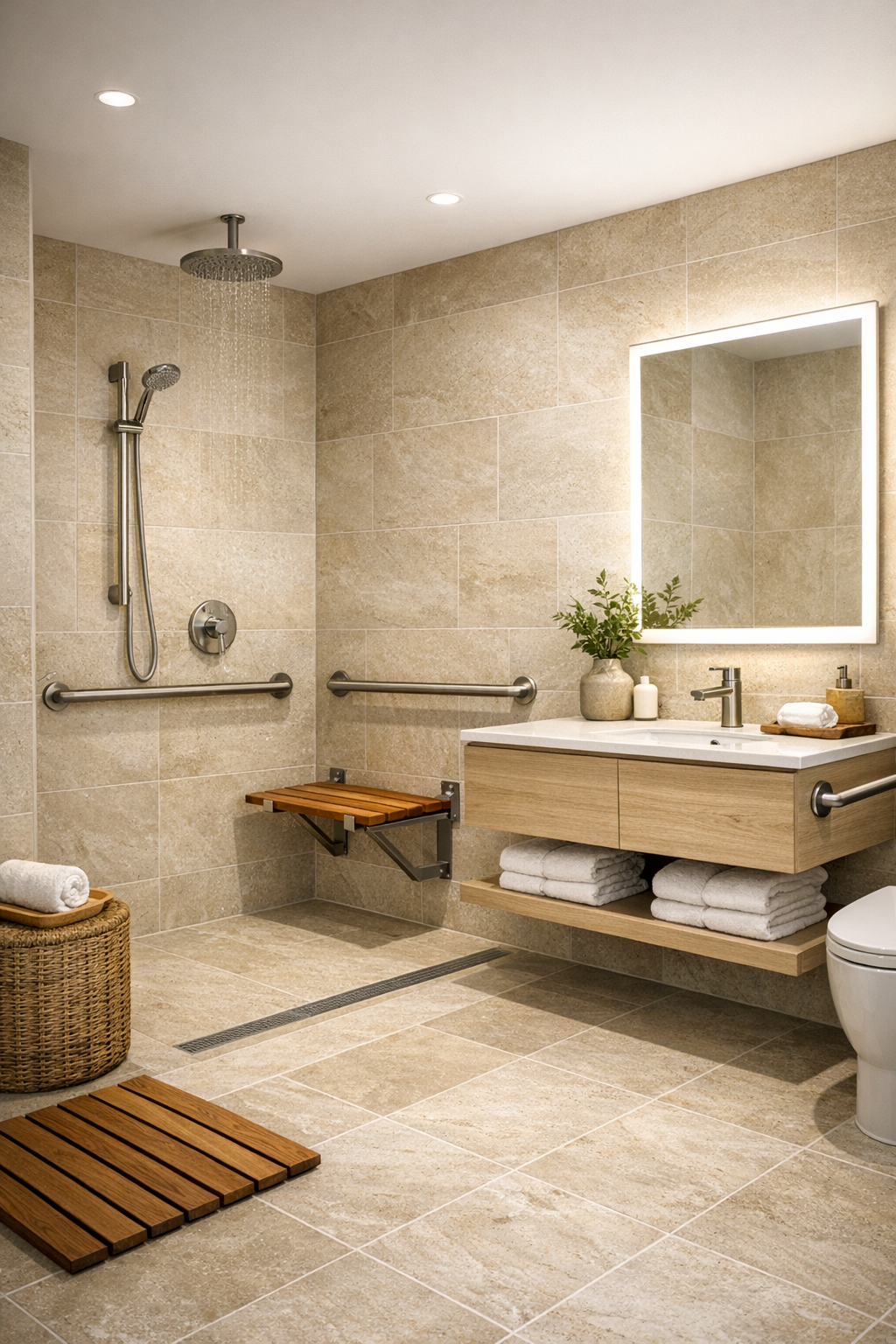
The bathroom is where the home’s accessible thinking becomes especially elegant. Rather than reading clinical, the space feels spa-like because every practical detail is resolved with restraint and good materials. A curbless shower with a linear drain keeps the floor plane continuous, and large-format porcelain tile in a warm limestone tone gives the room a seamless, expansive look. The vanity is likely wall-mounted, which lightens the room visually and makes cleaning easier, and I can picture a quartz counter and integrated sink maintaining that smooth, uncluttered effect.
Thoughtful hardware and lighting elevate the room further. Grab bars are incorporated in finishes that coordinate with the faucets, so they register as part of the design language rather than an interruption to it. A broad mirror, soft side lighting, and perhaps a skylight or high window keep the room bright and flattering. I also like the idea of a teak shower stool or slatted bath mat introducing a natural element against the tile. The overall feeling is calm, capable, and beautifully composed.
Other Areas
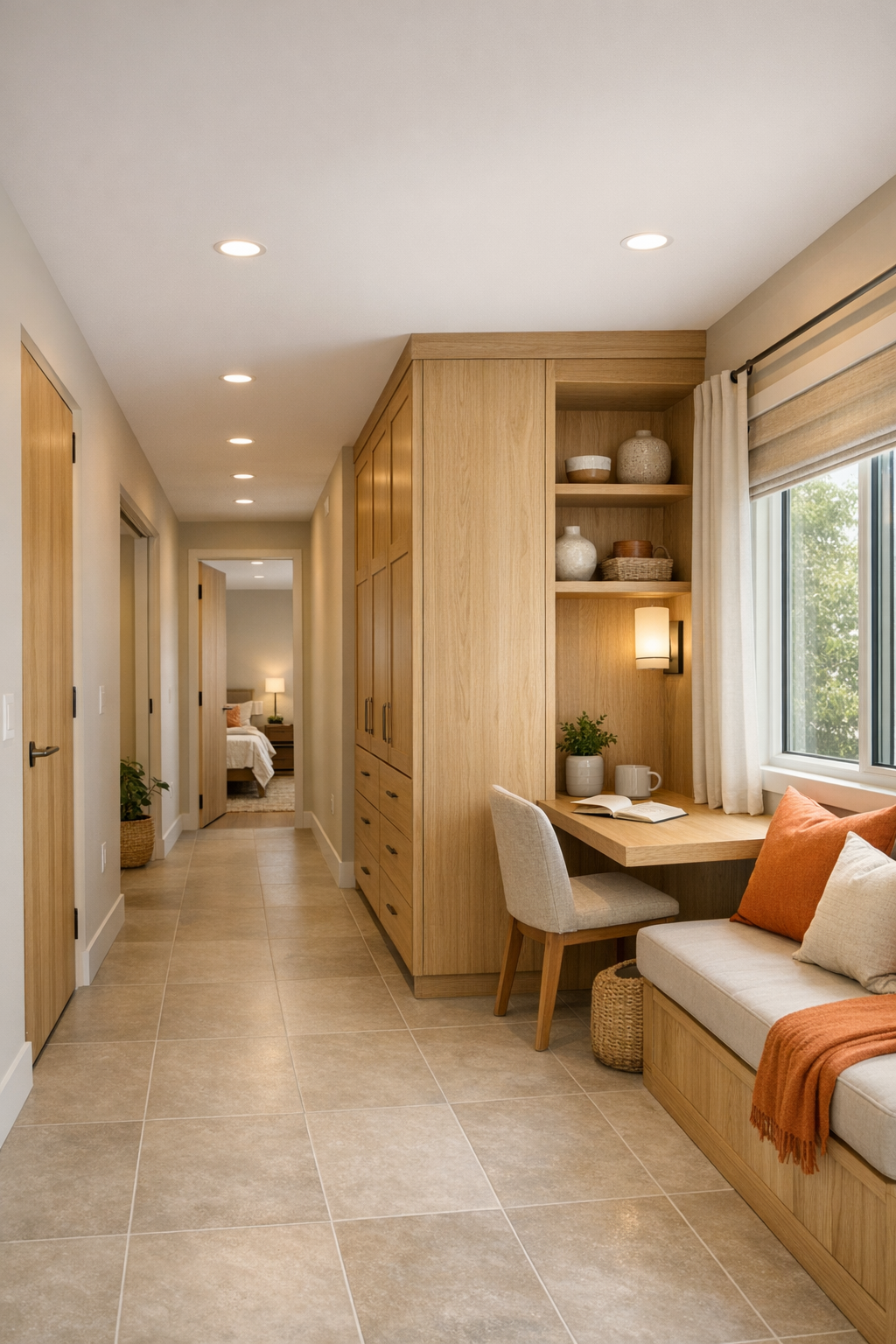
What rounds out the home are the transitional and secondary spaces, which often determine whether a compact footprint feels generous or compromised. A hallway here would likely be more than a corridor; it becomes a light-filled connector with built-in storage, shallow shelving, and maybe a niche for ceramics or books. If there’s a small home office corner or reading nook, I imagine it fitted with a floating desk in oak, a comfortable chair, and excellent task lighting, all tucked beside a window so the space feels purposeful rather than improvised.
An entry zone with a bench, concealed storage, and durable flooring would make everyday comings and goings much easier, especially in a climate with real seasons. I can also see a laundry area handled with unusual finesse—stacked or side-by-side machines behind tailored cabinetry, a folding counter, and enough room to maneuver comfortably. These are the kinds of details I always notice because they say so much about how a home respects real life. In this one, utility is not hidden away; it is simply made attractive.
Why You'd Live Here
You’d live here because it proves that a smaller, smarter home can still feel deeply generous. The accessible planning is not merely functional; it creates the kind of ease most homes could use more of—better movement, clearer sightlines, less friction in daily routines. Add to that the warm apricot palette, the softened modern materials, and the careful editing of every room, and the result is a house that feels emotionally welcoming as well as physically comfortable.
I also think this home succeeds because it understands that beauty lives in usefulness. The kitchen works, the bathroom reassures, the living spaces invite you to settle in, and even the in-between areas contribute something thoughtful. For anyone drawn to modern design but wary of spaces that feel cold or performative, this container home offers a much nicer answer: warmth, clarity, and a sense that every square foot has been considered with real affection.