
This warm white Amish log cabin tiny home has the kind of quiet presence that makes me slow down before I even step inside. Set against a peaceful natural backdrop, it blends the honesty of traditional cabin craftsmanship with a softer, brighter finish that feels unexpectedly fresh. The scale is modest, but the mood is generous: cozy without feeling cramped, rustic without becoming heavy, and polished in a way that still lets the handmade character shine through. As a concept design, it imagines tiny living at its most inviting.
What makes this home special to me is the balance. The whitewashed logs bounce light beautifully, the wood tones keep everything grounded, and every inch seems considered for both comfort and daily life. I can picture muddy boots by the door, soup simmering on the stove, and a table full of family with room somehow made for everyone. That is the magic here—it feels like a retreat, but it is designed with real living in mind.
Exterior
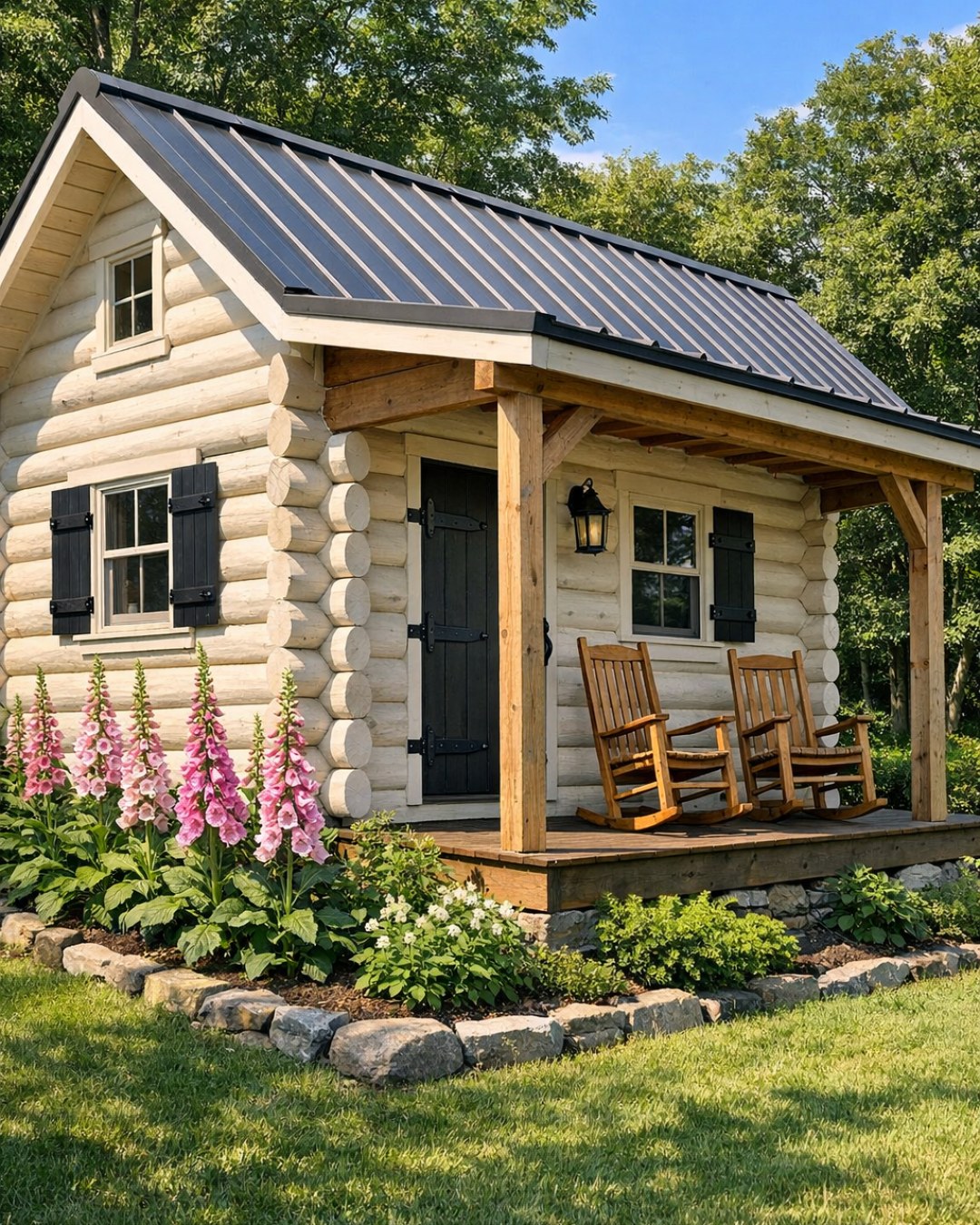
From the outside, the cabin feels simple and deeply reassuring, with its compact Amish log form, neatly stacked timbers, and warm white finish that softens the usual heaviness of rustic architecture. The pale exterior gives the home a clean, almost storybook quality, while natural wood accents at the trim, porch posts, and front door add the contrast that keeps it feeling authentic. The proportions are tidy and intentional, with a pitched roof that enhances the traditional silhouette and gives the tiny footprint a sense of height and presence.
I especially love how the exterior suggests hospitality without trying too hard. A small covered porch creates a natural pause before entering, and I can imagine it holding a pair of rocking chairs, a lantern, and a pot of herbs for clipping at dinnertime. Even in a compact build, those little architectural gestures matter. They make the home feel settled, handcrafted, and ready to welcome people in from the cold with something warm on the stove.
Living Room
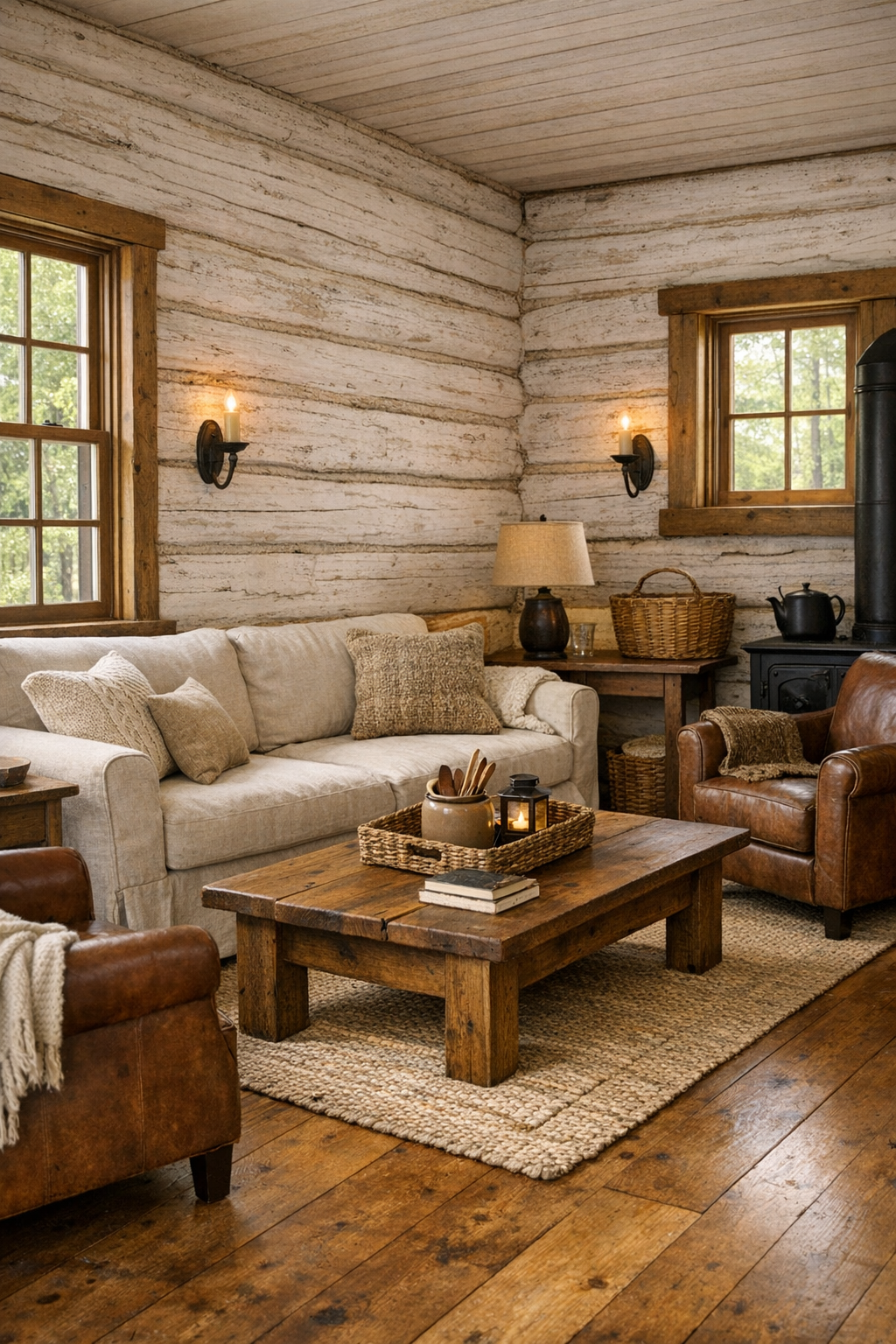
The living room leans into the cabin’s brightest strengths: whitewashed log walls, honey-toned wood floors, and a ceiling that draws the eye upward without overwhelming the space. Because the shell is so textural, the furnishings can stay relaxed and straightforward. I picture a slipcovered sofa in oatmeal linen, a pair of warm leather accent chairs, and a solid wood coffee table with softened edges that can take everyday use, from board games to cocoa mugs. A small woven rug underfoot adds pattern gently, keeping the room layered rather than busy.
Lighting does a lot of the emotional work here. Daylight filtering through simple divided-light windows would make the pale logs glow, while iron sconces and a modest table lamp would carry that warmth into the evening. In a family home, I always think seating should feel easy and forgiving, and this room does that beautifully. There is enough softness to curl up in, but the handcrafted finishes still give it structure and character.
Dining Room
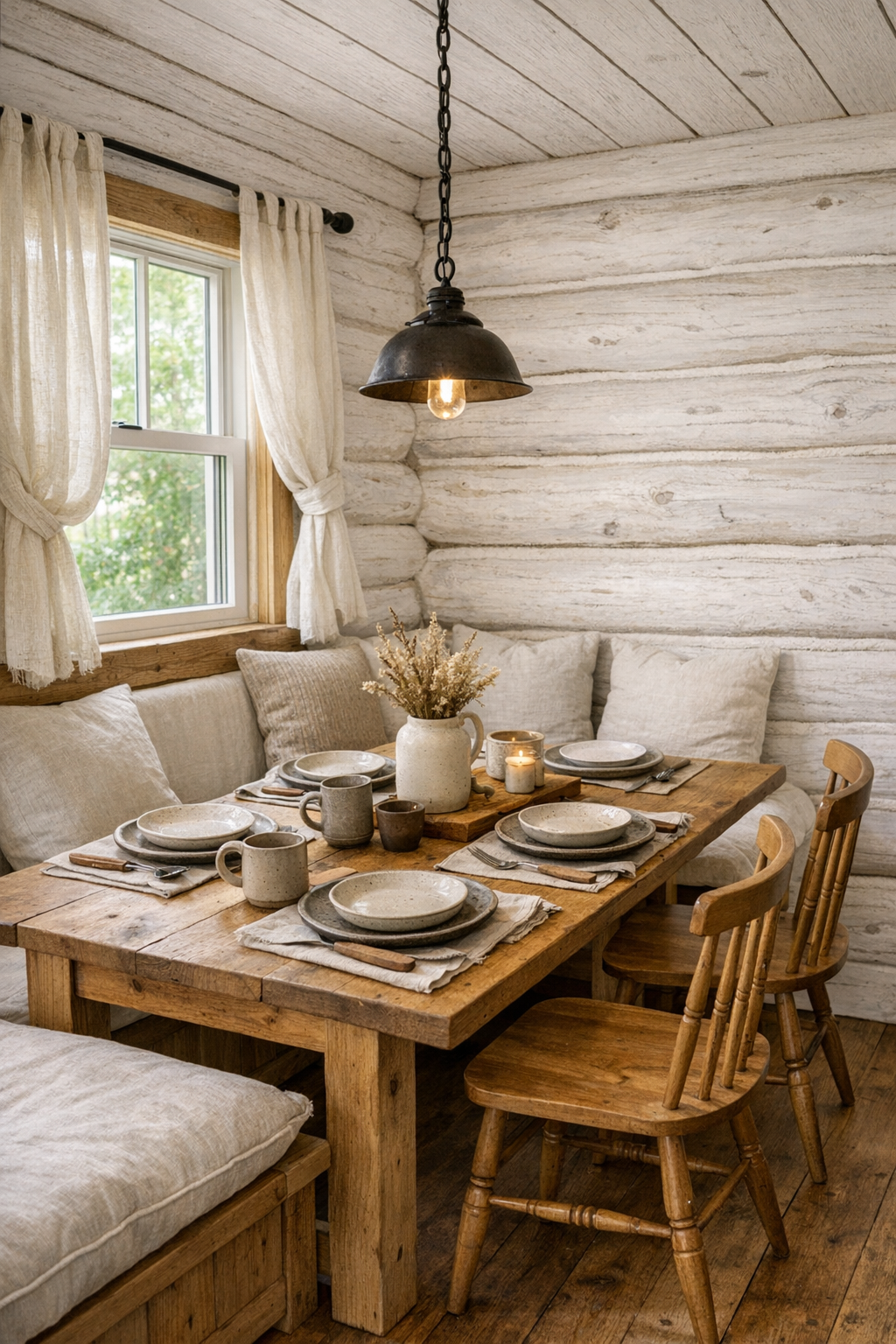
In a tiny home, the dining area has to work hard, and this one does it with grace. Rather than treating it like an afterthought, the design gives it a sense of purpose with a compact farmhouse table in natural wood and seating that feels flexible—perhaps a built-in bench on one side and spindle-back chairs on the other. That kind of setup is wonderful for families because it saves space, keeps circulation open, and makes it easier to squeeze in one more person for pancakes or soup night. The white log backdrop keeps the area feeling airy even when the table is fully set.
I would style this space simply: stoneware dishes, a linen runner, and maybe a low crock of wildflowers or clipped greenery from outside. Above, a small iron or antique brass pendant would anchor the table without visually crowding the room. For picky eaters or busy weeknights, I always appreciate a table that can shift moods quickly—from homework station to dinner spot to cookie-decorating zone—and this dining area feels made for exactly that kind of real family rhythm.
Kitchen
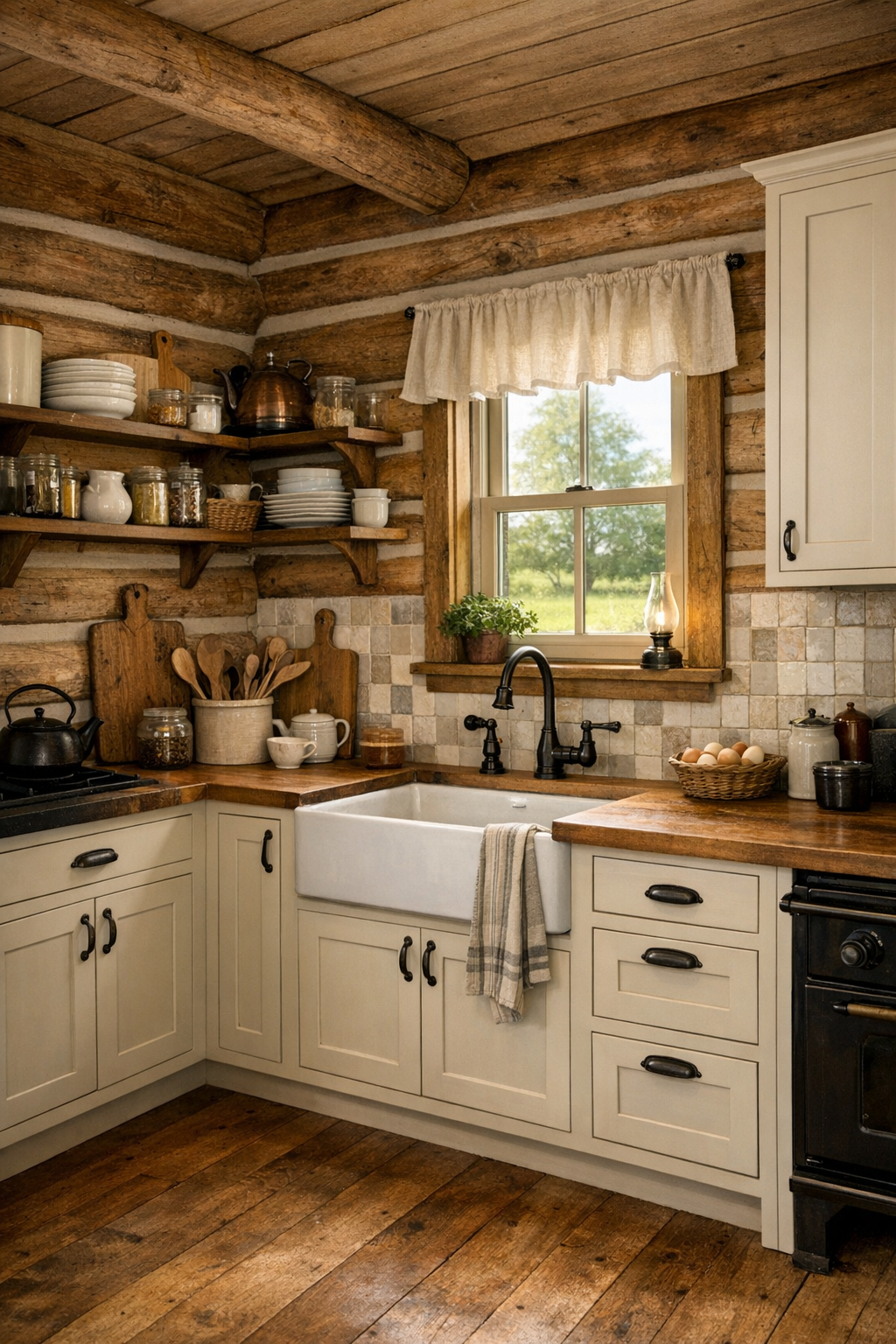
The kitchen is where this home really wins me over. It keeps the cabin language intact but refines it with thoughtful finishes: shaker-style cabinetry in a creamy warm white, butcher block or lightly sealed wood counters, and open shelving that lets everyday dishes become part of the design. I can easily imagine a deep apron-front sink beneath a window, matte black or aged bronze hardware, and a compact range framed by a simple backsplash in handmade tile. Nothing here feels oversized or flashy; it feels useful, beautiful, and made for people who actually cook.
For me, a good small kitchen needs zones that support the flow of a meal, and this one seems to understand that. There is likely room for prep near the sink, storage tucked vertically wherever possible, and enough counter surface to lay out sandwich fixings for kids or keep a pot of chili and a pan of cornbread moving at once. If you are feeding a mix of adventurous and cautious eaters, a kitchen like this helps because it keeps everything within reach and makes simple meals feel special. The warmth of the wood, the brightness of the walls, and the handcrafted details would make even an ordinary Tuesday dinner feel a little more cared for.
Bedroom
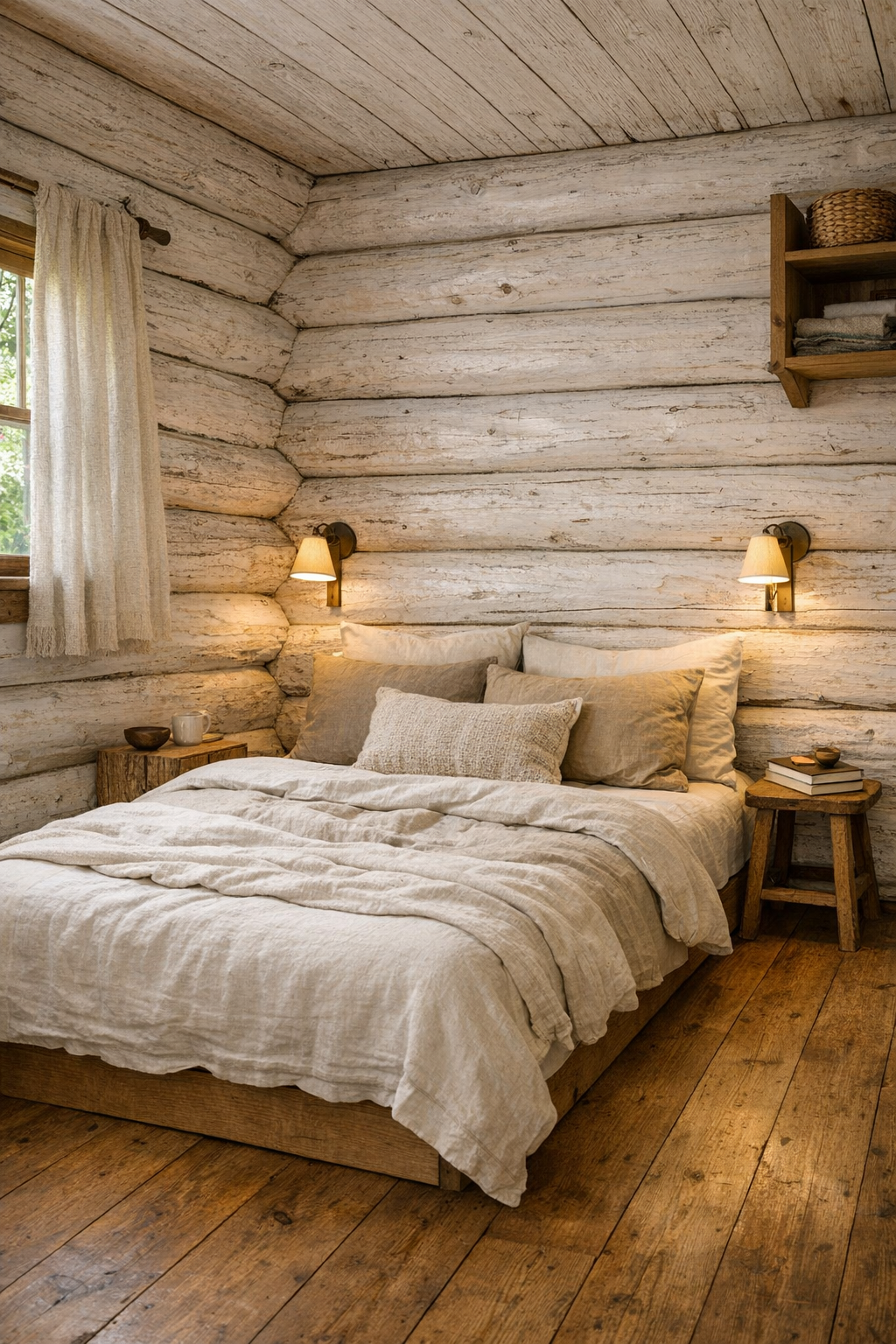
The bedroom carries the calmest energy in the house. With whitewashed log walls continuing through the space, the room feels cocooning but not dark, and that is such an important distinction in a tiny home. I imagine a low-profile bed dressed in soft layers—ivory quilt, flax linen sheets, maybe a muted plaid throw at the foot for a nod to cabin tradition. Natural wood bedside shelves rather than bulky tables would keep the footprint open, and a pair of petite reading sconces would add function without clutter.
What I find most appealing is the restraint. A bedroom this size does not need much beyond comfort, texture, and a sense of quiet. Under-bed storage or built-in drawers could do the heavy lifting, while curtains in a natural woven fabric would soften the windows and help with privacy. For families, guest stays, or even just those nights when everyone ends up piled together with a movie, this room feels intimate in the best way—simple, warm, and deeply restful.
Bathroom
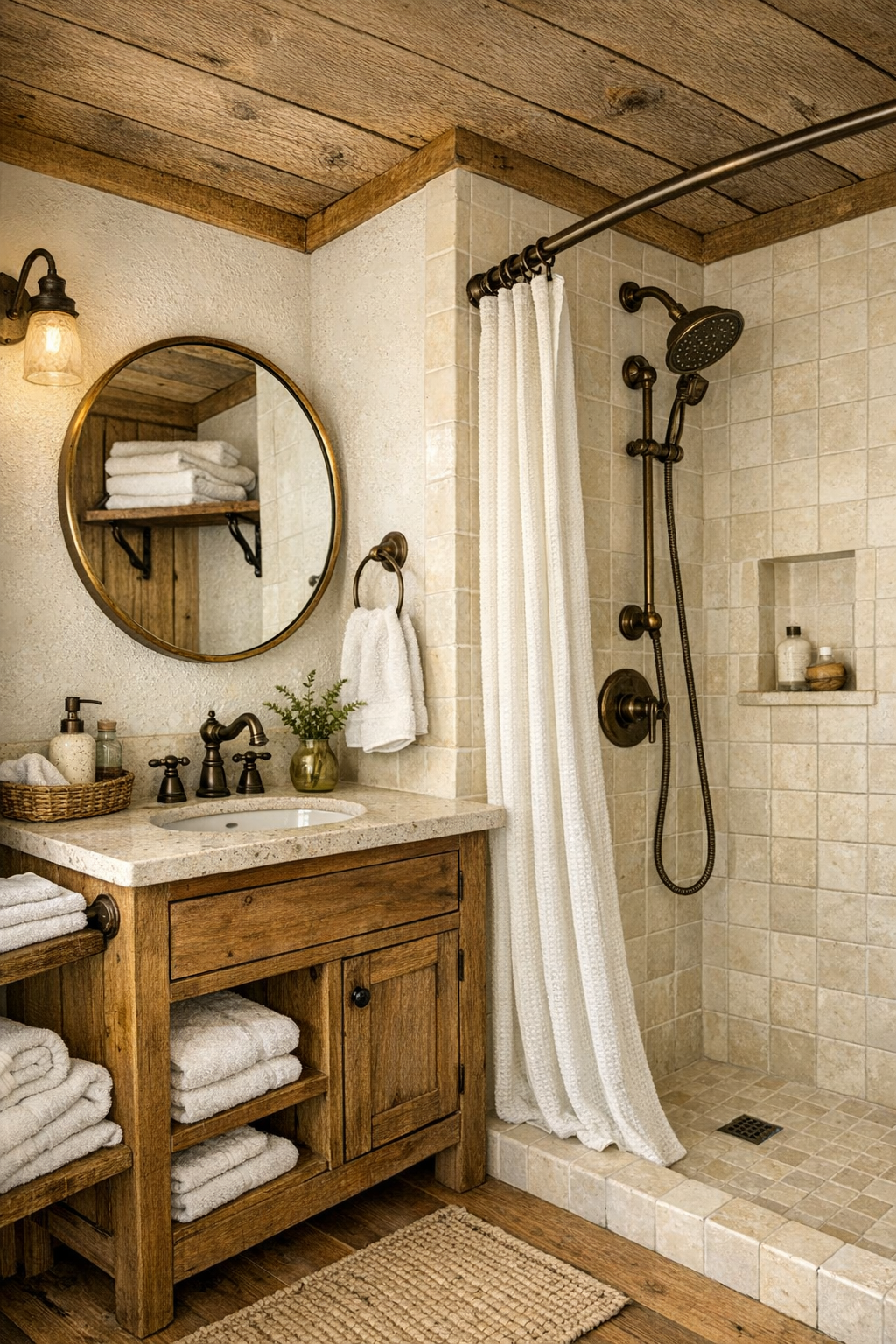
The bathroom appears to follow the same philosophy as the rest of the home: modest footprint, generous atmosphere. I picture a compact vanity in natural or painted wood, topped with a simple stone or quartz surface that brightens the room and stands up to daily wear. A shower lined in creamy tile, perhaps with a niche for soaps and a glass enclosure, would keep the space feeling open. The white log walls or complementary paneling would tie the bathroom back to the cabin’s identity while still allowing moisture-friendly surfaces where needed.
This is also the kind of bathroom where small details would matter so much. A rounded mirror, aged metal fixtures, fluffy white towels, and maybe a peg rail for robes can make a practical room feel downright lovely. In a home this size, I always appreciate when the bathroom feels easy to clean and easy to use, because that is what supports everyday family life. The result would be fresh, bright, and comforting rather than purely utilitarian.
Other Areas
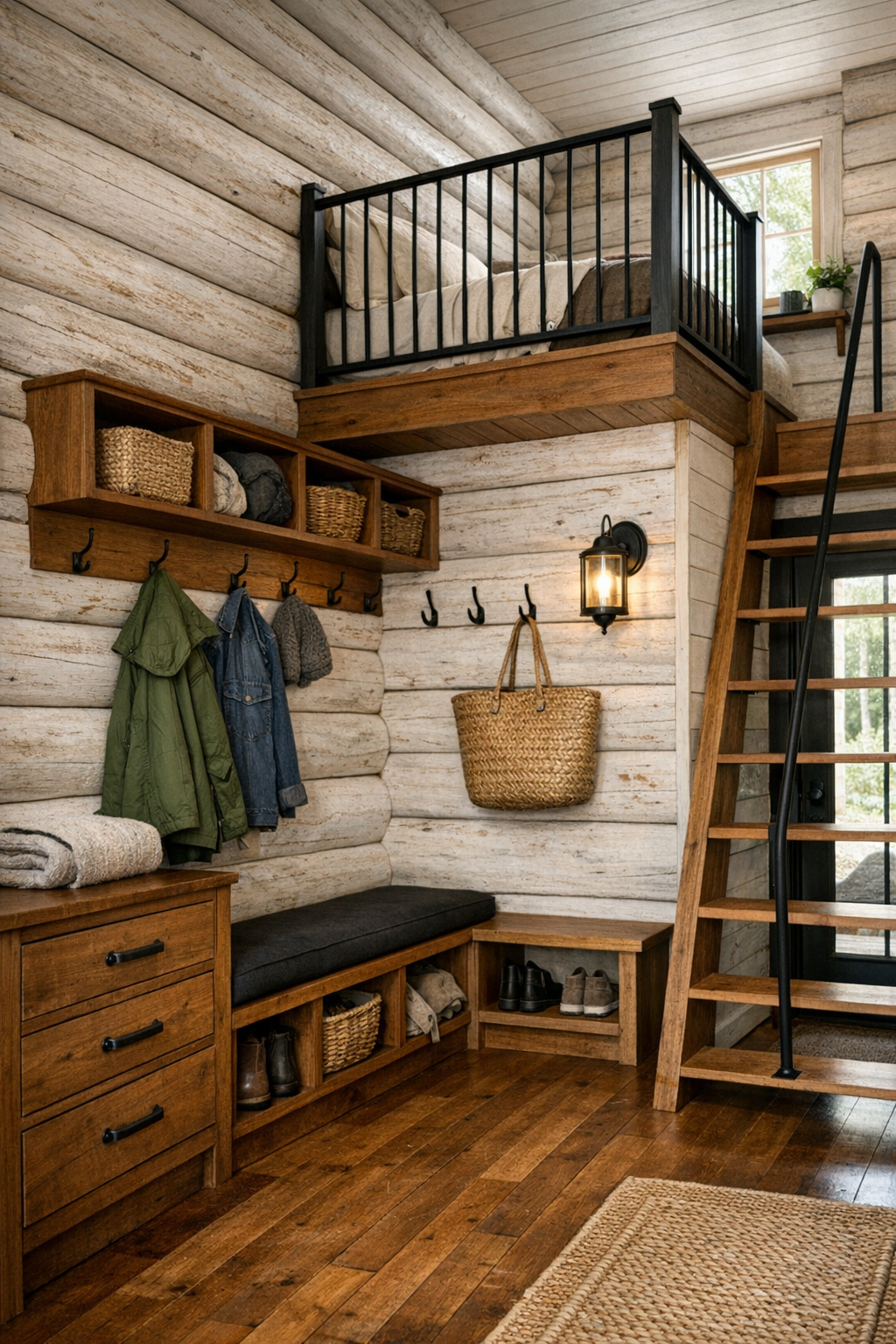
What often separates a good tiny home from a frustrating one is how it handles the in-between spaces, and this cabin seems especially thoughtful there. A loft, hallway nook, entry corner, or built-in storage wall could all become part of the design story rather than disappearing into it. I can imagine stair drawers, open cubbies for baskets, hooks for coats, and a slim bench for taking off boots. In a family setting, those hardworking spots are what keep the pretty rooms functioning when real life arrives.
Even circulation can feel beautiful when the materials stay consistent. Continuing the warm wood flooring, whitewashed logs, and black iron accents through these secondary spaces creates a sense of cohesion that makes the whole cabin feel larger than it is. If there is a loft sleeping area or reading perch tucked under the roofline, all the better—it would add that little bit of wonder children love and adults secretly do too. These are the corners that make a tiny home feel not just efficient, but deeply personal.
Why You'd Live Here
You would live here because it proves small can still feel abundant. The handcrafted detailing, softened white log interior, and careful use of natural materials give the home warmth that many larger houses never quite achieve. It offers the coziness people hope for in a cabin, but with enough brightness and order to support everyday routines, from morning coffee to weeknight dinner to guests gathered close around the table.
I also think you would choose this home for the way it makes ordinary life feel more intentional. There is no wasted space, very little visual noise, and a clear emphasis on comfort, usefulness, and welcome. If you love the idea of a home that encourages togetherness, simpler living, and meals that feel a little more special even when they are easy, this tiny cabin has a very compelling charm.