
There is a kind of quiet beauty to this tiny home that settles over you the minute you imagine walking up to it, the sort of softness that feels like fresh sheets on a clothesline and morning light on a farmhouse table. Done in a gentle linen palette with accessibility woven thoughtfully into every decision, this little home manages to feel both tender and capable. Though it is a concept design, it has the kind of clarity and grace that makes it feel entirely livable, as if someone built it out of equal parts common sense and affection.
What strikes me most is how the house never confuses small with spare. The setting feels peaceful and open, with a calm, grounded character that reminds me of the best country homes: practical, welcoming, and made for real life. Every surface, every passage, and every piece of furniture seems chosen to support ease of movement without giving up an ounce of charm, and that balance is what makes this home so special.
Exterior
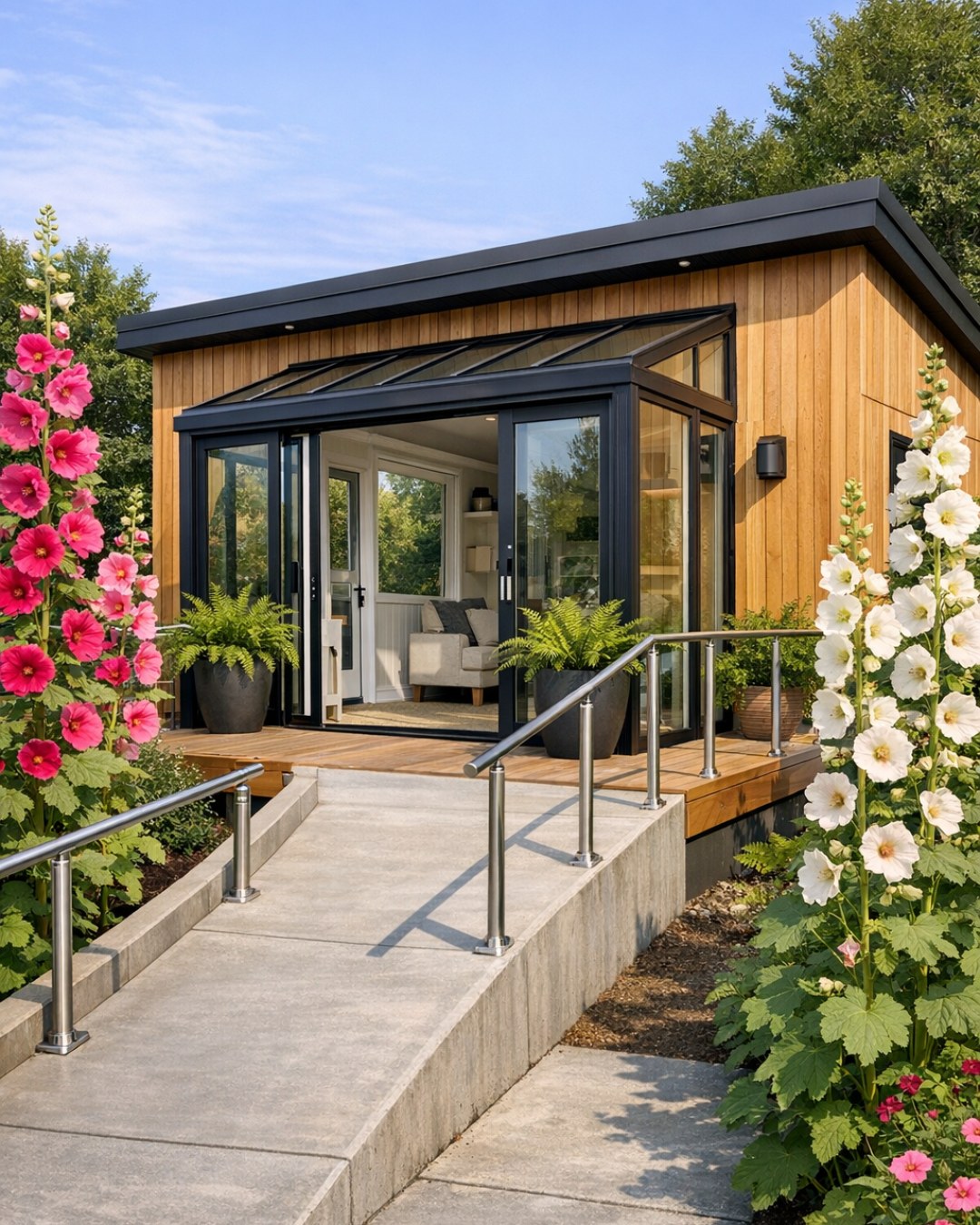
From the outside, the home reads as clean and modest, with a softened modern cottage presence that avoids fuss. The cladding appears in a pale putty or warm off-white tone, the kind of color that changes gently with the weather and always looks at home against grass, gravel, or a stand of trees. A low-entry approach is integrated so naturally you almost miss how skillfully it has been handled; there is no institutional feeling here, only a smooth welcome. The roofline is simple, the windows generous, and the trim quietly restrained, letting proportion and material do the talking.
I especially like the way the exterior seems to promise what the interior delivers: light, dignity, and comfort. The doorway is likely wider than one first assumes, framed with enough depth to feel substantial, and the path to it feels considered rather than added on. A small porch or landing gives the front elevation a human scale, and I can easily picture a clay pot of herbs, a sturdy bench, and maybe a lantern catching the evening glow. It has the honest appeal of a home that knows exactly what it is.
Living Room
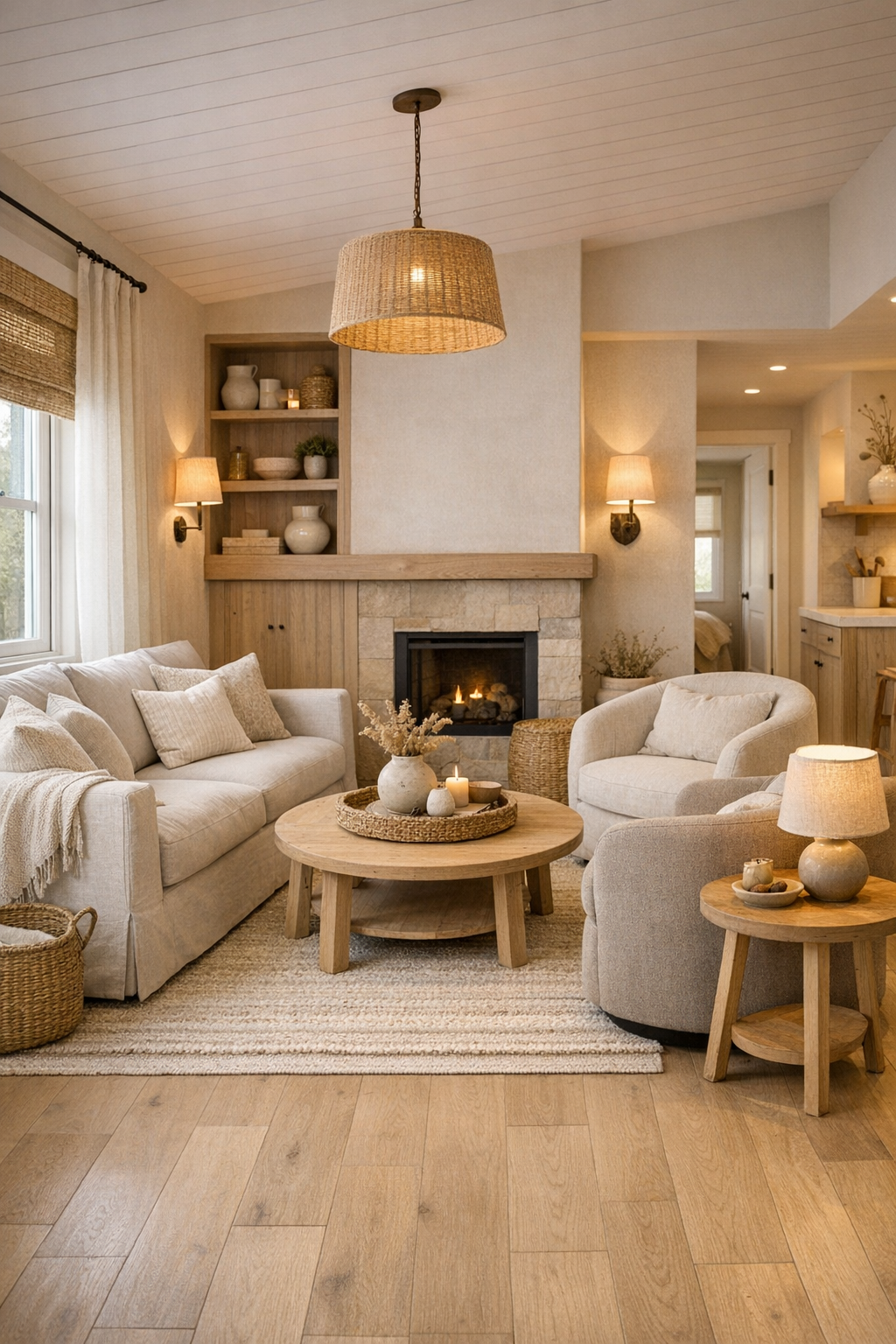
The living room is where the linen story truly begins to sing. The palette stays close to oat, cream, mushroom, and soft sand, but there is nothing flat about it; texture carries the room, from nubby upholstery to lightly grained wood and woven shades that filter the light like old-fashioned muslin curtains. The seating is arranged with sensible clearance all around, allowing easy turning and movement while still feeling intimate. A sofa with a tailored slipcovered look, a pair of rounded chairs with open bases, and a substantial but not bulky coffee table create a layout that invites conversation rather than crowding the floor.
Lighting is handled with a gentle hand, and that matters in a home like this. Instead of one harsh overhead source, I imagine layered illumination: a warm ceiling fixture with a low glare profile, a table lamp with a parchment shade, and perhaps discreet sconces washing the walls with a soft glow. The room feels restful because every edge has been considered, from the smooth flooring transition to the radius on the furniture corners. It reminds me of the old family sitting rooms I grew up with, where comfort was never showy, just deeply understood.
Dining Room
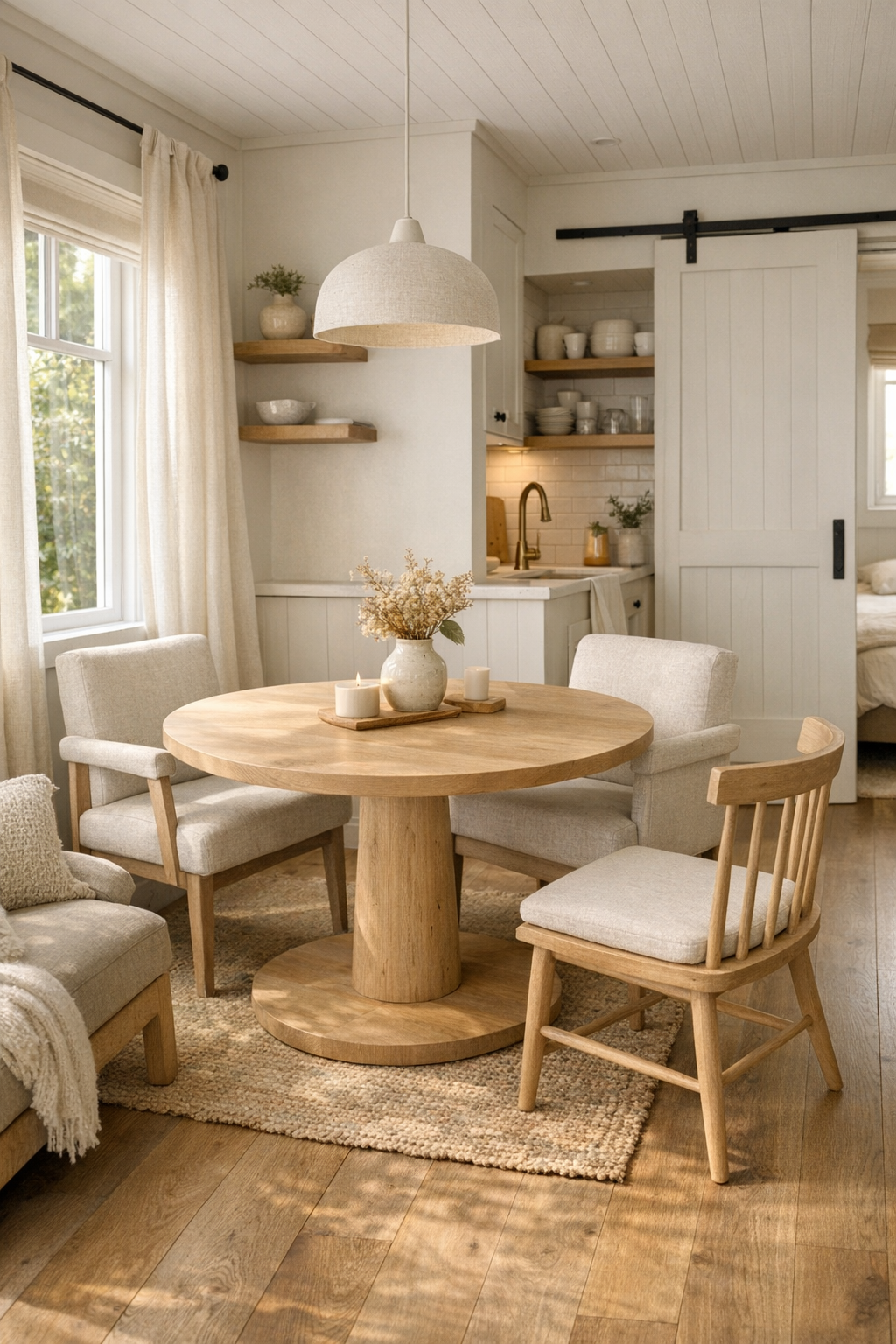
The dining area is modest in scale but generous in spirit, tucked into the plan in a way that makes it feel connected rather than squeezed in. A round or softly oval table would make perfect sense here, helping circulation while echoing the home's overall preference for gentle lines. In a compact house, shape matters tremendously, and this room uses that wisdom well. Light wood, matte finishes, and seating with supportive backs keep the look refined but unfussy, while the palette continues in warm neutrals that make every meal feel a little slower and more companionable.
I can picture the tabletop set simply, with stoneware, a small bowl of pears, and sunlight moving across the grain by late afternoon. There is likely a built-in banquette or a wall-side bench somewhere nearby, the sort of feature that quietly saves space while adding coziness. The lighting above might be a small linen or frosted glass pendant, low enough to define the table but open enough not to interrupt sightlines. It feels like a room made for everyday suppers, coffee with a neighbor, and the kind of lingering talk that turns a meal into a memory.
Kitchen
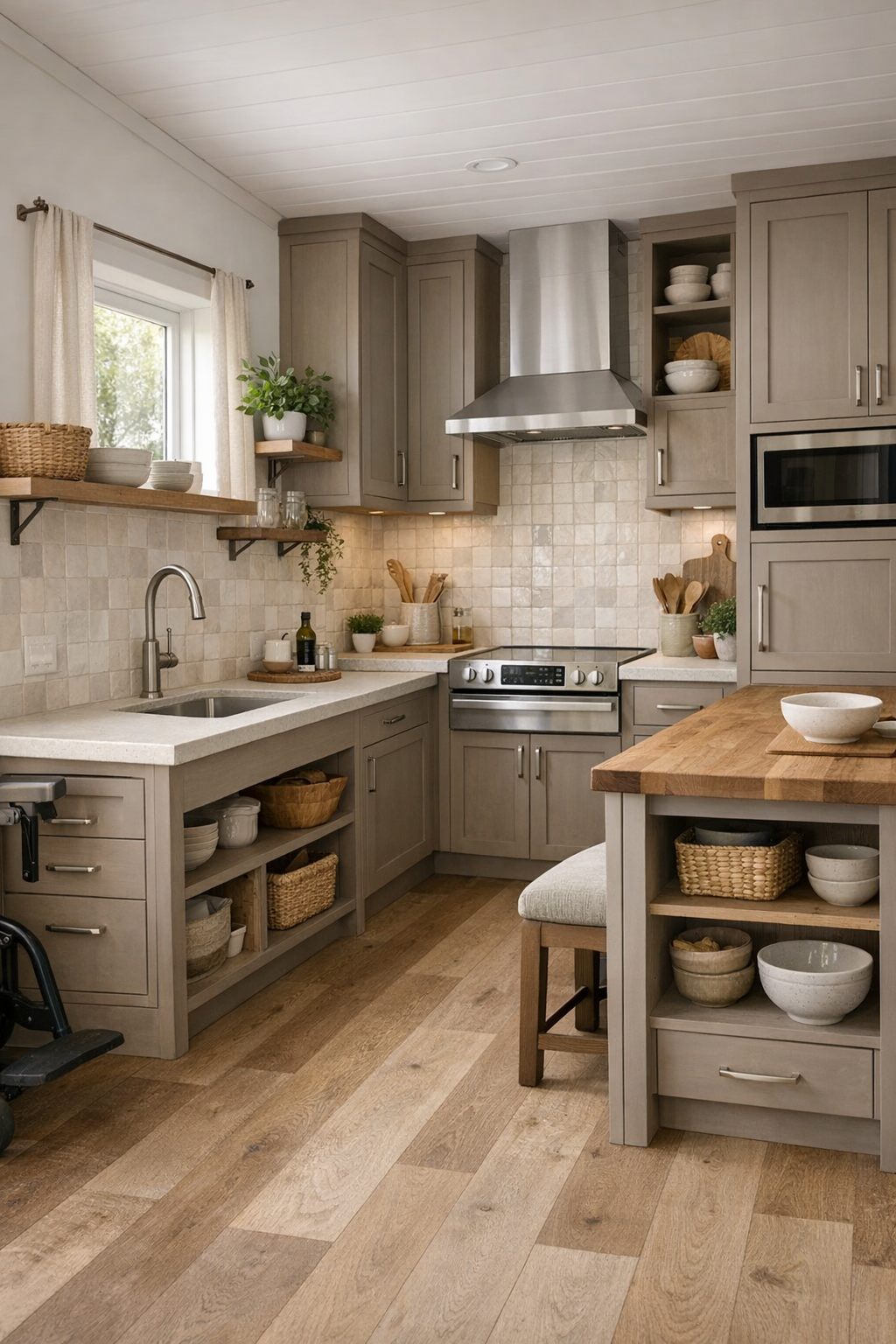
The kitchen is, to my eye, the heart of the whole home, and perhaps the clearest example of how beauty and practicality can sit at the same table. The cabinetry is likely done in a warm painted tone close to flax or creamy taupe, with minimal-profile hardware that is easy to grip and pleasing to look at. Countertops in a honed quartz or pale composite stone keep the surface bright without glare, and the backsplash may be a handmade-look tile with the faint irregularity that gives a room soul. There is enough open knee space and thoughtful counter height variation to make the room usable from different positions, which is such a meaningful design gesture.
What I love most is that none of these accommodations feel hidden or apologetic; they simply feel smart. Drawers replace hard-to-reach lower cabinets, storage is pulled into the right zones, and appliances are selected for ease without sacrificing the clean visual line. I can almost smell a pan of biscuits cooling here or a pot of soup set to simmer on a rainy day. The kitchen has that rare quality of seeming serene and hardworking at once, much like the farm women I have known all my life.
Bedroom
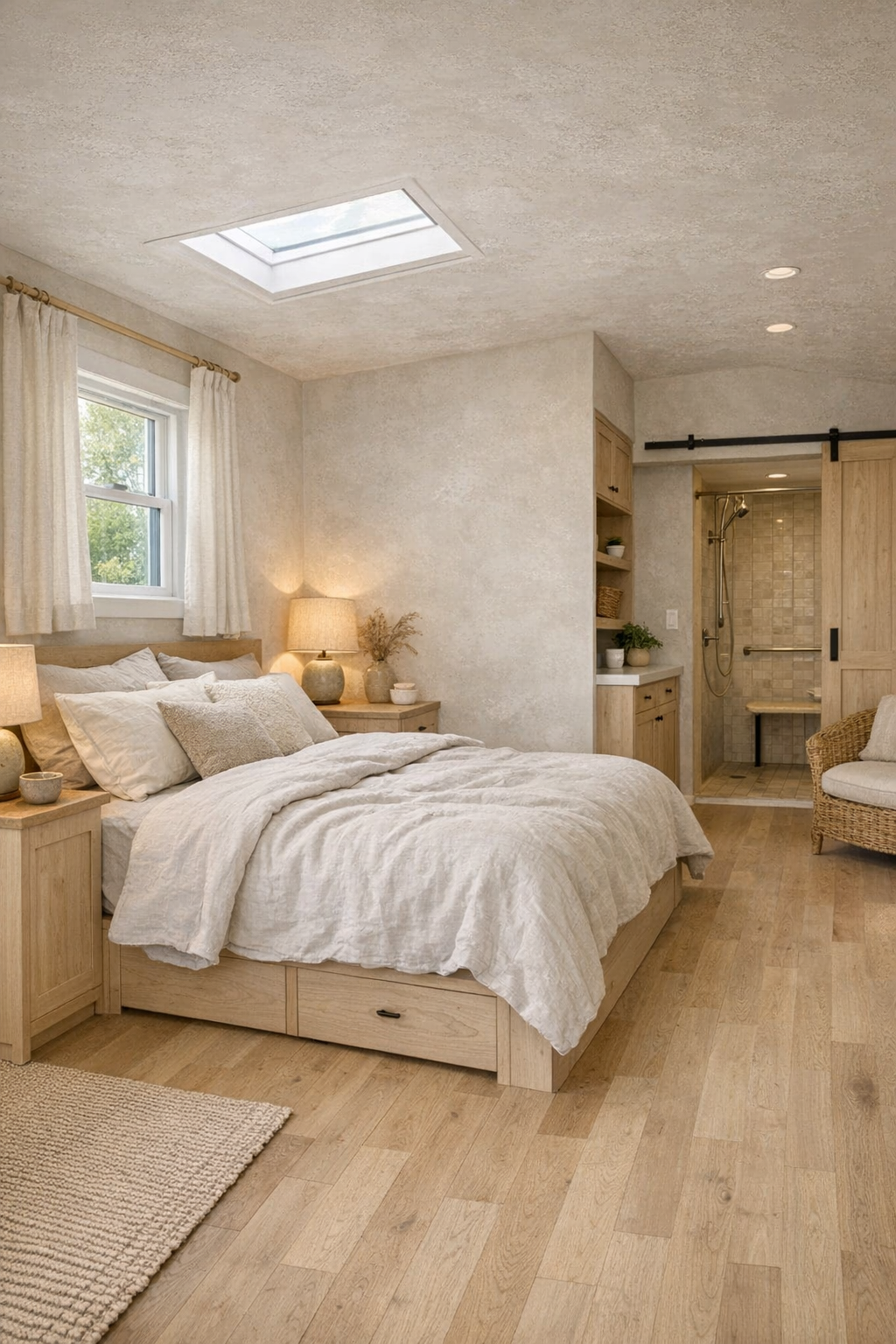
The bedroom leans into quietness, and in a small home that is a wise and lovely choice. Rather than overfilling the room, the design lets the bed become the visual anchor, dressed in layers of washed linen, soft cotton, and perhaps a knit throw in a pale oatmeal shade. The bed height appears intentionally comfortable for easy access, and there is enough breathing room around it to move with confidence. Built-in storage likely takes the place of bulkier case goods, leaving the room open and calm.
There is a tenderness to the materials here that I find especially appealing. Maybe a pale wood headboard, maybe plaster-toned walls, maybe a simple blackout drapery panel with a lovely hand to it—nothing loud, nothing sharp, nothing trying too hard. Bedside lighting would be easy to reach and softly diffused, and the flooring underfoot would feel smooth and steady. The whole room has the hush of an early Midwestern morning before the coffee is poured and the day gets underway.
Bathroom
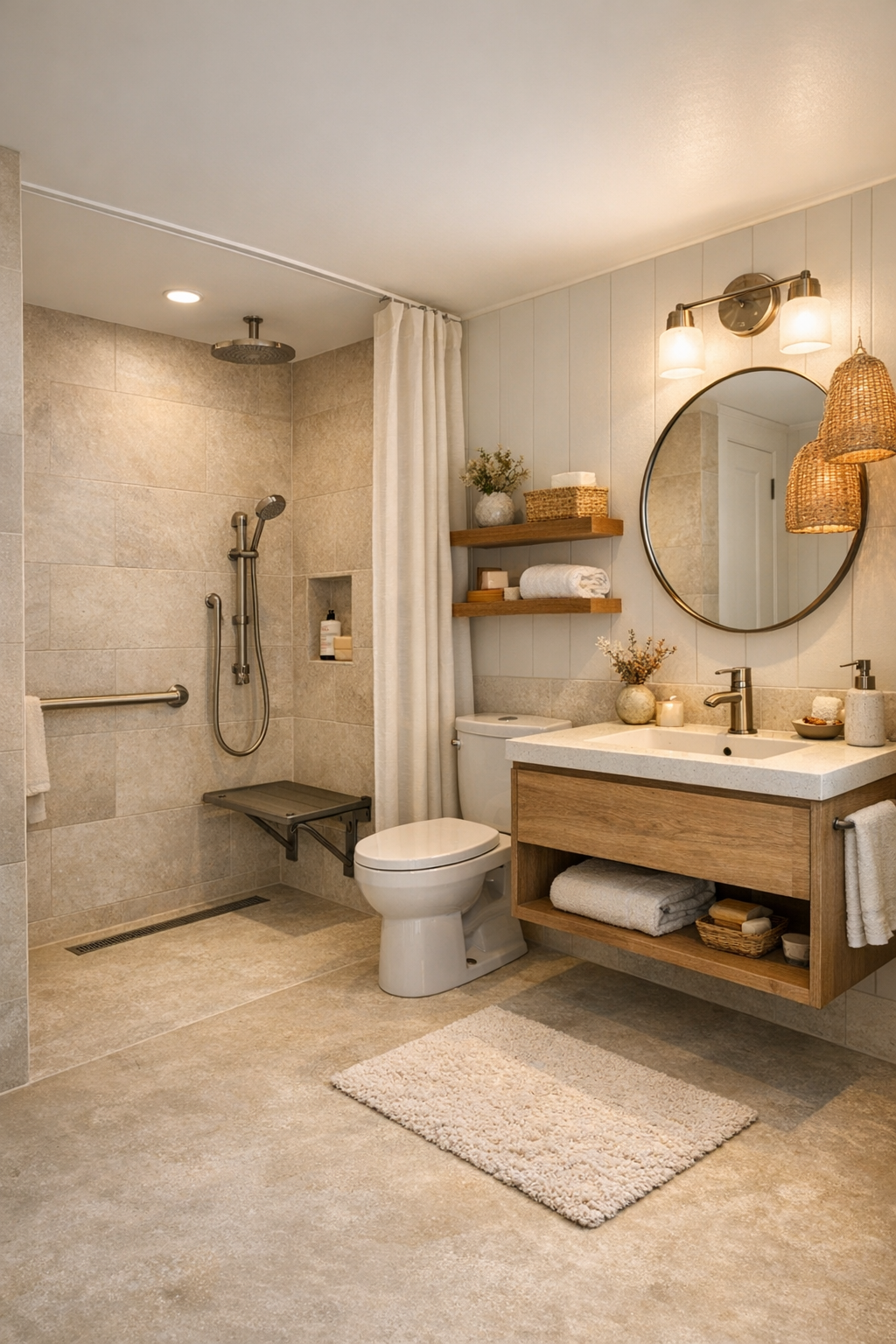
The bathroom is one of the most thoughtfully resolved rooms in the house, and perhaps the most impressive. Accessibility here is not treated as an afterthought but as the very basis of elegance. The shower appears curbless, with seamless floor transitions and a drainage solution so discreet it almost disappears, while the tile palette stays soft and natural—sand, bone, mist, and warm white. A floating vanity opens the floor visually and physically, and the mirror and lighting are positioned to flatter rather than merely function.
What keeps the room from feeling clinical is the choice of finishes. Brushed metal details, a tactile wall tile, thick towels in creamy neutrals, and perhaps a small wood stool or ledge bring warmth into the composition. Even support features can be integrated beautifully when the design is this disciplined. It is a bathroom that suggests relief, ease, and self-sufficiency, which to my mind are some of the finest luxuries a home can offer.
Other Areas
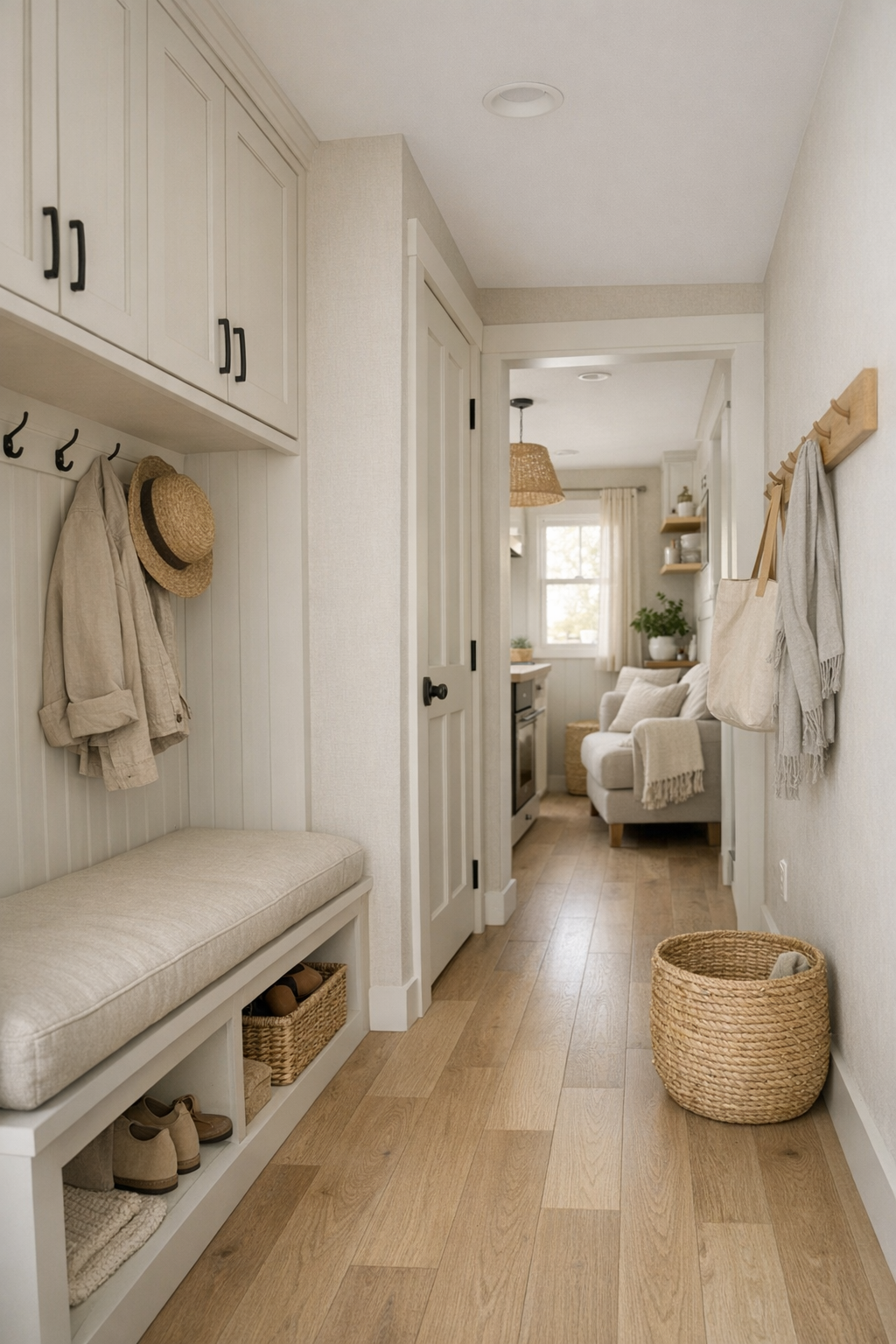
In a tiny home, the in-between spaces tell you just as much as the main rooms, and here they seem remarkably well handled. Hallways, thresholds, and built-in storage zones are given the same design care as the kitchen or bath, which makes the whole home feel coherent. There may be a small entry nook with hooks at usable heights, a bench for changing shoes, and cabinetry that disappears into the wall in the neatest way. Even a laundry area or utility cabinet could be softened with matching finishes, proving that practical spaces need not break the mood.
I also imagine little moments of grace throughout: a reading corner by a window, open shelving for a few meaningful objects, perhaps a ledge for cookbooks or baskets of folded throws. The circulation paths would stay broad and visually uncluttered, with continuous flooring helping the home feel larger than its footprint. Those are the details that make a compact house truly successful. Like a well-run country kitchen, it works because everything has its place and nothing feels wasted.
Why You'd Live Here
You would live here because it understands that beauty is not separate from ease; the two belong together. This home offers softness without fragility, accessibility without sterility, and compact living without deprivation. It is scaled for real life, shaped by thoughtfulness, and wrapped in materials that calm the eye and settle the spirit.
More than that, it feels deeply humane. I think that is what lingers with me most. In all its pale woods, quiet textiles, careful clearances, and steady light, this tiny home honors the daily rituals that make a life: rising, cooking, resting, gathering, moving freely from room to room. And in the end, that is what makes a house memorable—not just how it looks, but how kindly it meets you.