
This barrier-free Greek island houseboat feels like a love letter to slow living. Floating against a backdrop of sun-bleached stone, deep blue water, and the kind of light that makes everything look gently polished, the home blends coastal simplicity with thoughtful, highly functional design. I’m especially drawn to how it balances ease and beauty at every turn: soft curves instead of sharp corners, open circulation, tactile natural materials, and a palette that feels lifted straight from the Aegean.
Even as a concept design, it feels wonderfully livable and emotionally grounded. What makes it special to me is that accessibility is never treated like an afterthought or a compromise; it’s woven into the architecture so gracefully that the whole home feels calmer, more generous, and more welcoming. It has the airy romance you hope for in an island retreat, but it also has the practical comfort of a place where real life—family dinners, barefoot mornings, and long conversations after sunset—would be genuinely easy.
Exterior
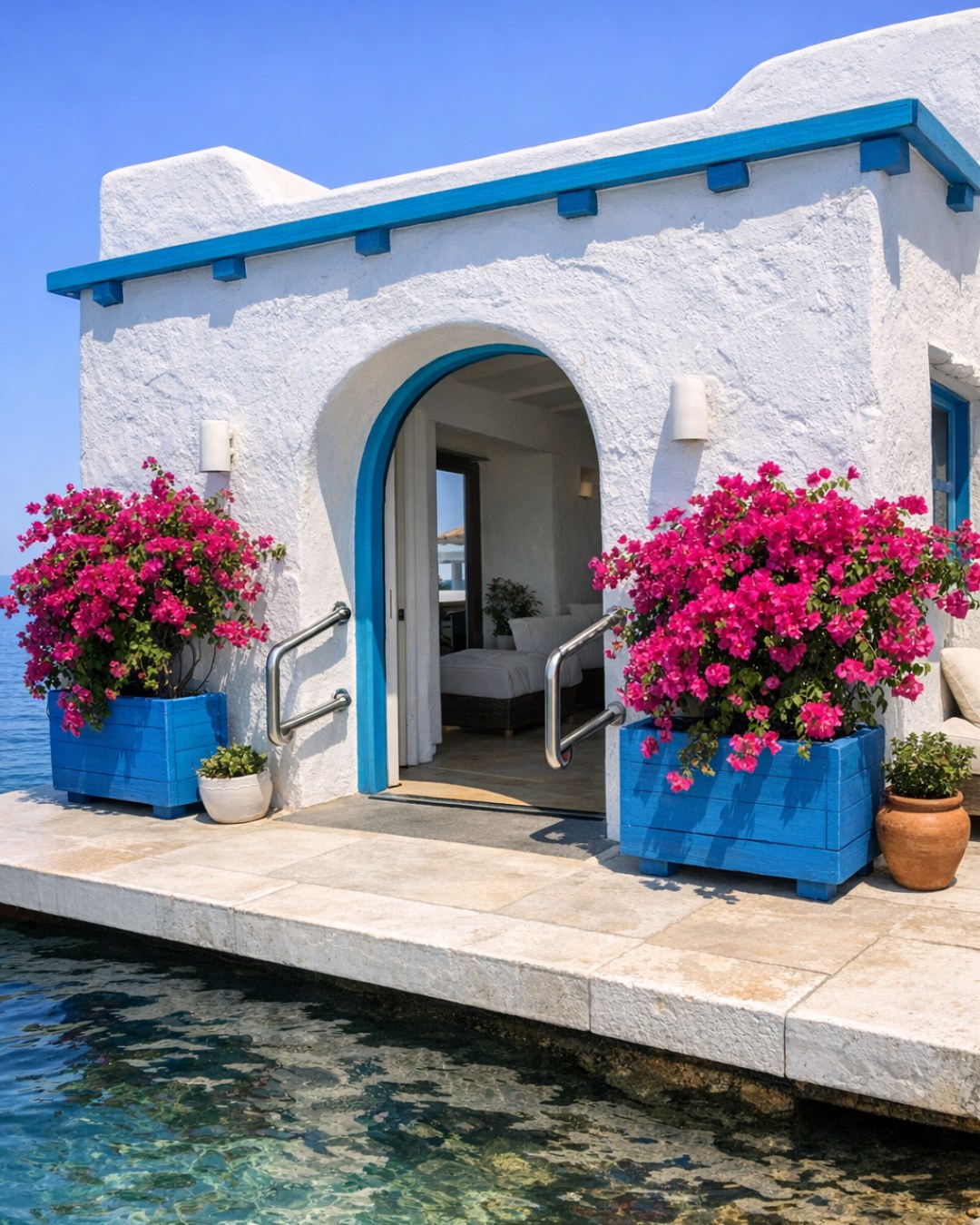
From the outside, the houseboat has a sculptural quietness that suits the Greek islands beautifully. The form is low and streamlined, with rounded white stucco volumes, pale oak decking, and brushed limestone details that soften the transition between boat and home. Instead of fussy ornament, the design leans on proportion, shadow, and texture. Slim railings in a muted sand tone keep sightlines open, while wide, gently sloped entry points make boarding feel seamless and secure. It has that clean Mediterranean look I always love, but here it’s paired with a reassuring sense of stability and ease.
What stands out most is how intentionally the exterior supports movement and comfort. Pathways are broad and uncluttered, thresholds are flush, and built-in bench seating is tucked along the deck in a way that invites people to pause without interrupting circulation. Linen-colored outdoor cushions, ceramic planters with silvery herbs, and softly recessed deck lighting make the whole perimeter feel like an extension of the interior. Rather than shouting for attention, the exterior settles into the landscape with a calm confidence, and I can already imagine carrying out a tray of grilled fish, fresh bread, and something simple for the kids without ever feeling cramped.
Living Room
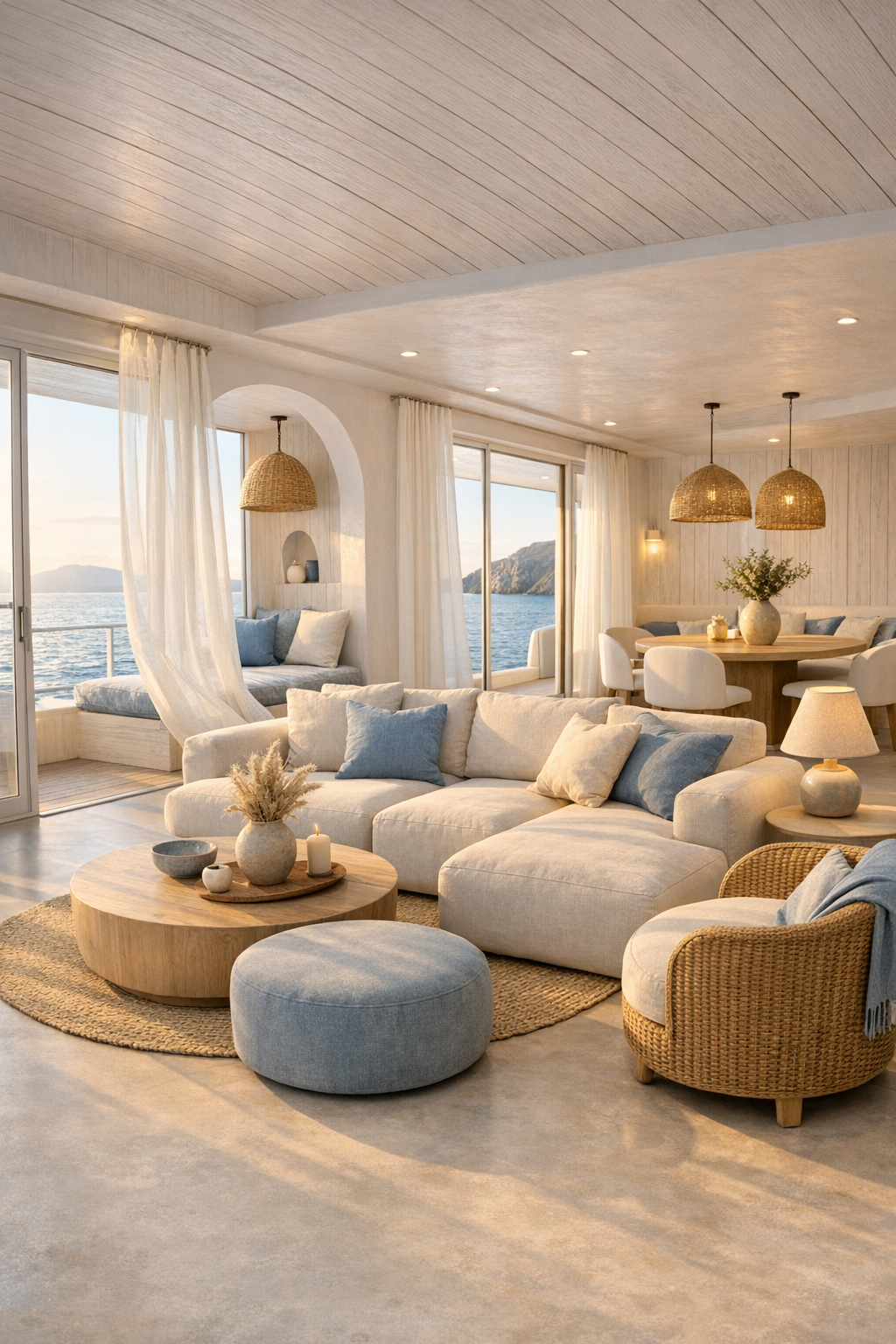
The living room is open, luminous, and remarkably gentle in its layout. A large modular sofa in washable ivory linen anchors the space, arranged to keep pathways wide and turning radiuses effortless without making the room feel sparse. Behind it, whitewashed oak paneling adds warmth, while the floor continues in a matte, pale microcement that keeps the surface level and visually quiet. I like how the palette stays restrained—chalk white, soft flax, driftwood, and watery blue—because it lets the changing light become part of the décor.
Furniture edges are rounded, tables are pedestal-based for easier access, and the built-in media wall is kept shallow so the room feels breathable. A handwoven wool rug introduces texture without too much pile, and gauzy curtains filter the sun rather than block it, giving the whole room a soft glow from morning into evening. Layered lighting does a lot of work here: recessed ceiling washes, discreet wall sconces, and a pair of ceramic table lamps that make the space feel cozy after dark. It’s the sort of room where I can picture kids stretching out with a snack, grandparents settling in comfortably, and everyone still feeling connected.
Dining Room
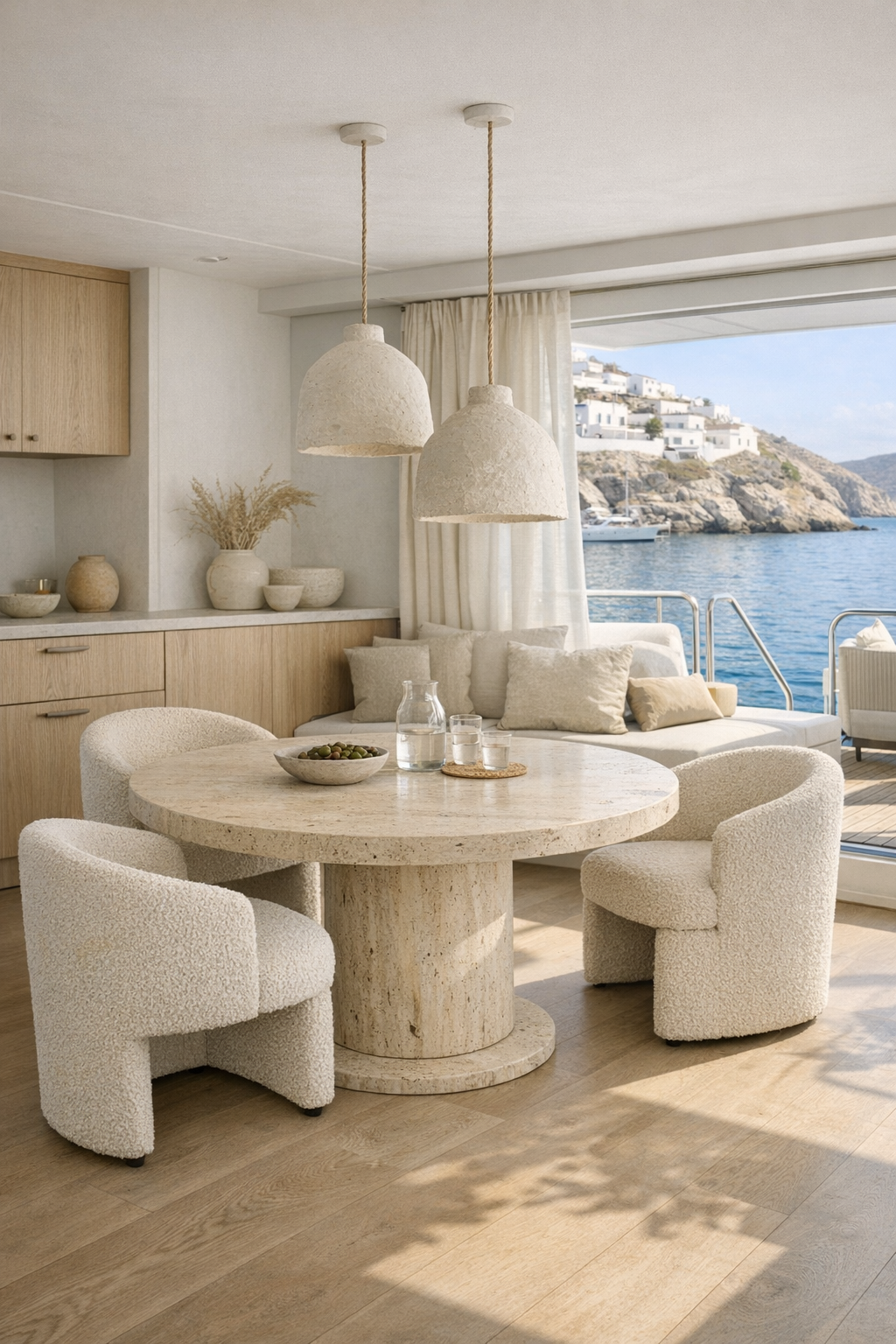
The dining area feels intimate without being closed off, which is a tricky balance and one this design handles beautifully. A round dining table in honed travertine sits at the center, supported by a sculptural pedestal base that leaves plenty of legroom and makes seating more flexible. The chairs are upholstered in a durable sandy boucle with supportive curved backs, and their scale is generous enough for lingering over dinner. I always appreciate a round table in a family home because it naturally invites conversation, and here it also makes movement around the room feel smoother.
Above, a trio of hand-thrown plaster pendants hangs low enough to create a sense of occasion, but not so low that the room feels crowded. A built-in sideboard in pale oak lines one wall, offering storage for dishes, linens, and all the little extras that make hosting easier. I can picture setting out a simple spread of olives, tomatoes, grilled vegetables, and maybe a few familiar sides for picky eaters, and the room would make even an ordinary meal feel thoughtful. The overall mood is relaxed and sunlit, with enough texture to keep it interesting and enough simplicity to let people be the focus.
Kitchen
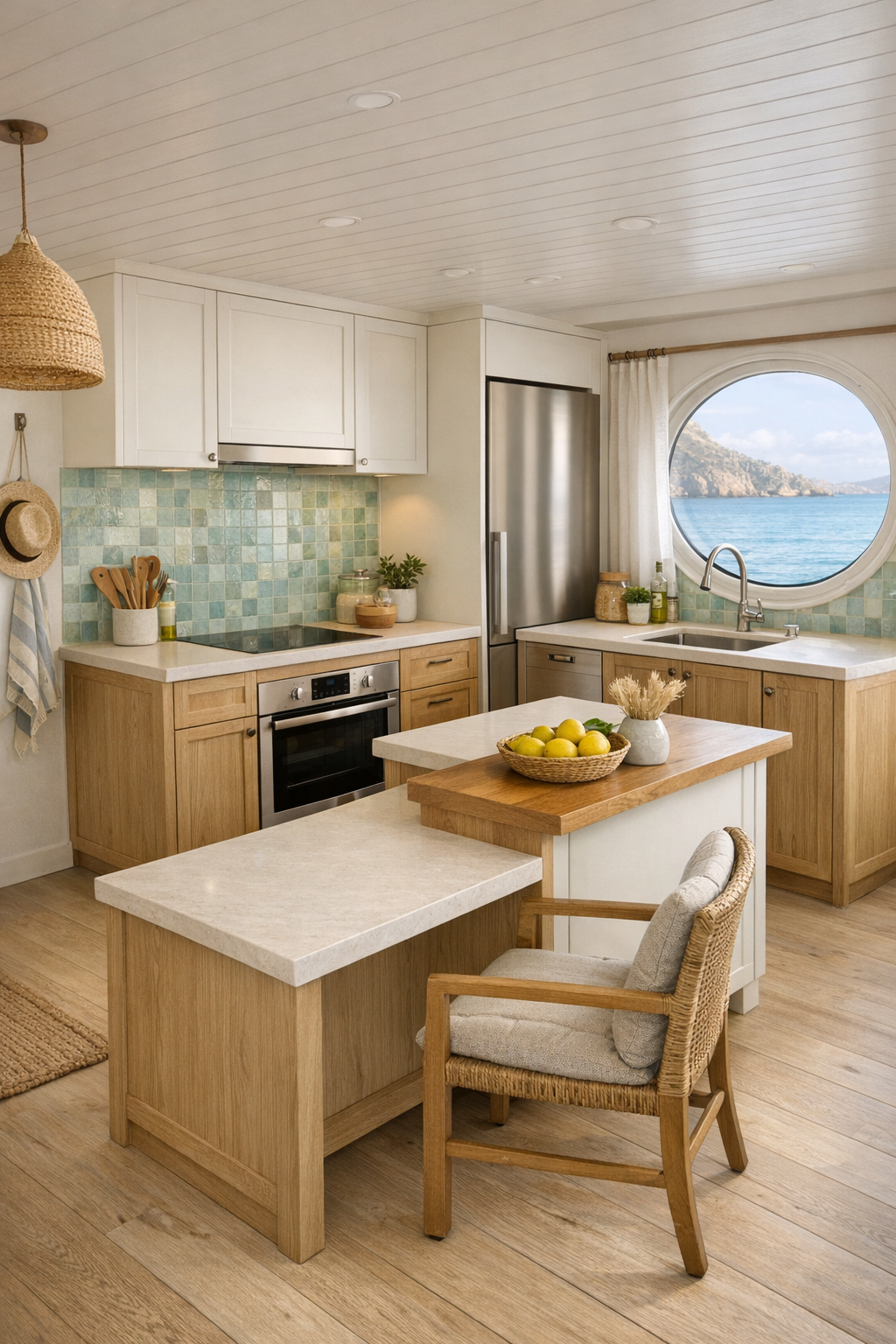
The kitchen is one of my favorite spaces because it manages to be both polished and deeply practical. Cabinetry in bleached oak and warm white lacquer keeps the room light, while fluted glass uppers add a little softness without visual clutter. The counters are a creamy honed quartz with eased edges, and the island is designed with varied heights so prep, serving, and seated participation all feel natural. As someone who spends a lot of time feeding people, I notice details like this right away; it’s the kind of kitchen that welcomes everyone in instead of pushing them to the sidelines.
Open knee space at key work areas, integrated appliances, and long linear pulls make everything feel intuitive to use, while the induction cooktop and undercounter refrigeration keep sightlines low and open. The backsplash, done in handmade zellige tile in a washed sea-glass tone, brings just enough shimmer to catch the island light. I also love the layered storage: deep drawers for cookware, pull-out pantry systems, and easy-reach shelving for everyday dishes. It’s efficient in the best possible way, but still warm enough that I can imagine serving breakfast here, setting out fruit and toast, and letting the day unfold slowly.
Bedroom
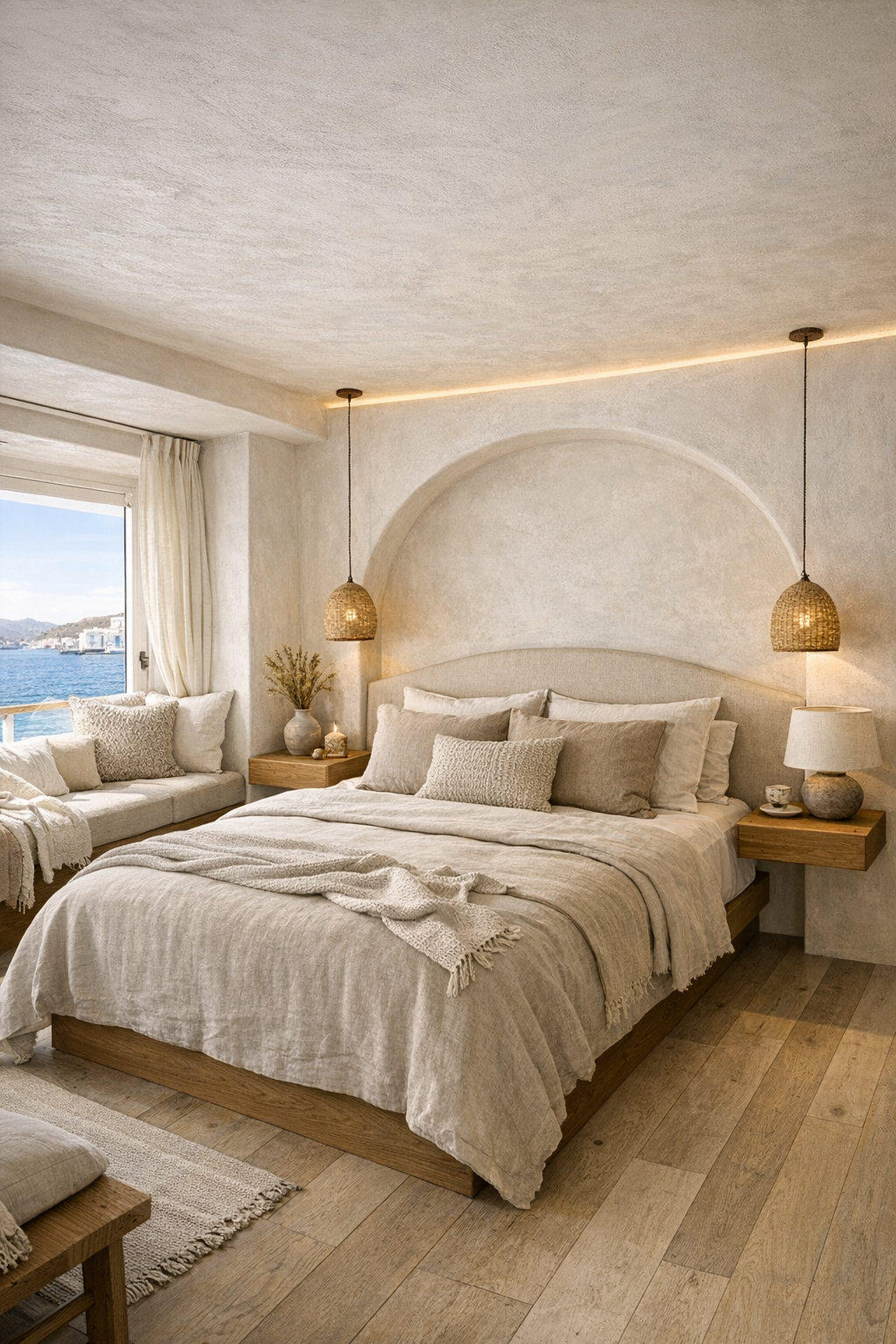
The bedroom is serene in that deeply restful way that comes from restraint rather than emptiness. A low-profile upholstered bed in oatmeal linen sits against a curved plaster headboard wall, with floating oak nightstands that keep the floor area open and easy to navigate. The bedding layers are simple but inviting—crisp white cotton, a lightweight sand-colored coverlet, and a washed indigo throw that quietly echoes the sea outside. Nothing feels overdone, and that’s exactly why the room works.
Instead of bulky case goods, storage is integrated into a wall of built-in wardrobes with touch-latch doors finished in a matte limewash tone. Soft cove lighting at the ceiling perimeter creates a flattering, restful glow, while reading sconces are positioned thoughtfully for comfort and ease of use. I especially like the sitting nook by the window, where a curved chair and a small drink table create a private corner without obstructing circulation. It’s the kind of bedroom that encourages real rest, not just sleep, and in a home like this that feels essential.
Bathroom
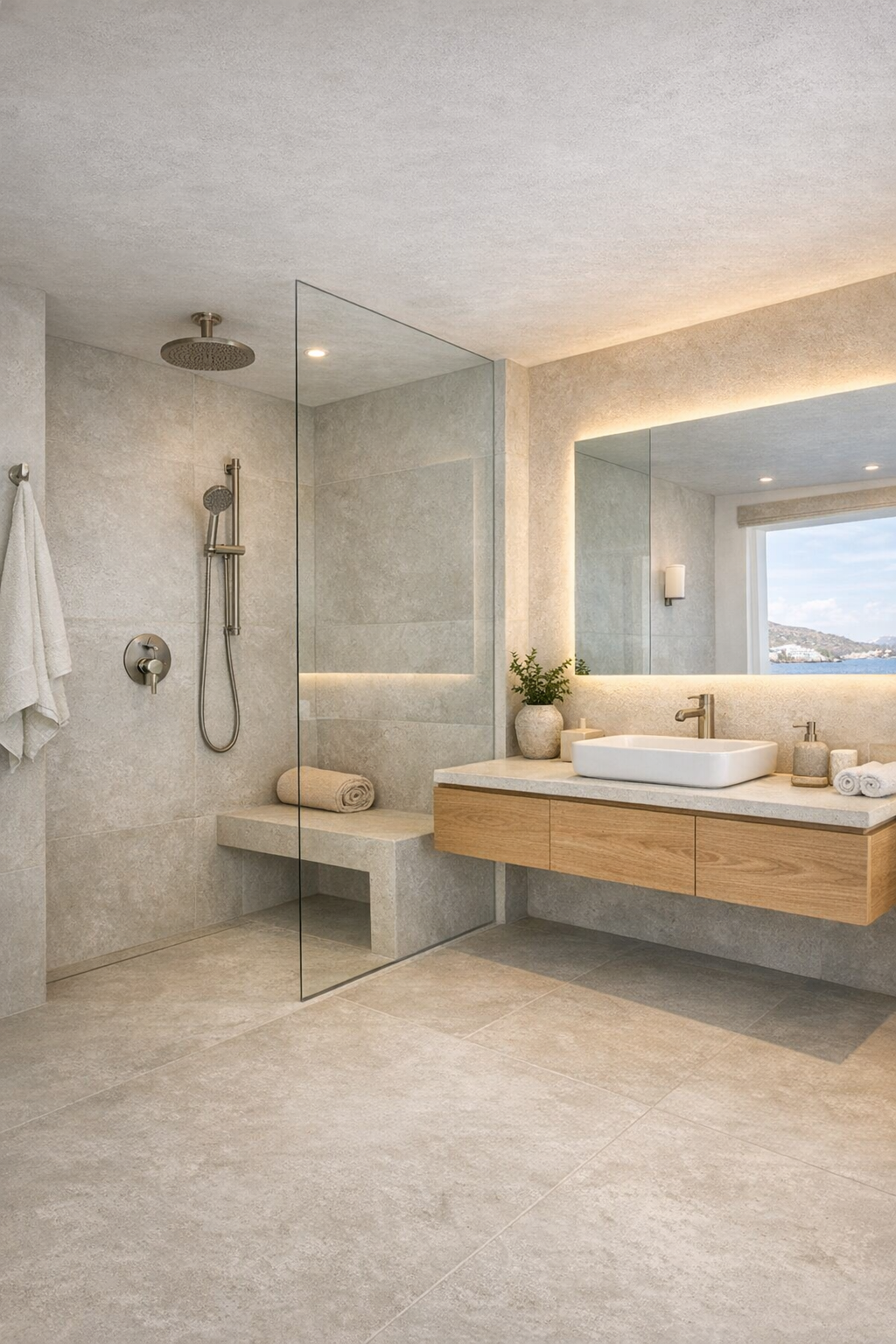
The bathroom is proof that barrier-free design can feel quietly luxurious. The floor and lower walls are wrapped in pale limestone-look porcelain with a soft matte finish that reduces glare and adds a grounded, spa-like feel. A curbless shower stretches along the back wall behind a minimal glass screen, with a built-in bench, handheld fixtures, and recessed niches that keep products organized without cluttering the space. Everything is easy to reach, easy to maintain, and visually calm.
A floating vanity in white oak with rounded corners is topped with a seamless integrated sink, and the mirror above is softly backlit to avoid harsh shadows. Brushed nickel fittings, thick cotton towels, and a few simple ceramic accessories keep the styling understated. I appreciate that the room doesn’t rely on flashy materials to feel special; it uses proportion, tone, and thoughtful detailing instead. It feels fresh, safe, and restorative, which is really what you want from a bathroom at the beginning and end of the day.
Other Areas
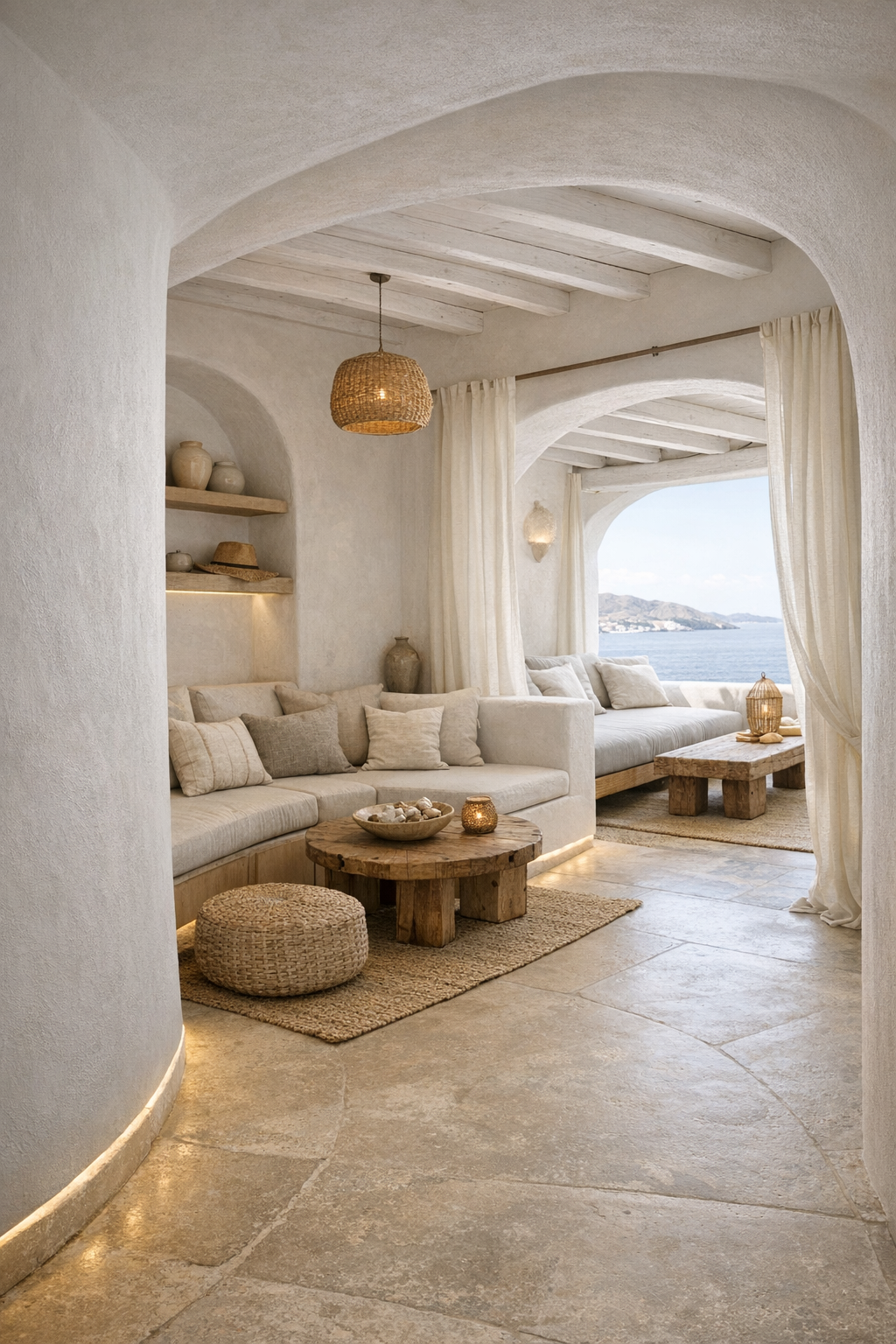
Beyond the main rooms, this houseboat makes the most of every transition space. The circulation corridors are wider than expected and treated as part of the design rather than leftover square footage, with softly curved walls, concealed storage, and subtle floor lighting that helps with navigation at night. There’s also a compact multipurpose nook that could serve as a reading corner, a workspace, or a quiet play spot, fitted with a built-in desk ledge and upholstered bench seating. In a family-minded home, spaces like this matter because they give everyone a place to be without scattering the feeling of togetherness.
I’m also charmed by the covered aft deck lounge, which acts like an outdoor room with all the comfort of the interior. It’s furnished with low teak seating, weather-friendly cushions in striped blue and flax, and a pedestal café table perfect for morning coffee or an easy lunch. Planters with rosemary and thyme soften the edges, and a retractable shade canopy helps the space adapt through the day. These supporting areas are what make the home feel complete to me: they’re useful, beautiful, and designed to make daily routines smoother rather than more complicated.
Why You'd Live Here
You’d live here because it offers something genuinely rare: beauty that doesn’t ask anyone to struggle for it. So many homes can be admired from a distance but feel difficult in daily life, and this one does the opposite. It’s graceful, accessible, warm, and deeply attuned to the rhythms of real living, whether that means hosting a long meal, moving easily from room to room, or simply waking up to water and light in a space that feels peaceful instead of demanding.
For me, the biggest draw is how generously this houseboat supports togetherness. The rooms are open without being stark, tactile without being fussy, and practical without losing that dreamy island spirit. It’s easy to imagine family and friends gathering here, each person feeling comfortable and included, and that’s ultimately what makes a home memorable. This one doesn’t just look lovely—it feels kind, and I think that matters more than ever.