
There is something deeply comforting about a white barn set against open sky, and this Amish Dutch barn tiny home captures that feeling with uncommon grace. Its silhouette is simple and familiar, but the details give it soul: a gambrel roof that softens the profile, crisp warm-white siding, and a sense of handmade honesty that reminds me of the outbuildings I have admired all my life in the rural Midwest. Though this is a concept design, it feels grounded in the old virtues of careful work, modest beauty, and rooms made to be truly lived in.
What makes this little home special is the way it balances plainness and richness at once. Nothing feels showy, yet everywhere the eye lands there is texture, proportion, and craft to savor, from peg rails and wide-plank floors to the glow of natural wood set against painted surfaces. I can almost imagine muddy boots by the door, bread cooling on the counter, and late afternoon light turning every surface the color of cream and honey.
Exterior
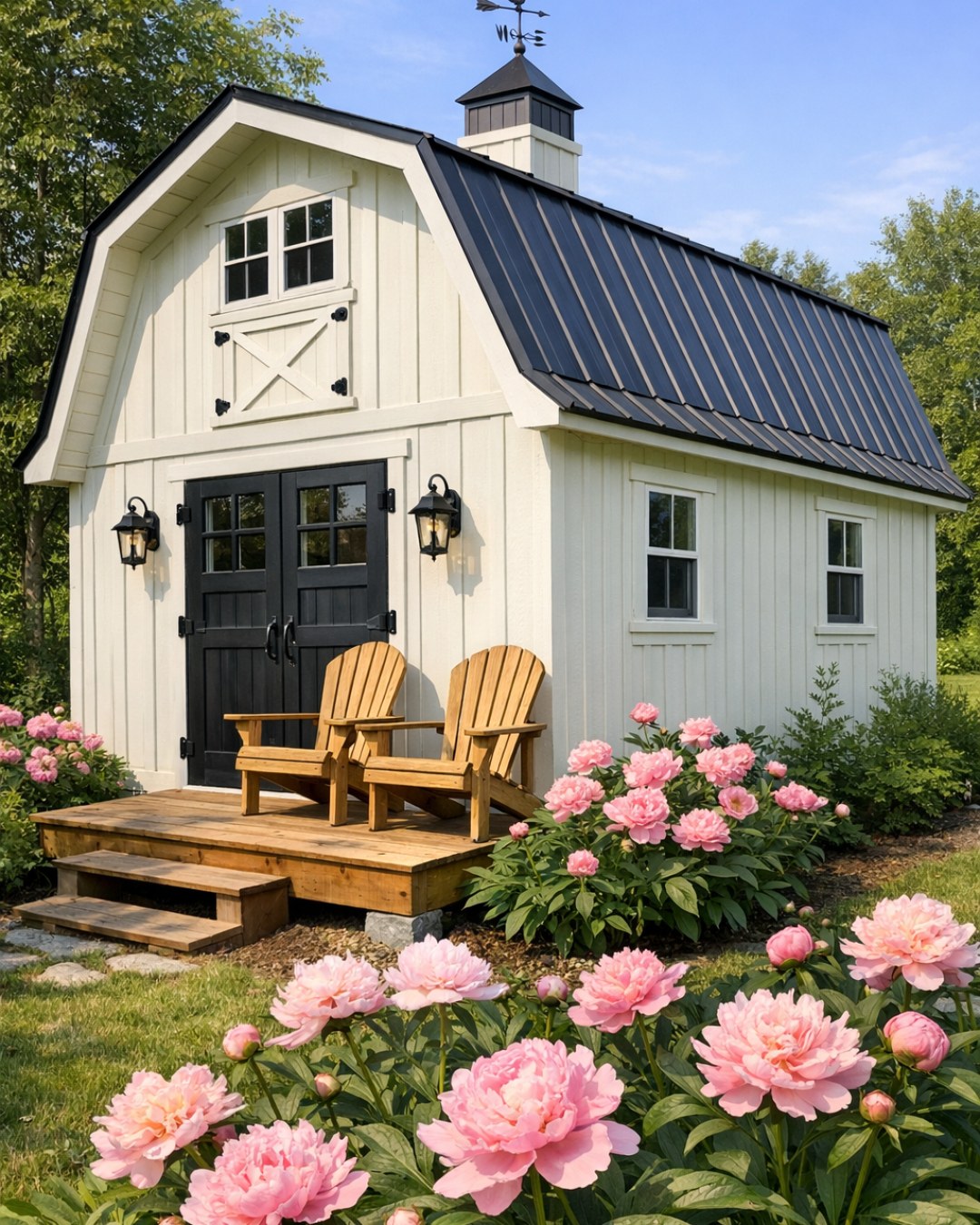
The exterior is dressed in a warm white finish that keeps the barn form bright and clean without looking stark. I picture a soft matte siding, likely board-and-batten, with trim in a slightly deeper ivory so the layers are subtle rather than sharp. The Dutch barn roofline gives the home its character right away, creating that familiar lifted shoulder overhead and allowing the upper level to feel generous without making the whole structure seem oversized. Windows are thoughtfully placed, with dark metal muntins and simple frames that lend just enough contrast to ground all that pale siding.
What I appreciate most is how the outside honors utility while still feeling tender and welcoming. A small covered stoop, sturdy timber posts, black gooseneck sconces, and perhaps a natural wood front door would be all it needs. Gravel underfoot, a few weathered planters, and maybe a simple bench would complete the picture. It has the kind of presence that does not ask for attention, but earns it all the same, much like the old farm buildings that have stood for generations because they were made right the first time.
Living Room
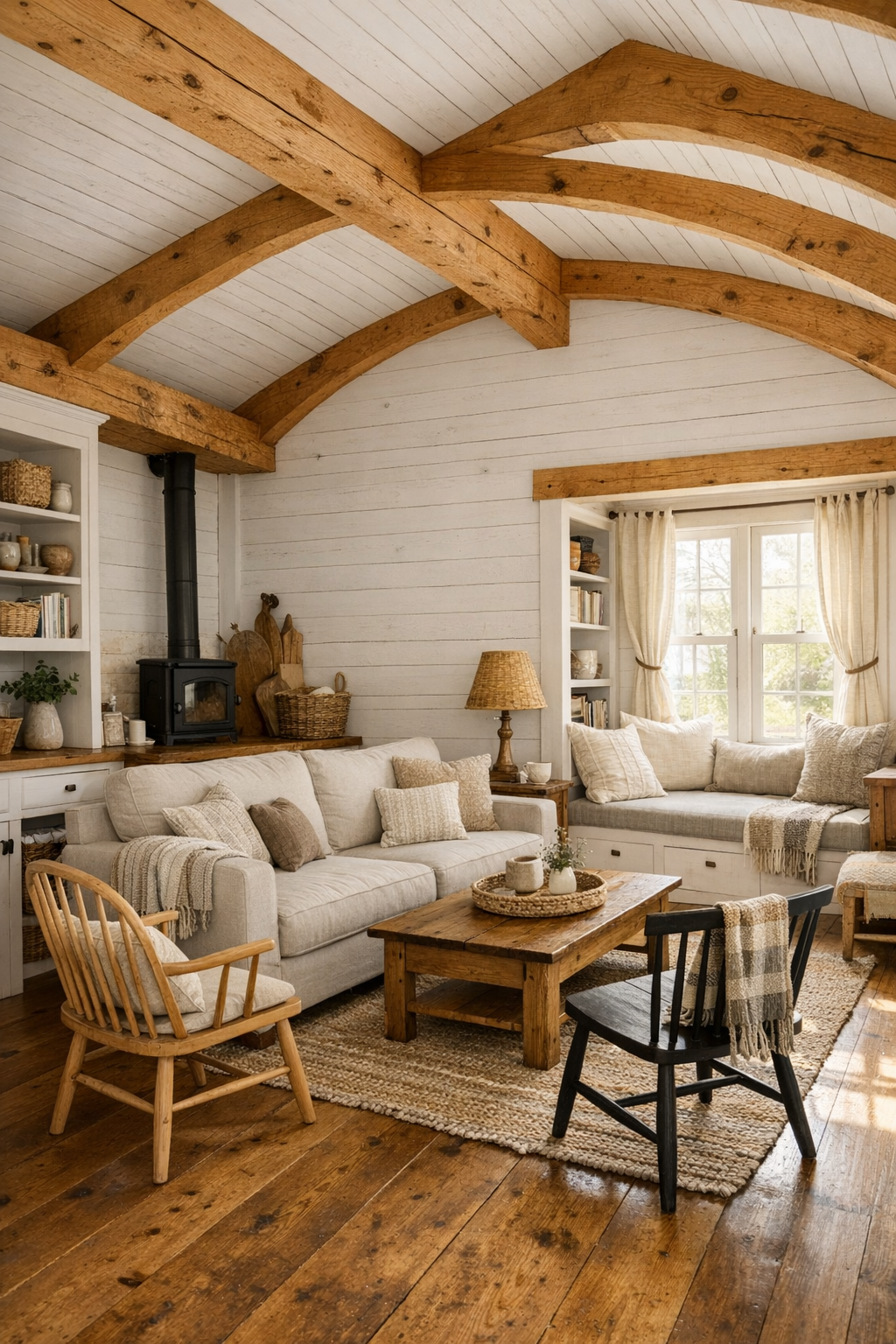
The living room carries the barn’s warmth indoors with white-painted walls, honey-toned wood beams, and wide-plank flooring that looks as if it would only get prettier with age. Because the footprint is small, the layout is disciplined, but it never feels pinched. A compact linen sofa, a pair of spindle-back chairs, and a solid wood coffee table create an arrangement that encourages conversation rather than television worship. I can see handwoven throws folded over an arm, a braided rug underfoot, and soft ticking-stripe pillows that nod to farmhouse tradition without becoming costume.
Light is doing a good deal of the work here. Daylight pours through the windows and bounces off the pale walls, while warm sconces and perhaps a modest iron chandelier bring a gentle glow after sunset. The room’s handcrafted details would be the true treasure: built-in shelves with a plate groove, neatly joined trim, pegged joinery, and perhaps a window seat tucked beneath the gambrel curve. It feels like a room meant for quiet evenings, mending baskets, coffee warmed a second time, and the kind of visiting that stretches pleasantly long.
Dining Room
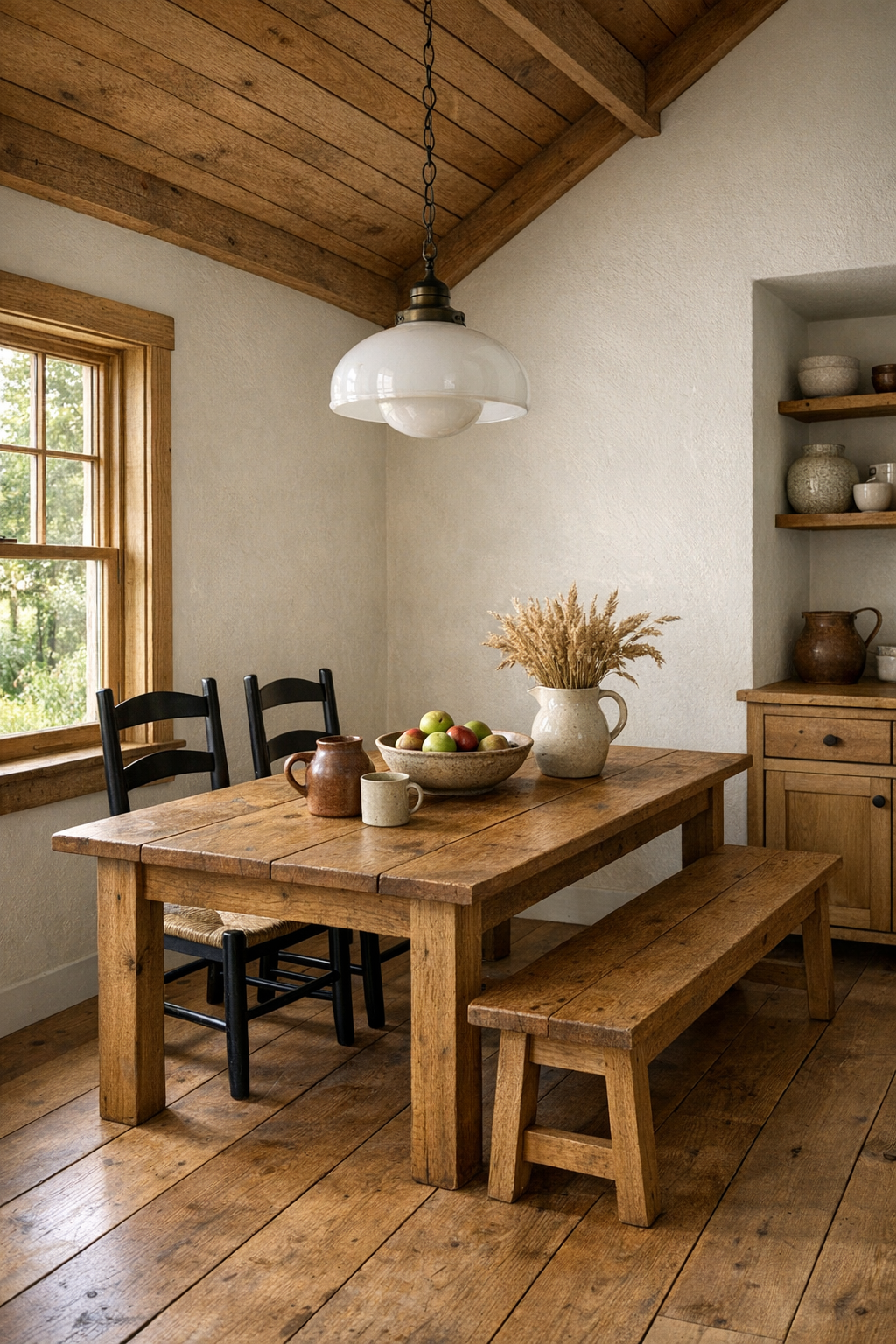
The dining area is likely modest in size, but it would be one of the emotional centers of the home. I imagine a sturdy rectangular table in oak or maple, its grain visible and touchable, paired with simple shaker chairs that speak the same language as the architecture. The palette remains calm: warm whites, oatmeals, flax, and wood tones deepened by oil-rubbed bronze or black iron hardware. A bench on one side would make practical sense in a tiny home, and it would also soften the room, giving it that gathered, family-table feeling I always love.
Overhead, a single pendant with a milk-glass shade or a lantern-style fixture would cast an intimate pool of light across the tabletop. The walls might hold a narrow ledge for crocks, a drying wreath, or a few everyday dishes, and perhaps there is a nearby window framing pasture, field, or garden. In a home like this, the dining room is not formal in the least; it is where soup gets ladled, pie gets sliced, and the table itself becomes a work surface, homework desk, and memory keeper all at once.
Kitchen
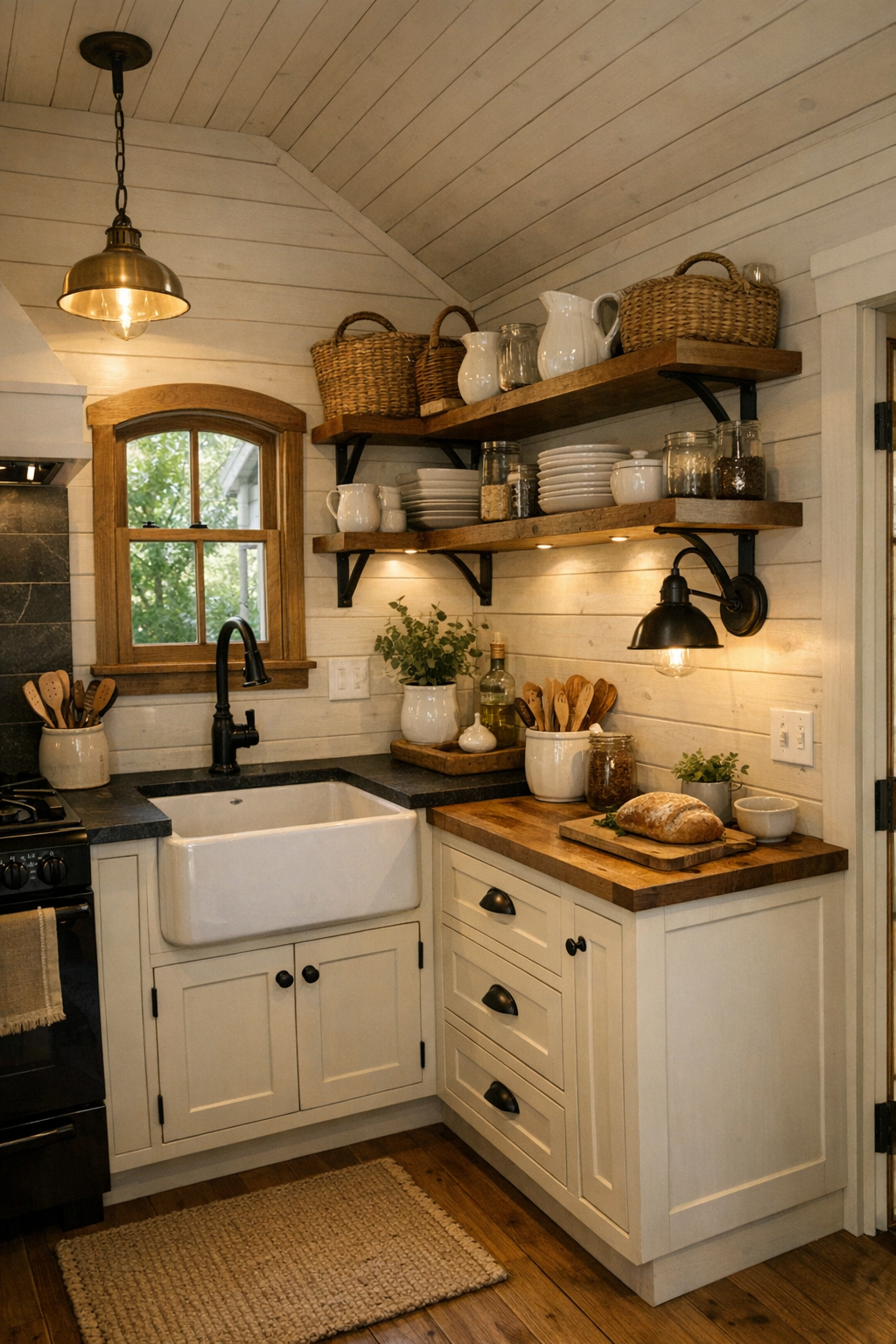
The kitchen is where this little home would truly shine for me. I have spent a lifetime in kitchens that prized usefulness over fuss, and this one seems cut from that same cloth, only refined. Cabinetry in painted warm white, perhaps inset-front with simple latches or dark pulls, would keep the room feeling bright and tidy. Butcher block or soapstone counters would be just right here, each bringing a different kind of old-fashioned integrity, while an apron-front sink beneath a window would complete the picture beautifully. Open shelves for everyday bowls and canisters would keep the room honest and lived-in.
What makes it special is the thoughtful use of every inch. Under-stair storage, slim pull-outs, ceiling-height cabinets, and a petite island or worktable would turn a compact footprint into a serious cooking space. I can imagine copper pans catching the light, crocks of wooden spoons, and a little runner softening the floor near the sink. The lighting should be layered and practical: under-cabinet glow for prep work, a focused pendant over the island, and enough daylight to make baking in the morning feel like a pleasure instead of a task. It is a tiny kitchen, yes, but one with the bones to feed people well.
Bedroom
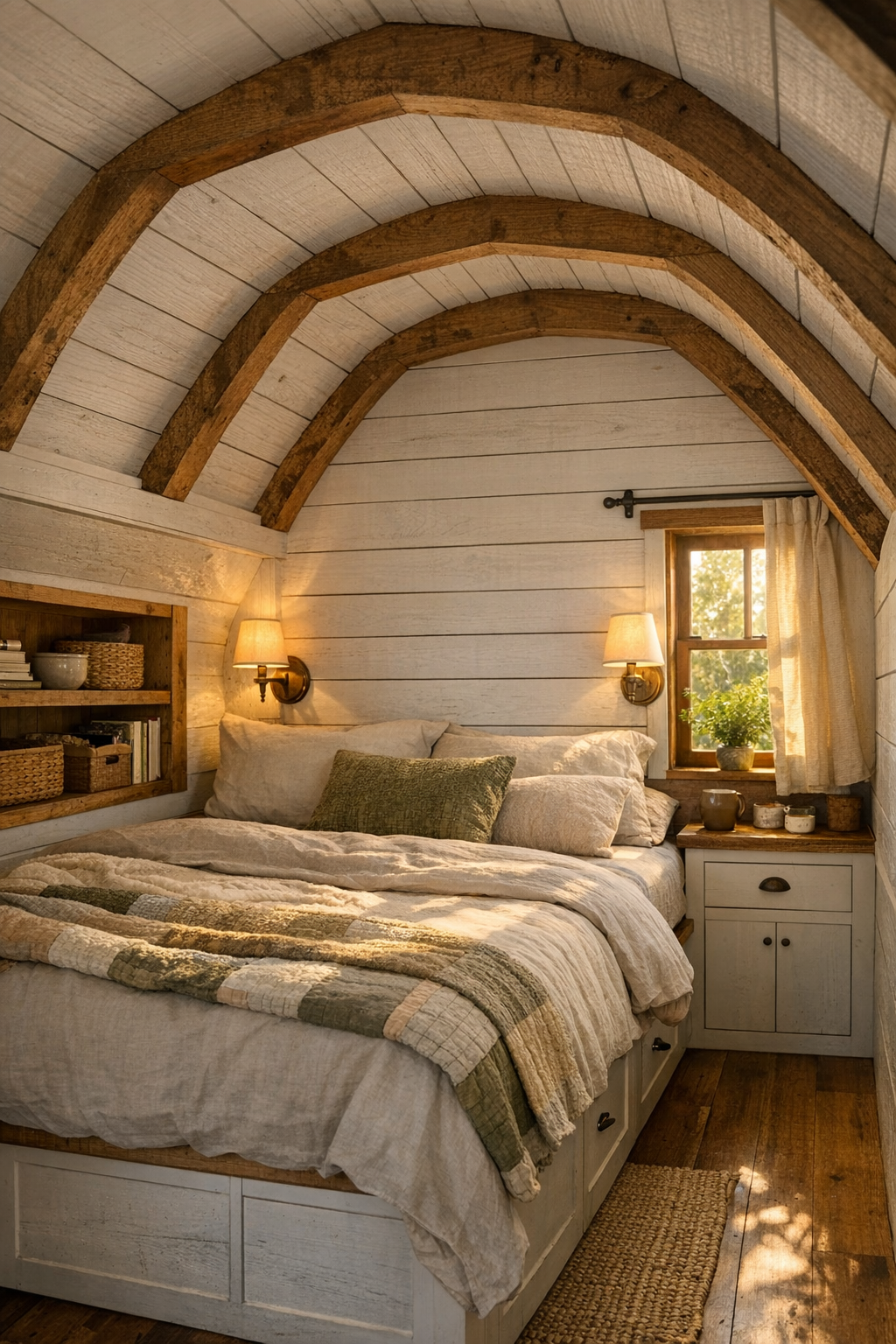
The bedroom, tucked beneath the gambrel roof, would be one of those spaces that feels instantly cocooning. Sloped ceilings can be awkward in the wrong hands, but here they become an asset, wrapping the bed in a gentle architecture that feels private and calm. I imagine white planked walls, a quilt folded at the foot of the bed, and built-in cabinetry painted to match the trim so storage recedes rather than crowds. The bed itself would likely be simple and low, dressed in washed linen, soft cotton, and perhaps a coverlet with a subtle homespun pattern.
The charm would lie in the little things: a pair of reading sconces, a peg rail for robes and baskets, a small stool serving as a bedside table, and maybe a dormer window seat if the structure allows it. Natural wood overhead would add warmth and keep the room from feeling too pale. This is not a grand bedroom, but it offers something grander than square footage: restfulness. It feels like the sort of room where rain on the roof would be company enough.
Bathroom
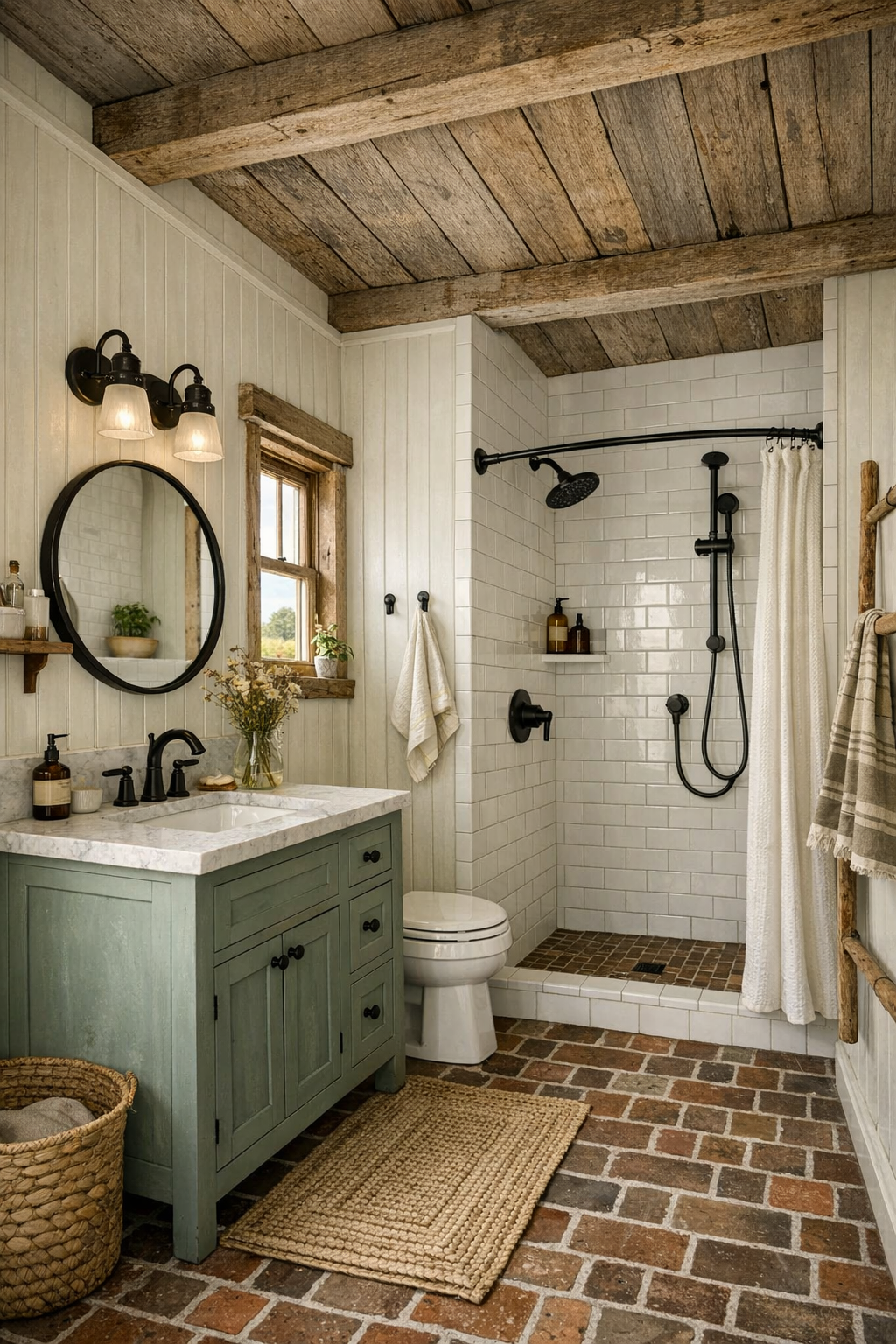
The bathroom continues the home’s plainspoken beauty with a palette that feels clean but never cold. I picture beadboard or vertical paneling on the walls, a petite vanity in painted wood, and a stone or porcelain countertop that can withstand real use. Fixtures in aged brass or matte black would bring definition without fuss, and a simple framed mirror would suit the handcrafted mood better than anything overly sleek. In a tiny home, the bathroom must earn its keep, so every element would need to be durable, compact, and easy to maintain.
A tiled shower in creamy white, perhaps with a soft gray grout and a niche lined in natural wood or stone, would make the room feel brighter and a touch more generous. The floor might be brick-pattern tile or small hex tile, something traditional enough to age gracefully. Good lighting is essential in a room like this, and I would want a warm sconce glow paired with daylight if possible. Altogether, it feels like a bath designed not to impress strangers, but to make everyday routines quietly pleasant.
Other Areas
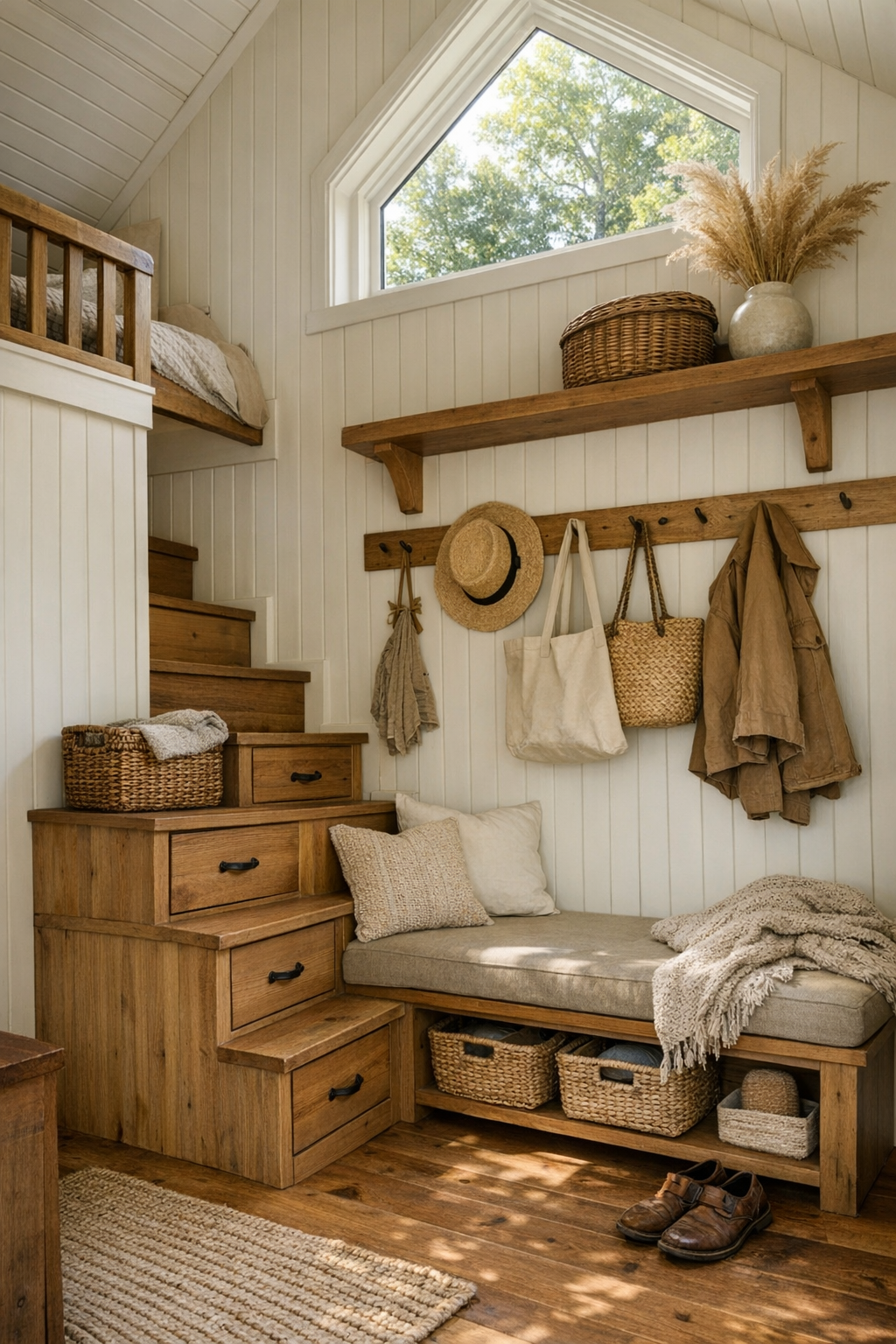
In a tiny home, the in-between spaces matter just as much as the main rooms, and this design seems full of them in the best possible way. I can imagine a compact entry with pegs for coats and a bench with shoe storage below, all built with the same sturdy restraint as the rest of the home. Stair treads might hide drawers, a landing could hold a narrow bookcase, and any awkward niche beneath the roofline could become storage for linens, pantry goods, or baskets. These are the kinds of solutions that make a small house feel thoughtful instead of compromised.
If there is a lofted nook, reading corner, or multifunctional workspace tucked somewhere under the eaves, it would only add to the home’s charm. A small desk in natural wood, a utility corner with stacked laundry, or a built-in daybed for guests would all suit the plan beautifully. What ties these areas together is consistency: the same warm whites, the same honest wood, the same simple hardware and hand-finished surfaces. It all feels unified, as though every board and bracket was chosen by someone who understood that beauty in a small home lives in discipline as much as decoration.
Why You'd Live Here
You would live here if you believe a home does not need excess to feel abundant. This tiny barn has the kind of abundance I value more with age: natural light, useful beauty, strong materials, and craftsmanship you can see from across the room. It offers a quieter way of living, one where every object has a place and every room asks a little less of you while giving a good deal back in comfort.
I think many of us are hungry for homes that feel honest again, and this one answers that longing beautifully. It draws from barn forms, farmhouse restraint, and handmade tradition without becoming heavy-handed about any of it. More than anything, it feels dear — the sort of place where the coffee pot is always worth putting on, where seasons can be felt through the windows, and where small daily rituals become the true luxury.