
Set among garden rows, split-rail fencing, and the easy rhythm of a working homestead, this converted bus has the kind of charm that reaches you before you even step inside. From the outside, it carries a quiet honesty—practical, weathered in spirit, and deeply rooted in the land around it—but indoors it opens into something unexpectedly tender and refined. The whole place feels stitched together from good sense and beauty, with sunlight, wood grain, and thoughtful storage doing the heavy lifting.
Though this is a concept design, it feels entirely believable to me: the sort of home made by someone who knows how to mend a gate, can vegetables in August, and still wants linen curtains that catch the morning light just so. What makes it special is the balance. It is off-grid without feeling austere, compact without feeling cramped, and rustic without ever slipping into roughness. It has that rare quality I always love in a home—it knows exactly what it is.
Exterior

The bus itself is painted in a softened cream with deep moss-green trim, a combination that sits beautifully against pasture grass and tilled earth. Rather than trying to disguise its original form, the design leans into the long, graceful profile of the vehicle, using planter boxes beneath the windows, a small wood entry deck, and black iron lanterns to make it feel settled and domestic. The roofline carries discreet solar panels, and near the rear I imagine a tidy utility wall clad in cedar slats, concealing tanks, tools, and the practical workings of off-grid life in a way that still looks handsome.
What I find especially winning is how naturally the bus belongs to the homestead. Gravel crunches underfoot, rain barrels stand ready near the garden shed, and a string of warm lights traces the porch edge for evenings after chores are done. Nothing here feels ornamental for ornament’s sake. The exterior has the plainspoken grace I associate with old farm country: useful things made beautiful by care, proportion, and the fact that somebody truly means to live with them every day.
Living Room
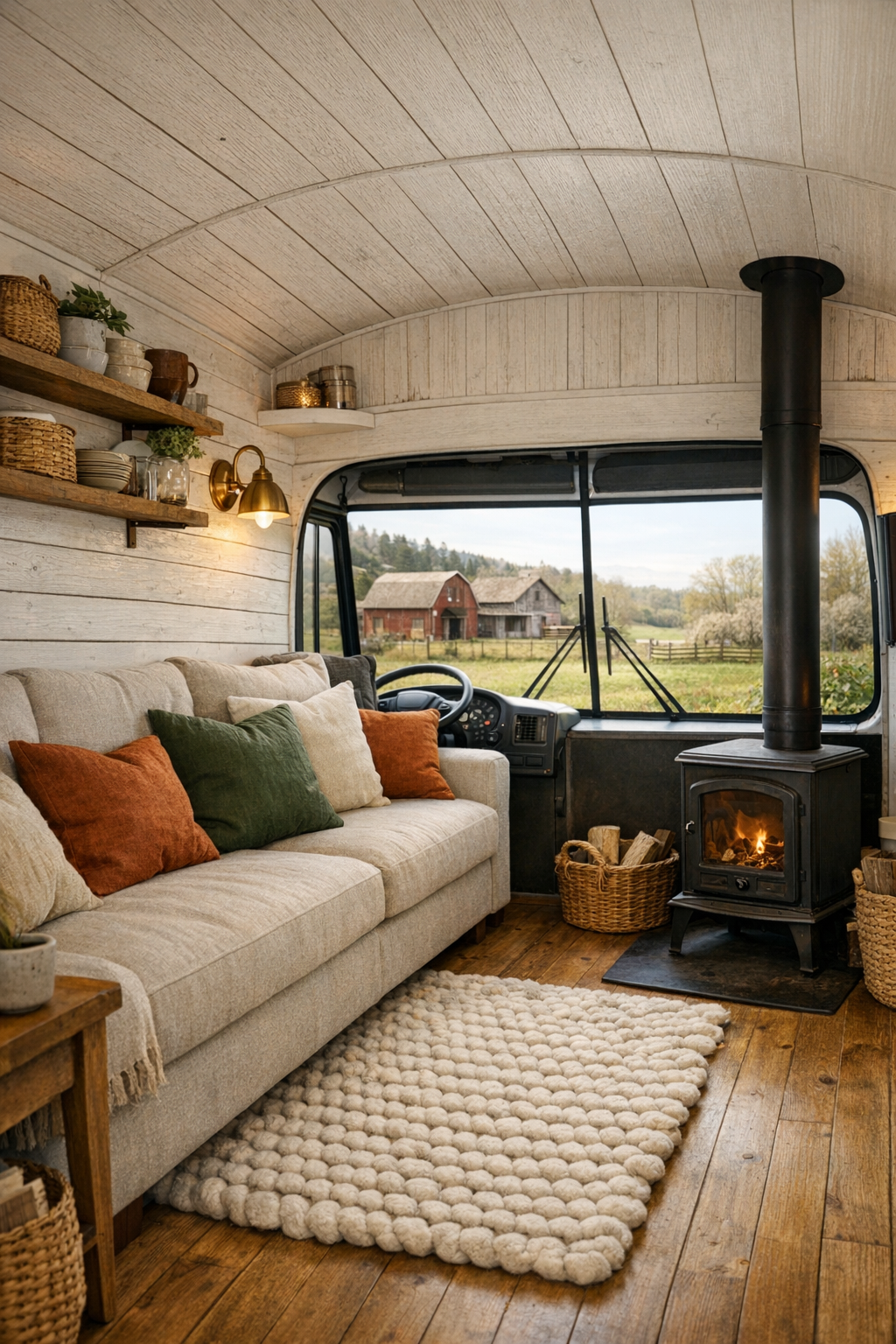
The living room occupies the front portion of the bus, where the original windshield now acts like a great glass picture frame for the surrounding fields. A built-in bench sofa runs along one side, upholstered in oatmeal-colored performance linen with deep green and rust-toned cushions that nod to the landscape outside. Opposite, a slim wall of whitewashed shiplap holds open shelves, books, baskets, and a compact cast-iron stove whose matte black finish anchors the room. The floor is a warm, honeyed wood, and because the ceiling curves gently overhead, the whole space feels cradled rather than confined.
There is a kind of old-fashioned comfort here that I recognize right away—the same feeling as settling into a kitchen chair while something bakes in the oven and daylight fades early in winter. The lighting is layered carefully: petite brass sconces for evening, under-shelf glow for softness, and plenty of daylight bouncing off pale walls and natural textiles. A braided wool rug underfoot adds color and memory, while lidded storage tucked beneath the seating keeps daily clutter out of sight. It is a small room, yes, but it has been given the dignity of thoughtful scale.
Dining Room
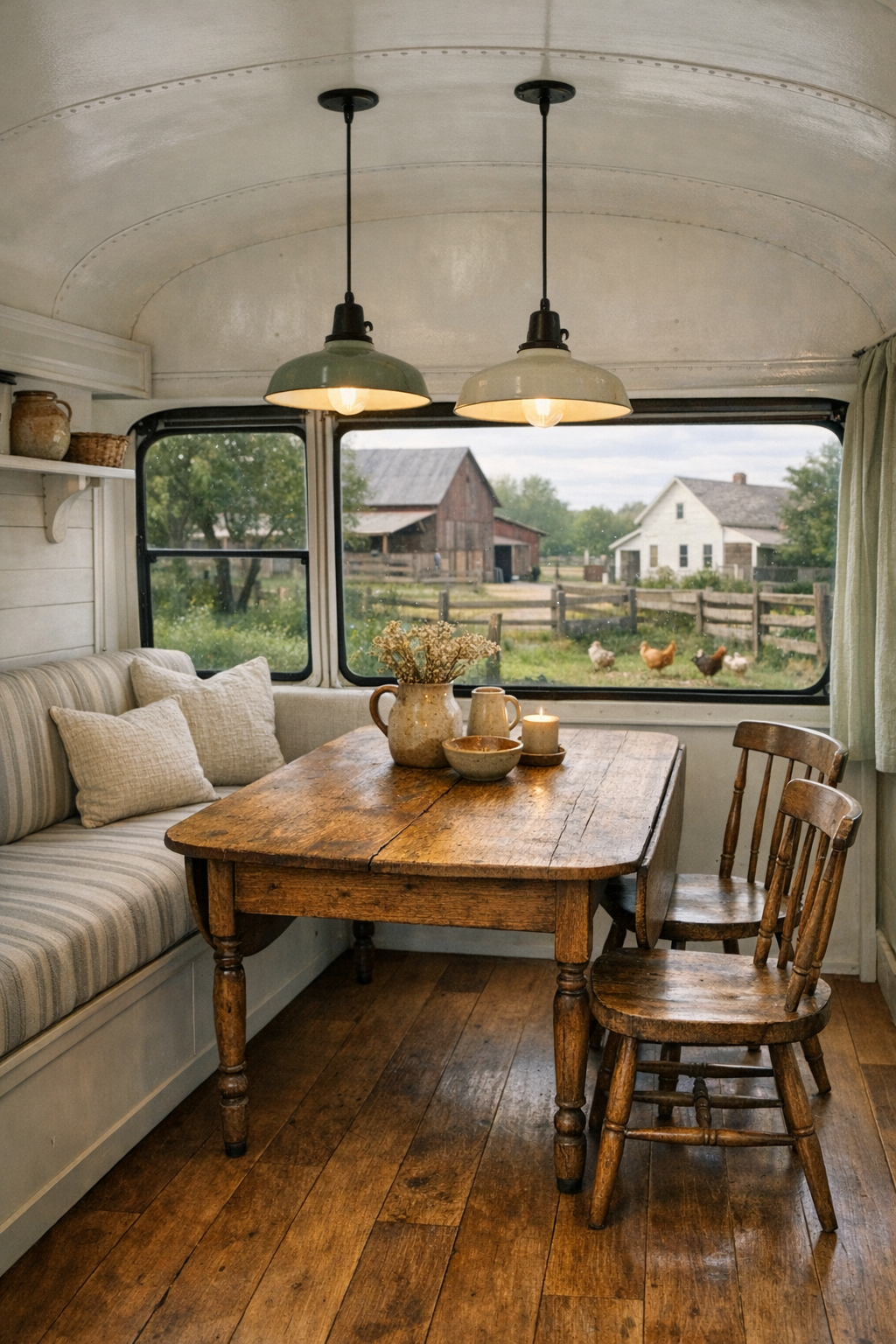
The dining area is tucked at the natural midpoint of the bus, where circulation widens just enough to create a true gathering spot. A custom drop-leaf table in aged oak sits beside a run of windows, paired with a built-in banquette on one side and a pair of petite spindle-back chairs on the other. The banquette cushion is covered in a muted ticking stripe, which gives the room a sweet farmhouse note without turning fussy. Above, a simple shaded pendant in enamel directs light downward, making the table feel like its own little world come supper time.
I like that this space does not try to imitate a formal dining room. Instead, it feels like the heart of daily living—good for coffee at dawn, seed catalogs in late winter, and a bowl of stew shared after work outdoors. A narrow ledge along the wall holds stoneware crocks, a vase of wildflowers, and perhaps a cooling pie if we are dreaming generously. The finishes stay disciplined: wood, linen, enamel, and a touch of black metal. That restraint is what makes it so appealing; every inch earns its keep, and still the room feels gracious.
Kitchen
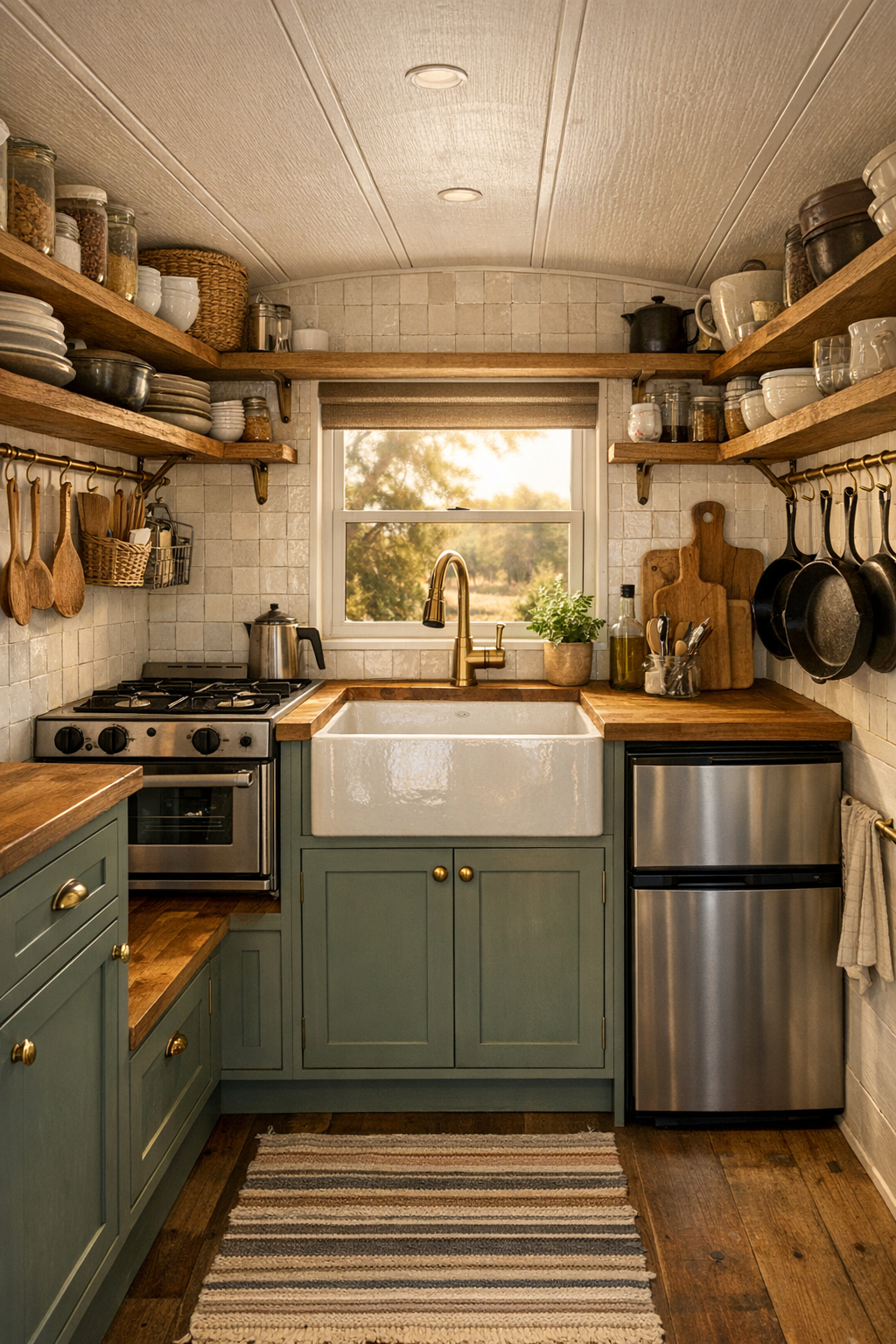
The kitchen is, to my eye, the triumph of the whole design. It runs efficiently along both sides of the bus in a galley arrangement, with painted lower cabinets in a dusky sage and open upper shelving in natural wood. The countertops appear to be butcher block sealed to a soft satin finish, practical and handsome, while the backsplash is done in small off-white zellige tile that catches the light with a little uneven shimmer. A deep apron-front sink sits beneath a window, and nearby there is just enough counter space for chopping vegetables, rolling biscuit dough, or setting jars in a neat row.
Because this is an off-grid home, the appliances are chosen with care: compact, integrated, and unfussy, with perhaps a propane range and an undercounter refrigerator hidden behind cabinet fronts. Brass hardware adds warmth without too much shine, and hanging rails keep wooden spoons, mugs, and iron pans close at hand. I can tell you from a lifetime spent cooking that a small kitchen can be a very fine one when the layout respects the cook, and this one surely does. It feels efficient in the best old-country way—everything nearby, everything useful, and not a bit of it cold.
Bedroom
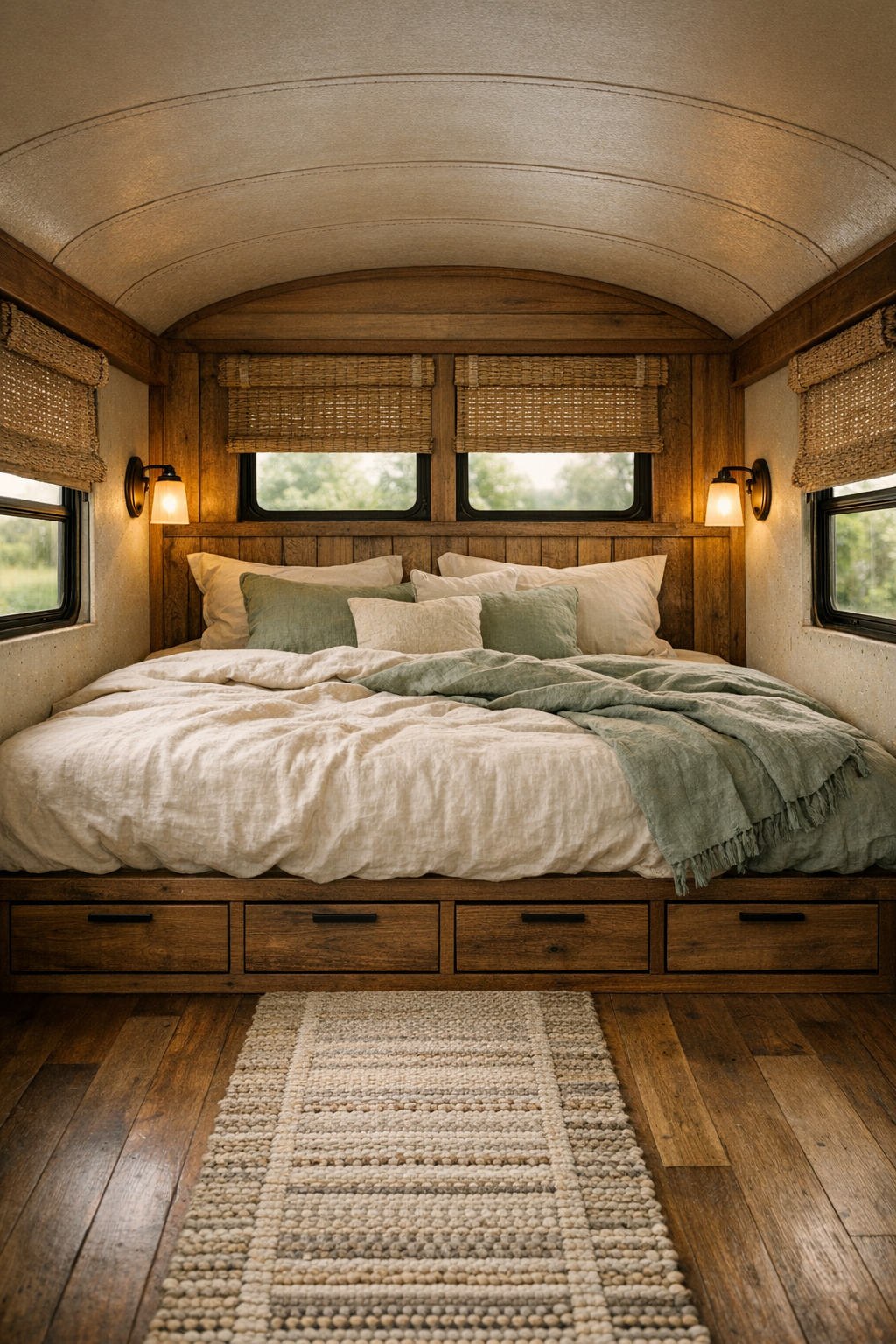
The bedroom is placed toward the rear, where it feels most private, and it is handled with a softness that makes the entire bus exhale. A raised bed platform stretches wall to wall, maximizing the width and allowing for generous drawer storage beneath. The bedding is kept simple and layered—washed flax linen in cream and foggy green, a quilt folded at the foot, and a pair of reading pillows propped against a paneled headboard. On either side, slim sconces save space and cast a low amber light that is kinder than any overhead fixture could ever be.
What keeps the room from feeling tight is the discipline of the palette and the abundance of texture. Pale walls, natural wood trim, woven shades, and a small wool runner create depth without clutter. There may be a narrow wardrobe built into one corner and a ledge for books, spectacles, and a jar of hand cream—just the bits one reaches for at day’s end. I find this room especially convincing because it understands that luxury in a small home is not excess. It is quiet, order, good light, and bed linens that feel lovely against the skin.
Bathroom
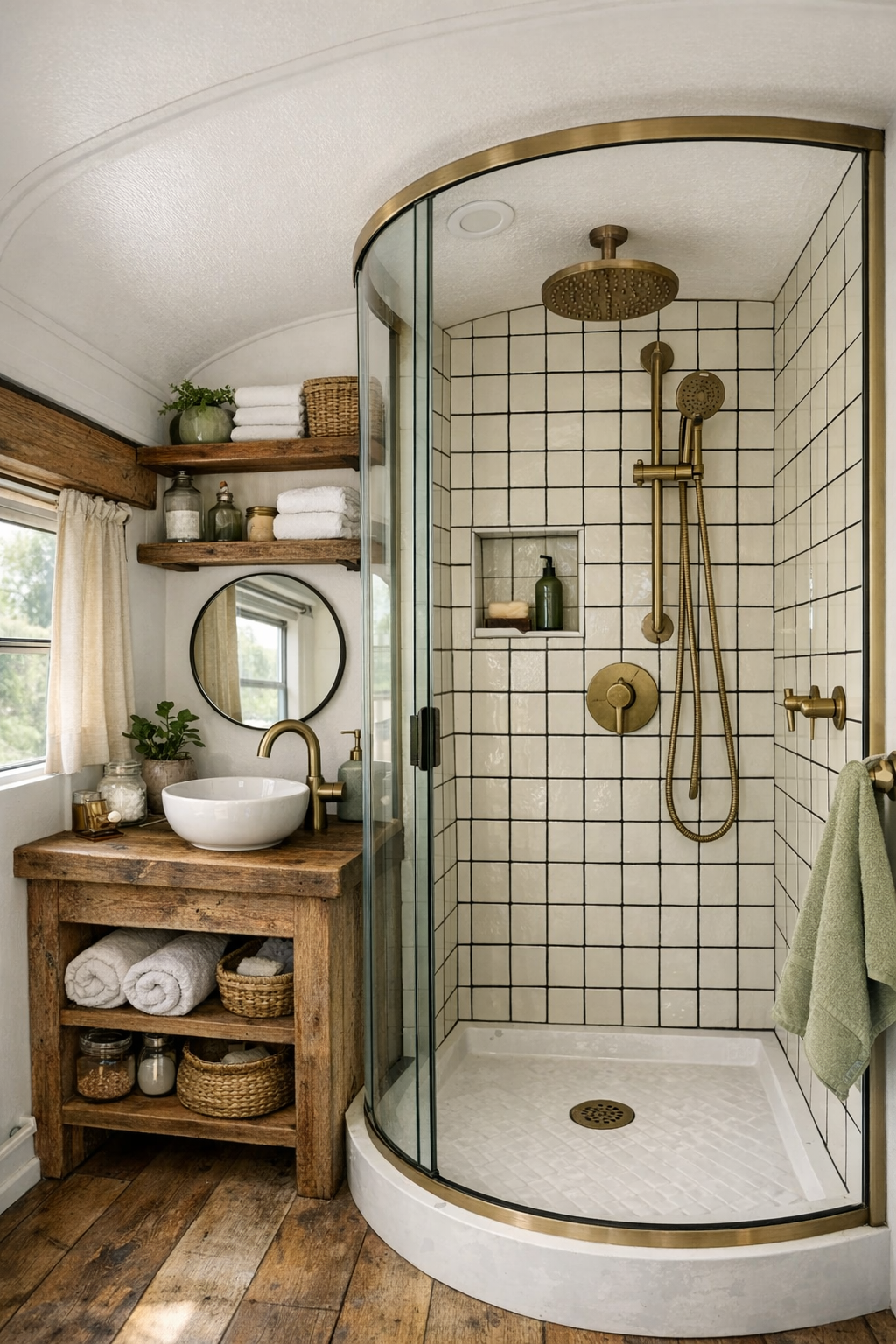
The bathroom is compact, naturally, but it has been designed with a great deal of care. A small shower lined in creamy tile with darker grout gives structure and texture, while a curved glass partition helps preserve the sense of openness. The vanity is narrow but sturdy, likely built from reclaimed wood with a stone or composite top and a petite round basin. A brushed brass faucet and matching mirror frame lend just enough polish, and the room’s palette stays quiet—soft whites, weathered wood, and shadowy green accents that tie it back to the rest of the bus.
I appreciate most the way this bathroom avoids the pinched, overcomplicated feeling tiny baths often have. There is open shelving for folded towels, a hook for a robe, and perhaps a little window that brings in fresh air and a view of the sky. Good lighting at the mirror matters, and here I imagine a pair of modest sconces creating a flattering, practical glow. It feels clean, calm, and well-made, the kind of room where even washing up after muddy outdoor work would seem a pleasant ritual rather than a chore.
Other Areas
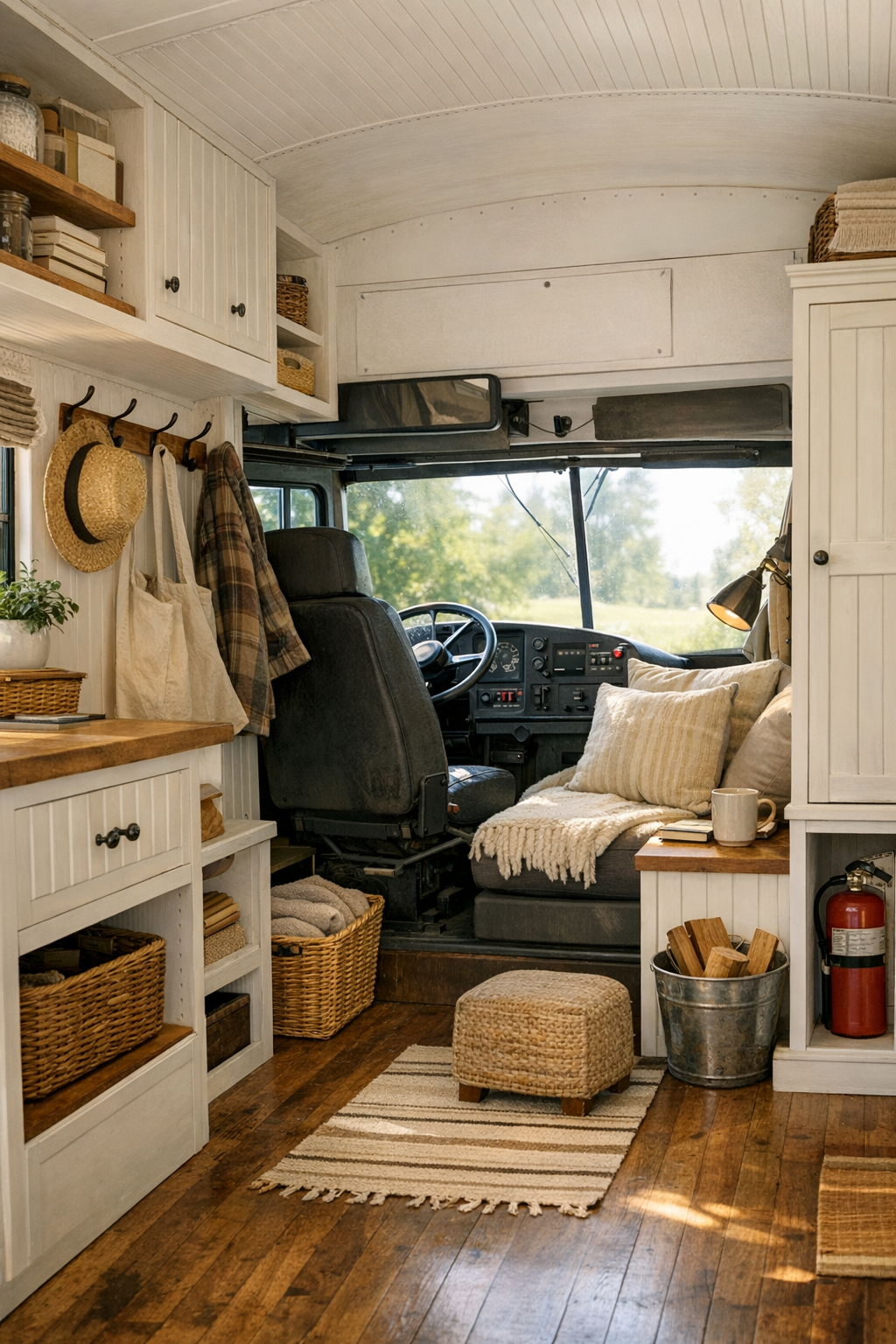
In a home like this, the in-between spaces matter tremendously, and this design uses them beautifully. The driver's area has been preserved with affection, transformed into a small sitting perch or reading corner when parked, with the original wheel and dash lending character rather than clutter. Overhead compartments are refined into closed storage with beadboard fronts, and narrow transition zones between rooms become opportunities for hooks, pantry pull-outs, and little shelves for preserving jars or boots. There is a sense that every awkward edge has been considered and turned into something useful.
Outside the main interior footprint, I can easily picture an adjoining deck and a mudroom-like threshold where homestead life spills in and out—baskets of eggs, muddy clogs, armfuls of herbs laid out to dry. These supporting areas are what make the bus feel not like a novelty, but like a functioning country home. The design respects the daily business of rural living, where one is always carrying, storing, washing, mending, or setting something by for later. That practical spirit, wrapped in such handsome materials, gives the whole place its soul.
Why You'd Live Here
You would live here if you believe a home should support a life, not perform one. This bus offers beauty, yes, but more importantly it offers intention. It is compact enough to keep one honest, comfortable enough to feel restorative, and grounded enough to belong to the daily work of a homestead. For someone who values self-sufficiency, craftsmanship, and the quiet pleasure of well-made things, it makes a mighty strong case for living with less and enjoying it more.
I think that is what stays with me most: the feeling that nothing here is wasted—not space, not materials, not light, not even the view from a single window. It has the warmth of a country kitchen, the ingenuity of a good farmhouse pantry, and the calm of a place that knows the seasons. In a world full of homes trying terribly hard to impress, this one wins me over by being useful, beautiful, and deeply human.