
This tiny home reads as calm, capable, and deeply considered from the moment I imagine approaching it. The architecture leans modern without feeling cold: clean lines, generous glazing, and a simple, compact form softened by warm wood tones and a landscape that feels easy to move through. What makes it special is not just its size, but the intelligence of its planning—every threshold, turning radius, storage decision, and lighting choice supports comfort with a kind of quiet grace.
Because this is a concept design, I can appreciate how clearly the ideas come through: universal design here is not treated like an afterthought or a checklist item, but as the aesthetic heart of the home. I’m especially drawn to the way accessibility and beauty are working together—wide passages, layered textures, integrated seating, and highly functional surfaces all create an interior that feels generous rather than constrained. It has the sort of atmosphere I always admire in a good kitchen: efficient, welcoming, and beautifully resolved.
Exterior
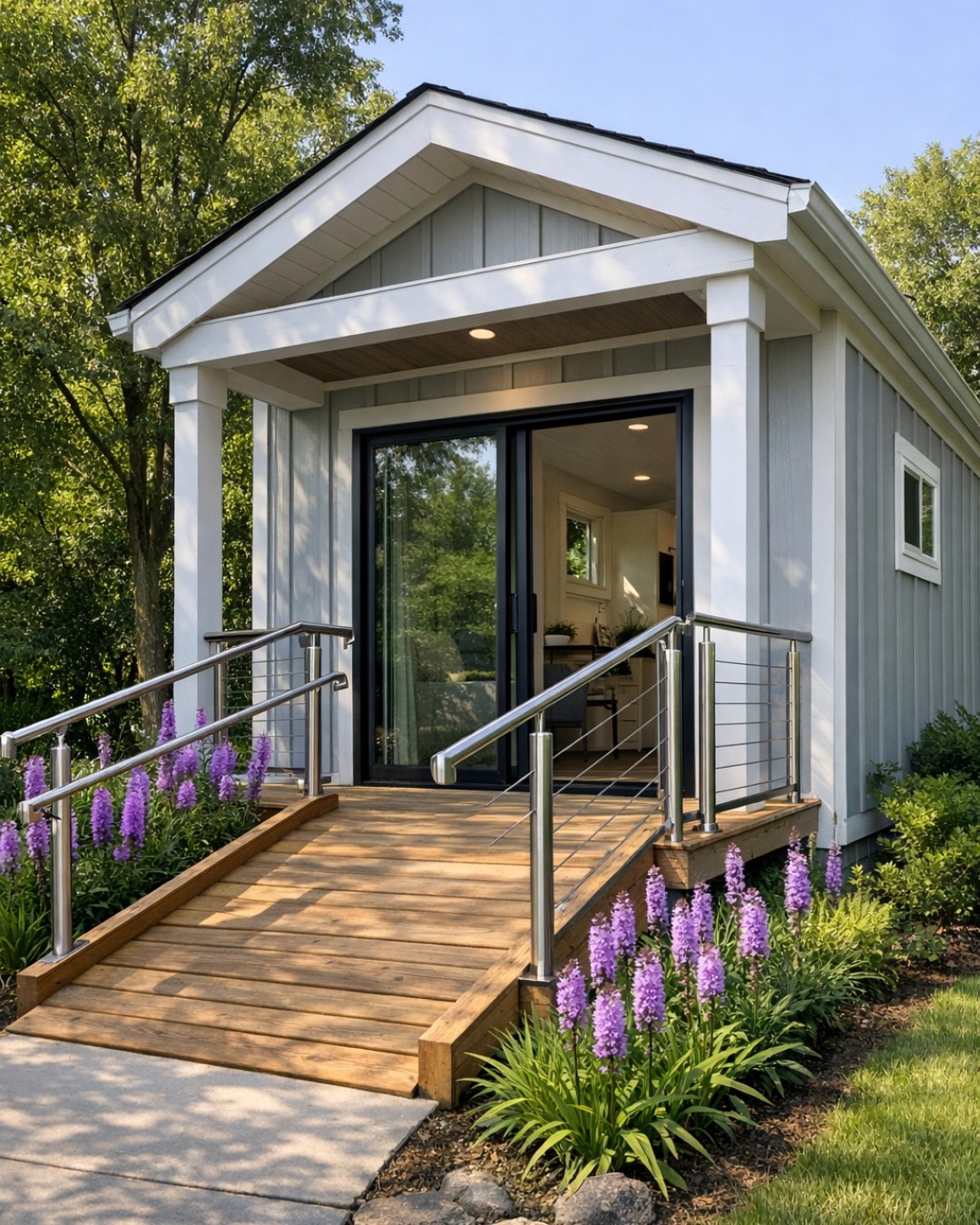
From the outside, the home presents as modest in footprint but remarkably confident in character. The siding combines vertical thermally modified wood with smooth fiber-cement panels in a soft mushroom gray, a pairing that gives the facade both warmth and durability. A low-slope roof with a deep overhang helps shelter the entry path, while blackened metal trim crisps up the edges without making the composition feel severe. The front approach is gently graded rather than interrupted by steps, and the walkway appears broad enough for side-by-side movement, which immediately sets a welcoming tone.
I like that the entry doesn’t announce accessibility with institutional cues; instead, it folds those needs into the architecture itself. The covered porch is flush and roomy, with a built-in bench, oversized house numbers, and sconces that cast an even, glare-free light. Large windows are placed low enough to create connection from a seated position, and the threshold detailing feels nearly seamless, which is one of those subtle moves that changes daily life in a meaningful way. For such a compact home, the exterior has real composure.
Living Room
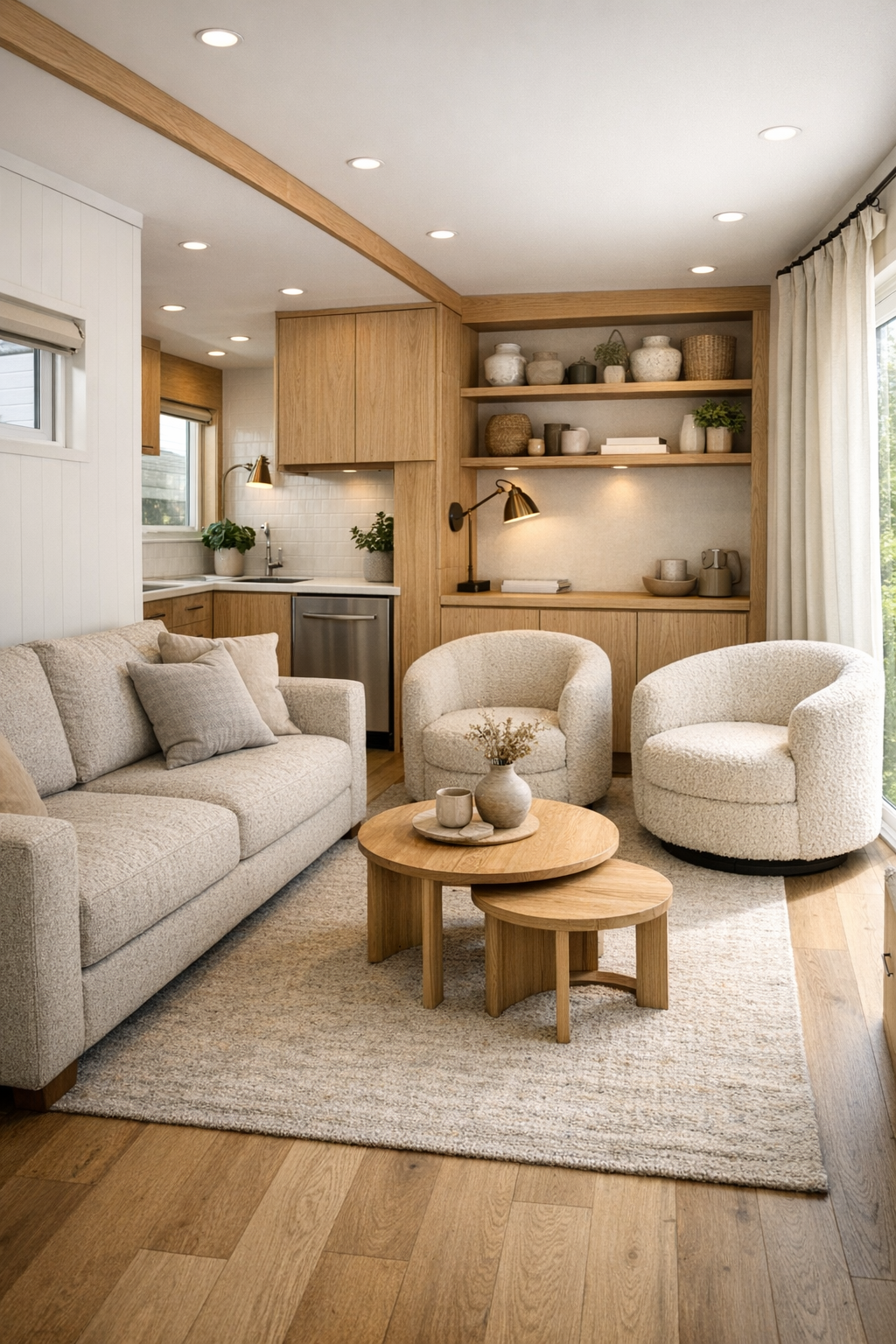
The living room is arranged to feel open, navigable, and genuinely restful. A wide circulation path runs cleanly through the space, and the furniture is scaled with care: a slightly higher sofa with firm cushions for easier sitting and standing, a pair of rounded swivel chairs, and a nesting coffee table with softened corners in pale oak. The palette stays light but not flat—oatmeal upholstery, clay-toned textiles, matte black accents, and white oak millwork create warmth without visual clutter. I can imagine how pleasant it would be to spend a long afternoon here, especially with the daylight pouring in through broad windows dressed in simple linen panels.
What keeps the room from feeling too pared back is its layering of texture. There’s a low-pile wool rug that allows easy movement, ribbed ceramic lamps on wide side tables, and integrated shelving that keeps books, objects, and practical items within reach. Lighting is thoughtfully distributed: recessed ambient lighting for overall brightness, a wall washer to soften the perimeter, and targeted reading lights mounted at accessible heights. The whole room feels composed in the same way a well-run kitchen does—nothing wasted, everything useful, and still undeniably inviting.
Dining Room
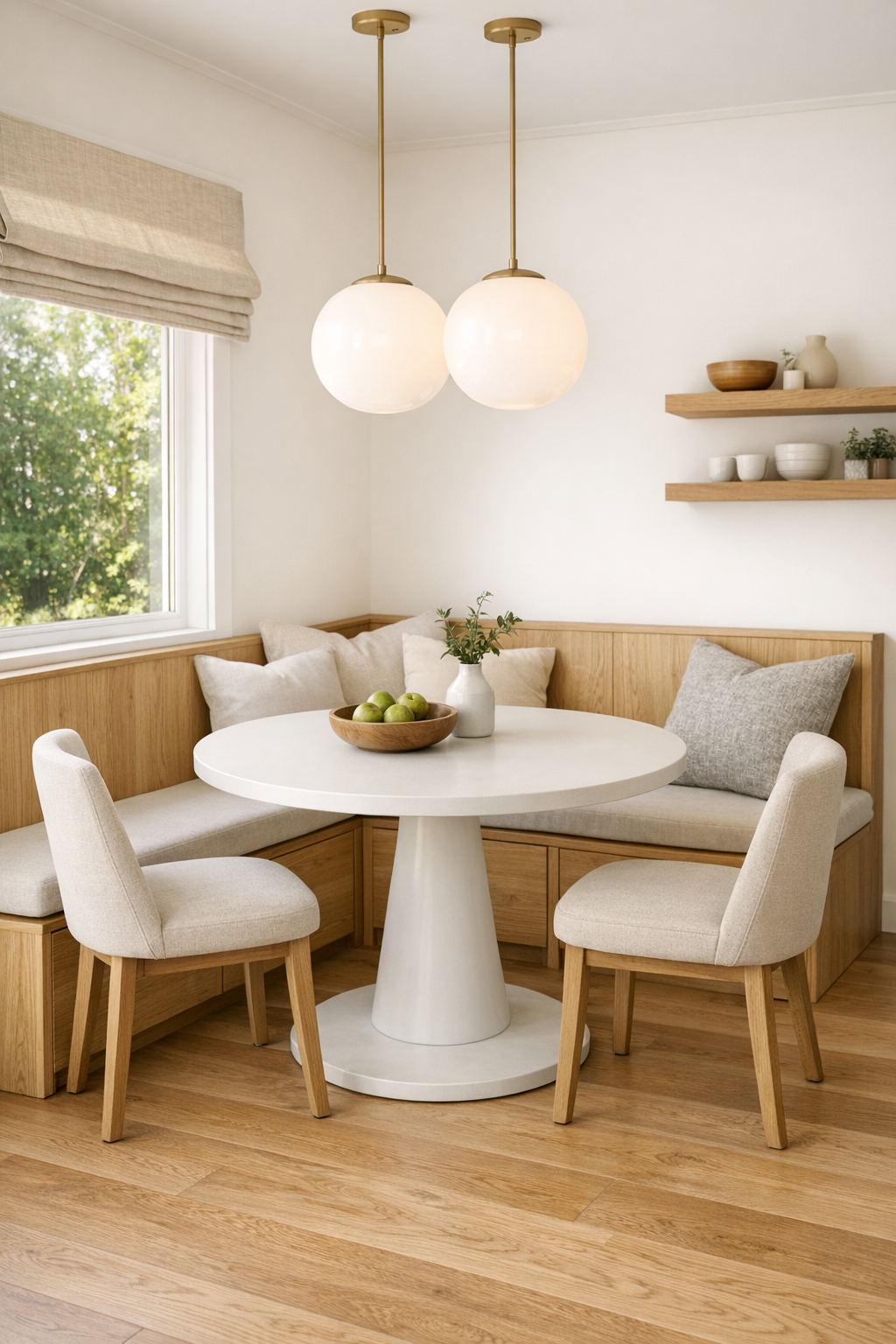
The dining area is compact, but it never feels squeezed. Instead of a heavy traditional table set, this space uses a round pedestal table with a slender base, which makes maneuvering around it much easier and keeps sightlines open. The chairs are upholstered for comfort, with supportive backs and enough spacing to allow flexible use. I appreciate the way the dining zone is visually anchored by a pendant in opal glass and aged brass; it adds intimacy without lowering the ceiling line too aggressively.
Material continuity does a lot of work here. The flooring remains flush and uninterrupted, the oak tones carry through from the living room, and a built-in banquette along one wall introduces concealed storage while offering another seating option. That banquette is particularly smart: it creates efficiency, softens the room acoustically, and makes the dining area feel more settled. A washable textured wall finish in a warm ivory and a narrow ledge for ceramics or herbs give the space personality without crowding it.
Kitchen
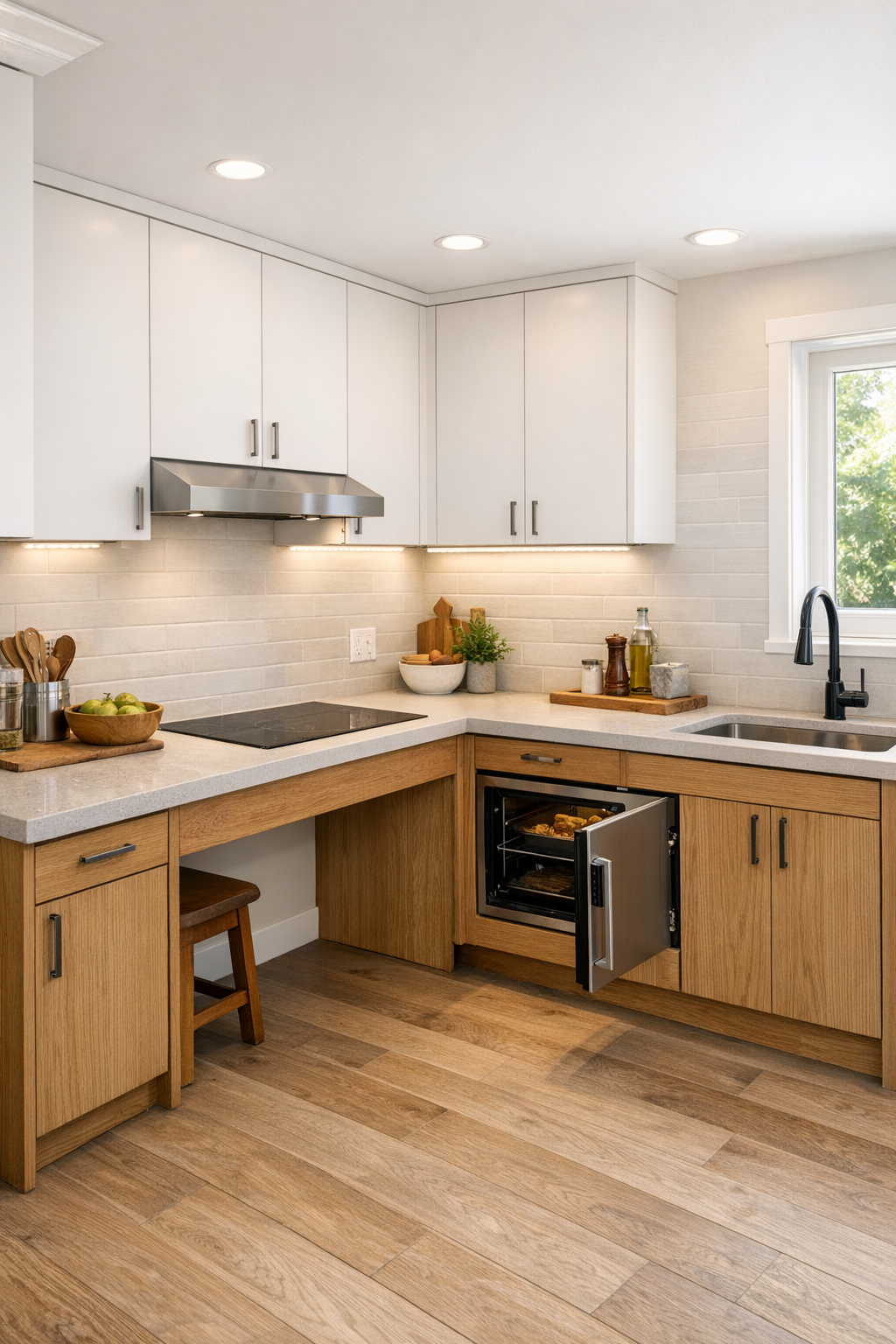
This is the room I instinctively study first, and it’s exceptionally well handled. The kitchen balances serious function with a polished, residential feel: lowered and varied counter heights for different tasks, generous knee space at a prep zone, easy-grip hardware, and full-extension drawers instead of hard-to-reach lower cabinets. The cabinetry is rift-cut oak below with warm white uppers kept to a minimum, which helps the room feel airy. A honed quartz countertop in a soft sand tone brings durability without glare, and the backsplash is done in elongated matte ceramic tile that reflects light gently rather than sharply.
The appliance choices are just as thoughtful as the finishes. There’s an induction cooktop with open landing space on both sides, a side-opening wall oven, a drawer microwave, and a refrigerator configuration that looks compact but highly efficient. I love the details that support real cooking: a pull-out pantry near the prep area, layered task lighting under cabinets, a faucet with a simple lever handle, and open shelving for frequently used bowls and ingredients. It has the kind of practical elegance that reminds me of a well-stocked pantry—everything where it should be, and everything easy to use.
Bedroom
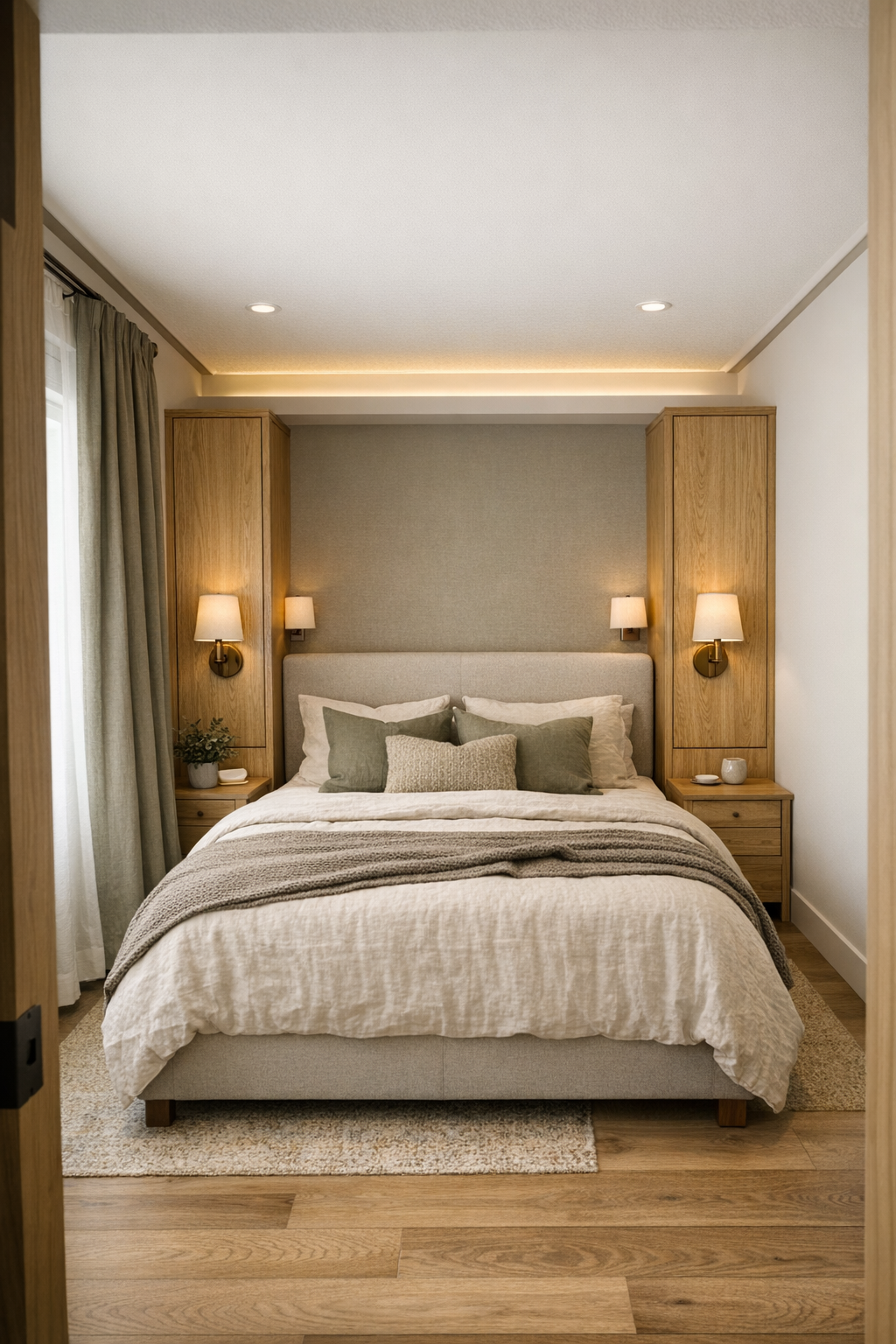
The bedroom avoids the common tiny-home trap of feeling like an afterthought. Instead of forcing a loft arrangement, it offers a main-level sleeping space with clear access on both sides of the bed, which immediately makes the room feel more dignified and more useful. The bed itself is simple and grounded, upholstered in a textured flax fabric, with integrated night ledges rather than bulky tables. A muted palette of warm white, mushroom, and dusty olive keeps the room soothing, while blackout linen drapery adds both softness and practicality.
I’m especially taken with the storage strategy here. Full-height wardrobes with slim pulls flank one wall, and a shallow overhead cabinet is used sparingly so the room never feels compressed. Wall-mounted sconces free up surface space and are positioned for easy reach, while cove lighting adds a gentle evening glow. The finishes remain tactile—oak, wool, brushed metal, soft plaster—so the bedroom feels serene rather than clinical. In a home this small, that sense of retreat matters enormously, and this room understands that.
Bathroom
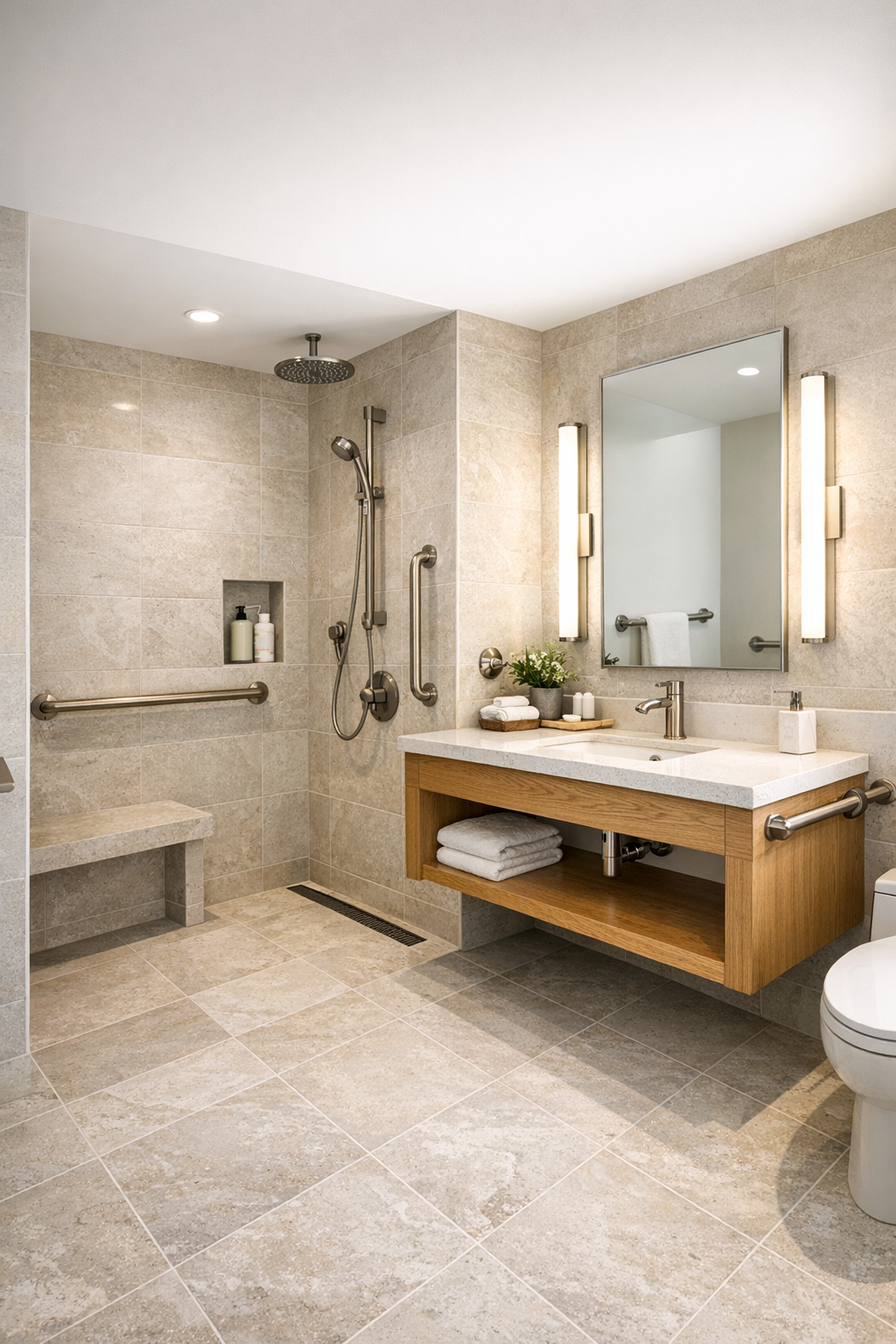
The bathroom may be one of the most impressive spaces in the house because it handles accessibility with such visual finesse. A curbless shower runs nearly flush with the rest of the floor, using a subtle linear drain and large-format porcelain tile in a pale stone finish. The vanity is wall-mounted with open knee space beneath one side, but it still looks custom and substantial thanks to oak detailing and a thick integrated counter. Fixtures in brushed nickel keep reflections soft, and the mirror is generously scaled with vertical lighting on either side to reduce shadows.
What I admire most is the room’s restraint. Grab bars are incorporated to read like elegant towel rails, the shower bench feels built-in rather than added on, and niches are positioned where products can actually be reached. The floor tile has enough texture for grip without looking overtly utilitarian, and the overall palette—stone, oak, white, and muted metal—makes the room feel spa-like. In a small home, bathrooms often have to work far harder than they look, and this one does that beautifully.
Other Areas
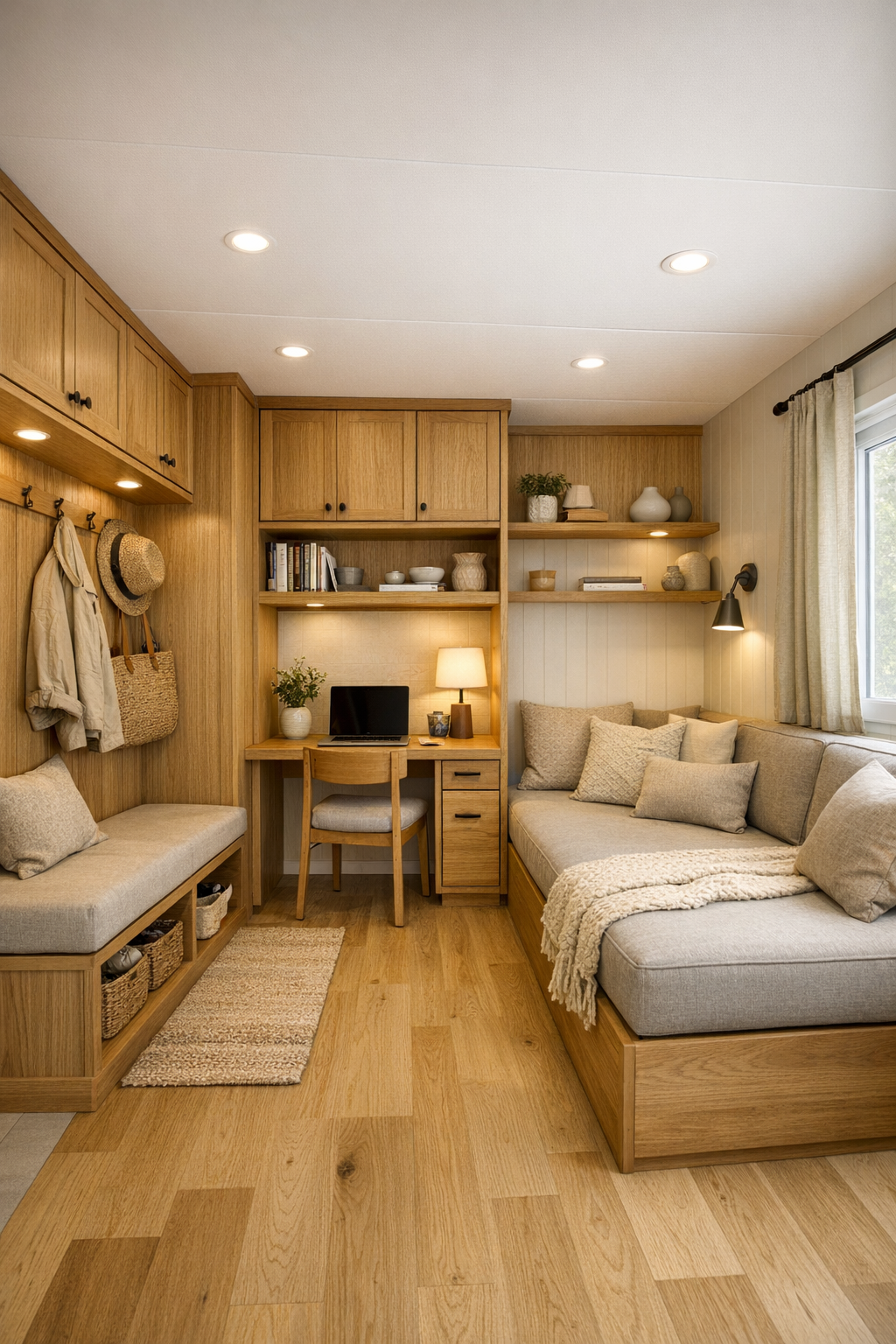
The supporting spaces are where the home’s intelligence really becomes undeniable. A compact entry zone includes a flush threshold, a tall closet for coats and utility items, a bench for changing shoes, and durable wall protection finished so elegantly you barely notice its practicality. There’s likely a small laundry niche concealed behind pocket or bifold doors, fitted with stacked machines, pull-out sorting bins, and shelving placed at reachable heights. Even the corridor space is doing double duty, widened enough to feel comfortable while also accommodating shallow storage and art ledges.
I can also imagine a flexible multipurpose nook—part office, part reading corner, part guest accommodation—handled with the same discipline as the rest of the home. A built-in desk with open knee clearance, adjustable shelving, and a daybed or convertible bench would make that area useful without sacrificing flow. The hardware, lighting controls, outlet placement, and door clearances throughout would be what truly elevate the experience. These are not dramatic gestures, but they are the daily-life details that make a home feel kind.
Why You'd Live Here
I would live here because it proves that accessibility can be deeply stylish, and that small-scale living does not have to mean compromise in comfort or beauty. The home is efficient in the best sense of the word: not stripped down, but finely edited. Every material seems chosen to work hard and age well, every room is shaped around real movement, and every surface contributes to a sense of ease. That combination is rare.
More than anything, this home feels respectful of daily life. It anticipates cooking, resting, bathing, hosting, storing, reaching, turning, and simply being at home with a level of care that I find genuinely moving. For anyone who values thoughtful design, graceful function, and rooms that support independence without sacrificing warmth, this tiny house offers an incredibly compelling vision of how we might live better.