
I’ve always believed the best homes know how to put a body at ease before you’ve even set down your bag, and this accessible ranch-style houseboat does that with uncommon grace. Set against quiet water and open sky, it carries the steady, familiar spirit of a Midwestern lakeside retreat, but pares it into something cleaner, softer, and more practical for everyday living. The lines are low and welcoming, the palette is calm and natural, and every space feels designed to move with you instead of asking you to work around it.
Though this is a concept design, it feels wonderfully lived-in in all the right ways, blending the easy charm of a ranch home with the gentle rhythm of life on the water. What makes it special to me is how it avoids fuss without ever feeling plain: wide passages, warm wood tones, durable finishes, and light-filled rooms come together in a way that feels both sensible and deeply comforting, like a well-kept family place that just happens to float.
Exterior
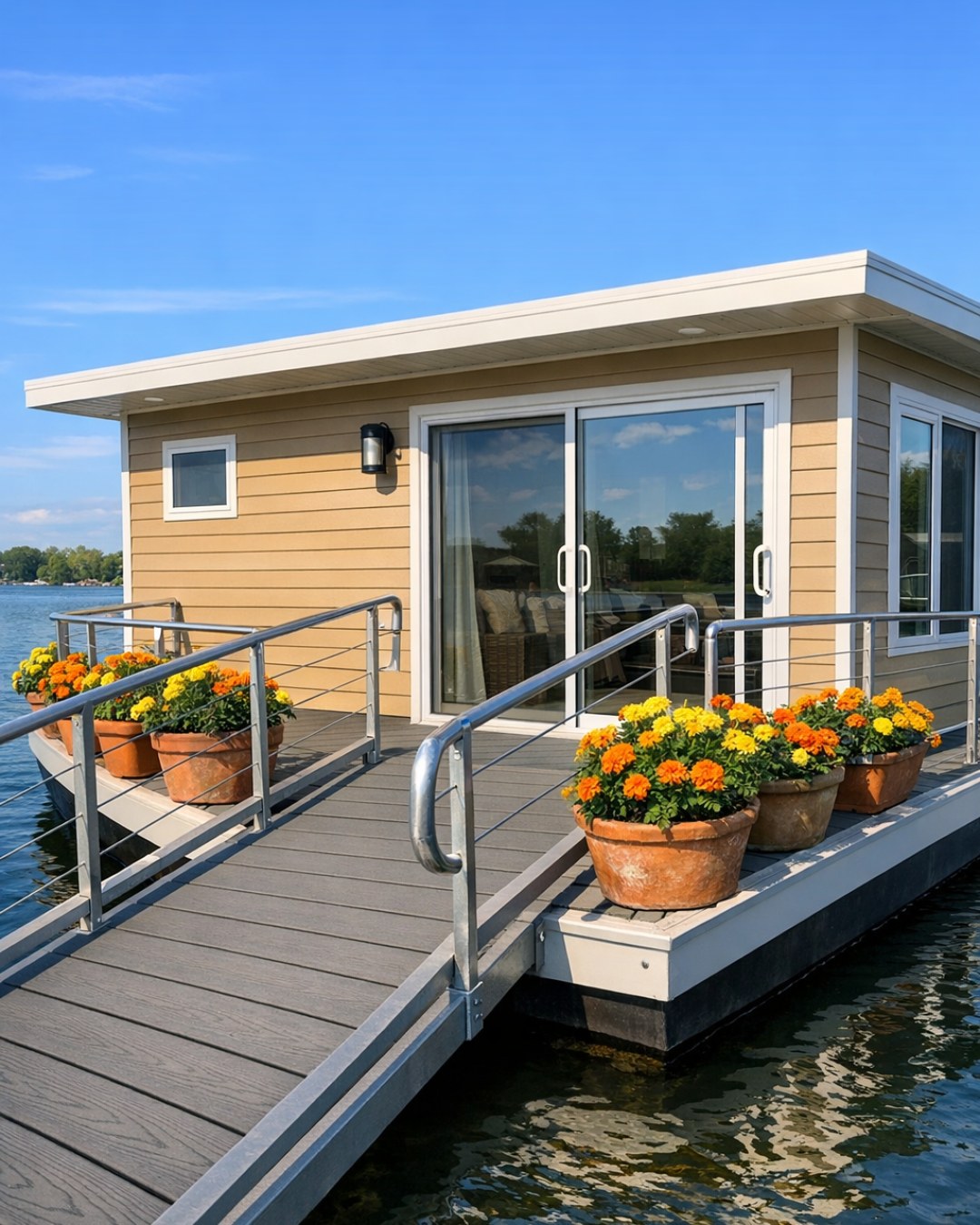
From the outside, the houseboat reads less like a novelty and more like a thoughtfully grounded home, which is part of its charm. Its ranch-inspired profile is long and low, with a broad roofline, generous overhangs, and simple horizontal siding in a weathered oatmeal tone that sits beautifully against the water. Matte black hardware and rail details add a little definition without turning sharp, while natural cedar trim brings in that honest, workmanlike warmth I’ve always loved in rural homes and boat lodges alike. The entry deck is wide and level, with integrated ramps and railings that feel architectural rather than clinical, and the whole composition has a calm sturdiness to it.
What keeps the exterior from feeling heavy is the glass. Large windows stretch along the main living side, drawing in daylight and reflecting the changing color of the lake, and a set of sliding doors opens onto a covered deck furnished like an outdoor room. The decking itself is a soft driftwood gray composite, practical for wet feet and changing weather, and built-in bench seating keeps the silhouette uncluttered. It’s accessible in the best way—thoughtful, seamless, and handsome—so the first impression is not of adaptation, but of ease.
Living Room
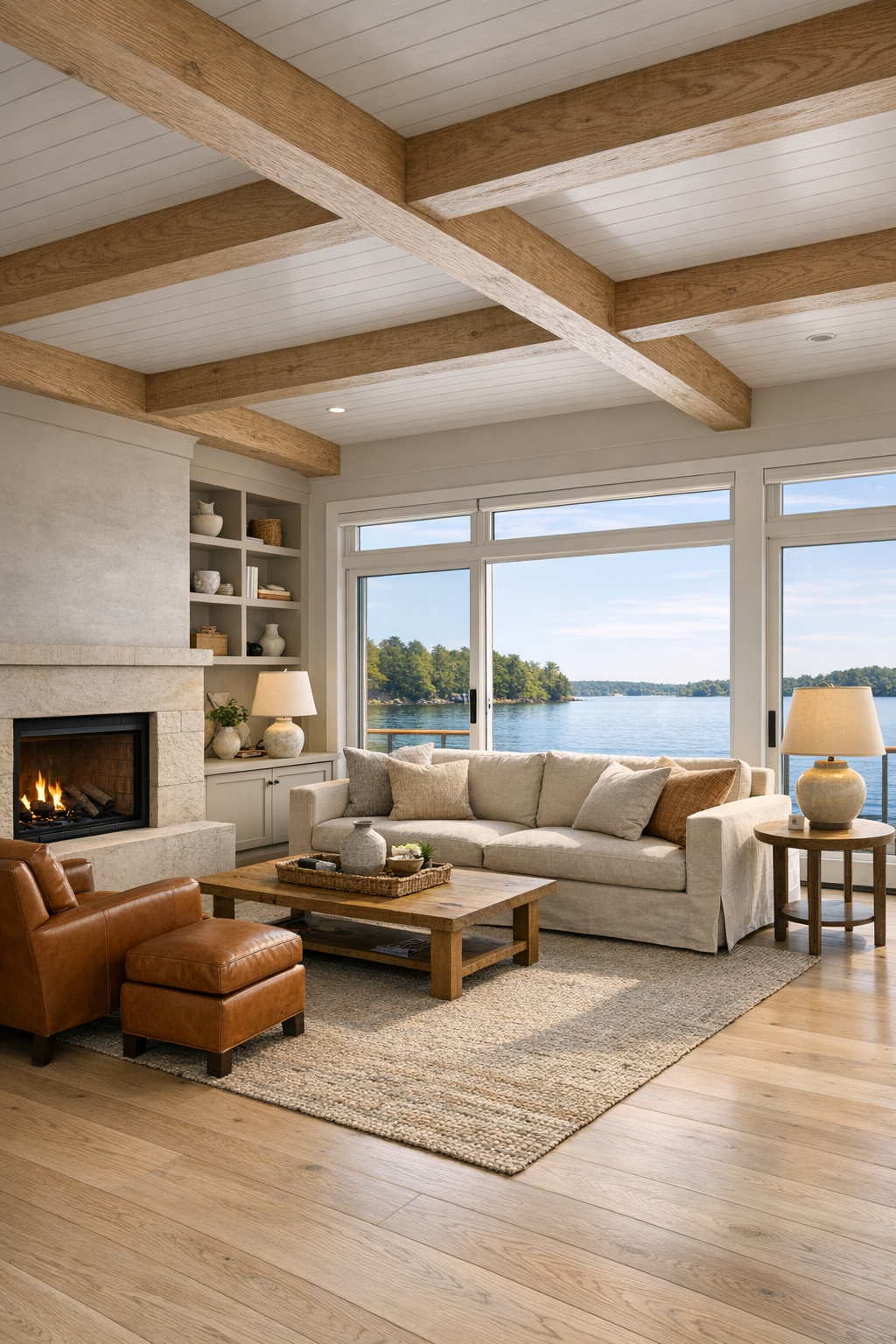
The living room is where the houseboat’s ranch sensibility comes through most tenderly. It’s open, wide, and easy to navigate, with enough turning space to feel generous rather than merely compliant. Pale white oak floors run wall to wall, softened by a flatwoven wool rug in muted sand, blue-gray, and faded rust. The seating is low-profile but supportive: a deep slipcovered sofa in warm flax, two broad-armed lounge chairs in caramel leather, and a pair of movable ottomans that can serve as footrests, extra seating, or simple places to set a tray of coffee. Nothing feels crowded, and every piece seems chosen for comfort that lasts longer than a quick impression.
I especially like the way the materials carry a quiet honesty. There’s a built-in media wall in painted putty-colored millwork, with open shelving for books, crocks, baskets, and a few old brass pieces that nod to lake life without becoming theme décor. A linear fireplace is set low for seated sightlines, framed in honed limestone that lends a little coolness against all the wood and fabric. Overhead, shallow ceiling beams in a natural finish help define the room without lowering it, and the lighting is layered beautifully: recessed ambient light, shaded sconces, and table lamps that cast the sort of evening glow that makes everybody linger after supper.
Dining Room
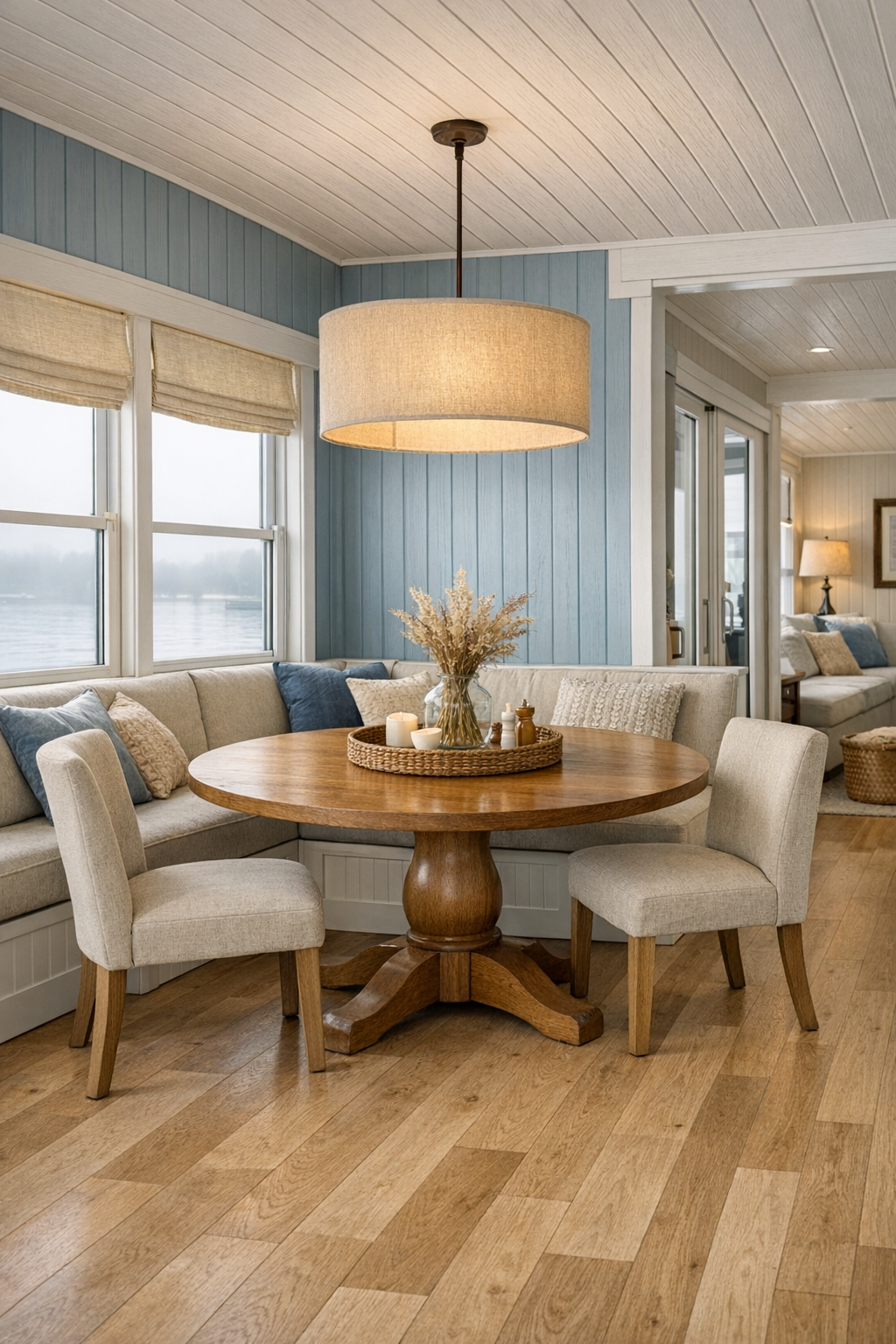
The dining area sits comfortably between the living room and kitchen, open enough to share in the conversation but distinct enough to feel like its own place. Instead of a formal dining room, this one has the practical grace of a family gathering space, with a round pedestal table in medium oak that makes circulation easier and keeps knees and chairs from tangling. The chairs are generously scaled, upholstered in a performance fabric the color of oatmeal, with supportive backs and enough softness to invite a long pie-and-coffee visit. A built-in banquette along one wall adds extra seating and tucks neatly beneath a line of windows, making the most of the view.
What gives this room its personality is the layering. A pendant above the table hangs low enough to feel intimate, with a linen drum shade that glows like lamplight at dusk. Behind the banquette, vertical tongue-and-groove paneling painted a soft foggy blue brings a little cottage memory into the space, the kind that reminds me of old lake cabins made fresh again. The room doesn’t fuss over ceremony; it honors daily life instead, with enough room for a walker, a serving cart, or grandkids pulling in close, and that sort of flexibility always reads as real luxury to me.
Kitchen
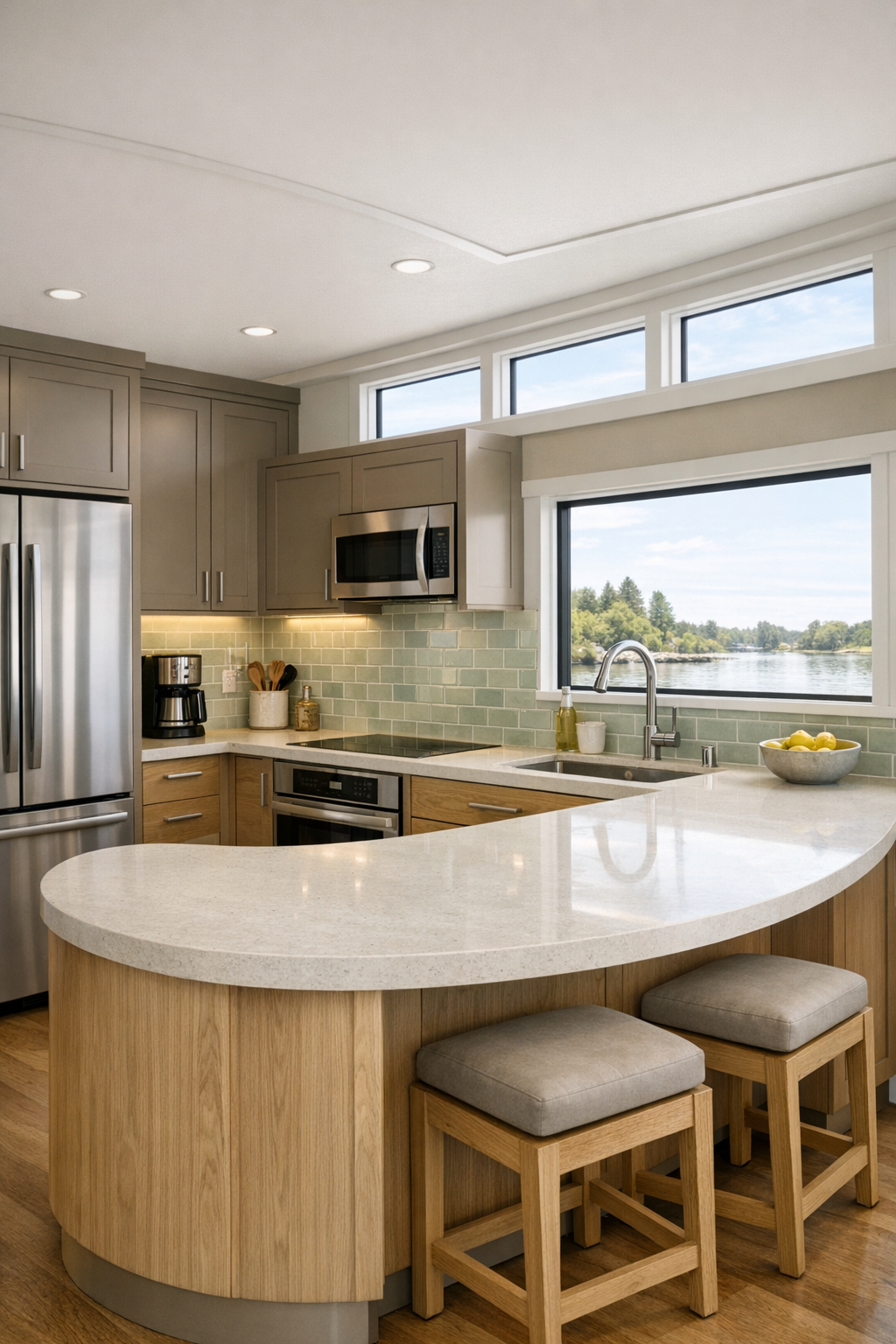
Now this kitchen, I’ll tell you plain, is where my heart settles in. It’s designed for real cooking, not just admiring, and that matters to me. The layout is broad and efficient, with lowered stretches of countertop worked naturally into the design, wide pathways, and easy-to-reach storage that doesn’t require climbing, stretching, or stooping more than necessary. Cabinetry in a warm mushroom paint is paired with white oak lowers and deep drawers, giving the whole room a grounded, handcrafted look. The countertops are a soft honed quartz in creamy stone tones, and the backsplash is a simple glazed tile in a milky celadon that catches light like old crockery.
The island is the true anchor, with rounded corners, open knee space on one side, and enough surface for rolling biscuit dough or setting out a Sunday spread. Appliances are integrated thoughtfully, with side-opening wall ovens, an induction cooktop, and a refrigerator concealed behind cabinet panels so the room keeps its calm. Under-cabinet lighting brightens the work surfaces without glare, while a row of clerestory windows and a larger picture window keep the kitchen cheerful all day long. It feels clean and current, yes, but it also has the reassuring usefulness of kitchens where people still can tomatoes, fry walleye, and pass recipes hand to hand.
Bedroom
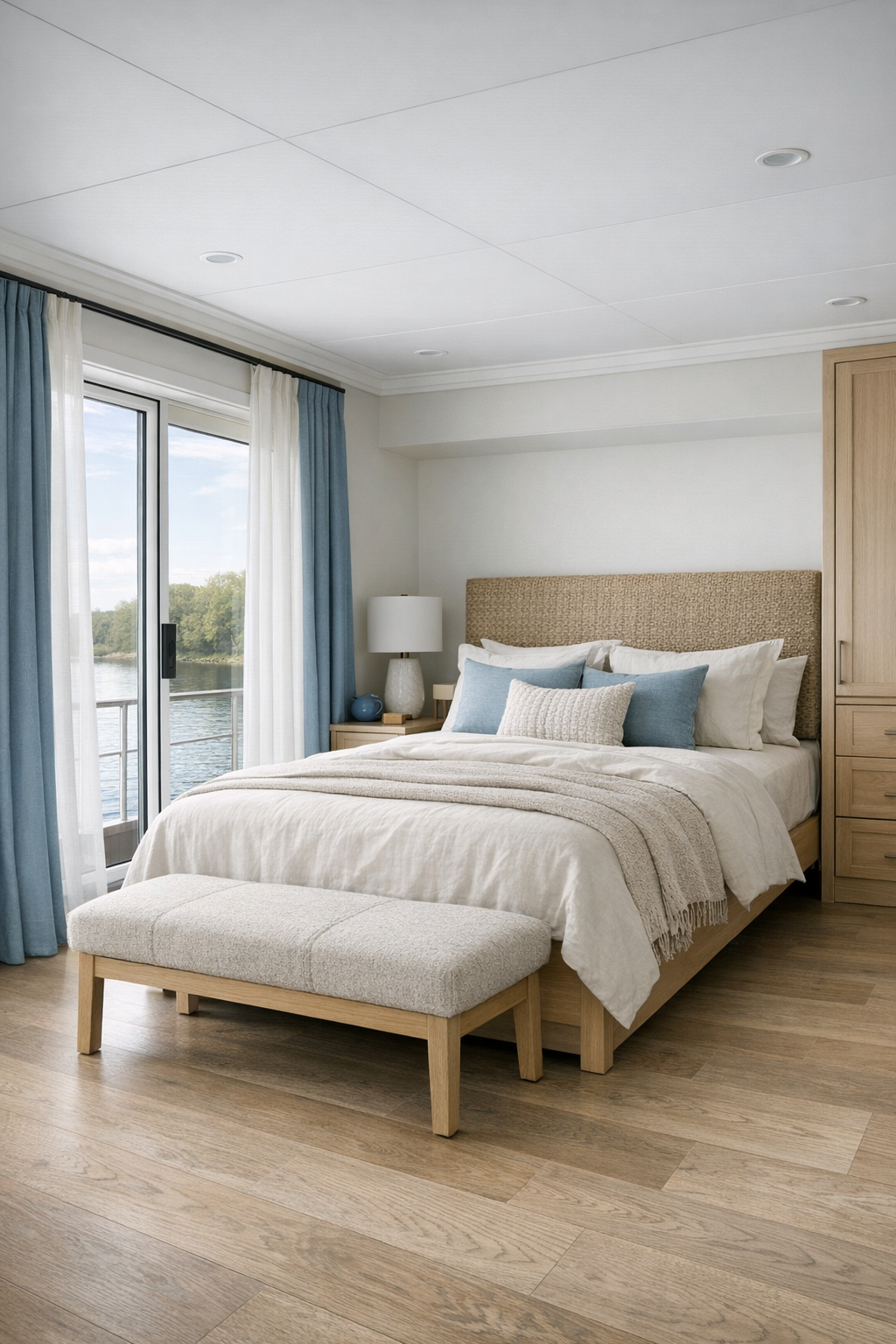
The bedroom is quiet in the way the best rooms are quiet—not empty, but restful. The palette shifts softer here, leaning into warm ivory, weathered flax, and muted river blue, with textured linens and matte finishes that keep the eye settled. The bed is framed by a gently upholstered headboard in a natural woven fabric, and on either side sit floating nightstands with rounded edges and simple pulls, leaving the floor open and easy to move through. There’s generous clearance around the bed, which gives the room a sense of freedom, and the proportions feel deliberately uncluttered.
I’m fond of the details that make it feel cared for rather than staged. A wall of built-in wardrobes in pale oak provides storage without crowding the room with furniture, and the hardware is substantial enough to grip comfortably. Blackout drapery is layered with light-filtering sheers so mornings can arrive gradually over the water, and a wool bench at the foot of the bed gives a place to sit and dress without adding visual noise. The lighting is soft and useful—reading sconces, dimmable overhead fixtures, and a discreet cove glow behind the headboard—and together they give the room the hush of a good afternoon nap after a long day outdoors.
Bathroom
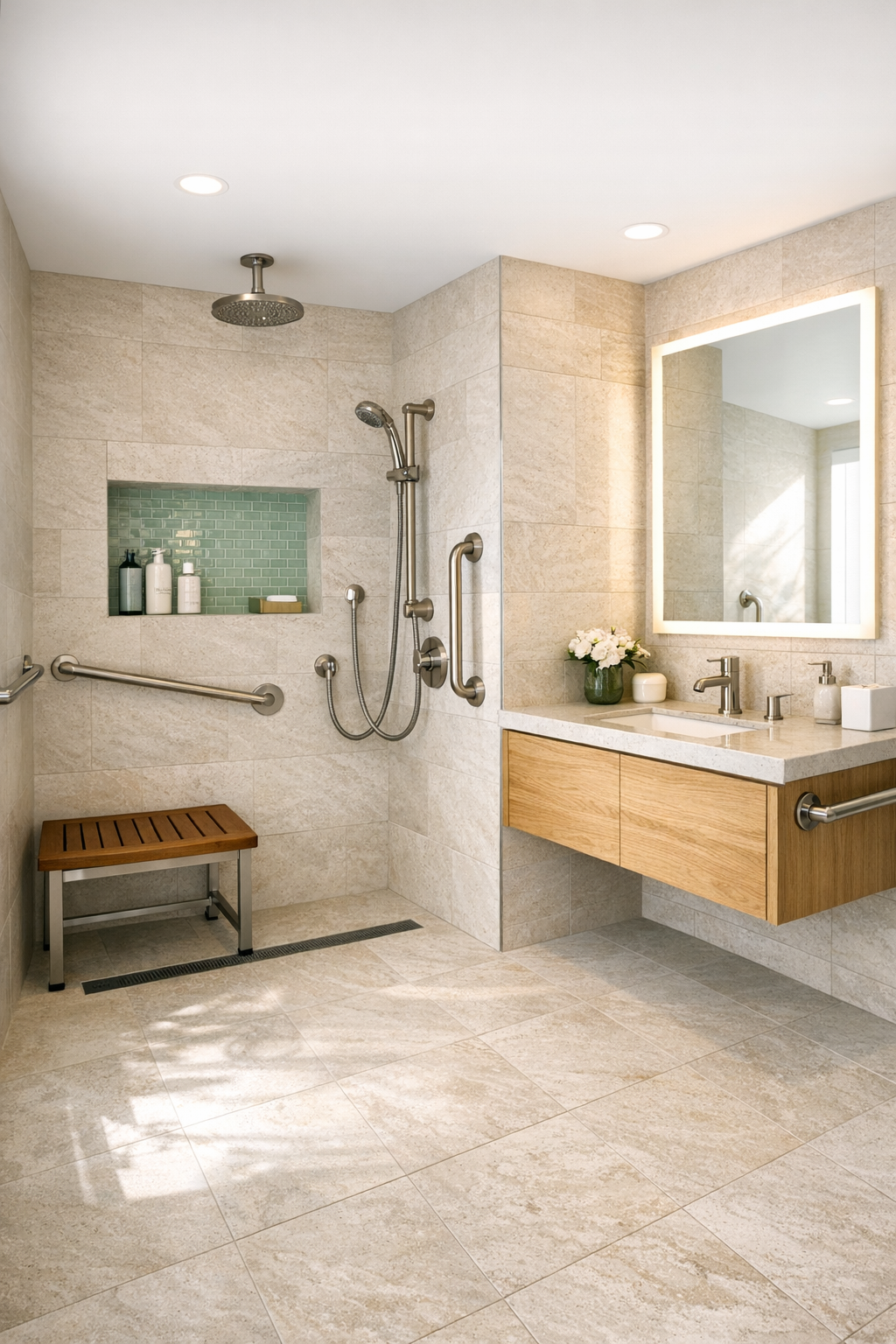
The bathroom is one of the smartest rooms in the home, and one of the prettiest too. Too often practical bathrooms turn cold, but this one stays warm through material and proportion. Large-format porcelain tile in a pale limestone tone runs continuously across the floor and into the shower, minimizing thresholds and grout lines while making the room feel larger. The vanity is wall-mounted in white oak with deep drawers, and the countertop is a creamy solid surface with softened edges. A wide mirror with integrated lighting brightens the face evenly, which is as useful as it is flattering.
The shower is curbless and spacious, with a built-in bench in teak slats, handheld and rain shower fixtures in brushed nickel, and niche storage lined in glossy celadon tile to tie back to the kitchen. Grab bars are integrated neatly into the design, matching the metal finishes so they read as intentional rather than added on. I also like the comfort-height fittings, the ample turning radius, and the touch of softness from woven towels and a washable striped runner. It’s the kind of bathroom that respects need without sacrificing beauty, and that balance is harder to achieve than it looks.
Other Areas
What I appreciate most in the secondary spaces is how carefully they’ve been considered. The hallways are wide and bright, finished with the same pale oak flooring and softly painted walls so the whole interior reads as one continuous, easy-moving environment. There’s a compact laundry nook tucked behind pocket doors, with stacked machines set at a comfortable reach and open shelving for baskets and folded linens. Near the entry, a mudroom-style transition zone includes a bench, closed storage, and hooks mounted at varying heights, which is the sort of practical touch that keeps daily life from spilling into every room.
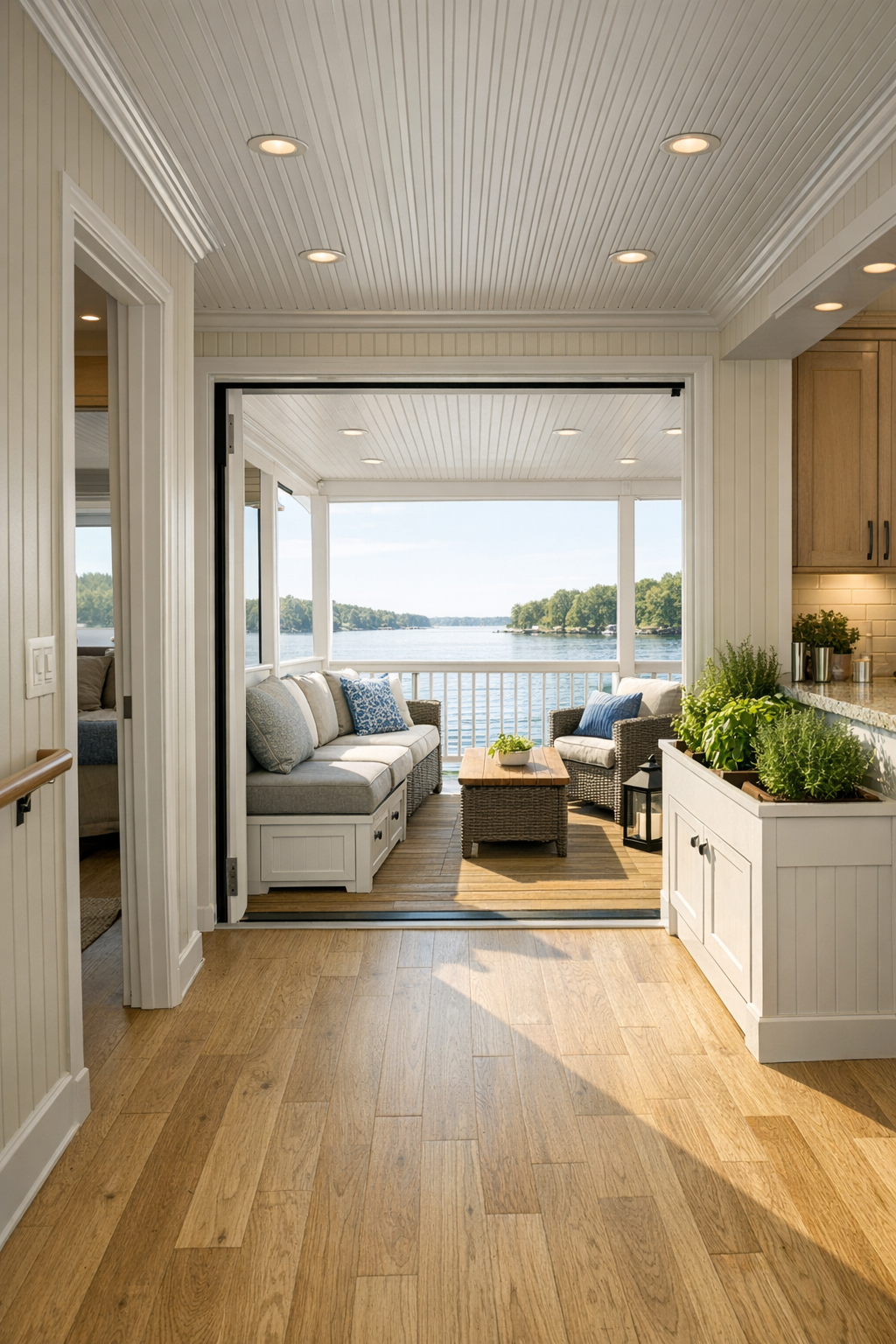
Then there’s the covered rear deck, which really feels like an extension of the home rather than an afterthought. Furnished with deep outdoor seating, a dining table with plenty of maneuvering room, and planters filled with grasses and herbs, it offers a breezy place to read, shell peas, or watch the light change on the water. The ceiling is finished in beadboard painted a soft cream, with quiet fans overhead and low-level lighting tucked into the railing for evening safety. Spaces like these make the home feel complete; they hold the in-between moments, and I’ve always thought that’s where a house earns its affection.
Why You'd Live Here
You’d live here because it offers something many homes promise and few deliver: genuine ease. Not the sterile kind, and not the kind that asks you to give up beauty in exchange for function, but a steady, graceful ease that makes everyday routines simpler and sweeter. The accessible planning is folded so naturally into the architecture that it simply feels like good design, and the ranch-inspired layout gives the whole place a familiar, reassuring rhythm.
I think you’d also live here for the feeling of it. This home understands comfort in a deep way—through soft light, honest materials, useful storage, forgiving finishes, and rooms that welcome real life. It has the practicality of the Midwest, the calm of the water, and the warmth of a home where people can gather, cook, rest, and stay a long while. To my eye, that’s not just delightful; it’s the sort of thoughtful living many of us have been wanting all along.