
Set on a sun-washed summer homestead with tall grasses brushing the tires and a kitchen garden not far from the door, this converted bus feels wonderfully grounded in the landscape around it. The overall look is rustic, practical, and unexpectedly soft, with weathered wood, warm linen tones, matte black accents, and little touches of handmade character that keep it from feeling overly polished. I love homes that know exactly what they are, and this one does: compact, hardworking, and cozy in a way that invites you to slow down and pay attention.
What makes it special is how thoughtfully every inch has been used without sacrificing beauty, even as a concept design. Instead of leaning into novelty, the interior is treated like a real home, with layered textures, good natural light, and the kind of sensible storage that makes daily life easier. It has that lovely surprise factor too, because from the outside you expect something charming and simple, but inside it opens up into spaces that feel calm, useful, and genuinely livable.
Exterior
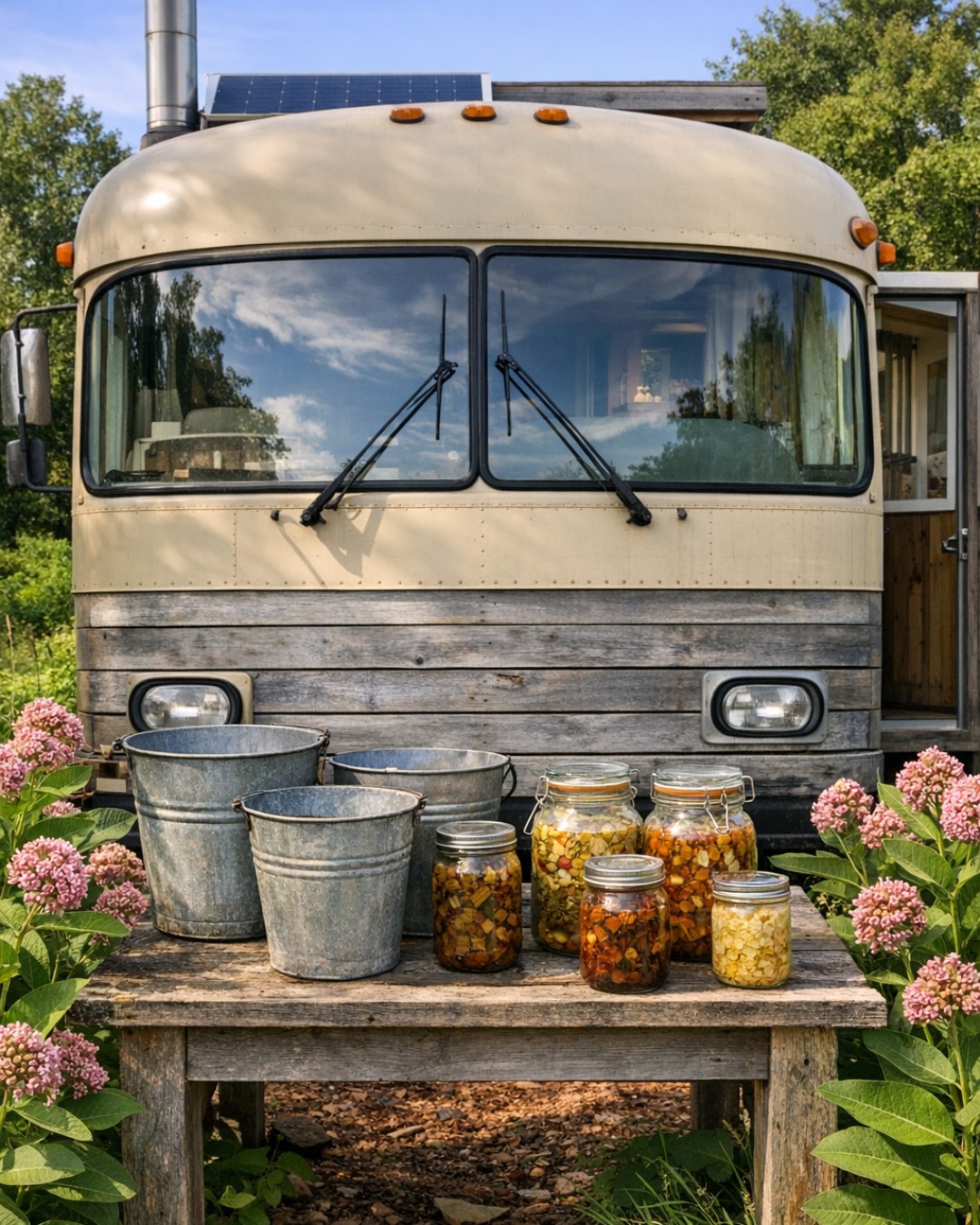
The exterior keeps the bus silhouette recognizable, but gives it a homestead warmth that makes it feel settled rather than temporary. The body is finished in a muted cream with slightly aged undertones, paired with natural cedar detailing around the entry and a small slatted platform that acts as both stoop and transition zone. Matte black hardware, simple industrial sconces, and a row of planter boxes help tie the vehicle to the land, while the windows are framed in dark trim that gives the whole profile a little definition without feeling too crisp.
I can picture this bus best in late afternoon, when the metal shell glows softly and the cedar reads almost honey-gold against the field. A canvas awning extends the living space outward, creating a shaded spot for muddy boots, baskets of tomatoes, or a folding table for lemonade and supper prep. There is a practical beauty to it all that really speaks to me: it looks sturdy, off-grid capable, and ready for everyday routines, but it still feels welcoming enough that you'd want to linger outside before even stepping in.
Living Room
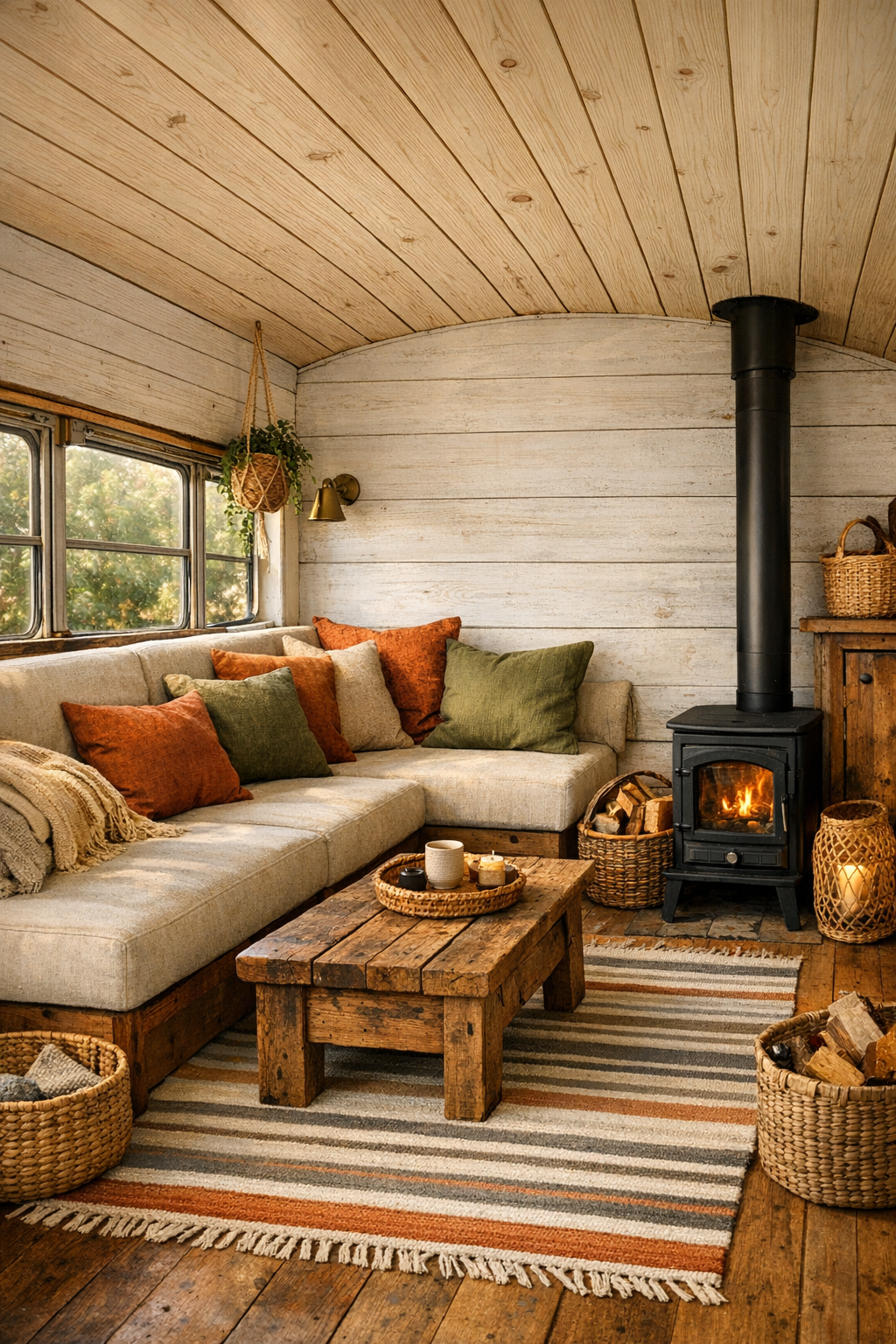
The living room sits just inside the entry and makes a smart first impression by feeling open instead of cramped. One side is lined with a built-in bench sofa in warm oat-colored canvas, topped with layered pillows in faded rust, olive, and cream, while the opposite side keeps things visually light with open shelving and a slim wood-burning stove tucked neatly into the plan. The original bus windows become one of the room's best design features, washing the space in light and making the narrow footprint feel wider, especially with the pale pine ceiling and whitewashed wall paneling reflecting everything back.
What I appreciate most here is the balance between comfort and durability. A low reclaimed-wood coffee table with softened edges anchors the seating area, and beneath it a flatwoven rug in earthy stripes adds texture without overwhelming the floor. There are baskets tucked under the bench for blankets, games, and probably the sort of everyday clutter families always seem to gather, and the lighting is handled with care: black swing-arm sconces for evening reading, warm under-shelf glow for softness, and enough daylight that the room feels cheerful from breakfast through bedtime.
Dining Room
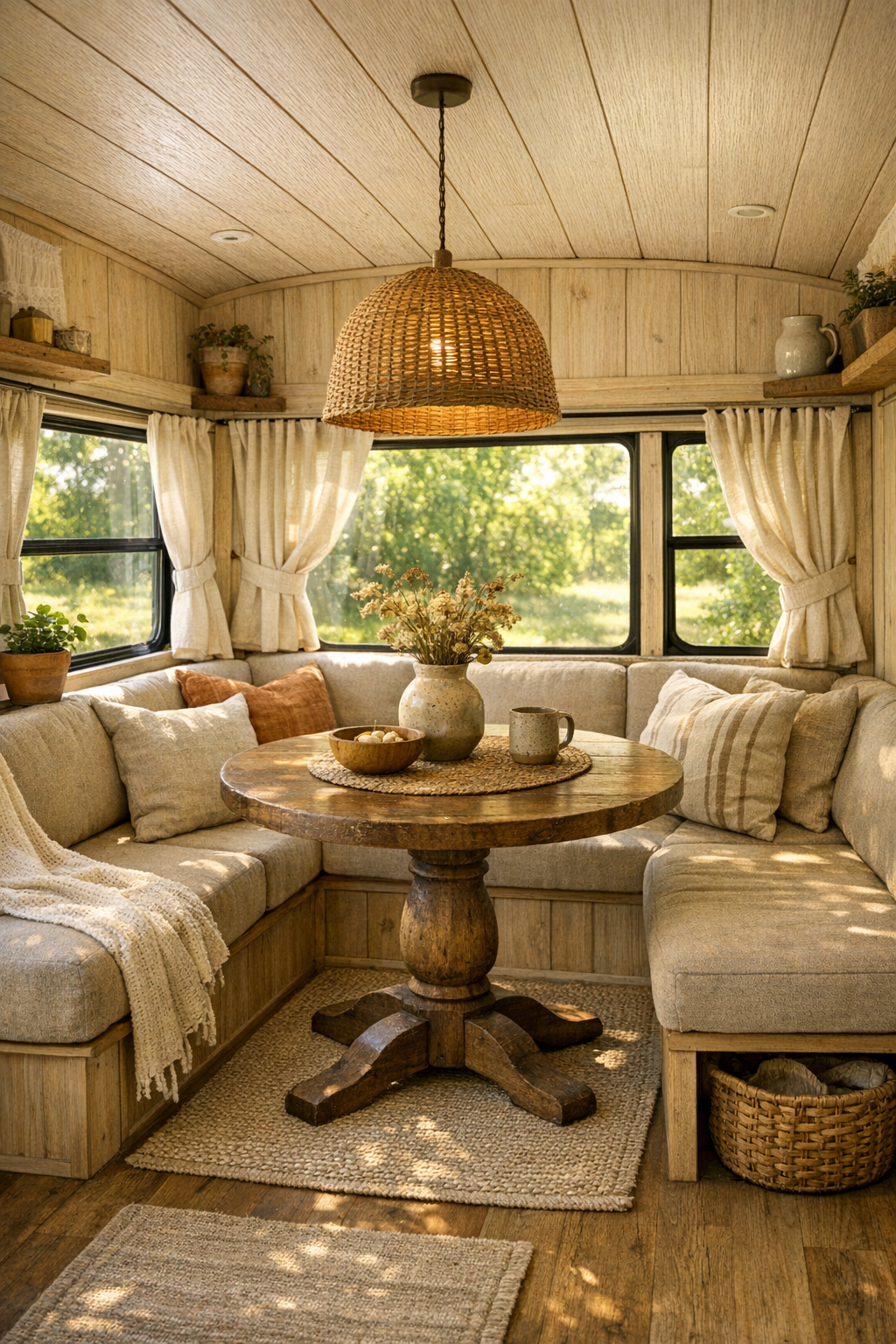
The dining area is one of my favorite parts because it proves a small footprint can still support meaningful meals. A custom banquette wraps one corner beneath the windows, with a solid wood pedestal table at the center so legs and chairs do not fight for precious inches. The seat cushions are done in sturdy flax-toned fabric, and the table's rubbed finish gives it that already-lived-with look that I always think makes meals feel more relaxed. It is intimate in the best way, the kind of place where soup tastes better and conversation lasts longer than expected.
Because I spend so much time thinking about food and gathering, I notice how well this space would work for real family life. There is room for a snack board, a stack of pancakes, or even a make-your-own taco night if you kept the fixings tidy in small bowls for picky eaters and adventurous ones alike. A narrow picture ledge holds a small vase of wildflowers and a candle or two, while a woven pendant overhead brings in shape and softness. The whole area feels sunny, casual, and made for unhurried meals, which is exactly what I want a dining space to do.
Kitchen
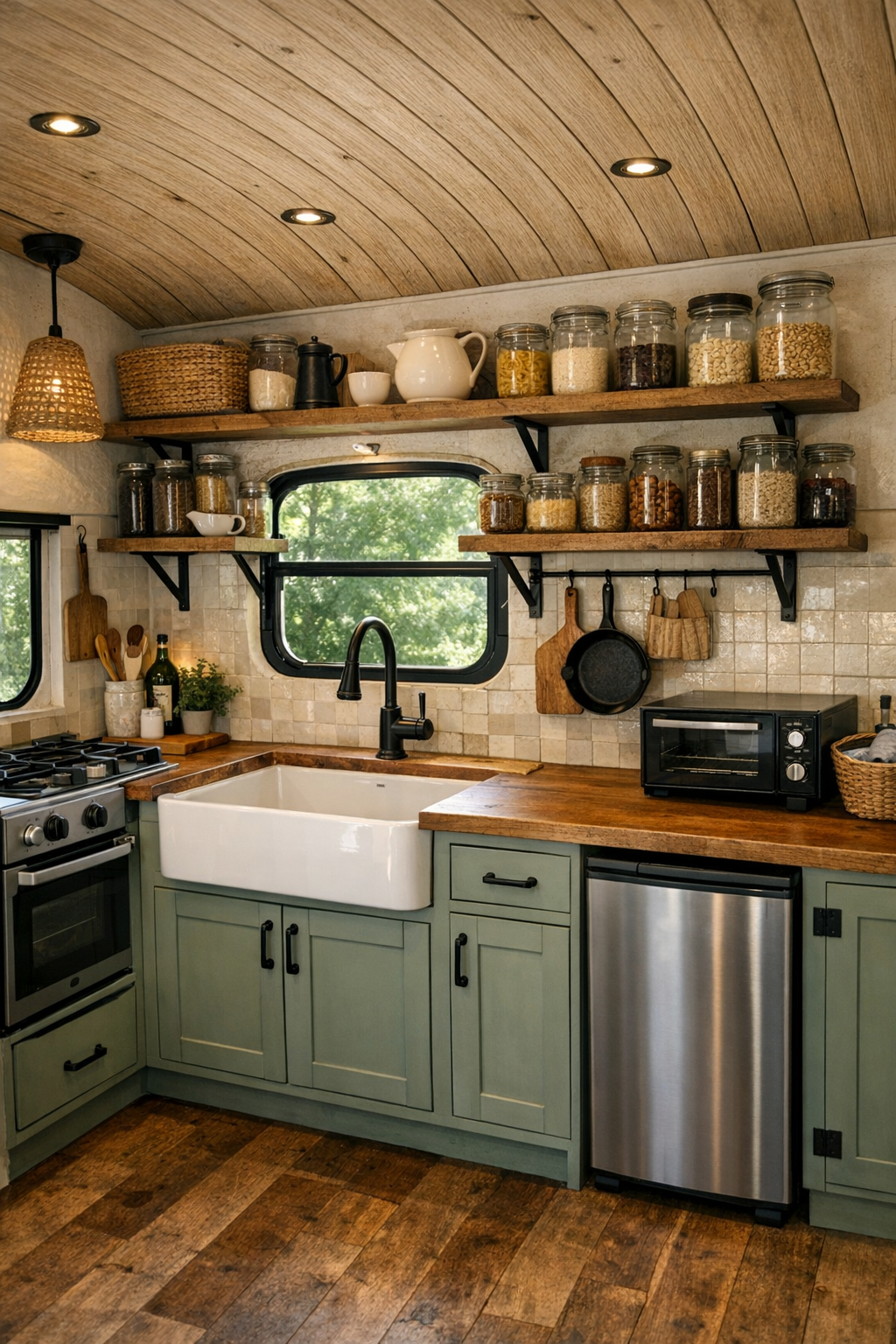
The kitchen is where this bus really wins me over. It is narrow, of course, but beautifully planned, with one continuous run of lower cabinetry in a muted sage green, butcher-block counters, and a white farmhouse-style apron sink sized just right for washing produce from the garden or rinsing a casserole dish after dinner. Open upper shelving keeps the room from feeling boxed in, and I can already imagine neatly stacked stoneware, glass jars of oats and pasta, and a few small bowls ready for chopped toppings or fruit.
The finishes feel hardworking but warm, which is exactly what an off-grid kitchen should be. A compact range sits beneath a simple vent surround in blackened metal, and a slim tile backsplash in creamy zellige catches the light with a slight unevenness that adds character. There is thoughtful storage everywhere: spice cubbies, toe-kick drawers, hooks for mugs and utensils, and a tall pantry cabinet at the end to handle dry goods and bulk staples. It is the kind of kitchen that would make cooking feel easy, and as a parent, I always appreciate a setup that leaves enough room for someone to help mix, stir, or sneak a carrot while supper is underway.
Bedroom
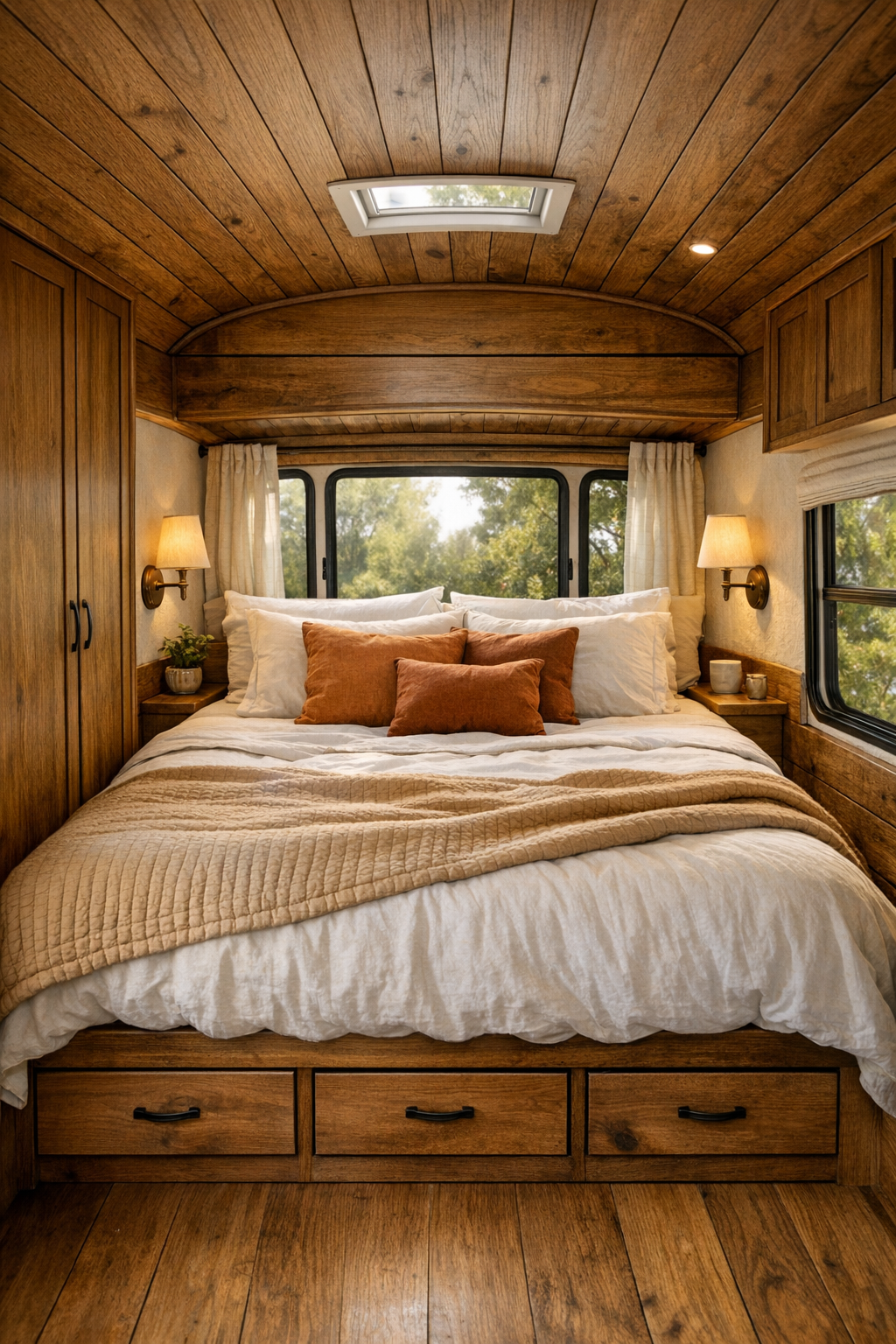
The bedroom takes a quieter turn, leaning into softness and rest rather than trying to do too much. A built-in bed platform stretches across the rear, dressed in rumpled white linen, a sand-colored quilt, and a couple of deeper clay-toned pillows that give the palette a little depth. Wood paneling continues here, but in a slightly richer tone, making the room feel cocooning and calm. Instead of cluttering the walls, the design relies on texture and proportion, letting the bed, the light, and the view out the back windows carry the mood.
I like that the room still feels practical despite its simplicity. Drawers are hidden beneath the bed, and slim wardrobes on either side make use of the bus's curves without crowding the sleeping area. Small sconces free up surface space, and a narrow ledge serves as a place for a book, a water glass, or a tiny pot of herbs. It has the peaceful, tucked-in feeling that is so important in a small home, where every room needs to work hard but still let you exhale at the end of the day.
Bathroom
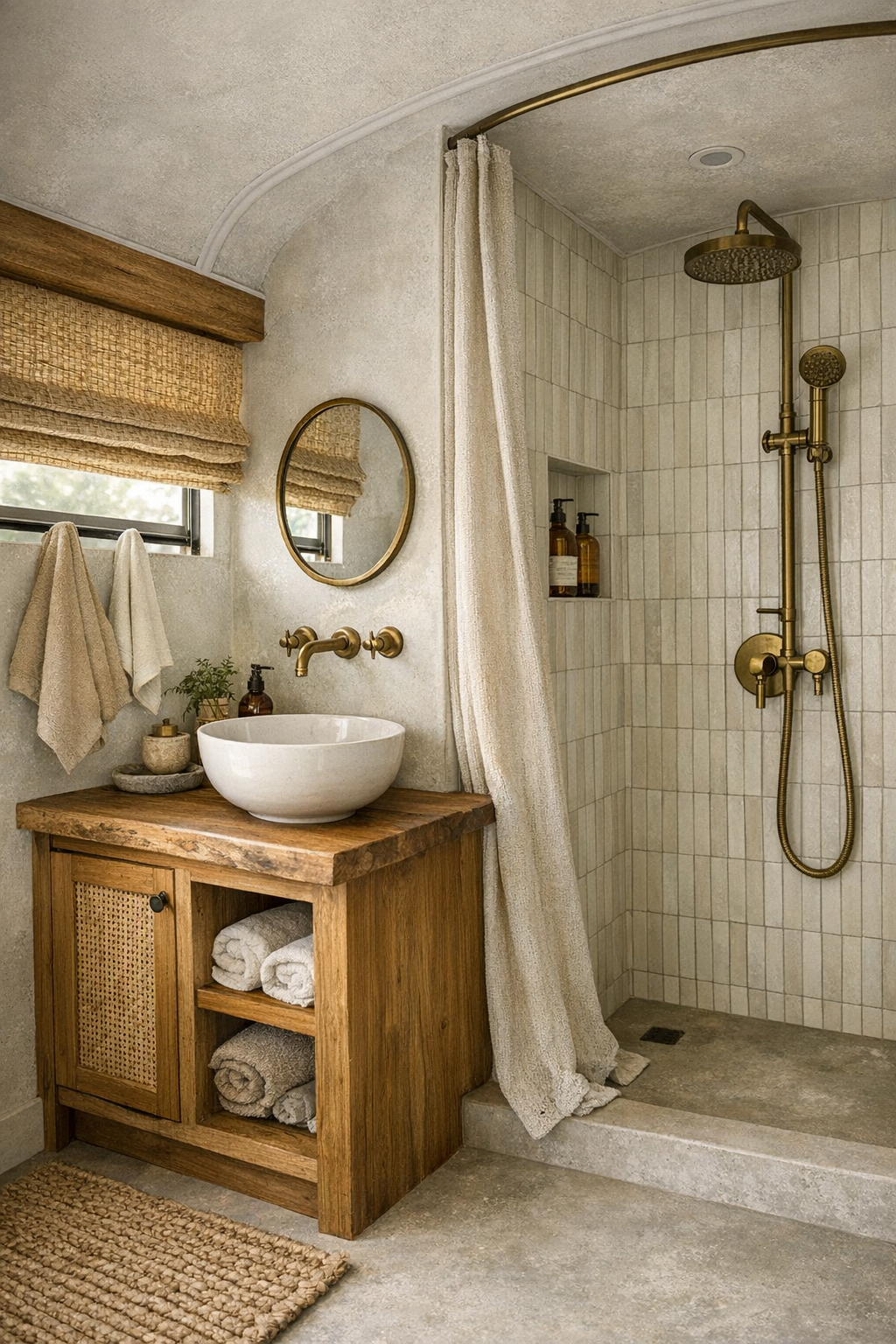
The bathroom is compact but handled with the same thoughtful hand as the rest of the bus. A small vanity in natural wood supports a stone-look vessel sink, while unlacquered brass fixtures bring in a touch of warmth that feels elevated without being fussy. The walls are finished in a soft mineral plaster tone, and the shower is lined in vertically stacked off-white tile that makes the ceiling feel taller. In a space this size, those little visual tricks matter, and here they are used beautifully.
What keeps it from feeling clinical is the layering of texture. A woven shade at the window filters light gently, a hook rail holds linen towels, and a tiny recessed shelf in the shower makes room for soaps and simple glass bottles. The floor appears to be a sealed microcement or small-format stone tile in a muted gray-beige, practical for muddy homestead days and easy to clean. It feels fresh, efficient, and genuinely pleasant, which is all I ever want from a bathroom, especially in a small home where comfort has to come from good decisions rather than extra square footage.
Other Areas
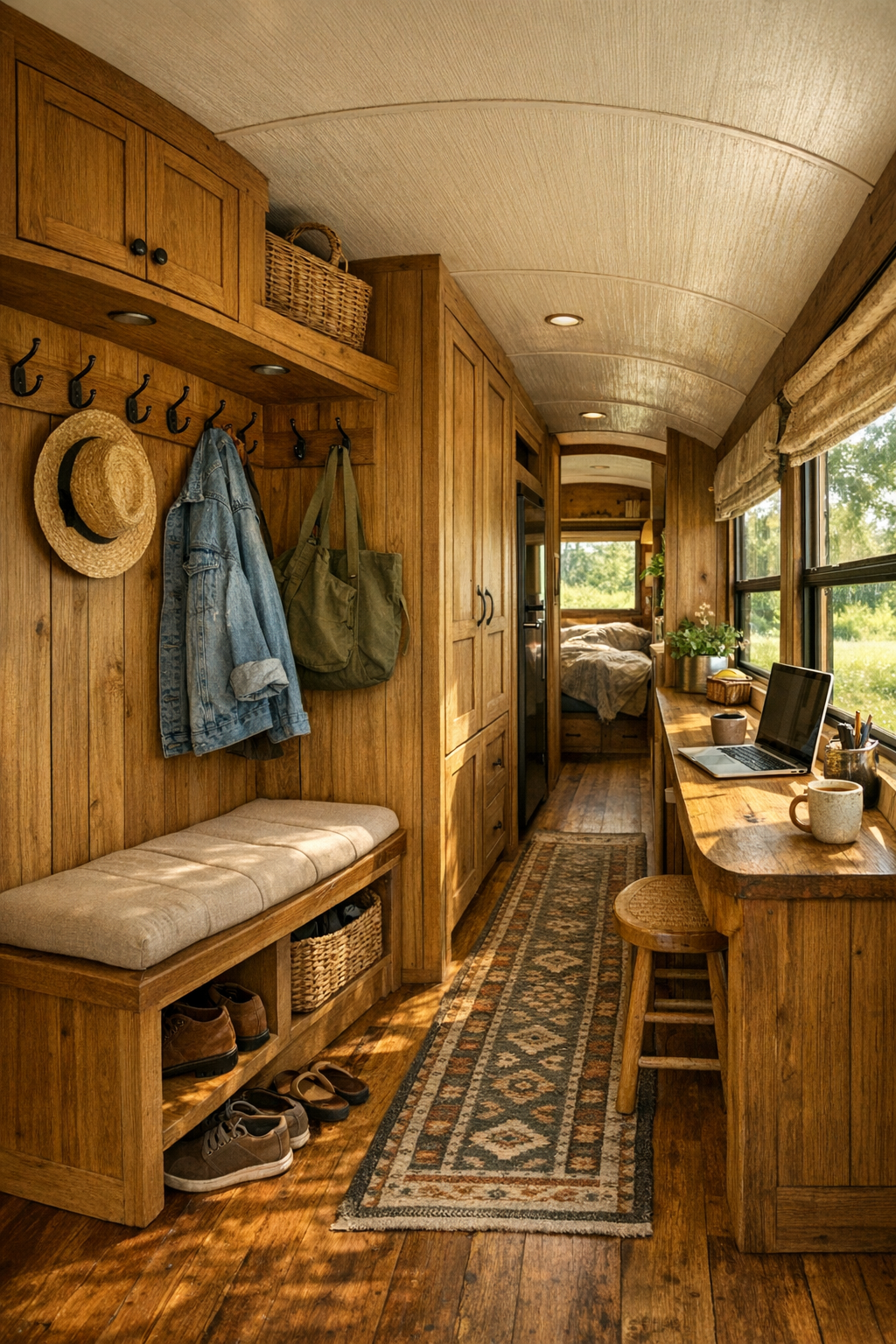
The circulation spaces and utility details are where this bus shows real discipline. The entry zone includes a bench nook for shoes and garden clogs, overhead hooks for hats and bags, and a durable runner that can handle the traffic of everyday life. Along the corridor, built-in cabinetry follows the shape of the bus walls so nothing is wasted, and even the lofted or overhead storage feels integrated rather than tacked on. In a small home, those transitions can either feel awkward or intentional, and here they are very much the latter.
There is also a lovely sense that the indoor and outdoor life of the homestead are constantly in conversation. A little desk or work ledge by a window creates space for writing lists, sorting seeds, or planning meals for the week, and near the door there is room for a basket of produce or an armful of fresh laundry. These supporting areas may not be flashy, but they are what make the bus feel truly livable. They give the whole home rhythm, and they quietly support all the cooking, resting, hosting, and ordinary family moments that matter most.
Why You'd Live Here
You would live here if you value simplicity, but not at the expense of comfort. This bus manages to feel both adventurous and deeply domestic, which is not an easy mix to get right. It offers a slower rhythm, a closer relationship to the outdoors, and just enough room to focus on what really matters: good meals, useful routines, and the people you share them with. I think that is a big part of its charm. Nothing feels excessive, and yet nothing essential seems to be missing either.
More than anything, this home understands how to make small spaces feel generous through warmth, order, and thoughtful design. The materials are honest, the palette is soothing, and every area has been planned for real life rather than just for looks. If you have ever dreamed of a place where you could open the windows, cook something comforting, wipe little dusty footprints from the floor, and watch the evening settle over a field, I can absolutely see the appeal. This one feels rustic in the loveliest sense of the word: lived-in, capable, and full of heart.