
This weathered gray Amish Dutch barn tiny home has the kind of quiet presence that makes me slow down before I even step inside. Its curved roofline, soft silvered siding, and simple, time-honored shape feel deeply rooted in the countryside, but the overall mood is anything but plain. There is a calm, handcrafted beauty here that balances utility with tenderness, and every detail seems chosen to make daily life feel a little more grounded, a little more special.
What drew me in most is how this concept design turns a compact footprint into something soulful and generous. The home feels honest in its materials and warm in its proportions, with thoughtful layers of wood, linen, iron, and natural light creating spaces that would suit both quiet mornings and family suppers that stretch a little longer than planned. It is tiny in scale, yes, but it carries itself with the grace of a much larger home.
Exterior
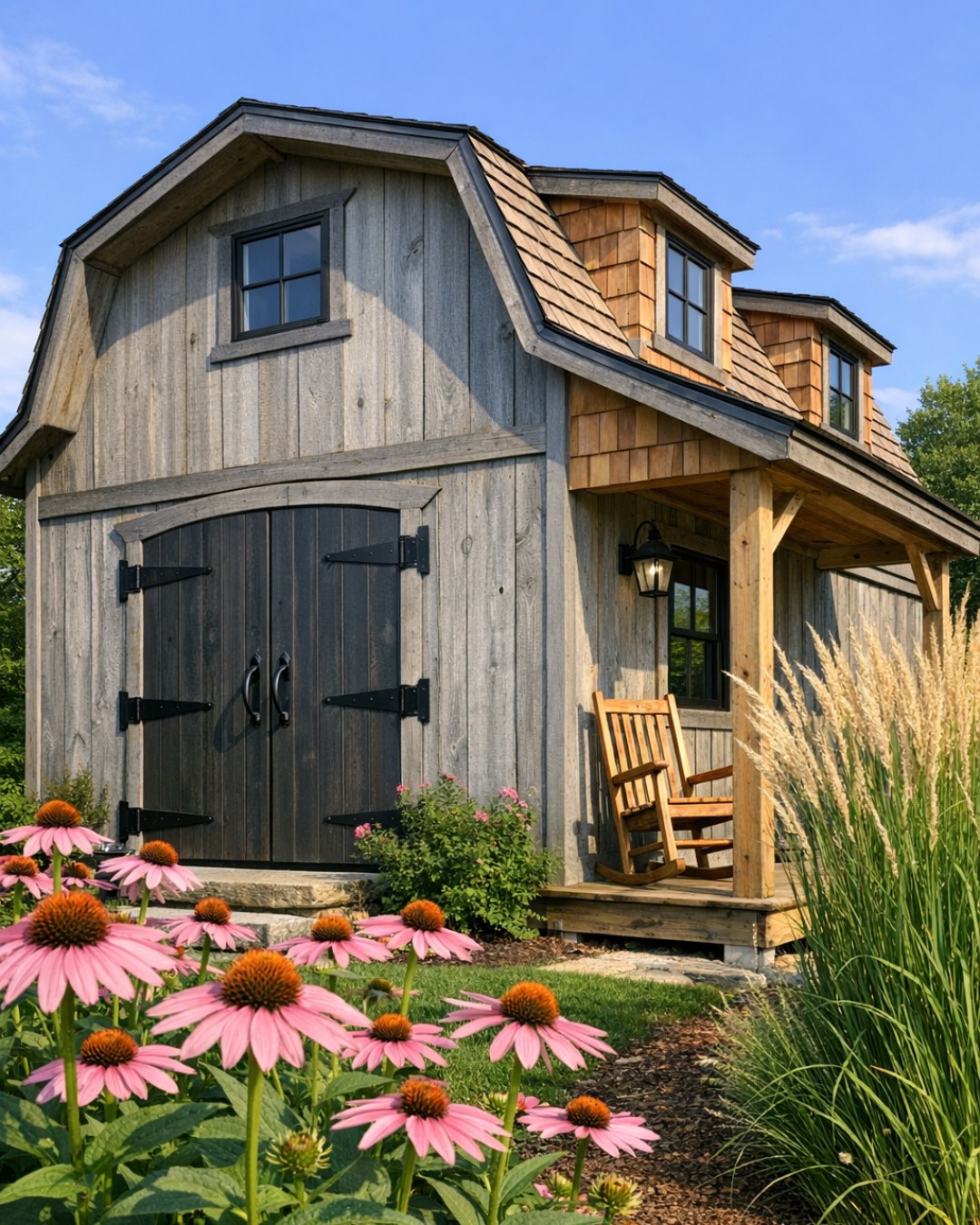
The exterior leans into the enduring character of an Amish Dutch barn, with weathered gray wood cladding that looks beautifully softened by time and seasons. I love the way the gambrel roof gives the structure its familiar silhouette while also making room for a more spacious upper level inside. Black metal hardware, understated windows, and a simple entry door keep the facade crisp without disturbing its rustic heart. Nothing feels overdone, and that restraint is exactly what makes it memorable.
The setting I imagine for this home is open and pastoral, with gravel underfoot, native grasses at the edges, and maybe a few planters overflowing with herbs by the entry. The gray exterior would look especially striking against green summer fields or a pale winter sky. It has that rare quality of feeling sturdy and welcoming at once, like a place where muddy boots are expected and supper is never far away.
Living Room
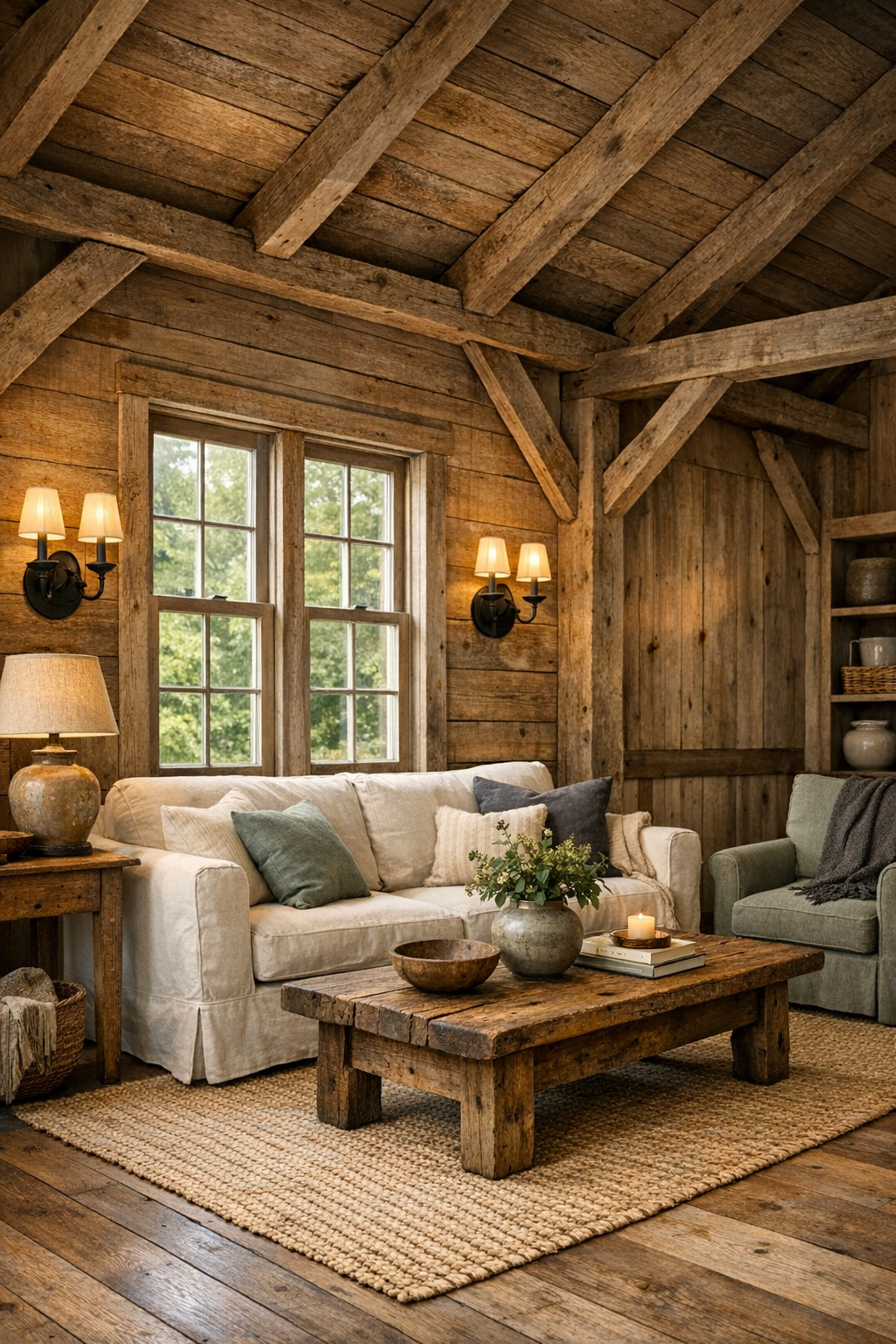
Inside the living room, the craftsmanship becomes the true star. Exposed wood beams and warm plank walls soften the barn shell, bringing in honeyed tones that gently contrast the cooler gray exterior. I can picture a compact but generous seating arrangement anchored by a natural fiber rug, with a slipcovered sofa, one deep reading chair, and a stout wood coffee table marked by grain and knots. In a small home like this, every piece has to work hard, so I would want storage tucked into benches and side tables that can hold blankets, board games, or the extra things families always seem to gather.
The lighting feels especially important here, and I would keep it layered and gentle. A pair of black iron sconces, one shaded table lamp, and daylight filtering through divided-light windows would make the room feel cozy from morning through evening. The palette is quiet and nourishing: oat, cream, weathered wood, charcoal, and muted sage. It is the sort of room where kids could sprawl out with a puzzle while something good simmers in the kitchen, and where even a simple cup of coffee would feel like a small ritual.
Dining Room
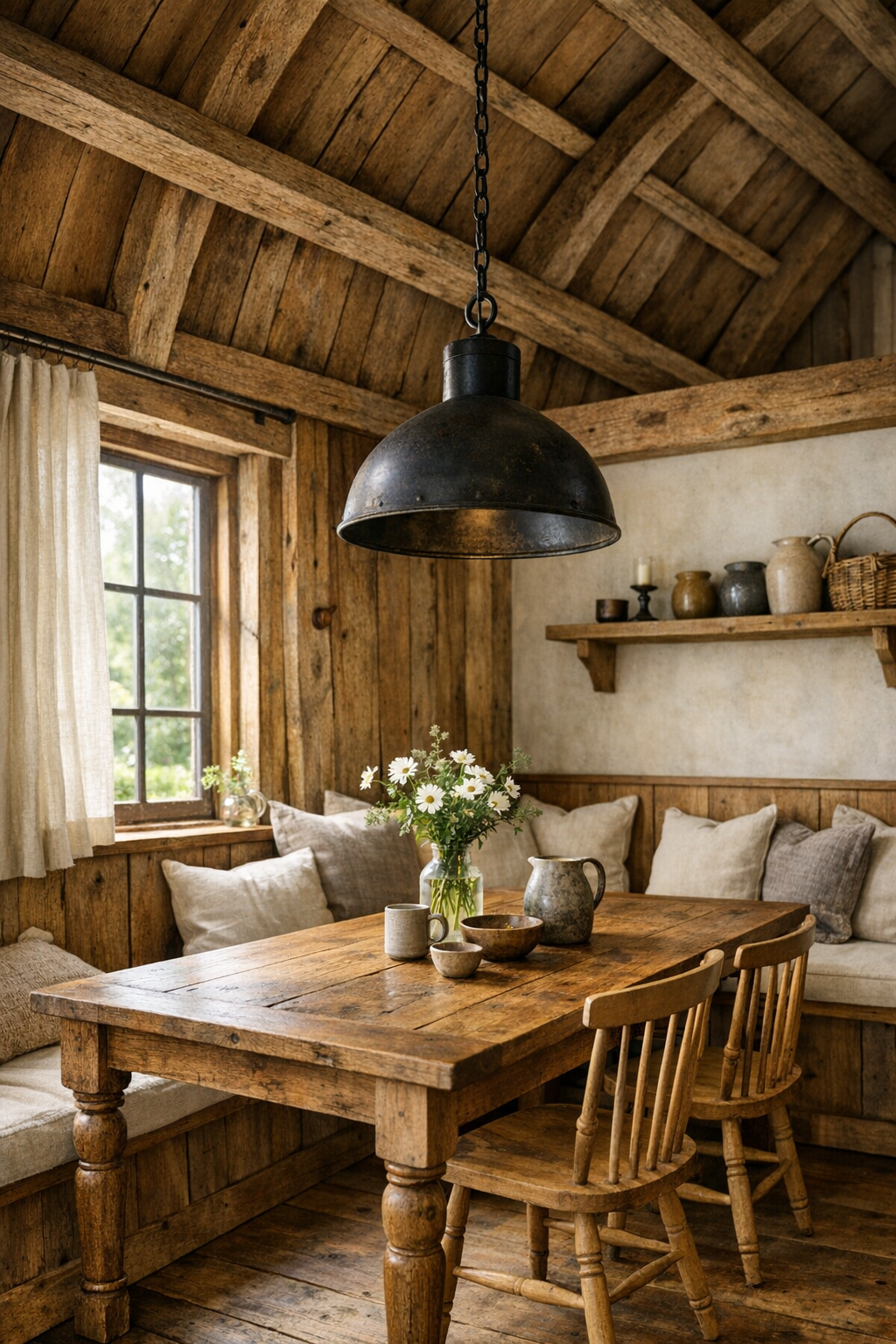
The dining area feels like an extension of the home's generous spirit, even if the square footage is modest. I imagine a solid wood table, slightly narrow but long enough for a family meal, tucked beneath the rise of the barn ceiling where the architecture can really shine. A built-in bench along one wall would save space and add softness with linen cushions in faded stripes or small checks. This is the kind of spot where I immediately start thinking about serving a pot of soup, warm bread, and a simple dessert in bowls that do not have to match perfectly to look beautiful.
To keep the room bright without losing its rustic character, I would pair the table with simple spindle-back chairs and a pendant in blackened metal or aged brass overhead. The finishes should feel touched by hand rather than polished to perfection. A small vase of grocery-store flowers, a crock of wooden spoons nearby, and maybe a stack of folded napkins in a drawer would be enough to make it feel lived in. For families with picky eaters, I always think a relaxed table matters just as much as the food, and this room has an easy, unpressured warmth that invites everyone to stay.
Kitchen
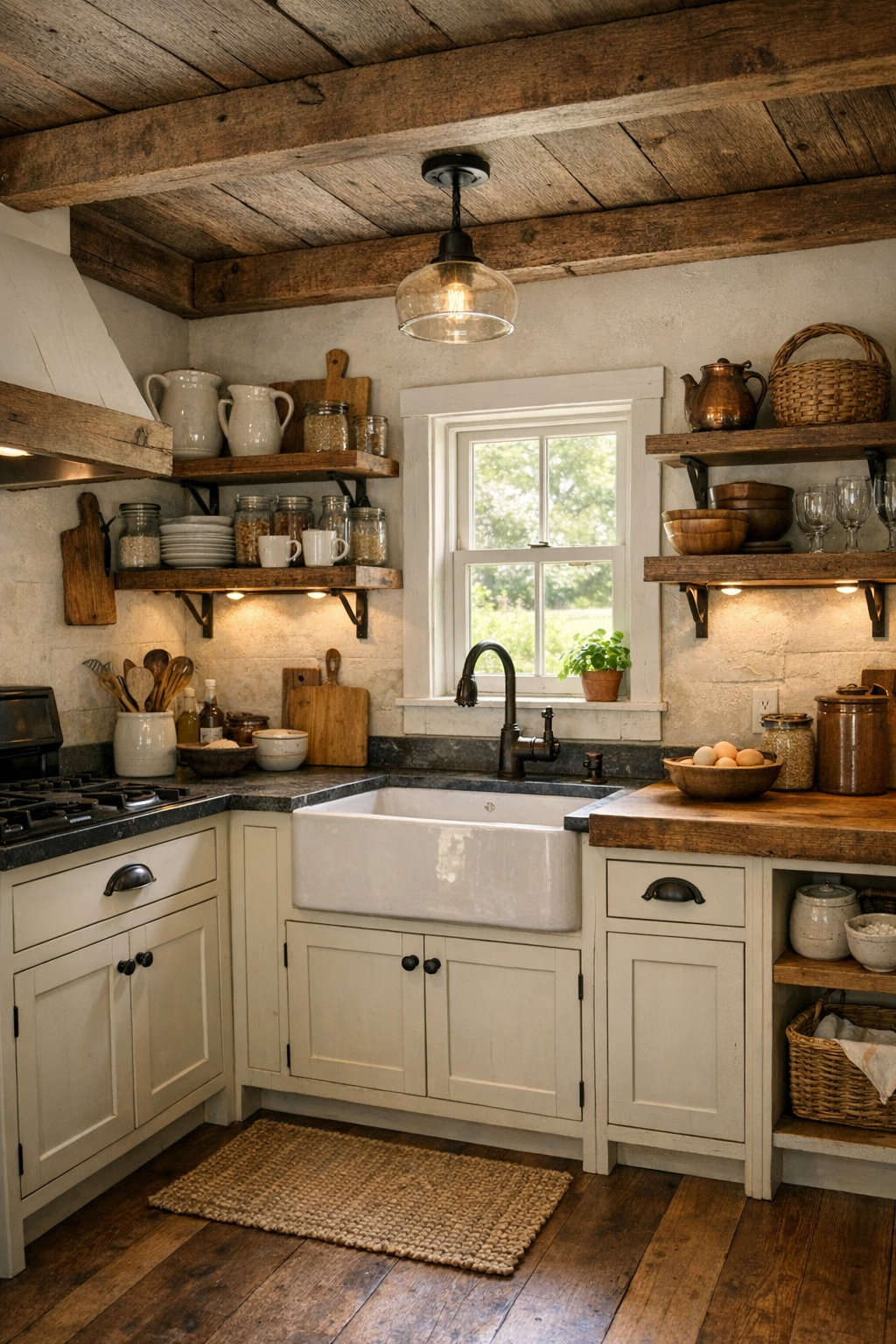
The kitchen is where this home would absolutely win me over. In a small footprint, good kitchen design has to be practical first, but here I would want that practicality wrapped in beauty: shaker-style cabinetry in a warm off-white, butcher block or soapstone counters, open shelves for everyday dishes, and a deep apron-front sink that feels ready for everything from washing garden greens to rinsing mixing bowls after baking. A slim range and paneled refrigerator would help the room feel seamless, while antique-inspired hardware could add just enough personality without cluttering the look.
What makes this kitchen special is how naturally it supports real family life. I can see a narrow stretch of counter dedicated to sandwich-making, cookie decorating, or setting out toppings so everyone can build their own baked potato or flatbread, which is always helpful when tastes differ around the table. Under-cabinet lighting, pale walls, and reflective finishes would keep the room open and airy, while wood accents tie it back to the barn envelope. It feels efficient, yes, but also deeply comforting, like a kitchen that understands that feeding people is part work, part love.
Bedroom
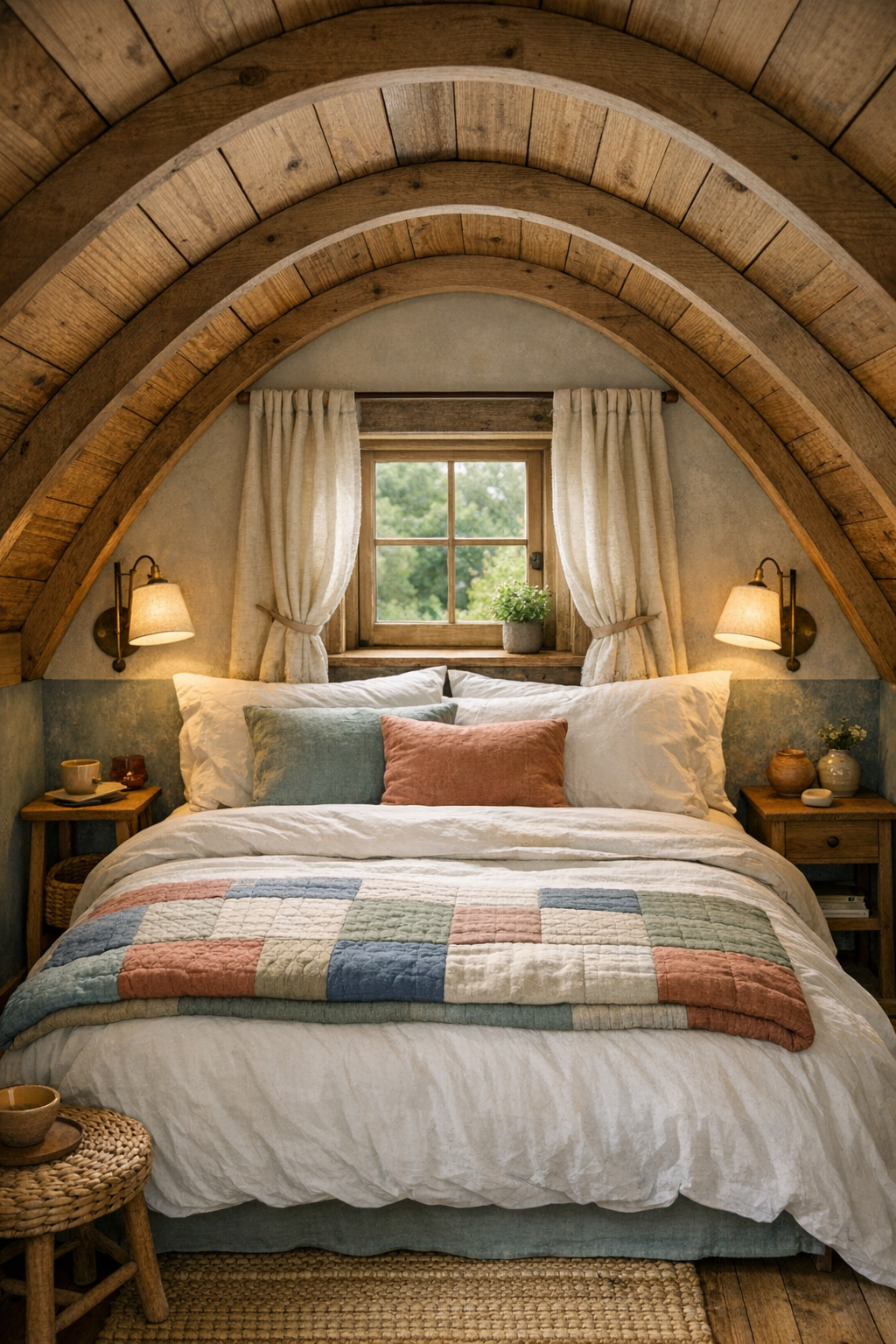
The bedroom takes full advantage of the barn form, likely tucked beneath the roofline in a way that feels sheltered and intimate. Sloped ceilings lined in wood would make the room feel like a cocoon, especially if paired with soft white bedding, a quilt folded at the foot of the bed, and curtains in washed linen. I would keep the furnishings simple and scaled carefully: a bed with drawers below, petite wall-mounted reading lamps, and maybe one narrow nightstand with room for a book and a glass of water. In a tiny home, visual calm matters so much, and this room seems made for rest.
I also love the idea of bringing in subtle color through textiles rather than larger furnishings. Muted blue, dusty sage, and faded clay would all sit beautifully against the wood tones and keep the room from feeling heavy. A woven rug underfoot and a small peg rail for robes or sweaters would add comfort without crowding the floor plan. It is the sort of bedroom that reminds me how little you actually need when the essentials are this thoughtfully done.
Bathroom
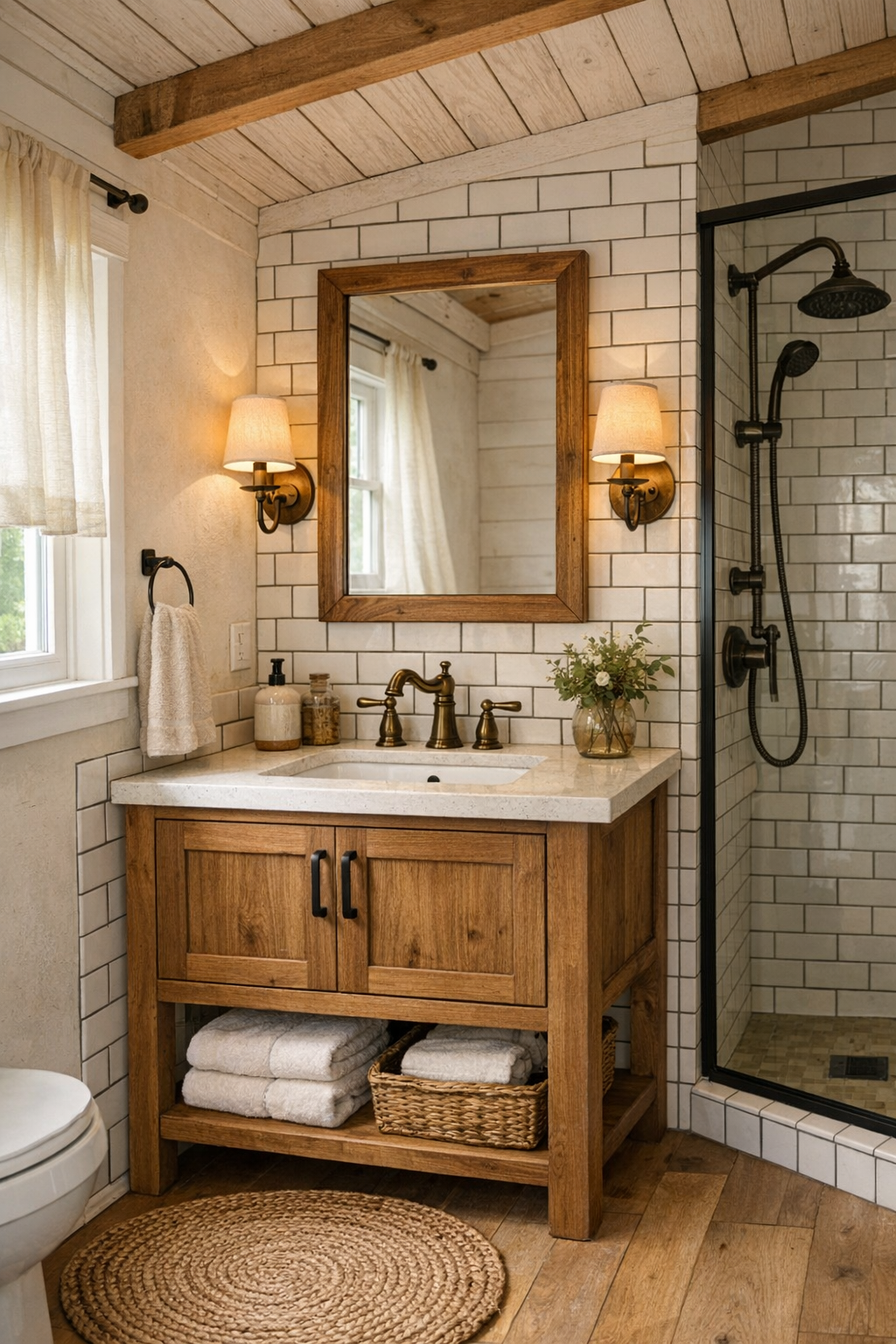
The bathroom is likely compact, but that does not mean it has to feel tight or purely functional. I would lean into a clean, hardworking design with small-scale tile, a wood vanity, and matte black or aged brass fixtures that connect back to the rest of the house. A shower lined in soft white tile with darker grout would feel classic and easy to maintain, while a simple framed mirror and warm sconces could add just enough polish. In a home like this, continuity is everything, so carrying through the same wood tone from the living spaces would help the bathroom feel integrated rather than separate.
What I appreciate most is the chance to make even this practical room feel comforting. Thick cotton towels, a woven basket for toiletries, and maybe a tiny stool beside the vanity can change the whole mood. If there is a small window, all the better. Natural light in a bathroom always makes morning routines feel gentler. The overall palette should stay fresh and quiet, with creamy whites, warm wood, and a few dark accents giving the room definition.
Other Areas
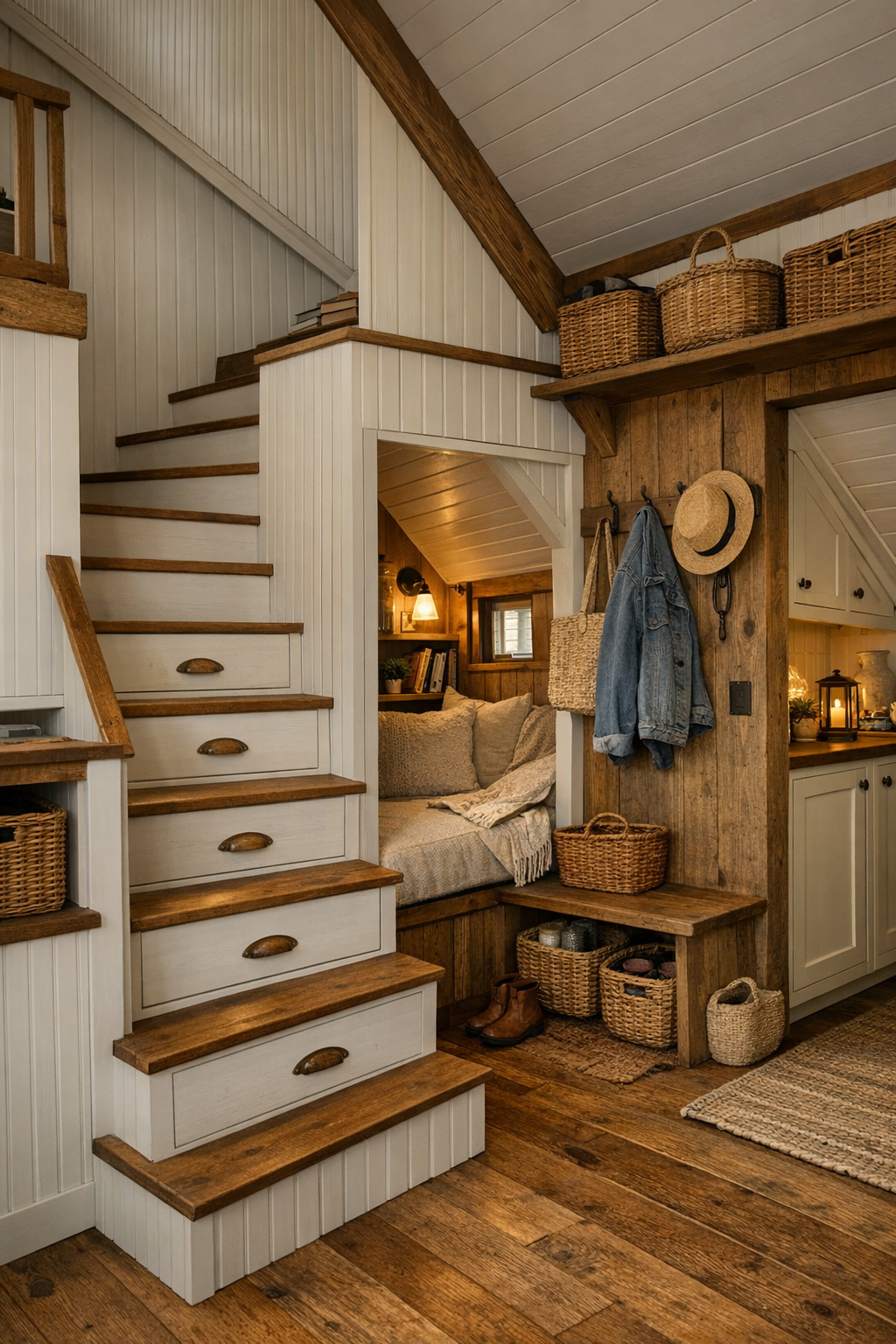
In a tiny home, the in-between spaces are never really just in-between, and that is part of the charm here. I imagine a stair or ladder area with built-in storage, a petite landing that doubles as a reading nook, and maybe a slim entry zone with hooks for coats and baskets for shoes. These hardworking corners are where good design earns its keep. When every inch is considered, the whole home feels calmer, and family life runs more smoothly because there is a place for the everyday clutter that can otherwise take over.
I would also expect smart built-ins throughout, maybe under-eave cabinetry, open cubbies, or a window seat that offers both storage and an extra perch. Even a compact hallway could become something lovely with beadboard, a runner, and a little wall light. These are the details that make the home feel handcrafted rather than merely efficient. They create moments of usefulness and beauty all at once, which is exactly what I want in a small space meant to support real living.
Why You'd Live Here
You would live here because this tiny home proves that smaller living does not have to feel like a compromise. It offers warmth, craftsmanship, and a sense of order that can be hard to find in larger homes filled with too much stuff and too many distractions. Every room has been shaped around what really matters: comfort, usefulness, beauty, and the simple routines that hold a household together.
For me, the real appeal is how naturally this home supports connection. The dining area invites conversation, the kitchen is ready for everyday meals and little accommodations for different tastes, and the living spaces feel made for togetherness without crowding. It is a barn-inspired retreat with a practical heart, and that combination is hard not to love.