
There is something instantly calming about this tiny home’s soft periwinkle exterior and gentle, light-filled interior. Set up to feel just as welcoming in a quiet backyard as it would on a small rural lot, the house blends cottage charm with smart accessible planning in a way I really appreciate. At first glance it feels sweet and understated, but the closer I look, the more I notice how carefully every surface, corner, and pathway has been considered.
This is a concept design, but it is the kind of one I can picture people talking about over coffee because it solves real everyday needs without sacrificing beauty. The mood is airy, practical, and quietly polished, with easy movement, warm wood tones, soft neutrals, and little moments of color that keep the whole home from feeling clinical. For anyone who loves small-space living but still wants comfort, personality, and a kitchen that actually works, this one feels especially memorable.
Exterior
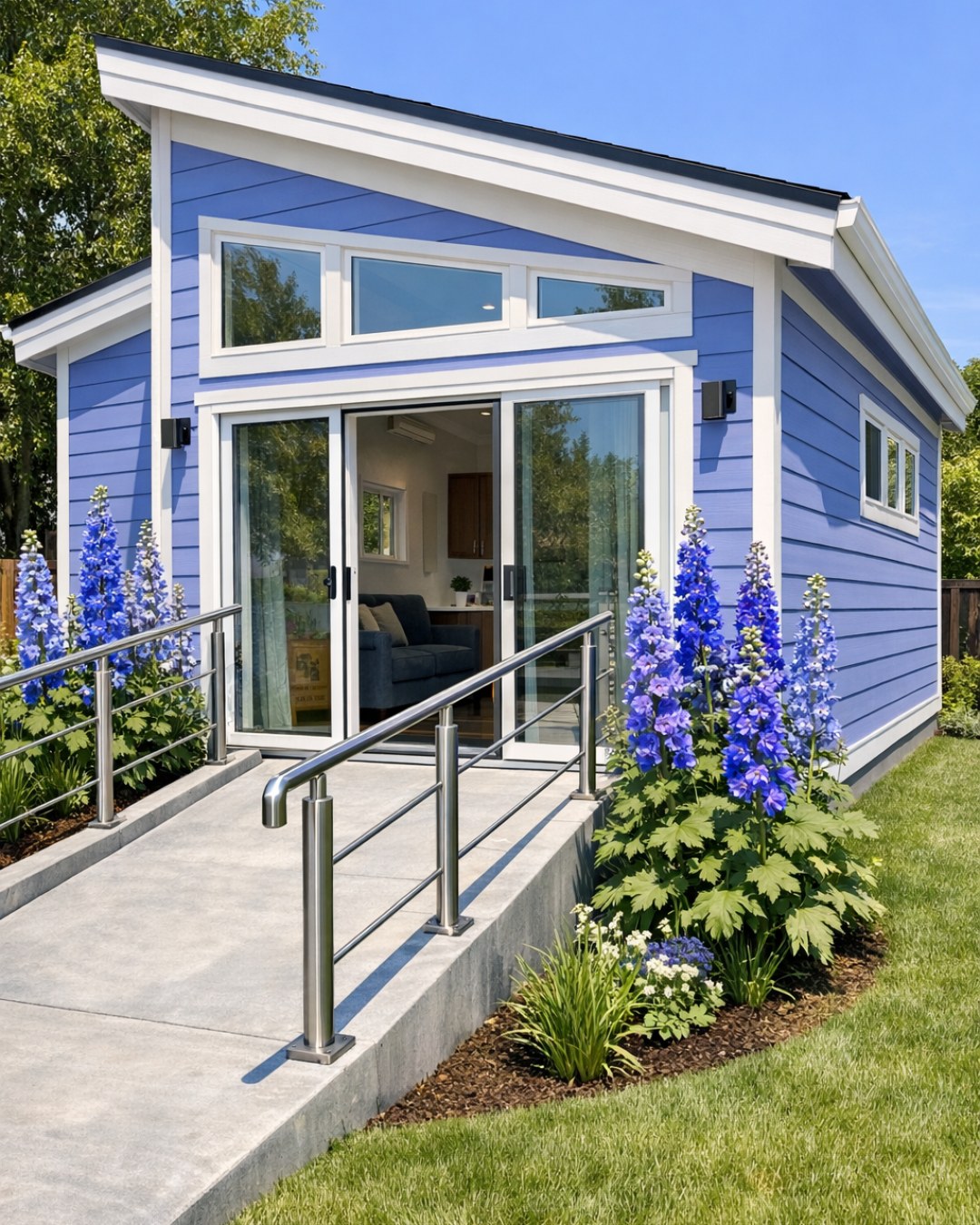
The exterior has that rare quality of feeling cheerful without being loud. The soft periwinkle siding gives the home its identity right away, especially when paired with crisp white trim, a pale gray metal roof, and simple black hardware that adds just enough contrast. I can easily imagine this shade changing character throughout the day, looking almost silvery in the morning and a little more lavender in the late afternoon. The proportions are compact, but the design avoids the toy-like feeling some tiny homes can have because the lines are clean and the windows are generously scaled.
Accessibility is folded into the architecture in a way that feels seamless rather than added on later. A gently sloped entry walkway replaces stairs, and the front porch is wide enough to function as a true transition zone instead of a token landing. The doorway is visually substantial, with a wider opening, a flush threshold, and a modern lantern-style sconce that frames the entrance beautifully. Even from outside, the home promises ease: level access, good lighting, and a layout that feels dignified and intentional.
Living Room
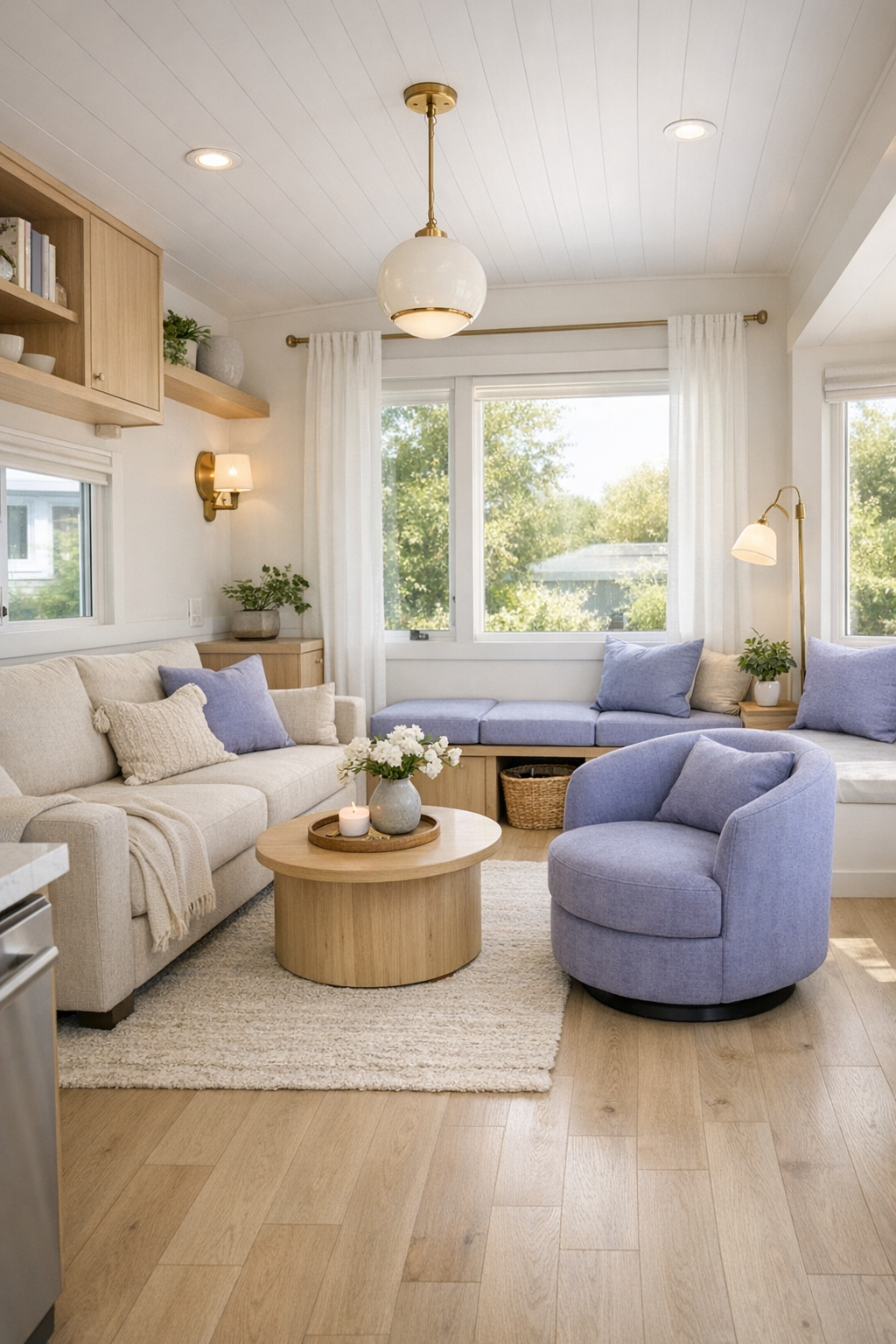
The living room is where the home’s accessible design and soft style really begin to shine. The layout keeps circulation clear, with wide passage space and furniture arranged so nothing interrupts movement. A compact sofa in a warm oatmeal fabric anchors the room, joined by a rounded swivel chair and a slim open-base coffee table that keeps the floor feeling visible and uncluttered. I love that the palette stays light without turning bland: creamy walls, pale wood flooring, periwinkle accents in pillows and artwork, and brushed brass details that warm everything up.
Lighting does a lot of work here, and it does it beautifully. Natural light pours in through oversized windows, while layered fixtures, including a low-profile ceiling mount, a wall sconce, and a soft-glow floor lamp, make the room feel comfortable at any hour. Textures keep the small footprint from feeling flat, with a nubby area rug, linen curtains, and subtly grained cabinetry built into one wall for storage. It feels like the kind of room where I could answer emails in the morning, fold a basket of laundry in the afternoon, and still happily settle in with tea at night.
Dining Room
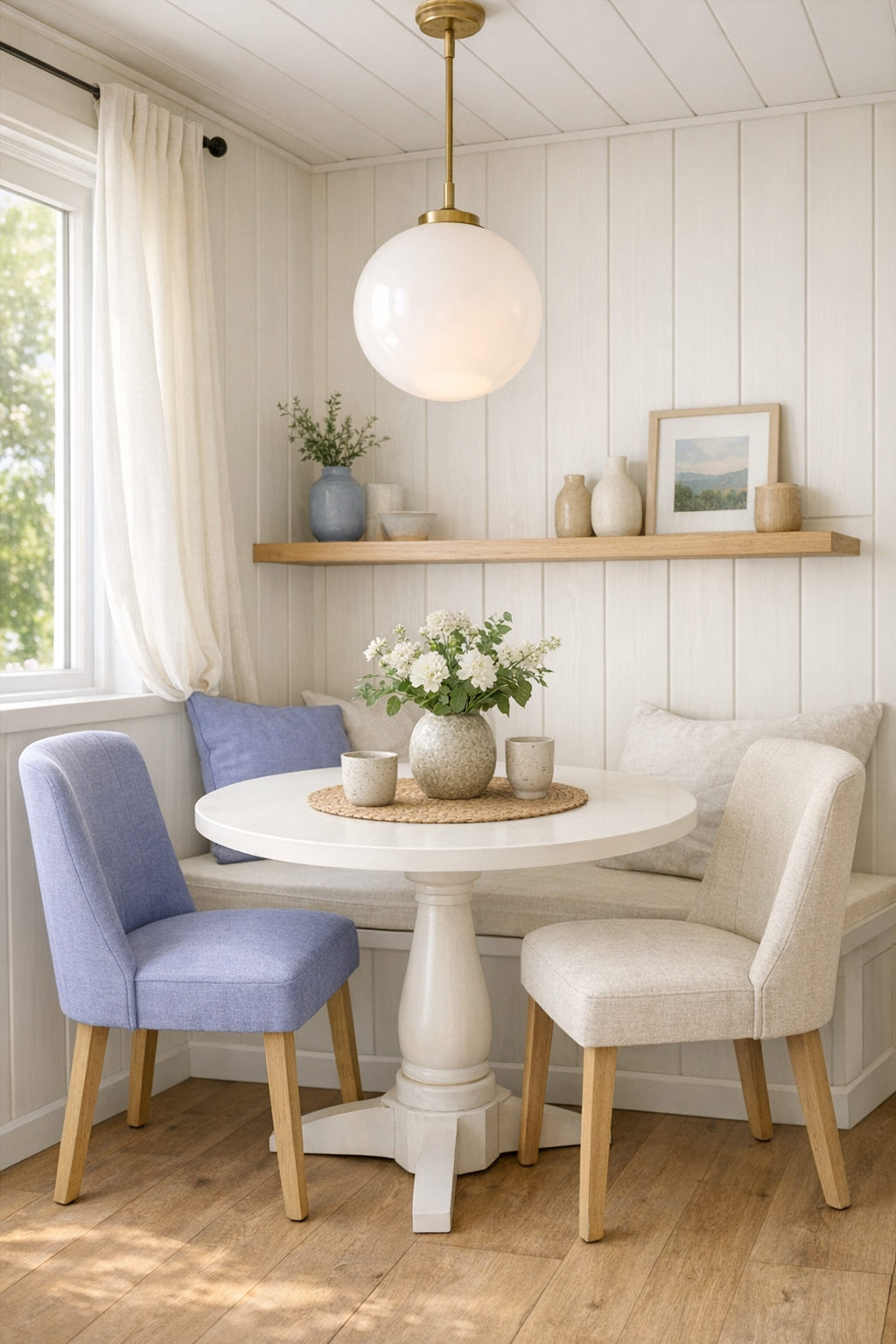
The dining area is modest in size but handled so well that it feels like a true destination rather than an afterthought wedged beside the kitchen. A round pedestal table is a smart choice here because it improves flow and softens the geometry of a compact floor plan. I can picture easy weeknight dinners here just as clearly as weekend muffin baking spread across the tabletop. The chairs are supportive and comfortable, with upholstered seats and enough clearance around them to make the setup practical as well as pretty.
Design-wise, this space carries the same calm rhythm as the rest of the home. A small pendant in opal glass drops overhead, casting a diffused glow that makes the area feel intimate without closing it in. One wall is finished with simple vertical paneling painted in a whispery warm white, giving the dining nook a little architectural definition. A nearby built-in ledge for serving pieces or cookbooks adds usefulness without bulk, and the whole corner feels polished in the way I always notice when a small home has been planned by someone who really understands daily life.
Kitchen
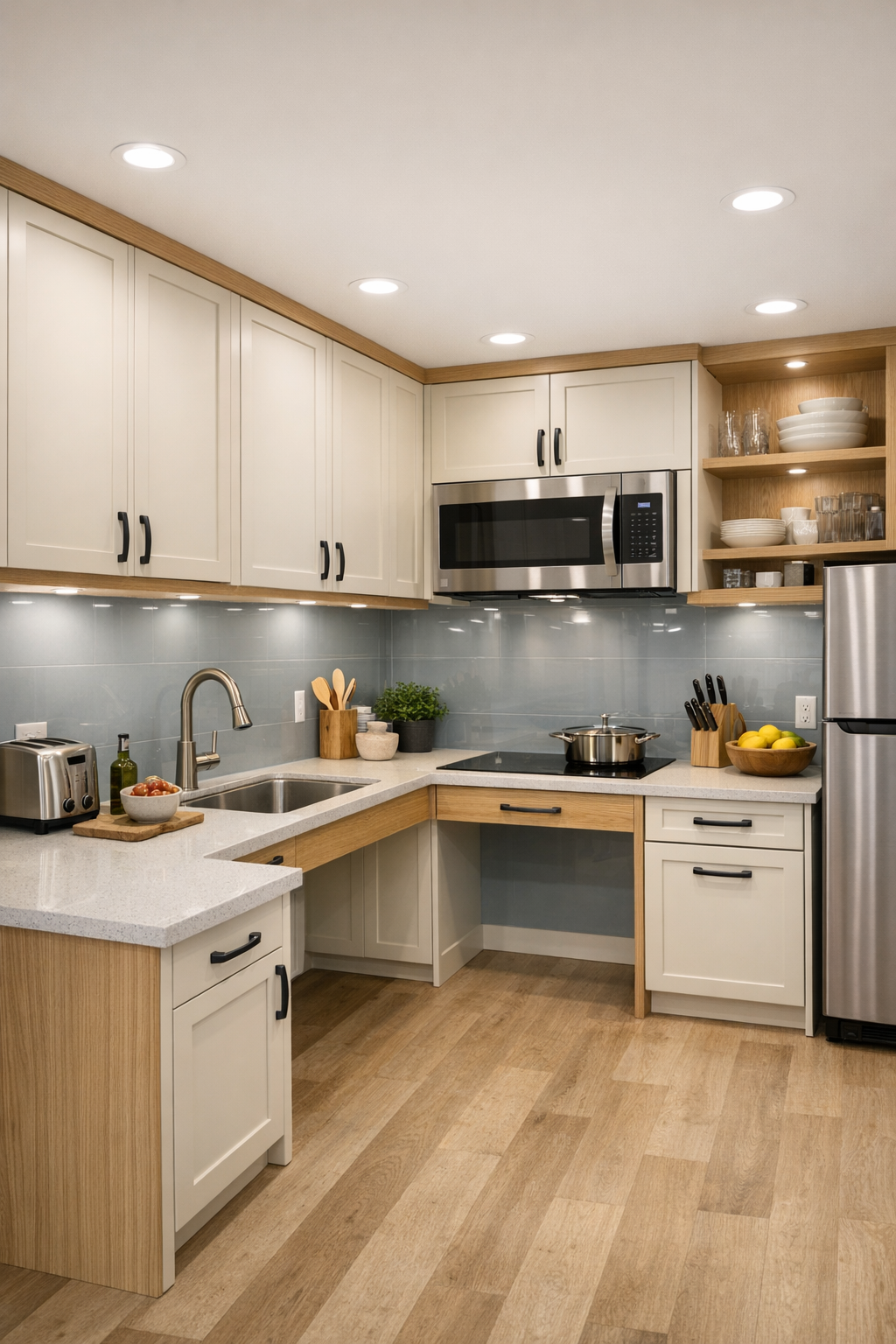
The kitchen is easily one of my favorite parts of the home because it feels truly usable, not just visually cute. As someone who is always thinking about dinner prep, leftovers, and where on earth to put mixing bowls, I notice right away that the counters are thoughtfully laid out and the circulation is easy. Lower counter sections, accessible storage, open knee space in key zones, and well-placed appliances make the room functional for a wide range of needs. The cabinetry is a mix of creamy painted fronts and light oak elements, with simple pulls that are easy to grasp and a matte finish that keeps everything looking soft and clean.
The finishes are fresh but grounded. A pale quartz countertop brightens the room, while a glossy handmade-look backsplash in a misty blue-gray adds subtle movement and ties back to the periwinkle story outside. Open shelving is used sparingly, which I think is smart in a tiny home, and under-cabinet lighting makes every work surface feel crisp and practical. This is the kind of kitchen where meal prep would actually be enjoyable: enough storage, enough elbow room, and enough personality to make even a quick Tuesday pasta feel a little special.
Bedroom
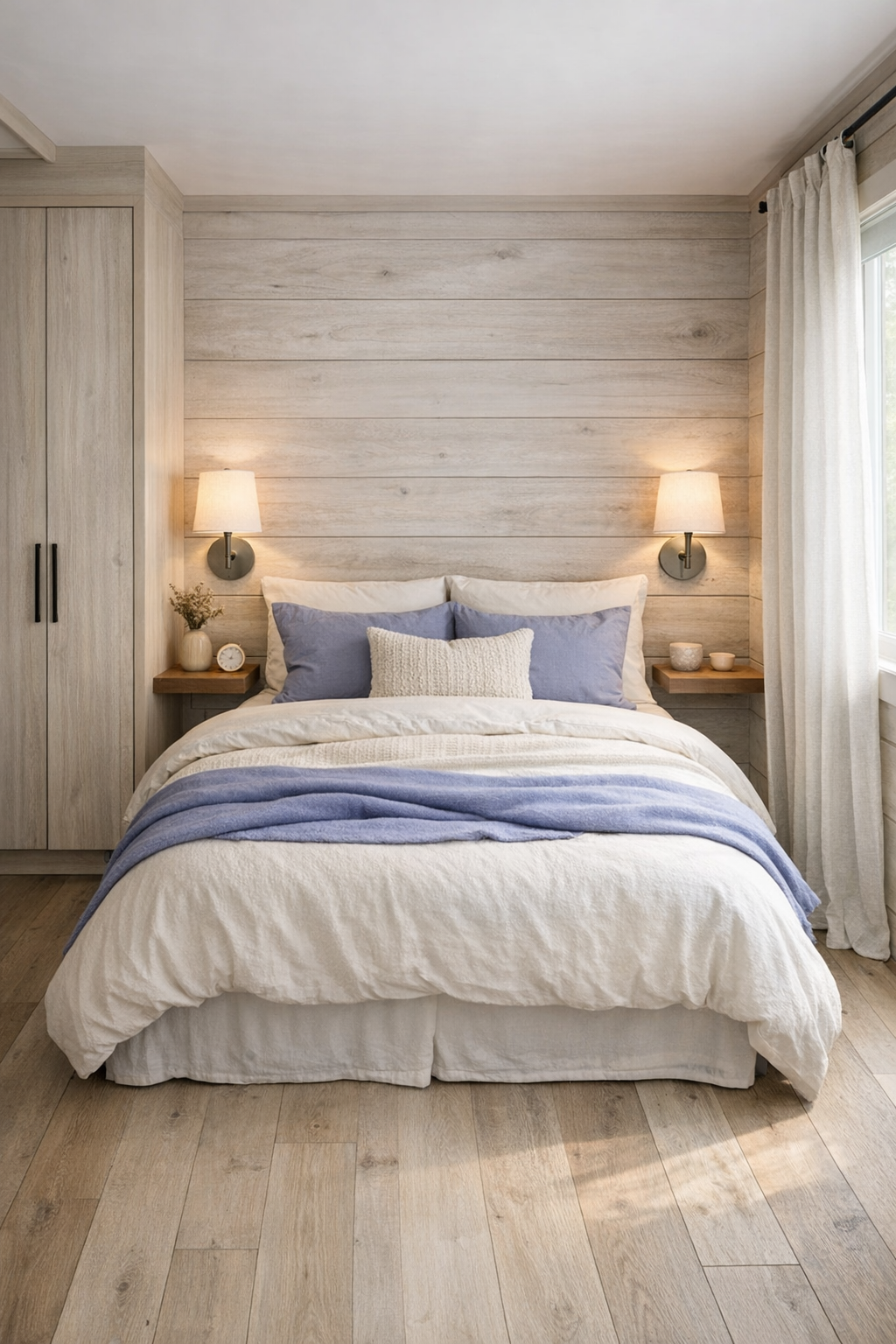
The bedroom skips the cramped loft approach and instead offers a main-level sleeping space that feels restful and genuinely practical. That choice alone changes the whole personality of the home for me. The bed is positioned to allow clear access on all sides, and the surrounding furniture stays minimal and intentional: wall-mounted sconces instead of table lamps, a slim wardrobe, and floating night shelves that keep the floor open. The palette leans a little softer here, with creamy bedding, pale taupe upholstery, washed wood, and a muted periwinkle throw folded at the foot of the bed.
What makes the room work is its balance between simplicity and warmth. There is enough textile layering to make it feel cozy, including a quilted coverlet, linen drapery, and a low-pile rug underfoot, but not so much that the space becomes busy. Natural light keeps it from feeling boxed in during the day, and blackout shades add comfort at night. I also like the little practical touches, like reachable storage, generous door clearance, and a sense of calm that comes from not overfurnishing a small room just to fill it.
Bathroom
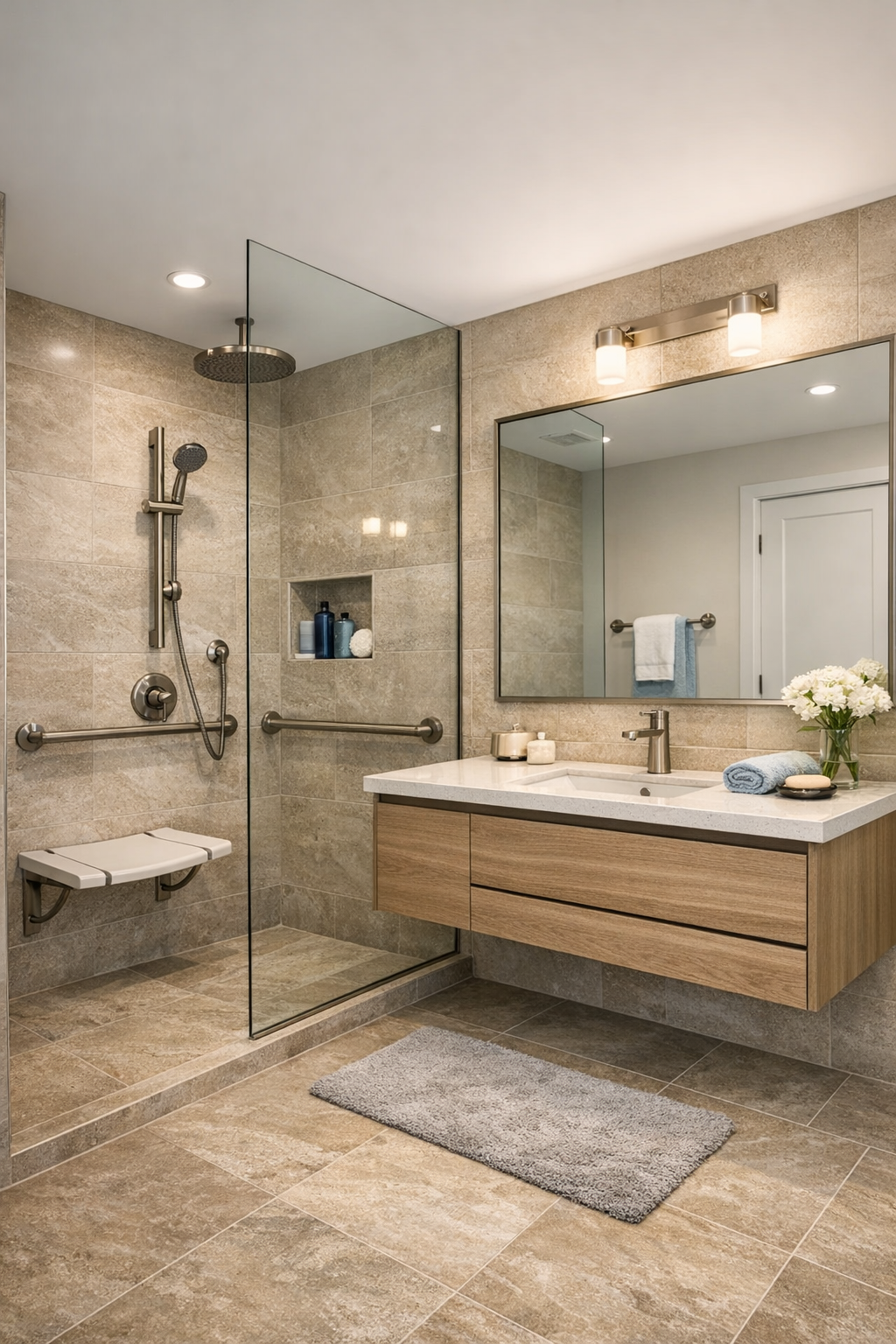
The bathroom is one of the most impressive spaces in the house because it proves accessibility can feel elevated and spa-like. A curbless shower with a wide glass panel keeps the room visually open, while large-format porcelain tile in a warm stone tone gives the whole space a clean, cohesive base. There is a floating vanity with plenty of knee clearance, a broad mirror that bounces light around, and streamlined plumbing fixtures in a soft brushed nickel finish. Everything feels easy to reach, easy to clean, and easy to move through.
I especially like the way the room avoids the cold, institutional look that sometimes happens in highly functional bathrooms. A niche lined in subtly glossy tile adds depth, fluffy white towels soften the harder surfaces, and the lighting is flattering rather than harsh. Even the color palette feels thoughtful, with warm neutrals and the faintest whisper of blue in the accessories to connect back to the rest of the home. It is compact, yes, but it feels composed and calming instead of compromised.
Other Areas
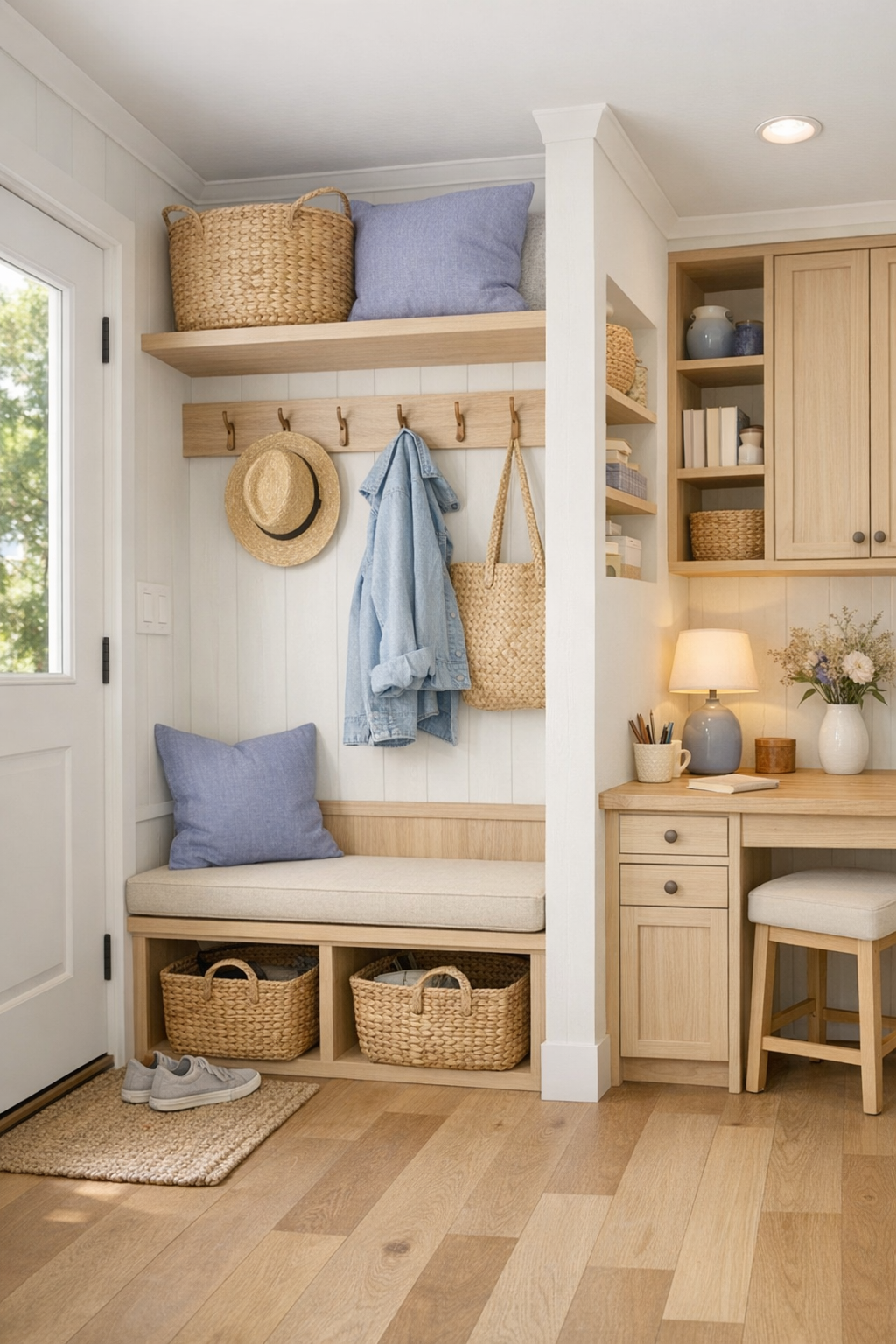
The supporting spaces in this tiny home are where the design gets even smarter. There is likely a compact entry zone with hooks, a bench, and concealed storage so bags, shoes, and daily clutter have a place to land without taking over the living room. A hallway or transitional wall area appears to work extra hard too, incorporating shallow cabinetry, charging space, and integrated shelving. In a small home, these in-between moments matter so much, and I always think they are the real difference between a place that photographs well and a place that lives well.
I can also imagine a flexible nook that serves as a work-from-home station, hobby corner, or extra prep area depending on the day. The best tiny homes do this beautifully, and this one seems to understand that real life is rarely one-note. Even the storage feels gentle and refined, with flat-front cabinetry, soft-close drawers, woven baskets, and warm wood trim tying everything together. Nothing appears overly complicated, but every inch seems to have a purpose, which is exactly what I want in a home with a smaller footprint.
Why You'd Live Here
This home makes a strong case for tiny living because it never treats accessibility, beauty, and practicality as separate goals. Instead, they all show up together in the floor plan, the material choices, and the atmosphere of each room. The soft periwinkle exterior gives it personality, while the interior offers the kind of calm, organized backdrop that can make busy daily routines feel more manageable. From the clear pathways to the hardworking kitchen, everything has been chosen with intention.
If you have ever wanted a smaller home that still feels gracious, this one absolutely delivers that feeling. I can picture it working for someone downsizing, someone wanting more independence, or honestly anyone who values thoughtful design over excess square footage. It feels warm rather than stark, efficient rather than cramped, and polished without losing its sense of home. For me, that combination is what makes it so compelling.