
There is something instantly uplifting about a home washed in soft peach, especially when that color is paired with the crisp lines of container architecture and a setting that feels calm and open. This concept home takes an industrial shell and turns it into something genuinely tender: approachable, light-filled, and thoughtfully accessible without ever feeling clinical. From the first glance, I’m struck by how the design balances simplicity with warmth, giving the whole place a gentle, welcoming mood that feels just right for both quiet mornings and lively family visits.
What makes this home special to me is the way every choice seems to support ease, comfort, and everyday beauty at once. Wide passages, smooth transitions, layered natural textures, and a sun-soft palette make the rooms feel generous even within a compact footprint. As someone who loves gathering people around food and conversation, I can immediately picture this being the kind of home where nobody feels left out, where movement is easy, and where even an ordinary weeknight dinner could feel a little more special.
Exterior
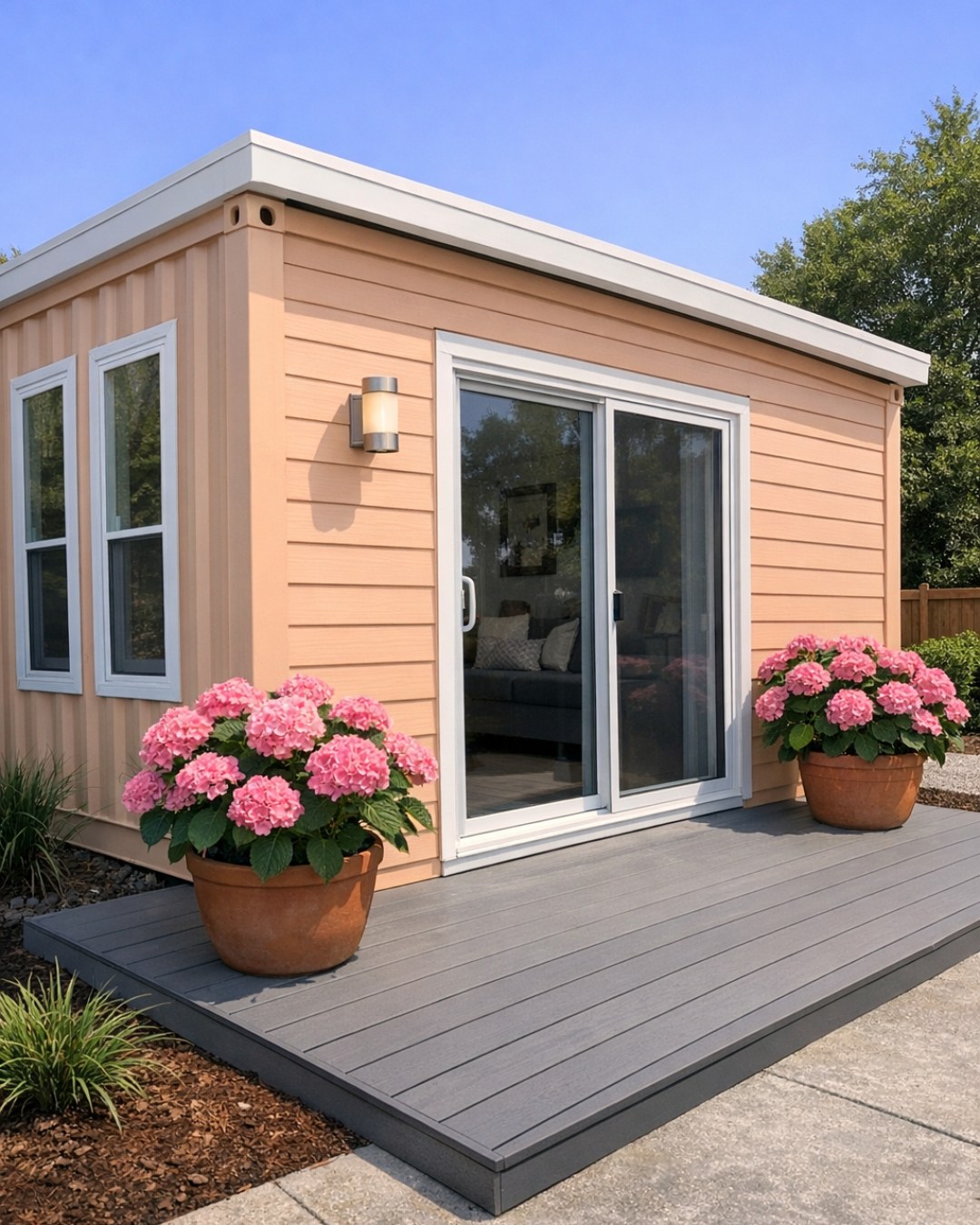
The exterior keeps the recognizable geometry of a container home, but it softens that structure beautifully with a muted peach finish that almost glows in warm daylight. Rather than fighting the home's linear form, the design leans into it with clean black window frames, pale concrete paths, and subtle wood accents that add a little earthiness. The contrast is just enough to give definition without making the house feel harsh, and I especially like how the peach tone makes the architecture feel cheerful instead of severe.
Accessibility is integrated into the curb appeal in a way that feels seamless. A gently sloped entry path replaces the usual steps, and the landing is broad enough to feel welcoming rather than merely functional. Low-maintenance landscaping with ornamental grasses, soft green shrubs, and simple planter beds keeps the focus on the architecture while adding movement and texture. It has that rare quality of looking modern, practical, and kind all at once, which is not always easy to achieve.
Living Room
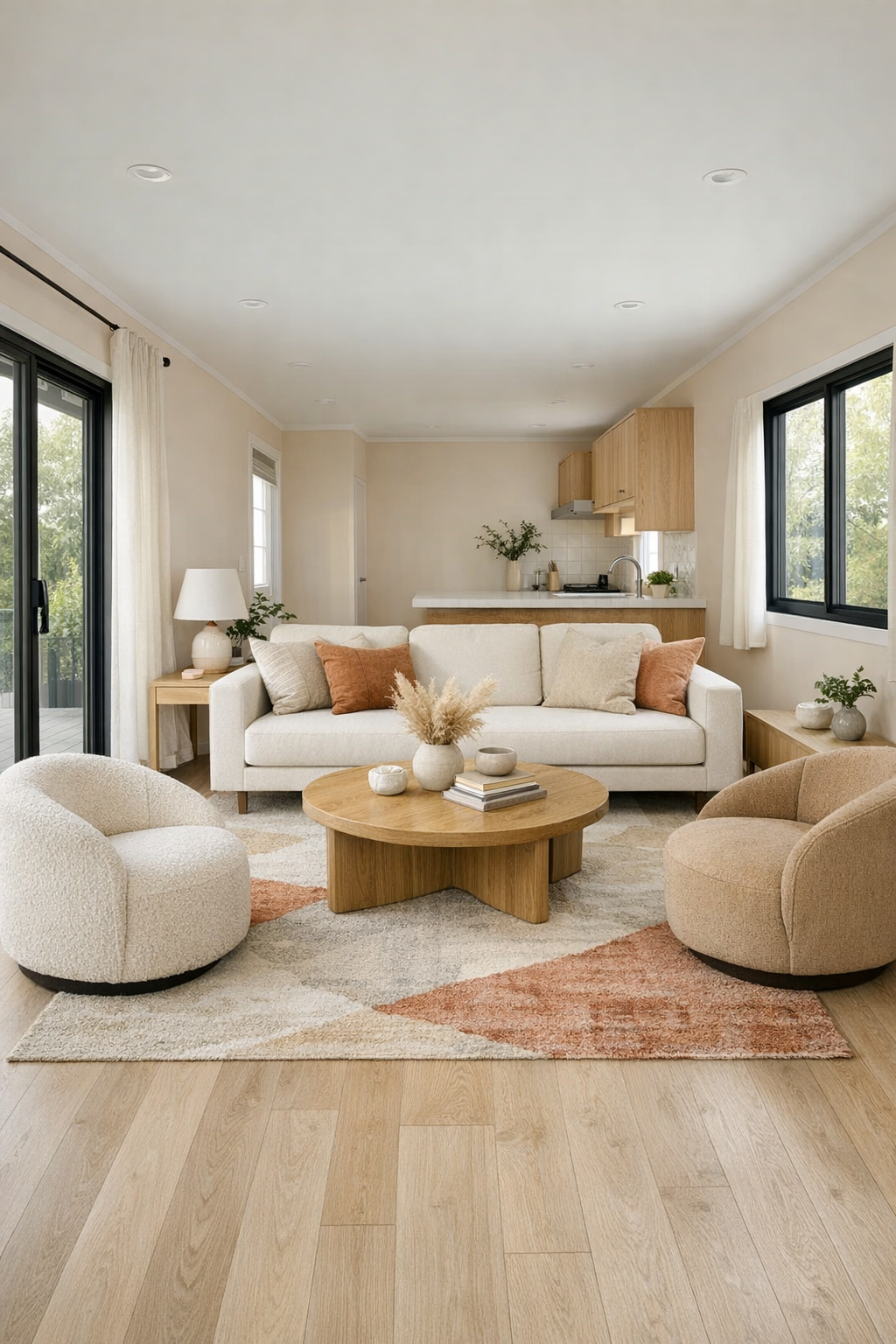
The living room is where the home’s softness really settles in. Pale oak flooring runs throughout, visually widening the space, while creamy walls and peach undertones bounce light around the room in the prettiest way. A low-profile sofa in warm ivory, a pair of rounded accent chairs, and a textured area rug with subtle terracotta and sand tones make the room feel grounded without cluttering it. I can imagine kids stretching out on that rug with a book while a tray of snacks sits on the broad, gently curved coffee table.
Because accessibility is part of the design language, the layout stays open and easy to navigate, with generous clearance around each piece of furniture. Window treatments are airy linen panels that soften the industrial lines, and layered lighting brings flexibility: recessed ceiling lights for even illumination, a sculptural floor lamp for reading, and a small wall sconce that adds a cozy evening glow. It feels calm, friendly, and polished, but not so polished that you’d worry about someone setting down a mug of cocoa.
Dining Room
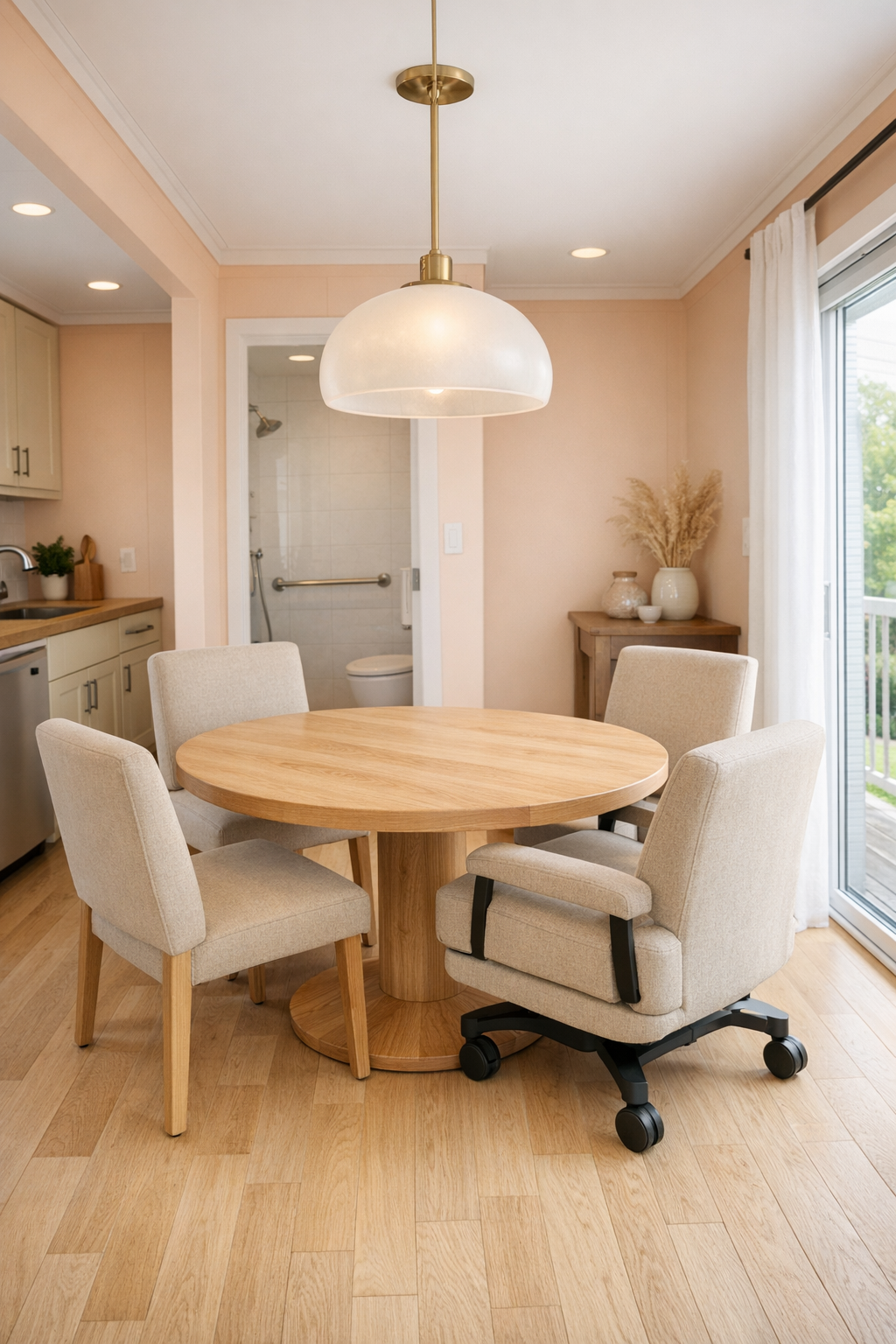
The dining area sits comfortably between the living room and kitchen, acting like the heart of the home without demanding too much square footage. A round dining table in light wood is such a smart choice here because it improves circulation and makes the room feel more social. I always think round tables help conversation along, especially when you have family members who like to linger or little ones who want to feel included. The chairs are upholstered in a wipeable woven fabric in a warm beige, which feels both practical and inviting.
Above the table, a simple pendant in frosted glass gives off a flattering, diffused glow that would make even a quick bowl of pasta feel like a proper meal. The palette stays soft and cohesive, with touches of peach, cream, and natural wood, but a darker metal base on the table and nearby shelving keeps everything from becoming overly sweet. If I were setting this space for dinner, I’d lean into that warmth with linen napkins, a ceramic serving bowl, and maybe one family-style dish in the center that even picky eaters could build their own plate from.
Kitchen
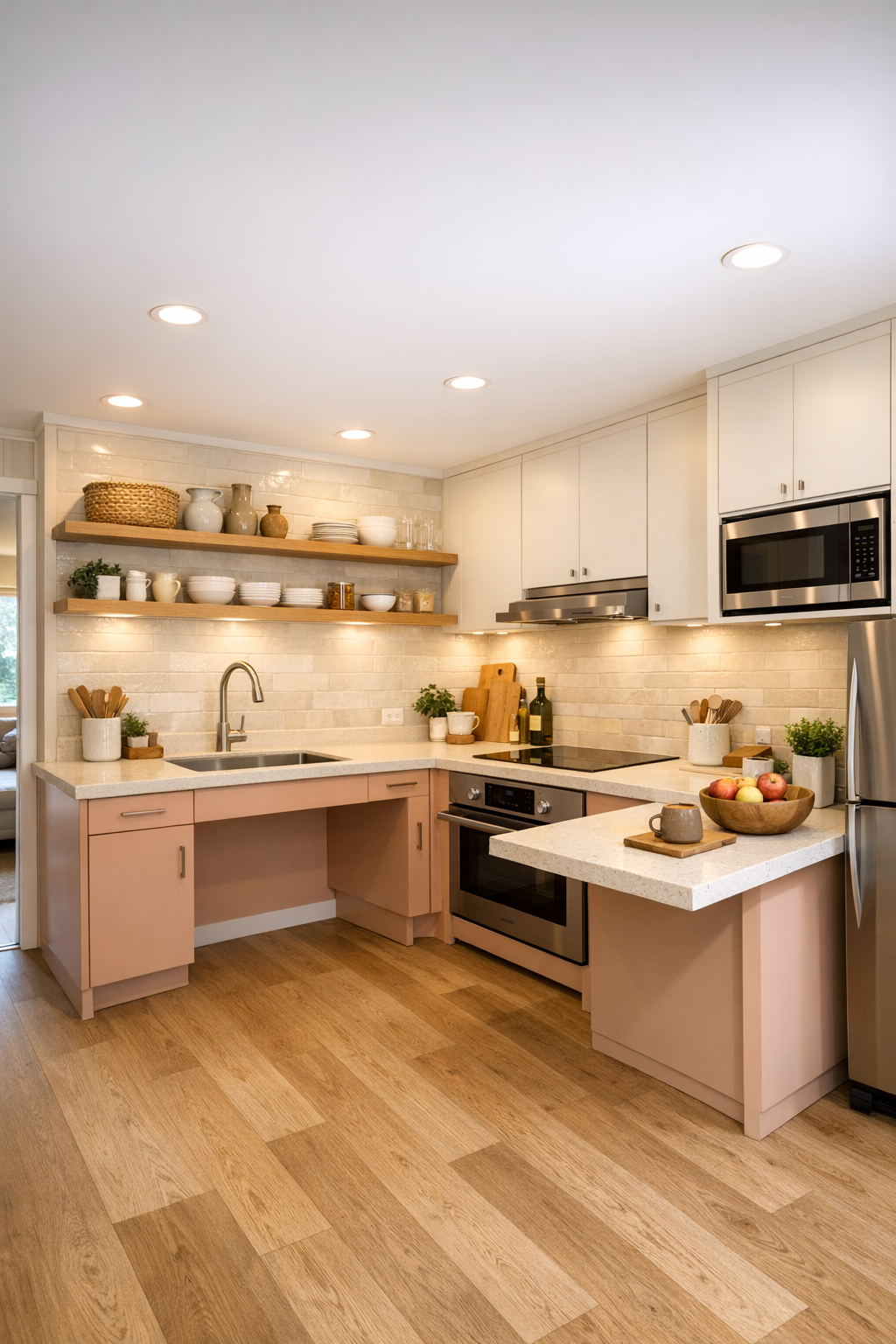
The kitchen is my favorite room in the home, and that probably won’t surprise anyone who knows me. It is designed with an easy flow that makes cooking feel less like a chore and more like a pleasure, with wide clearances, accessible counter heights, and smart storage built into every inch. Flat-panel cabinetry in a pale matte peach is paired with warm white uppers and light oak open shelving, creating a kitchen that feels fresh, gentle, and still very hardworking. The counters appear to be a soft quartz in a creamy tone, and the backsplash in elongated handmade-look tile adds just enough texture to keep the room lively.
What I appreciate most is how family-friendly the space feels without losing its clean design. There is room for more than one person to help, which matters when you are plating dinner, packing lunches, or letting children stir something simple at the counter. Integrated appliances keep the lines streamlined, and under-cabinet lighting brightens prep zones beautifully. I can picture setting out toppings for tacos, baked potato bars, or personal grain bowls here, which is one of my favorite tricks for feeding guests and picky eaters at the same time without making anyone feel like an afterthought.
Bedroom
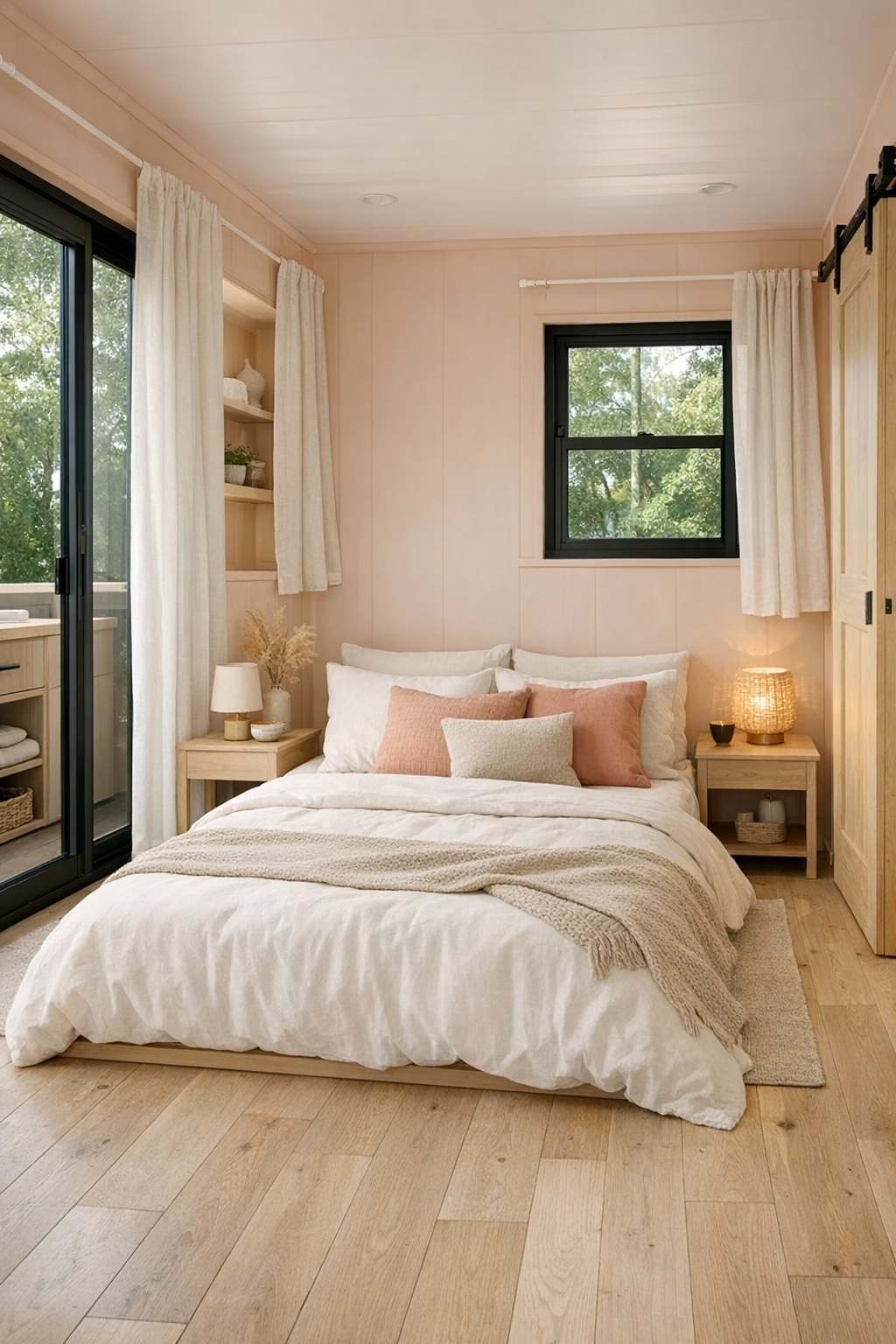
The bedroom takes the home’s soft palette and makes it even more restful. The bed is kept low and easy to approach, dressed in layered neutrals like ivory, oatmeal, and dusty peach, with a quilted coverlet that brings in a little softness and weight. Instead of crowding the room with bulky furniture, the design uses slim nightstands, built-in storage, and a simple upholstered bench at the foot of the bed. That choice leaves the room feeling breathable and calm, which is exactly what I want at the end of a busy day.
Black-framed windows give the room a bit of contrast, but everything else works toward quiet comfort: linen drapery, a textured wall finish, warm wood touches, and lighting that is easy to control from bed. I love that the space feels intentionally uncluttered rather than sparse. It has enough detail to feel cared for, but not so much that your eyes never get to rest. For me, that’s the sweet spot in a bedroom, especially in a home where every square foot needs to support real life gracefully.
Bathroom
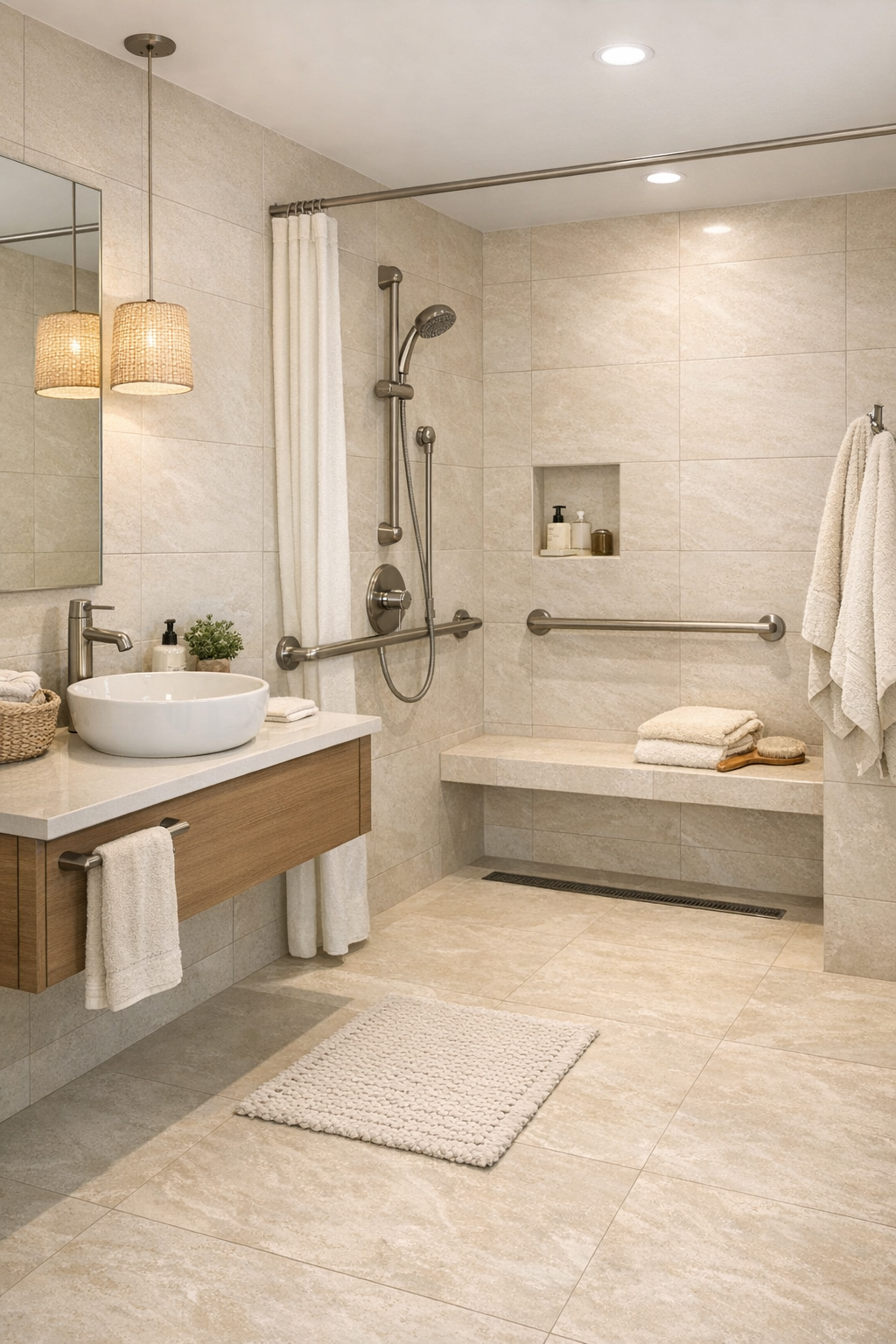
The bathroom is proof that accessible design can be truly beautiful. A curbless shower creates a clean, uninterrupted floor plane, and large-format tiles in warm ivory make the room feel bigger and brighter. The vanity is wall-mounted, which keeps the look airy while also improving usability, and the countertop basin adds a sculptural note without being flashy. Brushed nickel fixtures, a frameless mirror, and soft integrated lighting all contribute to a finish that feels polished, calm, and easy to maintain.
I especially like the way texture is handled here. There is enough variation between matte tile, smooth stone, and soft woven towels to give the room dimension, but the palette stays gentle and cohesive. Practical details are tucked in thoughtfully, from reachable storage niches to a built-in shower bench that looks intentional rather than added on. It’s the kind of bathroom that would make a rushed morning easier and an evening shower feel like a reset.
Other Areas
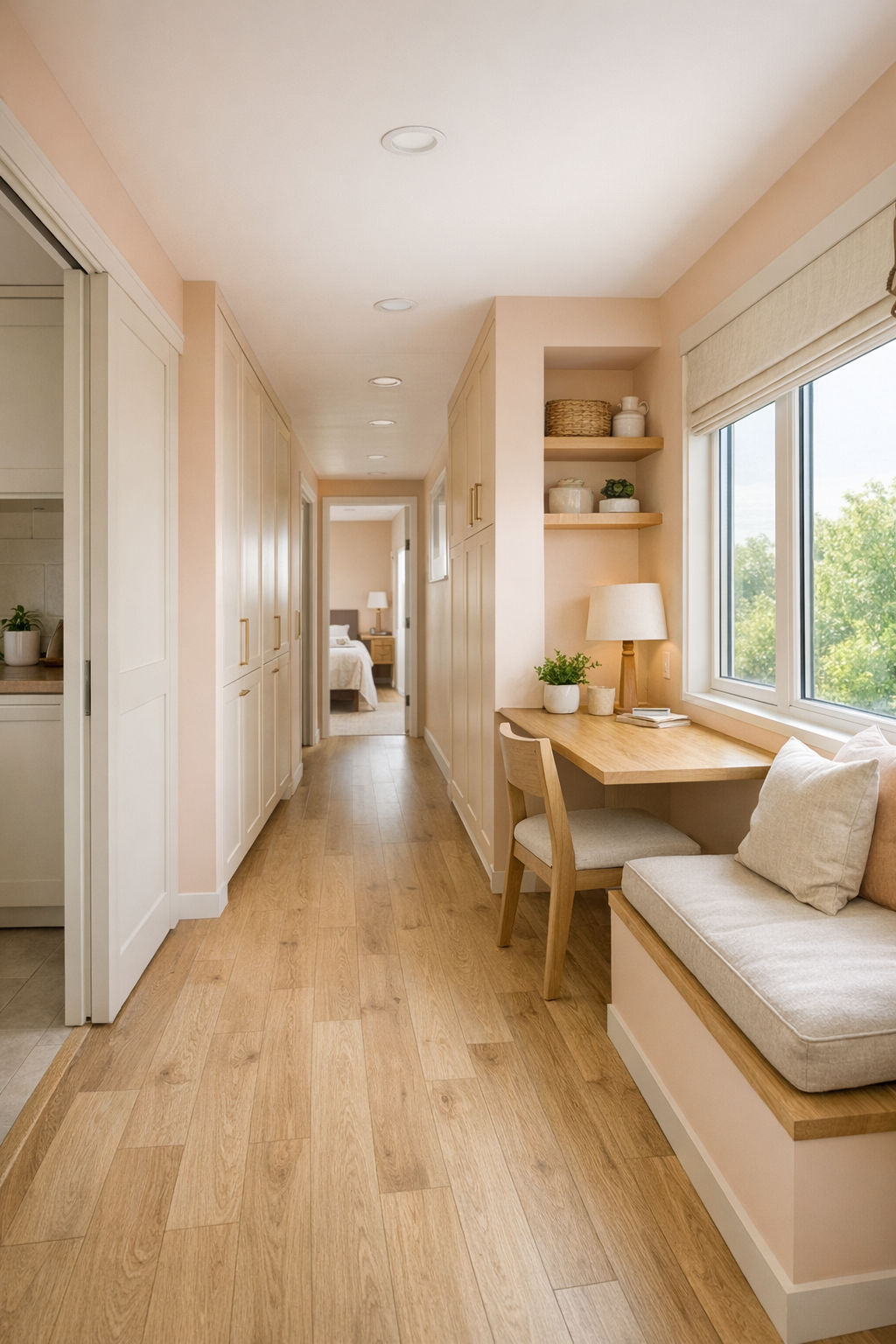
Even the transition spaces in this home feel considered, which I always notice because those are the places that can either support daily life or quietly frustrate it. The hallway is wide and bright, with the same pale oak flooring carrying through for continuity, and built-in storage keeps shoes, coats, and household extras from spilling into the main rooms. A small nook near a window works as a compact desk or reading corner, and I could easily imagine it doubling as a homework spot, a recipe-planning perch, or a place to sit with coffee before the rest of the house wakes up.
There also seems to be a lovely connection between indoors and out, helped along by large glazed openings and minimal thresholds. In a home like this, that really matters because it makes the entire footprint feel bigger and more relaxed. Little touches such as a built-in bench, soft wall hooks, and simple shelving turn overlooked areas into useful ones. As a parent, I appreciate spaces that do a bit of quiet heavy lifting, and these are exactly the kinds of thoughtful extras that make everyday routines smoother.
Why You'd Live Here
You’d live here because it offers something many compact modern homes miss: genuine softness. This design takes the efficiency of a container structure and wraps it in colors, textures, and planning choices that make life feel easier and more cared for. It is stylish without being intimidating, accessible without feeling institutional, and modern without going cold. To me, that combination is what gives the home its staying power.
You’d also live here because it understands real daily rhythms. There is room to cook, gather, rest, move comfortably, and welcome people in. Every material seems chosen to support both beauty and practicality, which is a balance I always come back to in a family home. If a house can make dinner prep smoother, quiet corners cozier, and guests feel immediately at ease, I think that is more than good design; that is a home doing exactly what it should.