
I love a home that feels both grounded and a little bit adventurous, and this converted bus in the countryside hits that sweet spot right away. From the outside, it has that unmistakable wanderer spirit, but inside, the design softens into something calm, warm, and beautifully livable. The overall look blends rustic simplicity with smart modern updates: light wood, creamy walls, matte black accents, and just enough texture to keep every inch from feeling flat. As a concept design, it imagines the best version of off-grid living without losing the comfort most of us still want at the end of a busy day.
What makes this home special to me is how thoughtfully the narrow footprint is handled. Instead of fighting the bus proportions, the layout leans into them with built-in furniture, layered lighting, and little visual pauses that make the whole interior feel longer, brighter, and more open. It has the cozy charm of a cabin, the efficiency of a well-organized kitchen drawer, and the kind of atmosphere that makes you want to slow down with a cup of coffee before the day starts.
Exterior

The exterior keeps the bus silhouette recognizable, which I think is part of its magic, but it is elevated with a more refined country look. The body is finished in a soft muted sage with warm white trim, and the windows are framed in matte black for contrast that feels crisp without being harsh. A cedar entry deck runs alongside the main door, creating a welcoming transition between the rugged landscape and the polished interior. I can easily picture muddy boots left outside here after a long walk, with the wood aging beautifully over time.
There is a practical elegance to the off-grid setup as well. Low-profile solar panels sit neatly along the roofline, and the rear storage is integrated so it does not interrupt the home's clean profile. Planters with trailing herbs and hardy grasses soften the base of the bus, while simple exterior sconces cast a warm glow in the evening. It feels intentionally placed in the countryside rather than dropped into it, with every detail helping the home settle naturally into its setting.
Living Room
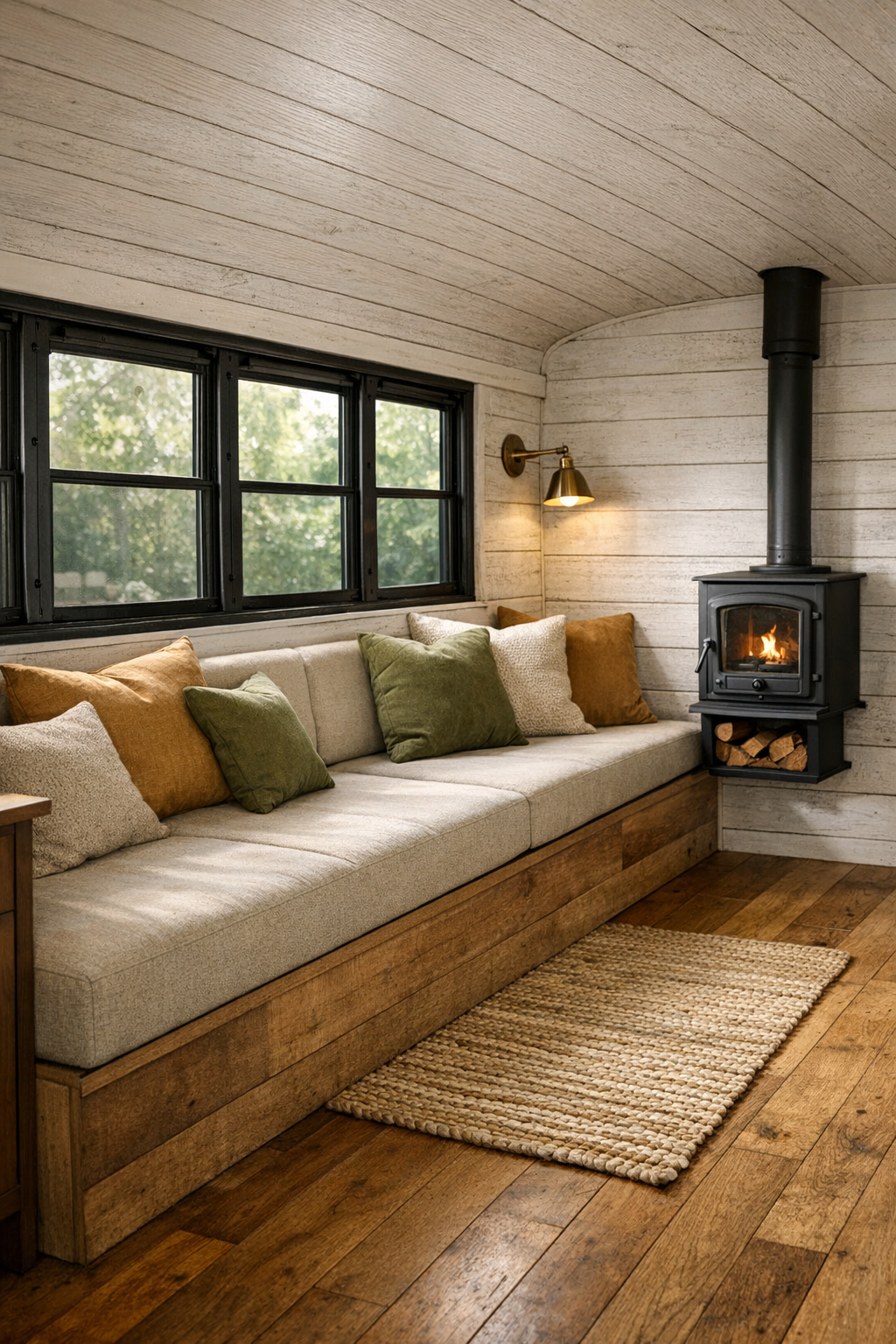
The living room is compact, but it never feels cramped because the design is doing so much heavy lifting in the best way. A built-in bench sofa stretches along one side beneath the windows, upholstered in a textured oatmeal fabric that instantly brightens the space. Under-seat storage keeps clutter tucked away, which, honestly, is the kind of practical detail I always appreciate in smaller homes. Across from it, a slim wood ledge and a petite wall-mounted stove create a focal point without taking over the room.
The palette here stays soft and easy on the eyes: honey-toned wood flooring, whitewashed plank walls, camel and olive throw pillows, and a woven rug that adds just enough pattern. Brass reading sconces and small recessed ceiling lights keep the lighting layered and warm, especially after sunset. I also love the fold-out coffee table, which can work for morning emails, dinner on the couch, or the kind of weekend snack spread that somehow turns into a full meal.
Dining Room
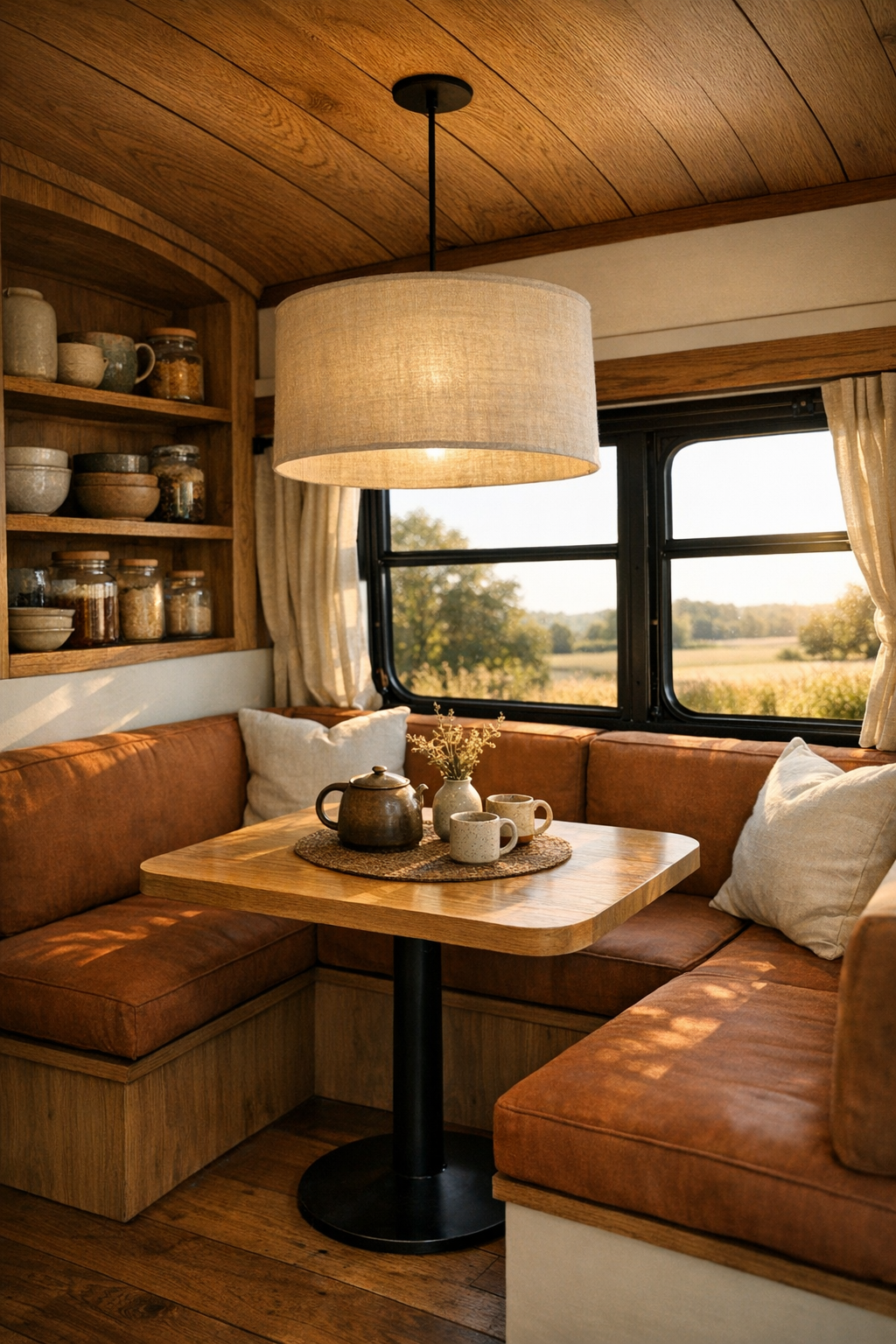
The dining area is one of the smartest spots in the bus because it works hard without looking overly engineered. A custom banquette wraps around a compact rectangular table, letting the space feel intimate and comfortable while still maximizing seating. The table itself appears to be solid ash with softly rounded corners, which is such a good move in a narrow home like this. Overhead, a simple linen pendant adds softness and draws the eye upward, making the ceiling feel a little taller.
I can imagine this being one of the most-used spaces in the home, especially for anyone balancing work and daily life. It is equally suited to a quick breakfast, laptop time, or a cozy dinner with the windows open to the fields outside. The seat cushions are done in a muted clay tone that gives the space a little warmth, and open shelving nearby displays stoneware, glass jars, and a few cookbooks without making things feel crowded. It is practical, yes, but it also has that gathered, lived-in charm I always notice in spaces that really work.
Kitchen
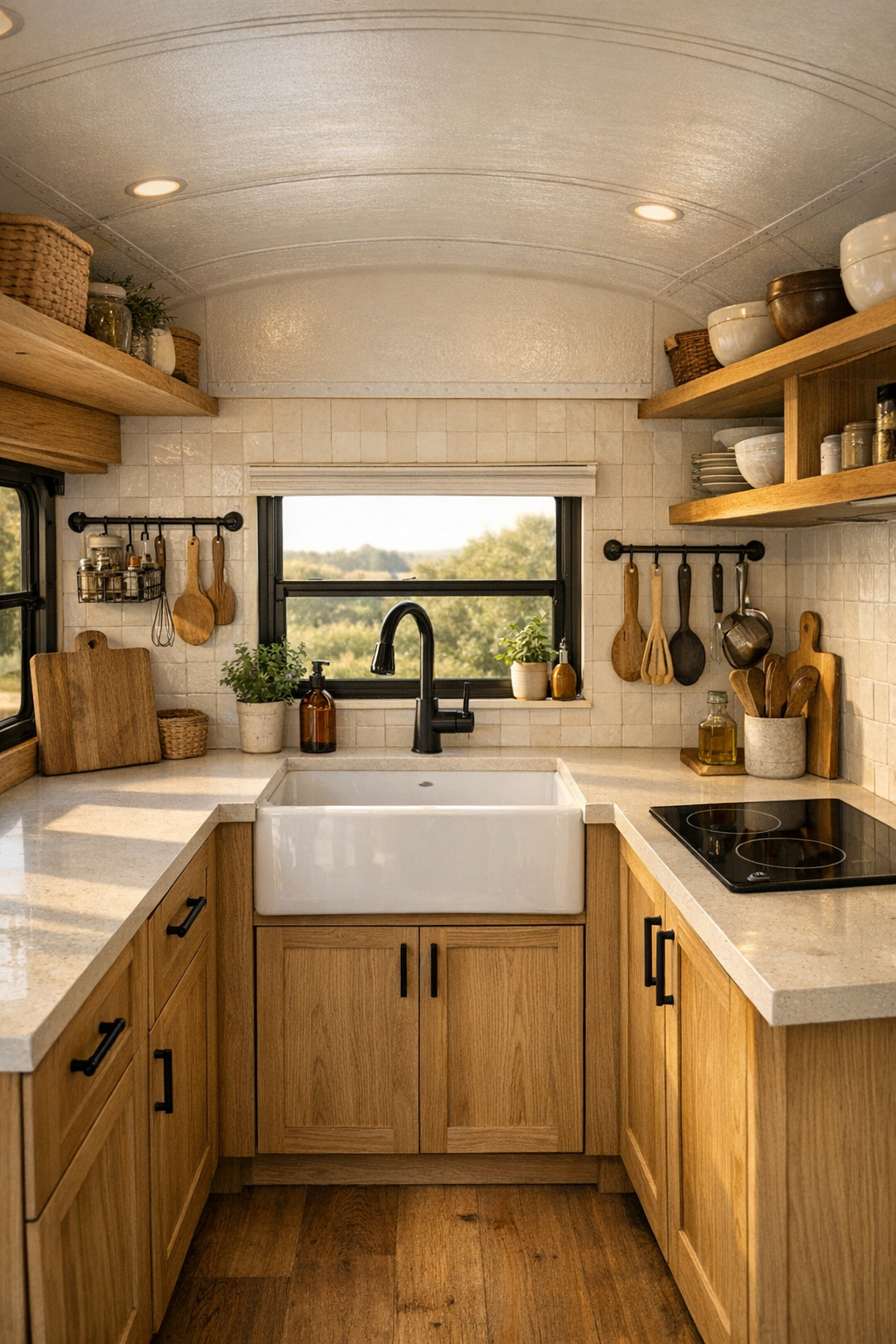
The kitchen is, without question, my favorite part of the bus. Maybe that is the cooking enthusiast in me, but I immediately notice how well it balances beauty and actual usability. The cabinetry runs in a galley layout with flat-front oak doors, slim black pulls, and creamy quartz counters that bounce light around the room. There is a deep farmhouse-style sink tucked below a window, and the backsplash is done in narrow handmade tiles with a soft off-white glaze that gives the space subtle movement.
Because this is an off-grid home, the appliances are thoughtfully scaled rather than oversized, and I think that makes the kitchen feel more intentional. A compact induction cooktop, under-counter fridge drawers, and clever vertical pantry storage keep everything efficient without sacrificing style. Open rails for utensils, magnetic spice storage, and a butcher-block insert over part of the sink create extra prep space, which is exactly the kind of detail I would love on a busy weeknight when dinner needs to happen fast. It feels streamlined, but still warm enough to invite slow cooking when there is time.
Bedroom
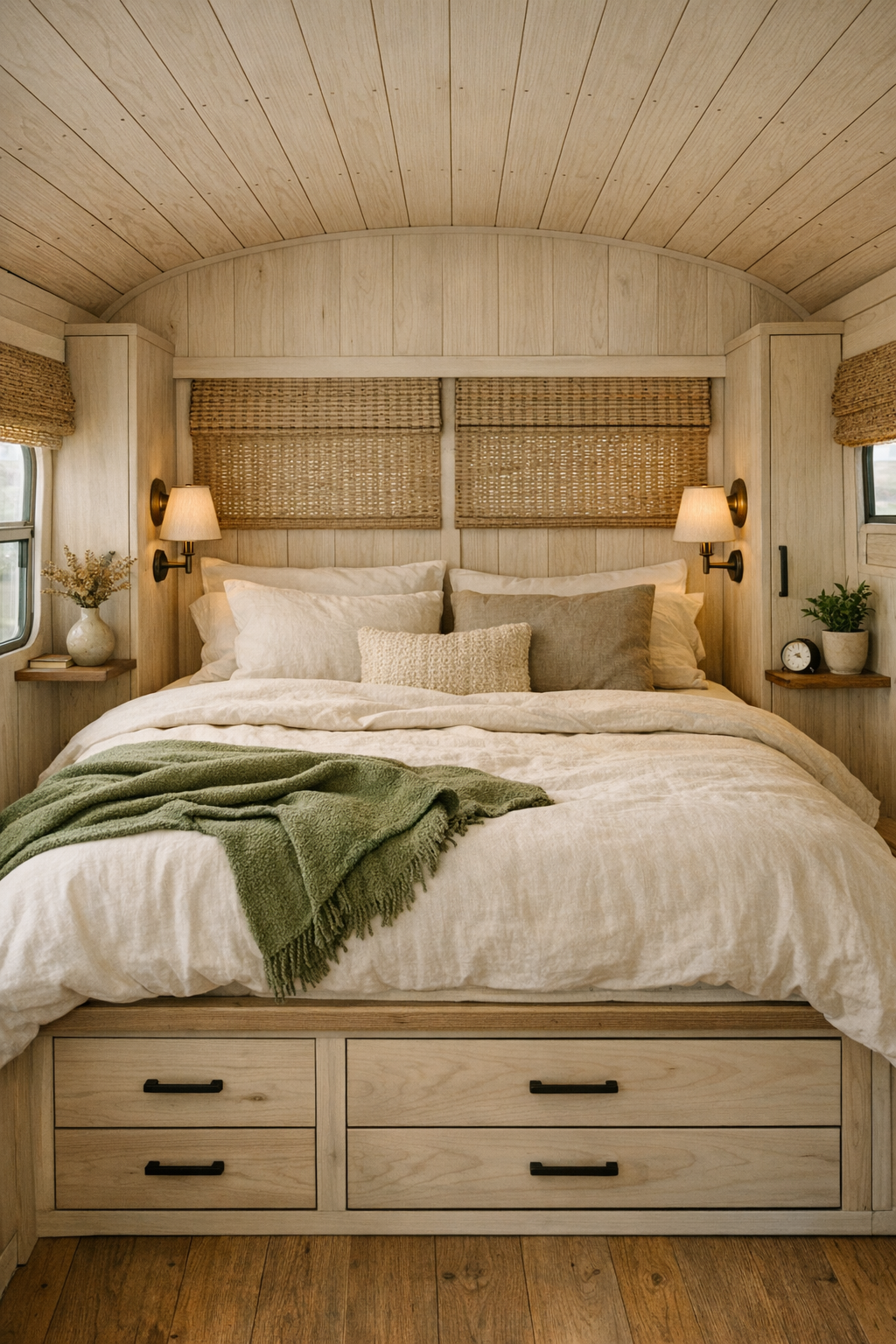
The bedroom takes advantage of the bus's rear curve in a way that feels surprisingly serene. A raised platform bed spans the width of the space, dressed in soft ivory linen with a moss-green throw and a stack of relaxed neutral pillows. Drawers built into the platform handle clothing storage, and narrow wardrobe cabinets on either side frame the bed almost like millwork in a custom cottage. It is snug, of course, but the symmetry and restrained palette make it feel restful rather than tight.
What really gives the room its peaceful mood is the layering of texture. There are paneled wood walls in a pale natural finish, woven shades that filter the light, and tiny sconces mounted for bedtime reading without crowding the night ledges. I like that the room does not try to do too much. It simply focuses on comfort, storage, and quiet atmosphere, which is often exactly what makes a bedroom feel luxurious in a small home.
Bathroom
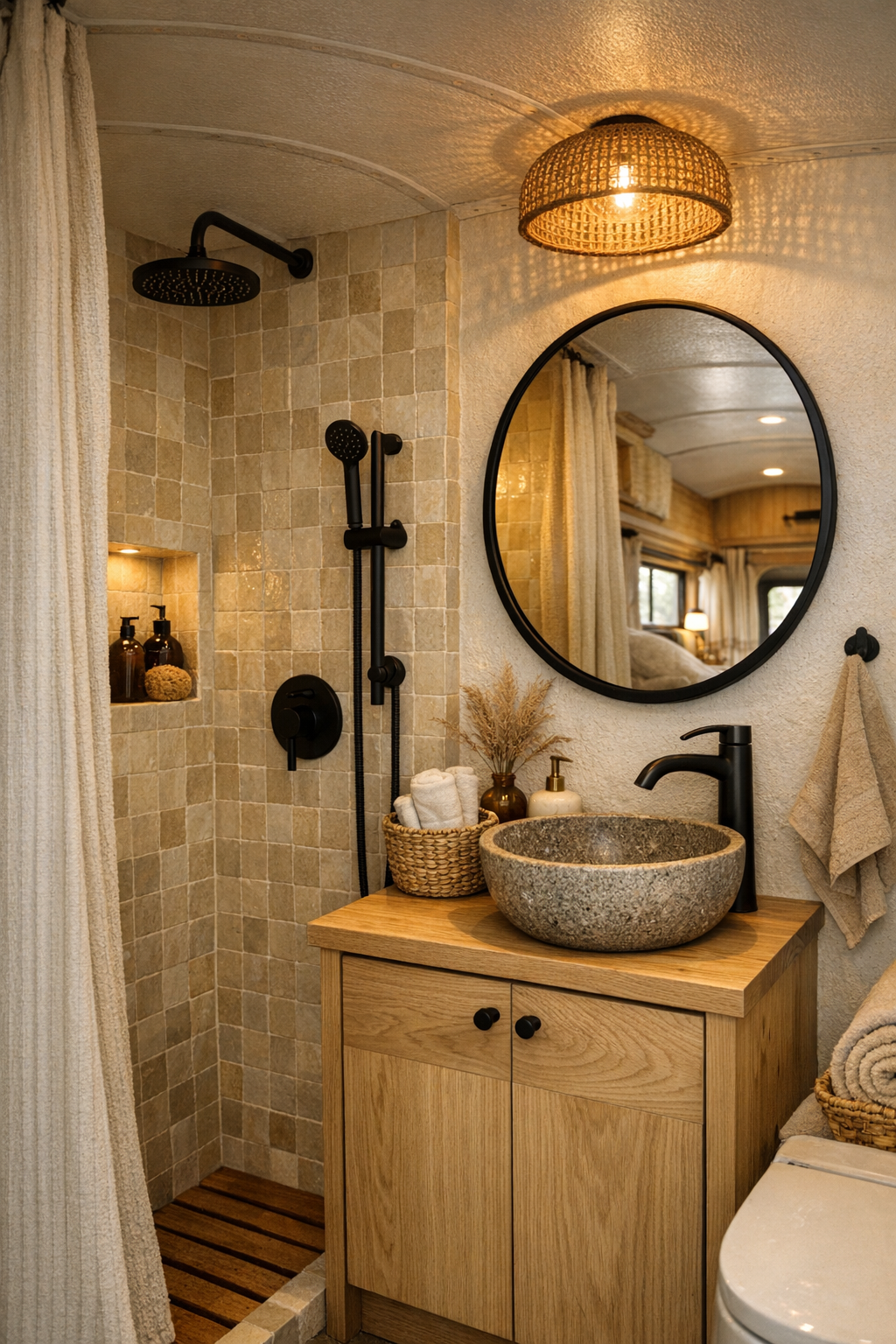
The bathroom is compact but beautifully resolved, and that is not always easy to pull off in a bus conversion. The shower is lined with vertically stacked zellige-style tiles in a soft sand tone, which helps elongate the walls visually. A petite vanity in white oak supports a stone vessel sink, while a rounded mirror keeps the space from feeling too boxy. Matte black plumbing fixtures tie back to the window frames and hardware used throughout the home, creating that nice sense of continuity from room to room.
There is also a thoughtful mix of closed and open storage so the essentials can stay accessible without becoming visual clutter. A recessed niche in the shower holds soaps and shampoo, and a shallow shelf above the toilet is styled simply with rolled towels and a small ceramic planter. I really appreciate how the finishes stay warm and natural instead of veering clinical. Even in a tiny footprint, the bathroom feels like a place to exhale for a minute, which is honestly all I want from a hardworking daily space.
Other Areas
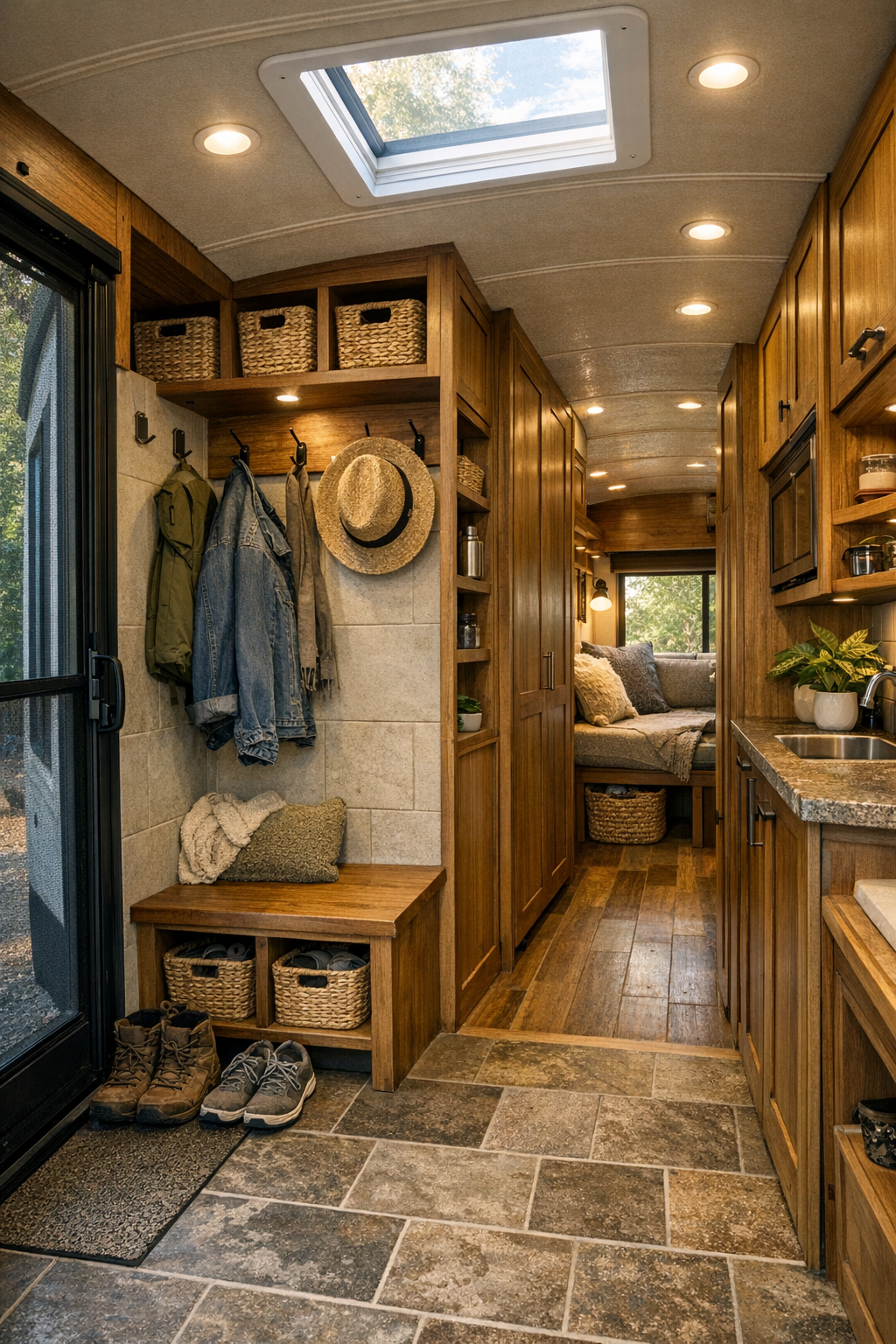
The transitional spaces in this bus are where the design really proves how carefully it has been considered. Hallway walls are used for slim cabinetry, hooks, and inset shelving, turning circulation into storage without making it feel utilitarian. Near the entry, there is a compact mudroom moment with a bench, cubbies, and durable floor tile that can stand up to country life. It is one of those features that sounds small until you imagine coming in with groceries, jackets, and muddy shoes, and then it suddenly feels essential.
There is also a lofted utility zone and overhead storage woven into the architecture so neatly that it reads as part of the design instead of an afterthought. Skylights punctuate the ceiling in key spots, bringing in extra daylight and helping the center of the bus feel open. I especially love the little reading perch tucked by one window, complete with a cushion and narrow shelf for a mug or book. Those tiny in-between spaces are often what make a home memorable, and here they add personality without wasting an inch.
Why You'd Live Here
You would live here if you love the idea of simplifying without giving up beauty. This bus proves that small-scale living can still feel layered, warm, and genuinely personal when the materials are thoughtful and the layout is working hard behind the scenes. It has all the ingredients that make a home feel comforting at the end of a full day: natural light, smart storage, a practical kitchen, and cozy corners that invite you to slow down.
For me, the biggest draw is how this design makes off-grid living feel approachable instead of extreme. It still supports everyday routines, whether that is cooking dinner, working at the table, or curling up with a blanket while the countryside goes quiet outside. There is freedom in that kind of home, but also softness, and I think that combination is what makes this one so unforgettable.