
Some homes feel polished in a way that keeps you at arm’s length, and then there are places like this converted bus, which pulls you in immediately with its warmth, ingenuity, and slightly rebellious charm. From the outside, it leans rustic and hardworking, but step inside and the mood shifts into something softer and more layered: reclaimed wood, matte black accents, cozy textiles, and the kind of smart storage that makes a small footprint feel surprisingly generous. It’s an off-grid retreat with a grounded, practical spirit, and as a concept design, it still feels incredibly livable to me.
What makes this home special is how thoughtfully it balances sustainability with real everyday comfort. I’m always drawn to spaces that don’t just look good in photos but seem like they could genuinely support busy routines, quiet mornings, and the kind of simple cooking that anchors a day, and this one absolutely does. The design turns limitations into personality, using every inch for texture, function, and ease, while keeping the overall atmosphere calm, rustic, and wonderfully unexpected.
Exterior

The exterior keeps the bus recognizable, which I love, but it has been refined with a more intentional, cabin-like presence. The body is finished in a muted earthy tone that feels at home against gravel, prairie grass, or a wooded clearing, while natural wood detailing around the entry adds a handcrafted softness. Matte black hardware, rugged tires, and streamlined solar panels across the roof give it that off-grid credibility without making it feel overly technical or severe.
What really works here is the contrast between utility and welcome. The entry door feels more like the front door of a tiny cottage than a vehicle, especially with a small built-in step, a lantern-style sconce, and planters that bring in a little lived-in charm. I can picture this parked at the edge of a field at golden hour, with the metal shell catching warm light and the wood elements mellowing everything down. It’s rustic, self-sufficient, and just polished enough to feel intentional rather than improvised.
Living Room
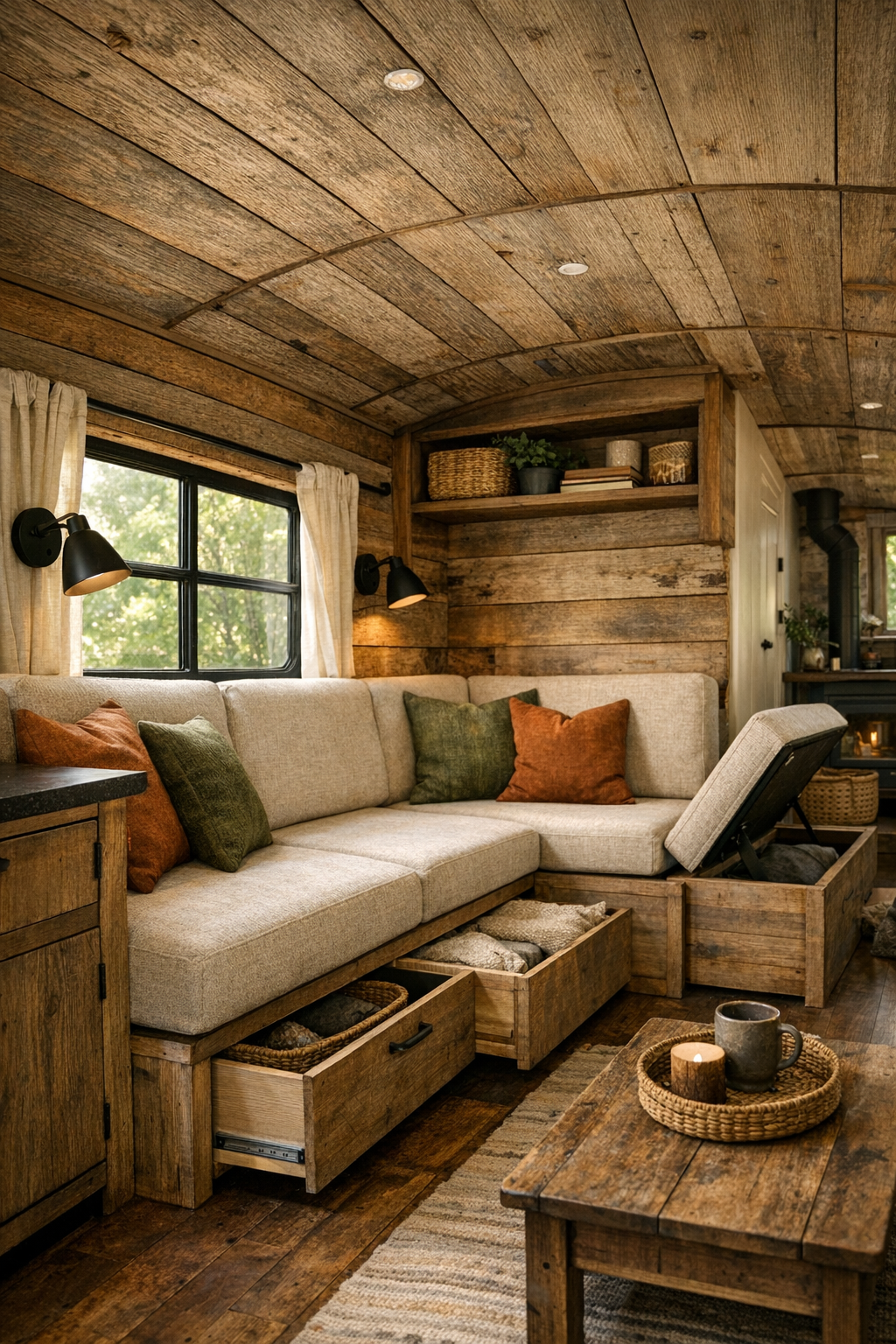
The living area is compact, but it never reads cramped because the palette is so warm and controlled. A built-in bench sofa runs along one side beneath the windows, upholstered in a durable oatmeal-toned fabric with layers of rust, olive, and charcoal pillows that make the whole space feel grounded. Reclaimed wood clads the walls and ceiling in a way that adds instant coziness, while black steel brackets and slimline sconces keep the rustic look from becoming too precious. It has that collected feeling I always appreciate in smaller homes, where every piece earns its spot.
The layout is especially smart here. A nesting coffee table can tuck away when floor space is needed, and hidden storage under the seating handles the practical stuff that can easily create clutter in a tiny home. Natural light does most of the heavy lifting during the day, filtering through linen-style window coverings that soften glare without shutting the outside out. At night, the layered lighting makes all the difference: a warm overhead fixture, reading sconces, and a subtle under-bench glow that turns the room into a cozy landing spot after a long day.
Dining Room
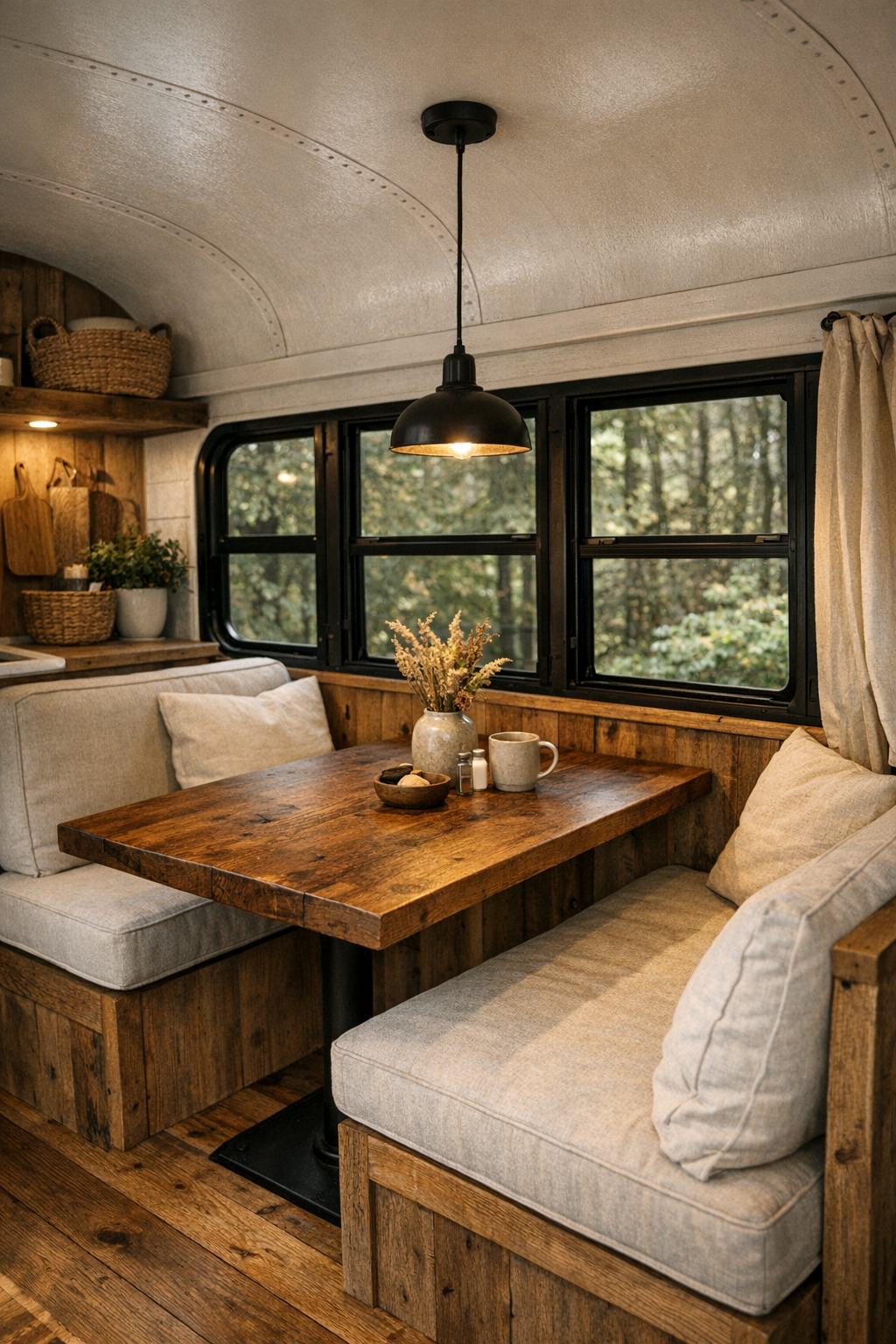
The dining area is one of the most charming parts of the bus because it feels so intimate without sacrificing function. A built-in dinette tucks neatly beside the windows, with a solid wood table that shows off its grain and just enough knots to feel authentic rather than overly refined. Opposite benches maximize seating while keeping circulation easy, and the cushions are done in a simple neutral performance fabric that can handle everyday life. If you’ve ever tried to make a quick weeknight meal in a small space, you know how important it is for the table to work hard, and this one absolutely does.
Design-wise, the dining nook gets its character from contrast. The wood tones bring warmth, while black-framed window trim and a compact metal pendant add structure and definition. I’d probably set this table with ceramic mugs and a linen runner and call it done, because the room already has so much texture built in. It feels like the kind of place where coffee tastes better in the morning and dinner stretches a little longer at night, helped along by the glow of focused lighting and the close, cocooning proportions of the bus shell.
Kitchen
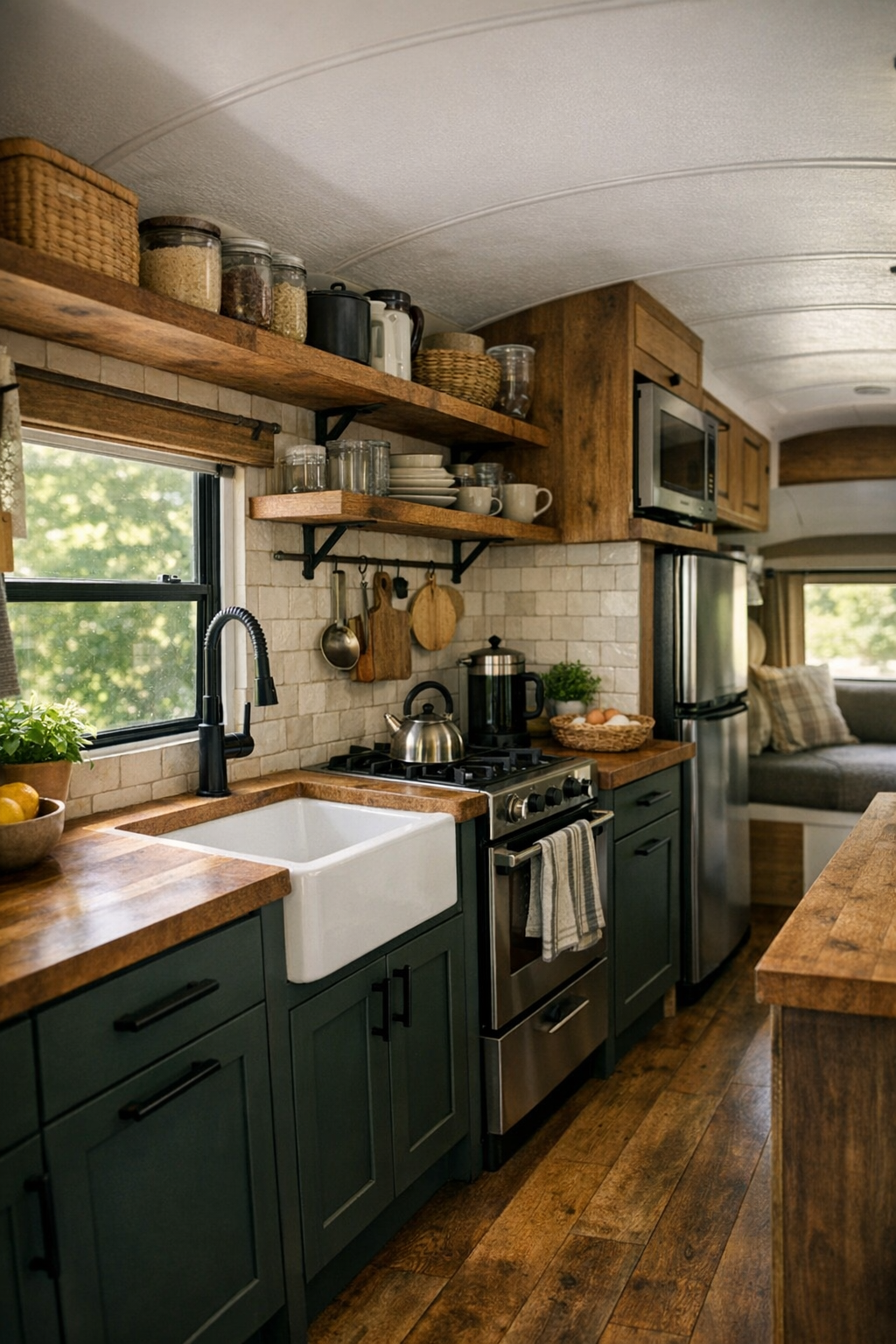
The kitchen is where this home really wins me over, probably because it manages to feel both beautiful and genuinely usable. Narrow galley layouts can be tricky, but this one has been handled with a lot of care: butcher block counters, lower cabinetry in a muted forest or charcoal tone, open wood shelving, and a compact but handsome apron-front sink. The finishes are simple enough to keep the space visually open, yet rich enough to give it personality. I can absolutely imagine meal prepping here on a Sunday afternoon, with jars lined up on the shelves and everything within reach.
Practical details make the biggest difference. There’s likely an induction cooktop to suit the off-grid setup, a slim refrigerator integrated neatly into the cabinetry, and clever pull-out storage that makes use of every awkward inch. The backsplash is understated, perhaps a handmade tile in a soft cream or warm clay tone, adding subtle variation without fighting the wood grain. Good under-shelf lighting keeps prep tasks easy, and the windows prevent the darker cabinetry from feeling heavy. It’s a hardworking kitchen, but it still has that calm, edited look that makes cooking feel less like one more thing on the list.
Bedroom
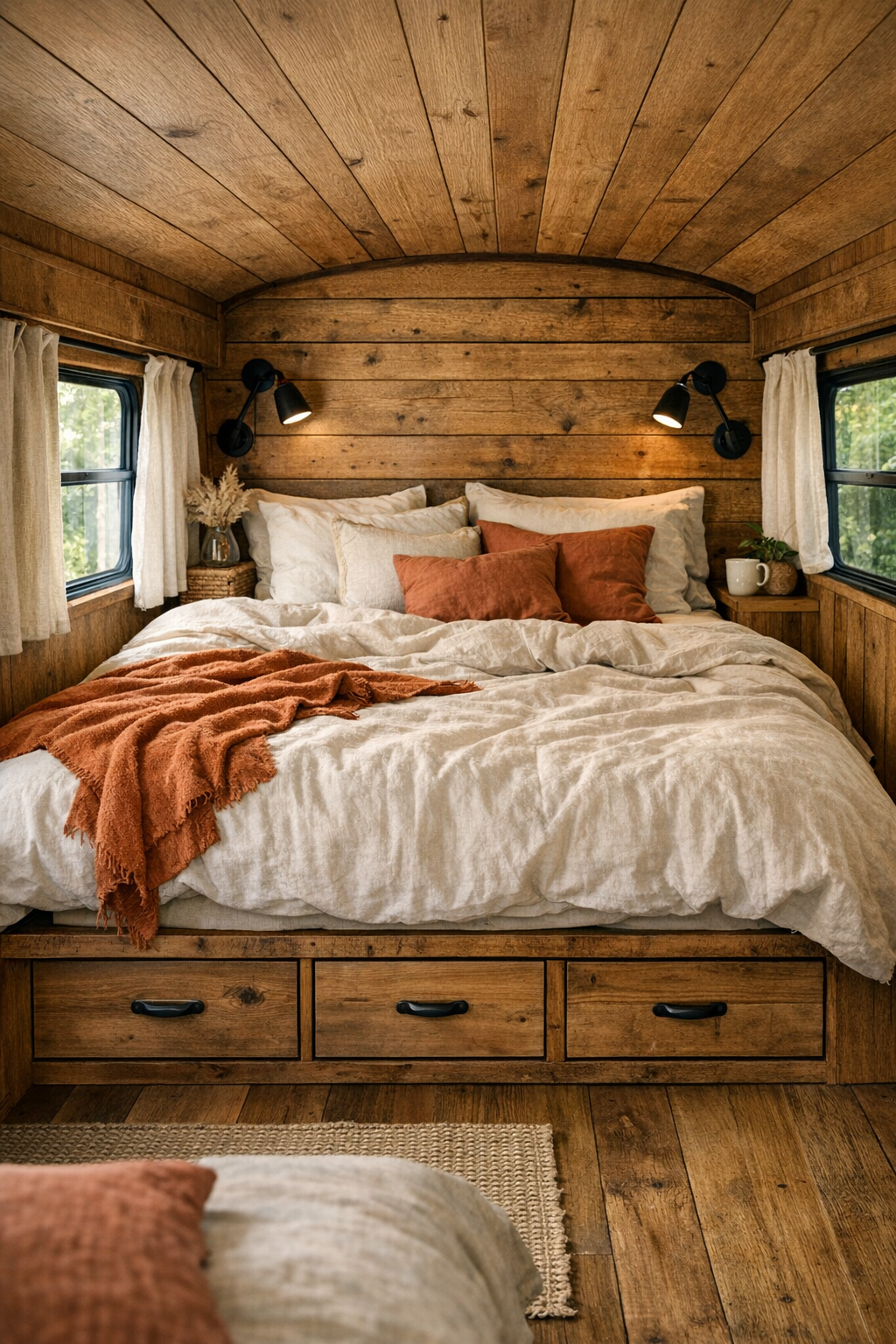
The bedroom proves that small spaces can still feel restful when the materials are chosen thoughtfully. The bed platform is likely built in, which keeps the footprint efficient and opens the possibility for generous drawer storage underneath. Linen bedding in soft ivory, camel, and muted terracotta tones gives the room a relaxed, layered look, while the wood-paneled walls continue the cozy envelope established elsewhere in the bus. I like that the design doesn’t try too hard here; it lets texture and proportion do the work.
There’s also a nice sense of retreat in the way the sleeping area is framed. Whether it sits at the back of the bus or slightly raised, it feels tucked away from the active zones, with just enough separation to create privacy without chopping the interior into tiny pieces. Small wall-mounted reading lights free up surface space, and narrow shelves or cubbies beside the bed hold the essentials without clutter. It’s simple, warm, and deeply calming, which is exactly what I want from a bedroom after a long workday.
Bathroom
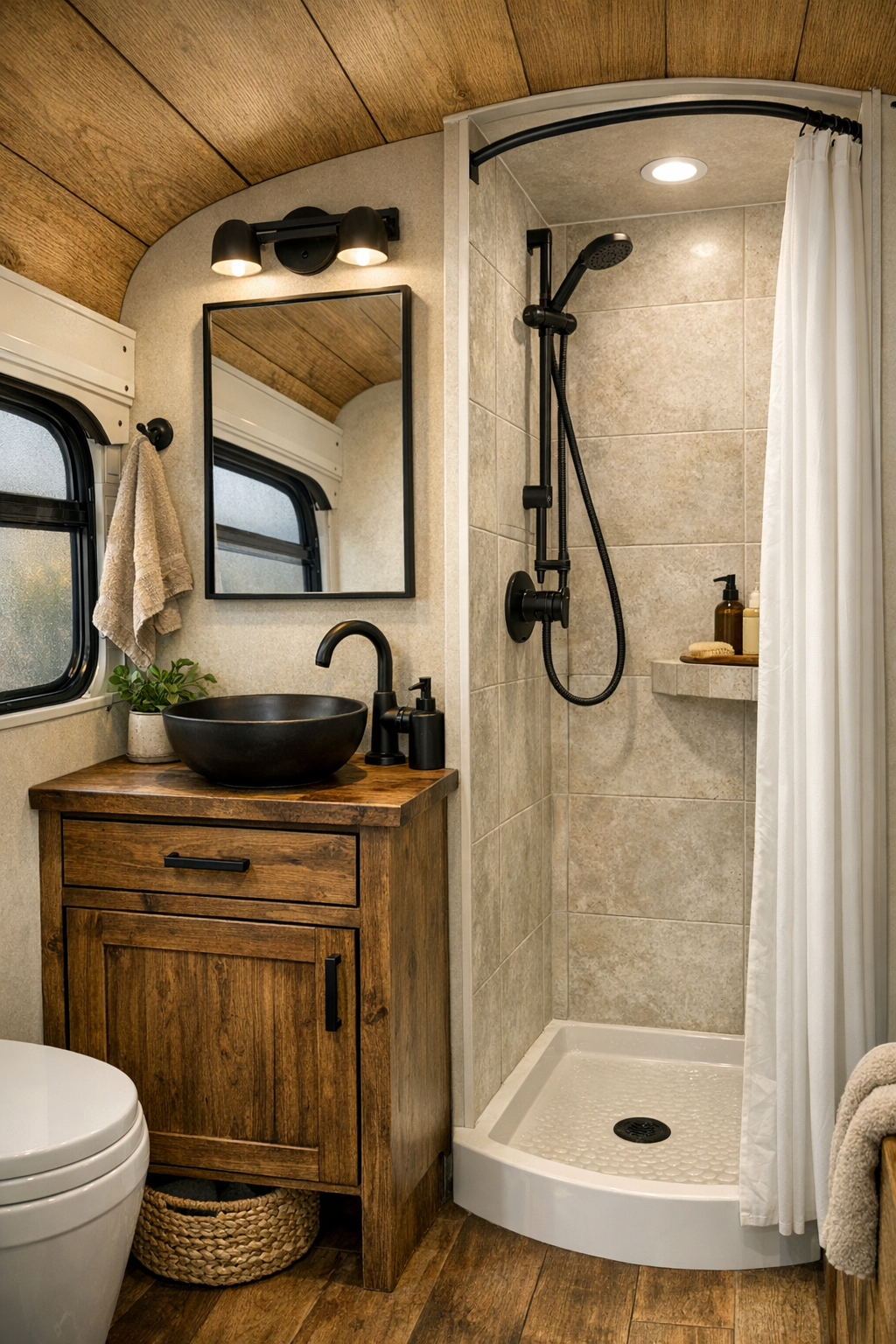
The bathroom is compact, of course, but it feels much more elevated than you might expect in a converted bus. A small vanity in stained wood or matte black anchors the space, paired with a simple vessel or integrated sink and a pared-back mirror that reflects light without adding visual fuss. The walls are likely treated with moisture-friendly finishes, maybe a vertical tile or sealed wood-look surface, and the palette stays consistent with the rest of the home: warm neutrals, black accents, and natural textures.
What I appreciate most is that the design seems to respect daily routines rather than just chasing novelty. There’s enough shelving for towels and basics, a compact shower with clean glass or a well-tailored curtain, and fixtures that feel sturdy and streamlined. In a small home, bathrooms can so easily end up feeling like an afterthought, but this one doesn’t. It carries the same rustic-modern personality as the rest of the bus while staying practical, easy to clean, and surprisingly serene.
Other Areas
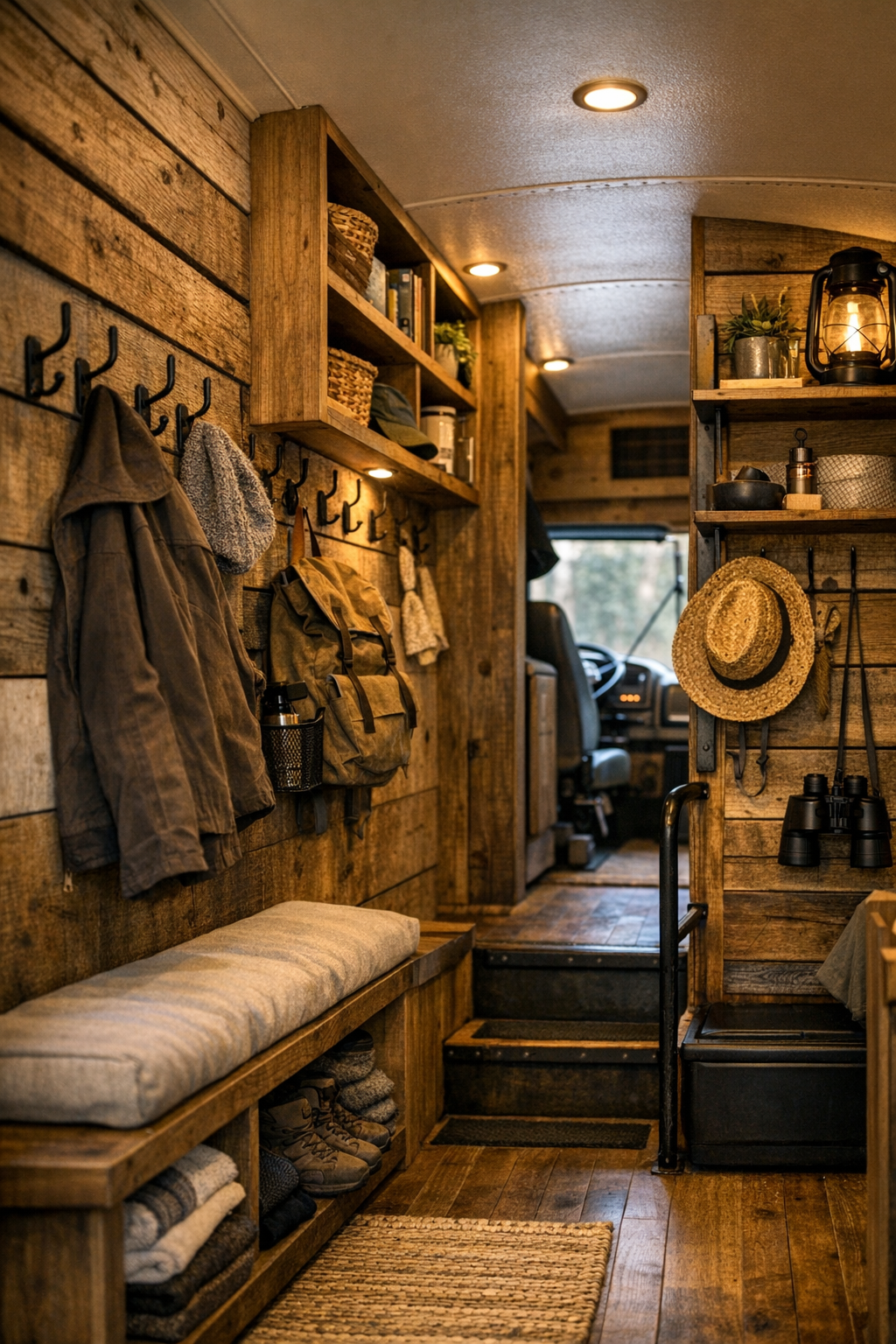
Some of the most impressive design moments in a home like this happen in the transitional and hardworking zones. Hallway walls become storage, stair risers hide compartments, and awkward corners turn into shelves for books, baskets, or pantry staples. I can easily imagine a slim work nook folded into one wall, or a tiny entry drop zone with hooks for jackets and a bench for shoes. These are the kinds of details that make compact living feel manageable, especially if you’re juggling work, errands, and all the little things that need a place to land.
Even the overhead space contributes to the design language. Exposed ceiling lines, integrated cabinetry, and carefully placed lighting draw the eye upward and help the bus feel taller than it is. There may also be a lofted storage area or a utility cabinet that discreetly houses off-grid systems, keeping the technology present but not visually dominant. That balance is what makes the interior feel so successful to me: every inch is active, but nothing feels frantic or overcrowded.
Why You'd Live Here
You’d live here because this bus makes sustainable living feel approachable, beautiful, and genuinely comfortable. It doesn’t rely on novelty alone; it offers warmth, organization, and a strong point of view, all within a compact footprint that encourages you to live a little lighter. I think that’s part of its appeal for so many of us who crave simpler spaces but still want them to feel personal and polished.
More than anything, this home shows that off-grid design can still be soft, inviting, and deeply practical. It’s rustic without being rough, clever without being cold, and full of thoughtful choices that support everyday life. For anyone who dreams about freedom but also wants a place that feels settled and cozy at the end of the day, this converted bus makes a very convincing case.