
There is something downright comforting about a home that knows exactly what it wants to be, and this accessible farmhouse houseboat does so with quiet confidence. Set against calm water and open sky, it brings together the plainspoken grace of a Midwestern farmhouse and the easy rhythm of life afloat. I was taken immediately by the way the design balances usefulness and beauty, with broad passages, thoughtful transitions, and sturdy natural materials that feel as honest as an old family table worn smooth by years of use.
Though this is a concept design, it feels wonderfully lived-in in spirit, the sort of place I can imagine welcoming muddy boots, fresh-cut flowers, and a pie cooling by an open window. The mood is bright but unshowy, with whitewashed wood, warm oak, soft black iron, and gentle blue-gray accents that echo the water outside. What makes it special is not one grand gesture, but a hundred caring choices that make daily life easier, calmer, and more gracious.
Exterior
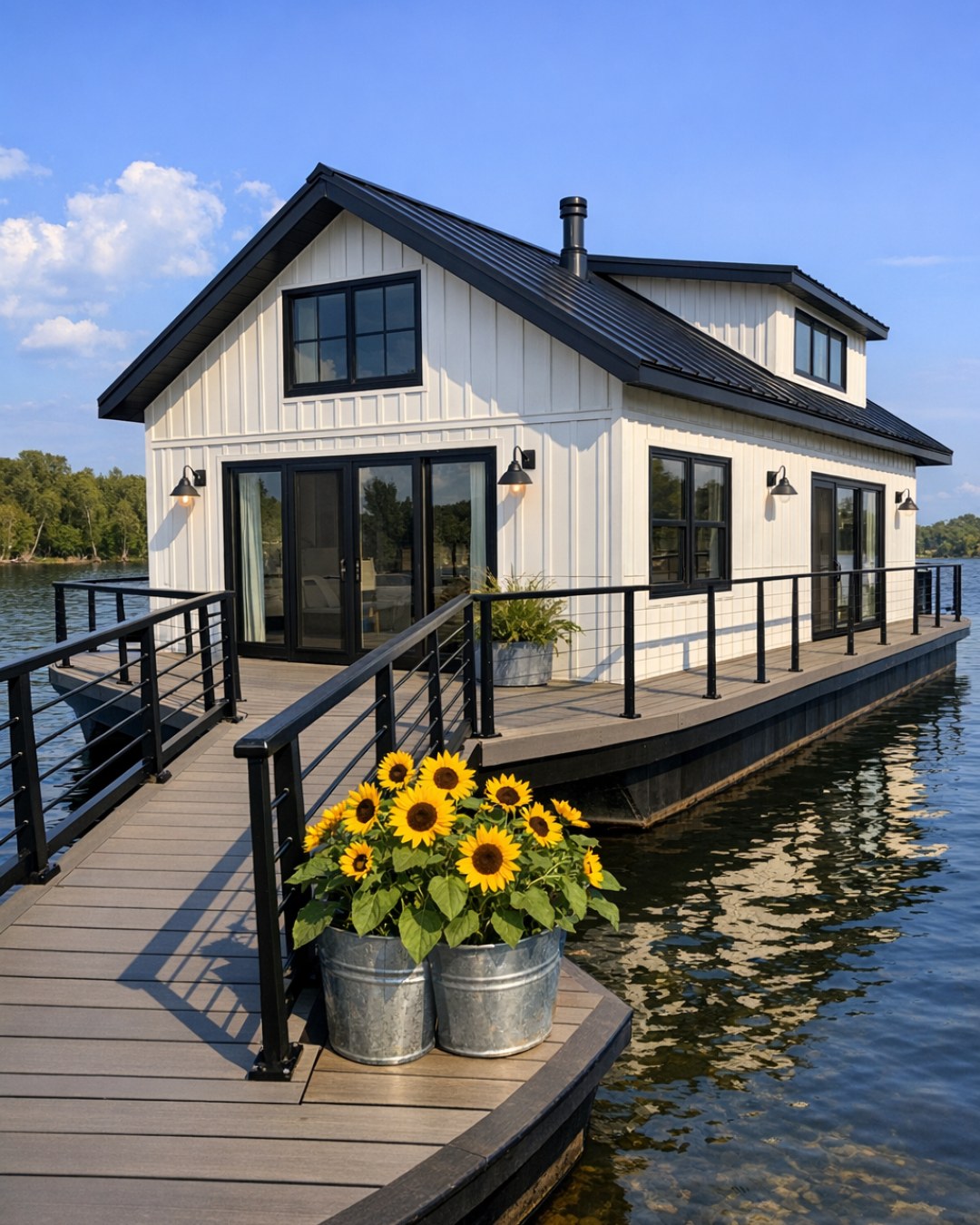
From the outside, the houseboat carries the familiar silhouette of a simple American farmhouse, translated beautifully for life on the water. A gabled roofline, board-and-batten siding, and neatly trimmed windows give it that rooted, homespun character, while the floating structure below lends a sense of lightness. The palette stays close to nature: creamy white siding, weathered wood decking, matte black lantern-style fixtures, and a soft river-stone gray on the roof. It feels practical and handsome, like something built to last through changing seasons.
What I especially appreciate is how accessibility is worked in so naturally you notice the welcome before the accommodation. The approach is level and generous, with a gently graded entry, wide doorways, and railings that feel more like part of the architecture than an afterthought. Planter boxes with herbs and trailing greenery soften the edges, and the porch-like deck creates that familiar farmhouse ritual of sitting outdoors at day's end, only here the crickets have been joined by the sound of water against the hull.
Living Room
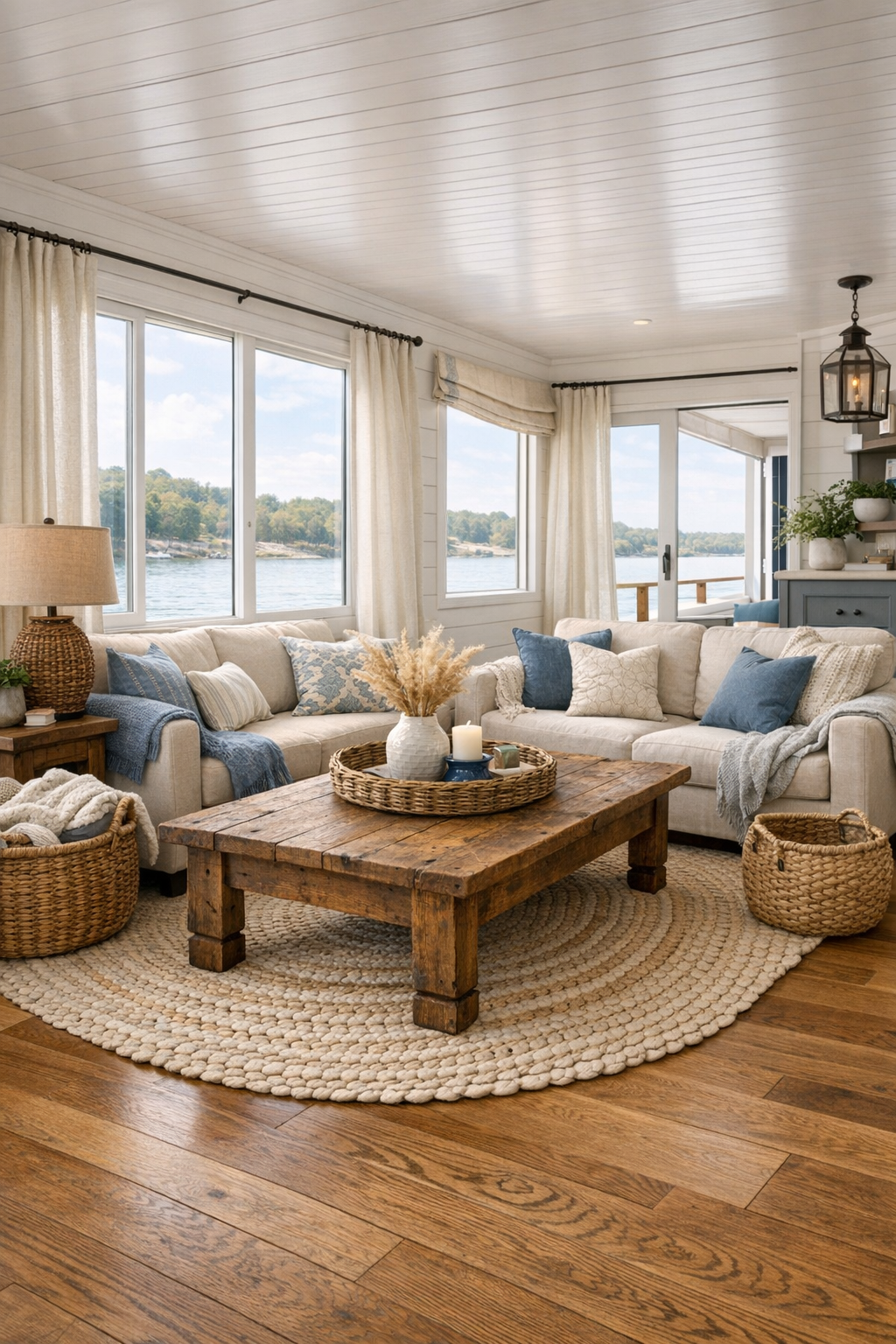
The living room is the heart of the home in the truest sense, open and airy but still gathered-in, the way a good sitting room ought to be. White shiplap walls reflect the light beautifully, while honey-toned oak floors bring in warmth and a bit of country steadiness. A pair of slipcovered sofas in oatmeal linen face one another across a substantial wood coffee table, leaving easy, unobstructed circulation all around. The proportions are generous without feeling oversized, and every piece seems chosen to support comfort, conversation, and a clear path through the room.
What keeps it from feeling too polished is the layering of texture: a braided wool rug underfoot, blue ticking-stripe pillows, a knitted throw over the arm of a chair, and woven baskets tucked beneath a console. Black metal sconces and a wagon-wheel-inspired chandelier nod to farmhouse tradition, while large windows keep the room bright and connected to the water outside. To my eye, it has the same kind of welcome as a Sunday afternoon in a family home—peaceful, tidy, and ready for folks to settle in a while.
Dining Room
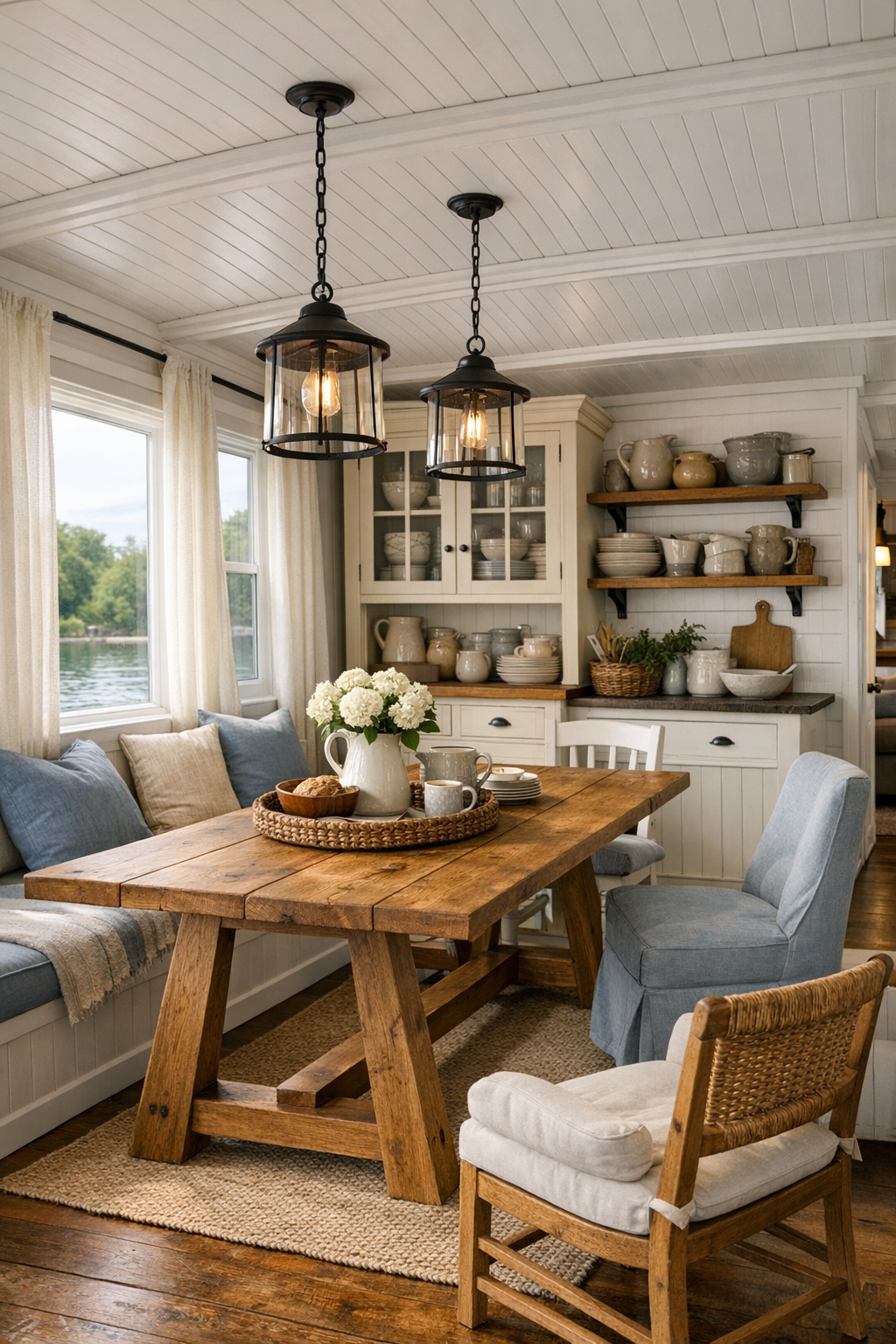
The dining area sits comfortably between the living room and kitchen, allowing the whole main space to work together without losing its own identity. A solid oak trestle table anchors the room, its softened edges and sturdy legs giving it both character and ease of use. The chairs are a thoughtful mix—some with supportive upholstered seats, others with arms for comfort—so the room feels inclusive without ever announcing it. Overhead, a simple iron-and-glass fixture casts a warm glow that would make even an ordinary supper feel a touch ceremonial.
I like the way the finishes keep this room grounded and familiar. A narrow hutch in painted cream provides storage for everyday dishes, while open shelving displays stoneware pitchers, stacked bowls, and a few old crocks that look as if they could have come down through generations. Under the window, a built-in bench with a washable cushion adds another practical perch and a little softness. It is easy to imagine the clink of plates here, the smell of roast chicken drifting in from the kitchen, and that easy kind of lingering at the table that turns meals into memories.
Kitchen
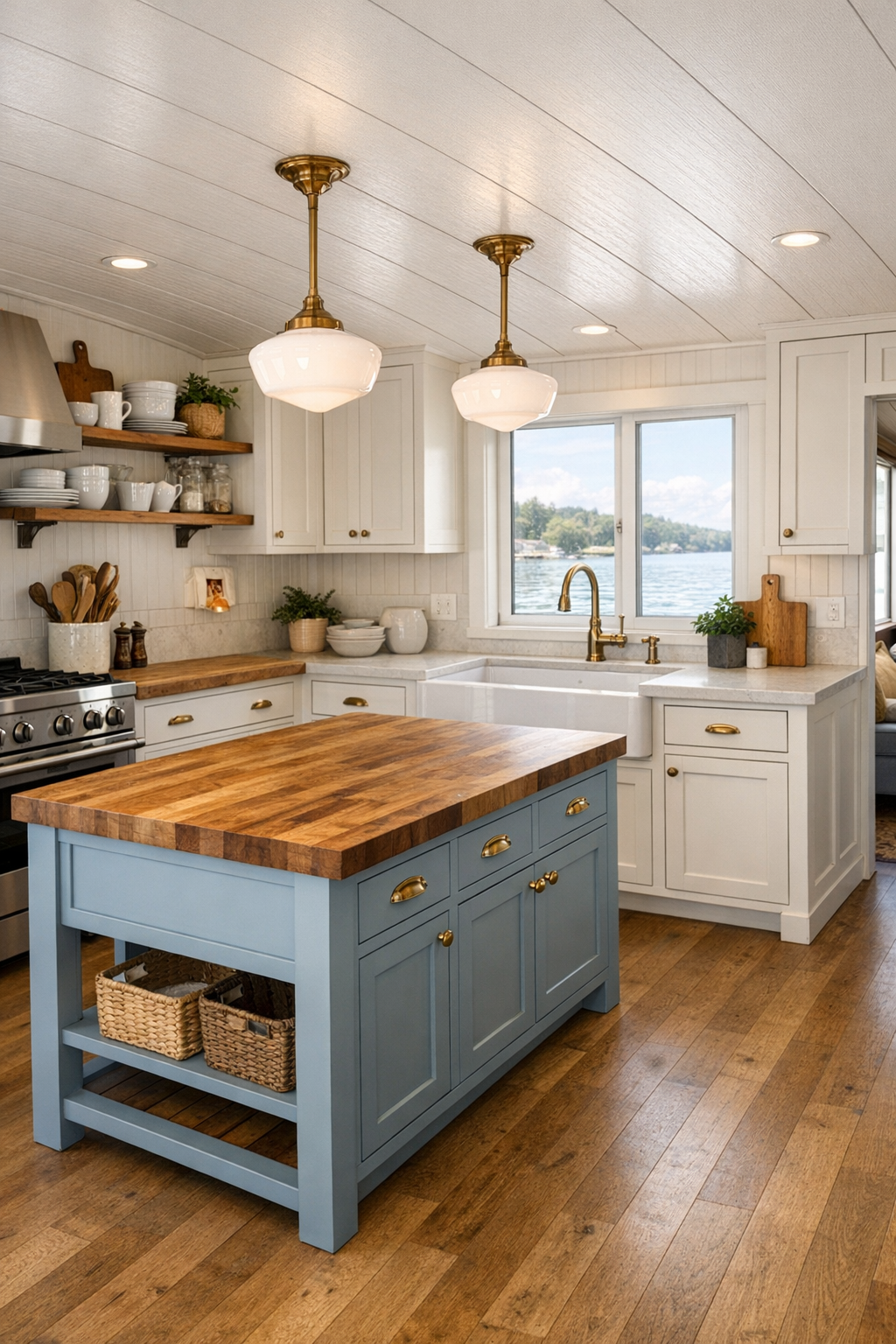
The kitchen may be the most charming room of all, because it understands that a hardworking kitchen can still be gracious. The cabinetry is painted a soft warm white with inset doors and aged brass latches, paired with butcher-block counters in some areas and pale honed quartz in others for a practical mix of warmth and durability. A soft blue-gray island sits at the center, roomy enough for prep and conversation, with open knee space on one side to make it comfortable for seated use. The work zones are arranged with real thought, and the clearances are ample, which gives the whole room a calm, efficient feel.
Details here do a great deal of the storytelling. A white apron-front sink sits beneath a window, open shelves hold crockery and mason jars, and a pot rack in matte black iron brings a little old-fashioned utility overhead. Under-cabinet lighting keeps the counters bright, while schoolhouse-style pendants add a glow that flatters the wood grain and the brushed hardware. This is the sort of kitchen that reminds me of the women I grew up around—resourceful, steady, and able to make something beautiful out of simple ingredients and a well-organized room.
Bedroom
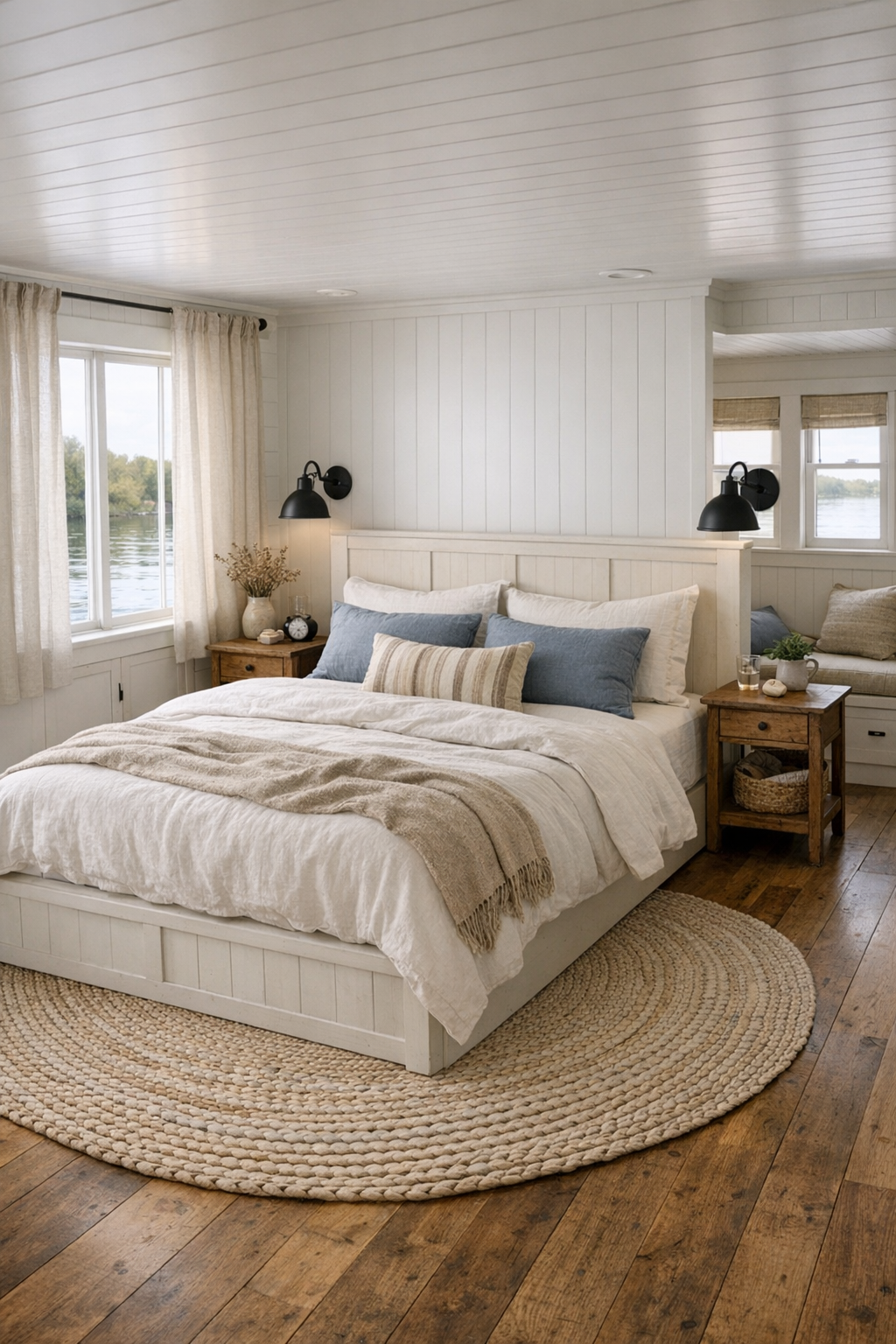
The bedroom is gentle in the very best way, designed for rest without becoming bland. The color palette settles into quiet neutrals—creamy whites, weathered flax, muted blue, and touches of warm wood—so the room feels airy and settled at once. A low-profile bed with a simple paneled headboard is dressed in crisp cotton layers and a quilt that looks hand-stitched, while matching nightstands keep the room symmetrical without stiffness. There is enough space to move easily around the bed, and that generosity of layout makes the room feel dignified as well as comfortable.
I am especially fond of the little details that keep the farmhouse spirit alive: reading sconces in blackened metal, a striped bench at the foot of the bed, linen curtains that move softly with the breeze, and a braided rug that adds quiet texture underfoot. Storage is tucked thoughtfully into built-ins so the room stays uncluttered, and the windows are placed to catch both morning light and a bit of water view. It has the peacefulness of a guest room in an old country house, but with all the convenience and careful planning of modern living.
Bathroom
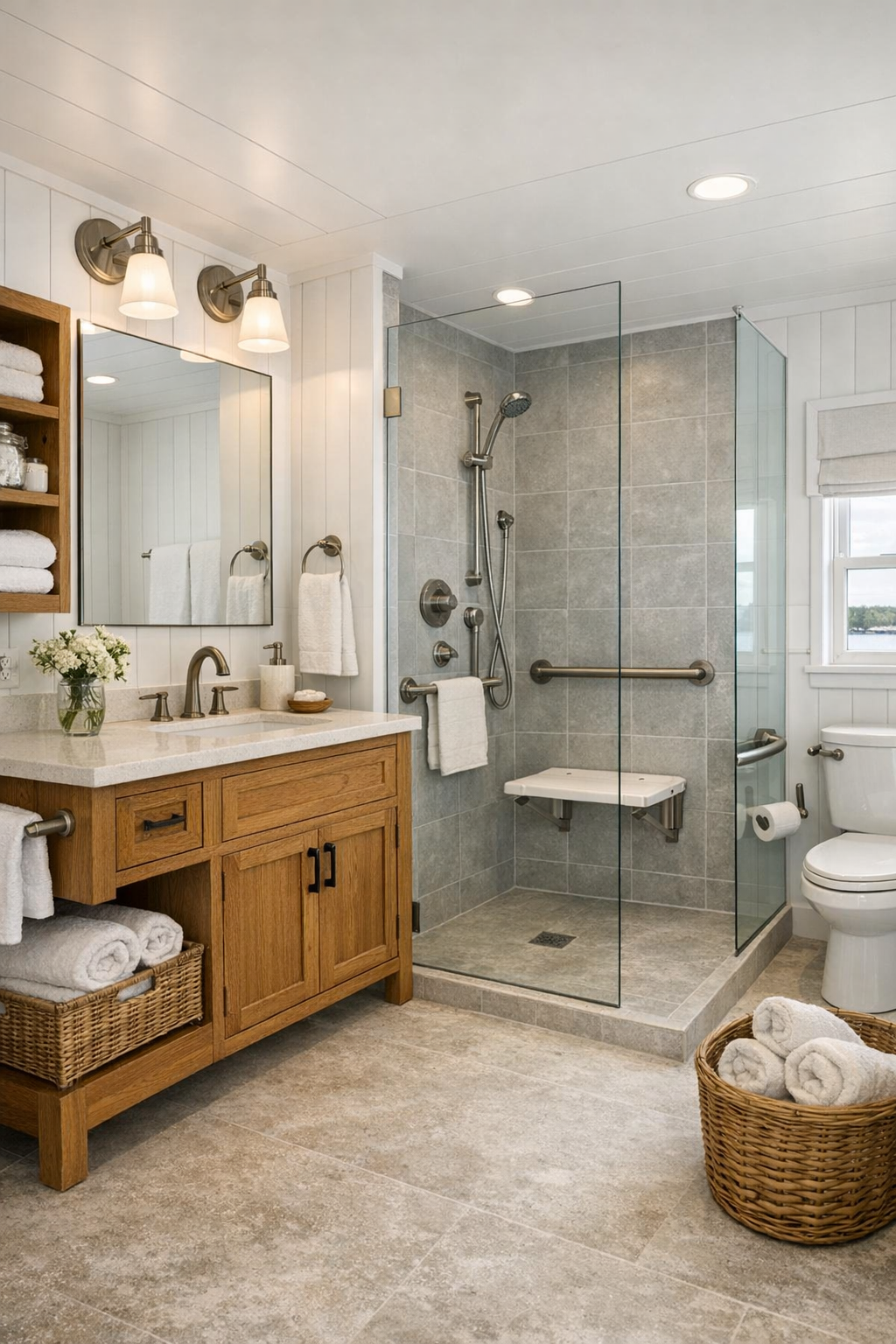
The bathroom carries the same plain, thoughtful beauty as the rest of the home. White vertical wall paneling and pale stone-look flooring create a clean backdrop, while a warm oak vanity prevents the space from feeling cold. The countertop is simple and durable, fitted with an easy-to-reach sink and classic bridge-style faucet in a brushed finish. A curbless shower with clear glass keeps the room open visually, and the tile inside—soft gray with a handmade look—adds just enough variation to feel warm and human.
There is a real sense of ease here, which I think matters more in a bathroom than nearly anywhere else. Good lighting around the mirror is balanced by daylight from a frosted window, and open shelving holds rolled towels, soaps, and a small crock of greenery without crowding the space. Black hooks, a framed mirror, and neatly chosen hardware tie it back to the farmhouse language used throughout the home. Altogether, it feels fresh and capable, not fussy—a room made for daily life, with every comfort considered.
Other Areas
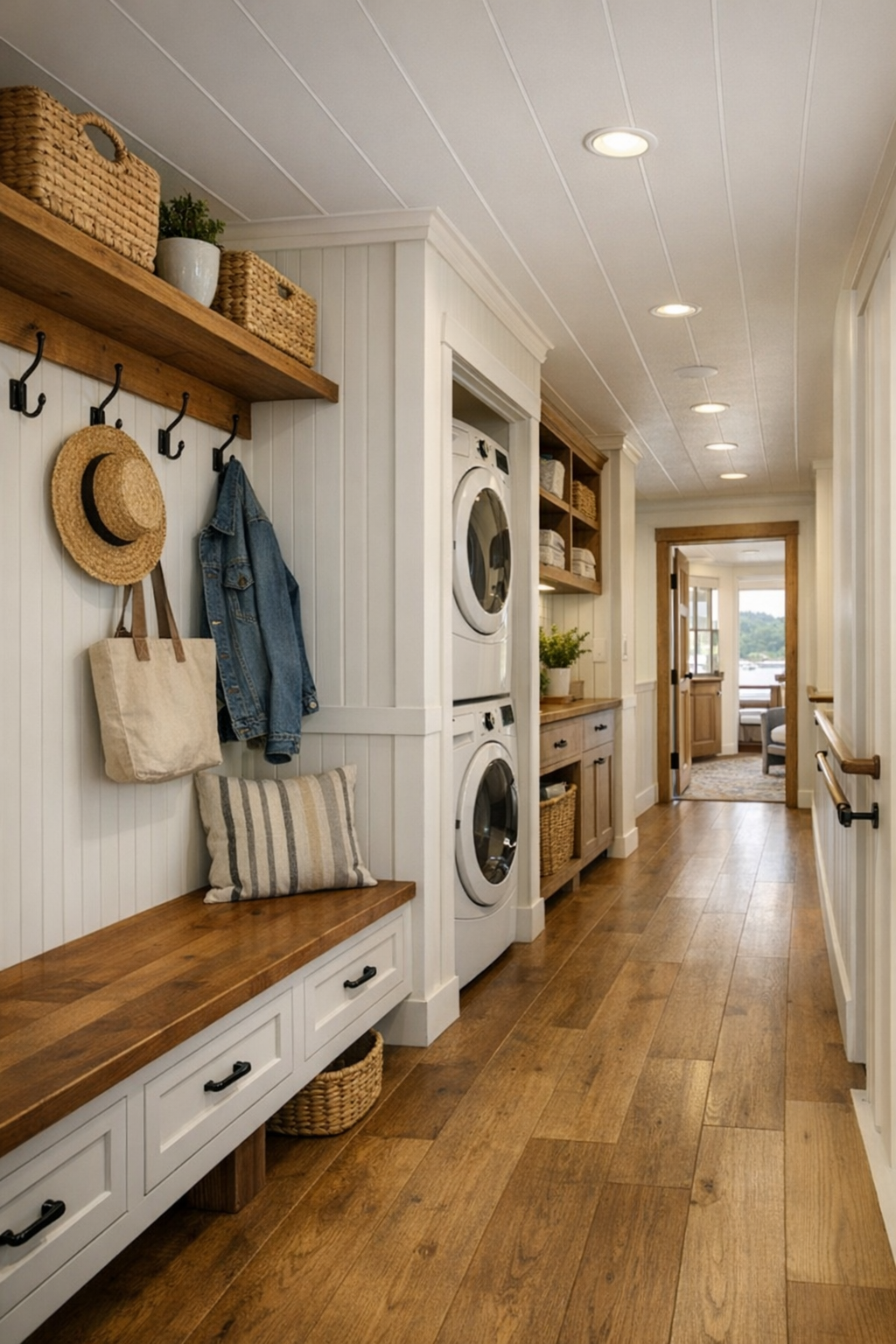
Some of the most appealing parts of this home are the spaces in between, those hardworking areas that often tell you whether a place has been truly thought through. Here, a compact mudroom-style entry includes beadboard walls, a built-in bench, sturdy hooks, and deep drawers for shoes, outerwear, and everyday gear. The circulation corridors are wide and filled with light, with integrated millwork that keeps storage close at hand without nibbling away at openness. Even a small laundry nook is handled with care, tucked behind paneled doors with room for folding, baskets, and a shelf of practical supplies in neat jars.
Then there are the outdoor living edges of the home, which feel like porches reimagined for the water. A covered side deck with rocking chairs and a small table extends the farmhouse idea beautifully, while a sheltered upper perch offers a quiet place for reading, shelling peas, or simply watching the day change over the water. These are the sorts of spaces I always remember most, because they support the ordinary rituals of a life well lived. They do not shout for attention, but they make the whole home kinder and more complete.
Why You'd Live Here
You would live here because it offers something rarer than novelty: it offers ease with character. This home understands that good design should steady the day, not complicate it, and it does so while wrapping every practical decision in warmth, familiarity, and charm. The farmhouse language gives it soul, the accessible planning gives it grace, and the setting on the water adds a softness that changes the mood of every room.
To me, it feels like a home built around the values that matter most—hospitality, usefulness, comfort, and beauty that does not need to show off. It would suit someone who wants a quieter kind of luxury, the kind found in natural light on painted wood, a well-placed chair, a kitchen that invites real cooking, and rooms that welcome everyone with equal generosity. In a world full of homes trying too hard, this one simply feels true.