
This soft honeydew green container home has a calm, hopeful look about it, the kind of place that feels cheerful before you even step inside. Set as though it were resting at the edge of open country, with wide sky overhead and enough breathing room around it, the home pairs the clean geometry of repurposed steel with a gentler, more welcoming hand. I’m especially taken with the way the color softens the industrial shell, turning something practical into something almost tender.
Though this is a concept design, it’s imagined with a lived-in graciousness that makes every choice feel purposeful. What makes it special to me is not only its beauty, but its accessibility done with true style: broad passages, thoughtful circulation, easy transitions, and interiors that do not feel clinical in the least. It has the good sense of a farmhouse kitchen, the efficiency of a well-planned cottage, and the quiet dignity of a home meant to serve every season of life.
Exterior
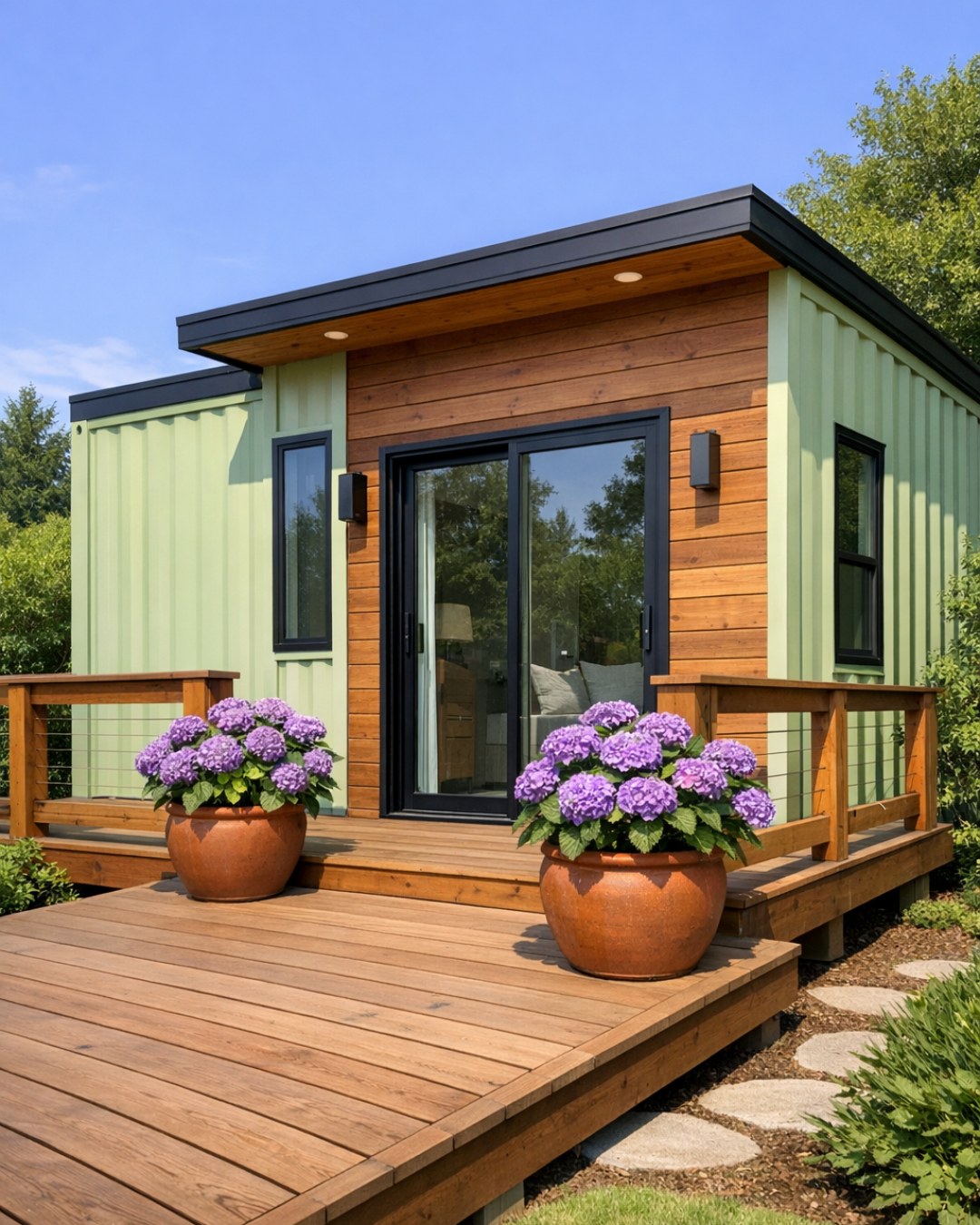
From the outside, the home keeps the recognizable long-lined form of a container structure, yet the soft honeydew green finish gives it a surprisingly light spirit. Rather than leaning into a stark industrial mood, the design tempers the corrugated metal with warm wood cladding, matte black hardware, and generous glazing that reflects the landscape. A low-slope roof extension and covered entry help broaden the silhouette, making the house feel grounded and approachable instead of narrow. I can easily picture gravel underfoot, planter beds with herbs and coneflowers, and a simple bench near the door where muddy shoes might be slipped off after a walk in from the garden.
The accessibility features are integrated with real grace. A gently graded entry path replaces the fuss of stairs, and the covered threshold looks seamless rather than utilitarian. Windows are placed to bring in light at different heights, which gives the facade rhythm and keeps the interior from ever feeling boxed in. What I appreciate most is that the exterior tells the truth about the house: it is efficient, modest, and sturdy, but also soft around the edges in the best possible way, like a practical Midwestern soul dressed in its Sunday best.
Living Room
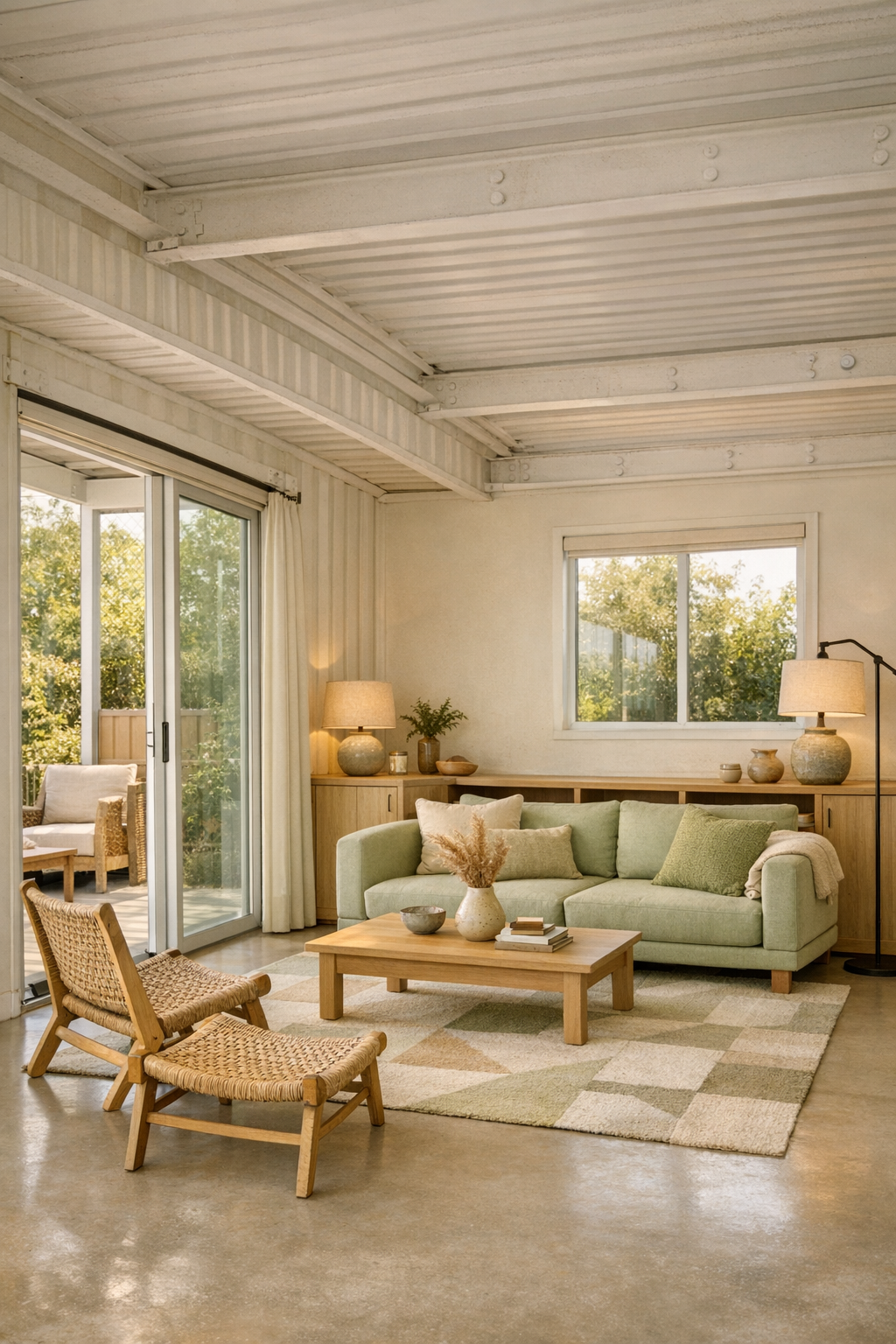
The living room is arranged to make movement easy, but it never sacrifices comfort. The palette stays close to the exterior, with muted greens, creamy whites, pale oak tones, and touches of warm caramel leather. A wide circulation path runs cleanly through the room, while the furnishings sit with enough breathing space between them to feel relaxed rather than crowded. I imagine a low-profile sofa with rounded arms, two structured lounge chairs in woven fabric, and a broad area rug with a subtle geometric pattern that gives softness underfoot without becoming visually busy.
Light seems to be one of the room’s finest materials. Large windows and a glazed door wash the corrugated shell with daylight, while linen drapery and natural-fiber textures keep everything gentle. In the evenings, layered lighting from a shaded floor lamp, understated sconces, and a soft ceiling fixture would make the room glow in a way that feels neighborly and easy. There’s a built-in media wall with oak shelving and closed storage below, and that little bit of millwork does so much to warm the architecture. It reminds me of the best kind of family room, where every chair is placed for conversation and nobody has to struggle to settle in.
Dining Room
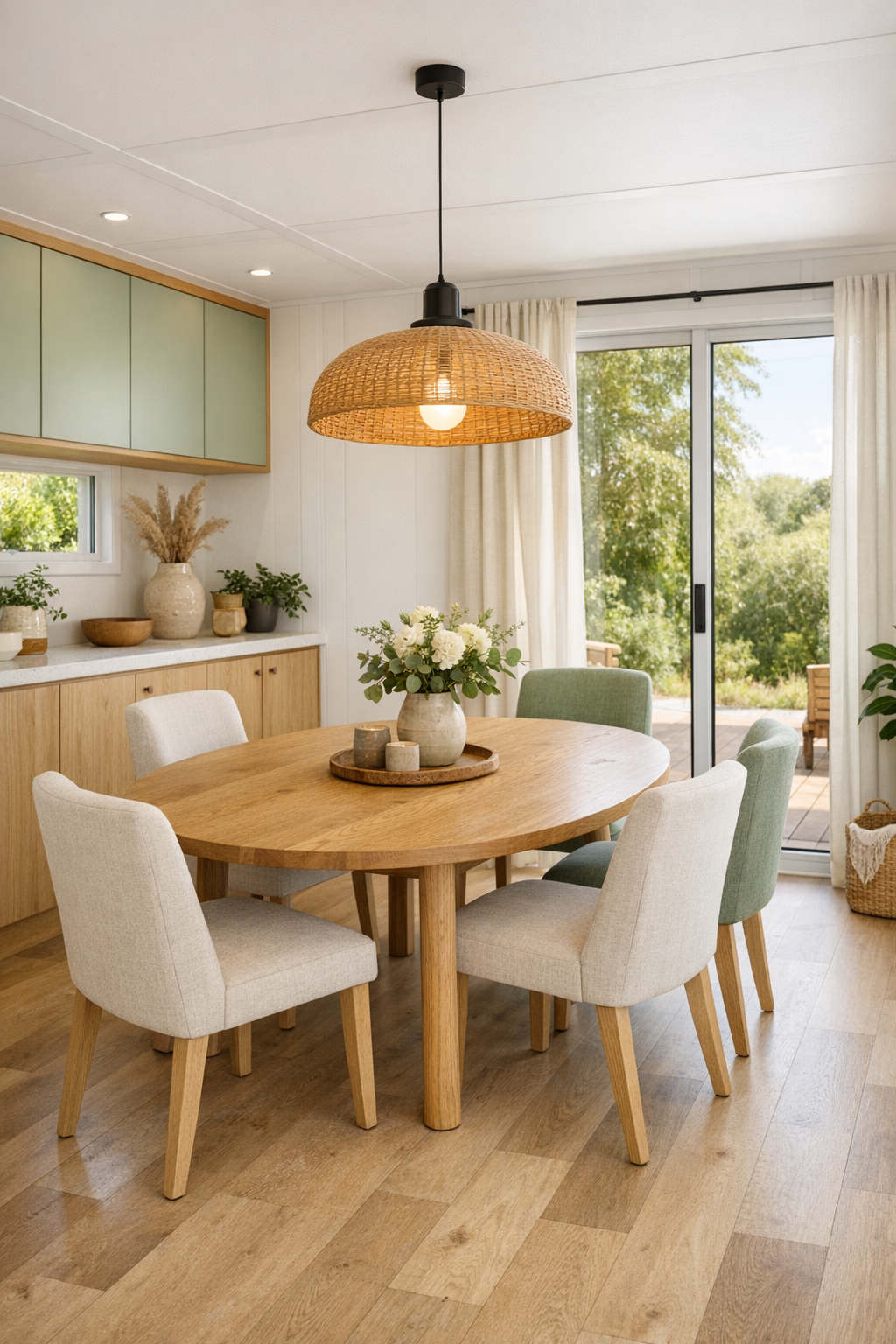
The dining area is one of those spaces that proves a compact footprint can still feel generous. Instead of separating it too sharply from the living room and kitchen, the layout lets it sit in the heart of the home, where conversation can travel easily from one end to the other. A round or softly oval table feels especially fitting here, both for accessibility and for the natural way it gathers people together. I love the thought of a solid oak tabletop paired with comfortably scaled chairs upholstered in washable flax-colored fabric, with enough clearance all around to move without bumping knees or corners.
Overhead, a simple pendant in frosted glass or aged brass would lend a quiet glow without overwhelming the space. The walls stay light, but there may be one panel of vertical wood slatting or a built-in sideboard that adds dimension and a place to set out supper. I can almost see a bowl of apples, a crock of wooden spoons nearby, and sunlight moving across the table in late afternoon. It has the sort of plain beauty I trust: not flashy, not fussy, just deeply pleasant to live with day after day.
Kitchen
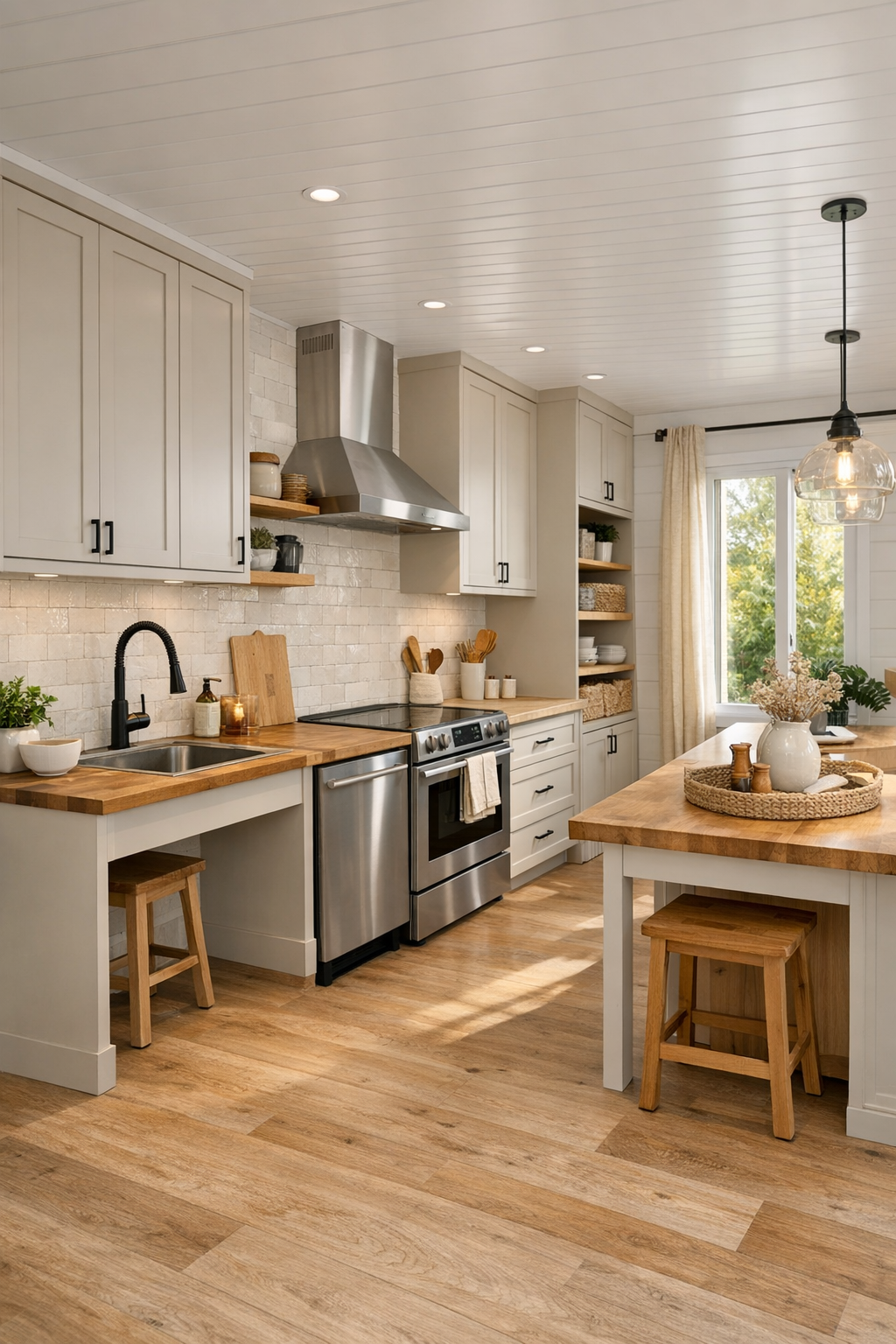
The kitchen is, to my eye, the soul of the house. It’s designed with a practical cook in mind, and I say that with real appreciation. The work zones are close enough to be efficient, yet open enough to avoid that pinched feeling so many narrow homes can have. Flat-panel cabinetry in a creamy putty tone keeps things light, while lower drawers, pull-out pantry storage, and easy-reach shelving make the room feel deeply considered. There’s likely a mix of quartz counters and butcher-block detail, which gives the space both durability and warmth, a combination I’ve always found comforting.
What lifts it beyond simple efficiency is the attention to usability without fanfare. A generous turning radius, varied counter heights, and open knee space at one work surface make it adaptable in a very humane way. The backsplash might be a handmade-look tile in a soft glazed white, catching light with a little shimmer, and the hardware a muted black or brushed brass. I can imagine soup on the stove, bread cooling by the window, and a sturdy faucet over a deep sink that’s seen a hundred family meals in its future. It has that good kitchen feeling, where the room seems ready to help instead of making work harder.
Bedroom
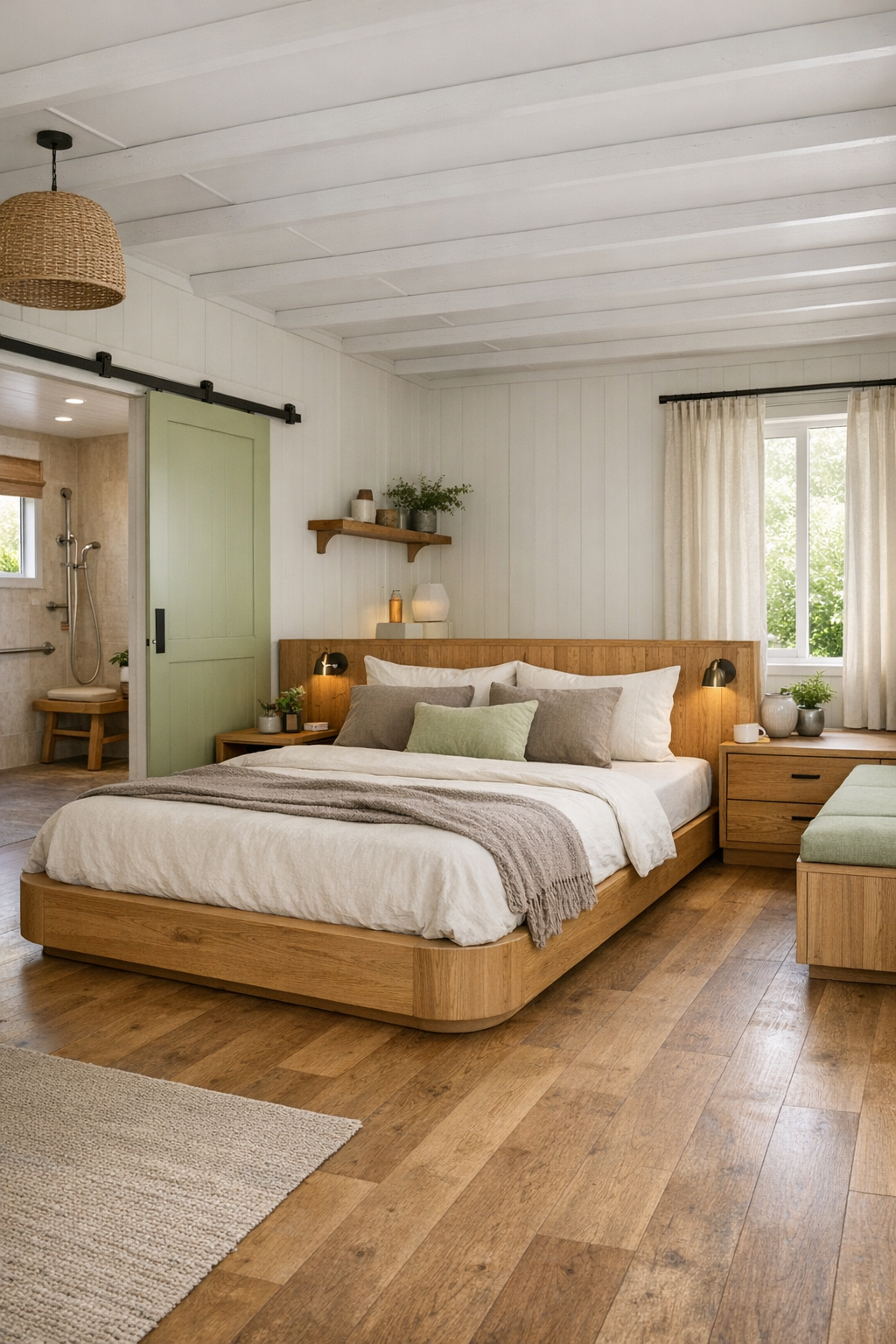
The bedroom takes on a quieter, more hushed version of the home’s palette. Here the honeydew influence comes through in the gentlest way, perhaps in textiles, painted millwork, or a muted accent wall behind the bed. The main finishes stay restful: warm wood, ivory bedding, soft taupe upholstery, and curtains with a natural drape that filter the light rather than block it harshly. The layout appears intentionally open, with enough room around the bed for easy movement, and that openness gives the whole room a sense of dignity and ease.
I’m fond of bedrooms that don’t ask too much of you, and this one seems to understand that beautifully. A platform bed with rounded corners, integrated nightstands, and easy-to-reach lighting keeps the room uncluttered. There may be a bench at the foot of the bed, a textured rug underfoot, and a built-in wardrobe that uses every inch wisely without looming. It feels restorative, plain and lovely in the old-fashioned sense of the word, like a place where you’d sleep soundly after a long day and wake to soft morning light over the fields.
Bathroom
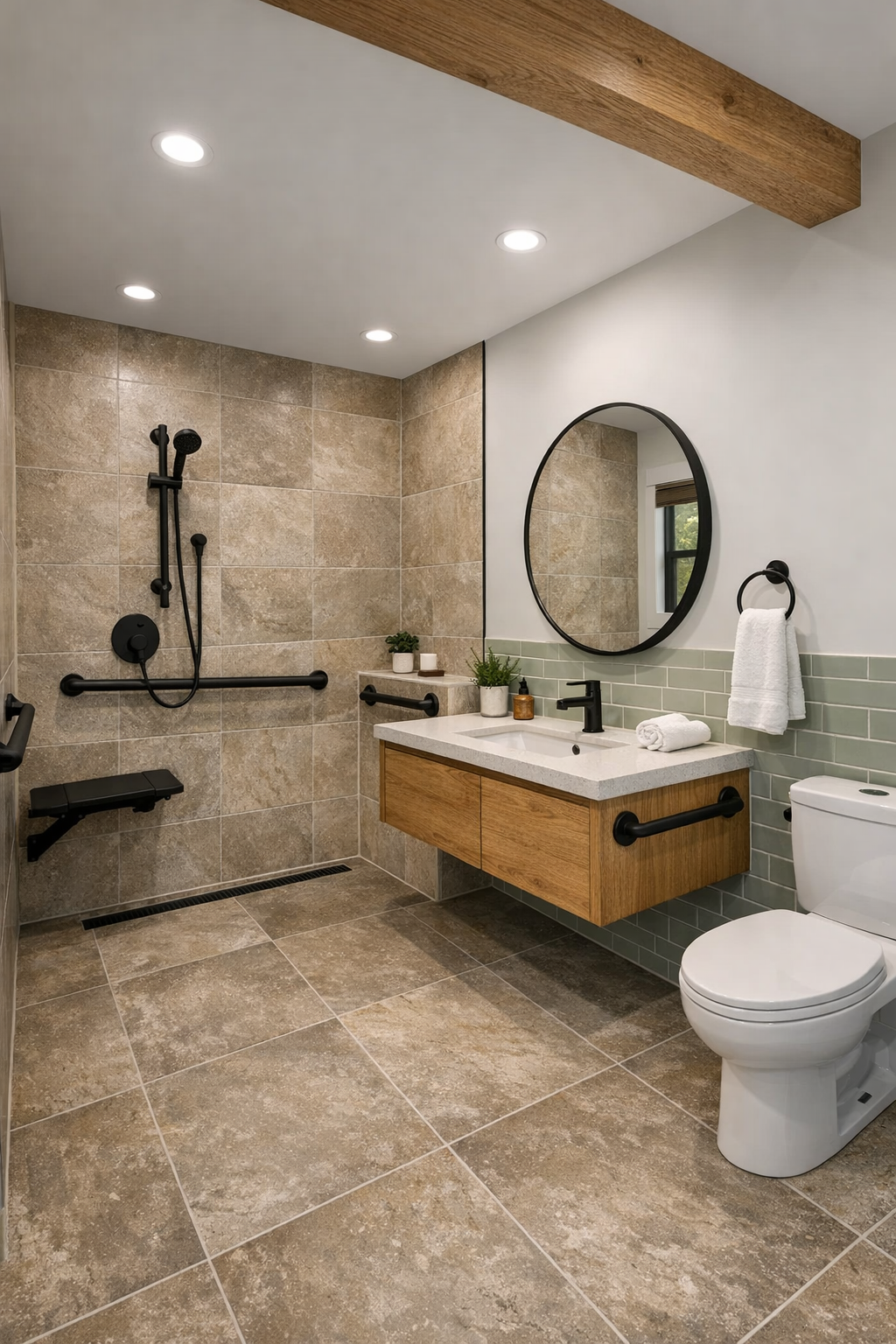
The bathroom is where thoughtful design really proves itself, and this one appears to handle that job with uncommon grace. The space likely uses large-format porcelain tile in a warm stone tone to keep the floor visually quiet and easy to navigate, with a curbless shower that blends right into the room. A floating vanity in oak or oak-look finish adds warmth while keeping the footprint light, and the sink area is uncluttered, simple, and easy to approach. Good bathrooms should feel steady and clean, and this one surely does.
There’s beauty in the details too. The shower may be lined in soft white or pale sage tile, with a built-in bench, niche storage, and matte black fixtures for just enough definition. A broad mirror and even, flattering lighting help the room feel larger, while plush towels and a woven hamper soften the hard finishes. I especially like when accessible spaces are designed this way, with the usefulness woven right into the elegance. It makes the room feel respectful, not compromised.
Other Areas
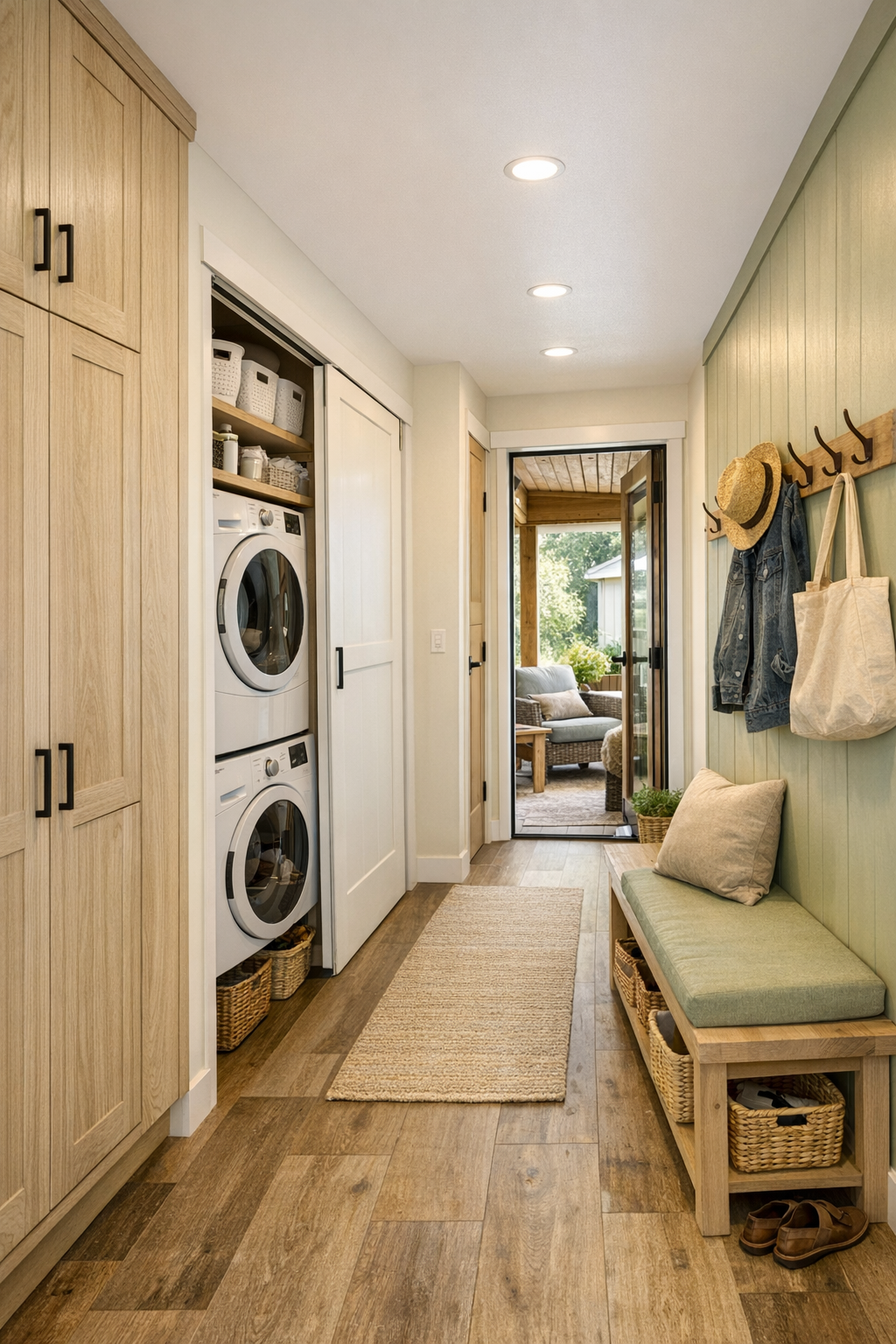
In a home like this, the in-between spaces matter just as much as the main rooms. A hallway can become a gallery of framed family photographs, a reading nook, or simply a bright passage with built-in storage tucked flush into the wall. There may be a compact laundry area hidden behind sliding doors, complete with lower storage, countertop folding space, and materials that match the kitchen so it feels like part of the whole story. Even a small entry zone can be made useful with a sturdy bench, coat hooks, closed cubbies, and flooring durable enough to take on wet boots and garden dirt.
If the plan includes a covered porch or small outdoor sitting space, that would be the final touch that makes the house truly sing. I can picture a pair of woven chairs, potted herbs, and the same honeydew green carried through in a quieter shade on planters or trim. These supporting spaces are what make daily life smoother, and this design seems to understand that comfort is built as much in the corners as in the showpiece rooms. It’s the sort of home that respects ordinary routines, and I’ve always believed that’s where real beauty begins.
Why You'd Live Here
You’d live here because it offers something more lasting than novelty. Yes, the container structure is smart and visually distinct, and yes, the honeydew green exterior is memorable, but what truly gives this home its staying power is the kindness of its layout. It’s accessible without feeling institutional, compact without feeling cramped, and stylish without chasing fashion. Every room seems to have been shaped around the simple wish that home should be easy to use and pleasant to wake up in.
I think many of us, especially as the years teach us what really matters, begin to crave spaces that are manageable, beautiful, and honest. This home answers that craving with warmth, practicality, and just enough charm to make it unforgettable. It feels like a house that would welcome grandchildren, soup pots, muddy shoes, quiet afternoons, and changing seasons alike. And to me, that is always the mark of a place worth calling home.