
Some homes have a way of settling your shoulders the minute you see them, and this sage green Amish colonial tiny home does exactly that. Tucked into what I imagine as a quiet patch of countryside, with grass brushing the porch steps and the day moving at a gentler pace, it carries that rare mix of humility and beauty I never stop admiring. The lines are simple, the proportions are tidy, and yet there is such grace in the details that the whole place feels lovingly considered from the first glance to the last hinge.
Though this is a concept design, it feels grounded in the kind of craftsmanship and common sense I grew up trusting. What makes it special is not showiness, but care: hand-finished wood, honest materials, soft colonial references, and that calming sage exterior that seems to borrow its color from old herb gardens after rain. It is tiny, yes, but it does not feel deprived. Instead, it feels gathered, intentional, and deeply comforting, like a well-kept family recipe written in a steady hand.
Exterior
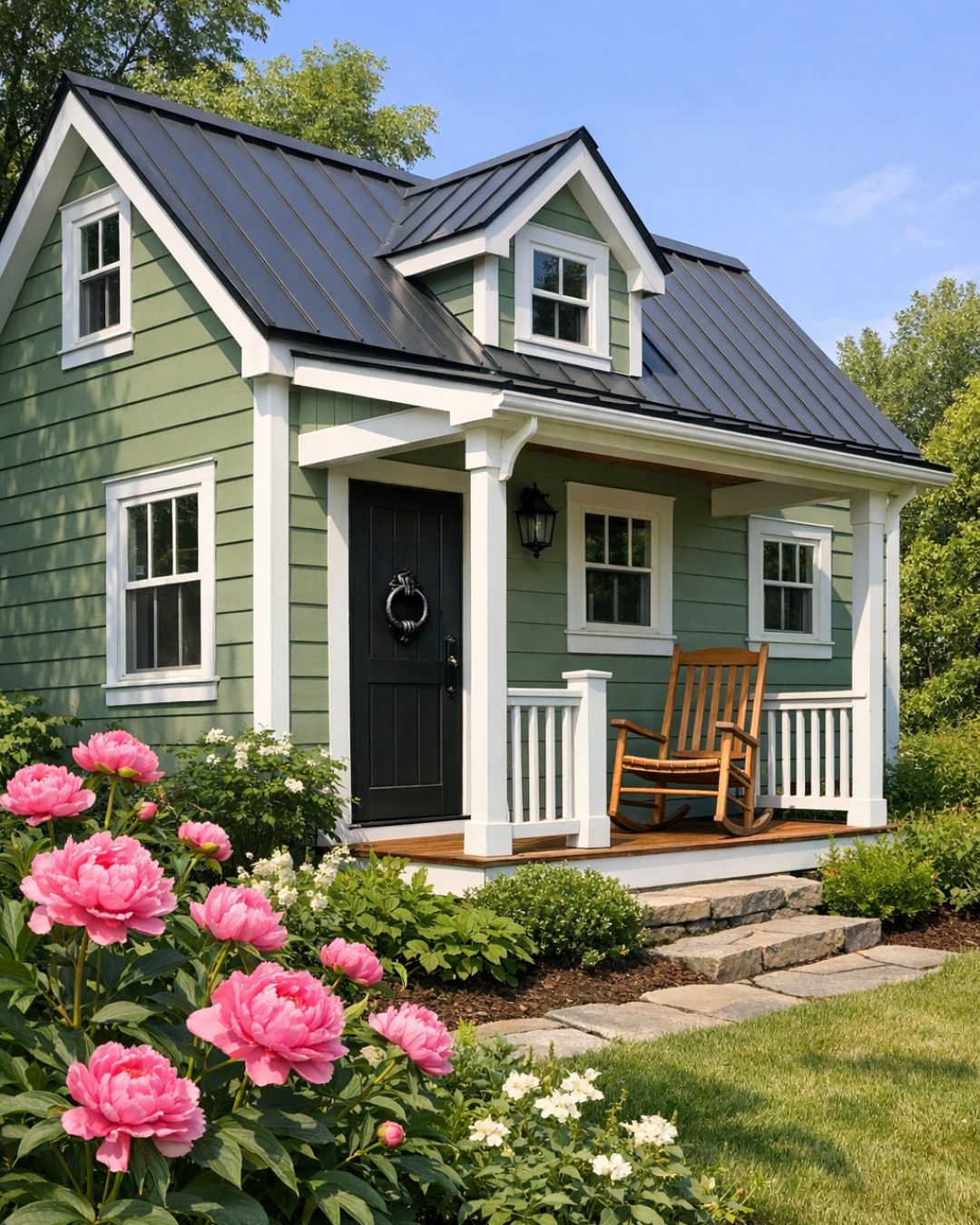
The exterior has the quiet confidence of an older farmhouse scaled down to its most essential form. Sage green siding gives the home its character immediately, but it is the pairing of that muted color with crisp cream trim and a darker roofline that gives the whole facade such balance. The colonial influence shows in the symmetry of the windows, the straightforward entry, and the modest porch that looks made for muddy boots, seed catalogs, and a cup of coffee taken before the rest of the day begins. Nothing here feels fussy, and that restraint is exactly what makes it so handsome.
I especially love the sense that every exterior choice serves both beauty and usefulness. The shutters are simple and properly scaled, the porch posts feel stout rather than decorative, and the door has the sort of solid presence that suggests real joinery behind it. Even in tiny form, the house feels anchored, as if it belongs to the land instead of merely sitting on it. It calls to mind the practical elegance I have always admired in rural Midwestern buildings, where beauty comes from proportion, weathered wisdom, and work done right the first time.
Living Room
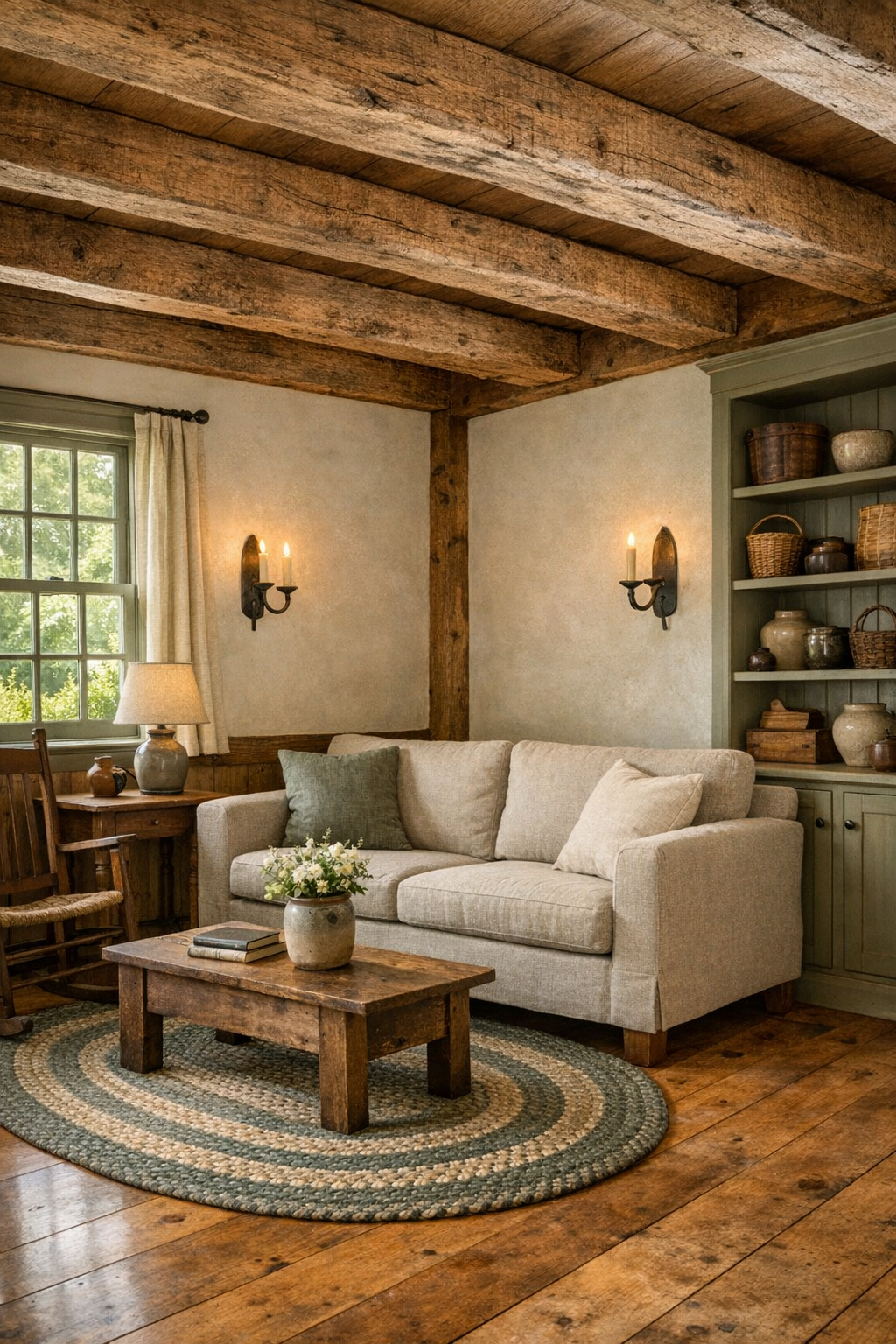
Inside, the living room opens with a warmth that feels almost immediate, thanks to honey-toned woodwork, hand-planed beams, and a palette of sage, cream, oatmeal, and soft brown. The walls are light enough to keep the room airy, but the grain of the wood adds the kind of visual depth that makes a small space feel rich rather than crowded. A compact sofa in a natural linen texture sits opposite a sturdy coffee table that looks as though it could survive generations of board games, supper plates, and folded laundry. I can just picture a braided rug underfoot, giving the room a little pattern and that familiar sense of home I remember from older houses.
The layout appears to be carefully trimmed of waste, with built-in shelving, a bench tucked beneath a window, and furniture scaled to preserve easy movement. Lighting is part of the charm here: wrought-iron sconces, a modest ceiling fixture with a colonial silhouette, and daylight pouring through divided-light windows that cast lovely rectangular shadows across the floorboards. Rather than trying to mimic a grand room in miniature, this space embraces intimacy. It feels made for reading by lamplight, shelling peas at the table when company is over, or simply listening to a storm pass through while the kettle hums in the next room.
Dining Room
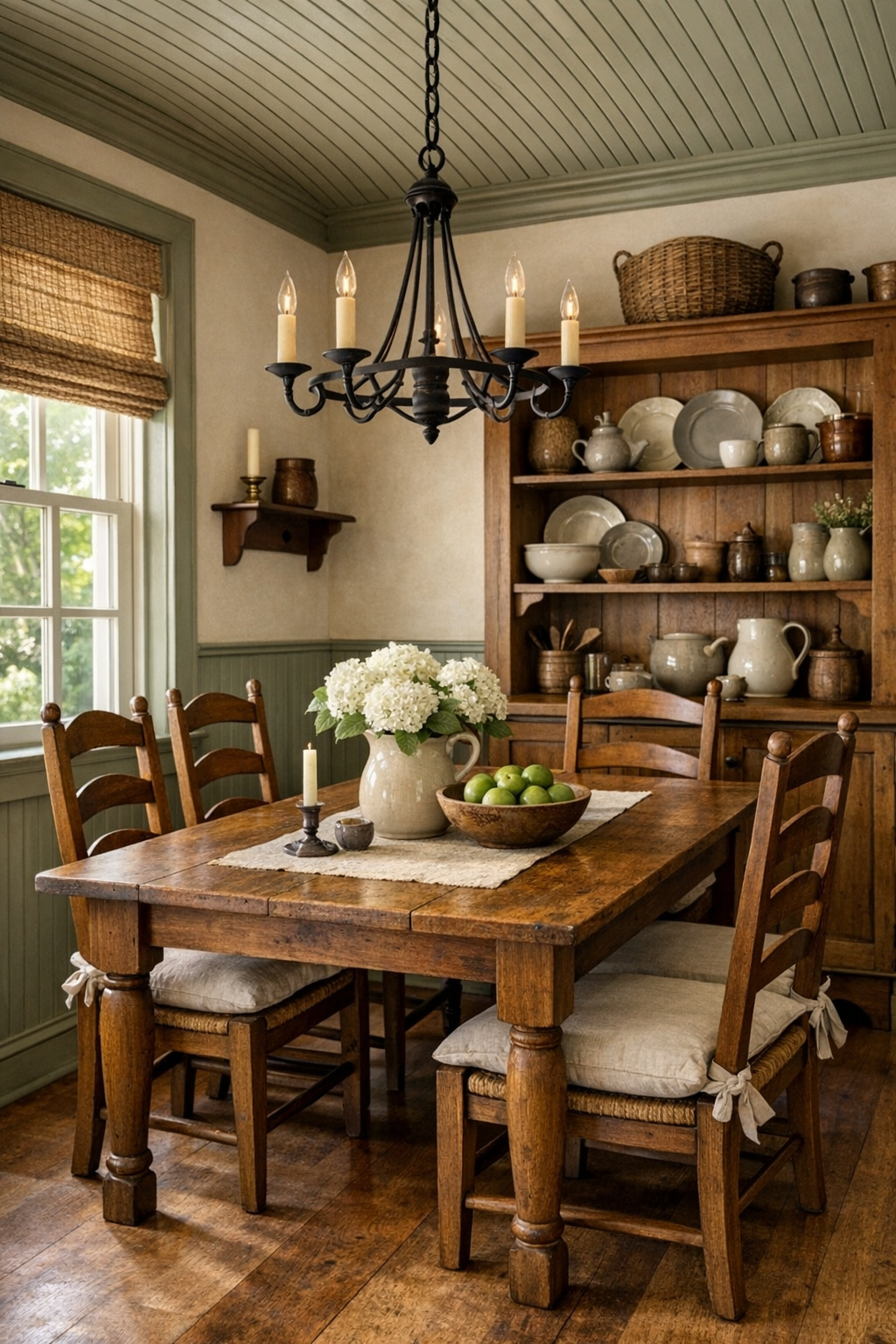
The dining area carries the same spirit of usefulness made beautiful, and I find that awfully appealing. Here, a small solid-wood table becomes the heart of the home, its surface showing enough grain and character to remind you that wood is meant to be touched and lived with. Ladder-back chairs or a built-in banquette would suit this room perfectly, especially with seat cushions in a faded stripe, ticking, or nubby flax linen. The palette stays gentle and familiar, letting the craftsmanship do the talking instead of relying on ornament.
What makes this little dining room sing is its nearness to everything else. It does not stand apart as a formal zone; it lives right in the rhythm of the house, close to the kitchen, open to conversation, and bathed in light from nearby windows. A simple iron chandelier or candle-style pendant would anchor the table without overpowering it, while a shallow hutch or plate rail could display stoneware, crocks, or everyday dishes in a way that feels collected over time. It is easy for me to imagine biscuits cooling nearby, supper being called in from outside, and this table holding all the important small moments that make a house worth loving.
Kitchen
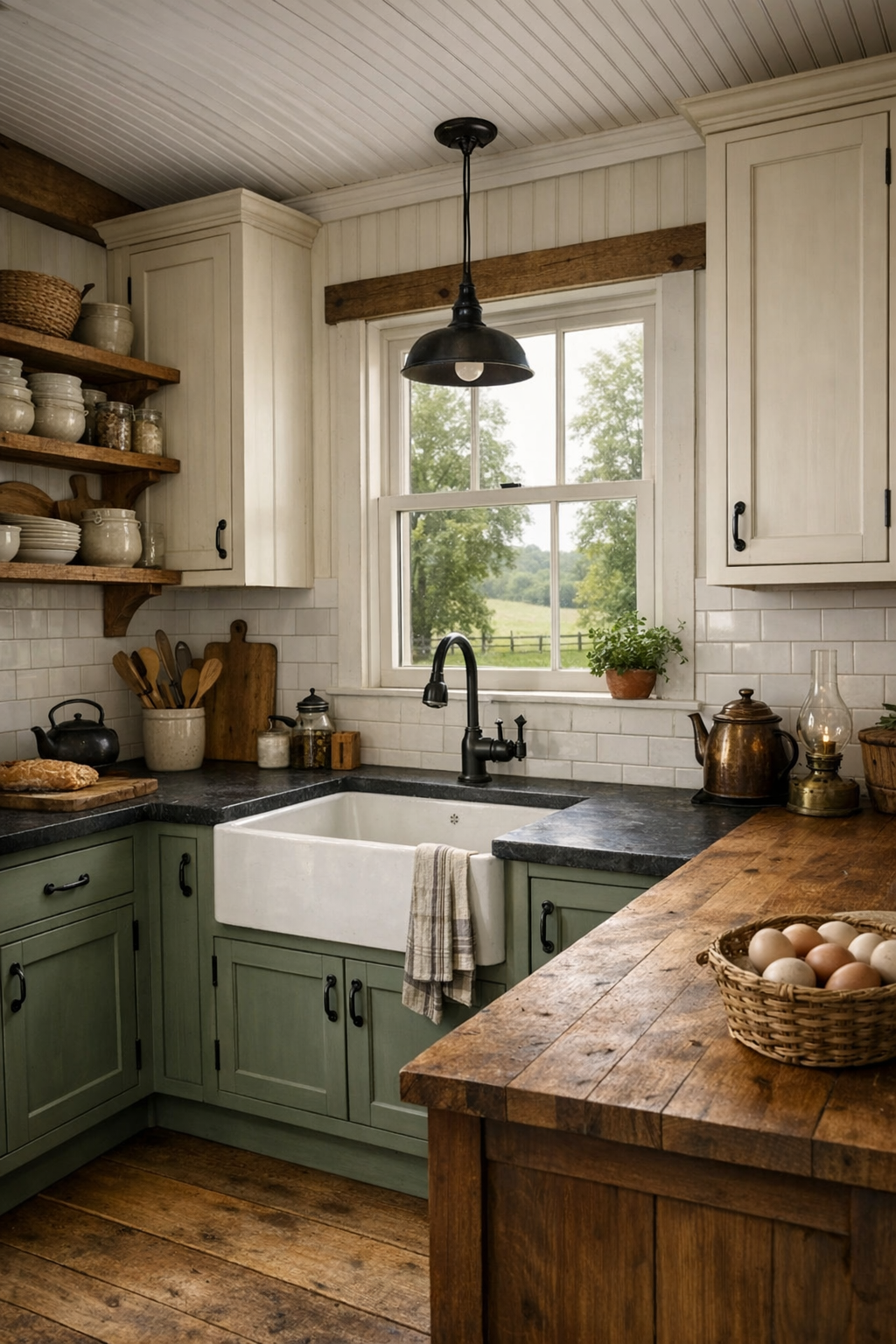
The kitchen is where this home truly wins me over, because it understands that small does not have to mean slight. Every inch seems thoughtfully worked, with inset cabinetry painted in a softened sage or creamy putty, butcher block or soapstone counters, and open shelves displaying practical pieces instead of clutter. I can almost feel the smooth cabinet latches and the rounded edges of a handmade worktable tucked into the plan. There is something wonderfully reassuring about a kitchen that does not chase trends but instead honors the old virtues: storage where you need it, surfaces that age well, and room enough to cook with pleasure.
I would expect a deep apron-front sink beneath a window, warm brass or black iron hardware, and a backsplash of simple tile or painted beadboard that keeps the focus on texture rather than shine. The lighting ought to be layered and useful: under-shelf glow, a centered ceiling fixture, and daylight strong enough to make flour dust sparkle on the counter. What I admire most is the sense that this kitchen was designed by people who understand work. It feels ready for pie dough, preserving jars, roast chicken, and all the small daily acts that turn ingredients into memory.
Bedroom
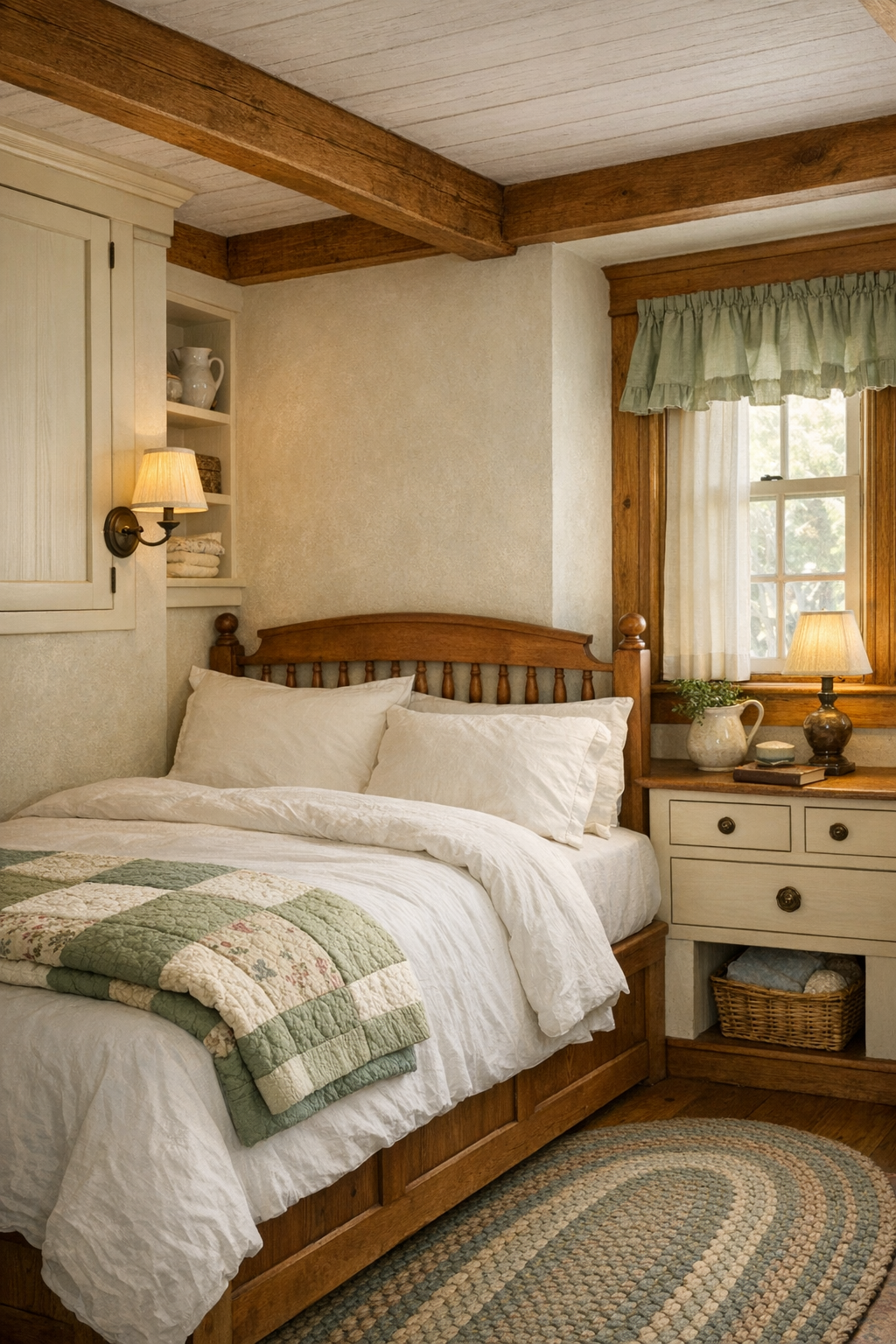
The bedroom looks to be a lesson in restraint, and I mean that as the highest compliment. In a small footprint, a bed with a spindle or paneled wood headboard becomes the natural focus, dressed simply in breathable white bedding, a quilt folded at the foot, and perhaps a sage ticking pillow or two. The surrounding finishes remain quiet: creamy walls, warm timber trim, and maybe one sweet patterned curtain softening the windows. It has the uncluttered peace of a room where one comes to rest for real, not to be distracted.
Storage, I suspect, is tucked with care into built-ins, drawers beneath the bed, or a narrow wardrobe crafted to match the millwork. Bedside lighting would be modest and warm, perhaps iron sconces or petite lamps casting an amber glow across the grain of the wood. What I love most is the emotional tone such a room creates. It feels old-fashioned in the best sense, not because it copies the past literally, but because it remembers that a bedroom ought to soothe the spirit. This is a room for early nights, open windows, and the sort of sleep that comes after a long day well spent.
Bathroom
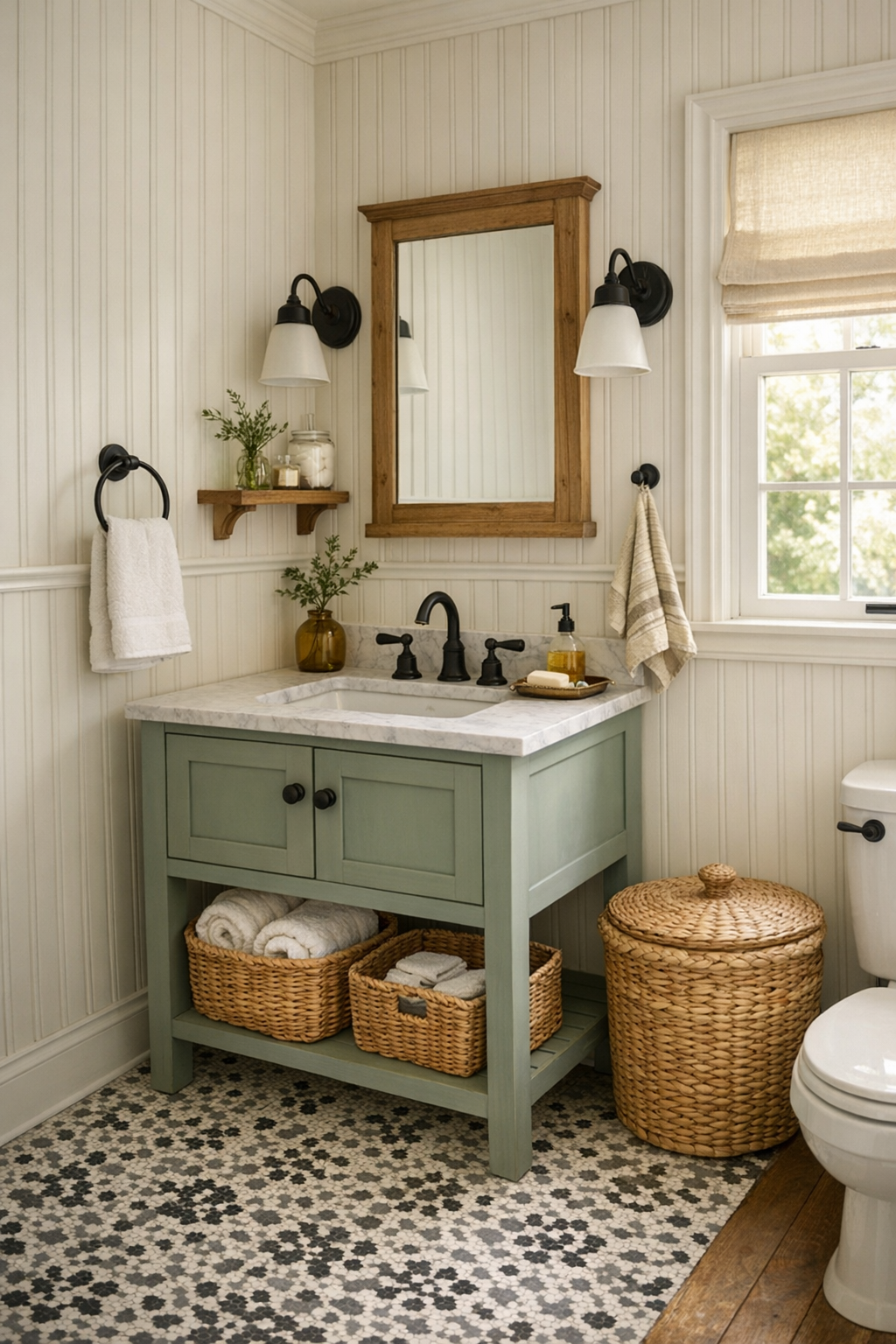
The bathroom is likely small, but if the rest of the home is any guide, it would feel neat, grounded, and beautifully resolved. I picture beadboard or tongue-and-groove walls, a compact vanity in painted wood, and a countertop that keeps things simple and durable. The fixtures would lean classic rather than ornate, perhaps with cross handles, an aged brass finish, or matte black for a little definition against the pale surfaces. In a home like this, even a washroom can carry grace when the materials are honest and the proportions are right.
Texture does much of the work here. A linen curtain, a woven basket, white towels, and a small patterned tile underfoot could bring softness without fussing up the room. Good lighting at the mirror, plus natural light if there is a window, would help the space feel open despite its size. I can see this bathroom being especially appealing in the morning, when the wood tones glow a bit golden and everything feels still. It would be the kind of room that encourages you to keep only what you need and enjoy the quiet order of that choice.
Other Areas
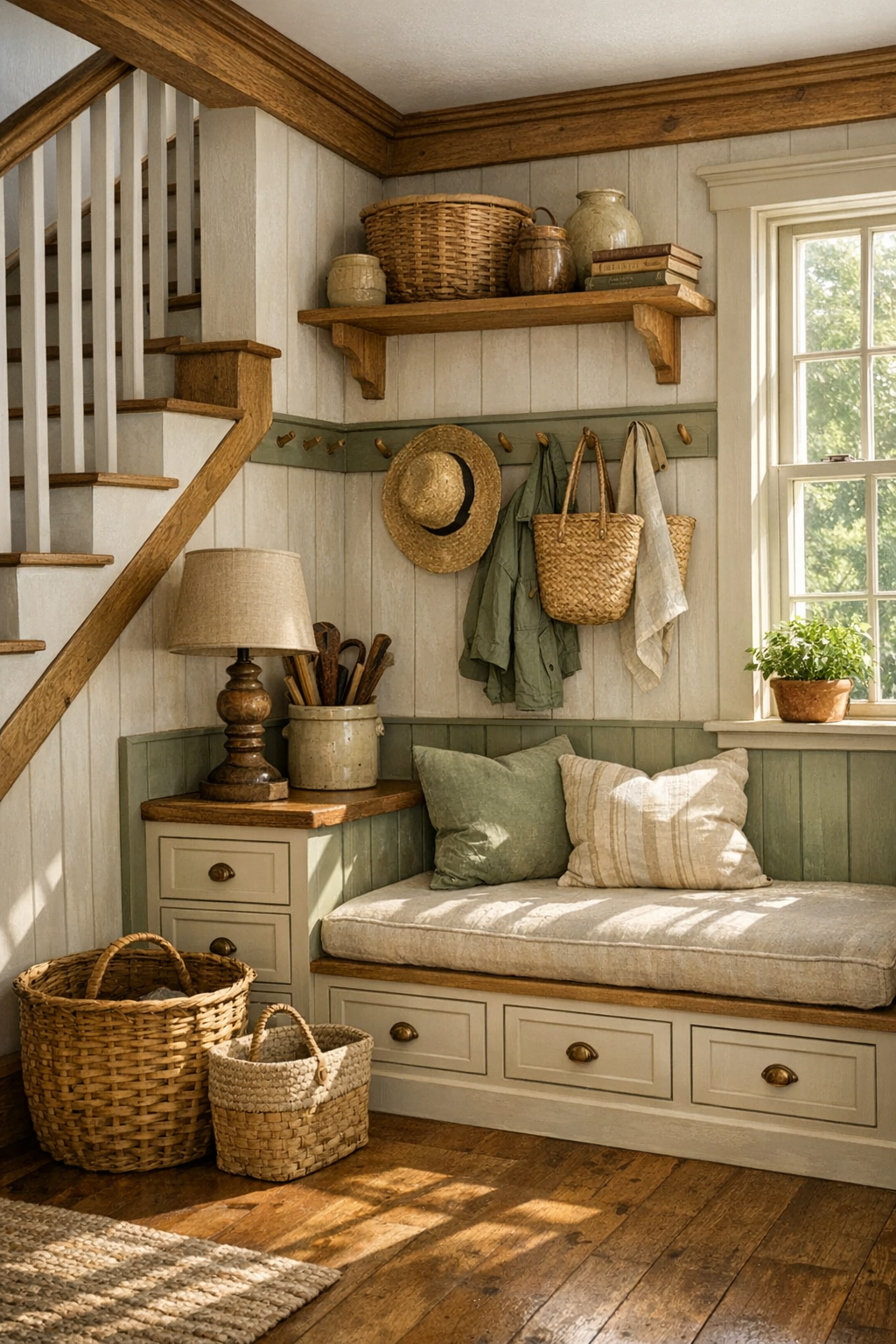
In a tiny home like this, the in-between spaces matter just as much as the main rooms, and I suspect they are some of the loveliest parts. A stair nook with drawers, a narrow hall lined with pegs, a reading corner under a window, or a loft reached by a stout built-in ladder could all carry the same handcrafted spirit. These are the places where Amish-inspired workmanship truly shines, because every odd inch becomes an opportunity for utility shaped with beauty. Even a simple mud entry or passageway can feel special when trimmed in real wood and finished with care.
I would also expect thoughtful moments that make daily life easier: open cubbies for baskets, hooks for coats and aprons, a bench for taking off shoes, and perhaps a little desk ledge or sewing corner tucked where the light is best. The charm is in how seamlessly these functions are absorbed into the architecture. Nothing feels added on or accidental. Instead, the whole house seems to say that living well is less about square footage than about attention, patience, and knowing exactly what a home is meant to do.
Why You'd Live Here
You would live here because it offers something many larger homes never manage to achieve: peace without emptiness, beauty without pretense, and usefulness without compromise. This little sage green colonial understands its own character, and that self-assurance is deeply attractive. It does not beg to impress; it simply welcomes you in with fine woodwork, calm colors, and rooms scaled to daily life rather than display. To me, that kind of confidence is more lasting than luxury.
You would also live here if you believe, as I do, that a home should support the rhythms that matter most: cooking, resting, gathering, reading, tidying up, and watching the seasons turn outside the window. Every surface and built-in seems to honor that way of living. In a world that often confuses more with better, this tiny home makes a gentler argument. It says enough can be beautiful, and when it is crafted with this much thought and heart, enough can feel downright extraordinary.